



A Rug for a Home Art or Craft Studio
In a home art or craft studio, keep the rug away from the easel, the potter's wheel and anywhere paint, clay or solvents are used. A rug belongs in the dry zones: under a viewing chair, beside a drawing table or in a reading corner, where a low wool and jute or jute weave of 7 to 10 mm works best.
In short
- A handmade rug should not sit under an easel, a potter's wheel, a printing press or a sink in a home studio, because paint, clay slip, inks and solvents can stain or damage wool and jute permanently.
- In a home studio, a rug suits the dry zones: the viewing chair where finished work is judged, a sketching or reading corner, or the floor beside a drawing table.
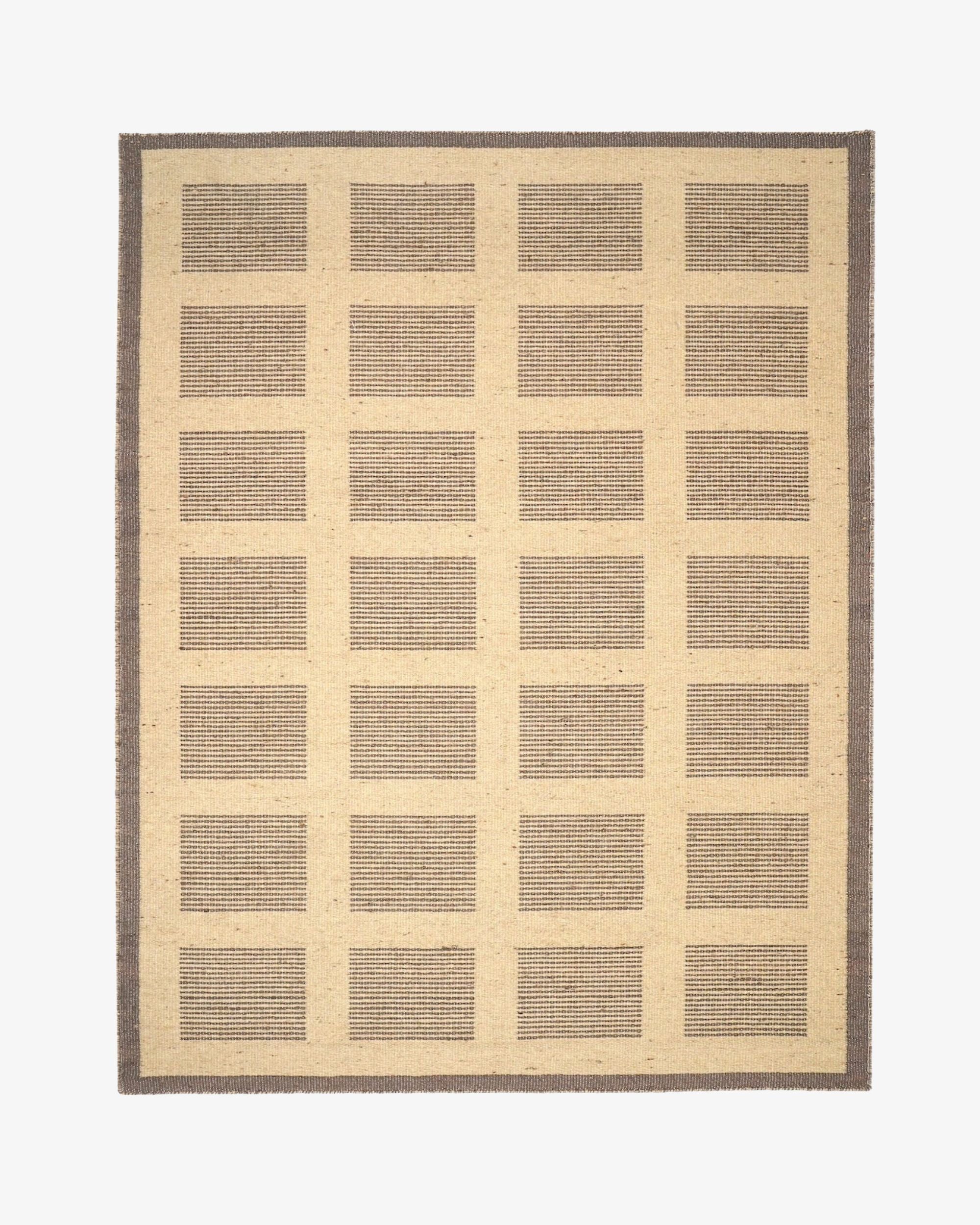
- Low, firm weaves such as the Rugberry Cabra Wool & Jute Rug at 7 to 8 mm and the Kora and Masai jute rugs at 10 mm suit a studio, because dry debris brushes off their surface.
- Where work happens on the floor, a canvas drop cloth or a washable cotton dhurrie should go down first, never the handmade rug.
Does a rug belong in a home art studio?
A rug belongs in a home art studio only in the zones where nothing wet or abrasive is used. A studio is a working room, and the floor where paint drips and clay dust settles needs a surface you can scrub or throw away.
Many artists, illustrators and makers in Indian cities now work from a spare room, a terrace studio or a corner of a living room. Those rooms are also where they think, read and sit back to look at a piece, and those quieter moments are where a rug makes the room feel like more than a workshop.
So the honest answer is to divide the studio. Give the messy work a hard floor or a drop cloth, and give the rest a rug.
Where should a rug never go in a studio?
A rug should never go under an easel used for wet media, a potter's wheel, a printmaking press, a sink, a resin or glue station, or anywhere spray paint or fixative is used. These are the places where accidents are certain, not possible.
| Studio zone | Risk to a rug | Rug or not | Use instead |
|---|---|---|---|
| Easel with oils or acrylics | Paint drips, solvent spills | No | Bare floor or canvas drop cloth |
| Potter's wheel, clay bench | Slip, wet clay, fine silica dust | No | Bare floor, mopped daily |
| Printing, dyeing, resin, glue | Inks and chemicals that set | No | Bare floor or a washable mat |
| Sink and washing area | Standing water | No | Rubber or a washable cotton mat |
| Drawing table with dry media | Pencil and charcoal dust | Yes, low weave | Wool and jute or jute rug |
| Viewing chair and reading corner | Very little | Yes | Any low wool rug |
For a working studio, choose a canvas drop cloth over a rug wherever paint or clay is used, because a drop cloth can be washed or replaced while a stained rug cannot be undone.
Oil painters should be especially careful. Turpentine, mineral spirits and linseed oil soak into wool and jute and can leave a permanent mark and smell. Rags soaked in linseed oil should never be left on a rug or near one, because oily rags can heat up as they dry.
Clay is the other trap. Wet clay stains, and dry clay dust is fine and abrasive. It works deep into a pile and wears the fibres from inside, so a pottery corner should stay entirely on hard floor.
Where does a rug work best in a studio?
A rug works best in the viewing and thinking zone of a studio: a chair or daybed set back from the work wall, a reading corner with reference books, or the floor around a drawing table used for dry media.

The viewing chair is often the most important seat in a studio. Artists step back from a piece many times a day, and a rug under that chair marks the place where the work is judged rather than made. A 5x8 ft rug under one or two chairs and a low table is usually enough.
Make the work on a floor you can scrub. Judge it from a chair on a rug.
Keep the rug at least 4 to 6 ft from the easel or wheel, so splashes and flicked brushes fall short of it. If the studio is one room, a change of floor from bare to rug also helps the mind switch from making to looking.
In a craft room used for sewing, knitting or paper work, a rug can sit under the work table, since the debris is dry. Choose a low weave so pins, threads and paper scraps sit on the surface and lift easily.
Which rug weaves suit a creative workspace?
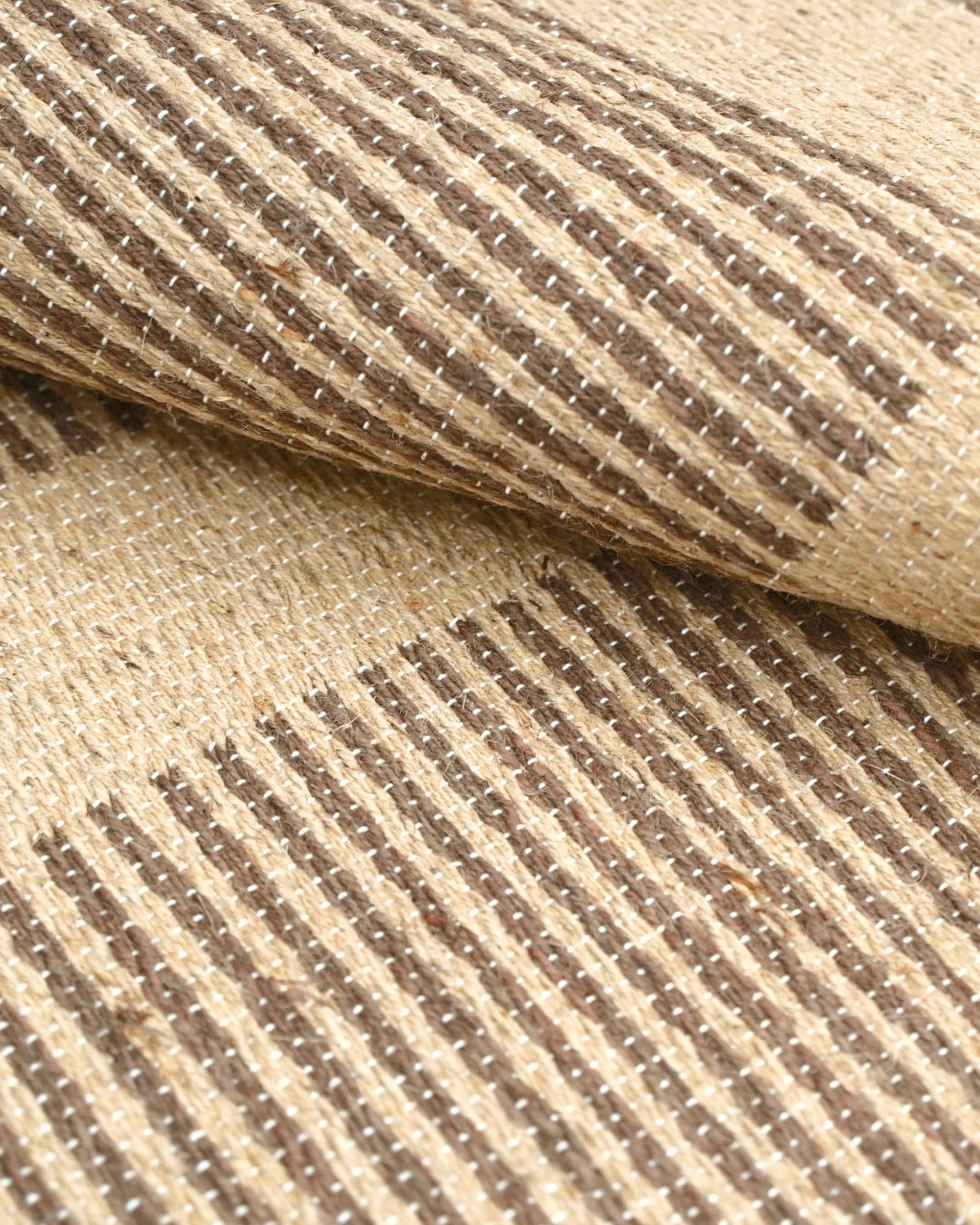
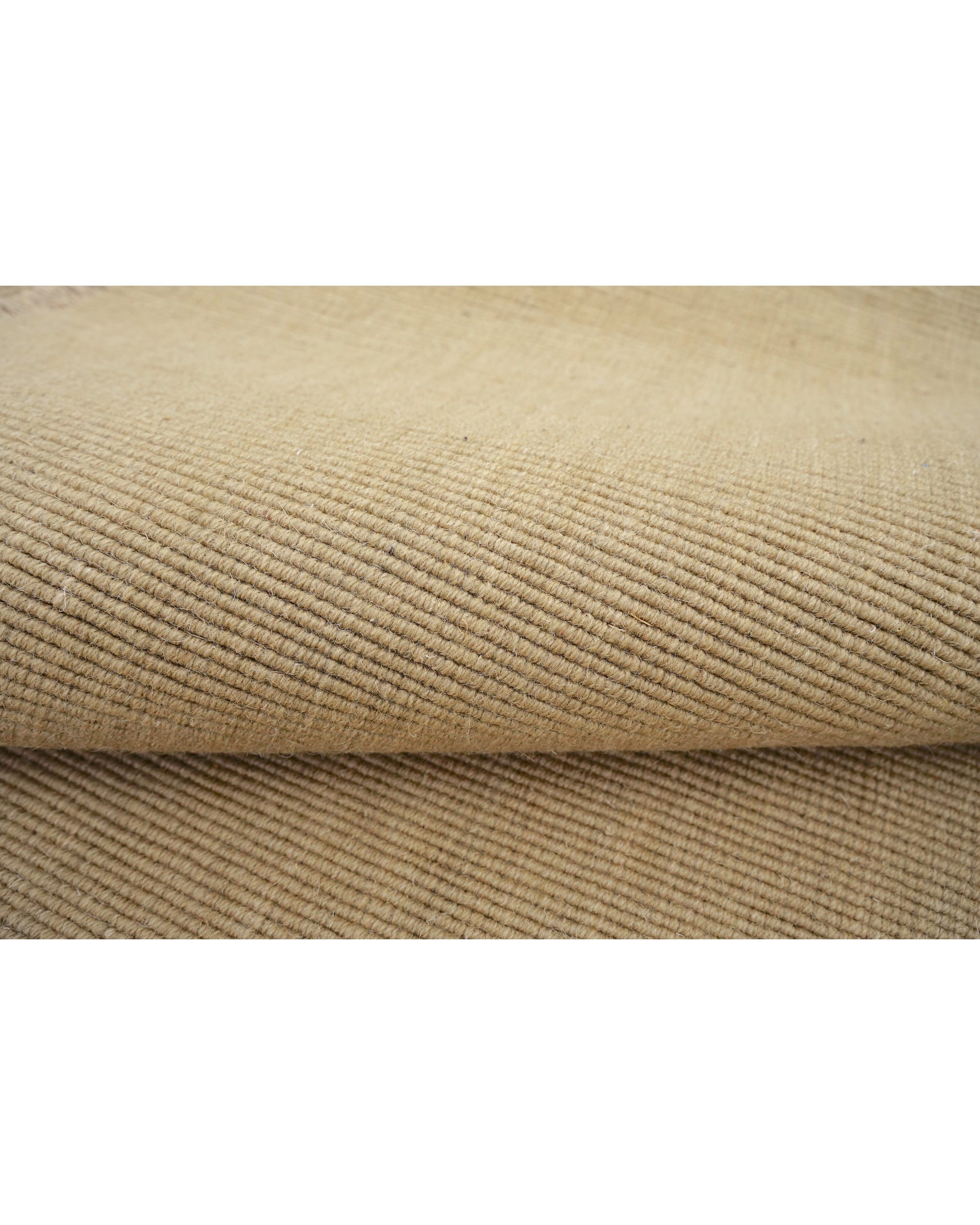
Low, firm weaves suit a creative workspace: wool and jute at 7 to 8 mm or handwoven jute at 10 mm. Dry debris such as pencil shavings, charcoal dust, thread and paper offcuts sit on top of a flat, firm surface and brush or vacuum off easily.


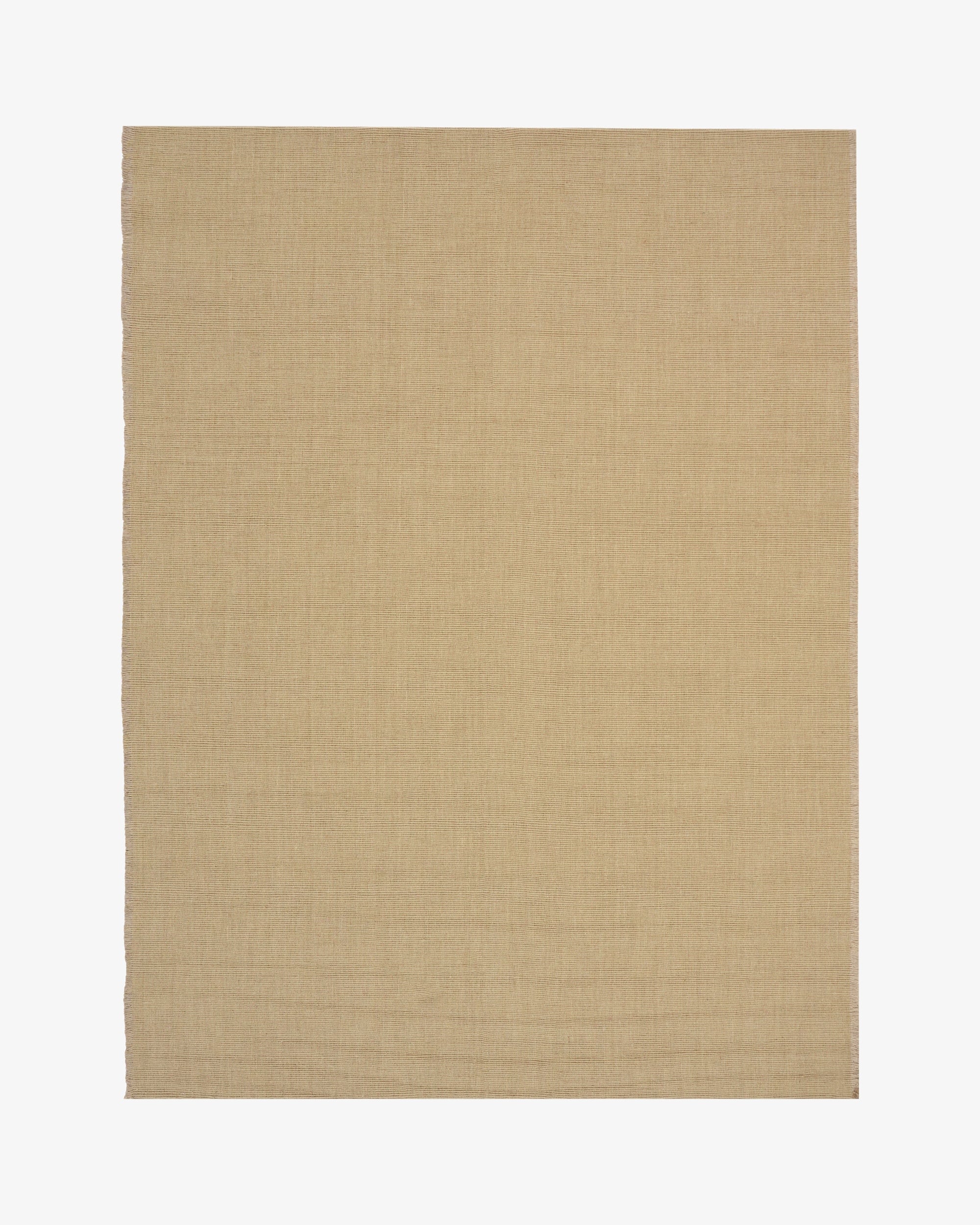
The Cabra Wool & Jute Rug in Sand is a handloom weave of New Zealand wool and jute at 7 to 8 mm, firm and flat, in a neutral sand that does not compete with the work on the walls. Its regular price is ₹34,000 for 5x8 ft and ₹45,900 for 6x9 ft, ex GST at the time of writing.
The Kora Jute Rug and the Masai Jute Rug are both handwoven in natural jute at 10 mm, firm and textured, at ₹28,000 for 5x8 ft and ₹38,000 for 6x9 ft, ex GST at the time of writing. Jute's honest, irregular texture suits a maker's room, but it marks if it gets wet, so keep it well away from water jars and the sink.
Deep pile and shag rugs are a poor fit for studios. They hold onto glitter, beads, pins and threads, and they make it hard to find the small things that always fall from a work table.
Can a patterned rug inspire a studio?
A patterned rug can bring energy to a studio, as long as it sits in the viewing corner rather than under the work. A drawn, graphic rug reads almost like another piece on the wall, laid flat.


The Tinker Wool Rug is hand tufted in New Zealand wool at 14 to 16 mm, worked with loose black lines across an ivory field, like a sketch left on the floor. Its regular price is ₹37,000 for 5x8 ft and ₹50,000 for 6x9 ft, ex GST at the time of writing. Keep an ivory rug like this strictly to the clean side of the room.
Think about colour against the work too. A painter who judges colour daily may prefer a neutral rug, so the floor does not tint the eye.
A sculptor or textile artist may want a rug that holds its own. Our guide to choosing a rug alongside art goes into how rugs and artworks share a room.
How do you protect a studio rug from accidents?
Protect a studio rug by keeping wet work off it, putting a drop cloth down whenever work spills over, and dealing with any accident immediately. Acrylic paint, in particular, sets permanently once dry.

For wet water based paint, scrape off what you can with a blunt knife, blot with a damp white cloth and keep blotting with cold water until no colour lifts. For oil paint or solvent, blot only and call a professional rug cleaner, because home remedies spread oil further.
Dry pigment, pastel and charcoal dust should be vacuumed with the suction head, never rubbed with a damp cloth, which turns dust into a stain. Our guide to protecting a rug during renovation covers similar dust problems.
If a project moves to the floor, such as stretching a large canvas, roll the rug away first. It takes two minutes and saves a rug you cannot replace for the price of a drop cloth.
How should a studio rug be sized and placed?
A studio rug should be sized to the viewing or reading zone, usually 5x8 ft, or to the drawing table plus 2 ft on each side. Place it on the side of the room furthest from the sink and the wet work, and lay it on a felt and rubber underlay so it stays put when chairs are pushed back.

Good light matters in a studio, and a rug changes the light that bounces up from the floor. A pale rug brightens the lower half of a room; a darker one keeps reflected light neutral. Our guide to rug colour in natural light explains the effect.
If the studio has an odd shape, Rugberry can make most designs to measure, so the rug can fit the dry corner exactly. For easy upkeep afterwards, see the guide to caring for flat and low weaves.
Rugberry suggests one simple test before you buy: put a swatch on the floor of the dry zone for a week of normal work. If it collects dust or threads you cannot brush off, choose a lower, firmer weave.
Frequently asked questions
Can I put a rug under my easel?
A handmade rug should not go under an easel used for paint, because drips and solvent spills can stain it permanently. Use a canvas drop cloth or bare floor there and keep the rug in the viewing area.
What is the best rug for a craft room?
A low, firm weave such as wool and jute at 7 to 8 mm or handwoven jute at 10 mm is the best rug for a craft room. Thread, paper and pins sit on the surface and lift easily.
How do I get acrylic paint out of a wool rug?
Act while acrylic paint is wet: scrape off the excess, then blot with a damp white cloth and cold water until no colour lifts. Dried acrylic is very hard to remove, so call a professional rug cleaner for a set stain.
Is a jute rug good for an art studio?
A jute rug suits the dry parts of an art studio, such as a drawing or reading corner in an air conditioned room. It marks if it gets wet, so keep it away from sinks, water jars and wet media.
Should a pottery studio have a rug?
A pottery studio should keep rugs away from the wheel and clay bench, because wet clay stains and dry clay dust wears the pile. A rug can sit in a separate seating or display corner.
Scrub the floor where you make, rest your feet where you look. See jute rugs and handwoven rugs. Material first.




Leave a comment
This site is protected by hCaptcha and the hCaptcha Privacy Policy and Terms of Service apply.