


Modern Rugs for a Kids' Room That Grow With the Child
The best rug for a kids' room in India is a wool rug in a calm, grown up colour, sized so the play area sits fully on it and laid over a non-slip underlay. Choose the design for the child at thirteen, not three, and let cushions, bedding and posters carry the cartoon years.
In short
- A 5x8 ft rug suits most Indian kids' rooms of 100 to 130 sq ft; a 6x9 ft rug suits rooms of 140 sq ft and above.
- Rugberry's Grain Wool Rug, handloom New Zealand wool at 12 to 14 mm, is the easiest kids' room rug to keep clean, with a regular price of ₹37,000 for 5x8 ft ex GST at the time of writing.
- Rugberry's Plush Wool Rug, handloom New Zealand wool at 18 to 20 mm, is the softer choice for floor play, with a regular price of ₹40,000 for 5x8 ft ex GST.
- Any rug in a child's room should sit on a non-slip underlay, because a loose rug on vitrified tile or marble is the most common cause of slips.
What size rug suits a kids' room in an Indian apartment?
A 5x8 ft rug suits most kids' rooms in Indian apartments, which usually measure 100 to 130 sq ft. In a larger room of 140 sq ft or more, or a room shared by two siblings, a 6x9 ft rug gives the play area room to spread.
The aim is to cover the floor where children actually sit and play. That is usually the open space between the bed, the study table and the wardrobe, not the whole room. A rug that stops short of the play zone means Lego on bare tile, and that is where knees get hurt.
Measure the open floor with a tape, then subtract about 12 inches on each side so the wardrobe doors and the bedroom door still swing freely. The size that remains is your rug. Mark it with masking tape for a few days and watch where the children settle.
| Room size | Typical layout | Rug size | Placement |
|---|---|---|---|
| 90 to 110 sq ft | Single bed against a wall, study table | 4x6 ft made to measure, or 5x8 ft | Beside the bed, in the open floor |
| 110 to 140 sq ft | Single bed, table, small play corner | 5x8 ft | Centred on the play area, long side parallel to the bed |
| 140 to 180 sq ft | Two beds or a bunk bed, shared table | 6x9 ft | Between the beds, both children stepping onto it |
| Above 180 sq ft | Bed, reading corner, play zone | 8x10 ft, or two smaller rugs | Under the lower half of the bed and across the play area |
Prices in this post are regular prices from the product pages, ex GST, at the time of writing. A seasonal sale may show lower figures on the product page.
Which fibre and pile work best for children?
New Zealand wool is the best fibre for a child's room, because it is resilient, naturally resists light spills through its lanolin and springs back after being sat on for hours. The pile height then decides how the rug is used.


A low, closely woven pile is easiest for building, drawing and rolling cars. A deep pile is best for lying down with a book. Both are wool from Rugberry's Terra grade, the grade chosen for strength and everyday living.
- Grain Wool Rug: handloom New Zealand wool at 12 to 14 mm. Blocks stand up on it, crumbs brush out and a toy car still rolls. Choose it for children who play hard.
- Plush Wool Rug: handloom New Zealand wool at 18 to 20 mm. Soft enough to lie on, warm on winter mornings in the north. Choose it for reading, quiet play and younger children who spend time on the floor.
- Hand tufted patterned rugs: New Zealand wool at 14 to 16 mm, dense and even. Choose one when the rug itself should be the design of the room.
Skip Botanical Silk and pale wool and Botanical Silk blends in a kids' room. Botanical Silk is beautiful but shows water marks and crushing, which a child's room will test daily. Our guide to low pile versus high pile explains the trade off in more detail.
Should a kids' room rug be patterned or plain?
A kids' room rug should usually be softly patterned or textured rather than plain, because a gentle pattern hides crumbs and small marks between cleans. Avoid literal themes such as cars, cartoon faces or alphabets, which a child outgrows in two or three years.


The trick is to pick pattern that a twelve year old and an adult would both accept. Rounds and squares, soft stripes and loose geometry read as playful to a small child and as modern design to a teenager.
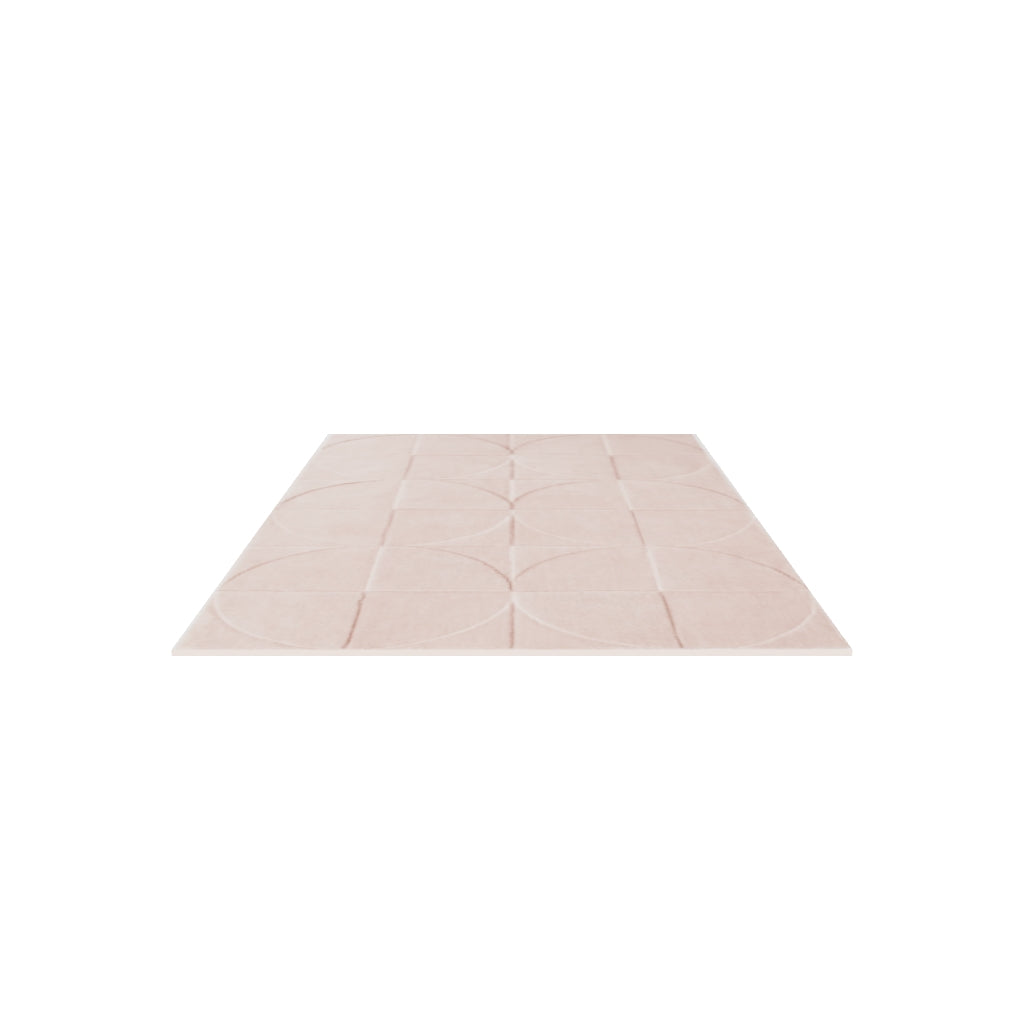
The Round Square Rug in Blush Pink is a good example. It is hand tufted New Zealand wool at 14 to 16 mm, with rounds and squares set against each other across a pink field. It suits a young child, and it still looks considered in a teenager's room with plain white walls.
Choose the rug for the child at thirteen, and let the cushions carry the cartoon years.
Plain rugs work too, if you choose a mid tone. Grain in Sage or Tan, or Plush in Sand, hides daily wear far better than ivory. Our post on patterned versus plain rugs has a simple test for deciding.
For colour, think about what the room will hold over ten years. Sage, sand, terracotta and soft pink grow with a child. Bright primary colours tend to date fastest, and a rug is a longer purchase than a bedsheet.
How do you keep a kids' rug clean through crayons, juice and monsoon?
You keep a kids' rug clean by vacuuming twice a week, blotting every spill at once and keeping a short kit of white cloths and plain water within reach. Wool forgives a great deal if the spill is lifted before it dries.

Children's rooms in Indian homes see fine dust through the year and damp in the monsoon. Both settle into a pile, so the routine matters more than any special product. Our daily rug care routine covers the basics.
- Juice and milk: blot with a white cloth, then dab with cool water and blot again. Never rub, which pushes the spill deeper and fuzzes the wool.
- Crayon and wax: let it harden, lift what you can with a blunt knife, then ask a professional cleaner about the rest.
- Play dough: let it dry completely, then brush it out with a stiff brush and vacuum.
- Sticker glue and slime: do not use solvents at home. Lift what you can and call a professional.
- Monsoon damp: keep the room aired, never leave wet towels or swimming bags on the rug, and lift a corner once a week to check the floor below is dry.
New wool rugs shed loose fibre in the first weeks, which is normal and stops with regular vacuuming. Rugberry's guide to wool rug shedding explains why. In a kids' room, vacuum a new rug more often in the first month, since small children put their hands to their mouths.
Is a rug safe for a child's room?
A wool rug is a sensible choice for a child's room when it lies flat, sits on a non-slip underlay and is kept clean. The risks are practical ones, mainly slipping, tripping on a lifted edge and dust, and each one has a simple fix.
We want to be precise here. Rugberry's product pages do not list any child safety certification, so we do not claim one. What we can describe is how a handmade wool rug behaves on an Indian floor and what you can do about it.
- Slipping: vitrified tile, Italian marble and polished granite are slippery under any rug. A thin non-slip underlay, cut about 2 inches smaller than the rug on every side, keeps the rug still when a child runs onto it.
- Edges: choose a rug that lies flat at the corners. If a corner curls after unrolling, roll it back against the curl for a day.
- Pile depth for toddlers: a child learning to walk is steadier on a low pile such as Grain at 12 to 14 mm than on a deep pile. Save the deeper Plush for the reading years.
- Dust: vacuum with suction only, without a beater bar, and air the room daily. A clean rug holds less dust than a bare floor that is swept rarely.
Small rugs and runners in a child's room need the most care, because they move most easily. If a rug keeps travelling, size up so the bed or a table leg holds one edge in place.
How do you choose a kids' rug that still works at thirteen?
Choose a rug that would suit a guest room, then style it for a child. That means a quality wool rug in a calm colour, a size that fits the room rather than the current furniture, and a design without a theme.

Children's rooms change every few years. The cot becomes a bed, the play corner becomes a desk, and the desk gets bigger. A 5x8 ft or 6x9 ft rug moves easily between these layouts, and between rooms if the family moves.
Think in cost per year. A Grain Wool Rug at a regular ₹37,000 for 5x8 ft, kept for ten years, costs about ₹3,700 a year, less than many children's bedsheet sets. A rug bought for a theme that lasts two years costs far more per year, even when the tag is lower.
If the colour you want is not in the standard range, Rugberry makes any rug to measure in any size and colour, and the Rugberry Design Lab lets you recolour a design online before you order. Many parents order a swatch first to check the colour against the walls and the bedding.
When the child grows out of the room, a good wool rug moves on to a study, a guest room or a teenager's first flat. Rugberry's post on how long a rug lasts sets out what to expect from each construction.
Frequently asked questions
What size rug is best for a kids' room?
A 5x8 ft rug is best for most kids' rooms in Indian apartments of 100 to 130 sq ft. For a shared room or a room above 140 sq ft, a 6x9 ft rug covers the play area between the beds.
Is wool or jute better for a child's room?
Wool is better than jute for a child's room, because it is softer for sitting and crawling and lifts spills more easily. Jute is firm and scratchy for small knees and marks with water, so it suits passages more than play areas.
Is a deep pile rug good for children?
A deep pile rug such as the Rugberry Plush Wool Rug at 18 to 20 mm is good for reading and quiet floor play. For toddlers learning to walk and for building toys, a low pile such as the Grain Wool Rug at 12 to 14 mm is steadier.
How do I stop a rug slipping in a kids' room?
Lay a thin non-slip underlay under the rug, cut about 2 inches smaller than the rug on every side. On vitrified tile and marble this is the single most useful thing a parent can do.
Which colours hide marks best in a kids' room rug?
Mid tones such as sage, sand, tan and soft pink hide marks best, because they sit between the colours of dust and of spills. Pure ivory and very dark colours show the most, and a gentle pattern hides more than a plain field.
Start with the fibre, size it for the play, and let the room grow around it. Browse the Grain Collection and the Plush Collection. Material first.




Leave a comment
This site is protected by hCaptcha and the hCaptcha Privacy Policy and Terms of Service apply.