



Which Rugs Are Worth Investing In
The rugs worth investing in are the ones whose cost per year of use stays low: dense constructions in durable or rare fibres, chosen for the right room. In practice that means hand knotted wool for hard use, fine handloom fibres for soft rooms, and real silk only where feet are few.
In short
- An investment rug is judged by cost per year of use, not by price, so construction and fibre matter more than the label.
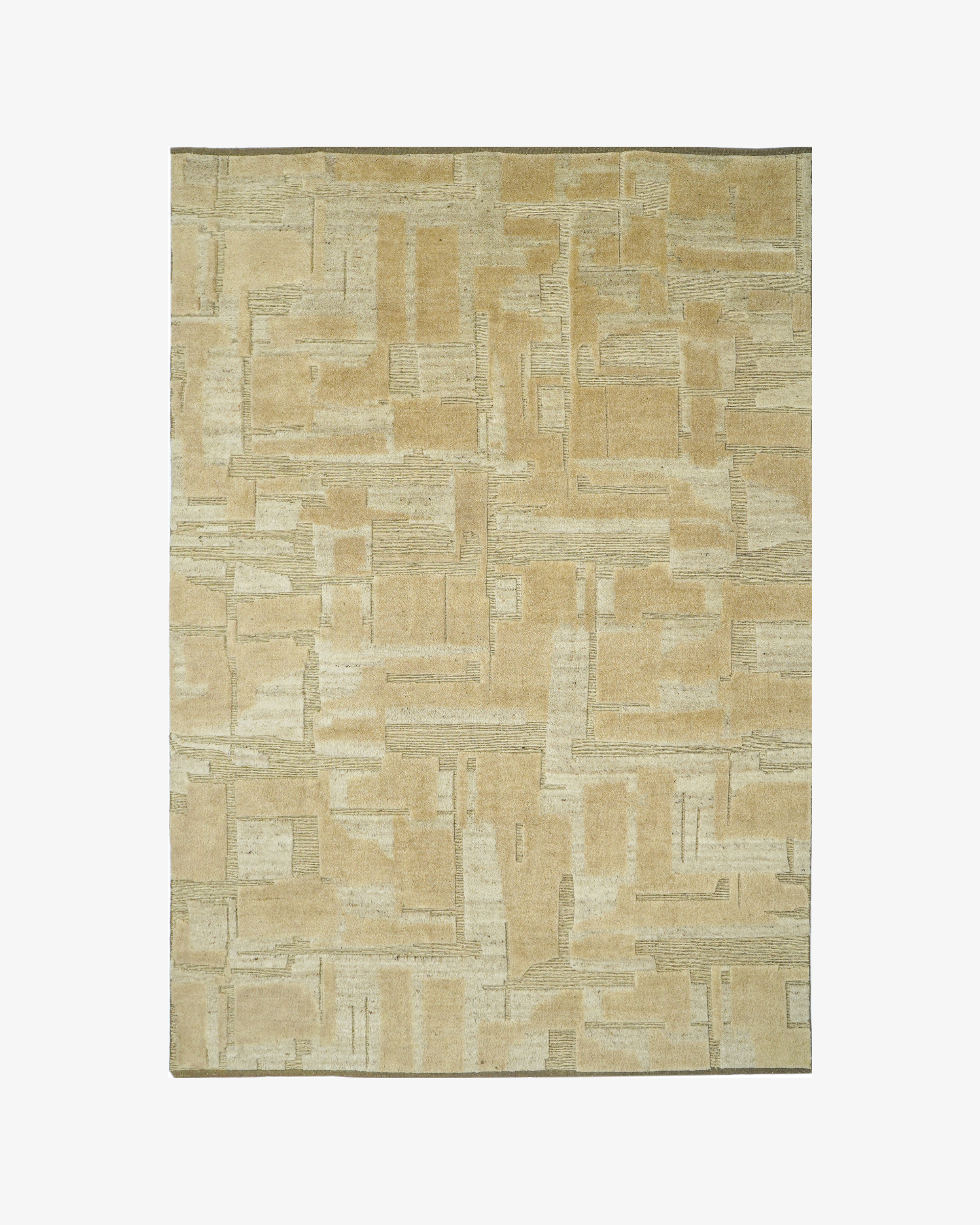
- Rugberry's Stratum Knotted Rug in Dune is hand knotted New Zealand wool, listed in 9x12 ft at a regular price of ₹1,75,000 ex GST at the time of writing, the most durable construction in the range.
- The Cashmere Blend Rug in Salt is handloom wool and cashmere at 16 mm, regular price ₹54,000 for 5x8 ft, for bedrooms and quiet living rooms.
- The Couture Silk Rug is hand knotted in real silk, listed in 5x8 ft at a regular price of ₹72,000, and belongs in low traffic rooms where its lustre is seen more than walked on.
What makes a rug an investment piece?
A rug becomes an investment piece when its construction and fibre let it last for decades, keep its looks with ordinary care, and stay relevant as a design. Price alone does not make an investment; a costly rug in the wrong room is an expense.
Three things decide it. First, construction: how densely the pile is held and how the rug is built.
Second, fibre: how the material ages, resists wear and recovers. Third, design: whether the rug will still suit your home when you move or redecorate.
A fourth factor is the room. The same rug can last a lifetime in a bedroom and show wear in five years in a busy entrance. Matching the rug to its room is the single most important decision for value.
This is why Rugberry describes every rug by fibre, grade and construction first. Those three facts tell you more about value than any adjective. Our provenance card guide explains the eight facts each piece carries.
How do you work out a rug's cost per year of use?
Work out a rug's cost per year by dividing its price by the years you can reasonably expect it to look good in its room. A rug that costs twice as much but lasts three times as long costs less per year.
Lifespan depends on construction, fibre, room and care, so any figure is an estimate. Our guide to how long a rug lasts gives typical ranges. The table below uses illustrative, conservative lifespans for a living room with normal family use and good care, to show how the arithmetic works.
| Construction and fibre | Rugberry example | Regular price, ex GST | Illustrative years in a living room | Illustrative cost per year |
|---|---|---|---|---|
| Hand knotted New Zealand wool | Stratum Knotted Rug, Dune, 9x12 ft | ₹1,75,000 | 30 | About ₹5,800 |
| Handloom New Zealand wool | Grain Wool Rug, 9x12 ft | ₹1,02,000 | 15 | About ₹6,800 |
| Hand tufted New Zealand wool | Arctic Wool Rug, 9x12 ft | ₹1,00,000 | 10 to 12 | About ₹8,300 to ₹10,000 |
| Handloom wool and cashmere | Cashmere Blend Rug, Salt, 9x12 ft | ₹1,46,000 | 15 in a bedroom | About ₹9,700 |
| Hand knotted silk | Couture Silk Rug, 5x8 ft | ₹72,000 | Long in a low traffic room | Best kept off walkways |
The figures are illustrations, not promises. Your rug's life depends on traffic, sun, pets and cleaning. The point is the method: a dense, durable construction often costs less per year than a cheaper rug replaced twice.
Two further costs belong in the sum. Cleaning: a professional clean every year or two adds a little to the yearly cost but extends the rug's life far more. Resale and handing on: a hand knotted rug in good condition can pass to the next generation, which no other construction does as reliably.
There is also the cost of getting it wrong. A rug bought for its price alone and replaced after four years has cost its full price twice, plus the time spent choosing again. Spending a little longer on the first decision is part of the investment.
Is a hand knotted wool rug the best investment?
A hand knotted wool rug is usually the best long term investment for a room in daily use, because every tuft of pile is knotted around the warp by hand, which holds it more securely than any other construction. Wool's resilience adds to that.


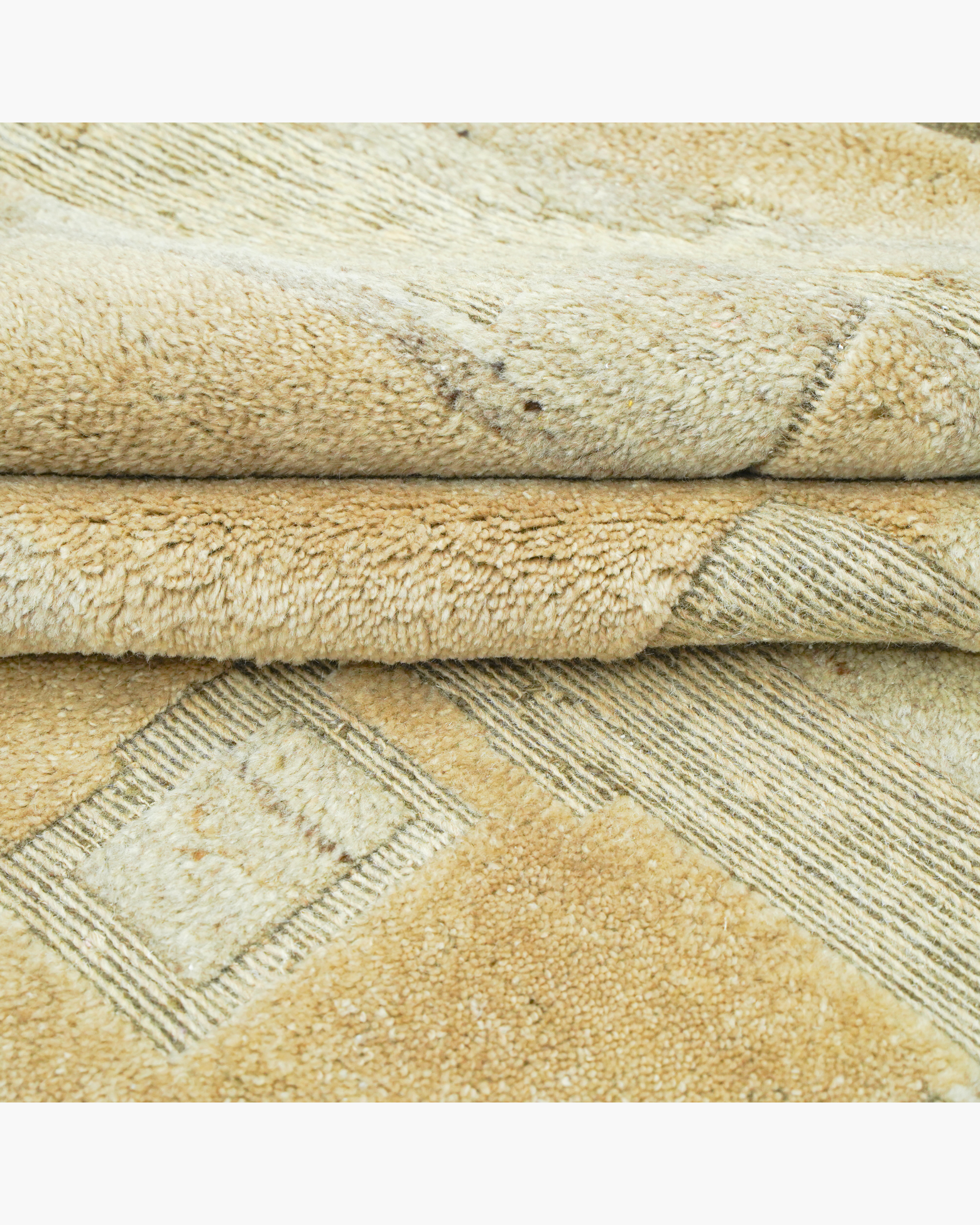
Hand knotting is the densest and most durable way a rug can be made. Each knot is tied one at a time, which is why a hand knotted rug takes far longer to make and costs more. That time buys strength: the pile cannot pull out easily, and the rug can be cleaned, restored and passed on.
Rugberry's Stratum Knotted Rug in Dune is hand knotted New Zealand wool in a calm, warm field, made for a living room that will be lived in hard. The Ithaca Rug and the Pazo Knotted Rug are other hand knotted wool pieces in the range. Our hand knotted versus hand tufted guide compares the two constructions in detail.
For a living room used every day by a family, choose hand knotted wool over hand knotted silk, because wool recovers from feet and furniture and silk does not. Keep silk for rooms where it is admired more than walked on.
Are cashmere and silk rugs worth the money?
Cashmere and silk rugs are worth the money in the right room: a bedroom, a dressing room, a formal sitting room or a study, where bare feet are welcome and traffic is light. In a busy entrance or dining room, their softness and lustre wear sooner than wool.

The Cashmere Blend Rug in Salt is handloom woven in a wool and cashmere blend at 16 mm, fine, dense and very soft underfoot. It is a rug for the room you start and end the day in. Our guide to the Cashmere Blend collection covers its colours and care.
The Couture Silk Rug is hand knotted in real silk, a fibre in Rugberry's Fina grade for softness, fine hand and quiet sheen. It is not the same as Botanical Silk, the plant based fibre in rugs like Luma and Nuva, and costs more for that reason.
The rarest fibres sit in Rugberry Reserve, the Rara grade of mohair, alpaca, cashmere and llama, with prices on request. Our guide to Rara and Rugberry Reserve explains the line, and the Reserve page introduces it.
A costly rug in the wrong room is an expense. The right rug in the right room is an investment.
Real silk and cashmere also need more careful cleaning than wool. Budget for professional cleaning from the start, and treat it as part of the price of owning a fine rug rather than as an extra.
Which design choices keep a rug valuable for longer?
Design choices that keep a rug valuable are calm fields, tonal or textural interest, natural colours and a size that will move with you. A rug tied to one trend colour or one sofa can feel dated in a few years, whatever it is made of.


- Colour: natural, mid tone colours such as sand, dune, taupe, umber and greige outlast bright trend colours and hide everyday wear.
- Pattern: plain, tonal or quietly textured rugs move between rooms and homes more easily than strong graphic designs.
- Size: 8x10 ft and 9x12 ft fit most living rooms and bedrooms in Indian homes, so they move with you more easily than an unusual size.
- Edges: a well bound or knotted edge lasts longer than a glued finish and can be repaired.
A made to measure rug is an exception. A rug sized for a specific room in a home you own and plan to stay in can be the best investment of all, because it fits perfectly for decades. Our guide to custom versus ready stock rugs weighs the two.
Think about where you will be in ten years. A family planning to move from a 2 BHK to a larger home should favour sizes and colours that will work in both. A family in its long term home can invest in a rug made exactly for one room.
How do you protect a rug investment in an Indian home?
Protect a rug investment with a rug pad, weekly vacuuming with suction only, rotation every three to four months, sheer curtains against harsh sun and a professional clean every year or two. Most damage comes from dust, sun and neglect, not from age.

Fine Indian dust acts like sandpaper inside a pile, so regular vacuuming matters more than any deep clean. Strong sun through west windows fades natural dyes unevenly, so turn the rug and soften the light. In the monsoon, keep rooms aired and the rug off damp floors.
Keep the paperwork. Note the fibre, construction, size and date of purchase, and keep the product page or invoice. If the rug is ever restored, cleaned or passed on, those facts protect its value.
Rugberry's guide to why handmade rugs cost more explains the hours behind each construction. Browse the hand knotted rugs and the premium rugs, or the Rugberry rug guide for every buying guide.
Frequently asked questions
Which type of rug lasts the longest?
A hand knotted wool rug usually lasts the longest, because each tuft is knotted around the warp by hand and wool recovers well from wear. With good care, a hand knotted wool rug can last for decades.
Is an expensive rug worth it?
An expensive rug is worth it when its construction and fibre suit the room, so its cost per year of use stays low. A costly rug in the wrong room wears early and gives poor value.
Is a silk rug a good investment?
A real silk rug can be a good investment in a low traffic room such as a bedroom or formal sitting room. In busy rooms, silk shows wear and marks sooner than wool.
What is the difference between silk and Botanical Silk in a rug?
Silk is the natural protein fibre made by silkworms, while Botanical Silk is a plant based fibre with a silk like sheen. Rugberry names them separately; the Couture Silk Rug is real silk, while Luma and Nuva are Botanical Silk.
How can I make my rug last longer?
Use a rug pad, vacuum weekly with suction only, turn the rug every three to four months and keep it out of harsh direct sun. A professional clean every year or two keeps the fibre in good order.
Buy the construction for the room, and the room will keep the rug. Material first.




Leave a comment
This site is protected by hCaptcha and the hCaptcha Privacy Policy and Terms of Service apply.