



Olive Rugs: The Quiet Green
An olive rug is a green that behaves like a neutral: it sits under wood, cane, linen and black metal without asking the rest of the room to change. In Indian homes it is also one of the most forgiving colours a floor can carry, because dust, dry soil and light stains fall into its range.
In short
- An olive rug works as a neutral in Indian homes because its yellow and grey undertones sit comfortably beside teak, cane, Kota stone and white marble.
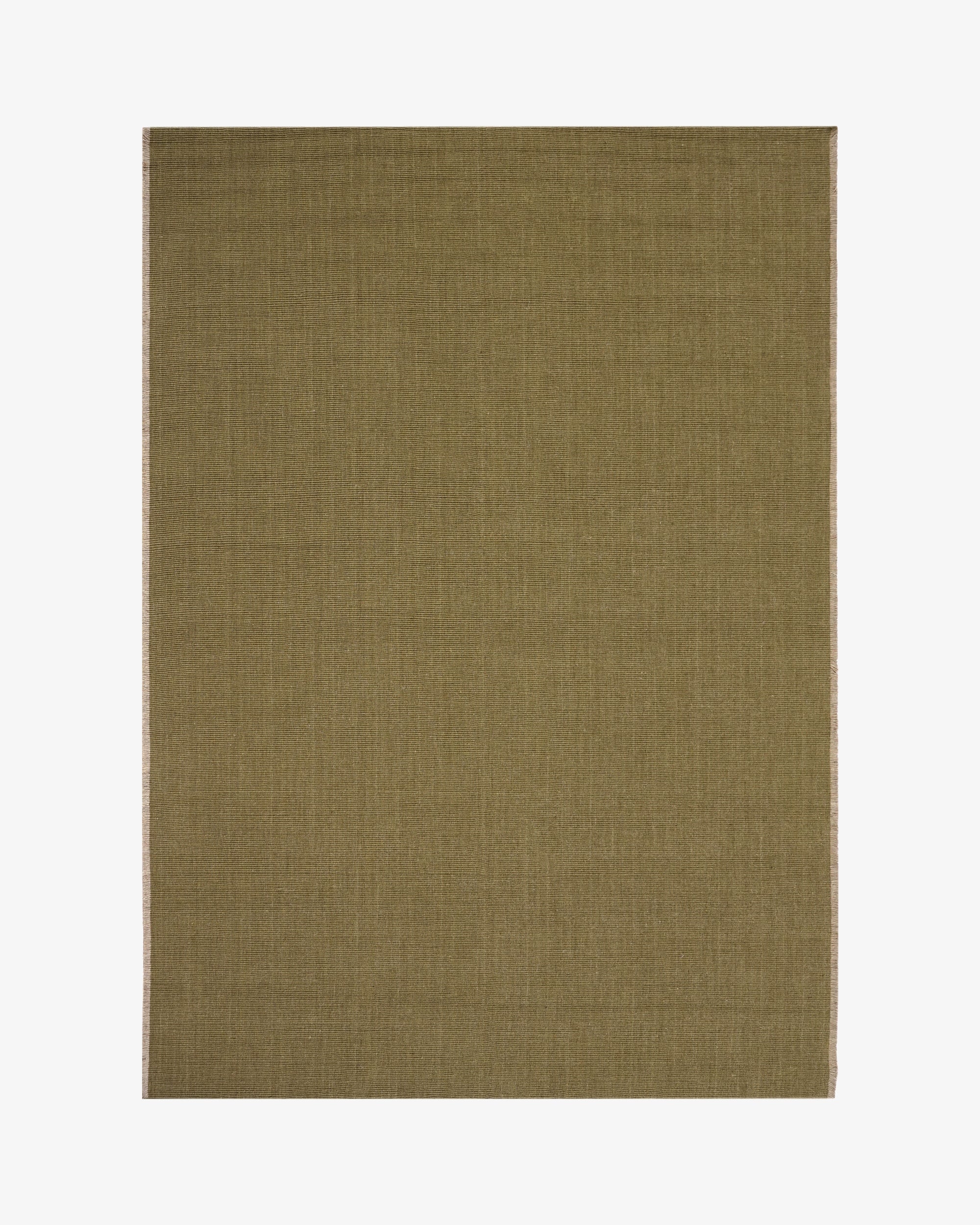
- Rugberry's Cabra Wool & Jute Rug in Olive is a 7 to 8 mm handloom weave of New Zealand wool and jute, with a regular price of ₹34,000 for 5x8 ft ex GST at the time of writing.
- Olive hides dust, dry mud and light footprints better than ivory, beige or pale grey, which makes it a sound choice for living rooms that open onto a garden or balcony.
- Olive reads best with brass-free hardware: black metal, cane, oiled wood and off white plaster keep the green calm rather than dated.
What makes olive different from other greens?
Olive is different because it carries yellow and grey inside the green, so it reads as an earth colour rather than a leaf colour. Sage leans grey and cool, emerald leans blue, and bottle green goes almost black; olive sits between khaki and moss.
That mix of undertones is why olive settles so easily into Indian rooms. Teak, sheesham, cane and terracotta all carry yellow and red, and olive shares the yellow, so nothing fights. A cool sage beside honey teak can look slightly washed out, while olive holds its own.
If you want a paler, cooler green for a bedroom or a north facing room, Rugberry's guide to sage green rugs covers those shades. This post stays with the deeper, warmer end of the range, where olive, moss and forest tones live.
Which Rugberry rugs come in olive?
Rugberry makes olive in two fibre families: wool and jute blends that are low and firm, and hand tufted New Zealand wool that is deeper and softer. Which one suits you depends on the room's traffic and on whether people sit on the floor.


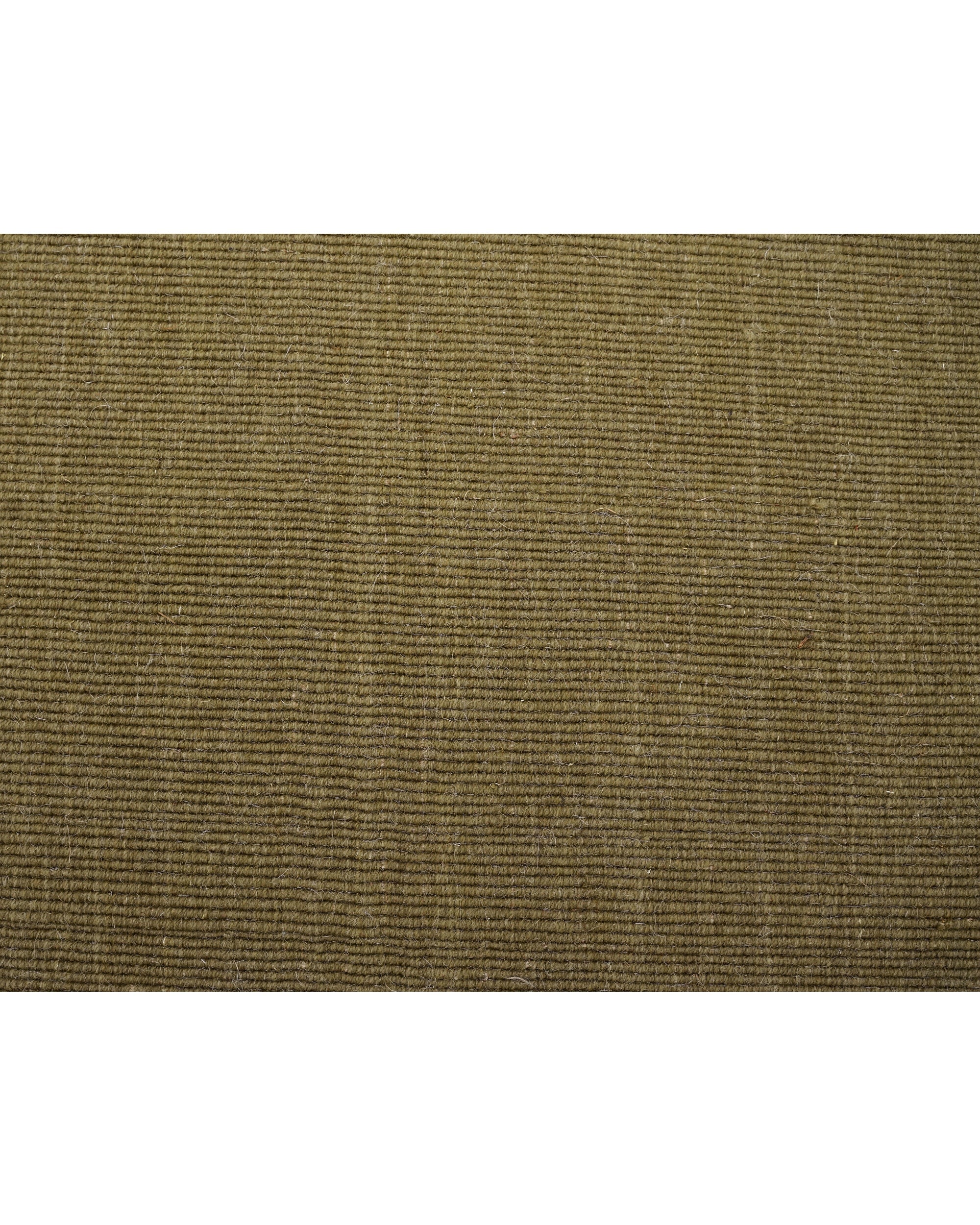
The Cabra Wool & Jute Rug in Olive is handloom woven in New Zealand wool and jute at 7 to 8 mm. The wool softens the jute, the surface is flecked rather than flat, and the low profile lets doors and dining chairs pass over it.
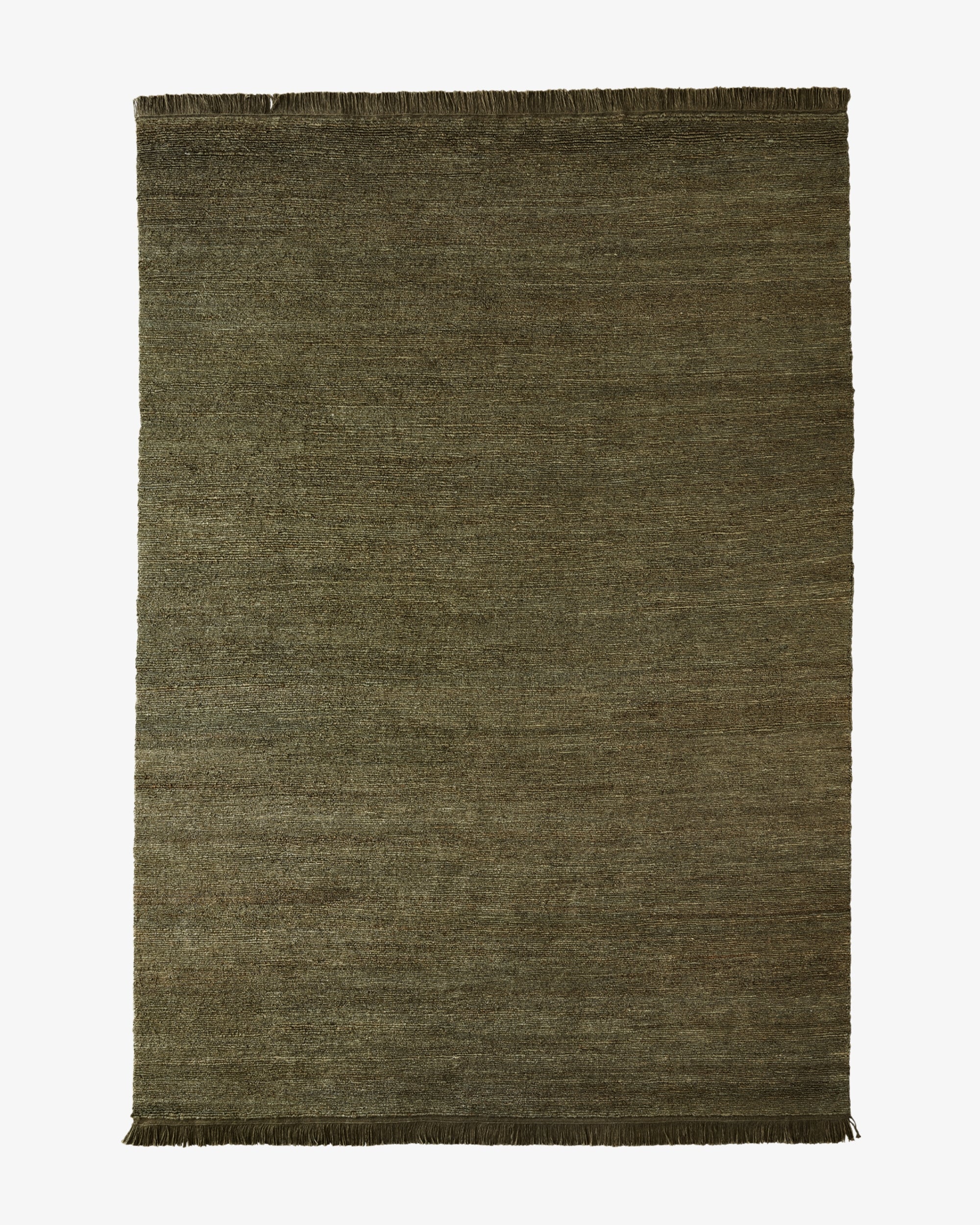
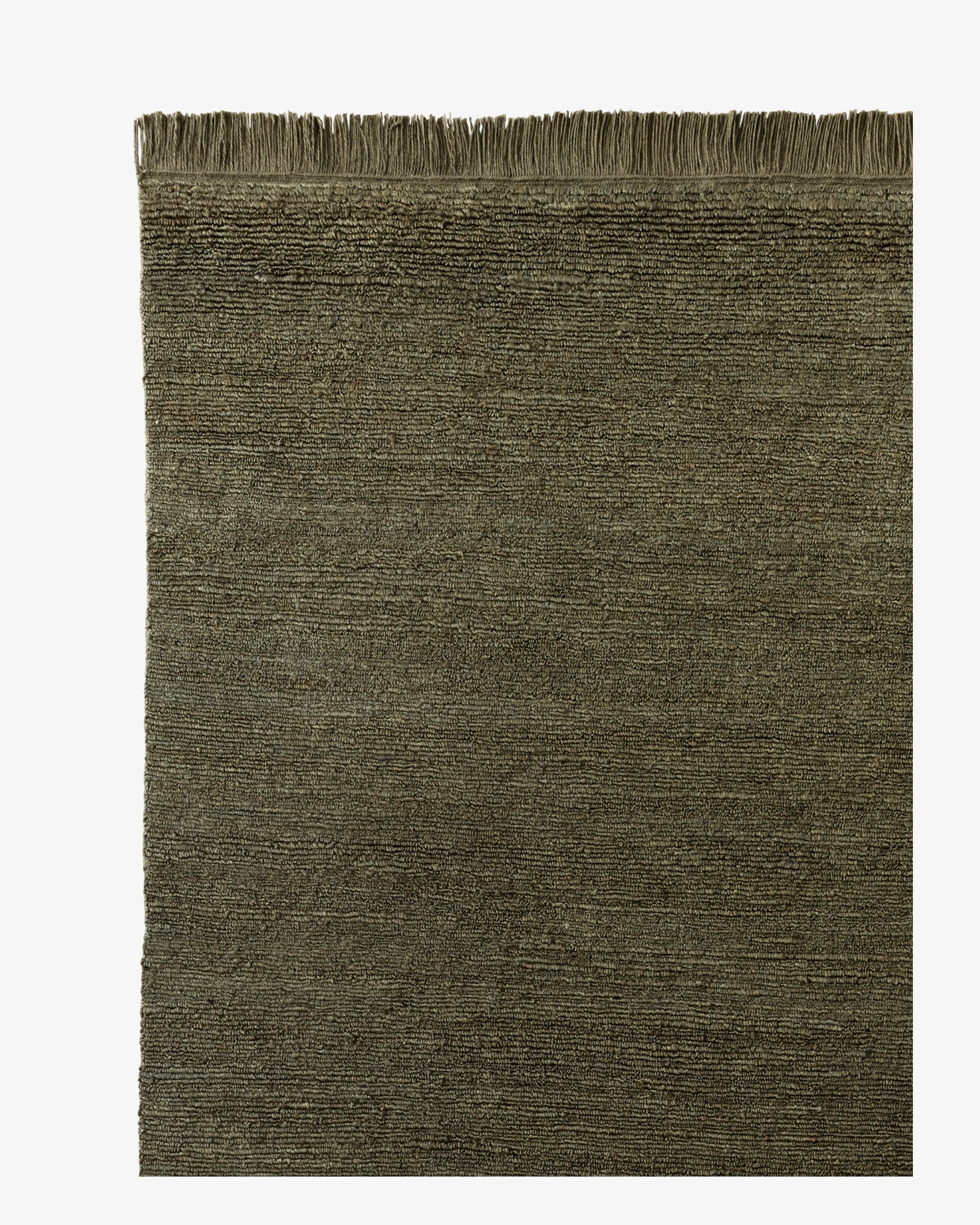
The Savannah Jute Rug in Olive is hand knotted in jute at 15 to 16 mm. It is firm and hard wearing, and like most jute it looks better as it ages, with the olive dye softening slightly at the tips.
For a softer foot, the Moss Wool Rug is hand tufted in New Zealand wool at 14 to 16 mm, a deep olive green carved in wave lines so the surface reads slightly overgrown. The Ombré Forest Rug, also hand tufted New Zealand wool at 14 to 16 mm, moves through greens and is deepest at one end.
What does an olive rug cost in India?
An olive rug from Rugberry starts at a regular price of ₹34,000 for a 5x8 ft Cabra and rises to ₹1,17,000 for a 9x12 ft Ombré Forest, all ex GST at the time of writing. The jute blends cost less per square foot than the hand tufted wool.


By size, the Cabra in Olive is listed at ₹45,900 for 6x9 ft, ₹68,000 for 8x10 ft and ₹91,800 for 9x12 ft. The Moss Wool Rug runs ₹47,000, ₹69,000 and ₹94,000 across the same three sizes, so wool costs only slightly more than the jute blend here.
The Savannah Jute Rug in Olive is ₹55,000 for 6x9 ft, ₹82,000 for 8x10 ft and ₹1,10,000 for 9x12 ft, reflecting its hand knotted construction. The Ombré Forest Rug is ₹59,000, ₹87,000 and ₹1,17,000 for those sizes.
These are regular list prices from the product pages, before GST, and a seasonal offer may show lower figures on the day you look. Moss is listed from 5x8 to 9x12 ft, and every other rug here runs to 12x15 ft; all of them can be made to measure.
For most Indian living rooms, an 8x10 ft is the size that lets the front legs of a three seater and two chairs rest on the rug. At that size the choice is roughly ₹68,000 for a low jute blend or ₹87,000 for a deep wool gradation.
What should an olive rug sit beside: walls, sofa, floor and wood?
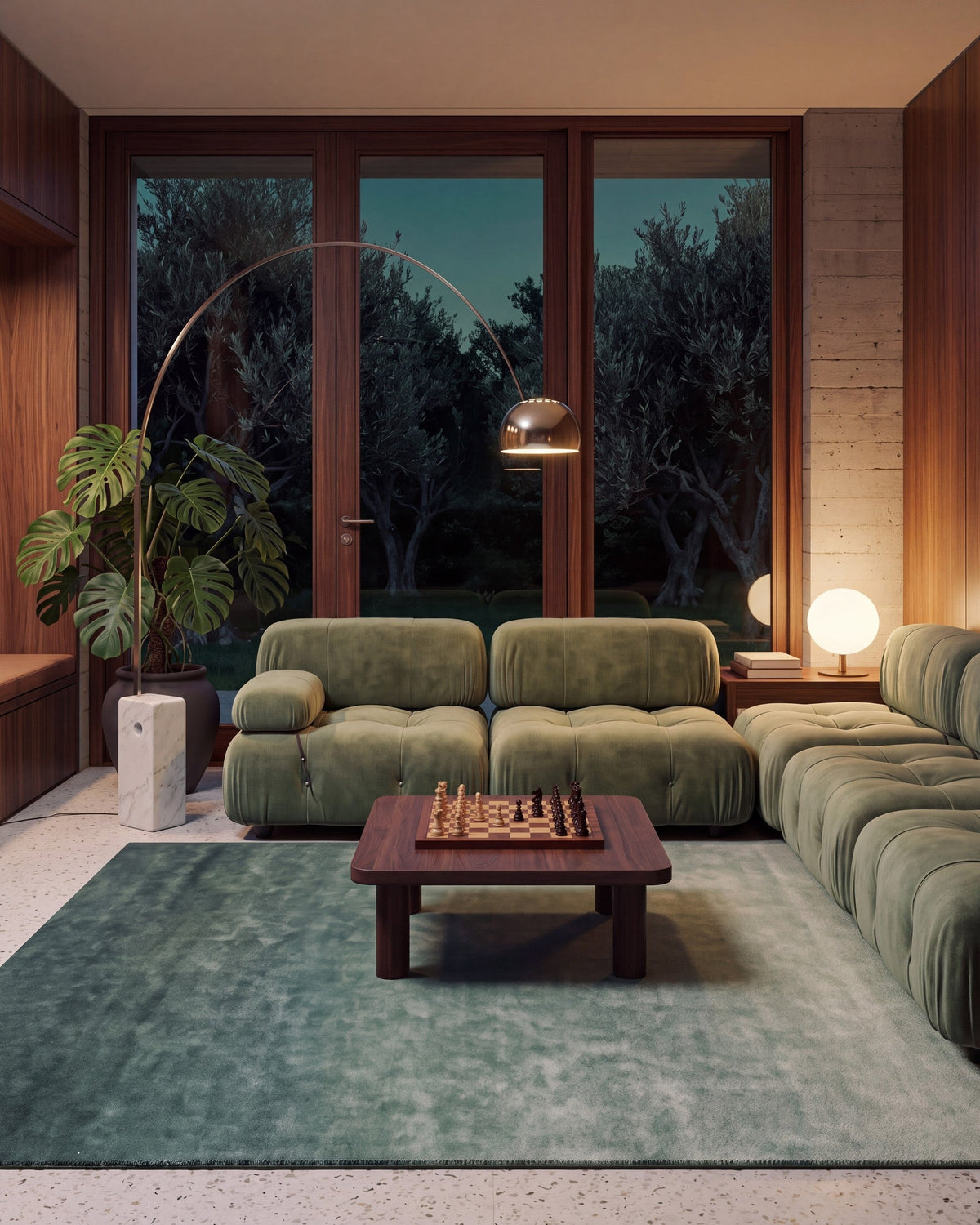
An olive rug sits best beside warm off whites, natural linen, pale stone and oiled wood, with black metal as the accent. The table below gives starting points for Indian homes; treat them as pairings to test with a swatch, not rules.

| Element | Works with olive | Use with care |
|---|---|---|
| Wall | Lime plaster in warm off white, chalky ivory paint, exposed brick | Bright white enamel, mint or pistachio paint |
| Sofa fabric | Natural linen, oatmeal cotton, rust or tan leather, charcoal boucle | Emerald velvet, teal, cool blue grey |
| Floor | Kota stone, white marble, pale vitrified tiles, red oxide | Green marble, glossy dark granite |
| Wood | Teak, sheesham, oiled oak, cane and rattan | Orange polished teak, heavy reddish varnish |
| Metal | Black powder coat, blackened steel, wrought iron | Polished brass in quantity |
The idea is to give olive one partner that is lighter and one that is darker. A lime plaster wall above and a teak leg beside it is usually enough; the rug does not need a matching cushion.
Avoid putting olive next to a second strong green of a different temperature, such as a mint sofa or a teal curtain. Two greens that disagree look accidental, while olive with neutrals looks chosen.
Why does olive suit brass-free interiors, cane and black metal?
Olive suits brass-free interiors because brass pushes it towards a 1970s look, while black metal, cane and raw wood keep it quiet and current. Brass and olive share so much yellow that together they can turn the whole room the colour of old gold.

Black metal does the opposite. A slim black floor lamp, a powder coated side table or a black window frame draws a dark line around the olive and makes it look deliberate. In an apartment with aluminium windows, black hardware on the furniture does the same job.
Olive needs a dark line and a pale wall. Black metal and lime plaster give it both.
Cane is olive's most natural companion in India. A cane lounge chair, a rattan headboard or a woven jharokha screen shares the fibre story of jute, and the honey tone of cane sits just above olive in warmth.
If the room already has brass, keep it small and keep it away from the rug. A brass lamp on a bookshelf is fine; a brass coffee table standing on olive is the pairing to skip. Rugberry's notes on Japandi living rooms in India show the same restraint with metal.
How does an olive rug wear in an Indian home?
An olive rug wears well in Indian homes because its mid tone hides dust, dry soil and faint footprints that show quickly on ivory or pale grey. It is not invisible to dirt, though: it shows lint, pale pet hair and dried white residue such as talc or rangoli powder.
Daily dust in Delhi, Jaipur or Ahmedabad lands as a pale grey film, and on olive that film reads as a slight softening of the colour rather than a stain. A weekly vacuum brings the green back. On the Cabra and Savannah jute weaves, vacuum along the rows so the flecks are not lifted.
Jute needs care in the monsoon. Both olive jute rugs should be kept dry, so blot spills at once with a dry cloth, never rub, and keep them off floors that are mopped wet. In Mumbai, Kochi or Kolkata, lift a corner once a week in July and August so air reaches the underside.
Sun is the other honest note. Olive dye will soften a little near a south or west window over years, as most colours do. Rotating the rug a half turn every six months keeps any change even, and a sheer curtain in the afternoon slows it further.
The wool rugs, Moss and Ombré Forest, take spills more calmly than jute because wool sheds water for a short while before absorbing it. Blot, then dab with cool water. For deep stains such as turmeric or oil, Rugberry recommends professional cleaning only.
Our broader guide to forgiving rug colours ranks olive among the easiest to live with.
Which olive rug suits which room?
The low Cabra in Olive suits busy rooms with doors and chairs, the Savannah in Olive suits living rooms where a firm natural texture is wanted, and the Moss or Ombré Forest suits rooms where people sit on the floor. Match the fibre to how the room is used, then confirm the shade with a swatch.


A dining room on Kota stone is a strong case for Cabra. At 7 to 8 mm the chairs slide back without catching, and the flecked olive hides crumbs between sweeps. A 9x12 ft Cabra covers an eight seater table with chairs pulled out.
A garden facing living room in Bengaluru or Pune suits the hand knotted Savannah, which carries the outdoors in without looking rustic. A den or TV room, where children lie on the floor, suits Moss. The Ombré Forest works where a room has a clear direction, with the deeper end placed towards the window or the seating.
For browsing, the green rugs collection gathers every Rugberry green, the jute collection shows the firmer weaves, and the Ombré collection shows the gradations. Rugberry's earlier guide to green rugs covers the whole family in brief.
Frequently asked questions
Is an olive rug a good choice for a home with children?
An olive rug is a good choice for a home with children because the mid green tone hides everyday dust and small marks. The hand tufted Moss Wool Rug at 14 to 16 mm is the softest olive option for floor play.
Does olive go with a grey sofa?
Olive goes with a grey sofa when the grey is warm, close to greige or stone. A cool blue grey sofa can make olive look muddy, so test a swatch beside the cushion fabric before deciding.
Can an olive jute rug be used in Mumbai during the monsoon?
An olive jute rug can be used in Mumbai during the monsoon if it is kept dry and lifted for air once a week. Avoid wet mopping beneath it, and choose the wool Moss or Ombré Forest for rooms that stay damp.
Is olive the same as khaki?
Olive and khaki are close but not the same. Khaki leans towards sand and brown, while olive keeps a clearer green, which is why an olive rug still reads as green beside teak furniture.
Can Rugberry make an olive rug in a custom size?
Rugberry can make each of its olive rugs to measure, in any size, and custom colours can be requested. This helps in Indian apartments where the living area is an odd shape, such as an L shaped hall or a room broken by a column.
Start with the fibre, then let the green follow. Material first.




Leave a comment
This site is protected by hCaptcha and the hCaptcha Privacy Policy and Terms of Service apply.