

What to Send Us: Drawings, CAD and References
For a custom rug, send Rugberry five things: a floor plan to scale, the rug outline in mm, the design artwork, physical colour references and photos of the room. With those in hand, the team can read the design as a rug rather than as a picture.
In short
- A custom rug brief to Rugberry should include a scaled floor plan, the rug outline in mm, design artwork, colour references and room photos.
- Design artwork for a rug works best as flat areas of colour, with one colour in the file standing for one yarn colour in the rug.
- Vector files such as PDF, SVG or AI keep lines sharp at any scale, while a raster file should be large enough to print at full rug size.
- Screen colours and paint codes are guides only, so final rug colours should be fixed against Rugberry swatches or numbered colour poms.
Rugs are not printed. Every line in a drawing becomes yarn placed by hand, so the files that work best are the ones that think like a rug.
What files should you send for a custom rug?
Send five files: a plan, an outline, the artwork, colour references and room photos. Each answers a question the maker would otherwise have to ask.
- Floor plan: PDF or DWG to scale, with furniture drawn in.
- Rug outline: the finished shape with every dimension in mm.
- Design artwork: the pattern itself, at a known scale.
- Colour references: swatches, poms or a named colourway.
- Room photos: daylight shots of the floor, walls and main fabrics.
Name files by project and room, for example "Andheri flat, living, rug outline". A clear name saves a round of emails when there are three rugs in one home.
How should the rug outline be drawn?
Draw the outline as the finished rug, in mm, with the length written first and every curve or cut corner dimensioned. If the rug is irregular, give a few reference points from a straight datum line.
Mark which edge faces the main seating or the door. Pile has a direction, and the rug is laid so the colour reads best from where people usually look at it.
For a shaped rug that follows a bay window or a curved sofa, send a template made on site as well as the CAD outline. Indian walls are rarely perfectly square, and the template catches it.
What makes design artwork work as a rug?
Artwork works as a rug when it is built from flat areas of colour, each standing for one yarn. Gradients, photo textures and fine shading must be translated into yarn, so it helps to decide how you want that done.


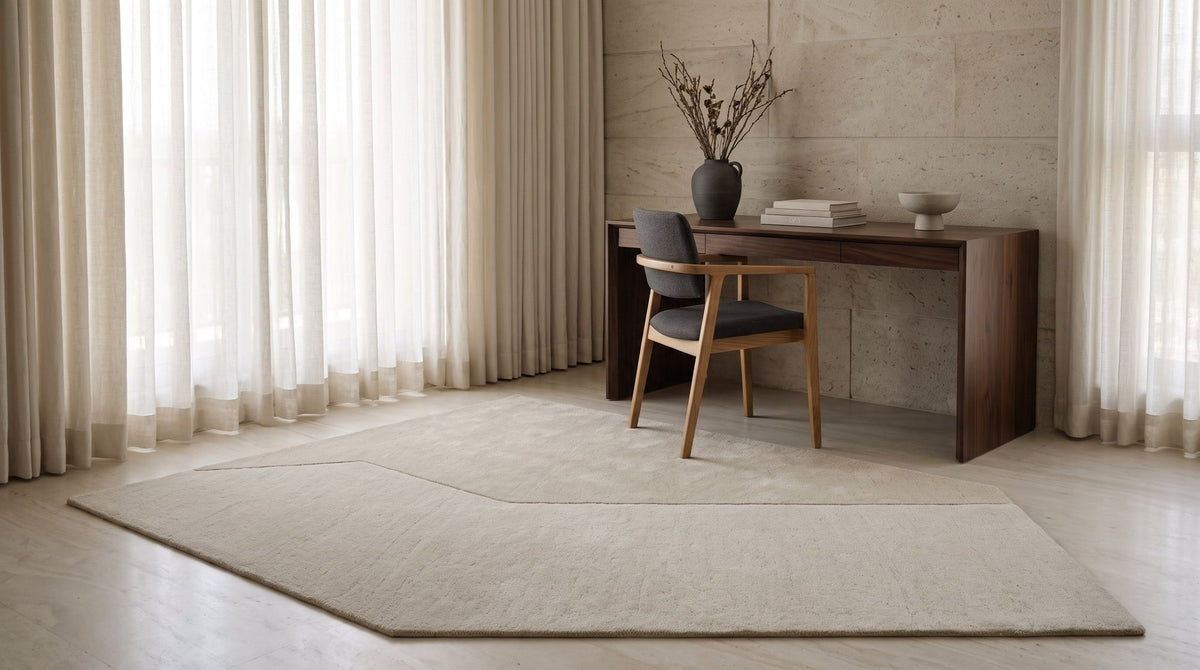
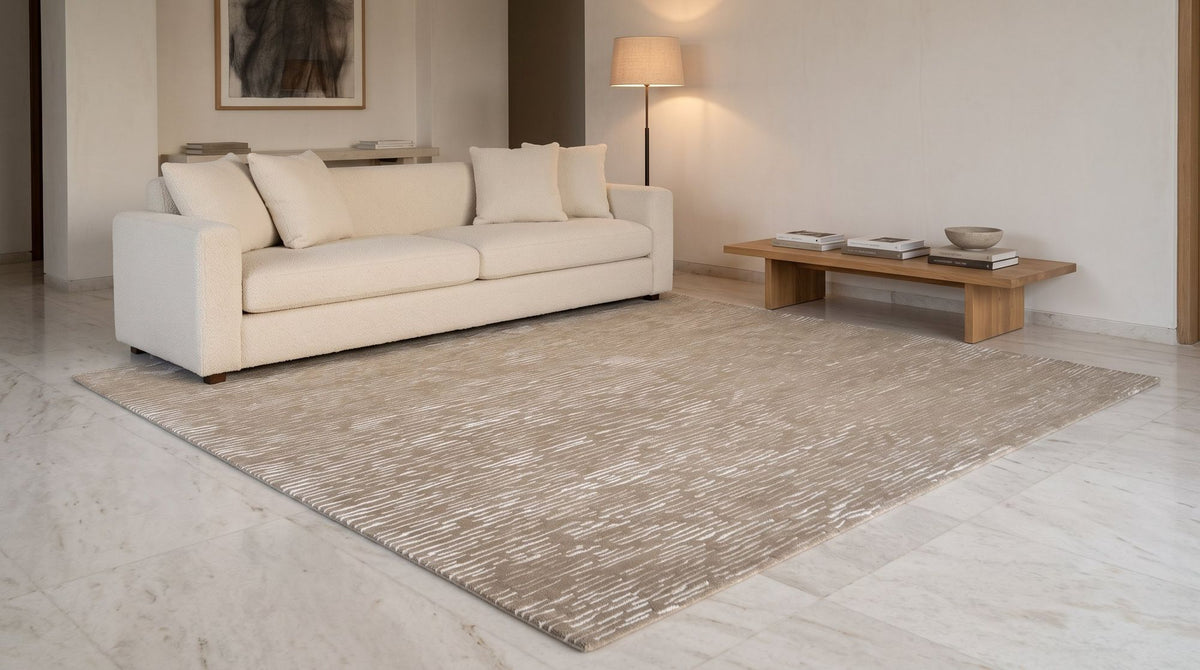
The Terraform Wool & Silk Rug shows the idea well. It is hand tufted in New Zealand wool and silk, contoured like ground seen from above, and every contour reads as a clean line of a second colour.
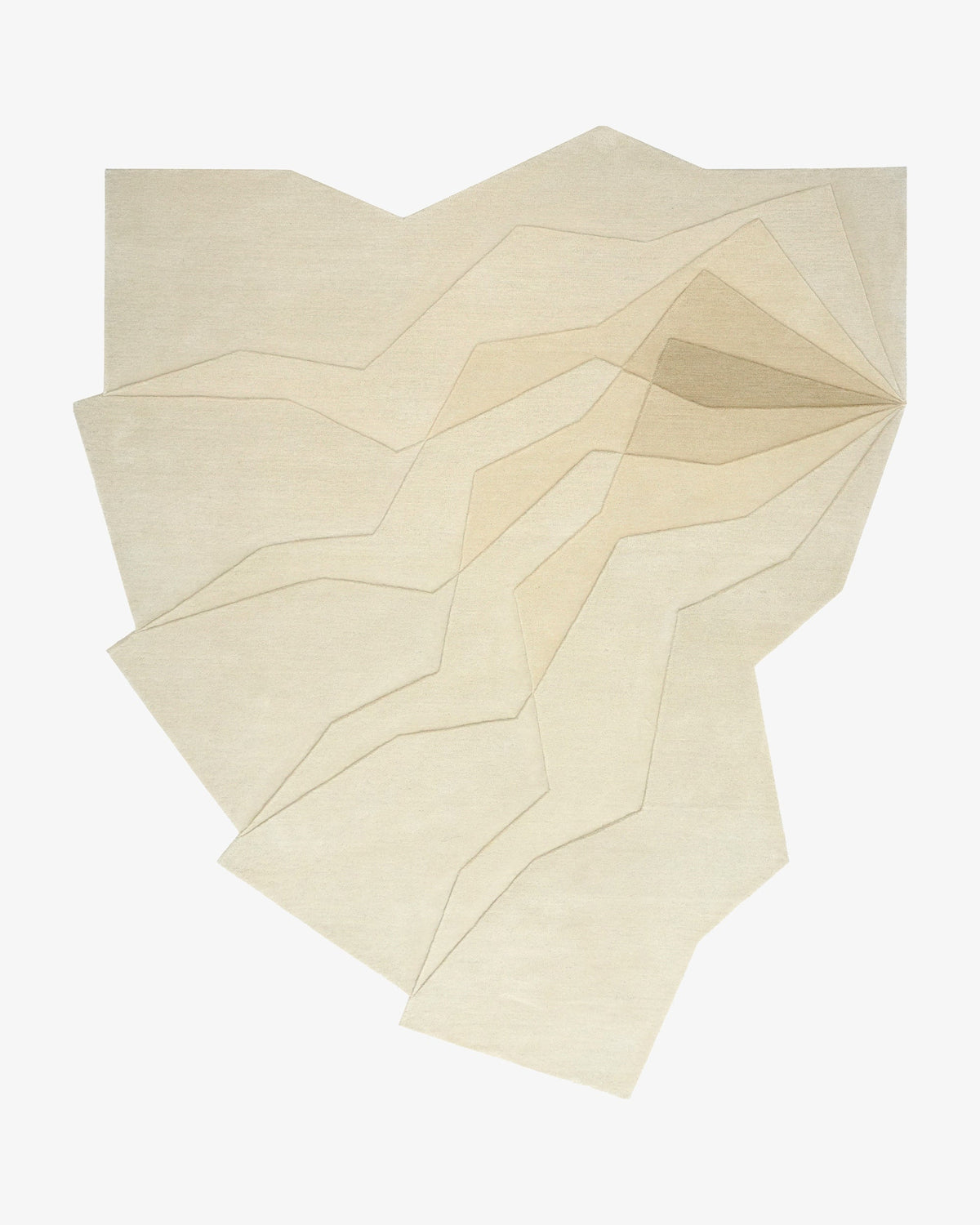
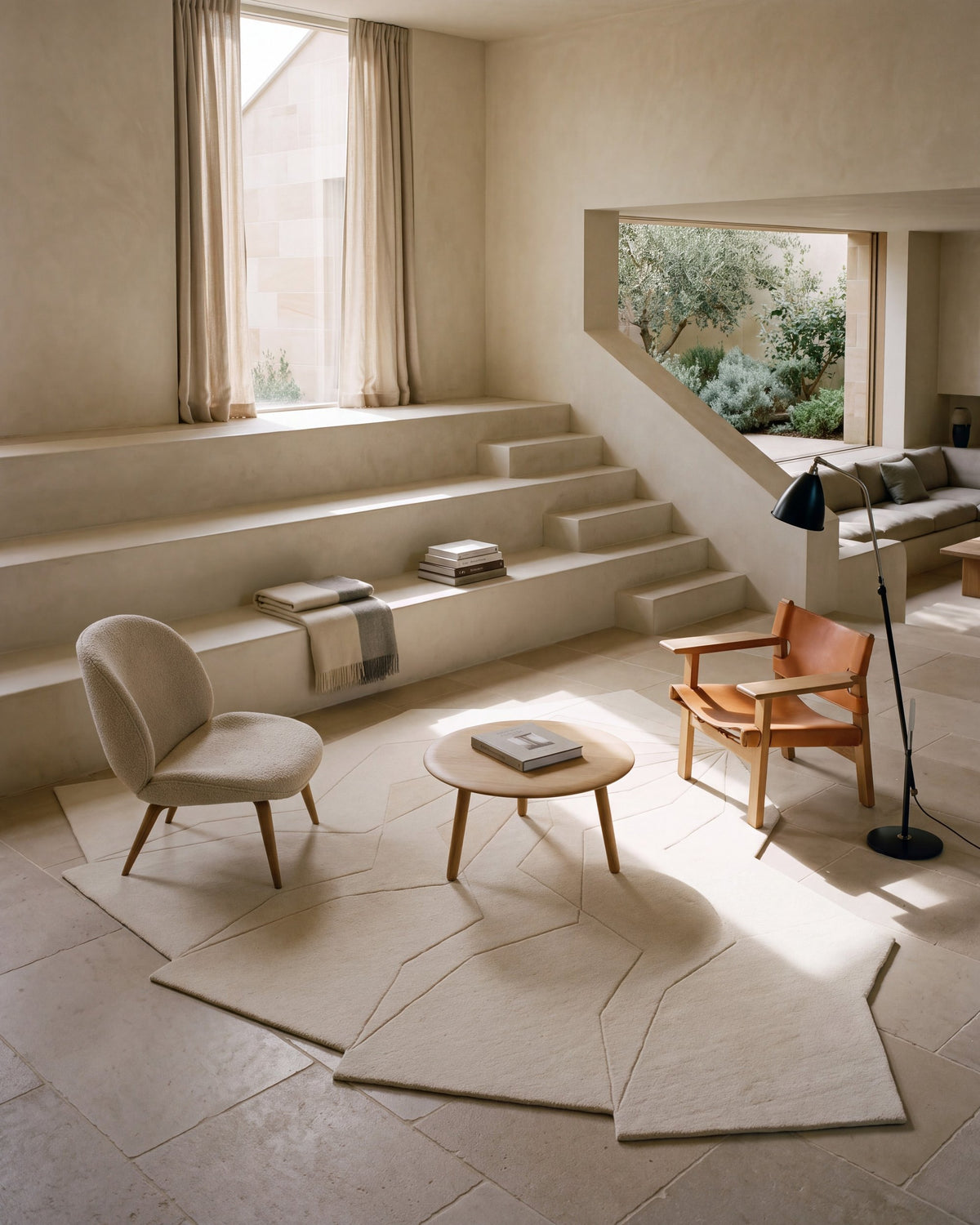
The Lucid Wool Rug uses a different trick: hand tufted planes folding toward a single point, each one a shade lighter than the last. A drawing for a design like this should number every plane, so each gets its own colour.
Which file formats are best?
Vector files, such as PDF, SVG or Adobe Illustrator, are best, because lines stay sharp at any scale. A raster image such as a JPG or PNG is usable if it is large enough to view at full rug size without blur.


- Vector: closed shapes, one fill per colour, no transparency effects.
- Raster: a reduced palette, so each colour is a clean block.
- Scale: state the scale, or include a dimension line inside the file.
Very fine lines may need to be thickened to be made by hand. Ask the team where your thinnest lines sit against what the chosen construction can hold.
Every line in a drawing becomes yarn placed by hand, so the best files think like a rug.
How do you send colour references?
Send colour as physical references wherever possible: a Rugberry swatch, a named colourway or numbered colour poms. Pantone or paint codes help describe intent, but yarn takes dye differently from paint, so they are guides, not targets.

Number each colour in the artwork and list the matching reference in a key beside it. The custom colour matching guide explains how close a match to a fabric or a paint can be.
Can you start from an existing Rugberry design?
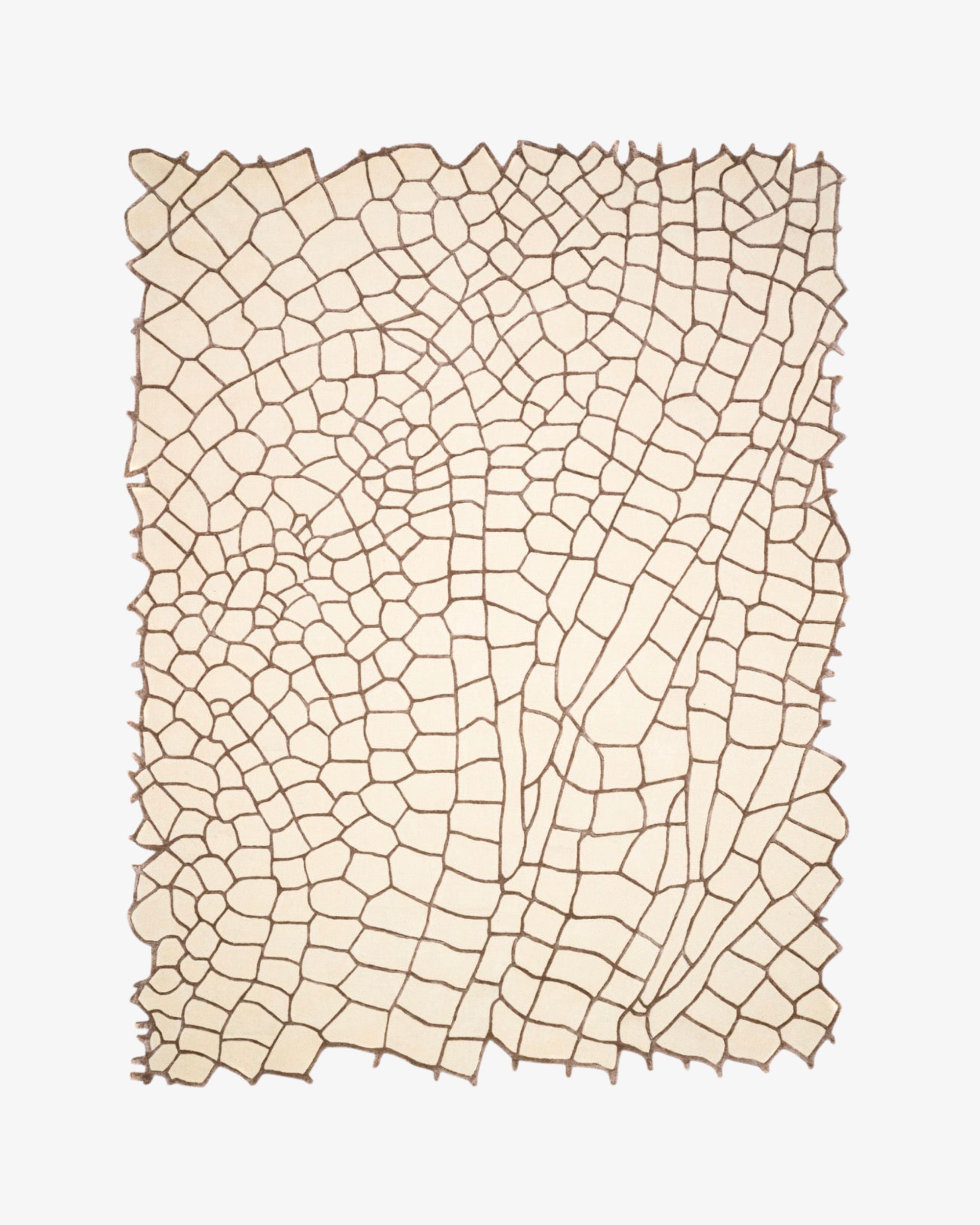
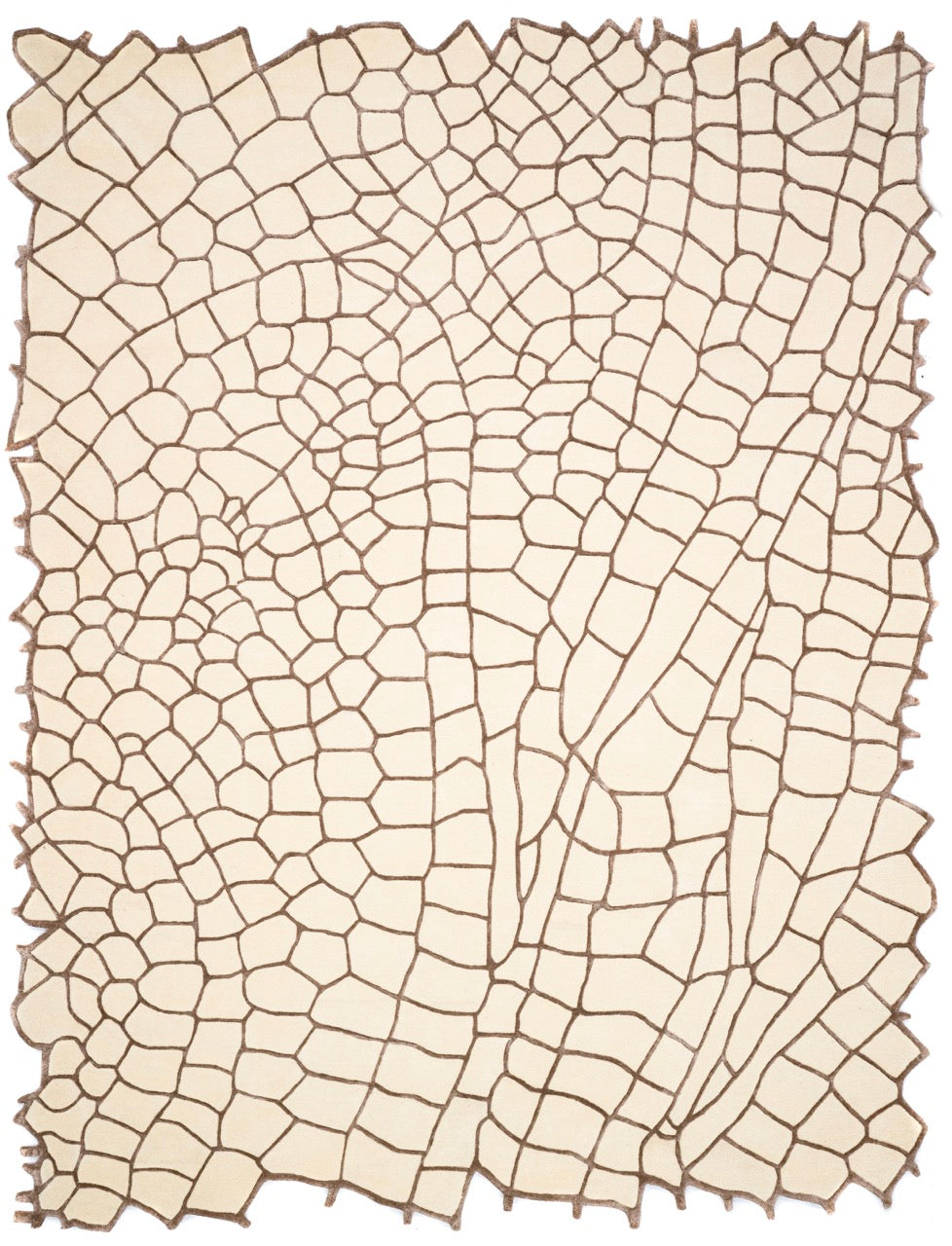
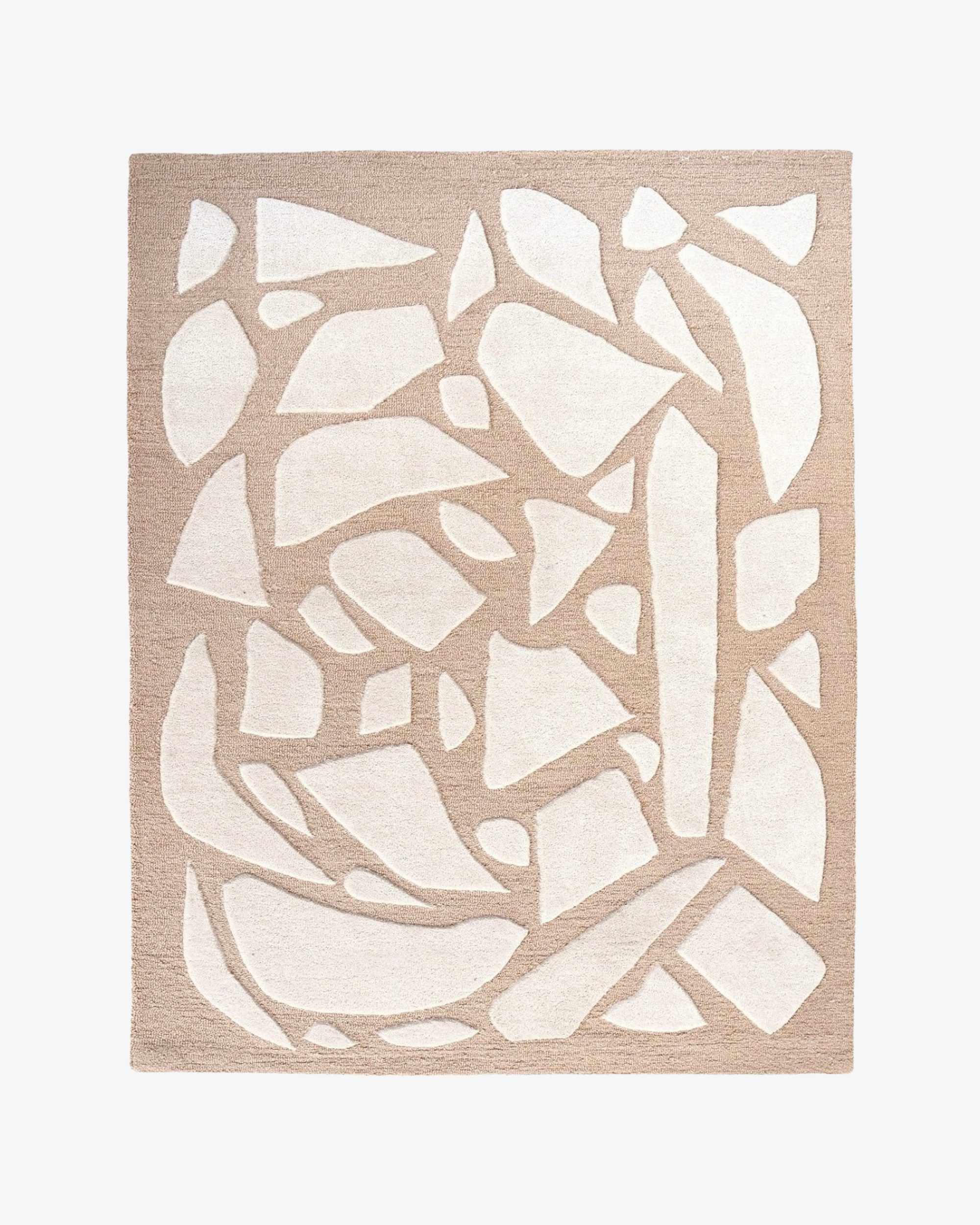
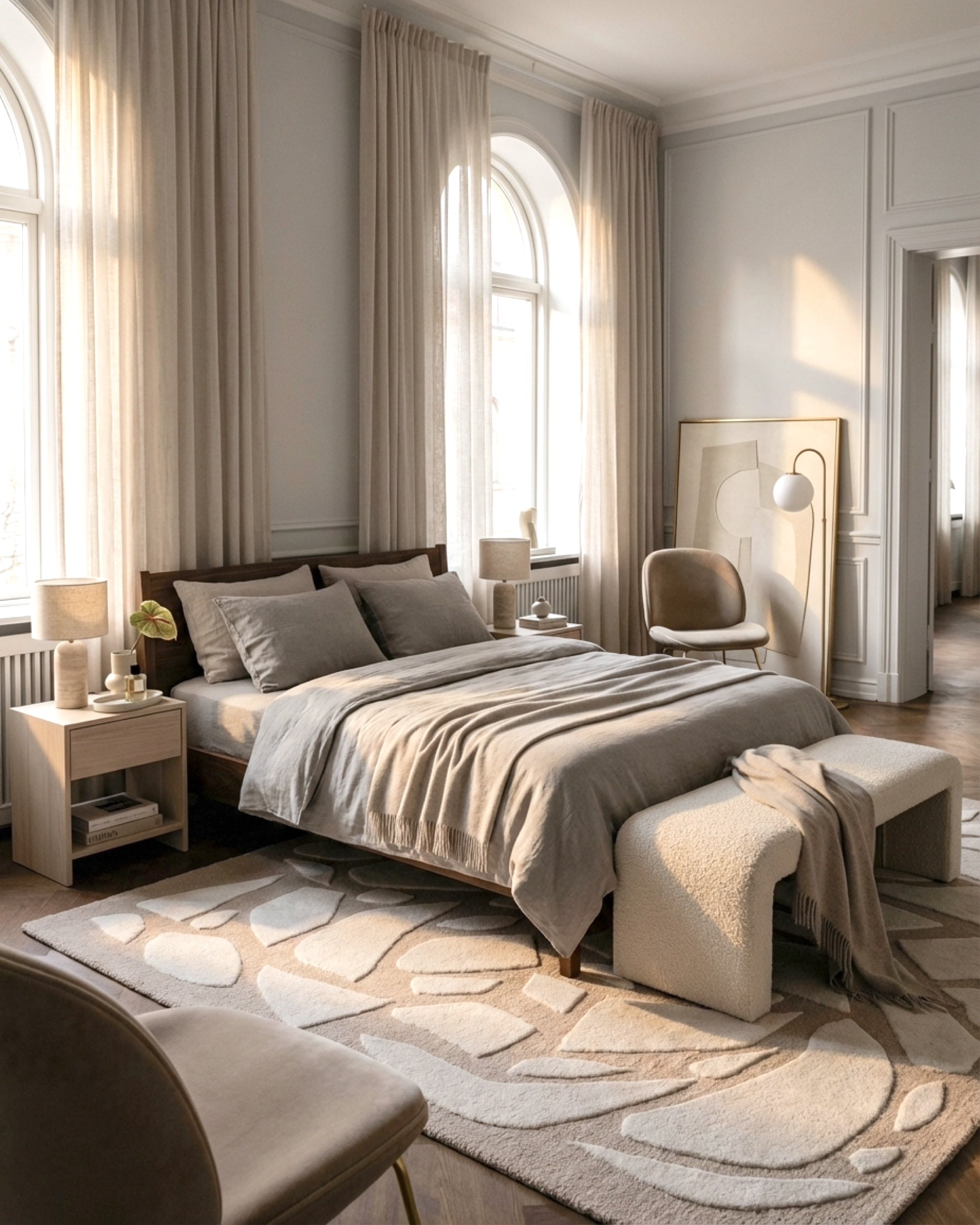
Yes, and it is often the quickest route: take a stock design and change its size or colours. The Bergamo Rug, hand tufted New Zealand wool drawn with a soft geometry, from about ₹40,000 in 5x8 ft, can be recoloured shape by shape.


For a new pattern of your own, send the artwork with a reference rug whose construction you like. A drawing plus "made like Bergamo" tells the team the pile, fibre and finish in four words.
Fees for developing a new design are a matter for the project discussion. Ask about them at the brief stage rather than assume they are included.
What room photos help most?
Photos of the empty floor in daylight, the wall colour and the main fabrics help most. Take them at the time of day the room is used, since morning light in a Chennai flat and evening light in a Delhi one change a colour more than any screen.

Include one wide shot from the main entrance. It shows the rug as guests will first see it, which is how the design scale should be judged.
Frequently asked questions
Can Rugberry work from a hand sketch?
A clear hand sketch with dimensions can start a conversation, but a scaled drawing is needed before making. Many designers send the sketch first, then a CAD outline once the shape is agreed.
Do I need to send a CAD file for a resized stock rug?
No. For a stock design in a new size, the rug outline in mm and the colour reference are enough, since the artwork already exists.
Are design fees waived for custom rugs?
Rugberry does not publish a fixed policy on design fees for new artwork. Ask during the brief, as it depends on how far the design moves from an existing rug.
Draw it in flat colour, dimension it in mm, and let the yarn do the rest. Material first.

Leave a comment
This site is protected by hCaptcha and the hCaptcha Privacy Policy and Terms of Service apply.