

Rug Samples and Swatches for Client Presentations
A rug swatch is the one object on a material board that shows fibre, colour and hand at the same time. Rugberry sells swatches for most of its rugs, so a designer can put the real yarn in front of a client before anything is ordered.
In short
- Rugberry sells swatches for most rugs, listed in the Swatches collection, including the Cashmere Blend Rug in Natural and the Cabella Wool & Silk Rug in Latte.
- A rug swatch shows what a photo cannot: the depth of the pile, the sheen of silk and how the colour shifts in daylight.
- For a client meeting, three swatches in contrasting fibres, such as cashmere blend, wool and silk, and jute, make the choice easier than six similar ones.
- Label every swatch on a board with the rug name, colourway, fibre and construction so the choice can be ordered without retyping.
Swatches are listed and priced individually in the Rugberry Swatches collection. Check the product page for the current terms rather than assuming a sample is free.
Why use rug swatches in client presentations?
Use swatches because clients decide on rugs by touch, and a swatch is the only way to give them touch before the rug exists. A photograph flattens pile, hides sheen and shifts colour with every screen.
In Indian homes the light is strong and warm for much of the year. A swatch placed on the actual floor, marble, wood or kota stone, shows how the rug will read in that room at 11 in the morning and at 6 in the evening.
A swatch also ends the debate about softness. A client who has pressed a Cashmere Blend swatch and a jute swatch in the same minute rarely needs the difference explained.
Which swatches should go on a material board?
Choose two to four swatches that differ clearly in fibre or construction, not six that differ only in shade. Contrast helps a client see what each option gives up.


- Soft option: the Cashmere Blend Rug in Natural, handloom wool and cashmere, fine, dense and very soft, from about ₹54,000 in 5x8 ft.
- Sheen option: the Cabella Wool & Silk Rug in Latte, hand tufted wool and silk with a low sheen, from about ₹41,000.
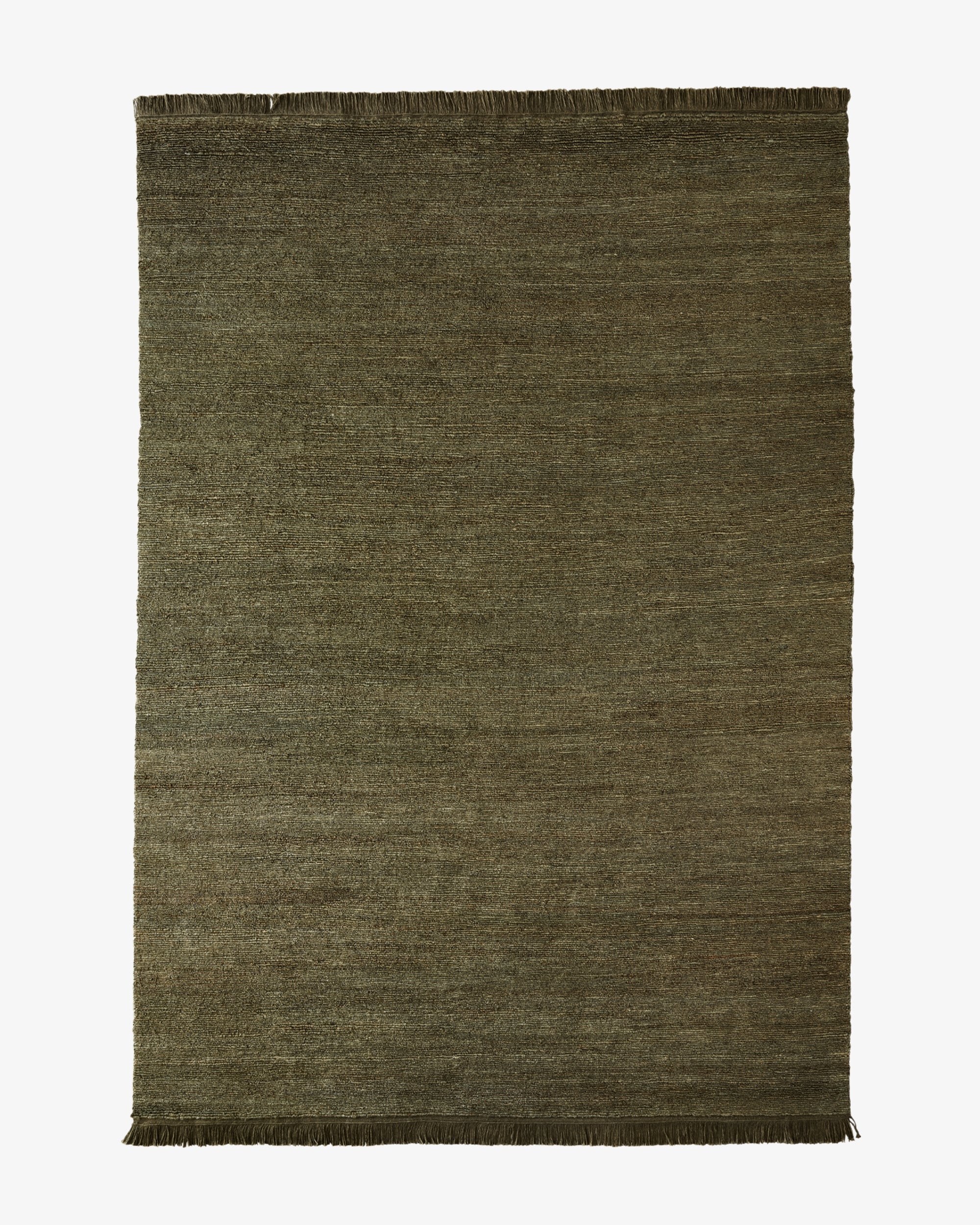
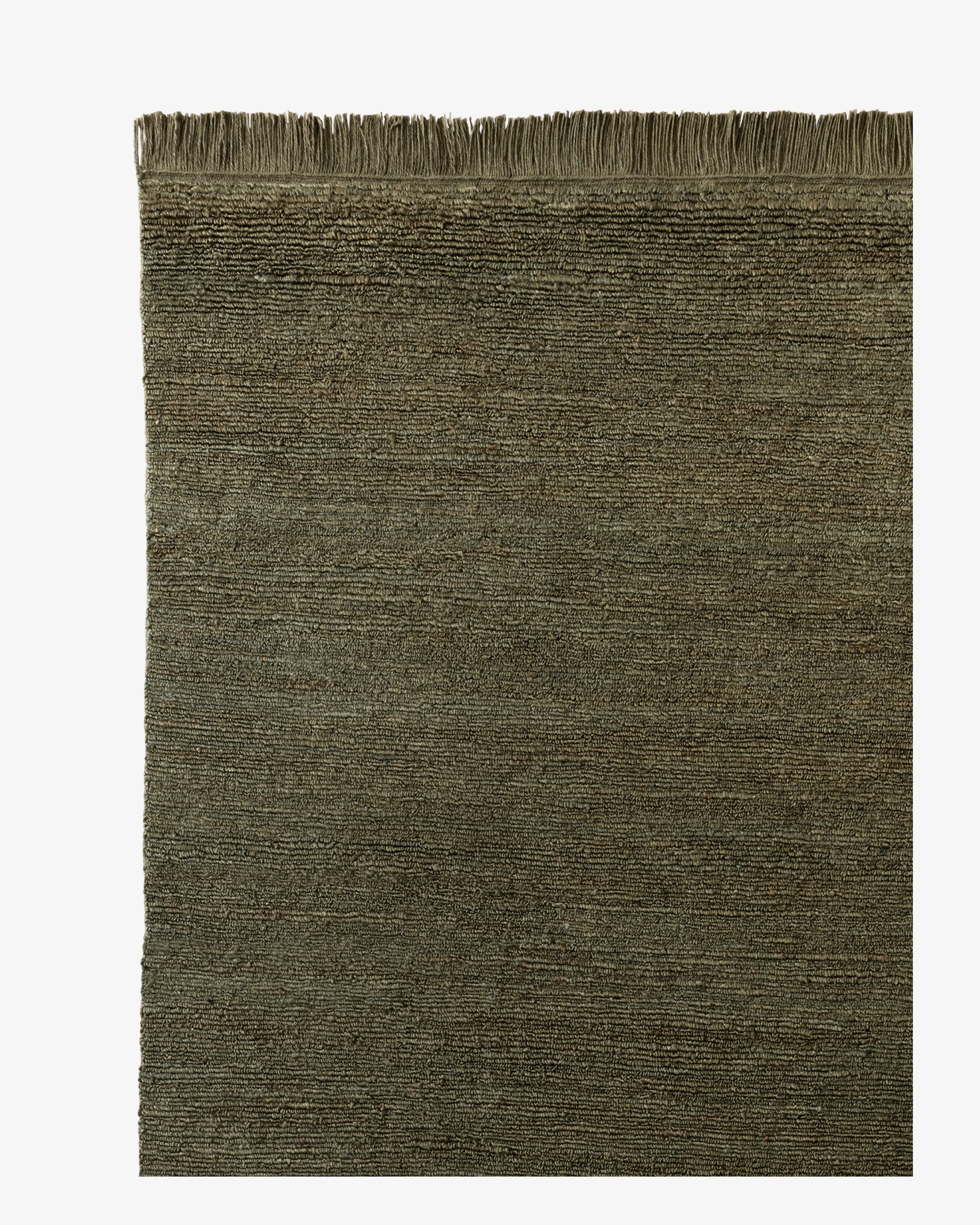
- Texture option: the Savannah Jute Rug in Olive, hand knotted jute, firm and textured, from about ₹41,000.
For a bedroom where feet are bare, lead with the cashmere blend over jute, because the hand is the whole point of that room. For an entrance or a dining area, lead with jute or a low wool.
How should swatches be labelled?
Label each swatch with four facts: rug name, colourway, fibre and construction. Write them on the back of the board, not on the face, so the client sees material first and reads the label after.


Add the starting price for the size you expect to use, before GST, on a separate sheet. A price beside the swatch pulls attention away from the material and towards a number that will change with size anyway.
Keep a photo of every board with its labels. When the client says "the second one from the left" three weeks later, you need to know exactly which swatch they meant.
Contrast helps a client see what each option gives up. Two clear choices beat six similar shades.
How do you show a swatch in the right light?
Show a swatch in the room it is meant for, on the actual floor, in daylight, before you show it under studio lights. Indian afternoon sun warms beige and grey, while LED downlights can make ivory look green.

Turn the swatch through 180 degrees as you show it. Wool and silk rugs have a pile direction, and the Cabella sheen in particular looks lighter from one side and deeper from the other, which is worth seeing in natural light.
Lay the swatch against the sofa fabric and the curtain, not only the floor. A rug is the largest soft surface in most rooms, so its colour has to sit with both.
What can a swatch not tell you?
A swatch cannot show scale, pattern repeat or how a colour reads across 108 sq ft. A small square of a patterned rug shows one fragment of the design, and a solid colour often looks a shade darker on a full rug.


Pair the swatch with a photo of the full rug and, for patterned designs, a drawing to scale. For custom colour, a swatch shows the yarn, but colour poms are better for building a palette band by band.
How should swatches be stored between projects?
Store swatches flat, out of direct sun, in a dry drawer with the label attached. Monsoon damp marks jute and can bring out a smell in wool, so a sealed box with a silica sachet helps in Mumbai or Kochi.

Replace a swatch that has faded or been handled heavily. An old swatch shown next to a new rug can make a correct dye lot look wrong.
Frequently asked questions
Are Rugberry swatches free?
Swatches are listed with their own price in the Rugberry Swatches collection. Check the product page for current terms before you order a set for a presentation.
Does a swatch match the finished rug exactly?
A swatch is a close guide to fibre, colour and hand, but every dye lot varies slightly, and a full rug often reads a shade deeper than a small square. For a strict match, confirm the dye lot when ordering.
How many swatches should a designer show a client?
Two to four is usually enough, chosen to contrast in fibre or construction. More than that tends to slow the decision rather than help it.
Let the client hold the yarn before they choose the rug. Material first.




Leave a comment
This site is protected by hCaptcha and the hCaptcha Privacy Policy and Terms of Service apply.