



A Calm Rug for a Maximalist Room
In a maximalist room, the best rug is usually a calm one: a plain or tonal rug with real texture, in a warm mid tone pulled from the room's wood, walls or textiles. It gives the eye a place to rest between colour, pattern and art, and makes the room feel collected rather than crowded.
In short
- Maximalism is about layers, and every layered room needs a base layer. On the floor, that is a quiet, textured rug.
- Pick the rug colour from something already in the room: the timber, the darkest wall colour or the background of a printed fabric.
- Texture keeps a plain rug from looking flat beside rich pattern; a close handloom weave or a deep pile both work.
- A pattern rug can work in a maximalist room, but only when the walls or the upholstery are the calmer layer.
What kind of rug suits a maximalist room?
A maximalist room is best served by a textured rug in a single warm tone or a quiet two tone. It acts as the ground that every colour, print and object stands on, so the room reads as a deliberate collection rather than clutter.
Maximalist interiors in India often draw on many sources at once: a hand block printed sofa, ikat cushions, a jewel coloured wall, brass and wood objects collected over years, a wall of paintings and photographs. Each piece is interesting. Together, they need something underneath that is not competing for attention.
Think of how a museum hangs a busy collection. The walls are plain, the floor is calm, and the objects carry the story.
The same logic works at home. The rug is the plain wall of the floor.
This is not the same as choosing a neutral rug out of caution. A good rug for a maximalist room has character of its own, in its fibre and texture, and holds its place among strong neighbours. Our guide to solid colour rugs explains why plain is rarely boring when the material is good.
How do you choose the rug colour in a room full of colour?
Choose the rug colour from something already in the room: the timber of the furniture, the background colour of the main printed fabric, or a deeper version of the wall. A rug that repeats an existing colour ties the room together; a new colour adds one more voice.


Warm mid tones such as tan, sand, wheat and caramel are the most useful, because they sit naturally with wood and with most jewel colours. A tan rug under a teal sofa and a mustard chair makes both look richer, while a grey rug in the same room can make them look loud.
| If the room is full of | Rug tone to try | Why it works | Rugberry example |
|---|---|---|---|
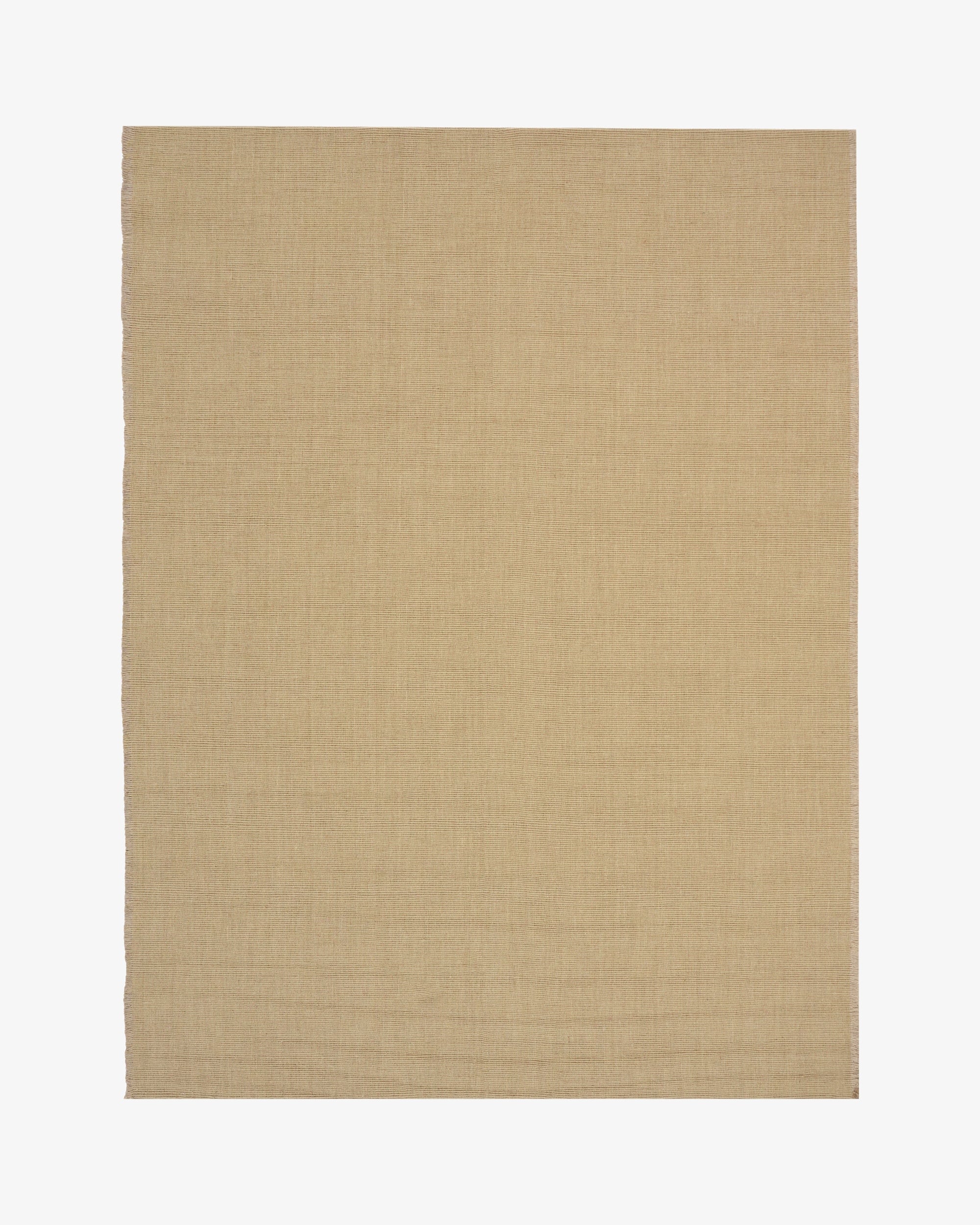
| Jewel walls (teal, emerald, ink) | Warm tan or caramel | Warmth balances deep cool walls | Grain Wool Rug, Tan |
| Block prints and florals | Sand or wheat, plain | Rests the eye between prints | Plush Wool Rug, Wheat |
| Dark wood and antiques | Pale sand with texture | Lifts the floor so furniture stands out | Cabra Wool & Jute Rug, Sand |
| A gallery wall of art | Sandstone or flax | Keeps attention at eye level | Grain Wool Rug, Sandstone |
| Calm walls, bold upholstery | A patterned rug can work | The walls are now the quiet layer | See the section on pattern below |
Hold a swatch against the room at the time of day the room is most used. Our guide to rug and curtain colour covers how two large soft surfaces should relate.
Why does texture matter more than colour here?
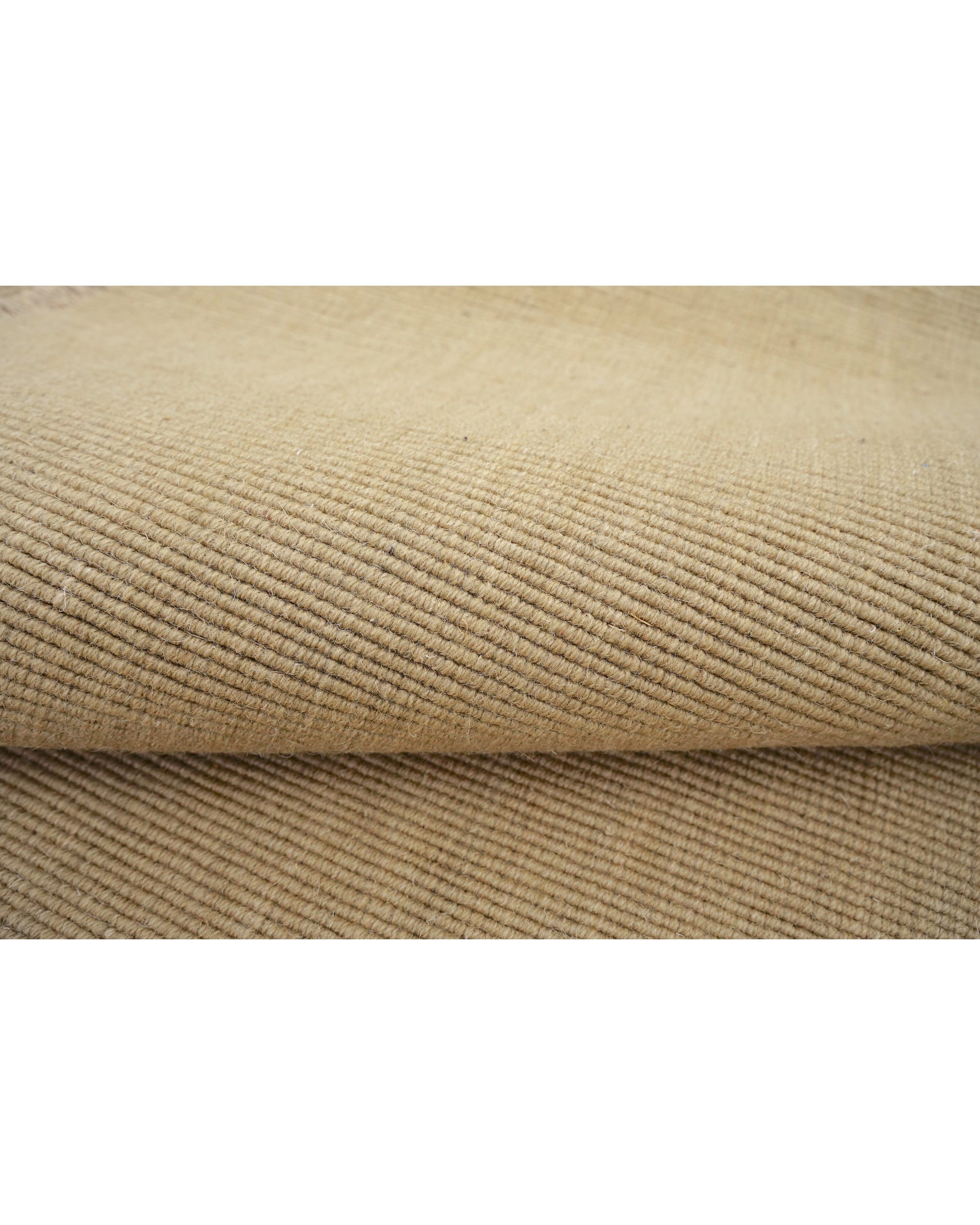
Texture lets a plain rug hold its own beside rich pattern. A flat, featureless rug can look like a gap in a maximalist room, while a rug with a visible weave or a deep pile adds a layer of interest that does not clash with anything.


The Grain Wool Rug in Tan is handloom woven in New Zealand wool with a low, closely worked surface at 12 to 14 mm, the weave visible underfoot. That surface catches light softly and gives a single colour depth. Its regular price is ₹37,000 for 5x8 ft, ₹74,000 for 8x10 ft and ₹1,02,000 for 9x12 ft, ex GST at the time of writing.
The Plush Wool Rug in Wheat takes the opposite route: a deep, quiet pile at 18 to 20 mm, handloom woven in New Zealand wool. It brings softness to a room full of hard edges such as carved wood, brass and framed art. Its regular price is ₹40,000 for 5x8 ft, ₹79,000 for 8x10 ft and ₹1,06,000 for 9x12 ft, ex GST at the time of writing.
Can a patterned rug ever work in a maximalist room?
Yes, a patterned rug works in a maximalist room when another large surface is calm. If the walls are plain and the sofa is a solid colour, a pattern on the floor becomes the room's main print. If the walls and upholstery are already patterned, the rug should be the quiet layer.
Count the large surfaces: walls, sofa, curtains and rug. A room can carry two strong patterns comfortably and three with care.
Beyond that, the eye cannot settle. When the rug is patterned, keep its colours inside the room's palette and make its scale different from the other prints: a large, loose pattern on the floor against small block prints on cushions, or the reverse.
Rugberry's guides to a rug with a patterned sofa and patterned versus plain rugs go deeper into mixing scales.
Every layered room needs a ground. In a maximalist room, let the rug be the quiet layer that holds the rest.
How big should the rug be in a busy room?
In a maximalist room, a larger rug usually looks calmer than a smaller one. A rug that sits under the front legs of every seat gathers the furniture into one group, while a small rug floating in the middle adds one more object to a room that already has many.
For most Indian living rooms with a three seater sofa and two chairs, that means 8x10 ft or 9x12 ft. In a long room with two seating areas, two rugs of the same colour and texture, each sized to its group, keep the calm without one huge rug. The Rugberry living room rug size guide has a table for common layouts.
Leave a border of floor visible around the rug, 30 to 45 cm from the walls in most rooms. In a maximalist scheme that border of wood or stone is another quiet frame, and it helps the eye read where the room's layers begin and end.
Which fibres suit a lived in maximalist home?
Wool and wool blends suit a lived in maximalist home best, because collected rooms are usually used rooms: guests, gatherings, children and pets. Wool forgives spills, hides daily wear and lasts for years, while jute blends add a natural, earthy texture.


The Cabra Wool & Jute Rug in Sand is handloom woven in New Zealand wool and jute at 7 to 8 mm. Its firm, natural surface sits well with antique wood, cane and terracotta, and it lifts a room with dark furniture. Its regular price is ₹34,000 for 5x8 ft and ₹68,000 for 8x10 ft, ex GST at the time of writing.
Keep jute blends away from rooms that are mopped often or that open onto a monsoon balcony. In those rooms, a pure wool weave such as Grain is easier to live with.
What mistakes make a maximalist room feel cluttered?
The most common mistakes are a rug that adds a new colour, a rug that is too small, a pattern rug in a room where every other surface is already patterned, and a thin, flat rug that looks lost among rich textures.
- A new colour: a lilac rug in a room of teal, rust and mustard adds noise. Repeat a colour instead.
- Too small: a 5x8 ft rug under a large seating group reads as a mat.
- Pattern on pattern on pattern: choose which layer is the quiet one.
- Too thin: a flat, low rug can disappear among velvet, brocade and carved wood.
- Too cool: pale grey under warm colours often looks cold and unrelated.
For a room where one bold rug is the whole point, our guide to statement rugs takes the opposite approach.
How do you bring an Indian maximalist room together with the rug?
In an Indian maximalist room, the rug works best when it echoes a material already present, such as the warm brown of teak or sheesham, the sand of a lime plaster wall, or the faded madder of an inherited textile. That repetition makes the room look collected over time rather than bought at once.


Many maximalist homes in India carry inherited pieces: a carved almirah, a jhoola, framed photographs of grandparents, brass lamps from a family home. These are the room's story. A rug that competes with them for attention takes away from that story; a rug in a quiet, related tone makes every piece look more deliberate.
Start by choosing the one or two objects the room is really about, then pick a rug tone that flatters them. A tan rug flatters dark teak; a sand rug flatters brass; a wheat rug sits well with faded reds and indigo.
Frequently asked questions
Should a maximalist room have a patterned rug?
Only if the walls or the sofa are calm. When several large surfaces already carry pattern, a textured plain rug works better as the quiet layer that holds the room together.
What colour rug goes with jewel tone walls?
Warm mid tones such as tan, caramel and sand sit well with teal, emerald and ink walls. They add warmth and let the wall colour look richer rather than heavier.
Is a neutral rug boring in a colourful room?
Not if it has texture. A close handloom weave or a deep wool pile gives a single colour depth, so the rug has its own character without competing with the room.
How do I mix a rug with block print fabrics?
Let the block prints carry the pattern and choose a plain rug in a colour taken from the print's background. If you want a patterned rug, choose one with a much larger scale than the prints.
Can two rugs work in one maximalist living room?
Yes, in a long room with two seating areas. Use the same colour and texture for both, each sized to its group, so they read as one calm base across the room.
A full room needs a calm floor. Explore Rugberry textures and solids and living room rugs, each named by fibre first. Material first.




Leave a comment
This site is protected by hCaptcha and the hCaptcha Privacy Policy and Terms of Service apply.