


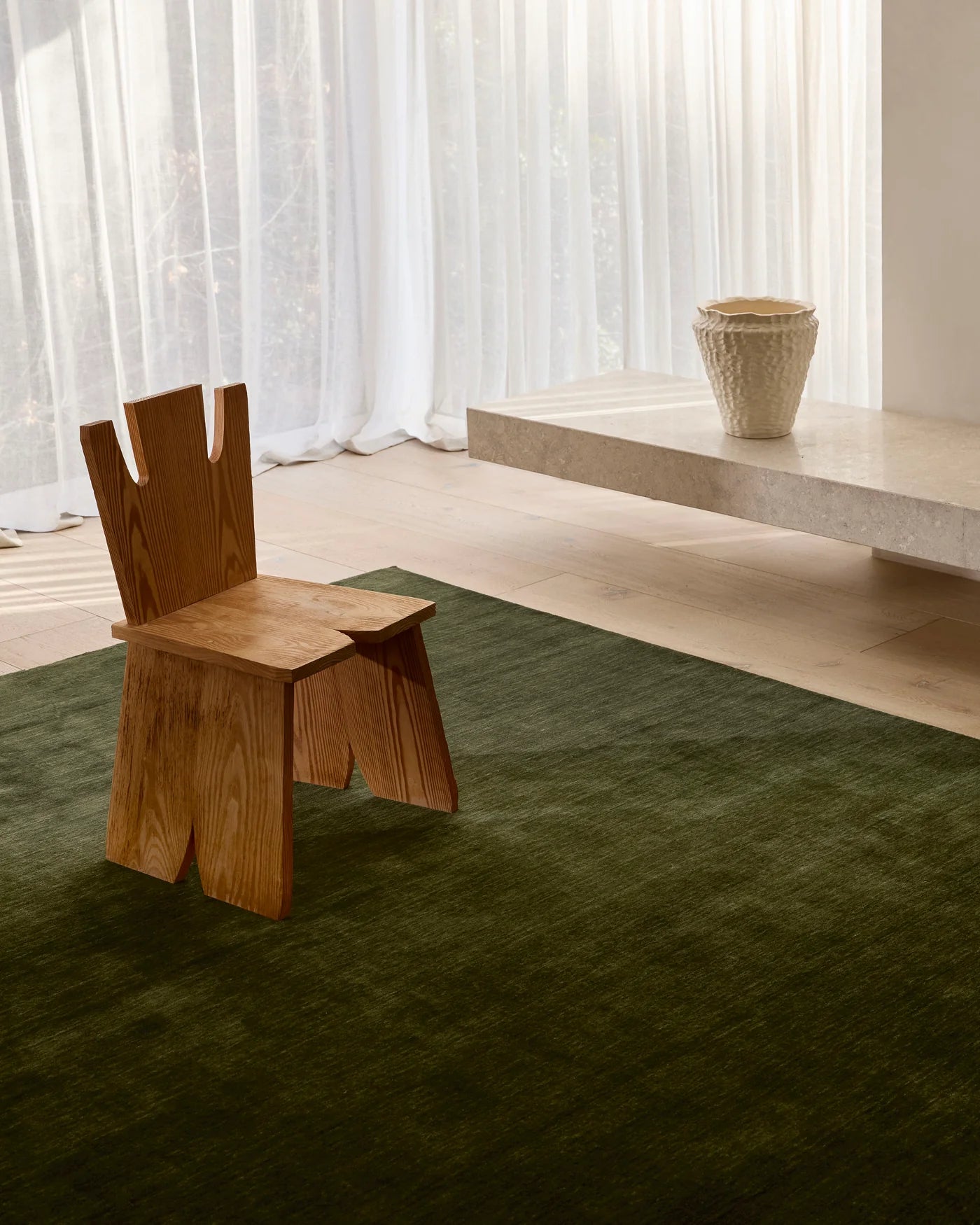
Lustre in Rugs: Why Some Fibres Glow
Lustre is the amount of light a fibre reflects back to your eye, and it is set mostly by the shape and surface of each strand. Silk glows because its fibre is smooth and long, while wool stays softer and more matte because its surface is covered in tiny scales.
In short
- Lustre in a rug is the light a fibre reflects, and it comes from how smooth and regular each strand is, not from a coating.
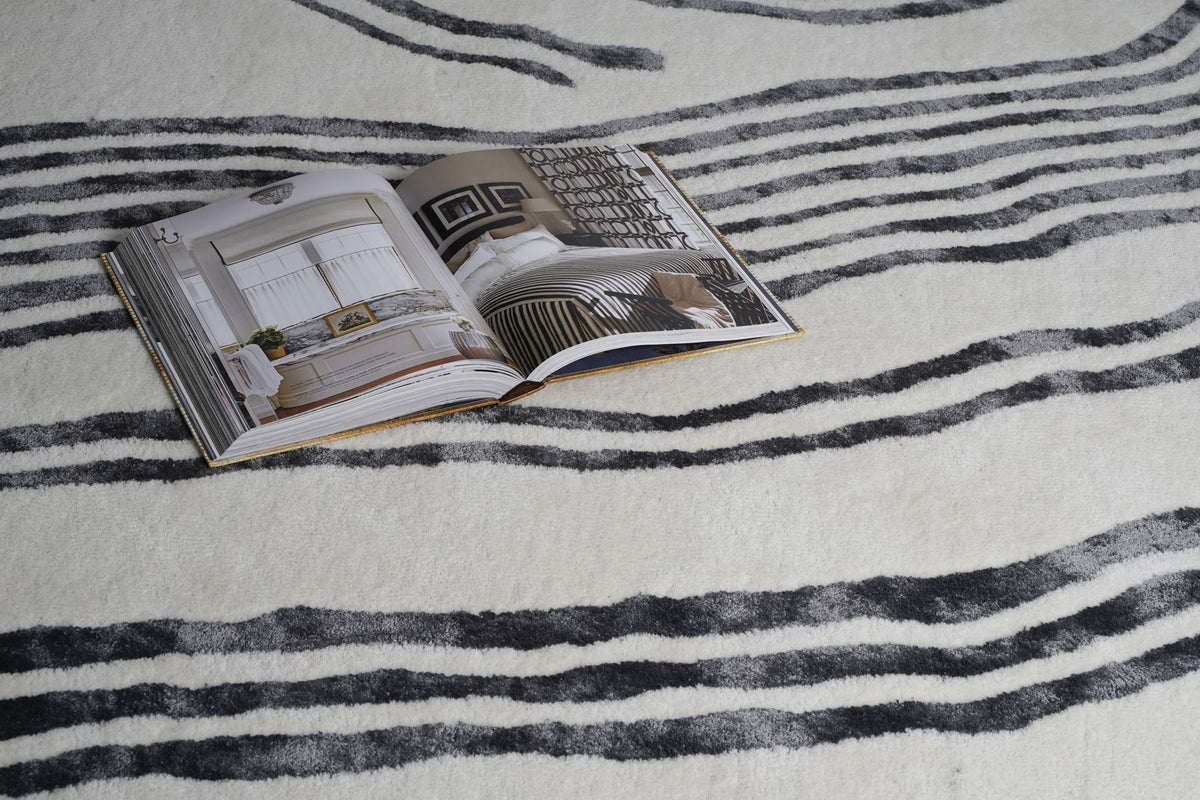
- Silk has the highest lustre of the fibres Rugberry uses, wool the lowest, and wool and silk blends sit between, with the silk showing as bright strokes in a matte ground.
- Lustre is a look, not a quality grade: a matte New Zealand wool rug is not a lesser rug than a glowing silk one.
- The same lustrous rug looks cool and silvery in north daylight and warm and golden under 2700K evening lamps.
What is lustre in a rug?
Lustre is the soft shine a rug gives off when light strikes its fibres and bounces back in one direction instead of scattering.


A strand that is smooth, straight and even along its length acts like a tiny mirror. A strand that is crimped, scaly or fuzzy breaks the light into many directions, so it reads as matte. Our glossary entry on lustre gives the short definition.
Lustre is close to sheen but not the same. Sheen is the visible effect across a whole surface, and it depends on pile direction and how you stand. Lustre is the property of the fibre that makes sheen possible.
Why do some fibres glow more than others?
Fibres glow when their surface is smooth and their cross section is regular, and silk has both.


Silk
A silk filament is long and almost free of surface texture, with a cross section that works a little like a prism. Light travels along it and comes back bright, which is why a silk pile can look wet from one side of the room.
Wool
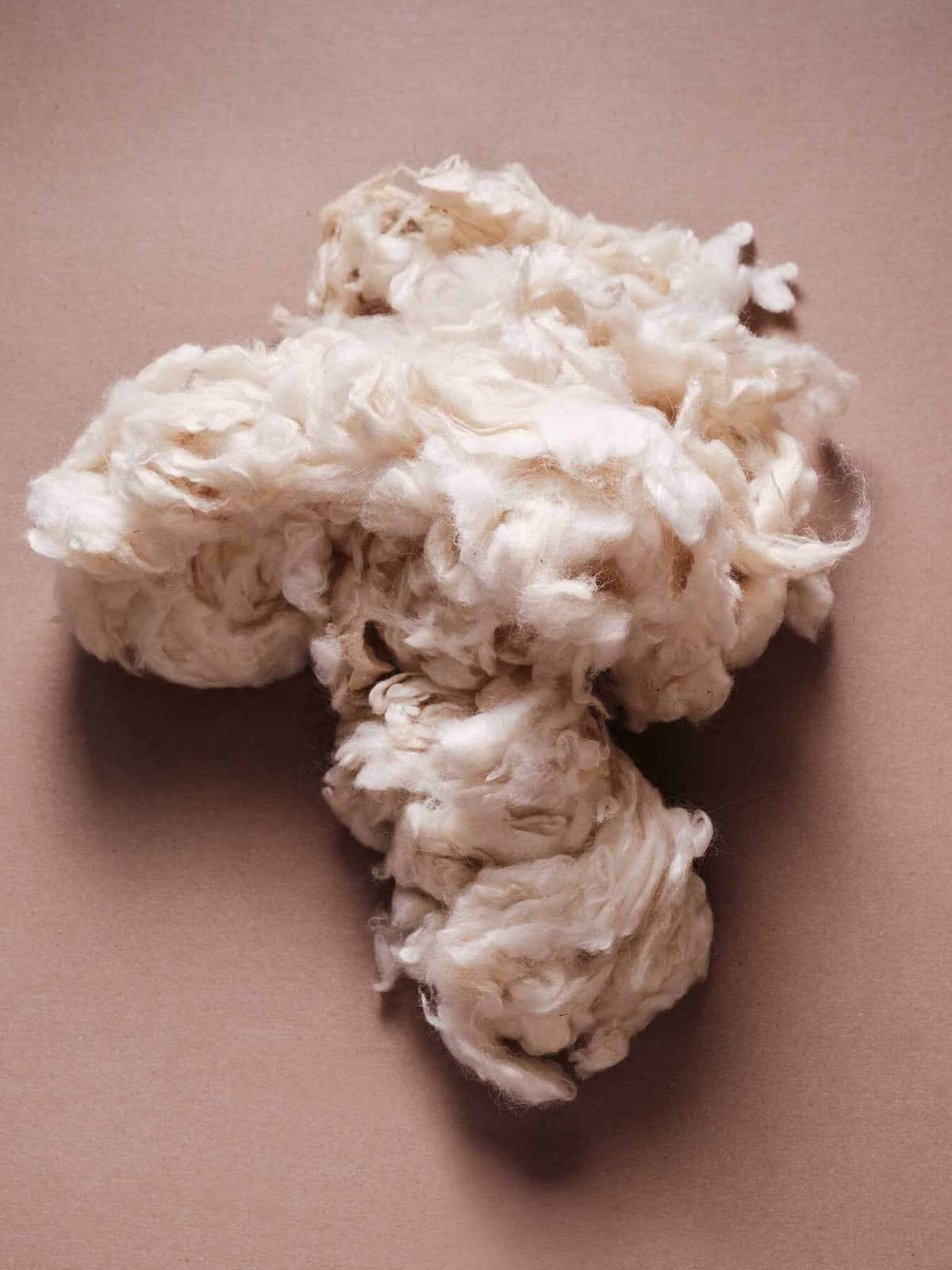
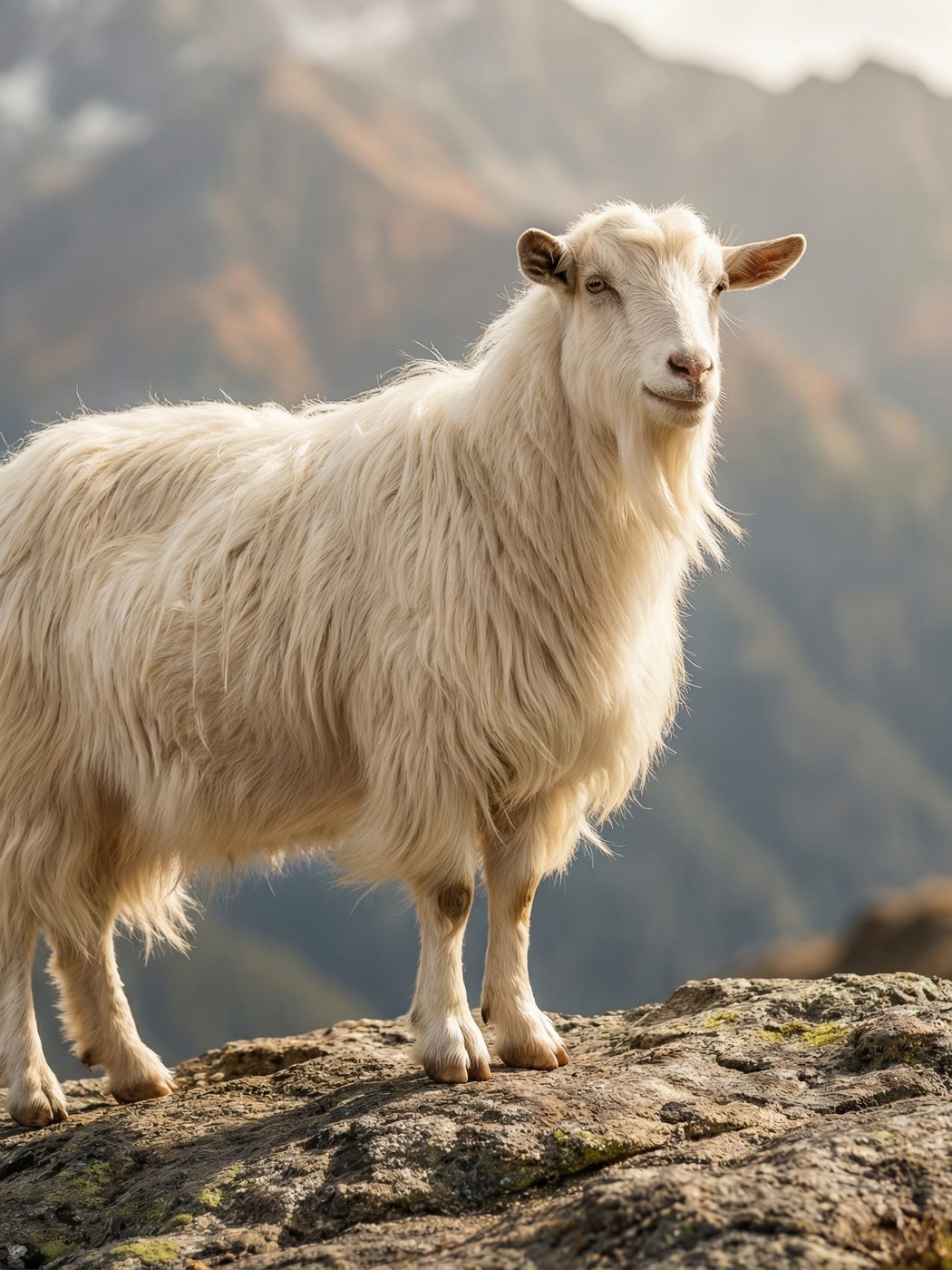
Wool has overlapping scales along each fibre and a natural crimp, the wave that gives wool its spring. Both scatter light. New Zealand wool is often chosen for rugs partly because it has a clean, bright colour, yet it still reads as soft and matte next to silk.
Jute and other plant fibres
Jute has a modest, dry glint when new, closer to straw than to silk. It is a plant fibre with a harder surface, and the glint softens as the rug is walked on.
How do wool, silk and blends compare for lustre?
At Rugberry, silk rugs show the most lustre, wool and silk blends show it in places, and wool rugs show the least.

| Rugberry rug | Fibre and construction | Lustre you will see |
|---|---|---|
| Couture Silk Rug | Silk, hand knotted | Dense, deep glow across the whole surface |
| Luma Silk Rug in gold | Botanical Silk, handloom | A low, fine sheen that changes as the light moves |
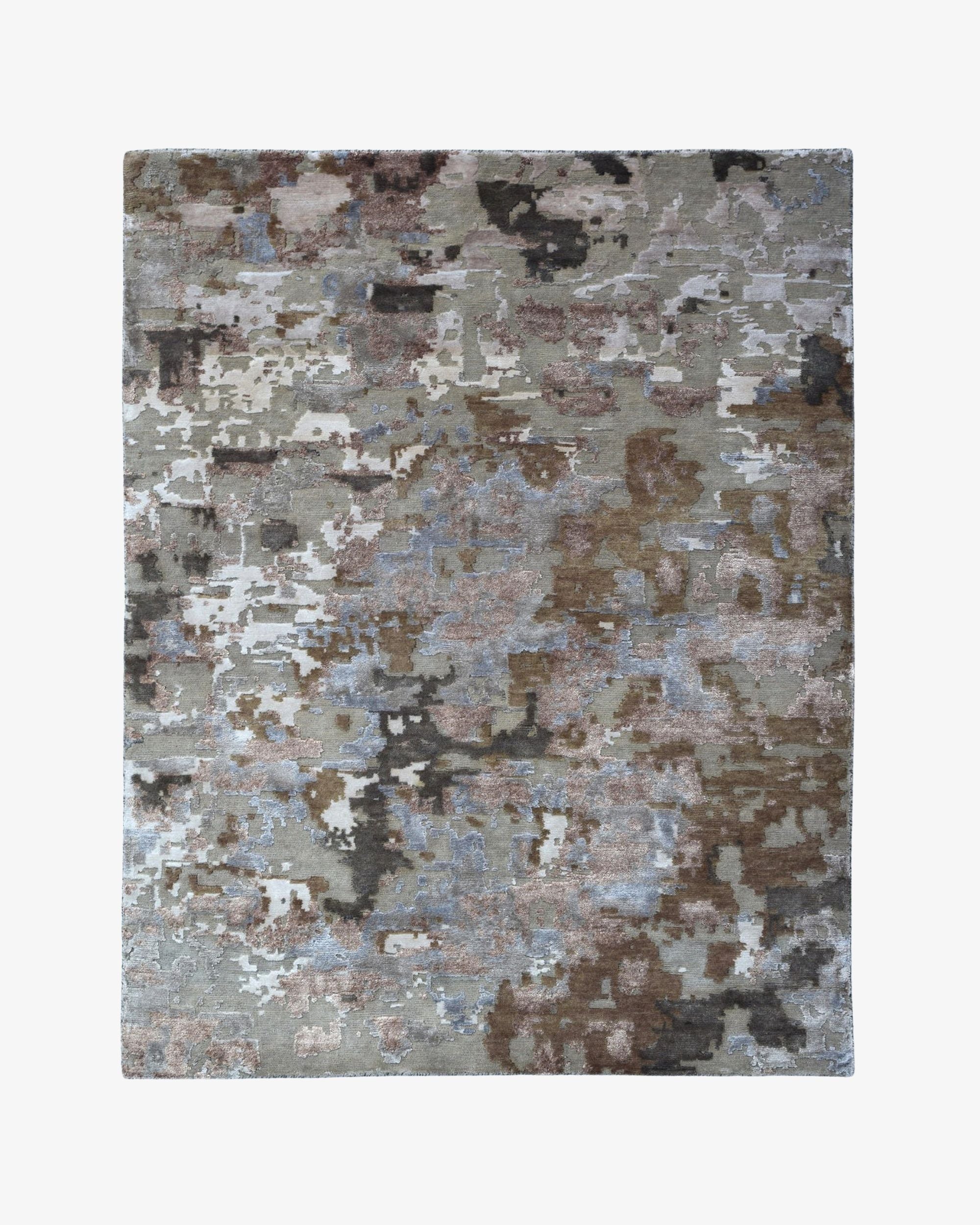
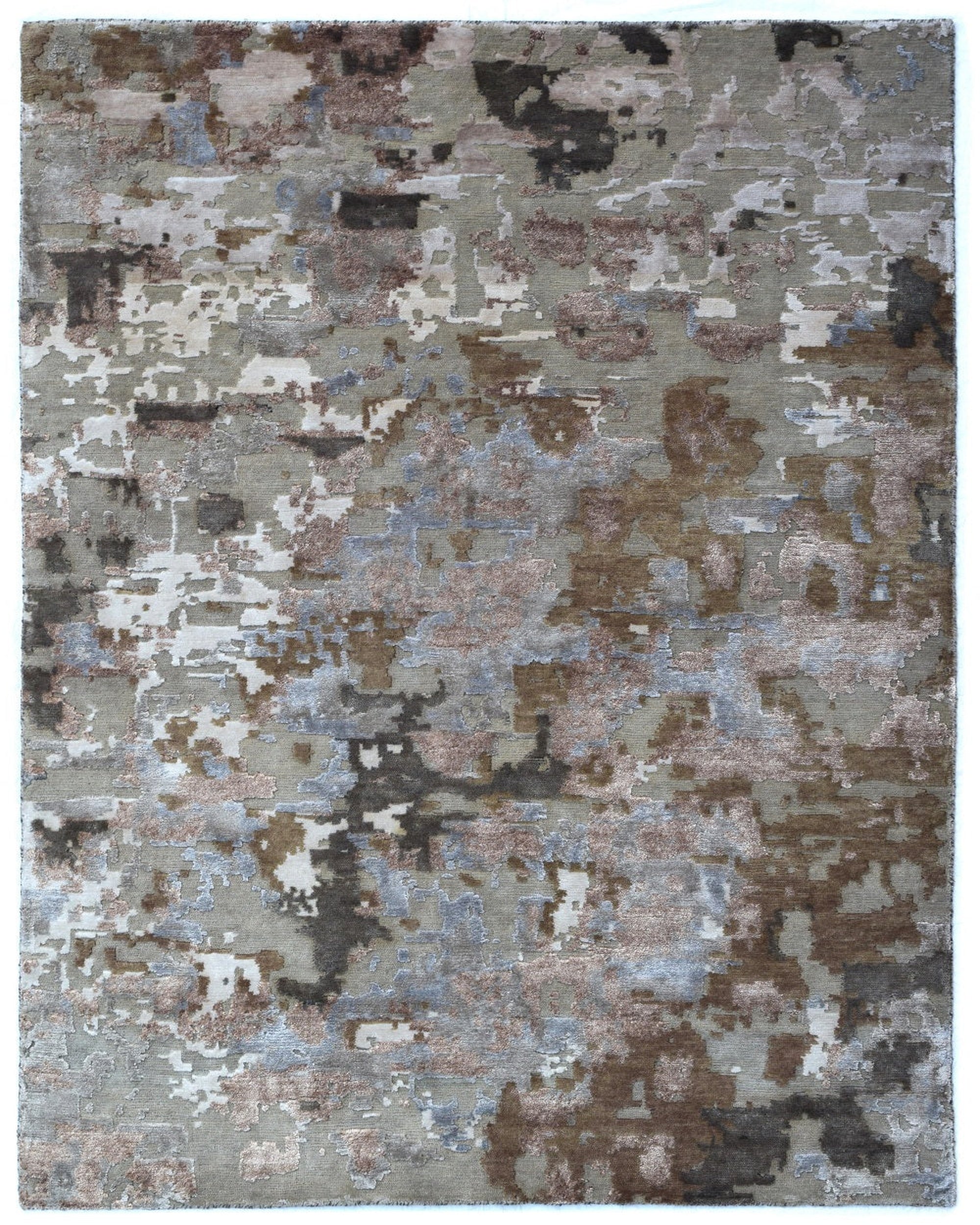
| Cabella Wool and Silk Rug in mink | Wool and Botanical Silk, hand tufted | A low sheen that lifts as you cross the room |
| Ivory Wool Rug | New Zealand wool, hand tufted | Soft and even, mostly matte |
The Couture Silk Rug is hand knotted in silk and listed from about ₹72,000 in 5x8 ft. The Luma Silk Rug in gold is handloom woven in silk, from about ₹40,000. The Cabella in mink, hand tufted in New Zealand wool and silk, starts from about ₹41,000.
For a room where you want the rug to glow without looking formal, choose a wool and silk blend over pure silk, because the matte wool ground calms the shine.
How does lustre change under Indian daylight and evening lamps?
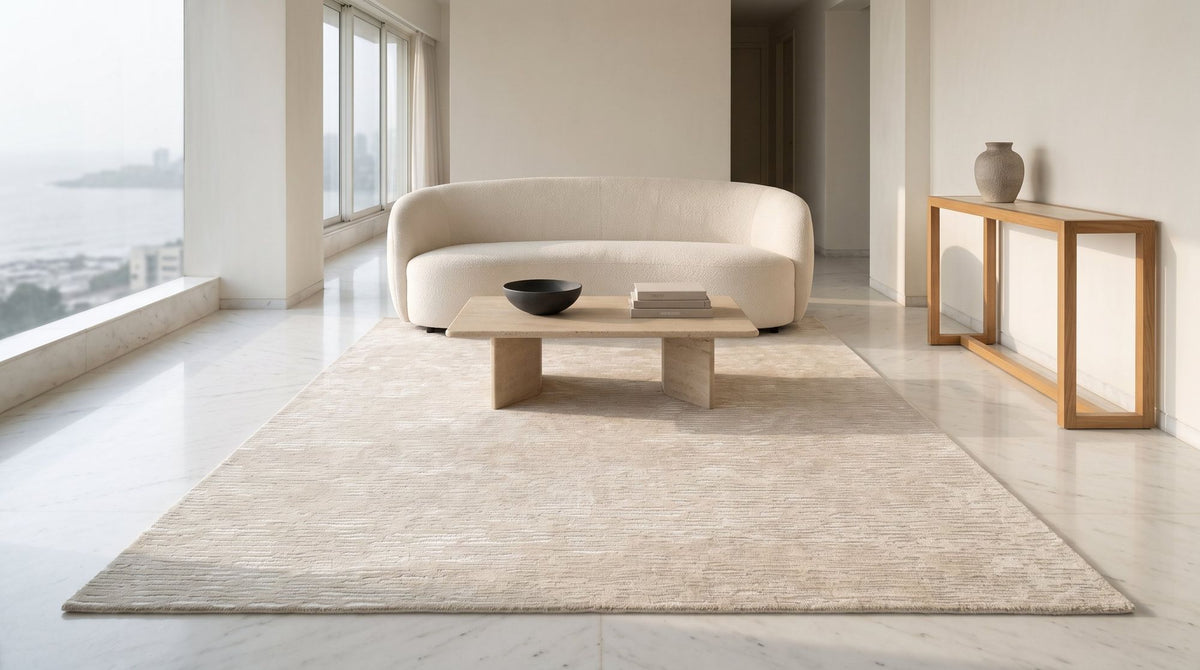
A lustrous rug looks cooler and more silvery in daylight and warmer and more golden under evening lamps, and the change is stronger the more lustre the fibre has.

Daylight
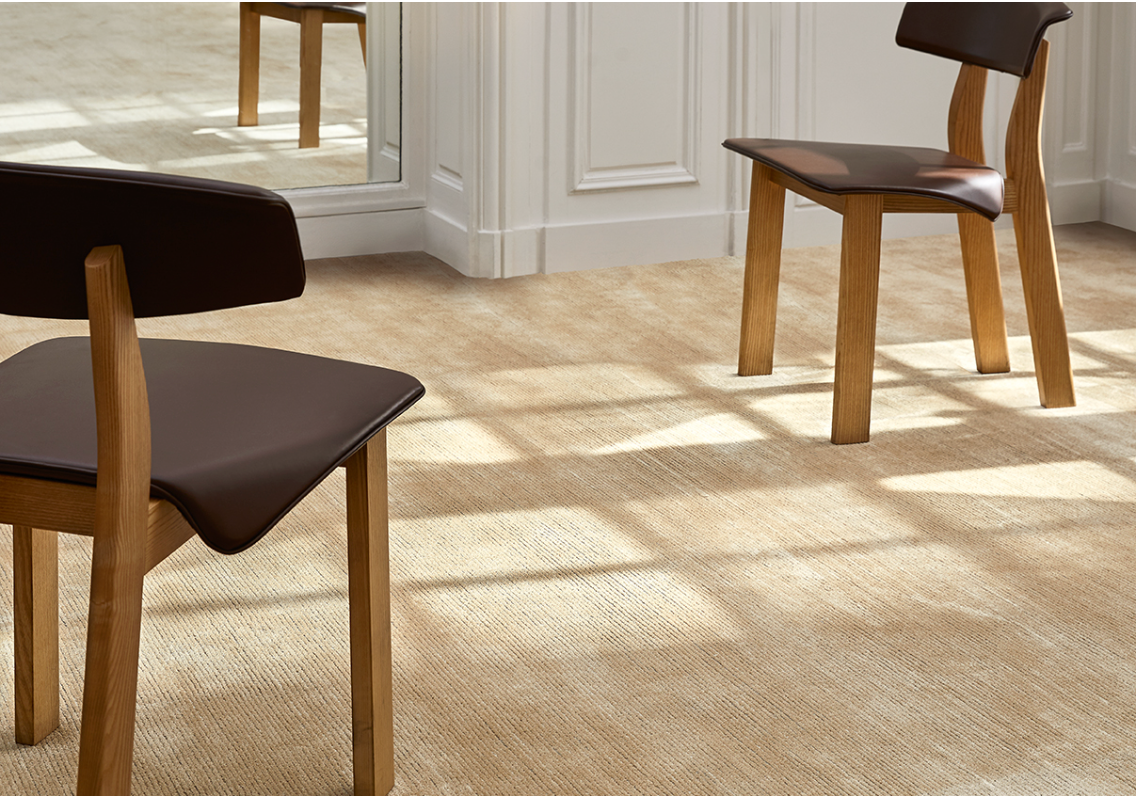
Indian daylight is strong and often comes in low through a balcony door. Light that skims across a silk pile picks out every change in pile direction, so you will see lighter and darker zones as you walk around the rug. In a north facing room the glow stays cool and even.
In a west facing room in May, the afternoon sun is harsh enough to wash out a gold or champagne silk. Draw sheer curtains in the hottest hours, which also protects the dye from fading.
Evening lamps
Most Indian homes switch to warm LED lamps at night, around 2700K to 3000K. Under these, silk turns honeyed and the shadows between the light and dark zones deepen.
A low lamp beside a sofa throws light across the rug, which makes lustre more visible than a ceiling light that shines straight down. If you want the glow, light the room from the side.
Lustre tells you how a fibre meets the light. It does not tell you how good the rug is.
Is a more lustrous rug a better rug?
No. Lustre describes how a rug looks in light, not how well it is made or how long it will last.
A matte New Zealand wool rug can be denser, more resilient and better suited to a busy family room than a silk rug with twice the shine. Silk is finer and slower to work, which is part of why it costs more, but that is a different question from quality.
Ask what the fibre is before you judge the shine. A bright gloss at a lighter price often comes from a plant-based fibre such as Botanical Silk, which gives a soft, quiet sheen but asks for a calm room and gentle care, with spills blotted and no wet washing. Know the fibre, then judge the lustre.
How can you see a rug's lustre before you buy?
Look at the rug, or a swatch, from both ends and under two kinds of light, because a single photo cannot show lustre fully.


- Stand at one end, then walk to the other. A lustrous pile will look lighter from one side and darker from the other.
- Hold a swatch near a window at noon, then under your own lamp in the evening.
- Run your palm across the pile both ways and watch the shade change. That is pile direction at work.
Rugberry sells swatches for most rugs, so you can see the lustre in your own room. Our guide to silk rug sheen covers the shading effect in more depth, and wool vs silk rugs compares the two fibres for daily use.
Frequently asked questions
What gives a silk rug its lustre?
Silk is a long, smooth filament with a regular cross section, so it reflects light in one direction rather than scattering it. That is why a silk rug looks bright from one angle and deeper from another.
Do wool rugs have any lustre?
Yes, a little. Wool has scales and crimp that scatter light, so a wool rug reads as soft and mostly matte, with a gentle brightness when light skims across a cut pile.
Does a rug lose its lustre over time?
A rug's lustre can soften where feet wear the tips of the fibres and where dust settles in. Regular vacuuming and turning the rug every few months keep the surface even.
Is a high shine rug always silk?
No. Plant-based fibres such as Botanical Silk also have a strong sheen, at a lighter price than real silk. Always check the fibre named on the product page before judging a rug by its shine.
Choose the fibre first. The light will do the rest. Browse the Rugberry silk rugs.



Leave a comment
This site is protected by hCaptcha and the hCaptcha Privacy Policy and Terms of Service apply.