



Burns, Bald Patches and Holes: Can a Rug Be Repaired
Most burns, bald patches and small holes in a wool rug can be repaired by a rug specialist, who re-tufts, reweaves or re-knots the damaged area in matched yarn. At home, the only safe steps are to cool the spot, brush off loose char and trim singed tips, never to glue, colour or cut.
In short
- A small burn on a wool rug usually chars only the tips of the pile, which can be trimmed with small scissors; a burn that reaches the backing needs a specialist to replace the damaged tufts.
- A bald patch from chair castors, pets or heavy traffic can be re-tufted on a hand tufted rug, rewoven on a handloom rug or re-knotted on a hand knotted rug by a rug restorer.
- Glue, felt pens, iron-on patches and home cutting make a rug repair harder and often impossible to hide, so they should never be tried.
- Rugberry does not run a repair service, but every Rugberry product page lists the fibre, construction and pile height a repairer needs to match the yarn.
Can a burn or bald patch on a rug be repaired?
Yes, in most cases a burn or bald patch on a wool rug can be repaired by a specialist. The work replaces the damaged yarn with new yarn of the same fibre, colour and height, so the patch blends into the pile.


The common causes in Indian homes are familiar: a hot iron set down on the floor, a diya or dhoop too close during puja, a cigarette, a chair on castors rolling over the same strip, or a puppy working at a corner. Each leaves a different kind of damage.
How well a repair hides depends on three things: the construction, the size of the damage and how closely the repairer can match the yarn. A clean, small repair on a plain area can be almost invisible; one across a drawn line will always show a little.
What should you do in the first minutes after a burn?
After a burn, make sure the heat source is out, let the spot cool, then gently brush away the loose char with a dry soft brush. Do not rub, wet or scrape it, because that spreads the soot into the surrounding pile.
Wool is naturally slow to catch fire and tends to char rather than melt, which is why a small ember often leaves a brown crust on the tips instead of a hole. Jute and plant based fibres burn more readily, so treat any burn on them as more serious. Our guide to keeping a diya near a rug explains safe distances.
Once it is cool, take a clear photograph in daylight with a coin beside it for scale. That photo is what a repairer will ask for first, and it helps you judge later whether the repair has blended.
An iron leaves a different mark from a flame. A hot iron set down on wool presses and glazes the pile into a flat, shiny patch, sometimes with a brown edge, and if the glaze is only on the surface, careful trimming and brushing can lift it.
Cool it, brush it, photograph it. Then leave the rest to someone who matches yarn for a living.
How are burns and holes repaired, construction by construction?
Burns and holes are repaired by rebuilding the pile the way the rug was first made. A tufted rug is re-tufted, a woven rug is rewoven and a knotted rug is re-knotted, each with yarn matched to the original.
| Construction | Small burn on the tips | Burn or hole to the backing | Bald patch | Verdict |
|---|---|---|---|---|
| Hand tufted | Trim the singed tips | Cut out the damage, patch the backing, re-tuft | Re-tuft in matched yarn | Very repairable |
| Handloom wool | Trim the singed tips | Reweave the damaged warps and wefts | Reweave or insert a matched patch | Repairable, slower |
| Hand knotted | Trim the singed tips | Rebuild warps and wefts, re-knot | Re-knot to the original density | Repairable, skilled and costly |
| Handwoven jute | Brush off and trim | Patch or reweave | Hard to hide | Often better replaced |
On a hand tufted rug, the repairer cuts out the damaged square, glues a new piece of backing behind it and tufts new yarn through with a hand tool, then shears it level. It is the most forgiving construction to repair.
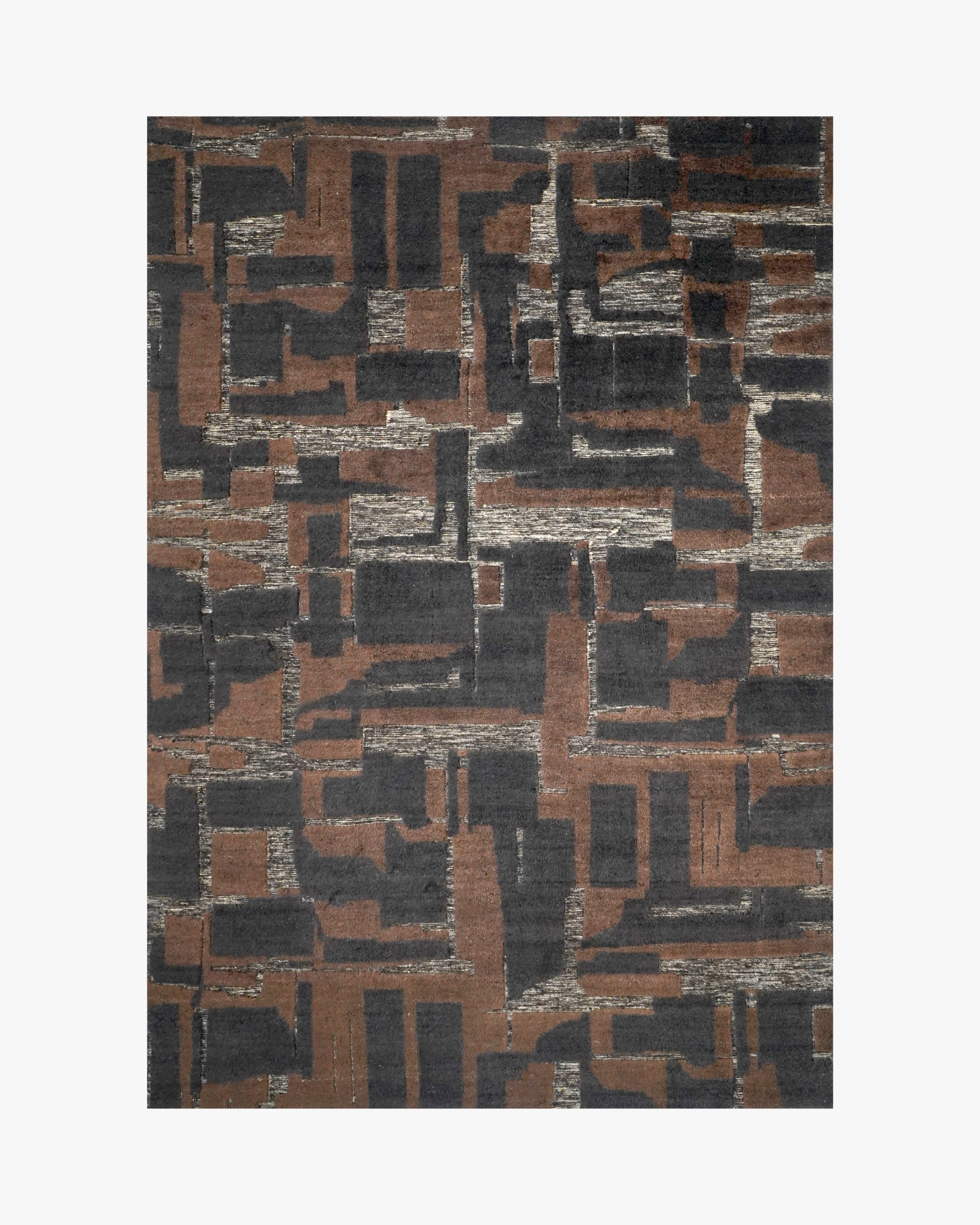
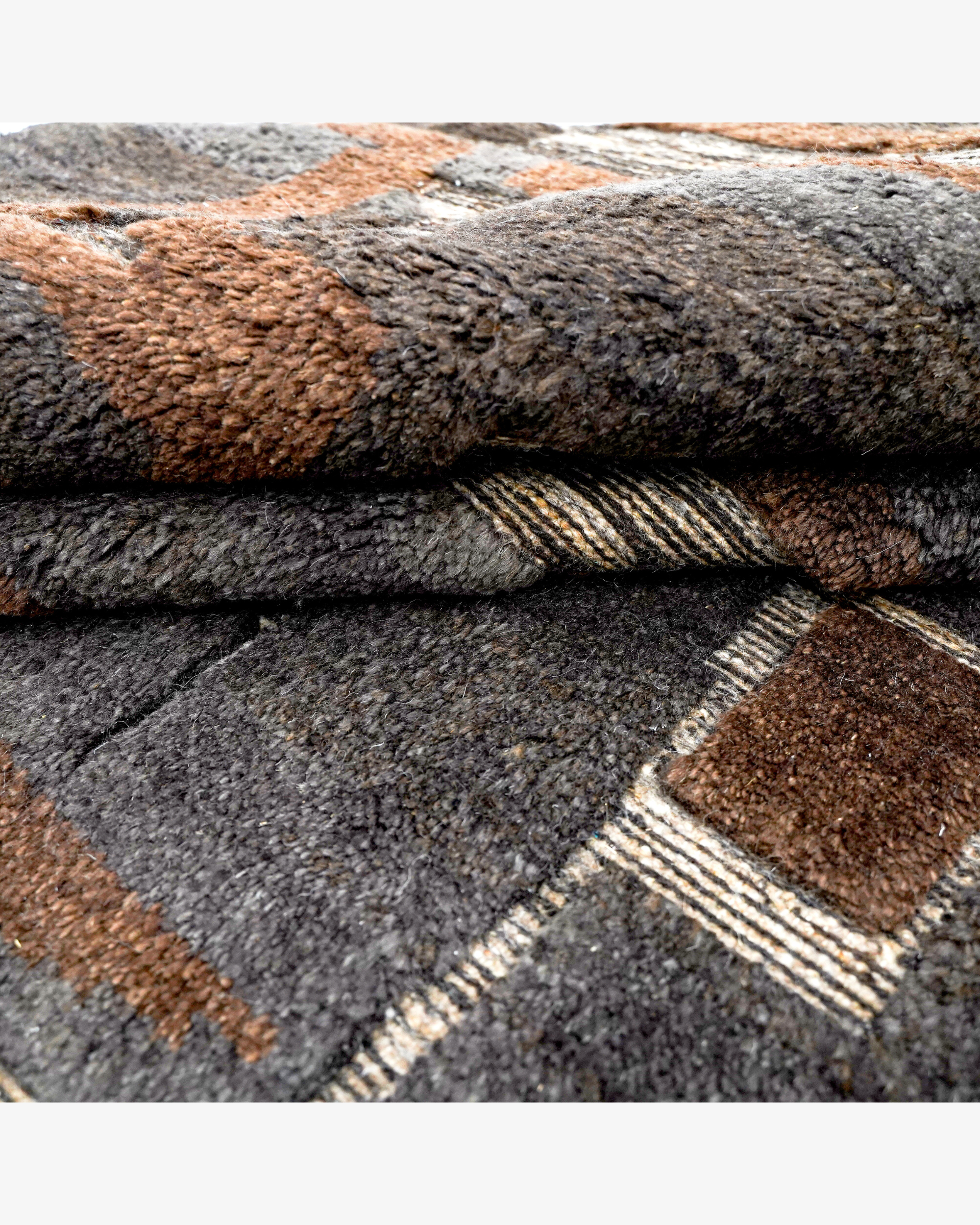
The Bias Wool Rug is hand tufted in New Zealand wool, a brown field meeting ivory with a dark stroke. A repair in the plain brown area would blend far better than one on the line where two colours meet, which is true of any patterned rug. Its regular price is ₹62,000 for 8x10 ft, ex GST at the time of writing.
Why do bald patches appear, and can they be filled?
Bald patches appear where pile is crushed or worn away faster than the rest: under chair castors, along a daily path, at a doorway or wherever a pet digs. They can be filled by a specialist, though prevention is far cheaper than repair.


Castors are the most common cause in homes with a study or dining corner. A hard wheel rolling on the same strip slowly cuts the yarn at the base, and a clear chair mat over the rug stops it completely.
Vacuum beater bars do slower damage of the same kind. A spinning brush on a hand tufted pile pulls at the tufts every week, so use a brush head or suction only on any handmade rug.
Pets usually go for corners and edges. A dog that chews the binding or a cat that scratches one spot leaves loose loops, and pulling at them makes the damage grow. Our guide to rugs for homes with pets covers the constructions that resist claws best.
Some loss is natural, too. New wool sheds loose fibre for a few months, which is not a bald patch, and our note on wool rug shedding explains the difference.
Furniture dents are not bald patches either. The pile under a sofa leg is crushed, not lost, and it usually recovers within days to weeks if you brush it up with your fingers and leave the spot uncovered.
What can you safely do at home?
At home you can trim, clip and protect, but not rebuild. Anything that adds glue, colour or new material should be left to a specialist.

- Trim singed tips. Use small, sharp scissors to snip only the browned ends, working from the edge of the mark inwards, a little at a time.
- Clip sprouts. A tuft standing above the pile is called sprouting. Clip it level with scissors and never pull it, which can unpick a whole row.
- Stop the cause. Put a chair mat under castors, move a pet's bed and keep diyas on a metal tray well clear of the rug.
- Rotate the rug. Turning it every few months spreads wear so one path does not go bald.
What never to try: superglue on loose tufts, felt pens or fabric paint on a pale burn, iron-on patches, or cutting out the damage yourself. Each one leaves a hard, discoloured spot that a specialist has to remove before the real repair can begin.
A heathered weave forgives small wear better than a flat colour. The Grain Wool Rug in Tan is handloom woven at 12 to 14 mm, with a mix of tones that hides minor marks, at ₹37,000 for 5x8 ft, regular price before GST.
When is a repair worth it, and when is a new rug better?
A repair is worth it when the rug is otherwise sound, the damage is small and the fibre is good. A new rug is usually better when the damage is large, spread across the field or on a low cost rug where the repair would cost more than the piece.

Hand knotted rugs are the strongest case for repair, because they are built to be restored over decades. The Stratum Knotted Rug in Cinder is hand knotted in New Zealand wool, priced at ₹1,75,000 for 9x12 ft, ex GST at the time of writing, the kind of piece a good restorer can keep going for a generation.
A deep pile shows repairs more, because new yarn sits at a slightly different angle at first. On the Plush Wool Rug in Camel, a handloom pile of 18 to 20 mm, expect a repaired spot to need a few weeks of walking and brushing before it settles. Our guide to how long a rug lasts sets out what each construction can take.
When choosing a repairer, ask to see finished work on the same construction, ask how they match yarn and agree a written quote before the rug leaves home.
Keep any spare yarn or offcut that came with a rug, and note the product name and size somewhere safe. Those two things make a later repair faster and the colour match closer.
Does Rugberry repair rugs?
Rugberry does not run a repair service. For a Rugberry rug, the product page and its provenance card list the fibre, construction and pile height, which is exactly what a repairer needs to match the yarn.

A fault that comes from the making is different from damage at home. Under the Rugberry return policy, a manufacturing defect reported to info@rugberry.in within 24 hours of delivery is replaced with another piece of the same rug.
For anything else, write to Rugberry with the product name and a photograph if you are unsure which construction or yarn you have. Our daily rug care routine covers the habits that keep repairs rare.
Frequently asked questions
Can a burn hole in a wool rug be fixed?
Yes. A rug specialist cuts out the burnt area and rebuilds it with matched wool, by re-tufting, reweaving or re-knotting depending on how the rug was made.
How do I fix a small scorch mark from an iron?
Let it cool, brush away the loose char and snip only the browned tips with small scissors. If the mark goes down to the backing, take it to a specialist.
Can bald spots on a rug be filled in?
Yes, a specialist can fill a bald spot with new yarn matched to the original colour and height. Stop the cause first, such as castors or a pet, or the spot will wear again.
Is it worth repairing a hand tufted rug?
Usually, yes, if the rug is in good condition apart from the damage. Hand tufted is the easiest construction to repair because new tufts can be added through a patched backing.
Will a rug repair be visible?
A small repair on a plain area can be very hard to see once it settles. Repairs across a pattern line or on a deep pile tend to show a little, even when the yarn is well matched.
Keep the flame and the castor away, and the pile keeps its shape. See fine wool rugs and hand knotted rugs. Material first.




Leave a comment
This site is protected by hCaptcha and the hCaptcha Privacy Policy and Terms of Service apply.