



Can a Rug Be Cut Down to Size
A rug can sometimes be cut down to size, but only by a rug specialist, and never with household scissors. A hand tufted rug can be cut and rebound, a handloom or jute weave needs its new edge secured at once, and a hand knotted rug needs skilled re-knotting, so a rug made to measure is usually the better answer.
In short
- A hand tufted rug can be cut down by a specialist, who seals the cut edge and finishes it with a binding tape or an overcast stitch.
- A handloom or handwoven rug starts to unravel along a cut, so the new edge must be secured by a specialist on the same day it is cut.
- A hand knotted rug can be shortened only by a skilled restorer who secures the knots and rebuilds the end, which is slow and costly work.
- Cutting changes a rug permanently, splits any border or pattern and leaves an edge that rarely matches the original, so ordering the right size is almost always the better route.
Can a rug be cut down to size?
A rug can be cut down to size if its construction allows it and a specialist does the work. The cut itself is quick; securing the new edge so the rug does not fall apart is the real job.
The question usually comes up after a move. A rug that fitted the old living room is a foot too long for the new one, or a hallway turns out narrower than the plan suggested.
Before anyone picks up a blade, it is worth knowing how the rug is made, because each construction holds its yarn in a different way. The back of the rug tells you which one you have.
A rug specialist here means a rug restorer or an established rug cleaning workshop with its own repair team, the kind found in most Indian metros. A tailor, an upholsterer or a carpenter does not have the binding tools or the yarn to finish a rug edge properly.
What happens when you cut a hand tufted rug?
When you cut a hand tufted rug, the tufts along the cut lose the backing that held them and begin to loosen. A specialist seals the edge and binds it, so the rug stays whole.


A hand tufted rug is made by shooting loops of yarn through a cotton cloth with a hand held tool, then fixing them from behind with latex and a second backing cloth. Cut through those layers and the tufts at the edge have nothing left to grip.
The repair is a new edge. The specialist trims the line straight, glues the cut, then sews on a binding tape or wraps the edge in yarn with an overcast stitch. Done well, the result is neat, though the new side rarely matches the original three exactly.
Cut along the width of the rug and the job is one new edge. Cut along the length and it is a long side, which takes more binding, more time and more care to keep straight on a rug of 9 or 12 ft.
The Fluid Wool Rug shows why a cut is rarely a good idea on a patterned piece. Its black and ivory curves run edge to edge, so trimming 1 ft off one end would chop the drawing mid stroke. Its regular price is ₹40,000 for 5x8 ft, ex GST at the time of writing, and any size can be made to order instead.
Can a handloom or handwoven rug be cut?
A handloom or handwoven rug can be cut only with great care, because the weave starts to unravel as soon as the warp threads are severed. The new edge has to be secured straight away, usually by machine serging or hand overcasting.


On a loom, long warp threads run the length of the rug and the weft is packed across them row by row. Cut across the warps and every row near the cut is free to slide out.
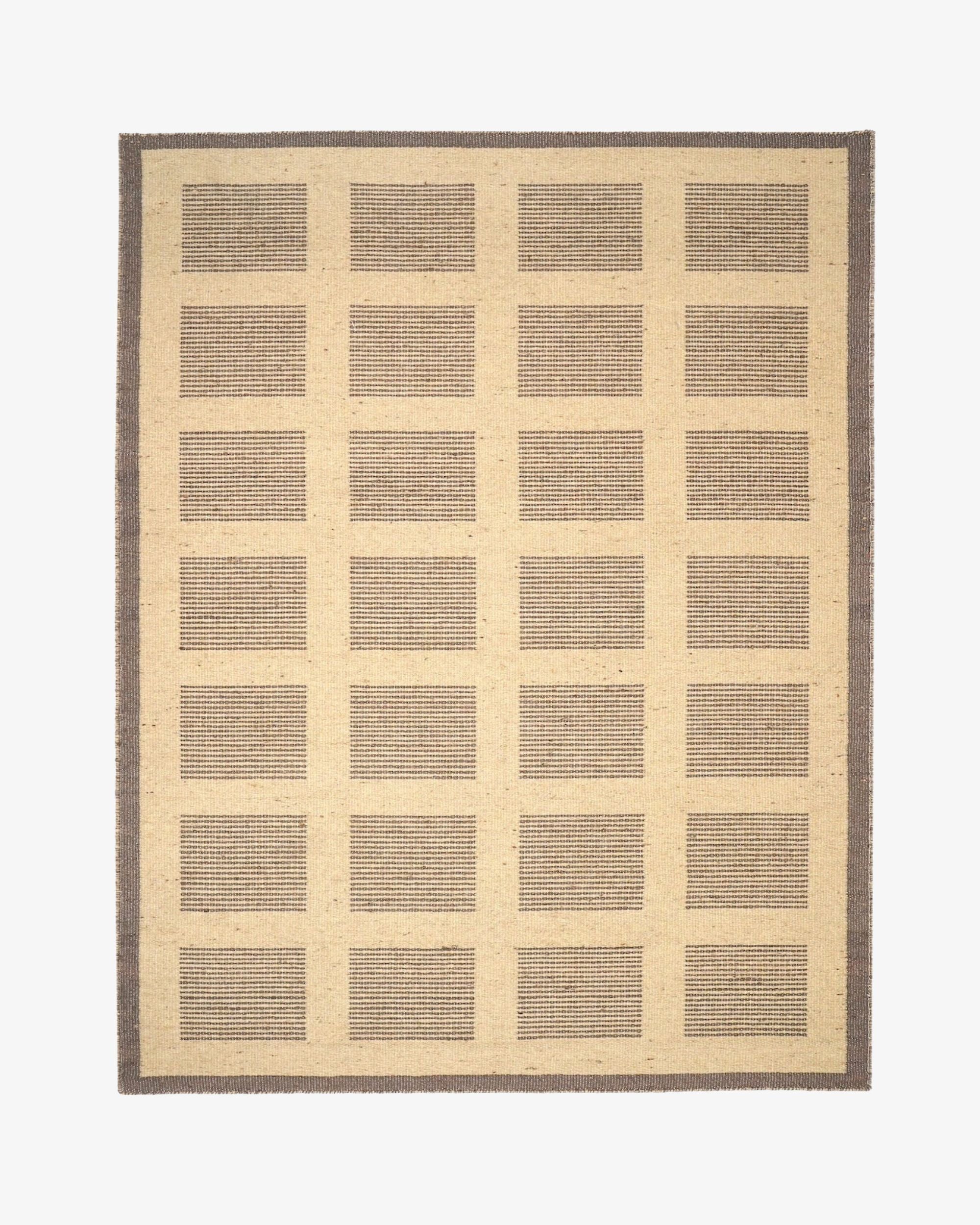
The Grain Wool Rug in Flax is woven on the handloom in New Zealand wool at 12 to 14 mm. A specialist could shorten it and serge the end, but the heathered weave would show a visibly different edge. Its regular price is ₹37,000 for 5x8 ft, ex GST at the time of writing.
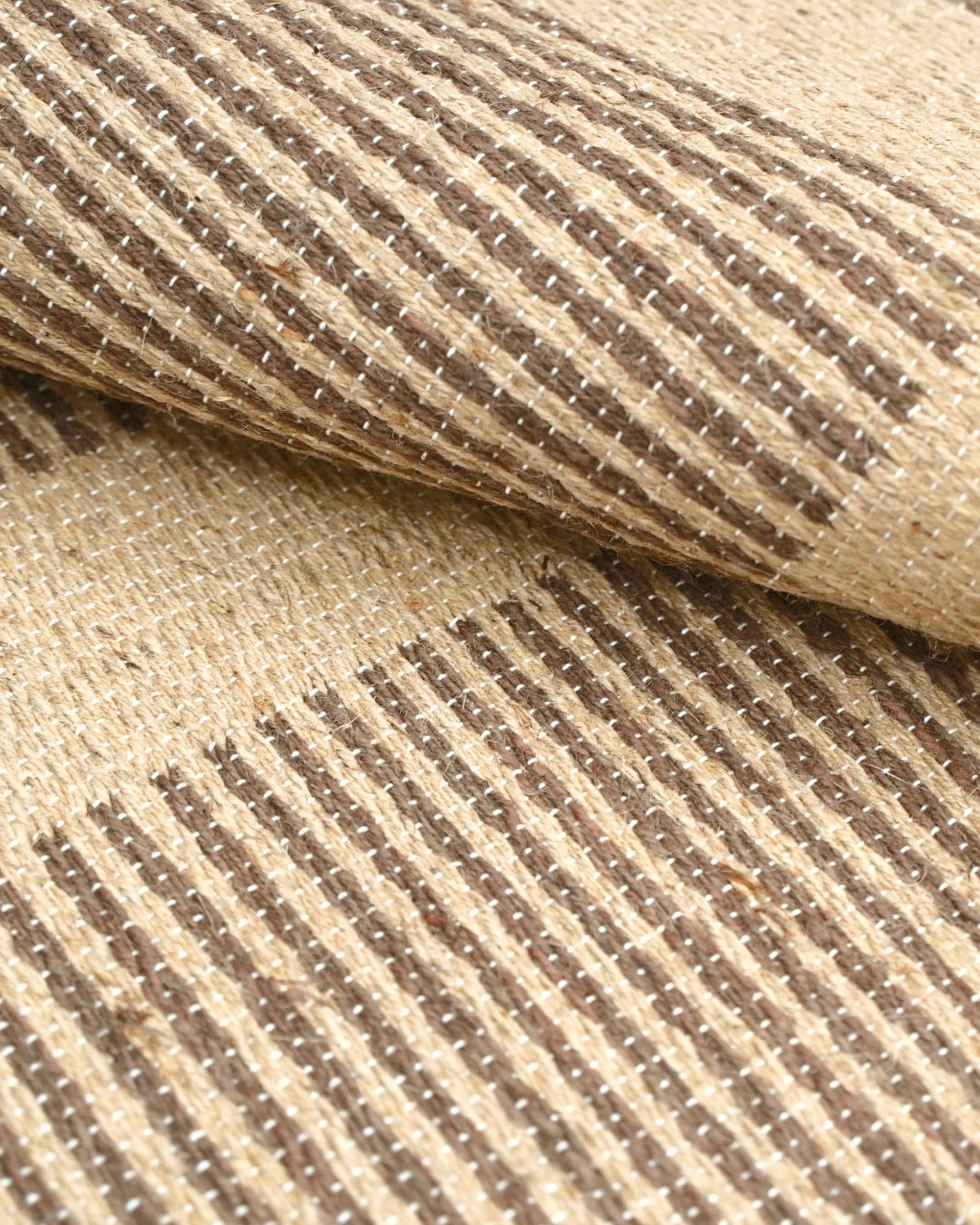
Jute is the least forgiving. The Kora Jute Rug is handwoven in jute at 10 mm, and cut jute frays fast and sheds stiff fibre. Treat a cut jute rug as a job for a specialist or not at all.
Some flat woven rugs finish their ends with knotted warps or a fringe, and a cut removes that finish for good. The new end will be a bound or serged edge, so the rug will no longer match at both ends.
What about a hand knotted rug?
A hand knotted rug can be shortened, but only by a skilled restorer, and it is the most expensive construction to alter. Each knot is tied around a pair of warps, so a cut releases the knots nearest the line.
Narrowing a knotted rug is harder still, because the side edges, or selvedges, are wrapped around the outer warps as the rug is made. A new side has to be built up by hand along the full length.
The restorer secures the last rows, overcasts or rebuilds the end, and may add a new fringe from the cut warps. On a patterned piece the border is lost on that side, which changes the balance of the whole design.
A cut takes a minute. A good edge after it takes a specialist and most of a day.
Which rugs can be cut, and what do you lose?
Hand tufted rugs are the easiest to cut and rebind, handloom and handwoven rugs are possible but risky, and hand knotted rugs need specialist restoration. The table sets out what each one involves.


| Construction | Can it be cut? | What the specialist does | What you lose |
|---|---|---|---|
| Hand tufted | Yes, by a specialist | Trims, seals the cut, adds binding tape or an overcast edge | Part of the pattern; the new edge looks different |
| Handloom wool | With care | Serges or overcasts the cut the same day | The woven end finish; the texture may pull at the edge |
| Handwoven jute | Rarely worth it | Binds the cut fast before it frays | A clean edge; jute sheds along the cut |
| Hand knotted | Only by a restorer | Secures knots, rebuilds the end, may add a fringe | The border on that side; a large part of the cost saved |
| Round or shaped | Not advised | Would need a full new edge | The shape itself |
For a rug that is too big, choose a rug made to measure over cutting your current one, because a new rug is built with its own edge and its pattern drawn for the size.
What should you check before cutting a rug?
Before cutting a rug, check the construction, the pattern and the cost of the work against the cost of a new piece. Then measure twice, because a cut cannot be undone.

- The pattern. A plain or all over design hides a cut; a border, a central motif or a drawn line does not.
- The proportion. Trimming 1 ft from a 6x9 ft rug makes a 6x8 ft piece, which is longer and narrower than any standard size.
- The edge. Ask the specialist to show a finished edge on a similar rug before you agree.
- The furniture. Sometimes moving the sofa forward or letting a bed sit further onto the rug solves the problem without a cut.
Every Rugberry rug is made for one client and sales are final, so a cut rug cannot be exchanged. Our guide to custom rugs for odd rooms shows how a size is drawn to fit before anything is made.
Weigh the cost honestly. A specialist cut and rebind on a large rug is skilled hand work, and on a patterned piece the result is a smaller rug with a lopsided design, so compare the quote with the price of a rug in the right size before agreeing.
Why is a rug made to measure the better route?
A rug made to measure is the better route because it is designed for the size from the start, with its own finished edge and a pattern scaled to fit. Rugberry makes any design in any size, shape or colour.

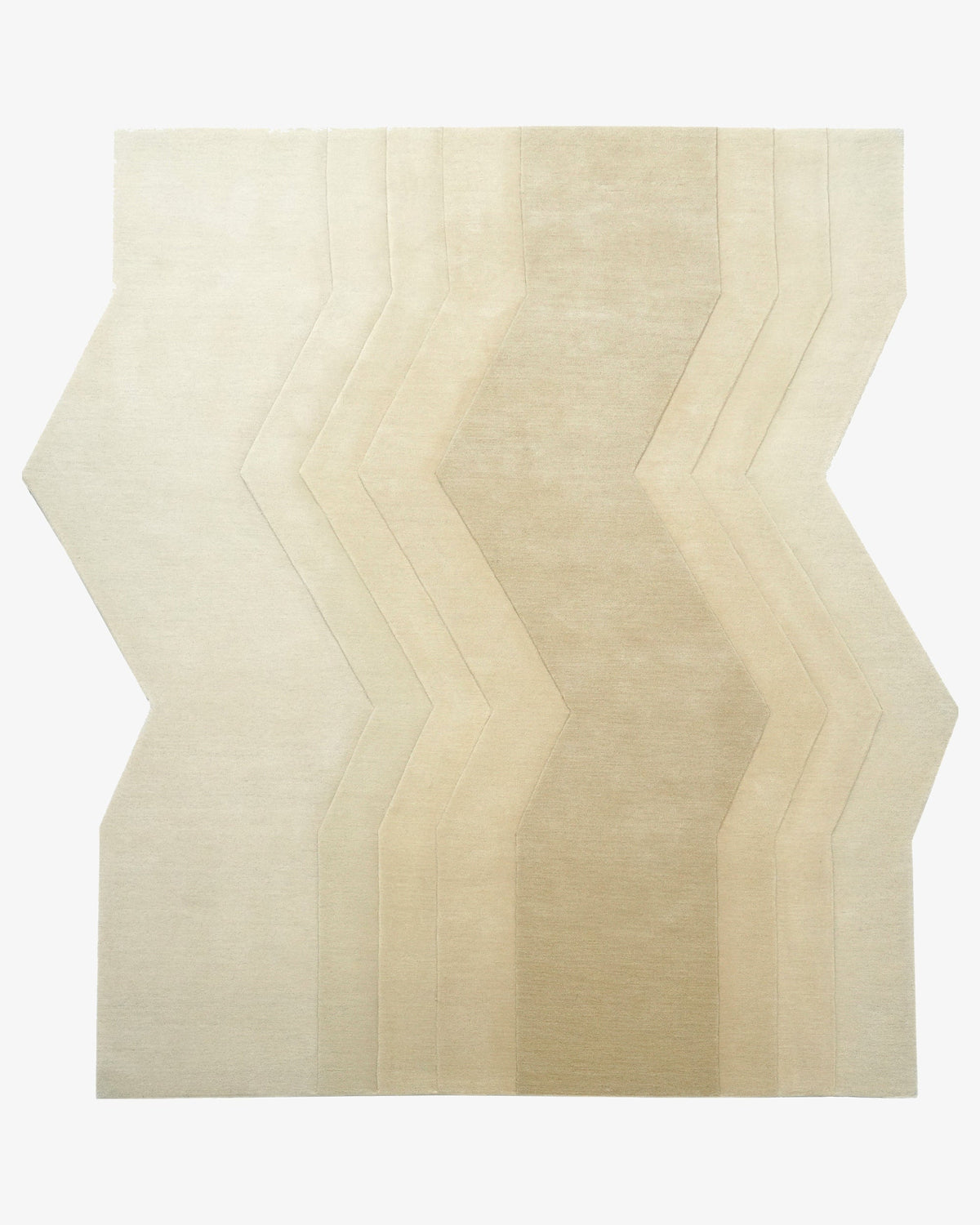
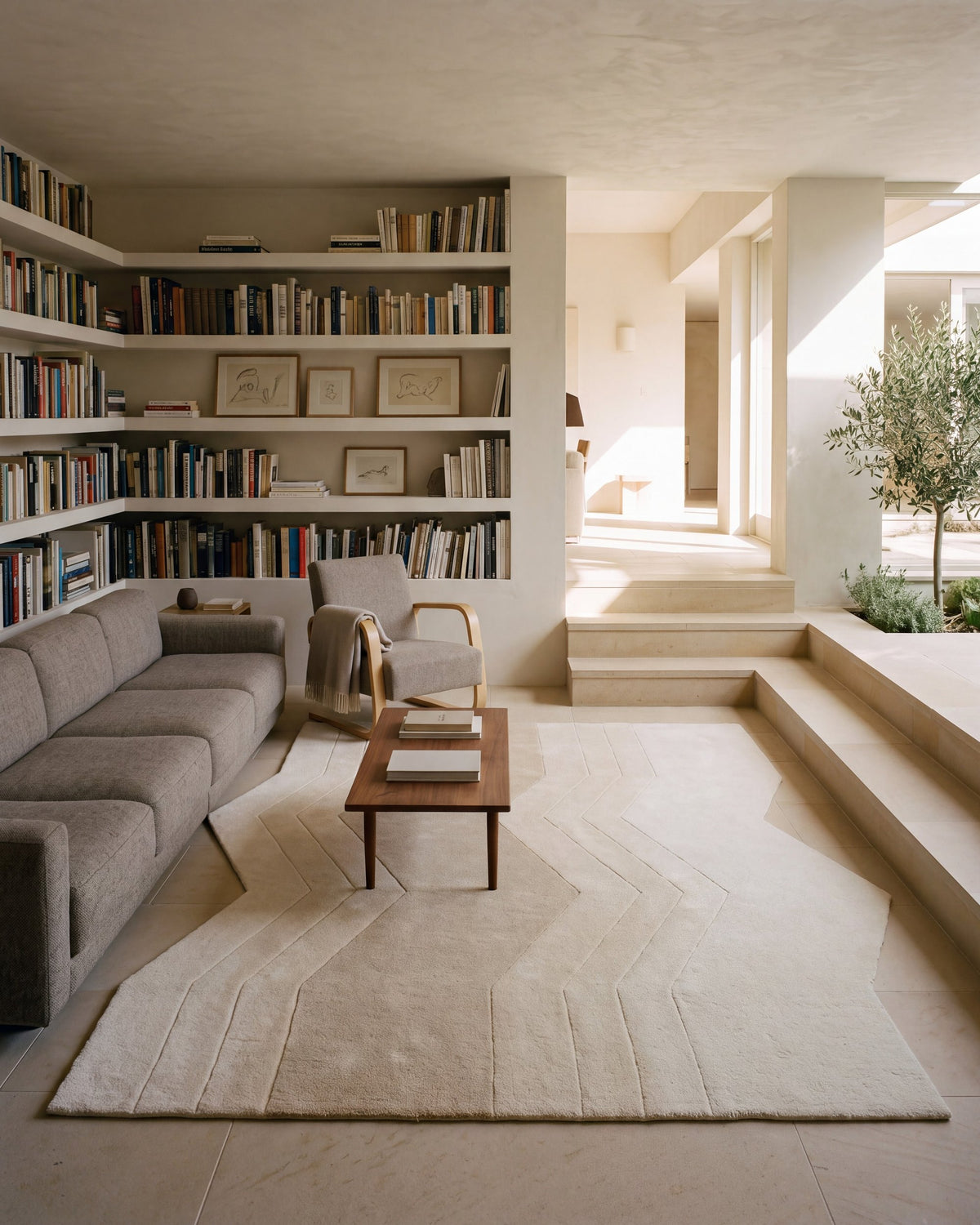
The Cadence Wool Rug shows why scale matters. Its carved chevrons are spaced for the rug they sit on, and a made to measure Cadence keeps that spacing at 7x10 ft or 11x13 ft, where a cut would stop a chevron halfway. Its regular price is ₹40,000 for 5x8 ft and ₹80,000 for 8x10 ft, ex GST at the time of writing.
For a faster custom size, the Quick Custom Program holds a set of designs ready to be cut and finished to your dimensions at the source, before the edge is made. Our guide to made to measure rugs explains how to measure and order one.
Measuring for a made to measure rug is simple. Measure the room, take off a margin of 12 to 18 inches of floor on each side, check the doors and any built in furniture, and send the size with a photo or a sketch. Colour can be changed too, and the Rugberry Design Lab lets you recolour a Rugberry design online first.
Frequently asked questions
Can I cut a rug myself with scissors?
No. A home cut leaves an unsealed edge that sheds tufts or unravels within weeks, and it cannot be undone. Take the rug to a rug specialist or order the right size.
How much can a rug be shortened?
A specialist can shorten a hand tufted rug by almost any amount, but the more you take off, the more the proportions and pattern change. Small trims on plain rugs work best.
Can a round rug be cut smaller?
It is not advised, because the whole circumference would need a new edge and the pattern would no longer sit centred. A smaller round rug made to measure is the cleaner choice.
Will a cut rug look different at the edge?
Usually, yes. A binding tape or overcast edge is neat but rarely identical to the factory finished sides, so it shows on close inspection.
Does Rugberry cut rugs to a new size?
Rugberry does not alter rugs after they are made. It makes any design to measure, and its Quick Custom Program finishes ready designs to your dimensions before the edge is made.
Measure first, then order once. See customisable rugs. Material first.






Leave a comment
This site is protected by hCaptcha and the hCaptcha Privacy Policy and Terms of Service apply.