



What GSM Means in a Rug, and When It Matters
GSM means grams per square metre, the weight of one square metre of rug. On its own it says little about quality, because it can include the backing and glue, so for a handmade rug the fibre, the pile height in mm and the density you can feel matter more.
In short
- GSM, or grams per square metre, is the weight of a rug per square metre and can describe either the whole rug or only the pile yarn above the backing.
- Face weight, also called pile weight, counts only the yarn you walk on, which makes it more useful than total GSM for comparing rugs.
- Pile density is how closely the yarn is packed, and a short, dense pile usually wears better than a tall, loose one of the same weight.
- Rugberry describes its handmade rugs by fibre, construction and pile height in mm, for example 7 to 8 mm for Cabra and 18 to 20 mm for Plush, rather than by a GSM figure.
What does GSM mean on a rug?
GSM on a rug means grams per square metre, a measure of weight across a fixed area. A rug listed at 3,000 GSM weighs 3 kg for every square metre of its surface.


The figure first came from machine made floor coverings, where it is quick to measure and easy to print on a label. It has since spread into online listings for every kind of rug, often without saying what was weighed.
You may also meet the same idea in ounces. American listings give face weight in ounces per square yard, and one ounce per square yard is about 34 grams per square metre, so a figure of 40 oz is roughly 1,350 GSM of pile yarn.
That missing detail is the problem. A GSM number can mean the whole rug, including the backing cloth, the glue and any underlay that comes attached, or only the pile, and the two can differ by a large margin.
What is the difference between GSM, face weight and density?
GSM is total weight per area, face weight is the weight of the pile yarn alone, and density is how tightly that yarn is packed. They answer three different questions about the same rug.
| Term | What it measures | What it tells you | What it hides |
|---|---|---|---|
| Total GSM | The whole rug per square metre | How heavy the rug is to move and how well it lies flat | How much of that weight is backing and glue |
| Face weight | Pile yarn above the backing per area | How much fibre you actually walk on | Whether the yarn is tall and loose or short and packed |
| Pile height | Length of the pile in mm | How deep and soft the rug feels | How close together the tufts or knots sit |
| Pile density | Yarn per unit of volume | How well the pile resists crushing | Fibre quality, which still needs a name |
Density is the one that predicts wear. In simple terms it is face weight divided by pile height, so two rugs with the same face weight can behave very differently if one has a pile twice as tall.
Put simply, a rug with 2 kg of pile yarn per square metre packed into 10 mm is far denser than one with the same 2 kg spread over 25 mm. The first stands up to a dining chair; the second shows every footprint.
For a rug that keeps its look under a sofa and daily feet, choose a dense pile over a heavy GSM figure, because packed fibres support each other and spring back.
Why are handmade rugs described in mm and fibre?
Handmade rugs are described by fibre, construction and pile height because those are the facts that change how a rug looks, feels and ages. A GSM figure cannot tell New Zealand wool from a synthetic, or a handloom weave from a tufted one.


Weight also varies naturally in handmade work. Wool is a living fibre that holds moisture from the air, so the same rug can weigh a little more in a Mumbai monsoon than in a dry Delhi winter.
Hand knotted rugs have their own measure of density, the number of knots in a square inch, written as KPSI. It says more about the fineness of a knotted rug than its weight does, and our guide to Persian and Tibetan knots explains why the knot itself changes the count.
That is why Rugberry names the fibre and its grade, the construction and the pile height in mm on every rug. The provenance card on each product page follows the same idea, so two rugs can be compared like two lengths of cloth.
Weight tells you what a rug costs to ship. Fibre and density tell you how it will live.
Is a higher GSM rug always better?
A higher GSM rug is not always better. Weight can come from a thick latex coat, a heavy backing or a coarse fibre, none of which makes a rug softer or longer lasting.
A heavy rug does have real advantages. It lies flatter, curls less at the corners and shifts less on a smooth floor, which matters on Indian vitrified tile and polished marble.
But a lighter rug in a fine, resilient fibre can outlast a heavier one in a weak fibre. Compare like with like: the same fibre and construction, then density, then weight last.
In a hand tufted rug, part of the weight is the latex that locks the tufts and the cloth glued behind it. A generous, even coat is a good sign, but a very heavy rug with a thin pile is mostly glue, and it will feel stiff and smell strongly when new.
Fibre changes the picture again. Jute is heavier and firmer than wool for the same look, and synthetics can be packed to a high weight cheaply, so a weight figure only compares fairly within one fibre.
How can you test a rug's density at home?
You can test density at home with your hands and, if you have a swatch, a kitchen scale. None of these needs a lab, and together they tell you more than a printed GSM figure.


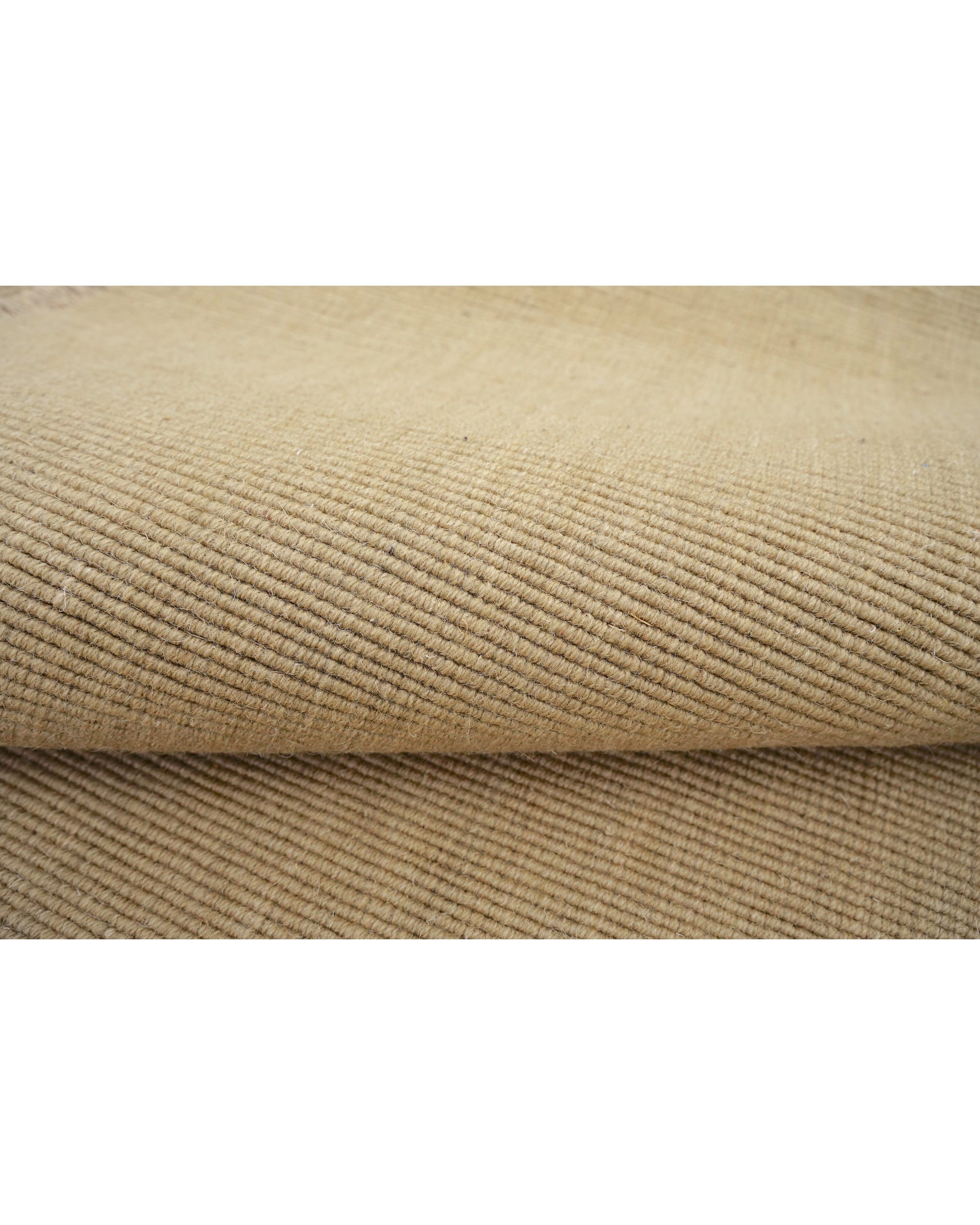
- The bend test. Fold a corner back so the pile opens along the fold. If you see a lot of backing between the rows, the pile is loose; if the yarn still covers it, the pile is dense.
- The thumb test. Press your thumb into the pile for a few seconds. A dense wool pile pushes back and recovers within minutes.
- The back test. Turn the rug over and look at how close the rows of tufts, knots or weft sit to each other.
- The swatch scale. Weigh a swatch and divide by its area in square metres. That gives an approximate total GSM, backing included, which is useful for comparing two swatches of the same construction.
Our guide to checking rug quality covers the edges, the back and the finish in more detail.
How do pile height and density feel in an Indian home?
A low, dense pile feels firm and cool and suits dusty, busy rooms. A deep, dense pile feels warm and cushioned and suits bedrooms and quiet living rooms, while a deep, loose pile tends to flatten in paths.

Deep and loose is the combination to be wary of. A long shag pile with plenty of backing between the tufts looks lush in a photograph, then flattens into paths and holds dust, which matters in Indian homes where floors are swept daily and windows stay open for much of the year.
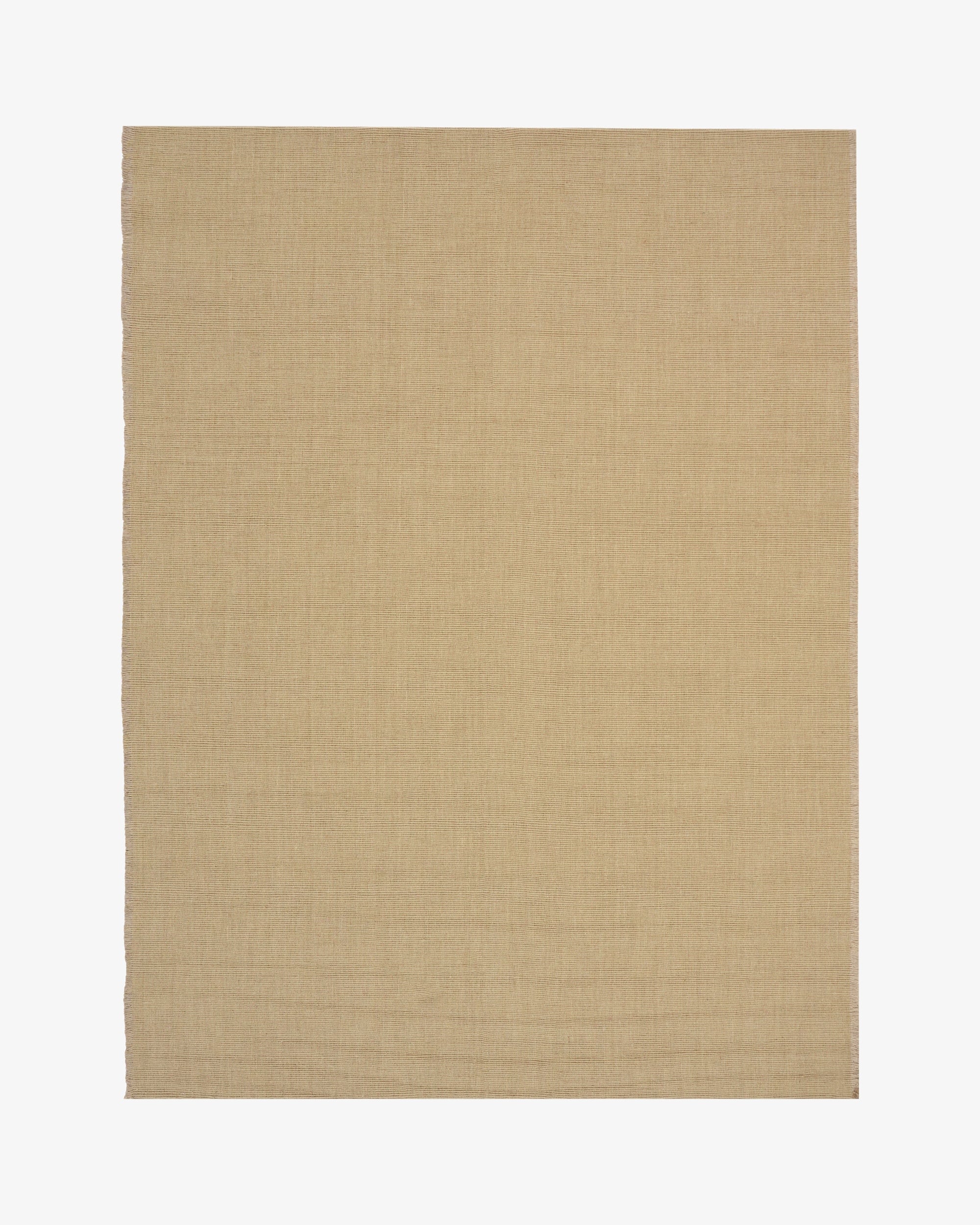
In Rugberry's range, the Cabra Wool & Jute Rug in Sand is a handloom weave at 7 to 8 mm, low enough for a dining room or a door that swings over it. Its regular price is ₹34,000 for 5x8 ft, ex GST at the time of writing.
The Grain Wool Rug in Umber is handloom woven at 12 to 14 mm, a middle path that hides dust and handles a family room. It is ₹37,000 for 5x8 ft and ₹74,000 for 8x10 ft, ex GST at the time of writing.
At the deep end, the Plush Wool Rug in Sand is a handloom pile of 18 to 20 mm, ₹40,000 for 5x8 ft at regular price before GST. Our guides to pile height and rug thickness explain how each depth behaves under doors and furniture.
Which Rugberry rugs have a dense, hard wearing pile?
Most of Rugberry's hand tufted rugs are made with a dense New Zealand wool pile at 14 to 16 mm, and the handloom Grain and Cabra lines are close woven and low. All of them are described by fibre and mm rather than by an invented weight.

The Monochrome Wool Rug shows what a dense hand tufted pile looks like up close: fine black and ivory lines that stay crisp because the tufts sit tight together. Its regular price is ₹38,000 for 5x8 ft and ₹76,000 for 8x10 ft, ex GST at the time of writing.
If a project specification asks for a weight, ask Rugberry for a swatch and weigh it yourself, or ask for the details on the trade side through the Rugberry Trade Program. For most homes, the fibre, the construction and the mm tell the whole story.
For a designer comparing samples, the useful set is fibre, construction, pile height in mm and the feel of the swatch in the hand. Weight can sit at the end of that list as a check, never at the start of it.
Frequently asked questions
What is a good GSM for a rug?
There is no single good GSM, because the number may or may not include the backing and glue. Compare rugs of the same fibre and construction on face weight and density instead.
Is GSM the same as face weight?
No. GSM often describes the whole rug per square metre, while face weight counts only the yarn above the backing, the part you actually walk on.
Does a heavier rug last longer?
Not necessarily. A heavier rug lies flatter and moves less, but how long it lasts depends on the fibre and how tightly the pile is packed.
Why does Rugberry not list GSM for its rugs?
Rugberry lists the fibre, grade, construction and pile height in mm on every rug, because those facts describe how a handmade rug feels and wears. Weight also shifts slightly with humidity in a natural fibre.
How do I check rug density when buying online?
Order a swatch and do a bend test: fold it and see whether the backing shows between the rows. Ask for the pile height in mm and a photo of the back.
Read the fibre first and the weight last. See fine wool rugs and the Plush collection. Material first.




Leave a comment
This site is protected by hCaptcha and the hCaptcha Privacy Policy and Terms of Service apply.