


Rug Thickness: Pile Height vs Total Height
Pile height is the depth of the soft yarn on top of a rug, while total height is the full thickness from the floor to the top of the pile, base included. Total height is the number that decides whether a door will clear the rug.
In short
- A rug's pile height measures only the yarn above the base, while its total height measures the whole rug from the floor to the surface.
- Total height is always greater than pile height, because it includes the woven ground or backing underneath.
- To check door clearance, measure the gap under the door when closed and compare it with the rug's total height plus any rug pad.
- Deep pile rugs such as the Rugberry Plush range suit rooms where doors open away from the rug or where there is ample clearance.
Most rug listings talk about pile, because that is what you feel. In a flat with tight door gaps, the total height matters more.
What is the difference between pile height and total height?
Pile height is the length of the yarn standing above the rug's base. Total height adds the base, which is the knotted or woven ground, or the backing cloth on a tufted rug.


Two rugs with the same pile can differ in total height, because one has a thicker base. And a rug with a short pile can still be thick overall if it is woven heavily. When you compare rugs, ask for both numbers, or measure them yourself. Our guide to rug pile height covers how pile depth changes feel.
How thick should a rug be?
A rug should be as thick as the room allows: deeper for bedrooms and quiet sitting rooms, lower for dining rooms, passages and rooms with tight doors. There is no single right thickness.

- Bedrooms. A deep pile is pleasant for bare feet, and bedroom doors often open into the room away from the rug.
- Dining rooms. A low surface lets chairs slide without catching.
- Passages and entrances. A low rug avoids trips and keeps doors clear.
- Homes with elderly family members. A low, firm rug on a non-slip pad is safer than a deep one.
For a dining room, choose a low handloom rug over a deep pile, because chairs move freely and crumbs lift out easily.
Will a rug fit under your door?
A rug fits under a door if the gap beneath the closed door is larger than the rug's total height, plus any pad. Measure before you buy, not after.

Many Indian flats, especially newer builds in Mumbai, Pune and Gurugram, have interior doors hung close to the floor, sometimes with only a small gap over marble or vitrified tile. A deep rug laid where a door swings across it will catch, scuff the pile and wear the door.
Measure the gap under the door before you fall for the pile. The door has the final say.
Three ways round a tight door
- Place the rug clear of the door's swing. Leave the arc of the door bare.
- Choose a lower rug for that room, and keep the deep pile for the bedroom.
- Size the rug down. A custom size can stop just short of the door. See customisable rugs.
How do Rugberry constructions differ in thickness?
Rugberry rugs range from low handloom weaves to deep plush piles, and the product page describes the feel of each one. Read that line before the colour.


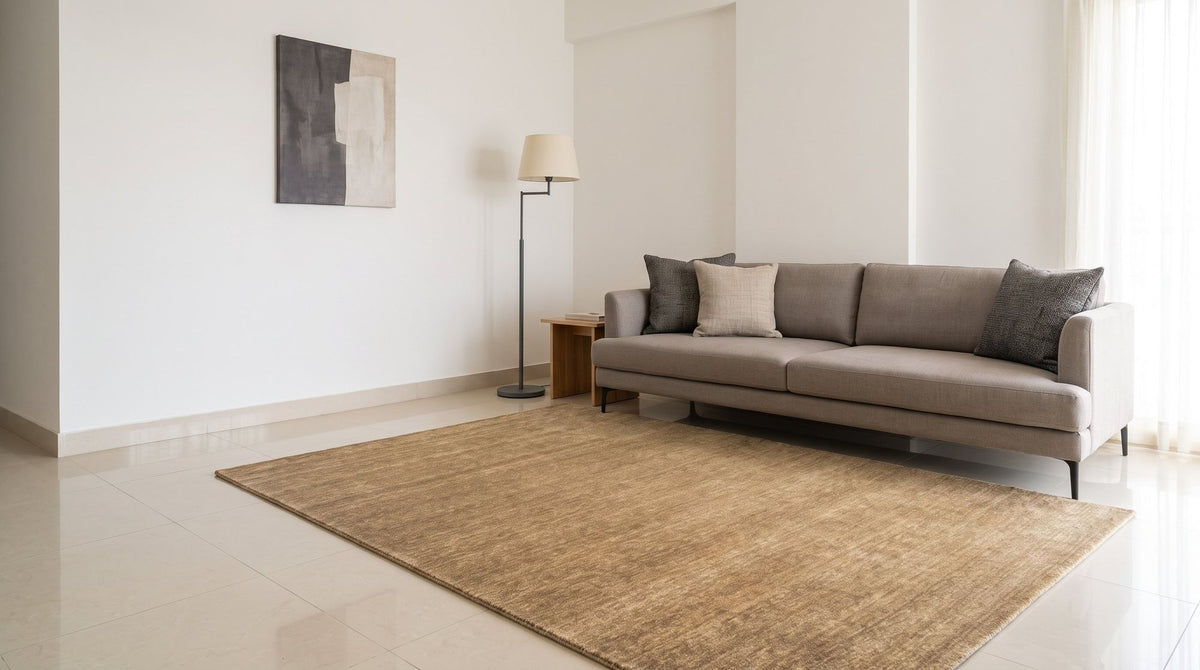
The Plush Wool Rug in Wheat is handloom New Zealand wool with a deep, quiet pile, from about ₹40,000. It is the thickest feeling of the three here, so check door gaps carefully. The Grain Wool Rug in Tan, handloom New Zealand wool with a low, closely textured surface from about ₹37,000, sits close to the floor.
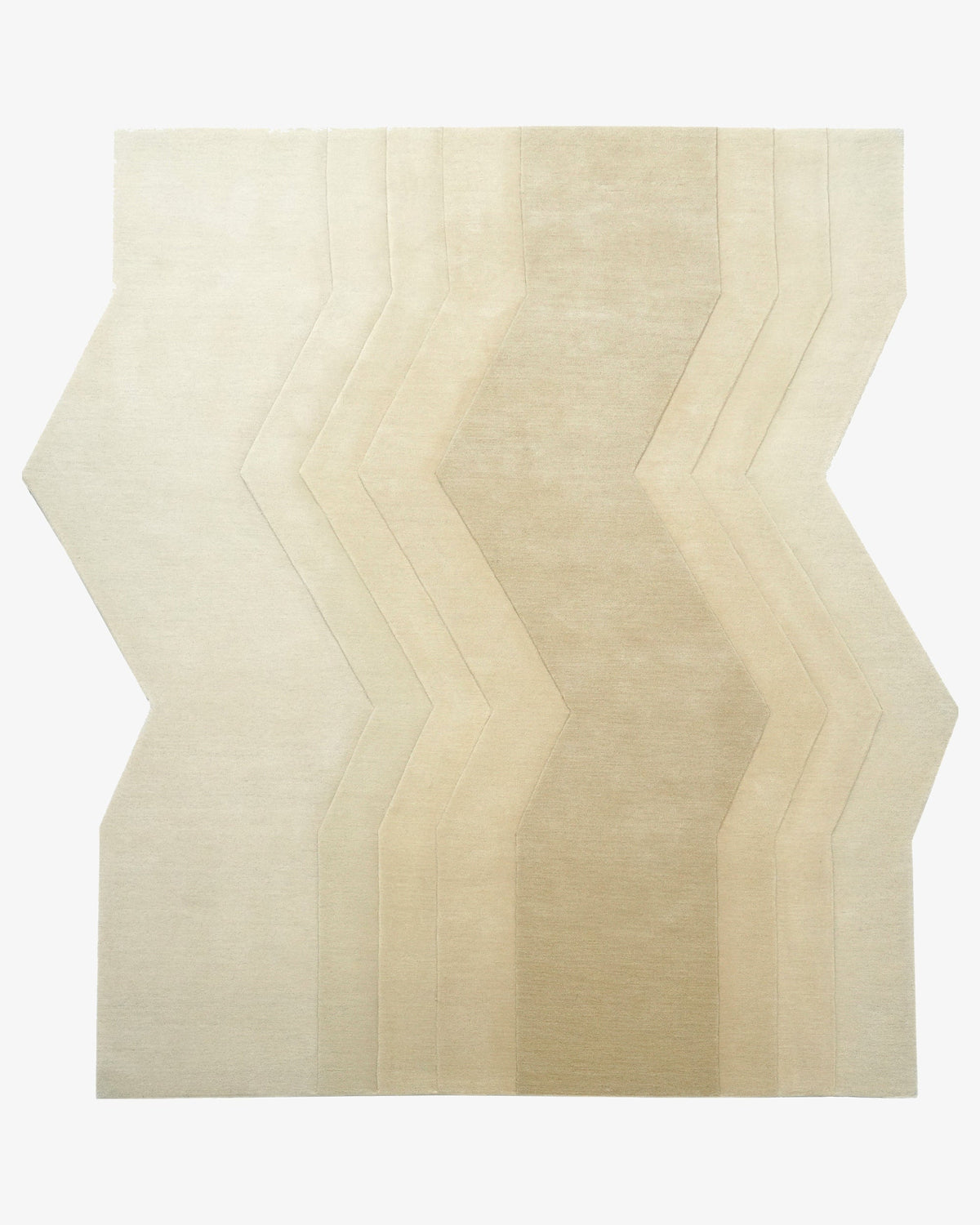
Between them sits the Cadence Wool Rug, hand-tufted New Zealand wool from about ₹40,000, soft and even underfoot with a dense pile that holds its shape. Because exact heights are not listed for these rugs, ask Rugberry for the total height of the one you choose if your door gap is tight.
Does a rug pad change the height?
Yes. A rug pad adds its own thickness under the rug, so add it to the total height when checking a door. A thin grip pad adds little, a cushioned pad adds more.
On smooth marble and tile, a pad is worth the extra height because it stops slipping and protects the floor. Where clearance is very tight, choose the thinnest grip pad from the rug underlays, or keep the rug clear of the door.
How do you measure a rug's height yourself?
Measure a rug's height with a steel ruler at the edge, pressing lightly so the pile is not crushed. Read the total from the floor to the top of the pile.

- Total height. Stand a steel ruler on the floor at the rug's edge and read the level of the pile tips.
- Pile height. Part the pile with your fingers until you see the base, then measure from the base to the tips.
- Door gap. Close the door and slide a stack of coins or cards under it until it stops. Measure the stack.
Measure in two or three places, since a handmade rug can vary slightly across its surface. The pile entry in the glossary defines the terms.
Frequently asked questions
What is the difference between pile height and rug thickness?
Pile height measures only the yarn above the base of the rug. Rug thickness, or total height, measures the whole rug from floor to surface, including the base or backing.
How much gap do I need under a door for a rug?
The gap under the closed door must be larger than the rug's total height plus any rug pad. If it is close, leave the door's swing clear of the rug or choose a lower rug for that room.
Is a thicker rug always better quality?
No. Thickness describes feel and use, not quality. A low handloom wool rug can be as well made and as durable as a deep pile one, and is often the better choice for dining rooms and passages.
Feel the pile, measure the height, then choose. Material first.



Leave a comment
This site is protected by hCaptcha and the hCaptcha Privacy Policy and Terms of Service apply.