

Rug Under a Bed: Three Layouts That Work
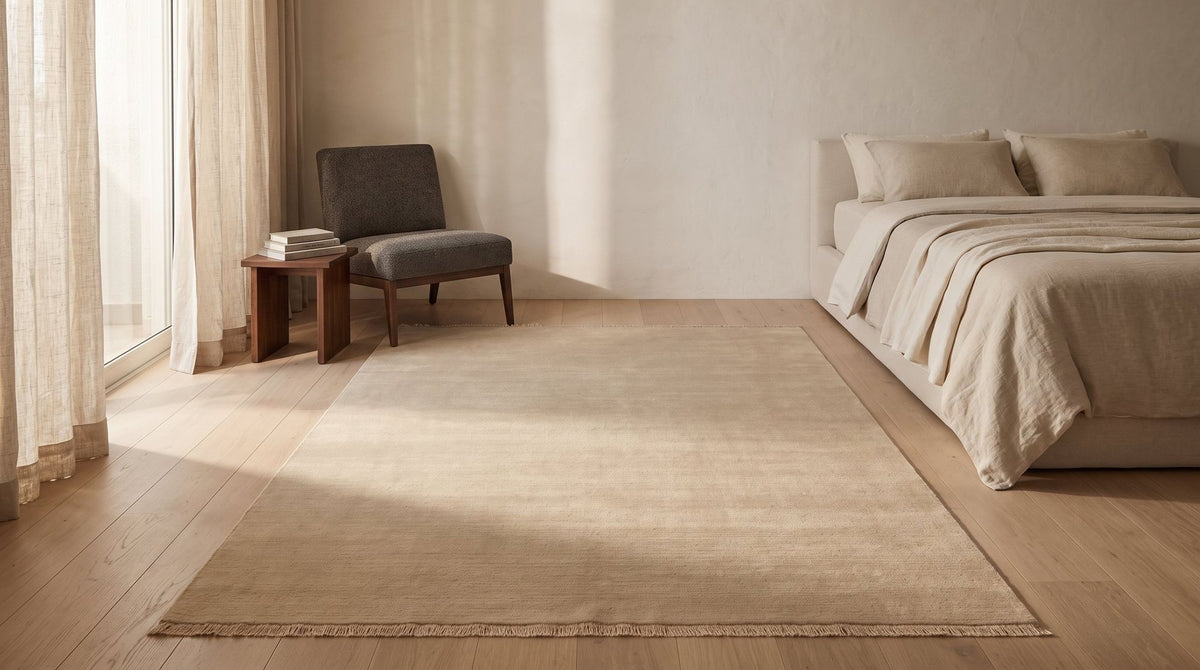
There are three layouts for a rug under a bed: the whole bed on the rug, the rug under the lower two thirds, or a runner on each side. In most Indian bedrooms, where a wardrobe stands 2 to 3 ft from the bed, the two thirds layout or runners work best.
In short
- The three rug layouts under a bed are full (bed and bedside tables on the rug), two thirds (rug starts just below the bedside tables) and side runners (one narrow rug on each side).
- In a bedroom where a hinged wardrobe opens within 3 ft of the bed, the rug edge should stop before the arc of the shutters or sit under it with clearance to spare.
- Bedside runners suit a bed against a wall or a room too narrow for a wide rug, and they cost less than one large rug.
- Rugberry makes the Cashmere Blend Rug and the Plush Wool Rug in six stock sizes from 5x8 to 12x15 ft and in any size to order.
This post is about layout, not the size chart. For bed by bed sizes, see the bedroom rug size guide.
Which rug layouts work under a bed?
Three layouts work, and each solves a different problem. The right one depends on how much floor is free around the bed, not on the bed alone.

| Layout | What sits on the rug | Works best when |
|---|---|---|
| Full | Bed and both bedside tables | The room has 3 ft or more of free floor on three sides of the bed |
| Two thirds | The lower two thirds of the bed, bedside tables on the floor | A wardrobe or dresser stands close to one side |
| Side runners | Nothing; runners lie beside the bed | The bed is against a wall, or the room is narrow |
Before choosing, stand at the foot of the bed and look at what touches the floor within 3 ft of it. Wardrobe shutters, a dressing table stool and the bathroom door are the usual suspects.
When does the full layout make sense?
The full layout makes sense in a larger master bedroom where the bed floats with clear floor on both sides and at the foot. The bed, both bedside tables and a bench all stand on one rug.
It gives the calmest look and the softest floor everywhere you step. It also needs the largest rug, so the bedside tables must be stable on the pile, since a 14 to 16 mm pile can make a narrow table rock slightly.
Choose a full layout only if the wardrobe is at least 3 ft away. If the rug runs under a hinged shutter, measure the gap under the shutter first.
How does the two thirds layout work with a wardrobe close to the bed?
In the two thirds layout, the rug begins just below the bedside tables and runs past the foot of the bed. The tables stay on the floor, and the rug still meets your feet on both sides.

This is the layout that suits most Indian bedrooms. It needs less floor across the width, so the rug edge can stop short of a wardrobe that stands 2 to 3 ft from the bed.
Lay the rug crosswise, its long side across the bed. Aim for 45 to 60 cm of rug showing on each side of the bed, and 45 cm or more past the foot.
A rug that stops before the wardrobe shutters is a rug you will never have to lift.
When are bedside runners the better choice?
Runners are the better choice when one side of the bed is against a wall or the room is too narrow for a wide rug. Each runner covers the first step out of bed and nothing else.


A runner about 2.5 to 3 ft wide and as long as the bed works well. Rugberry can make most designs to any size, so a pair of runners can be cut to the length of your bed rather than a stock size.
Runners also suit a shared bedroom where each person wants a different side. Learn more about the form in our glossary entry on the runner.
How do wardrobes and doors change the layout?
A hinged wardrobe shutter that clears the floor by less than about 2 cm will drag on a pile rug. Measure that gap before you decide whether the rug can run under it.

- Hinged shutters: keep the rug outside the arc of the doors, or choose a low, flat handloom or handwoven rug under them.
- Sliding shutters: the rug can run up to the wardrobe base, since nothing swings over it.
- Bathroom door: keep 30 cm of bare floor in front of it, so damp feet do not land on the rug edge.
Mark the rug outline with tape and open every door in the room. If anything catches, shorten the rug or change the layout before ordering.
Which fibre feels best for the first step out of bed?
For bare feet first thing in the morning, choose a fine, dense fibre over a hard-wearing one. A bedroom sees far less traffic than a living room, so softness can lead. Rugberry makes three rugs that suit it.


- Cashmere Blend Rug: handloom woven in a wool and cashmere blend, fine and very soft underfoot, from about ₹54,000 in 5x8 ft.
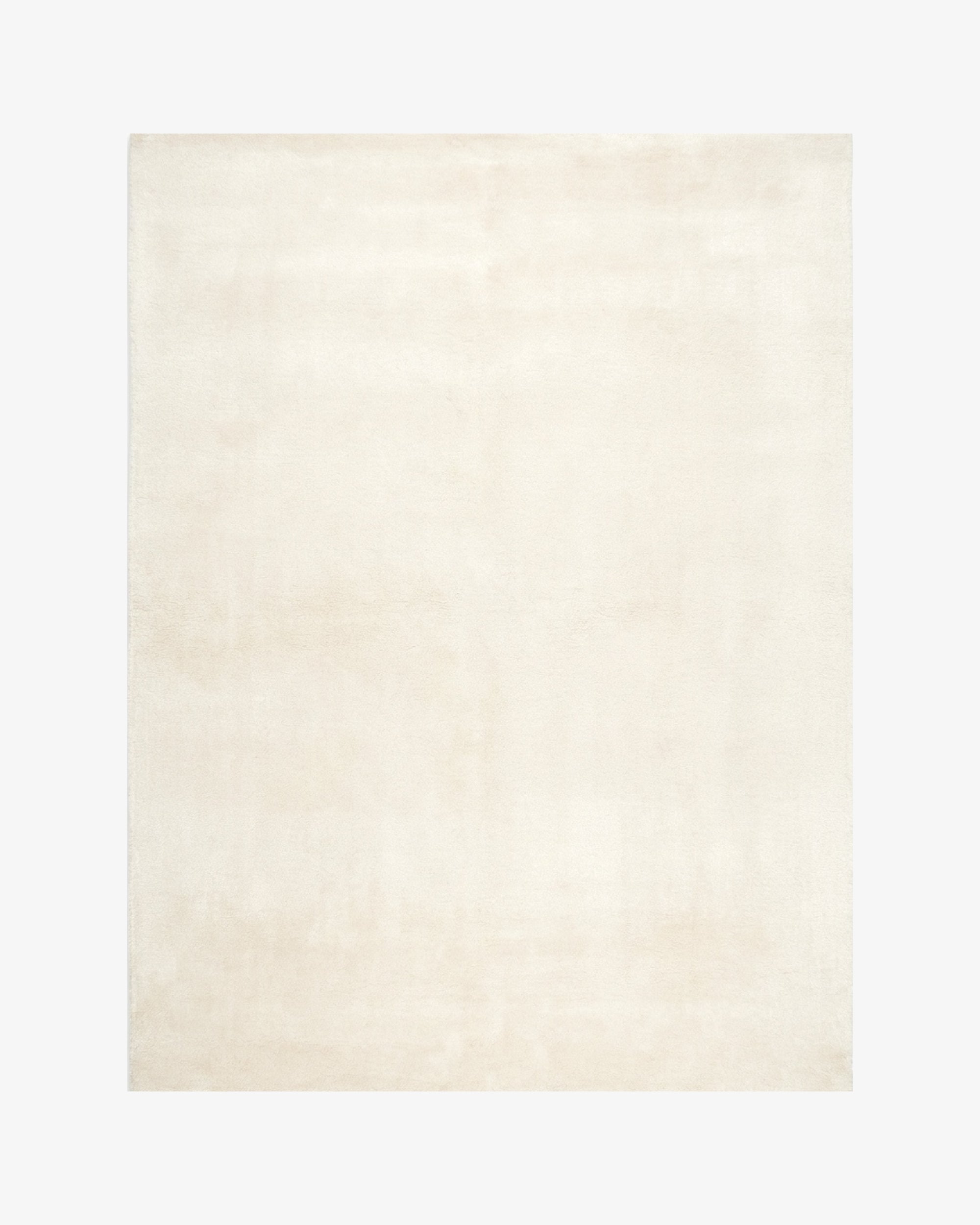
- Plush Wool Rug in ivory: handloom New Zealand wool with a deep, quiet pile, from about ₹40,000.
- Ivory Wool Rug: hand tufted New Zealand wool, plain and soft, from about ₹36,000, and the easiest of the three to place under any bed linen.
The full Rugberry Cashmere Collection shows the other colourways.
Frequently asked questions
Should the rug go under the bedside tables?
Only in the full layout, where the rug is large enough to hold both tables and the bed. In the two thirds layout the tables stay on the floor and the rug begins just below them.
Can I use a runner on one side of the bed only?
Yes, when the other side of the bed is against a wall. A single runner on the open side is a neat solution for a smaller bedroom or a child's room.
Does a rug under a bed need an underlay?
An underlay helps on polished marble or vitrified tiles, where a rug can creep when you sit on the edge of the bed. Under a full layout the bed holds the rug in place, so an underlay matters less.
Open every door, then choose the layout. Material first.




Leave a comment
This site is protected by hCaptcha and the hCaptcha Privacy Policy and Terms of Service apply.