

Sustainable Rugs: Recycled and Natural Fibre Options
A sustainable rug is one made from honestly labelled materials, built by hand, sized correctly and kept in use for many years. At Rugberry, the clearest options are the handwoven reversible rugs in recycled and natural fibres, and the handwoven jute rugs.
In short
- The Rugberry Stella, Rift and Sandstorm reversible rugs are handwoven and labelled as made of recycled and natural fibres.
- A reversible rug has two usable faces, so turning it over extends its useful life without buying a new one.
- The Rugberry Kora Jute Rug is handwoven in jute, a plant fibre, and is described as plant-spun and hard wearing.
- The greenest rug is often the one bought at the right size and kept for a long time, whatever its fibre.
What makes a rug a more sustainable choice?
Four things matter most: what the fibre is, how the rug is made, whether it is the right size, and how long it stays in use. A rug that is replaced every two summers is rarely green, whatever the label says.

Handwoven rugs use no power loom, and flatweaves need no adhesive backing, which keeps the materials simple. Choosing the correct size the first time avoids a second purchase, and a rug that can be cleaned and turned lasts longer.
None of this makes any rug free of impact. The honest aim is a rug with fewer, plainer materials that you will keep.
What does recycled and natural fibres mean on a Rugberry label?
It means the rug's yarn includes recycled fibre alongside natural fibre, as stated on the product page. Rugberry lists the material line as "recycled and natural fibres" for its handwoven reversible rugs, and that label is the claim; it does not give a percentage.


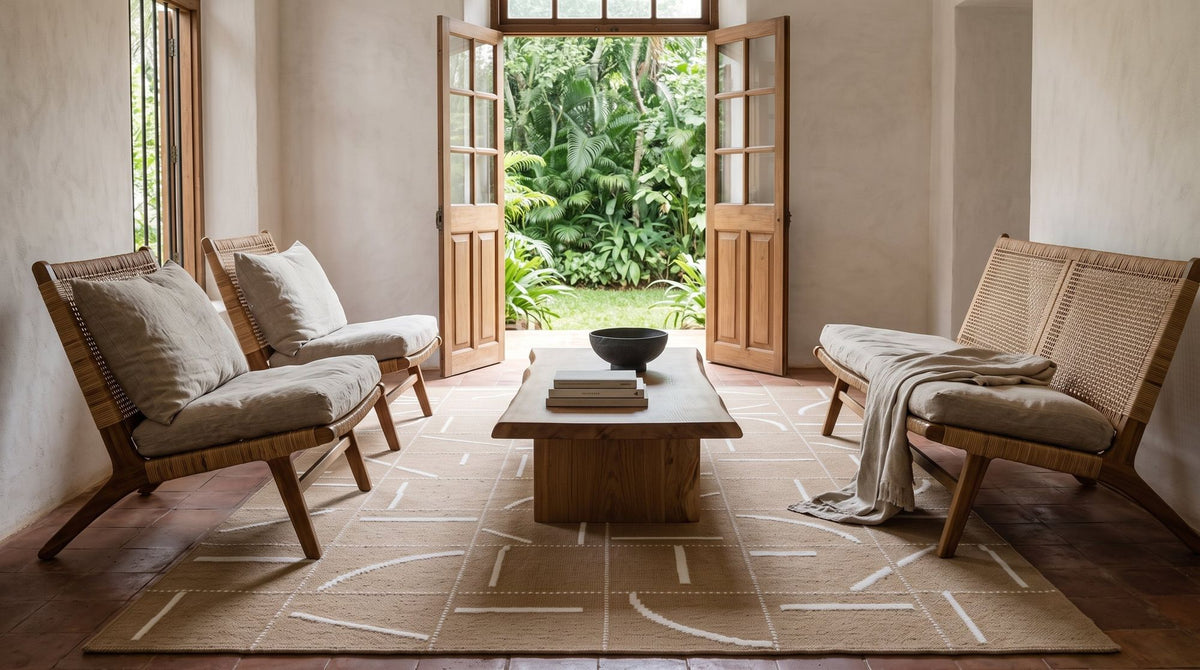
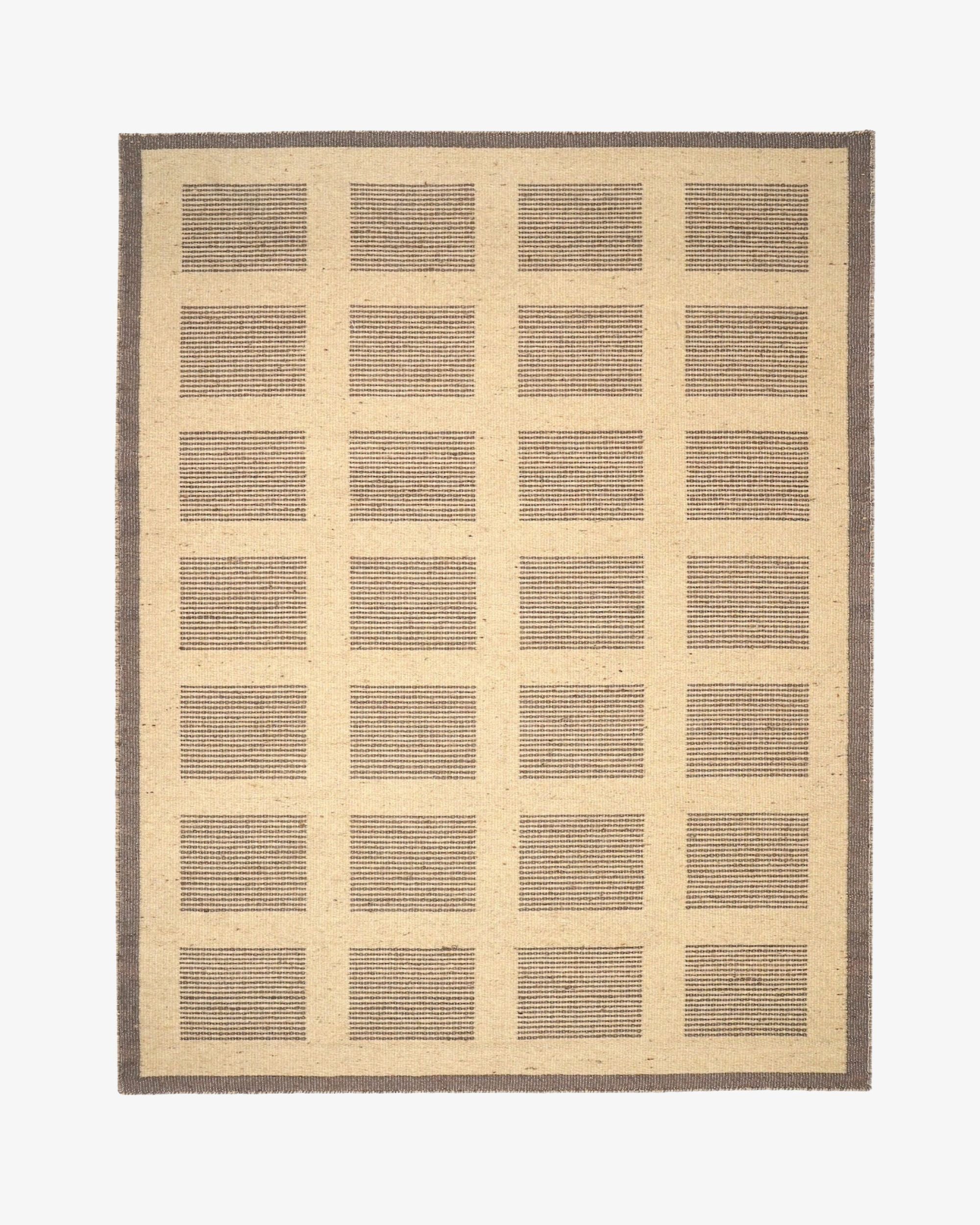
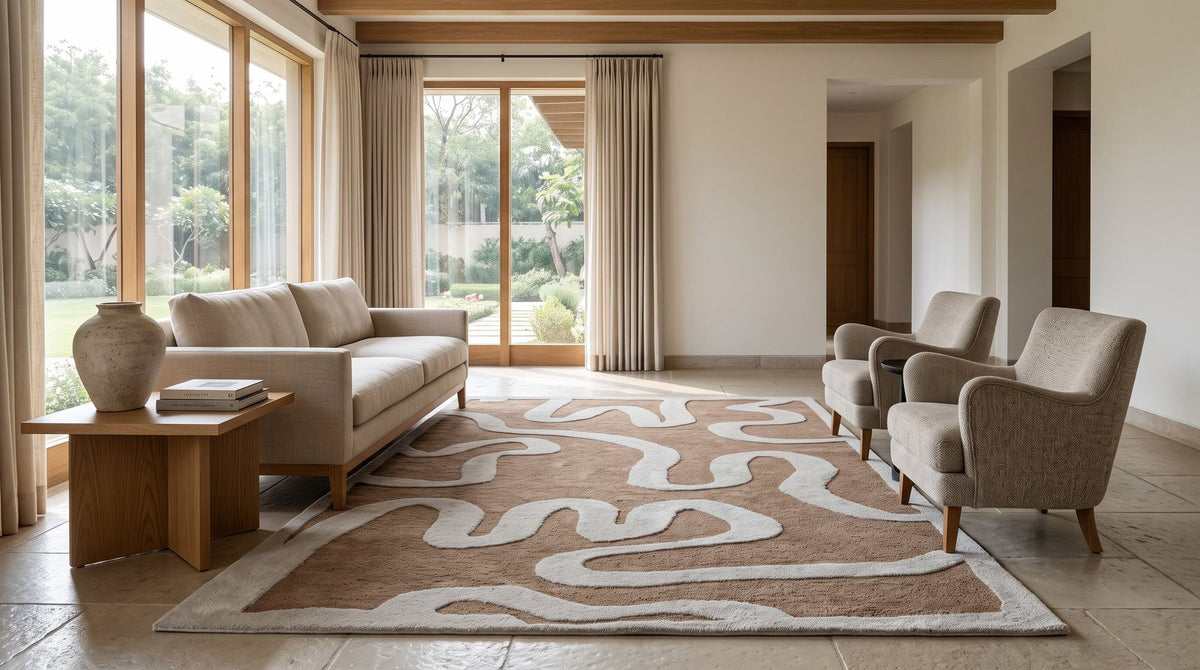
The Stella Reversible Rug, in brown and rust tones, is 5x8 ft from about ₹24,000. The Rift Reversible Rug, in black and beige, is 6x9 ft from about ₹30,000. The Sandstorm Reversible Rug comes in 5x8, 6x9 and 8x10 ft, from about ₹24,000.
If a project needs exact figures for a green building rating, ask for them in writing rather than relying on a general label. The glossary entry on recycled fibre explains the term.
Why does a reversible rug count as a greener choice?
A reversible rug has two faces you can use, so when one side has seen a few years of sun or footfall, you turn it over and start again. That doubles the useful surface of a single rug.

The flat, light weave also helps in Indian homes. It is easy to lift, shake out and dry in the sun after the monsoon, which keeps it fresh without heavy cleaning. The Sustainable Rugs collection holds all the reversible rugs.
For a home that wants a lower impact rug for everyday use, choose a reversible flatweave over a deep pile rug, because it is lighter, simpler to clean and gives you two faces.
The greenest rug is usually the one bought at the right size and kept for years.
Is jute a greener rug fibre?
Jute is a plant fibre, spun from the stem of the plant, and it has long been used for sacking and matting because it is strong and plentiful. As a rug fibre it needs no chemical finish to feel right, and it ages in colour rather than wearing out quickly.


The Kora Jute Rug is handwoven in jute, described as plant-spun and hard wearing, and better looking as it ages. It comes in 5x8, 6x9 and 8x10 ft, from about ₹28,000. More jute rugs sit in the jute collection.
Jute's limit is water. It does not suit damp floors, bathrooms or monsoon balconies, and a rug that rots in a damp corner is not sustainable at all.
What should architects ask when a brief says green interiors?
When a client brief asks for sustainable finishes, the rug schedule deserves the same scrutiny as the paint or the timber. A few direct questions help:

- What exactly is the fibre? Ask for the material line as stated, not a description.
- How is it built? Handwoven, handloom, hand knotted or hand tufted, and whether there is an adhesive backing.
- Can it be made to size? A rug made to the exact plan avoids offcuts and a second order. Most Rugberry rugs are listed with any size to order.
- How is it cleaned? A rug that can be washed and turned stays in service longer.
- What documents can be supplied? If a rating system needs data, ask early and in writing.
How do you make any rug's footprint smaller?
Buy once and buy right. Measure carefully so the rug suits the room for years, and choose a colour that will survive a change of cushions and curtains.

Then look after it: vacuum regularly, turn it every few months, and repair a loose edge early rather than replacing the rug. When you move, take it with you; a good rug outlives a flat lease.
Frequently asked questions
Are Rugberry reversible rugs made from recycled material?
The Rugberry Stella, Rift and Sandstorm reversible rugs are labelled as handwoven in recycled and natural fibres. The product pages do not give a recycled percentage.
Is a jute rug eco friendly?
Jute is a plant fibre that is plentiful and needs little finishing, which makes a handwoven jute rug a lower impact choice. It should be kept dry, since damp can damage it.
Is a wool rug sustainable?
A well made wool rug can be a sustainable choice because it lasts a long time, can be cleaned and repaired, and is a renewable fibre. Its long life is the main reason.
Can a sustainable rug be used in a living room with heavy use?
Yes. A handwoven reversible rug or a jute rug handles daily use well in a dry living room, and the reversible ones can be turned to spread wear across both faces.
Choose plain materials, the right size, and keep it. Material first.



Leave a comment
This site is protected by hCaptcha and the hCaptcha Privacy Policy and Terms of Service apply.