

Rugberry Journal
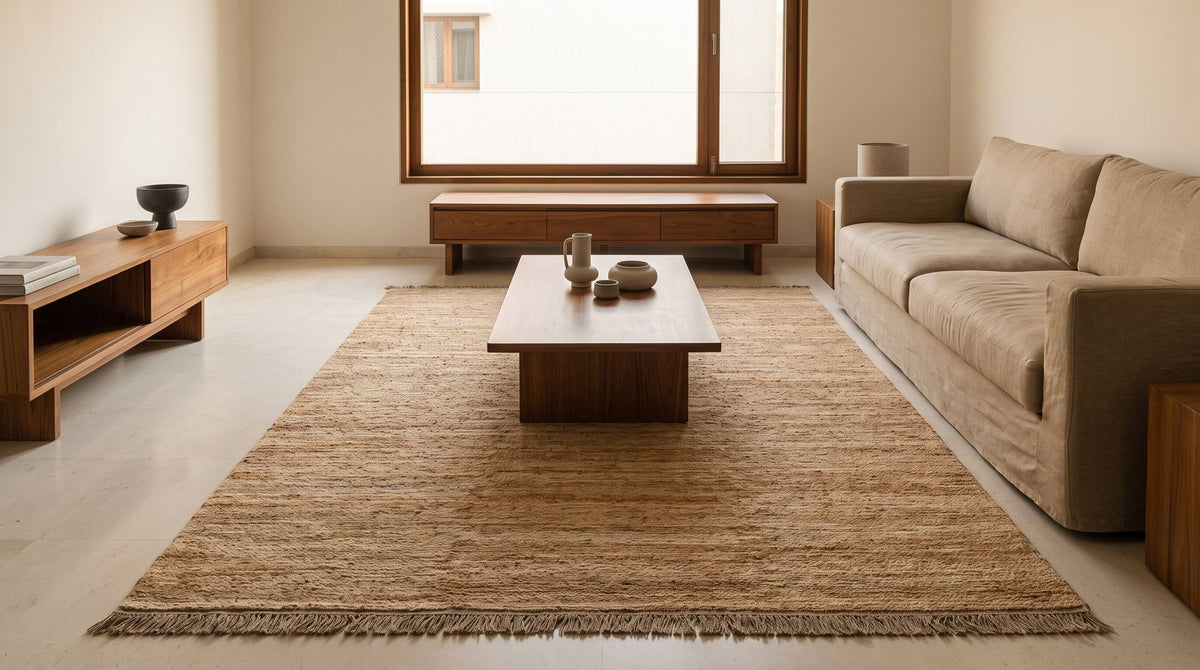
Wabi Sabi and the Handmade Rug
Wabi sabi finds beauty in the irregular and the worn. Here is how jute and handloom wool rugs bring that quality to an Indian home, and how to tell character from a fault.
Read more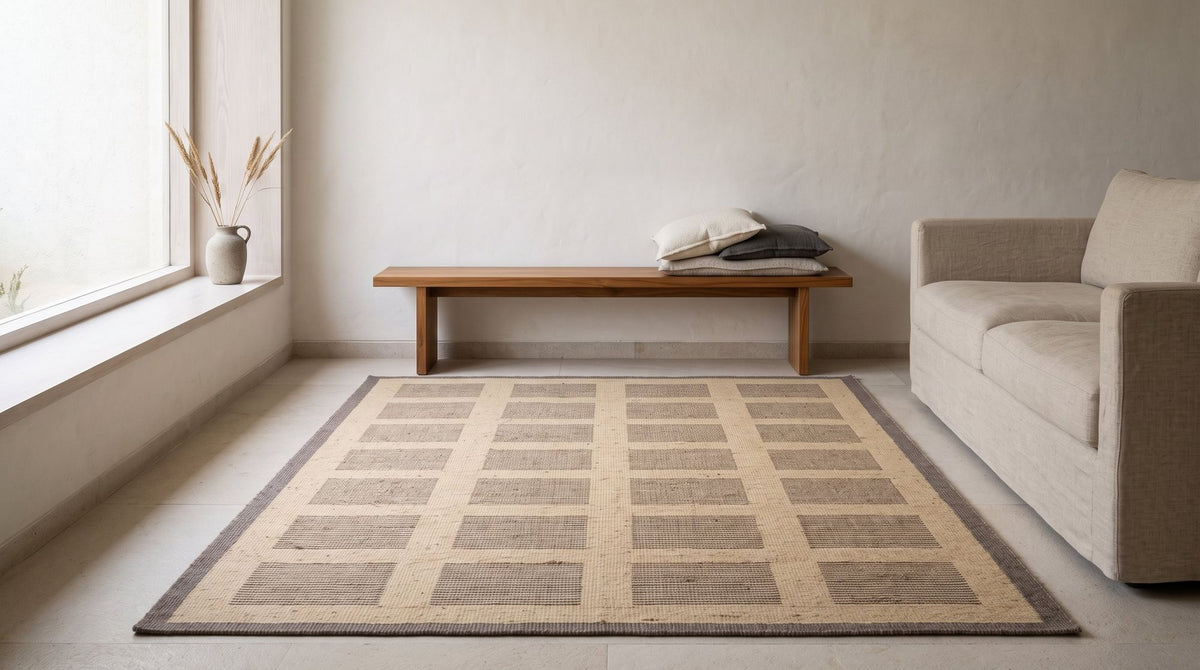
Japandi Rugs: Texture Over Pattern
Japandi rooms rely on low furniture, pale wood and honest materials. The rug carries the texture, so here is how to pick fibre, weave and tone for one.
Read more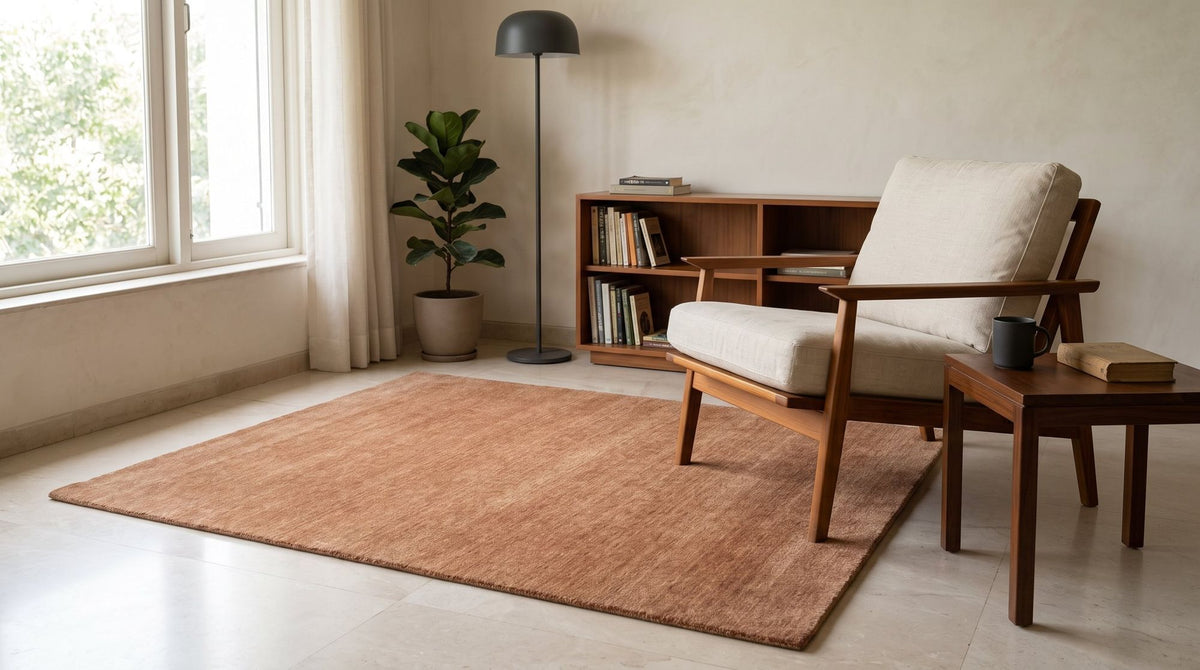
Diyas, Incense and Rugs: Fire Sense at Home
Diyas and agarbatti are part of daily life in many Indian homes. Here is how to keep them and your rugs safely apart.
Read more
Rugs on Kota, Granite and Stone Floors
Kota, granite and Jaisalmer stone each have a strong colour of their own. Here is how to choose a rug that sits well on each, either in tone or in contrast.
Read more
A Daily Rug Routine for Busy Households
Most rug damage in Indian homes comes from the daily jhadu and pocha. Here is a simple routine your household help can follow instead.
Read more
Fringe on Rugs: Why Some Have It
Fringe is the warp of a knotted or woven rug, left long past the last row. Here is why some rugs have it, and how it fares in a busy Indian home.
Read more
Handwoven Flatweave Rugs Explained
A flatweave is a rug woven from warp and weft alone, with no pile standing up. If you grew up with a cotton dhurrie, you already know the family.
Read more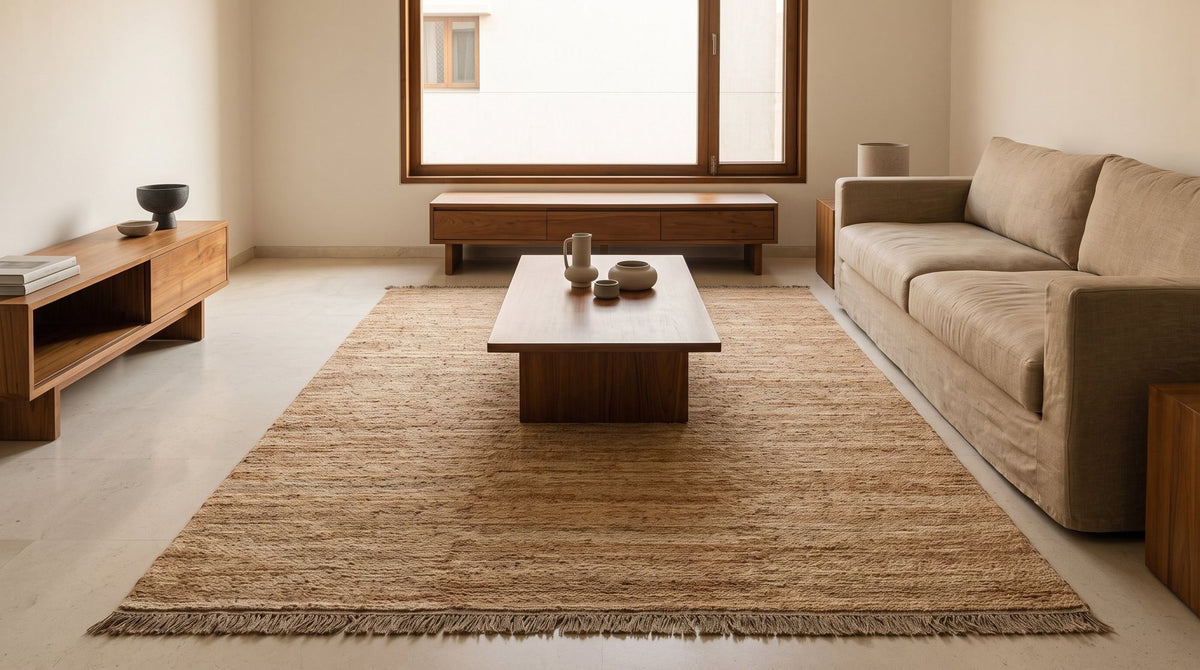
Why Handmade Rugs Have Small Irregularities
A handmade rug is never machine straight. Here is how to tell expected variation from a real fault, and how to check a new rug fairly when it arrives.
Read more
Which Rug Fibres Are Easiest to Clean
Wool, jute, silk and recycled fibres behave very differently with a spilt cup of chai. Here they are ranked for cleaning at home in Indian conditions.
Read more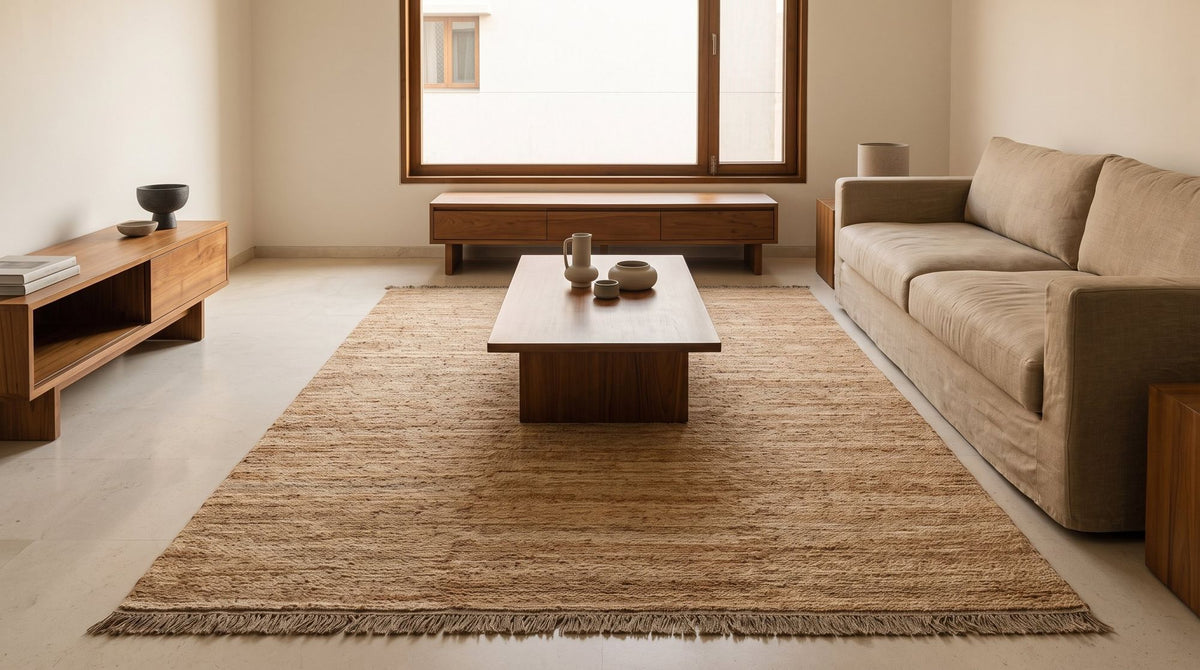
Do Jute Rugs Shed: What to Expect
Jute rugs do shed, as short brittle fibre and a fine dust rather than soft fluff. Here is what to expect on a floor that is swept every day, and how to reduce it.
Read more