



Jute Rug Price in India: What You Pay For
A jute rug in India can cost a few thousand rupees or well over ₹30,000 for 5x8 ft, and the gap is mostly construction. At Rugberry, handwoven jute starts from about ₹23,520 for 5x8 ft and hand knotted jute from about ₹34,440, roughly ₹588 to ₹861 per square foot, inclusive of GST at the time of writing.
In short
- Construction sets most of a jute rug's price: braided and power loom jute is cheapest, handwoven flat jute sits in the middle and hand knotted jute pile costs the most.
- Rugberry's handwoven jute rugs, Kora, Masai and Pampas, are listed from about ₹23,520 for 5x8 ft, about ₹588 per square foot, inclusive of GST at the time of writing.
- Rugberry's hand knotted Savannah Jute Rug, 15 to 16 mm deep, is listed from about ₹34,440 for 5x8 ft, about ₹861 per square foot, inclusive of GST at the time of writing.
- A jute rug priced far below handmade jute in 5x8 ft is usually machine braided or power loom woven, thin, and sometimes blended with synthetic fibre or backed with latex.
How much does a jute rug cost in India?
A jute rug in India costs a few thousand rupees for a 5x8 ft machine braided or power loom piece, and more than ₹20,000 for a 5x8 ft rug made by hand on a loom. The handmade figures in this guide come from Rugberry's own jute rugs, listed on rugberry.in at the time of writing.

The low end is a broad description of mass produced braided and printed jute sold online, not a Rugberry price, and it varies widely by seller. The handmade end is precise: the five Rugberry jute and wool and jute designs compared below span about ₹23,520 to ₹34,440 for 5x8 ft, inclusive of GST.
That is a wide spread for one plant fibre, and it is fair to ask what the extra money buys. The answer sits in four places: how the rug is built, how its yarn is spun and plied, what else is blended in, and how big it is. Each section below takes one of those in turn. For what jute is and how it is grown and spun, see what is jute.
What does each jute construction cost per square foot?
Per square foot at 5x8 ft, Rugberry's handwoven jute costs about ₹588, its handloom wool and jute blend about ₹714 and its hand knotted jute about ₹861, inclusive of GST at the time of writing. The table sets out each rug, its construction and what that price buys.


| Rug | Construction | Thickness | Sizes listed | From, 5x8 ft | Per sq ft |
|---|---|---|---|---|---|
| Kora Jute Rug | Handwoven jute | 10 mm | 5x8, 6x9, 8x10 ft | ₹23,520 | about ₹588 |
| Masai Jute Rug | Handwoven jute | 10 mm | 5x8, 6x9, 8x10 ft | ₹23,520 | about ₹588 |
| Pampas Jute Rug | Handwoven jute | Flat weave | 5x8, 6x9, 8x10 ft | ₹23,520 | about ₹588 |
| Cabra Wool & Jute Rug | Handloom, New Zealand wool and jute | 7 to 8 mm | 5x8 to 12x15 ft | ₹28,560 | about ₹714 |
| Savannah Jute Rug | Hand knotted jute | 15 to 16 mm | 5x8 to 12x15 ft | ₹34,440 | about ₹861 |
Per square foot figures divide the listed 5x8 ft price by its 40 sq ft and are rounded. Prices include GST at the time of writing and can change with offers.
Verdict: for a dining room or passage where a flat, firm surface is wanted, choose handwoven jute over hand knotted, because it gives the same fibre and character for about a third less per square foot.
Why does a hand knotted jute rug cost more than a handwoven one?
A hand knotted jute rug costs more because every tuft of yarn is tied around the warp by hand, row after row, and it uses far more yarn to build a 15 to 16 mm pile. A handwoven jute rug interlaces yarn into a flat, 10 mm weave, which takes fewer hours and less fibre for the same area.


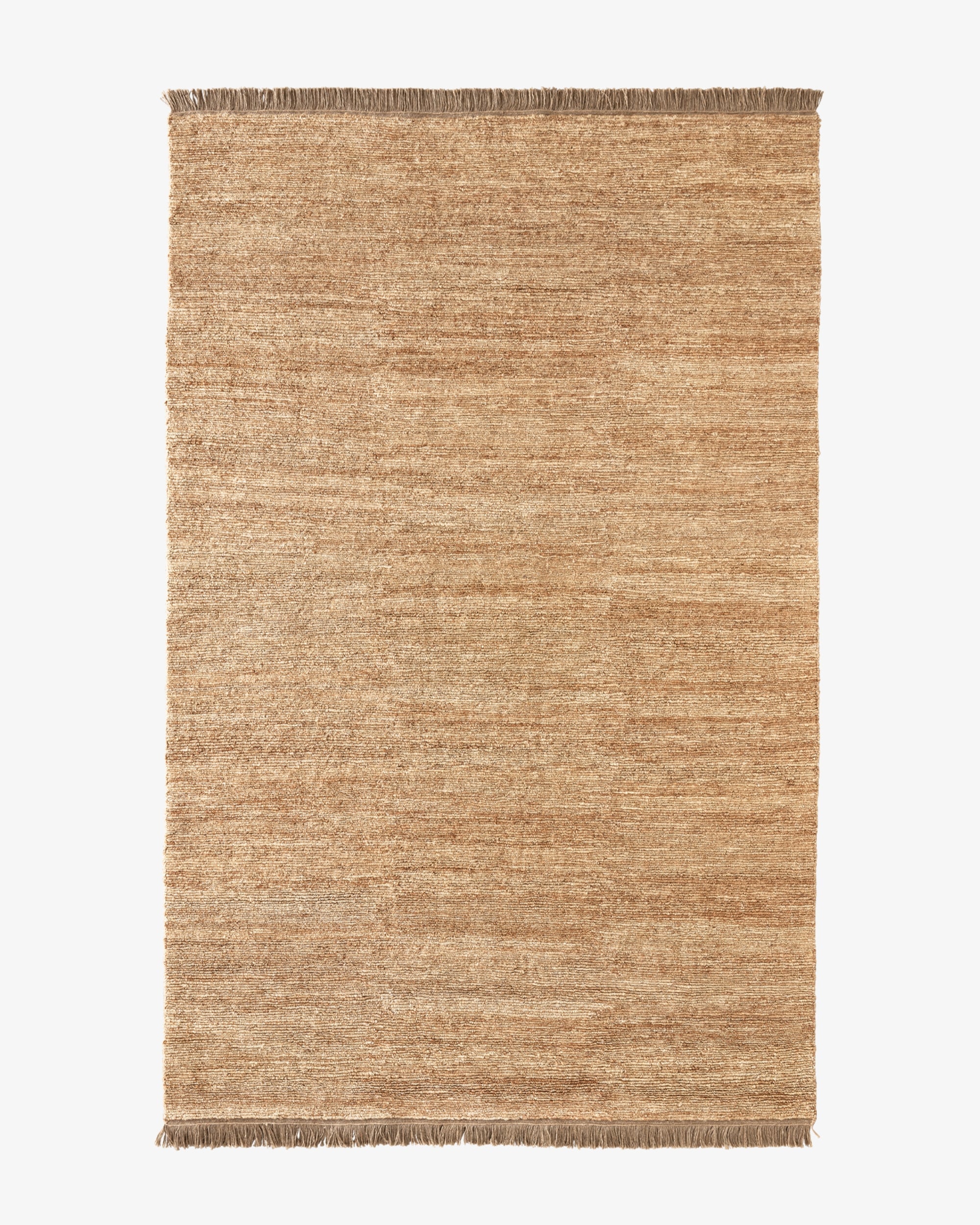
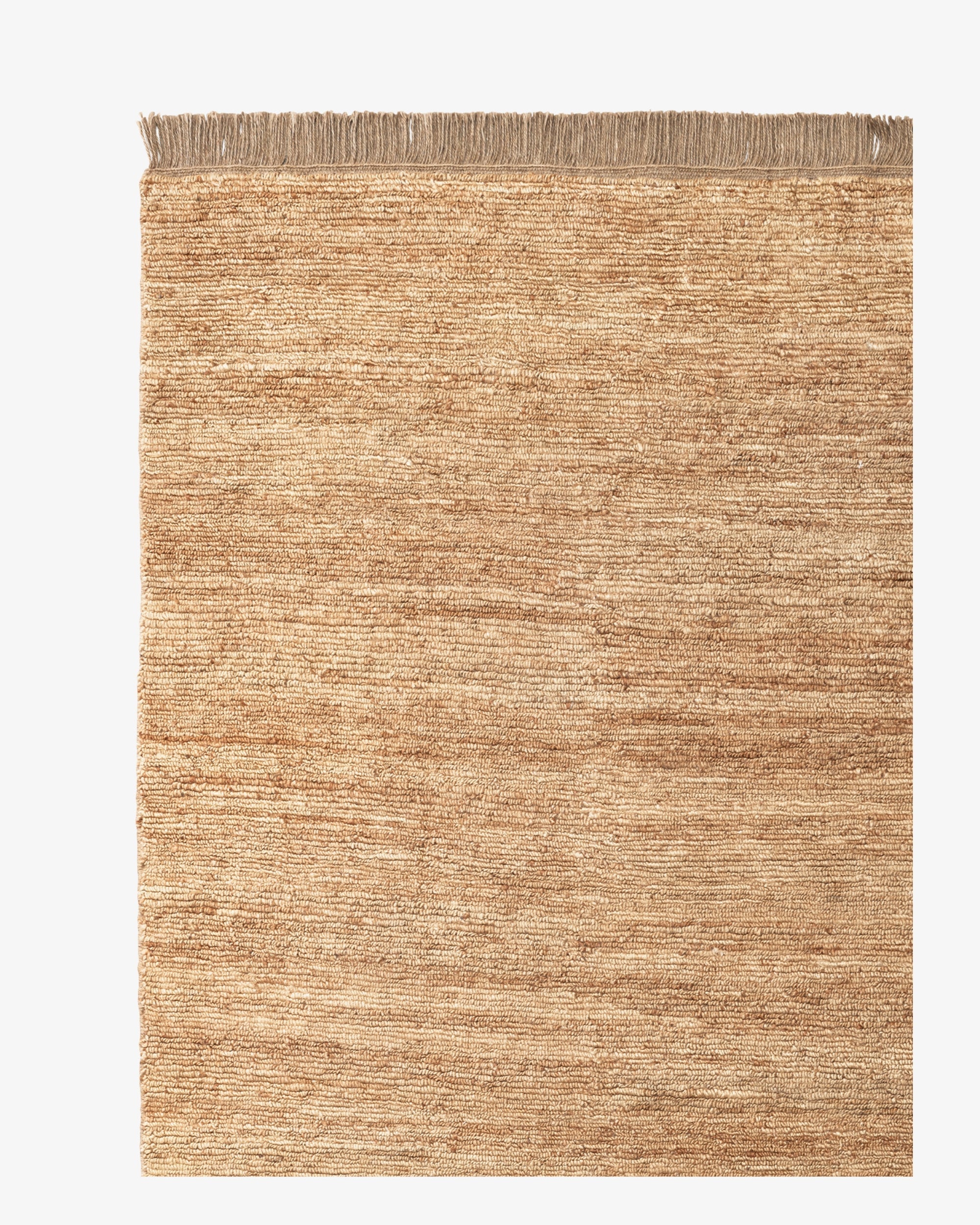
Knotting is the slowest way to make a rug. A weaver ties a knot, cuts the yarn, moves along and repeats, then beats each finished row down tight. The result has depth: the surface of the Savannah Jute Rug in Natural is a dense field of cut jute ends rather than a woven face, and it softens and settles with use. It is listed from about ₹34,440 for 5x8 ft, inclusive of GST at the time of writing.
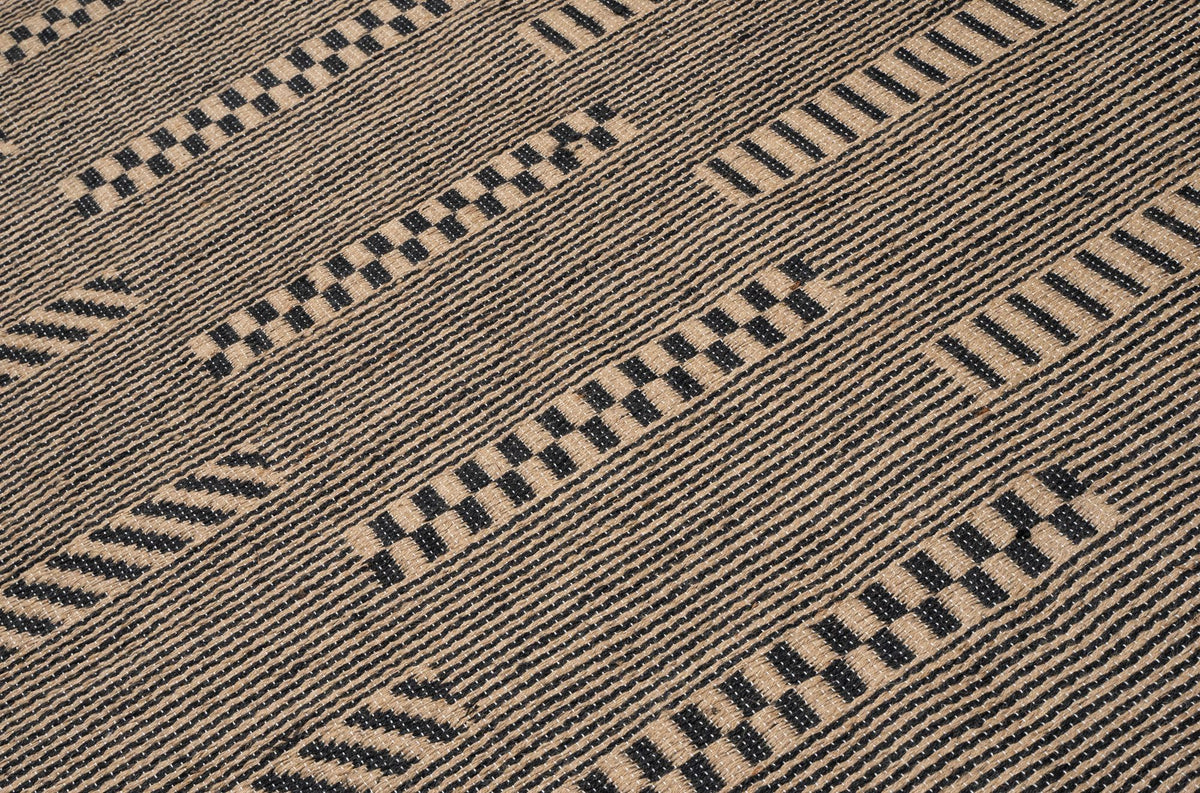
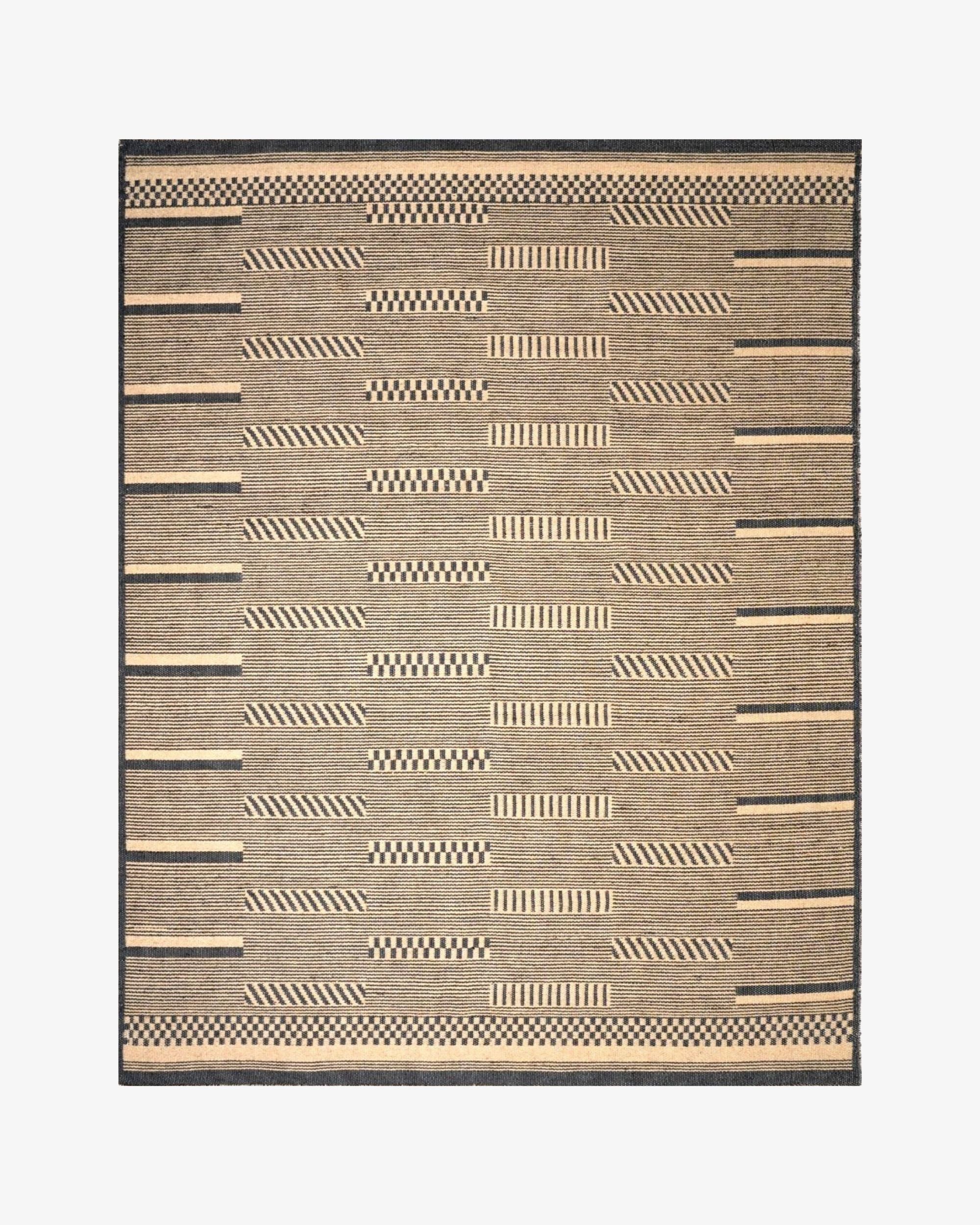
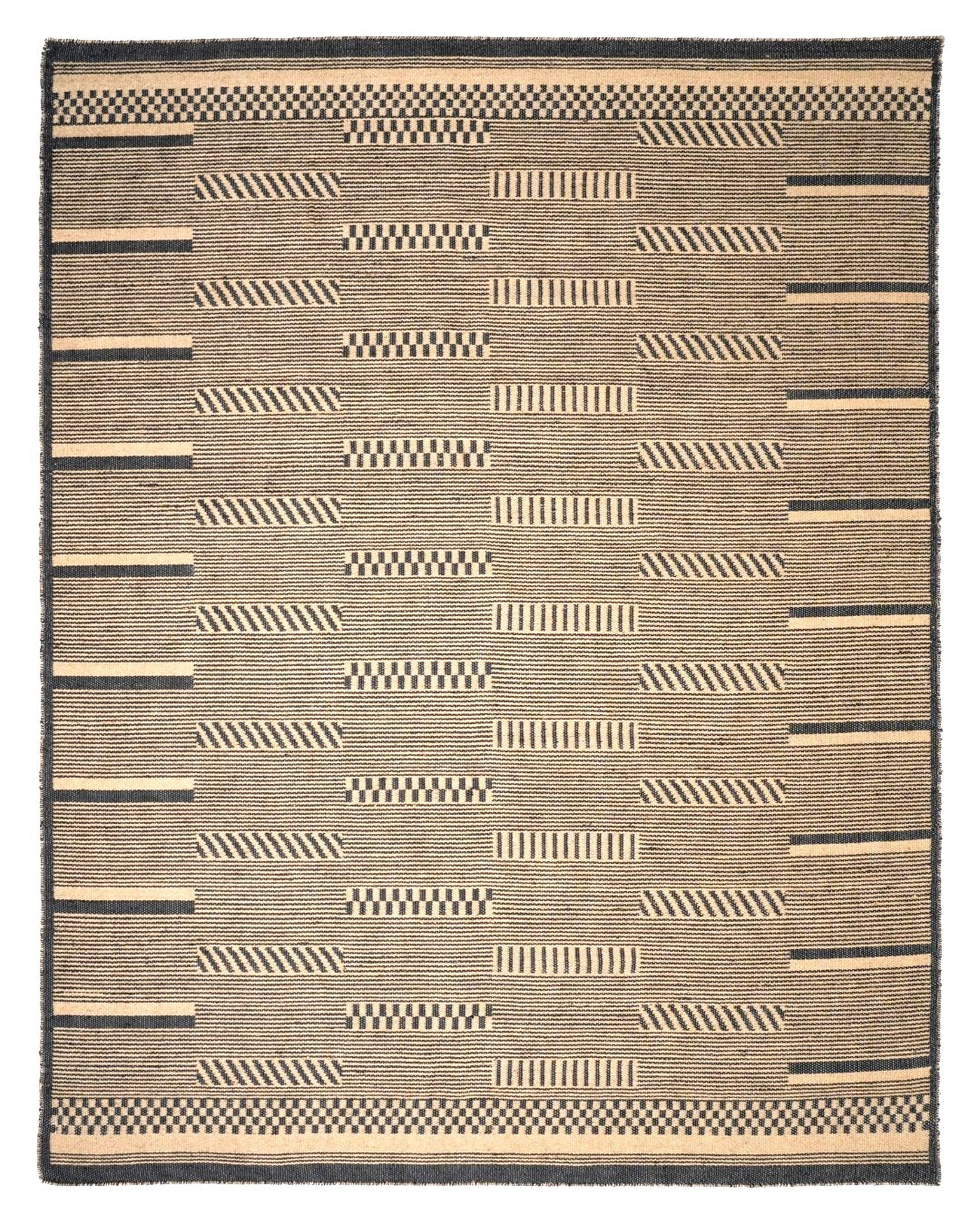
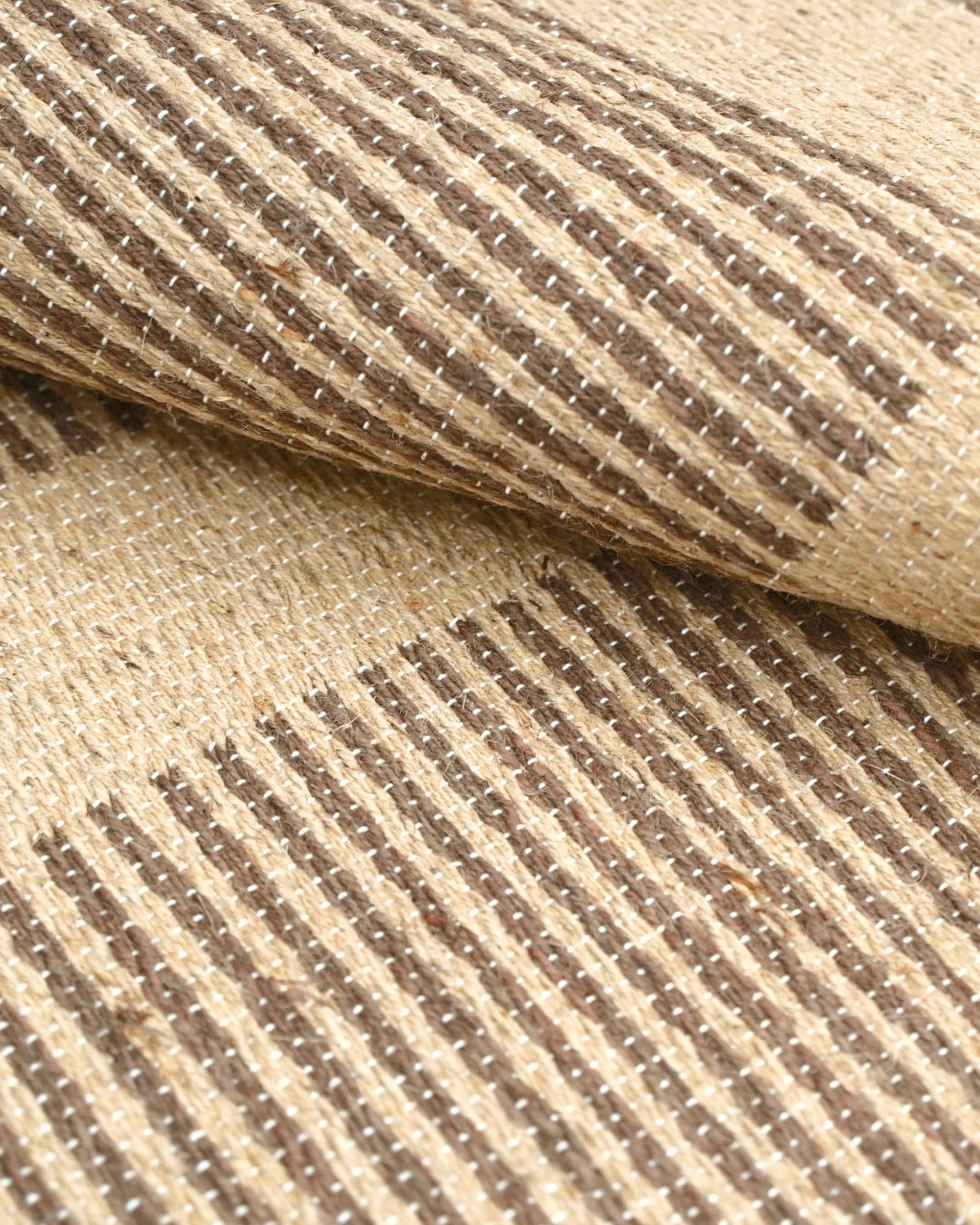
A flat weave builds its surface from the weft itself. The Kora Jute Rug runs bands of darker jute through a natural ground, and it is firm, crisp and quick to lay. It is listed from about ₹23,520 for 5x8 ft, inclusive of GST at the time of writing. Neither is better in absolute terms; they are different rugs for different rooms. Our guide to hand knotted jute explains the knotted surface in more depth.
How does yarn thickness change the price of a jute rug?
Yarn thickness changes the price of a jute rug by setting how much fibre goes into each square foot and how much work it takes to weave it. Thick, well twisted yarn uses more jute and lasts longer underfoot; thin, loosely spun yarn is cheaper and frays sooner.
Jute yarn is spun from long plant fibres, then plied, which means two or more strands are twisted together. A heavily plied yarn is round, strong and even, and a rug built from it feels substantial when you lift a corner. A single, loosely spun yarn is flat and hairy, and it tends to shed more and wear into paths along the walkways of a room.
You can test this without any tools. Lift the rug's corner: a well made 5x8 ft jute rug has real weight. Look at the yarn on the surface: it should be round and twisted, not flat. Bend a corner back: the weave should spring back rather than crack or open. Some shedding is normal in any new jute rug; our guide to whether jute rugs shed explains what to expect.
Two jute rugs can look alike in a photograph and weigh twice as much as each other.
What does blending wool into jute add to the price?
Blending wool into jute adds cost because New Zealand wool is a more expensive fibre than jute and is spun and dyed separately. It buys a softer hand, better resistance to damp and a richer colour range than jute alone can take.


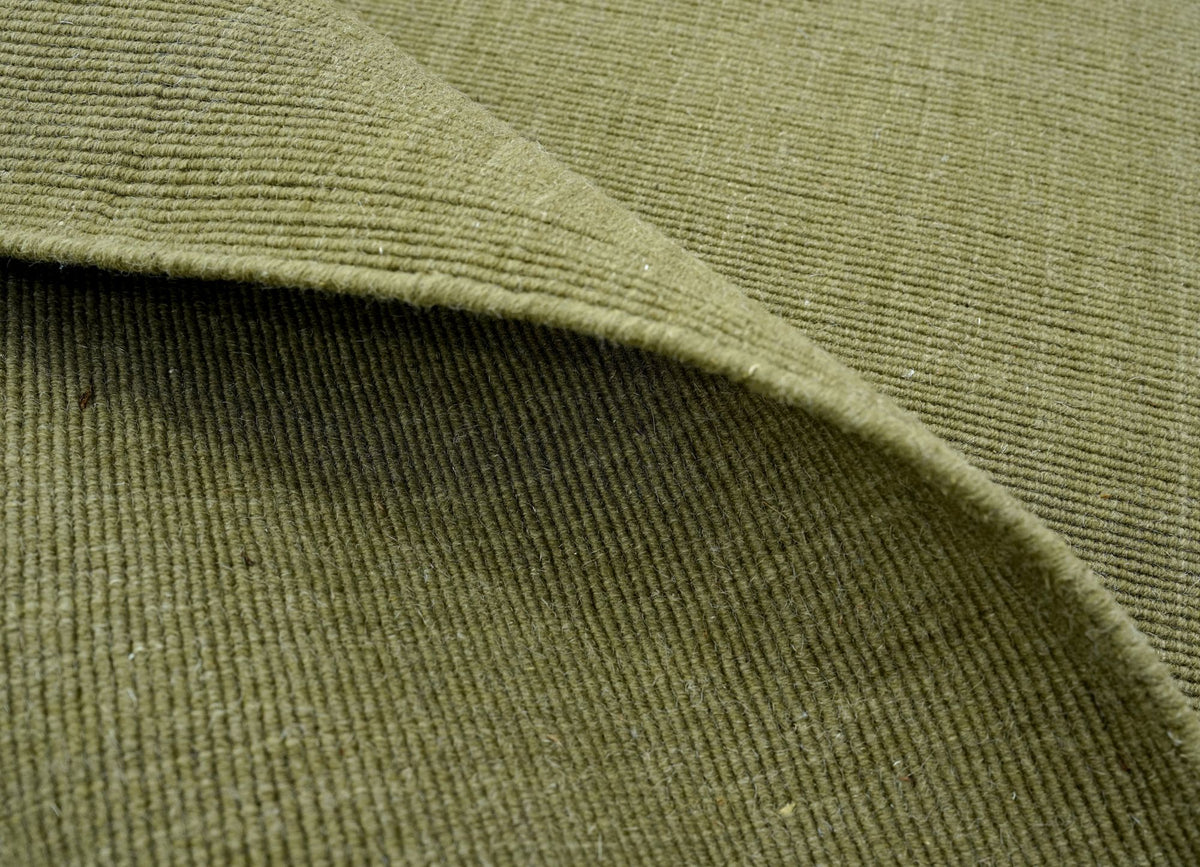
The Cabra Wool & Jute Rug is handloom woven in New Zealand wool and jute at 7 to 8 mm, in Olive, Rust and Sand, and listed from about ₹28,560 for 5x8 ft, inclusive of GST at the time of writing. That is about ₹126 more per square foot than handwoven jute. Wool absorbs moisture without feeling wet and dries faster, so a blend is the safer choice for a humid city or a ground floor room.
Jute is also sometimes woven with plant based sheen fibres such as Botanical Silk, which lift its surface with a soft glint. Those blends cost more than plain jute for the same reason: a second, more expensive fibre, and more care in weaving two yarns that behave differently. Read wool or jute for how the two fibres compare in daily use.
What is a very cheap jute rug usually?
A very cheap jute rug is usually machine braided, power loom woven or printed, made from thin single ply yarn, and sometimes mixed with synthetic fibre or held together by a latex or PVC backing. It can look fine in a listing photograph and still be a different product from a handmade jute rug.


The common forms are easy to spot once you know them. A braided rug is a long plait of jute coiled into a round or oval and stitched together; the stitching is what fails first. A power loom jute rug has a perfectly regular surface with no variation from row to row. A printed jute rug has its pattern on the surface only, so the design fades and wears while the fibre underneath is plain.
Check the back. A handmade jute rug shows the same yarn on both faces, or the knots and warp of the loom, with nothing glued on. A rubbery or plastic backing usually means machine production, and on Indian floors it can trap moisture and mark polished stone over time. Our guide to telling handmade from machine made covers more tests.
None of this makes a cheap jute rug wrong. For a balcony, a rented flat or a children's room that will change in two years, an inexpensive braided rug can be the sensible buy. Just compare it with other cheap rugs, not with a hand knotted one.
How does size change what you pay for a jute rug?
Size changes a jute rug's price roughly in step with its area, so an 8x10 ft rug of 80 sq ft costs about twice a 5x8 ft of 40 sq ft. Larger sizes also ask for a wider loom and more handling, which can nudge the rate per square foot a little in either direction.
Rugberry's handwoven jute rugs, Kora, Masai and Pampas, are listed in 5x8, 6x9 and 8x10 ft. Savannah and Cabra go up to 12x15 ft, which suits large living rooms and open plan spaces. The exact price for each size appears on the size selector of each product page, inclusive of GST.
The Masai Jute Rug is a good example of the entry point: handwoven in natural jute at 10 mm, with a pattern of darker diamonds and lines, listed from about ₹23,520 for 5x8 ft inclusive of GST at the time of writing. Every Rugberry jute design can also be made to measure in any size, and a made to measure size is quoted from the area and construction. For a full view of size and price, see how rug size changes the price.
Frequently asked questions
What is the cheapest handmade jute rug at Rugberry?
The handwoven Kora, Masai and Pampas jute rugs are Rugberry's most affordable jute designs, each listed from about ₹23,520 for 5x8 ft inclusive of GST at the time of writing. All three are firm, flat and natural in colour with darker woven patterns.
Is a hand knotted jute rug worth the extra cost?
It is worth it where you want depth and softness underfoot, such as a living room or a reading corner. In a dining room or entrance, a flat handwoven jute rug does the job well for less.
Why is jute cheaper than wool?
Jute grows quickly as a crop in eastern India and Bangladesh and needs little processing before spinning, so the raw fibre costs much less than New Zealand wool. Wool also needs scouring and dyeing, which adds to its cost.
Does a jute rug price include GST in India?
Rugberry's listed prices include GST at the time of writing, so the price on the product page is the price you pay for the rug. Always check whether another seller's price is shown with or without tax before comparing.
How long does a handmade jute rug last?
A well made handwoven or hand knotted jute rug lasts many years in a dry room with regular vacuuming and rotation. Damp is jute's main enemy, so keep it away from wet floors, bathroom doors and ground floor rooms that take moisture in the monsoon.
Pay for the construction you will feel, and the fibre will do the rest. Browse the natural jute rugs to compare all five. Material first.



Leave a comment
This site is protected by hCaptcha and the hCaptcha Privacy Policy and Terms of Service apply.