

What Is Jute: The Plant Fibre Behind the Rug
Jute is a bast fibre, the long strands that run inside the stem of the jute plant, grown widely in eastern India. Spun into yarn, it makes a firm, textured rug with a warm golden tone, hard-wearing in dry rooms and unhappy in damp ones.
In short
- Jute is a plant fibre taken from the stem of the jute plant, and it is the same fibre used for gunny sacks, twine and hessian.
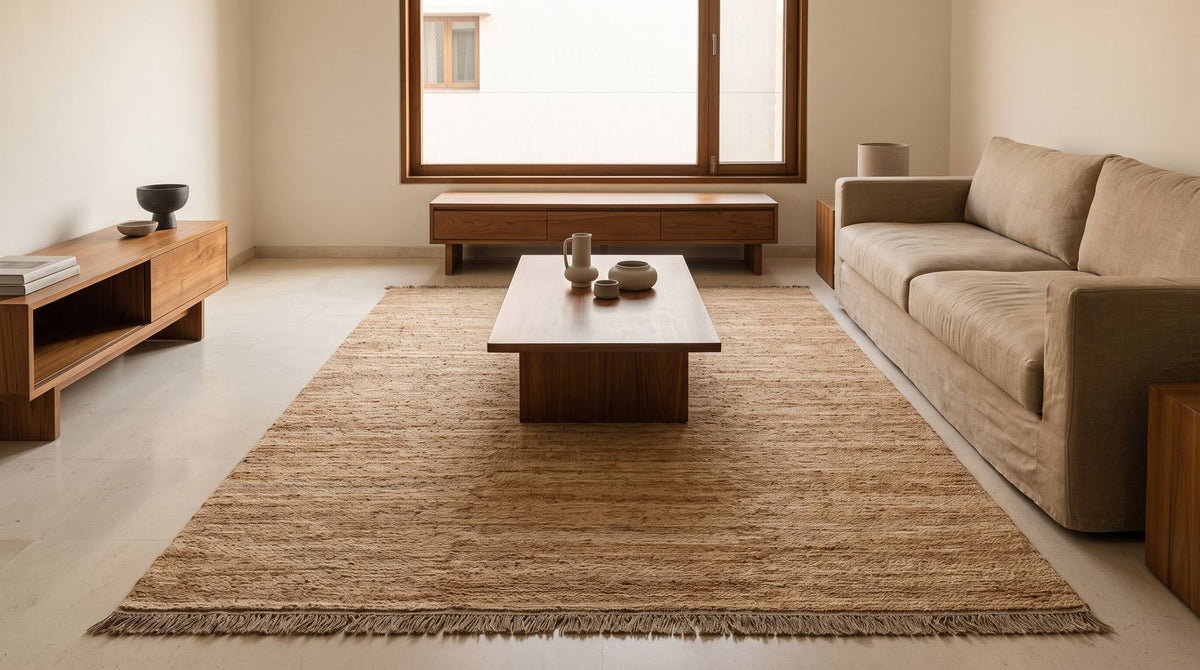
- A jute rug feels firm and textured underfoot, with no soft pile, so it suits entrances, dining areas and living rooms that see shoes and traffic.
- Jute absorbs water quickly and can brown or weaken if it stays damp, so a jute rug belongs away from bathrooms, monsoon balconies and wet mopping.
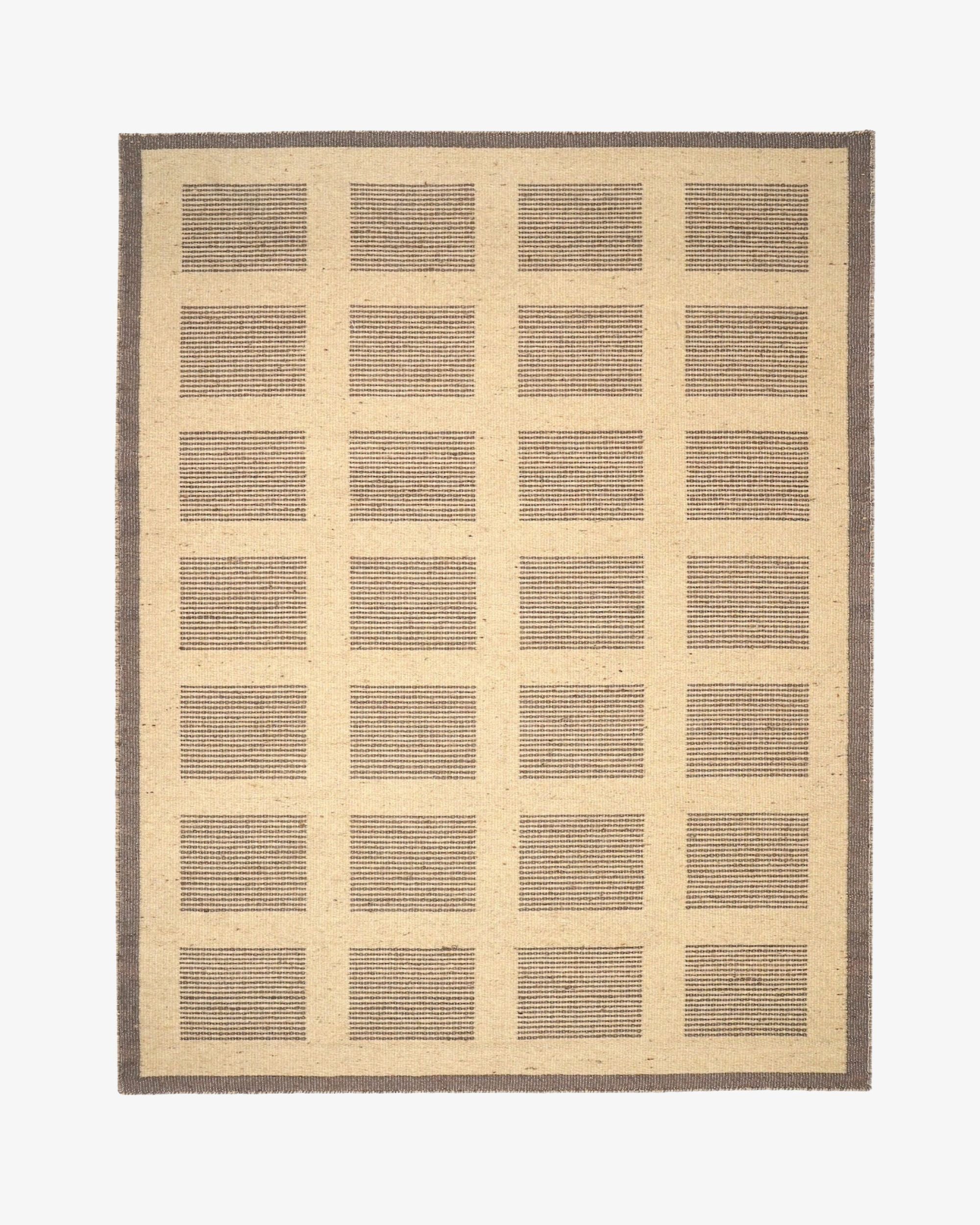
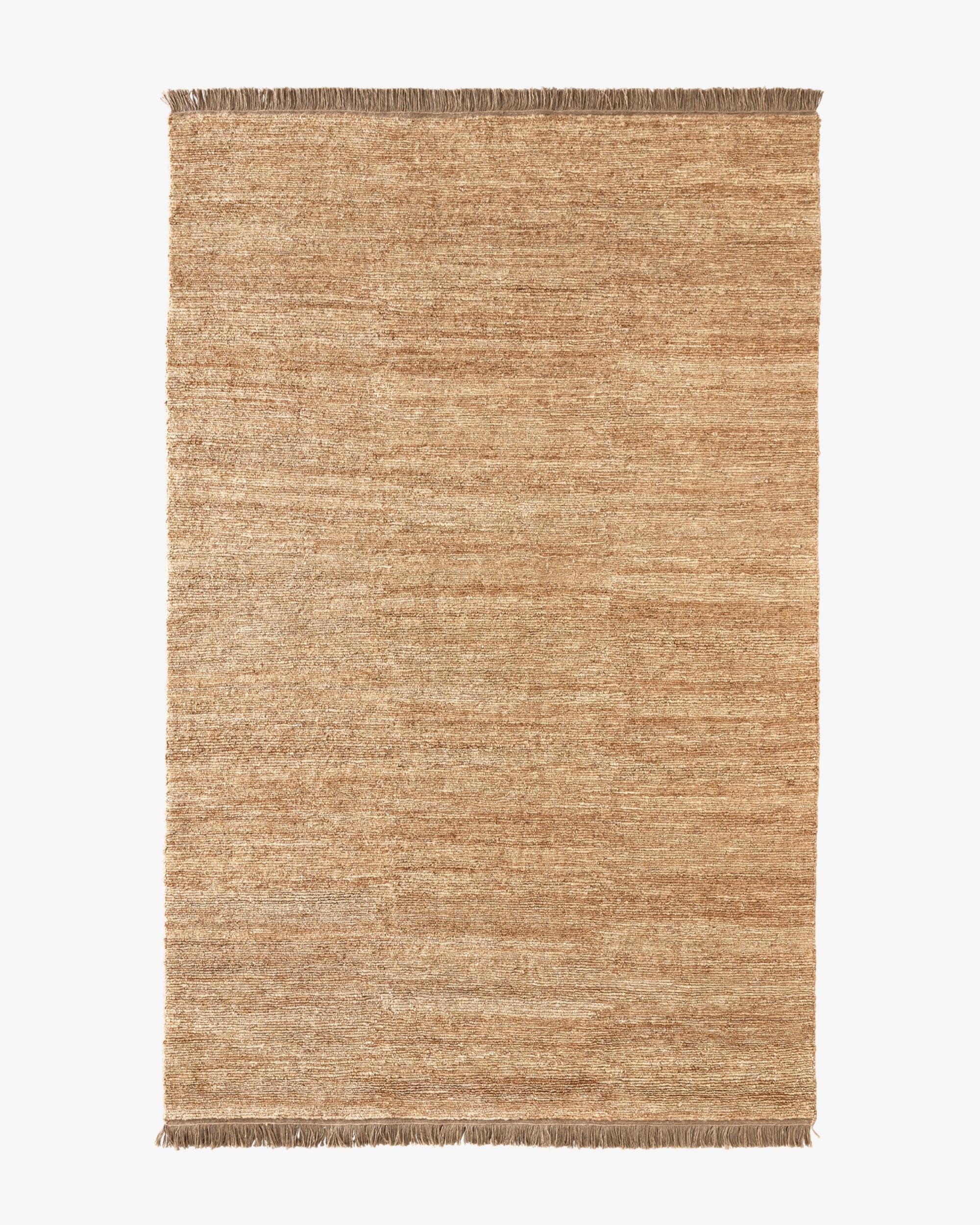
- Rugberry jute rugs include the handwoven Kora and Pampas Jute Rugs from about ₹28,000 and the hand knotted Savannah Jute Rug from about ₹41,000 in 5x8 ft.
What is jute?
Jute is a bast fibre: it grows in the inner bark of a tall, slim plant, between the outer skin and the woody core. Each strand can run as long as the stem itself, which makes it easy to spin into strong yarn.


Jute is mostly cellulose with a good share of lignin, the woody substance that gives plants their stiffness. That lignin is why jute feels firm rather than soft, and why it has been the fibre of sacks and ropes for generations. Our glossary entry on jute sums it up.
How does jute become rug yarn?
Jute becomes yarn in four broad stages, and every one of them is about separating the fibre from the rest of the plant.

- Harvest. The stems are cut and bundled.
- Retting. The bundles are soaked in water until the soft tissue loosens its hold on the fibre.
- Stripping and drying. The long golden strands are pulled free, washed and dried in the sun.
- Spinning. The fibre is combed and spun into yarn, thick for chunky rugs and finer for close weaves.
The colour you see in an undyed jute rug is the fibre's own, a warm straw gold that varies a little from batch to batch.
What does a jute rug feel like underfoot?
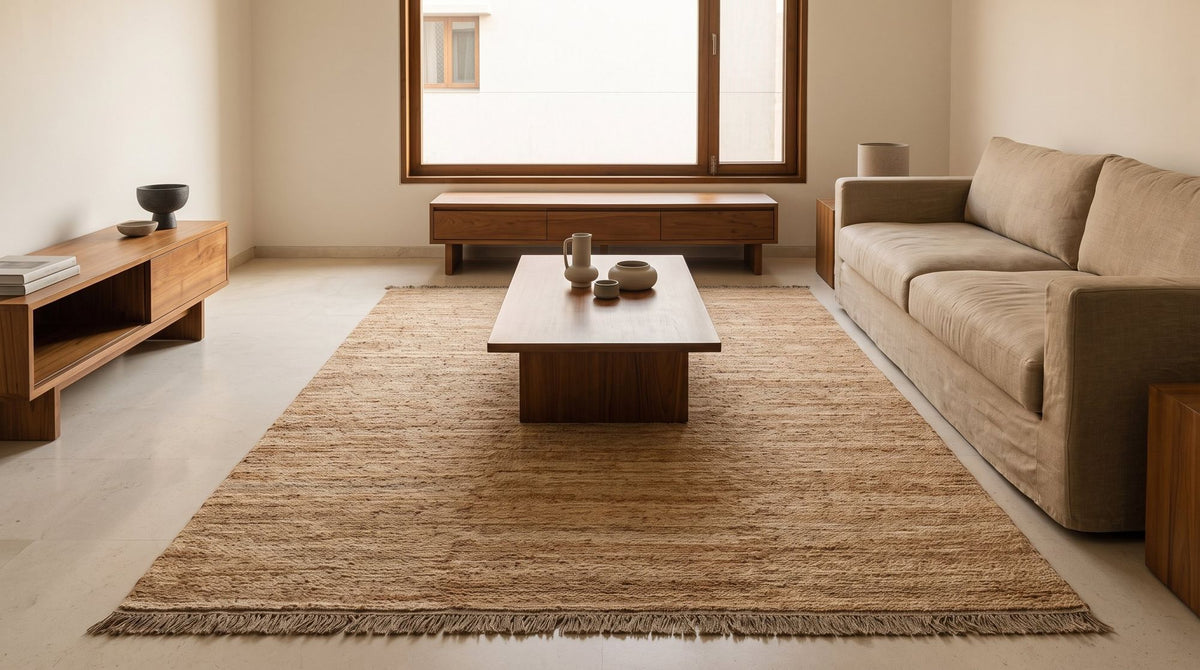
A jute rug feels firm, dry and textured, a little like walking on a well made mat. There is no soft pile to sink into.

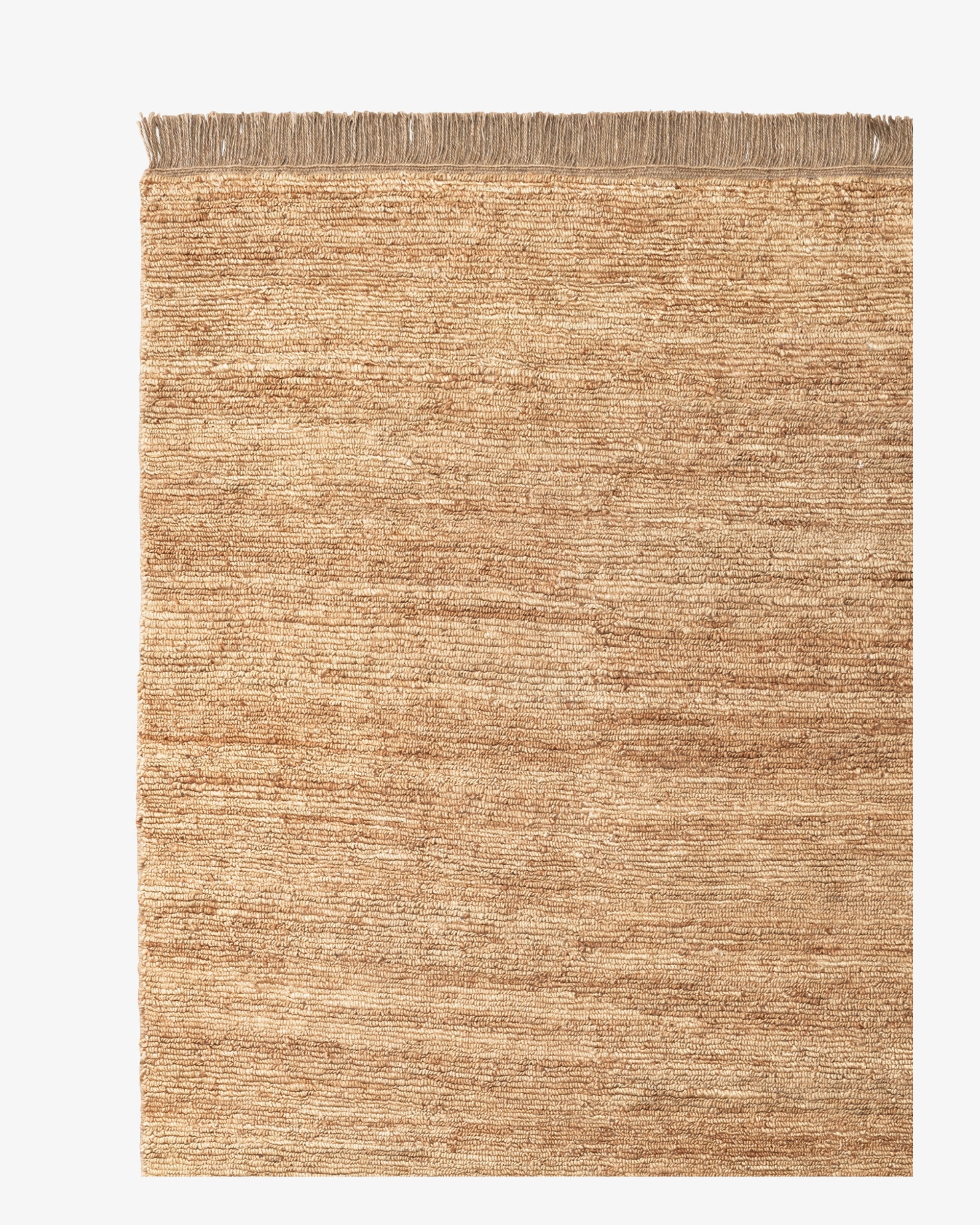
The surface has the natural irregularity of a plant fibre: slightly thicker and thinner yarns, small shifts in tone, a matt finish. Bare feet feel the ribs or knots of the weave, which many people find pleasant in a hot room.
New jute rugs shed a little fine fibre and dust for the first weeks, which a regular vacuum clears. Our post on whether jute rugs shed explains why.
Jute is firm, dry and textured underfoot. It loves a busy room and dislikes a damp one.
How does jute handle Indian weather?
Jute handles dry heat very well and humidity less well. In a Delhi or Ahmedabad summer it stays cool and dry to the touch, and it does not trap warmth the way a deep pile can.


Water is its weakness. Jute absorbs moisture fast, and a spill or a damp floor left to dry slowly can leave a brown mark as natural compounds in the fibre rise to the surface.
- Keep jute off floors that are wet mopped daily, or let the floor dry fully before laying the rug back.
- Blot spills straight away and dry the spot with a fan.
- In a coastal monsoon, lift the rug on very damp days or move it to a drier room.
How do Rugberry jute rugs differ?
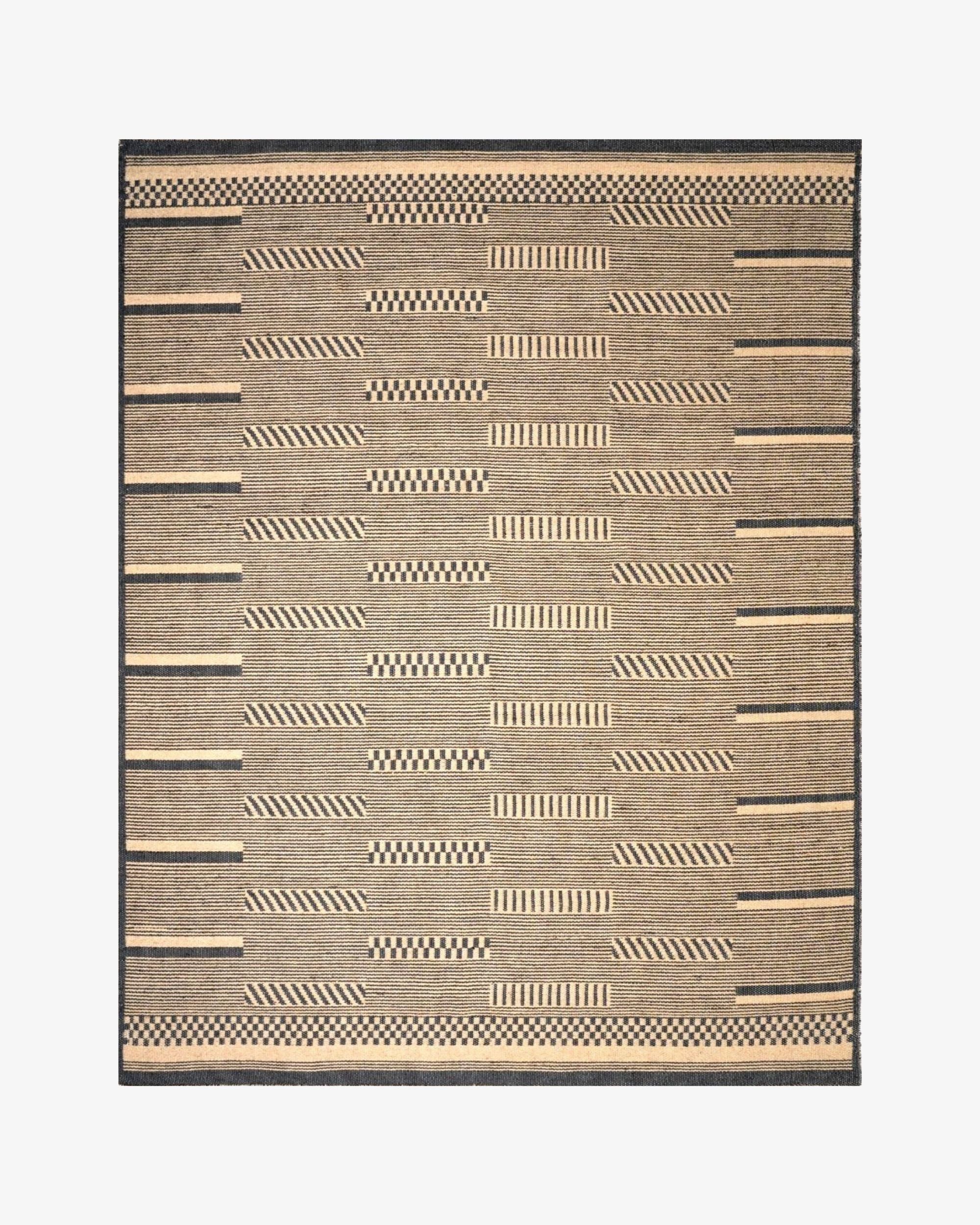
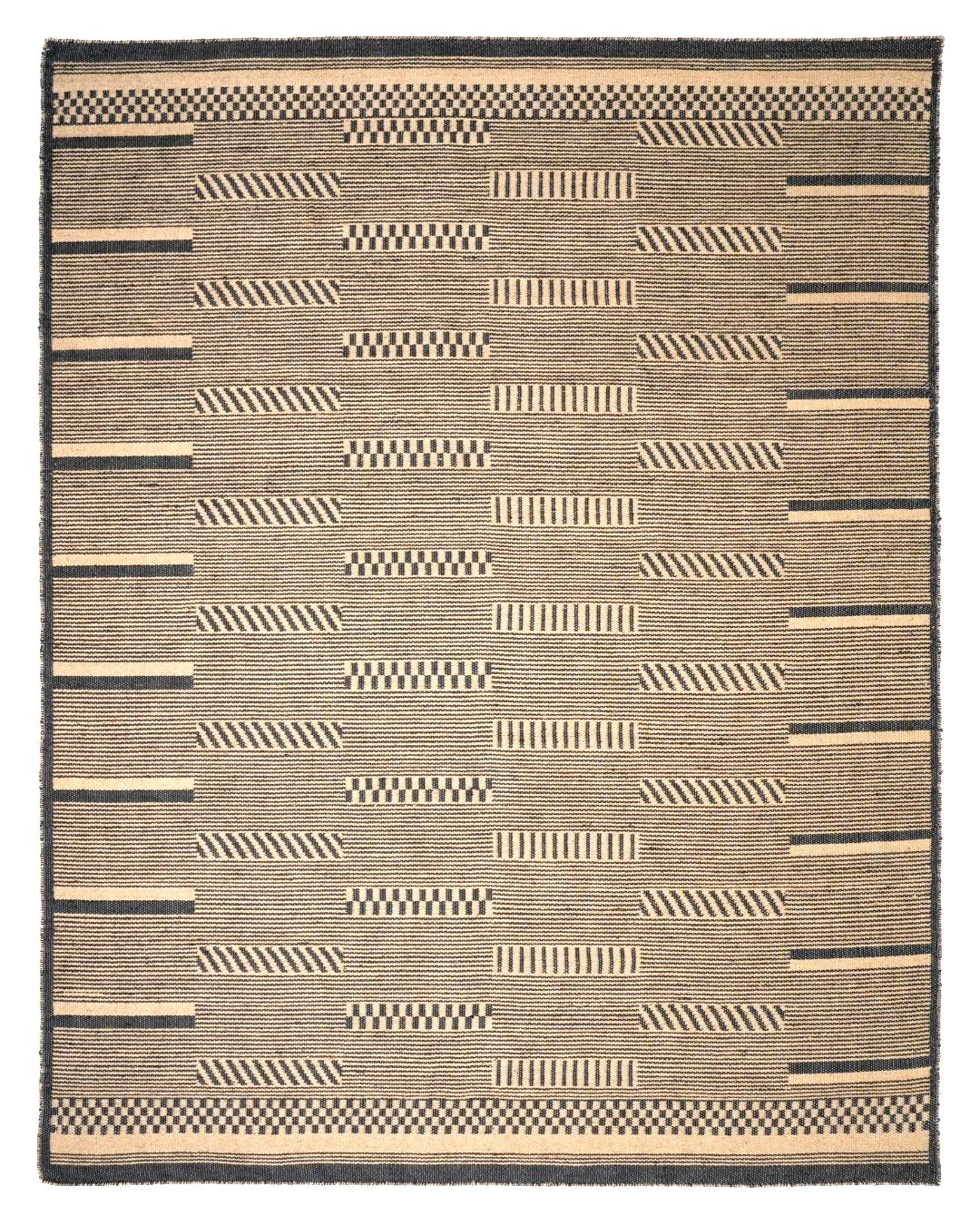
Rugberry jute rugs differ mainly in construction: handwoven flat, or hand knotted for a denser surface. The table compares three of them.


| Rug | Construction | Stock sizes | From |
|---|---|---|---|
| Kora Jute Rug | Handwoven | 5x8, 6x9, 8x10 ft | about ₹28,000 |
| Pampas Jute Rug | Handwoven | 5x8, 6x9, 8x10 ft | about ₹28,000 |
| Savannah Jute Rug / Natural | Hand knotted | 5x8 to 12x15 ft | about ₹41,000 |
The Kora Jute Rug and the Pampas Jute Rug are handwoven, firm and light enough to lift for cleaning. The Savannah Jute Rug in natural is hand knotted, so it is heavier and lies flatter, and it comes in sizes up to 12x15 ft for larger rooms.
Where does a jute rug work best in an Indian home?
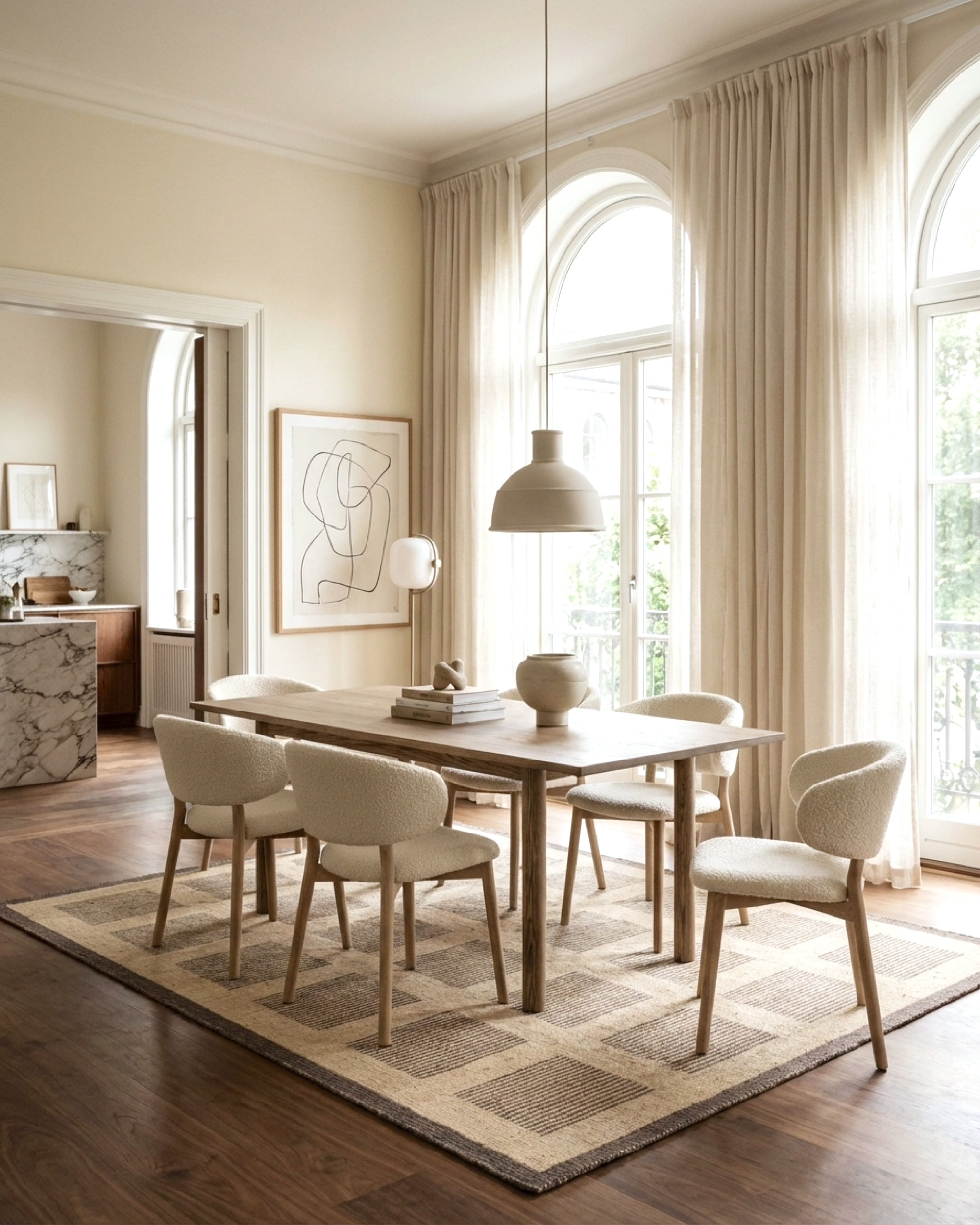
A jute rug works best in dry, busy rooms where shoes and furniture move: an entrance, a family room, under a dining table on a terrace that stays covered. For a dining room with children, choose a handwoven jute over a deep wool pile, because crumbs sit on top of jute and vacuum away easily.

It is less suited to a bedroom where you want softness underfoot, or to a ground floor flat that gets damp in the rains. There, a wool rug is the kinder choice; our comparison of wool and jute rugs goes into the trade-offs.
Frequently asked questions
Is jute the same as sisal?
No. Jute comes from the stem of the jute plant and is softer and more golden, while sisal comes from the leaves of an agave plant and is coarser and stiffer. Both are plant fibres used for flat, textured rugs.
Can a jute rug be washed with water?
It is best not to soak a jute rug. Water can brown and weaken the fibre, so clean it by vacuuming, blot spills quickly and use a rug cleaner who knows plant fibres for anything deeper.
Does a jute rug suit a home with pets?
A flat, tight jute weave suits dogs reasonably well because claws catch less in it. Accidents are the risk, since moisture can stain jute, so clean them straight away.
Lay jute where life is busy and the floor stays dry. See the jute rugs. Material first.

Leave a comment
This site is protected by hCaptcha and the hCaptcha Privacy Policy and Terms of Service apply.