


Article: Wool Fineness: Microns Explained Simply
Wool Fineness: Microns Explained Simply
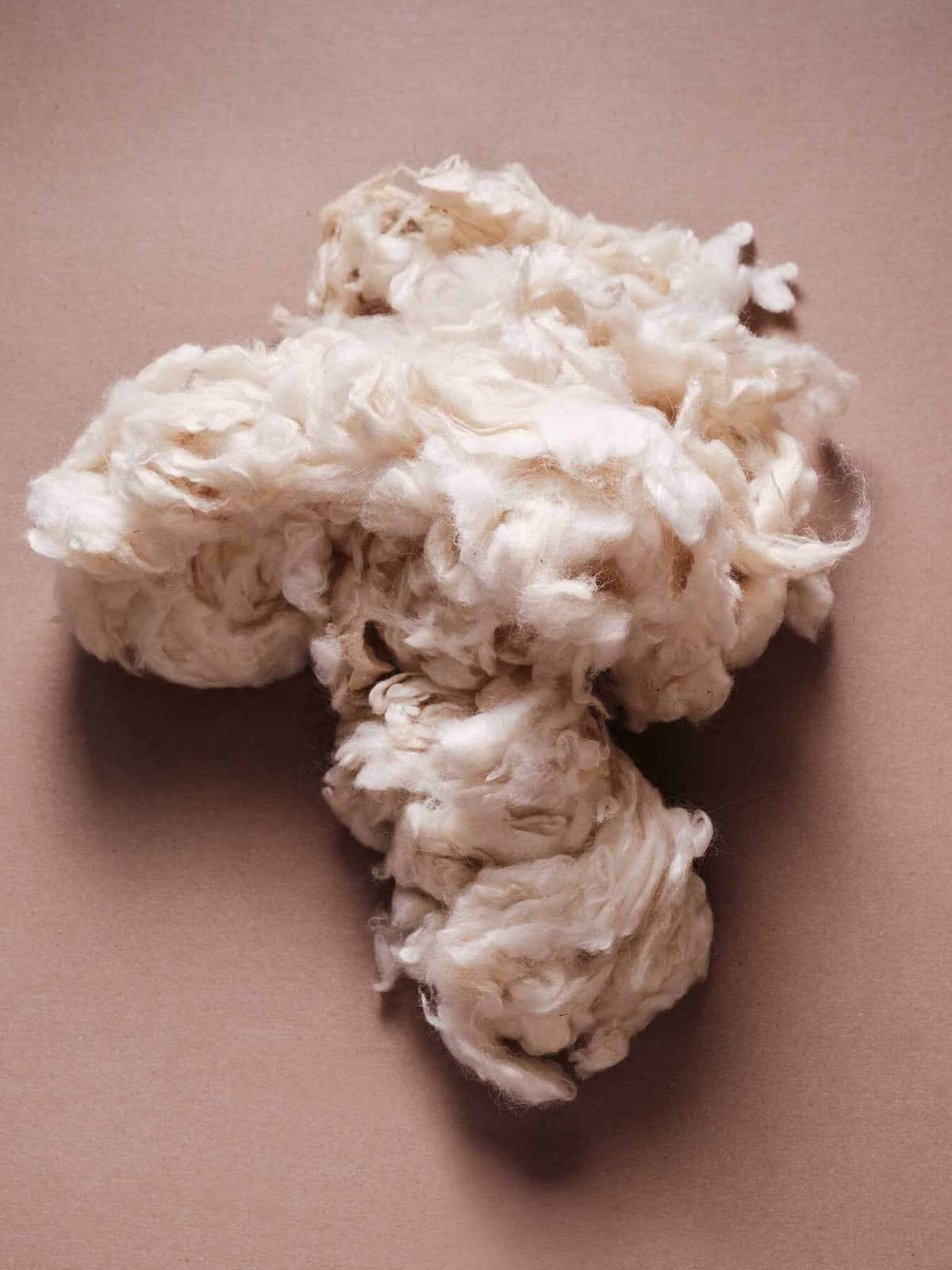
A micron is one thousandth of a millimetre, and in wool it measures the diameter of a single fibre: the lower the number, the finer and softer the fibre. Rug wool is deliberately coarser than the wool in a fine sweater, because a floor needs fibre that springs back and resists wear, not just softness against the skin.
In short
- A micron is one thousandth of a millimetre, and wool fineness is the average diameter of the fibre in microns.
- Fine garment wools such as merino are commonly below about 20 microns, while wools chosen for rugs are usually considerably thicker.
- Finer is not always better on a floor: a slightly thicker wool fibre is stiffer, springs back faster and stands up to footfall better.
- Rugberry does not publish micron figures for its rugs; the fibre, construction and feel on each product page are the better guide.
What is a micron in wool?
In wool, a micron is the unit used to measure fibre diameter, and one micron is one thousandth of a millimetre.


A human hair is very roughly 50 to 100 microns across. Most wool fibres are far thinner than that. Wool is sold by its average micron, measured on a sample from the fleece, because diameter drives how the wool feels, spins and wears. Our glossary entry on micron has the short definition.
Lower numbers mean finer fibre. A fine merino fleece and a sturdy rug wool can differ by many microns, and you can feel that difference with a fingertip.
Why is rug wool coarser than garment wool?
Rug wool is coarser because a floor needs resilience and abrasion resistance more than next to skin softness.


What a sweater needs
A sweater sits on the neck and arms. Fibres thicker than roughly 25 to 30 microns can feel prickly against skin, so fine knitwear uses fine wool.
What a rug needs
A rug is pressed by feet, furniture and floor cushions thousands of times. A thicker fibre is stiffer, so it bends less, springs back faster and survives grit better. It also holds a cut pile upright, which keeps the surface looking full.
That is why wools bred for carpet and rug yarn, including much New Zealand wool, are chosen for strength, length and a clean colour that dyes well, rather than for the lowest micron.
Is finer wool always better for a rug?
No. Finer wool is softer, but on a busy floor it can flatten and pill faster than a sturdier fibre.
A very fine fibre bends easily, so a pile made from it crushes more under a sofa leg and recovers more slowly. Fine fibres also break into fluff more readily under shoes and grit.
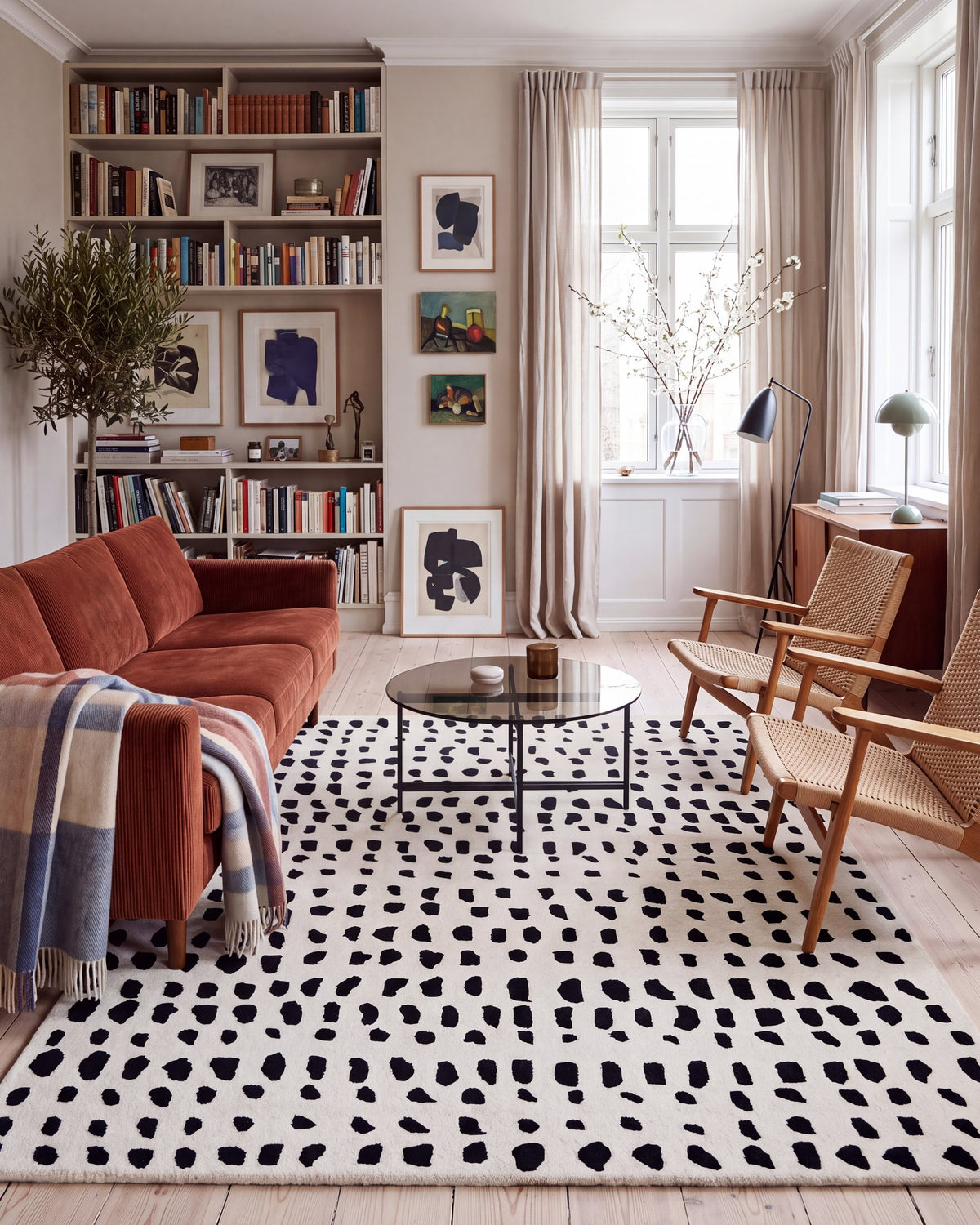
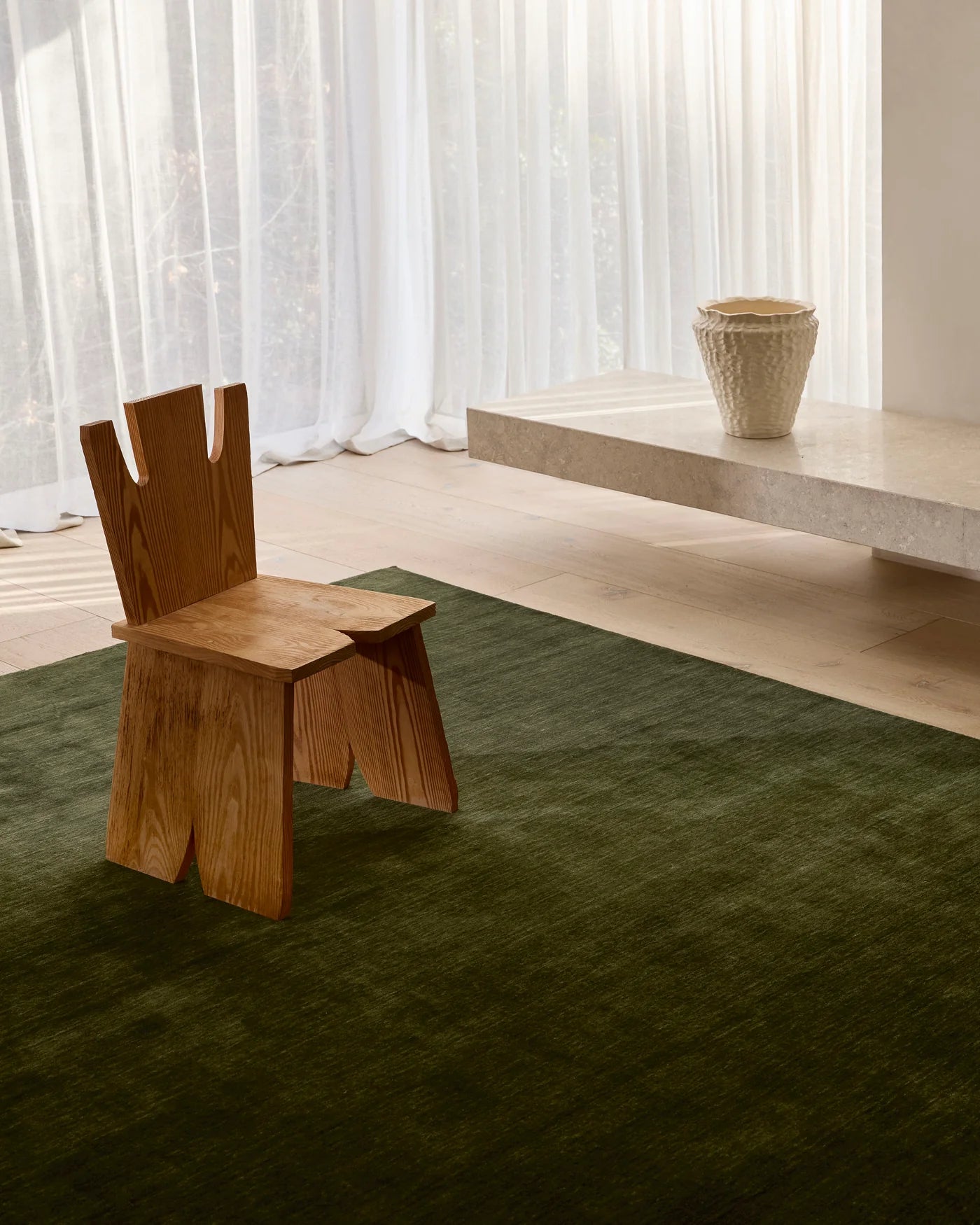
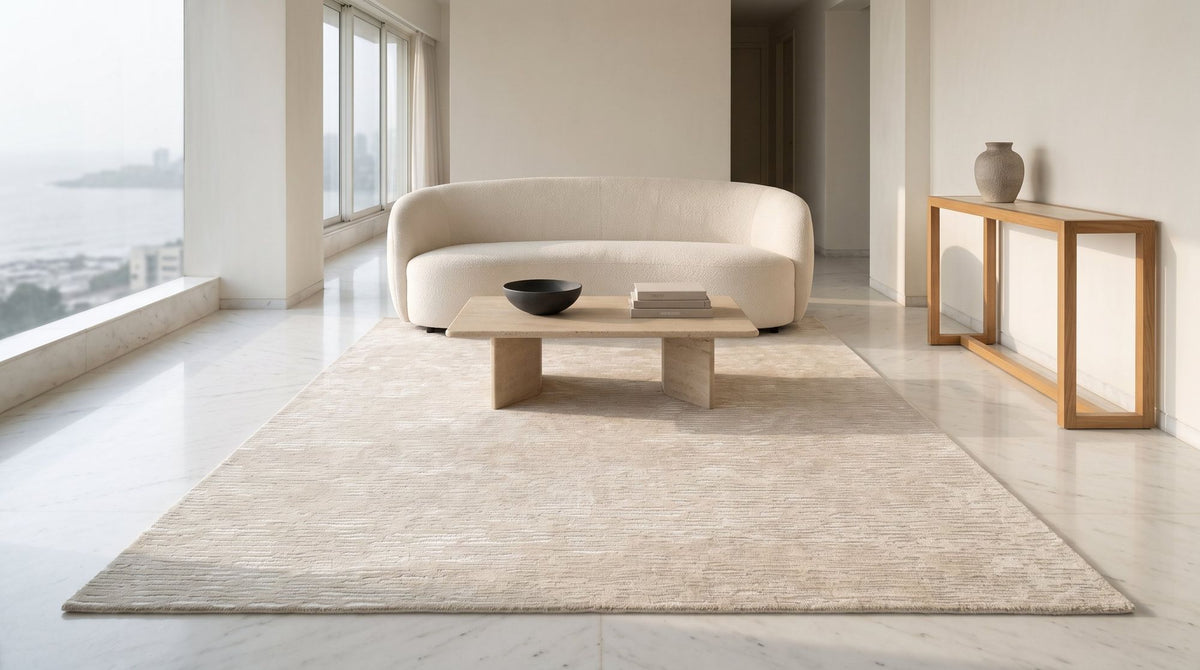
The Ivory Wool Rug is hand tufted in New Zealand wool and described as soft and even underfoot, with a dense pile that holds its shape, from about ₹36,000. That balance of soft and sturdy is what a family living room needs.
For a living room that sees daily footfall, choose a sturdy New Zealand wool over the finest fibre available, because it keeps its pile and its looks for longer.
A rug is not a sweater. It needs a fibre that stands back up, not only one that feels soft.
Where does a cashmere blend fit?
A cashmere blend adds a much finer fibre for softness, which makes it best suited to bedrooms and quiet rooms rather than busy walkways.

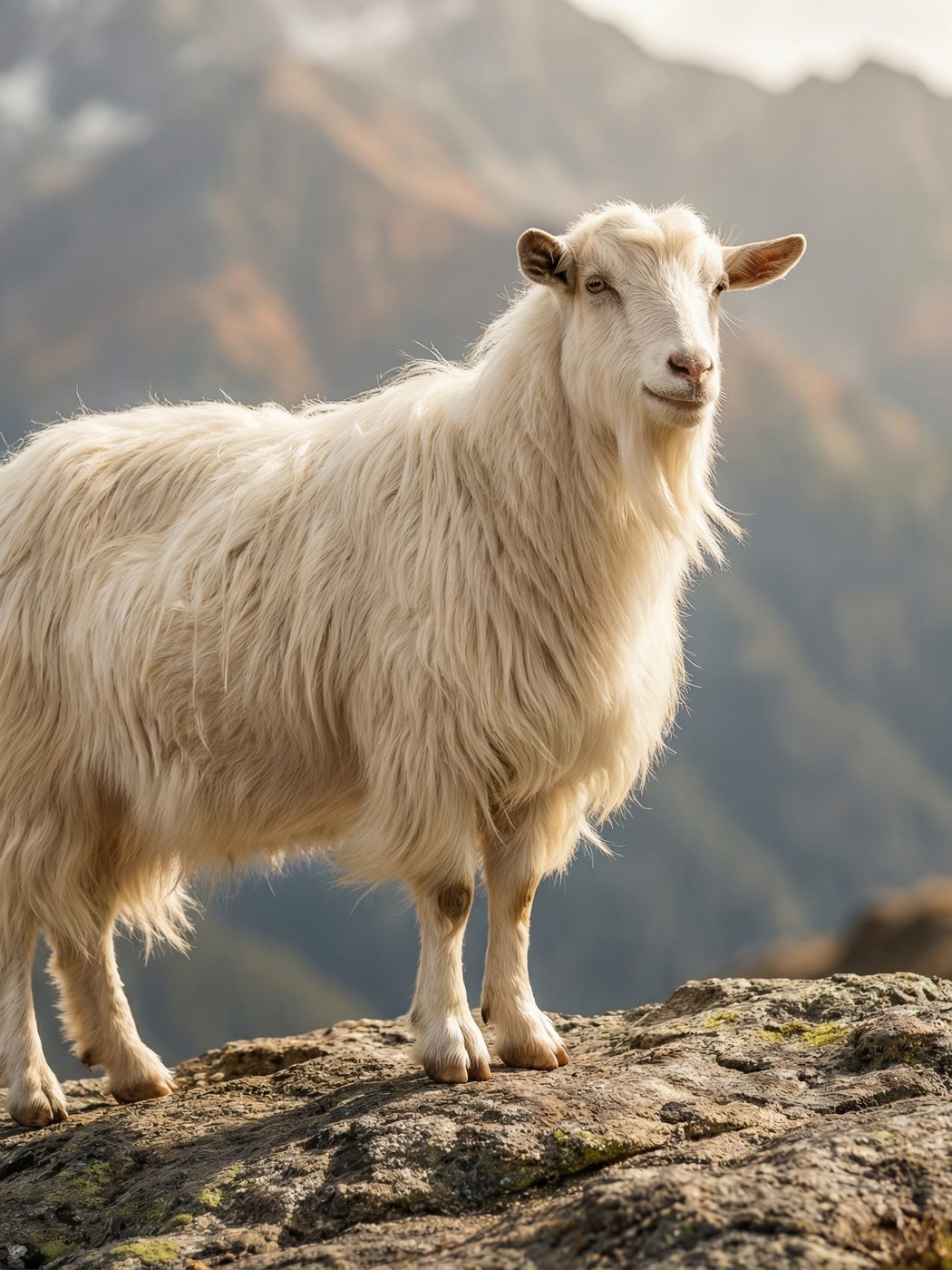
Cashmere comes from the fine undercoat of cashmere goats and is far finer than rug wool. Blended with wool, it softens the hand while the wool gives the pile its body.
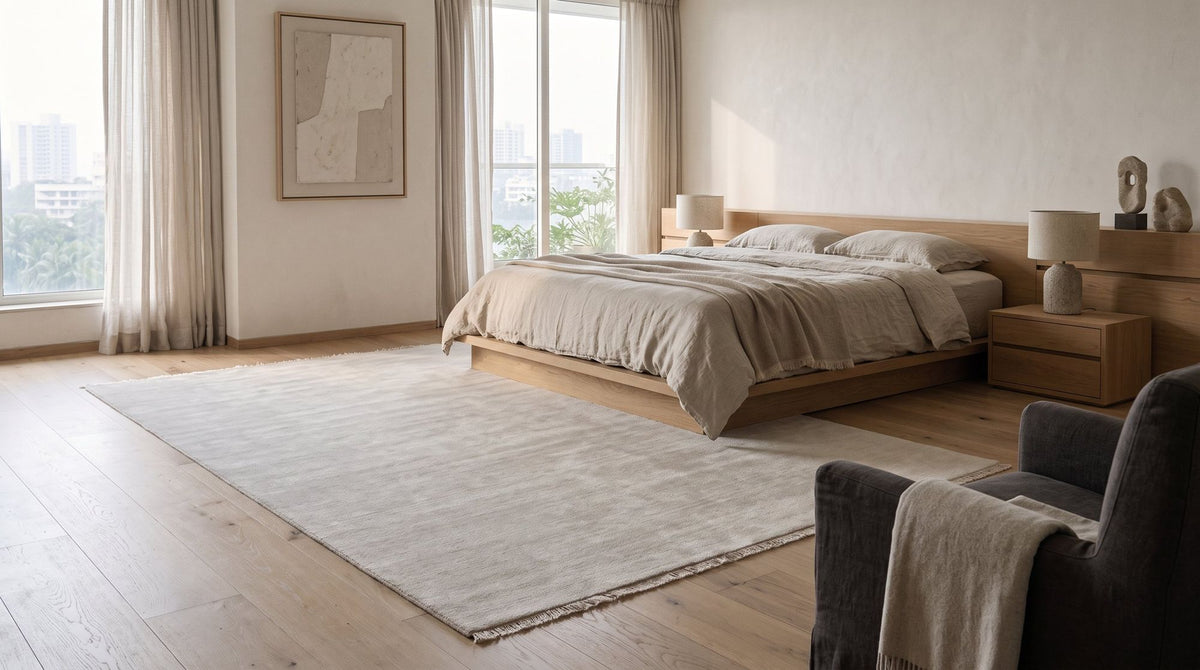
The Cashmere Blend Rug in salt is handloom woven in a wool and cashmere blend, fine, dense and very soft underfoot, from about ₹54,000. It belongs where you are barefoot: beside a bed, in a dressing room, in a reading corner. Our guide to the cashmere blend rug goes into care.
How can you judge fibre fineness without a number?
You can judge fineness by touch, by watching how the pile moves and by comparing two swatches side by side.


- The back of the hand. The skin there is more sensitive than the palm. Fine fibre feels smooth and cool. Coarse fibre feels lively and slightly crisp.
- The press test. Press the pile with your thumb for ten seconds. A sturdier wool rises back quickly. A very fine fibre may stay flatter.
- The side by side test. Compare a wool swatch with a cashmere blend swatch. The difference in softness is clear at once.
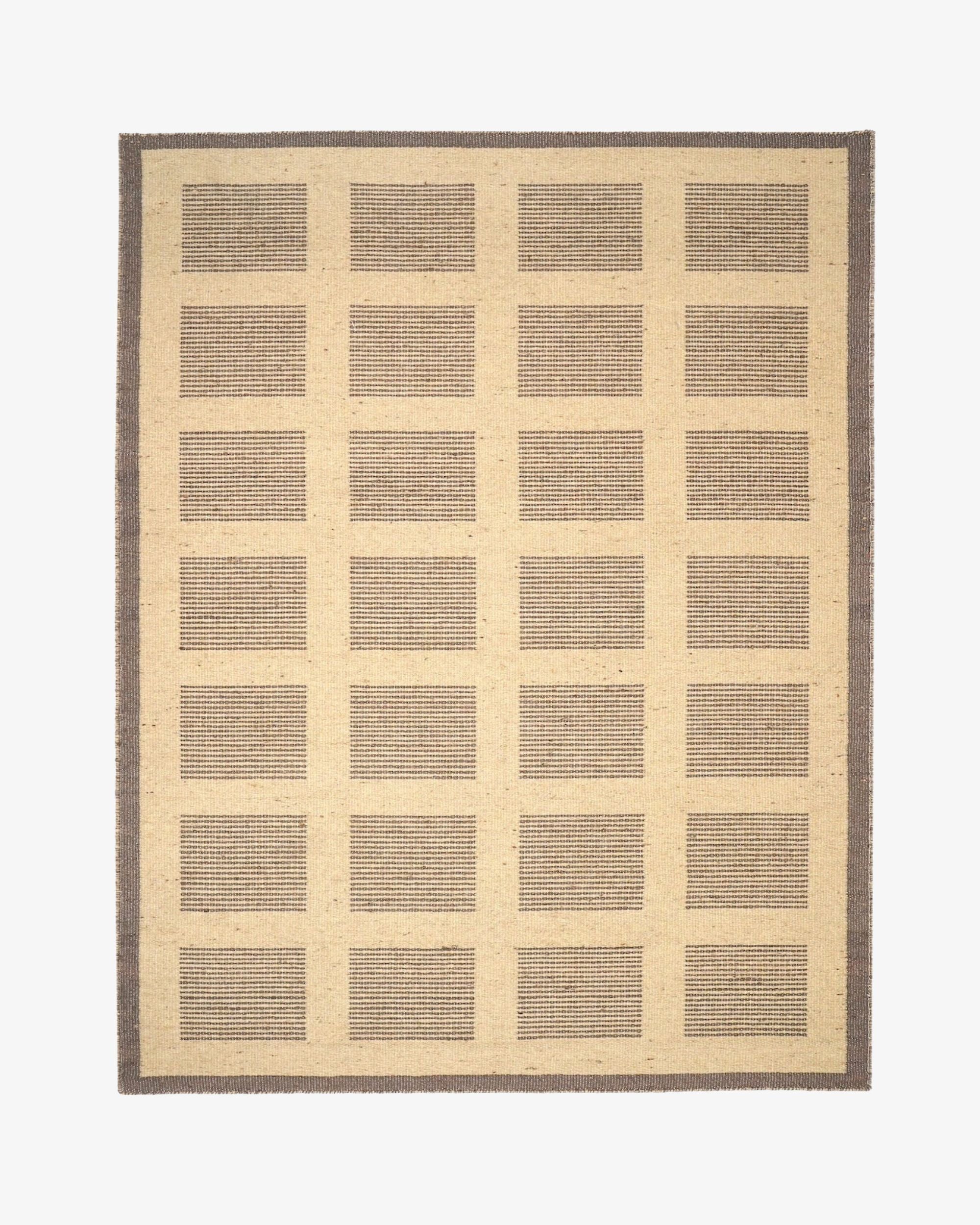
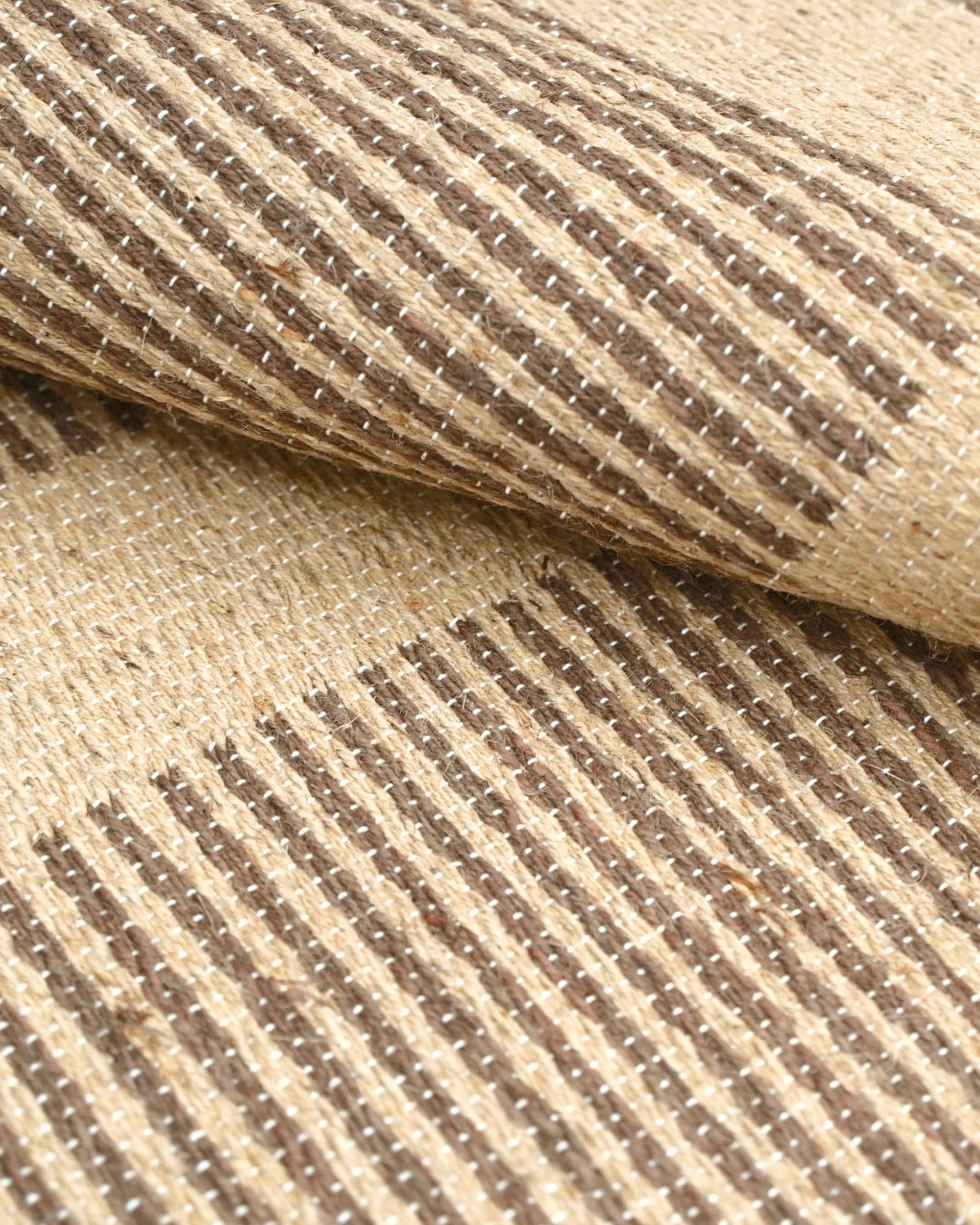
For contrast, try a plant fibre. The Kora Jute Rug, handwoven in jute from about ₹28,000, is firm and textured, a reminder that firmness underfoot is a quality in its own right.
Which fibre fineness suits which room?
Use sturdy wool for busy rooms, finer blends for quiet ones, and plant fibre where you want a firm, hard working surface.

- Living rooms and family rooms: hand tufted or handloom New Zealand wool.
- Bedrooms and dressing rooms: a wool and cashmere blend, or a deep wool pile.
- Entrances and passages: jute or a wool and jute weave.
For more on the fibres themselves, read New Zealand wool rugs and merino wool rugs, or browse the Rugberry fine wool rugs.
Frequently asked questions
What micron is good for a rug?
There is no single right number. Rug wool is chosen to be thicker than garment wool so it springs back and resists wear, while finer fibres such as cashmere are blended in when softness matters more than traffic.
Does Rugberry publish micron counts?
No. Rugberry describes each rug by fibre, construction and feel on the product page, which together tell you more about how a rug will behave than a single micron figure.
Is merino wool good for rugs?
Merino is very soft but finer than typical rug wool. It suits low traffic rooms and blends, where softness is the priority.
Why does my wool rug feel slightly coarse?
Rug wool is thicker than sweater wool on purpose, so the pile stays upright under feet and furniture. Most wool rugs also soften a little over the first months of use.
Fineness is one note in the chord. Choose the fibre for the floor it will live on.




Leave a comment
This site is protected by hCaptcha and the hCaptcha Privacy Policy and Terms of Service apply.