
When the Looms Came Back to Maheshwar
Images are credited where they are not from the Rugberry house.
Ahilya Fort and the ghats of Maheshwar above the Narmada. Photo: Kirandeep Atwal, CC BY-SA 2.0, via Wikimedia Commons, licence
From the river the fort looks like what it was built to be, a wall of stone stepping up from the ghats of the Narmada, all ramparts and steps and old trees. From inside it sounds like something else. Somewhere behind the courtyards there is the dry knock of a shuttle and the soft thud of a beater, over and over, the sound of cloth being made a few steps from where guests sit down to lunch.
Ahilya Fort in Maheshwar was built as the residences and offices of Maharani Ahilyabai Holkar, who ruled from 1765 to 1796. Today it is a hotel of 19 rooms spread across six 18th century buildings on three acres above the river. That would be reason enough to write about it. The more interesting story is the one carried on inside its walls, where a weaving society has spent nearly half a century bringing a local cloth back to life.
A queen's house becomes a guest house
Richard Holkar turned the fort into a hotel in 2000. What he made is not the kind of heritage hotel that strips a building back to an empty shell and fills it with new things in an old style. Much of the furniture is original or repurposed. Old rifle holders have been turned into towel racks, a detail that says a great deal about the attitude of the place. Nothing is thrown away if it can be given another job.

The kitchen works in the same spirit. Meals follow a fixed daily menu, drawn from Holkar's own cookbook and from the fort's organic gardens, so a guest eats what the house and its land have to offer that day rather than choosing from a long card. The property runs a no plastic policy and draws power from solar panels. None of this is presented as a manifesto. It reads instead like the habits of a careful household that happens to take in guests.
For anyone interested in interiors, this is the lesson of the rooms. They are furnished with what was already there, adapted rather than replaced, and with textiles that were made close by. The result has the quality that so many new hotels try and fail to buy, a sense that the room has been lived in for a long time and will be lived in for a long time after you leave.

Nothing in the fort is thrown away if it can be given another job, not even a rifle holder.
The looms inside the walls
The weaving began before the hotel. Rehwa Society was founded in 1978 by Richard and Sally Holkar to revive Maheshwari weaving, and today it works with 250 weavers and 110 looms across units within the fort itself. The sound behind the courtyards is theirs.
The cloth they make has a particular character. Maheshwari fabric pairs a silk warp with a cotton weft, which gives it a feather light body with a soft shine, cool against the skin and quietly luminous in a dim room. The best known form is the Maheshwari sari, recognisable by its reversible border, the bugadi, which is finished so that it can be worn either way out. Fine saris take more than 15 days to weave. That figure is worth holding in mind the next time a handwoven textile seems expensive. It is a measure not of the material but of the days.
Rehwa's work does not stop at the loom. The society runs the Ahilya School for the children of its weavers. That one fact shifts the whole picture. A craft revival that only trains adults to make things for visitors is fragile, because it depends on the visitors. A revival that also educates the next generation is investing in the people of the town, not only in the product, and gives them a choice about whether to stay at the loom or to do something else.
The combination of fibres is also a small lesson in design. Silk alone would be costly and slippery, cotton alone would be matte and heavy. Together, with the silk running the length of the cloth and the cotton crossing it, each fibre does what it is best at. The silk carries the light and the strength along the warp, the cotton gives the cloth its softness and its ease on a hot day. It is the kind of decision that a weaver makes once and that a wearer feels every time the cloth moves.
Décor or economy
Any heritage hotel with a craft story invites a hard question: whether the craft is part of the scenery for guests or a living economy that would carry on without them. It is a fair question to ask of Maheshwar, and the numbers here lean toward the loom. Two hundred and fifty weavers is not a demonstration corner. A hundred and ten looms is a working industry, and a school is a long term commitment.
The relationship runs both ways. The hotel gives the weavers a visible home and a steady stream of people who see the cloth being made and understand what it takes. The weaving gives the hotel a reason to exist beyond comfort, a connection to the town that a guest can hear from their room. Neither would be quite the same without the other, and that is perhaps the best test of whether a craft is décor. If you took the guests away, the looms would still be working.

There is a gentler lesson in it too, about how a building and a craft can keep each other alive. A fort with nothing to do becomes a monument. A weaving tradition with no home becomes a memory. Put the two together, add a kitchen that cooks from the garden and a school for the weavers' children, and what results is closer to a small town than a hotel, one that happens to have a river view.
The ghats below the fort have seen several centuries of comings and goings. The looms behind the walls have been working for nearly fifty years. Between them, they make a strong argument that the most convincing way to furnish a place is with things made nearby, by people who are paid properly and whose children are in school.

Follow @ahilya.fort on Instagram for their own work, in their own words.
Rugberry notes
From the Rugberry house
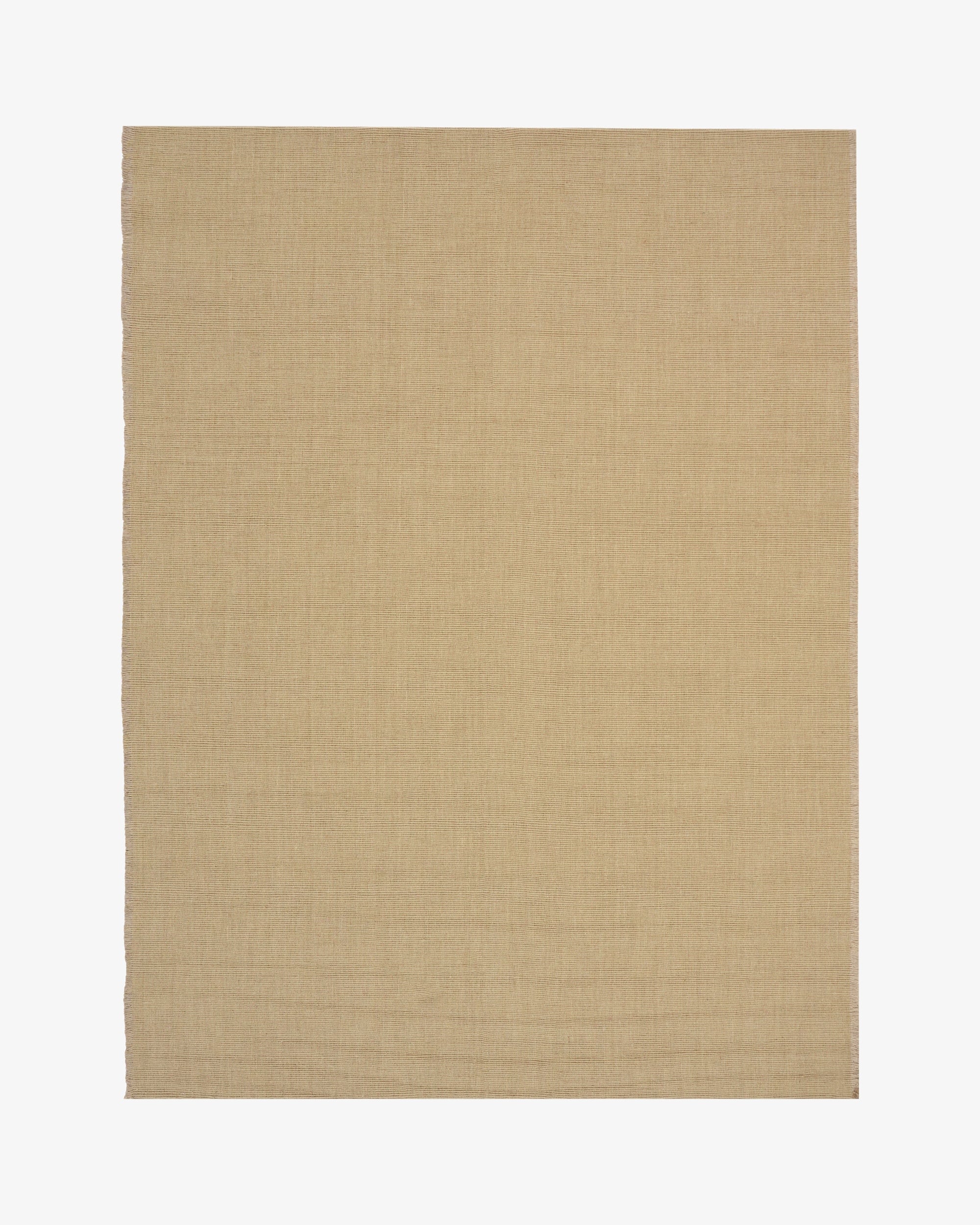
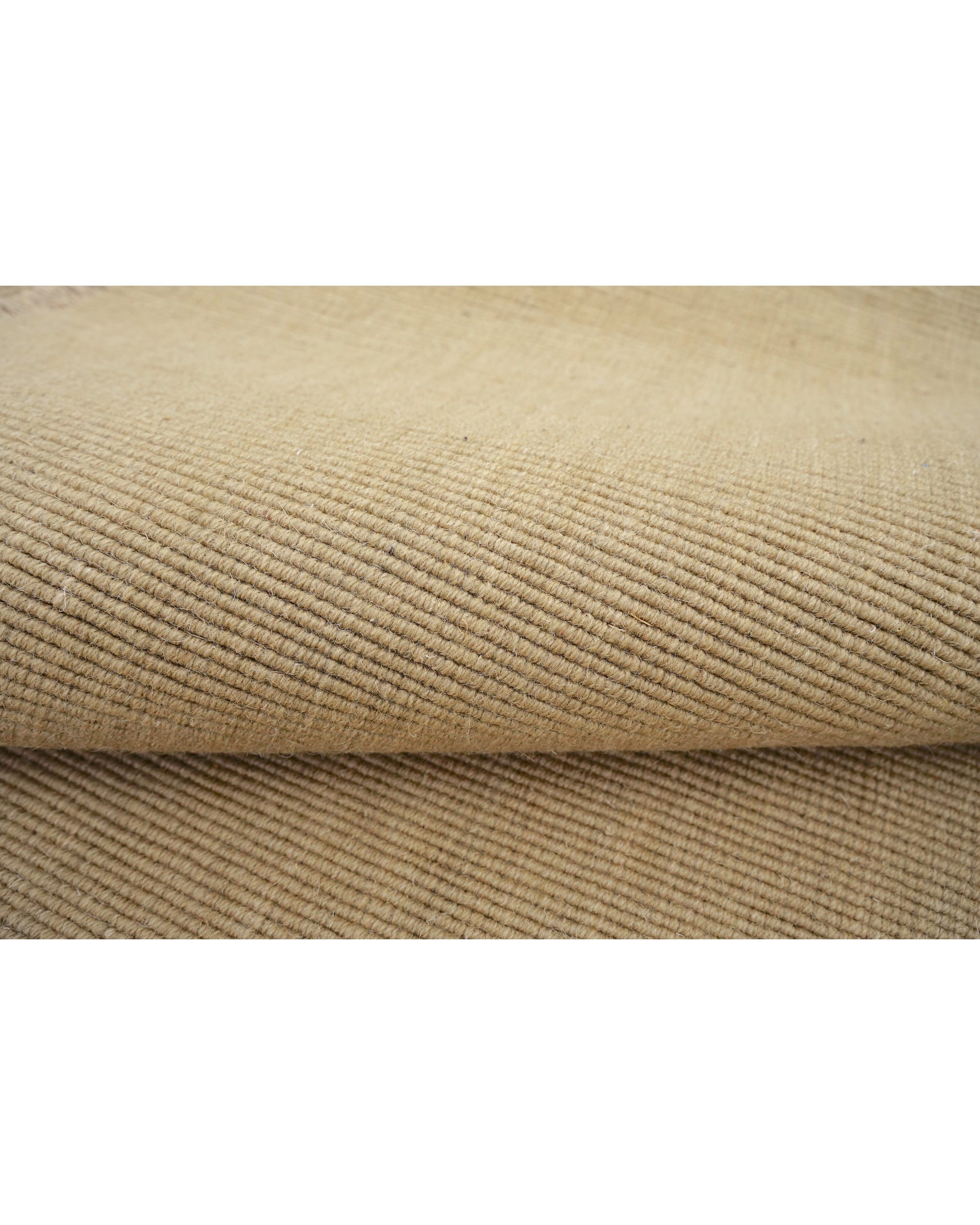
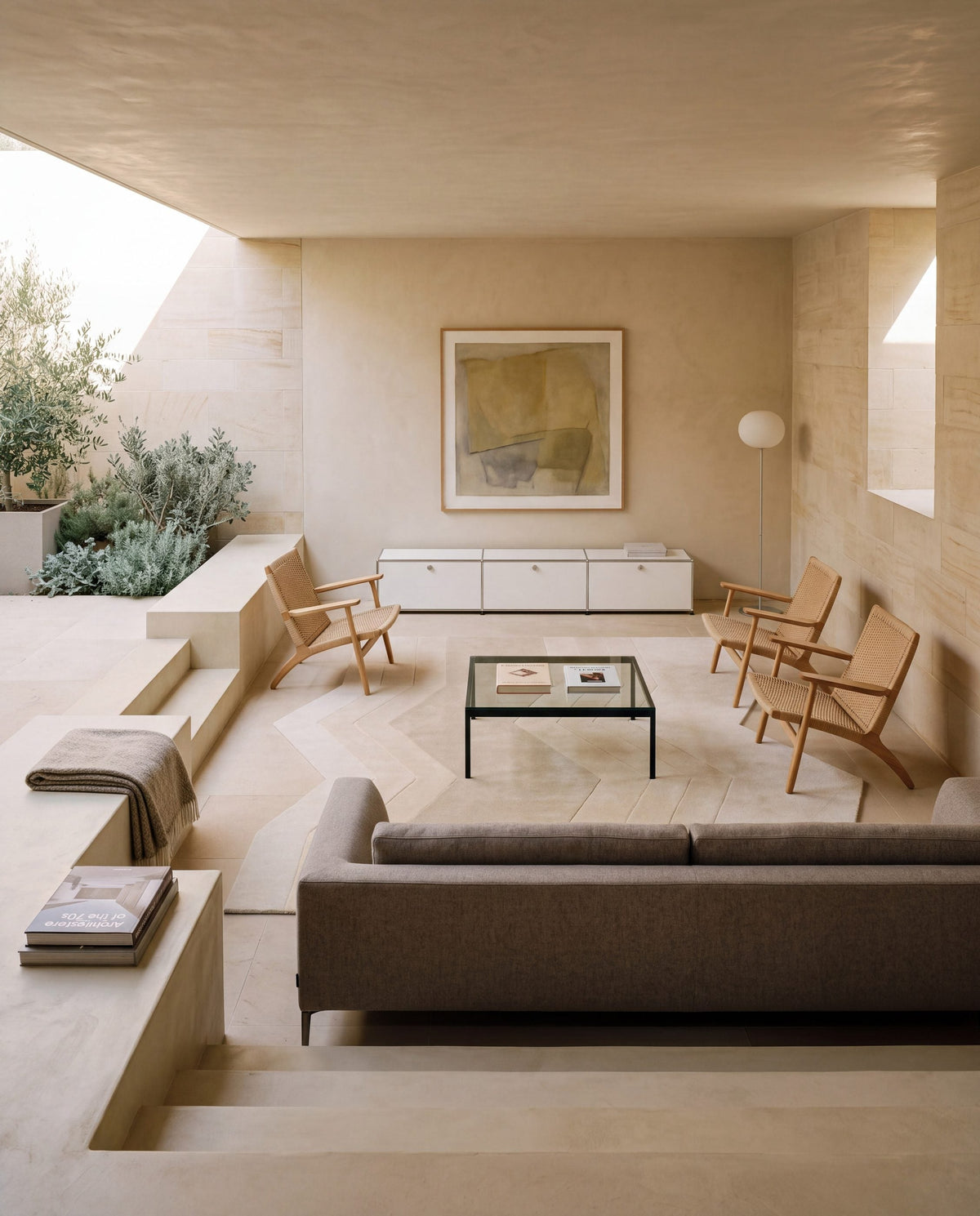
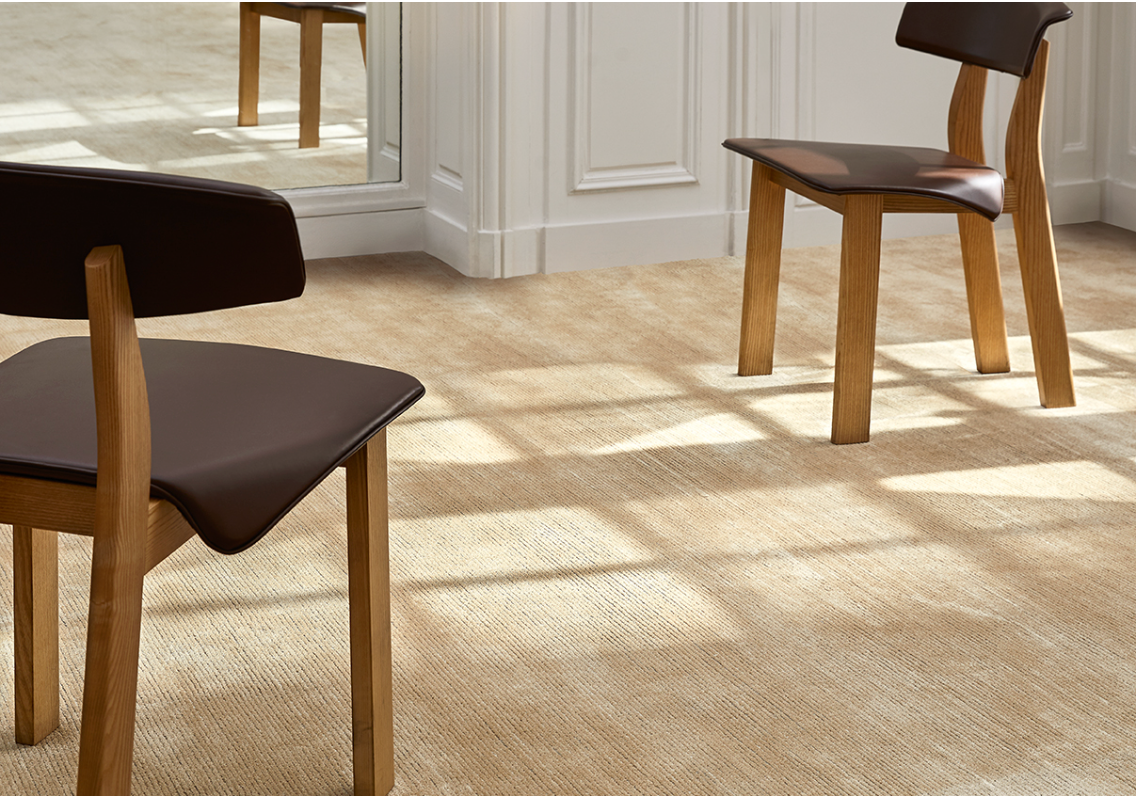
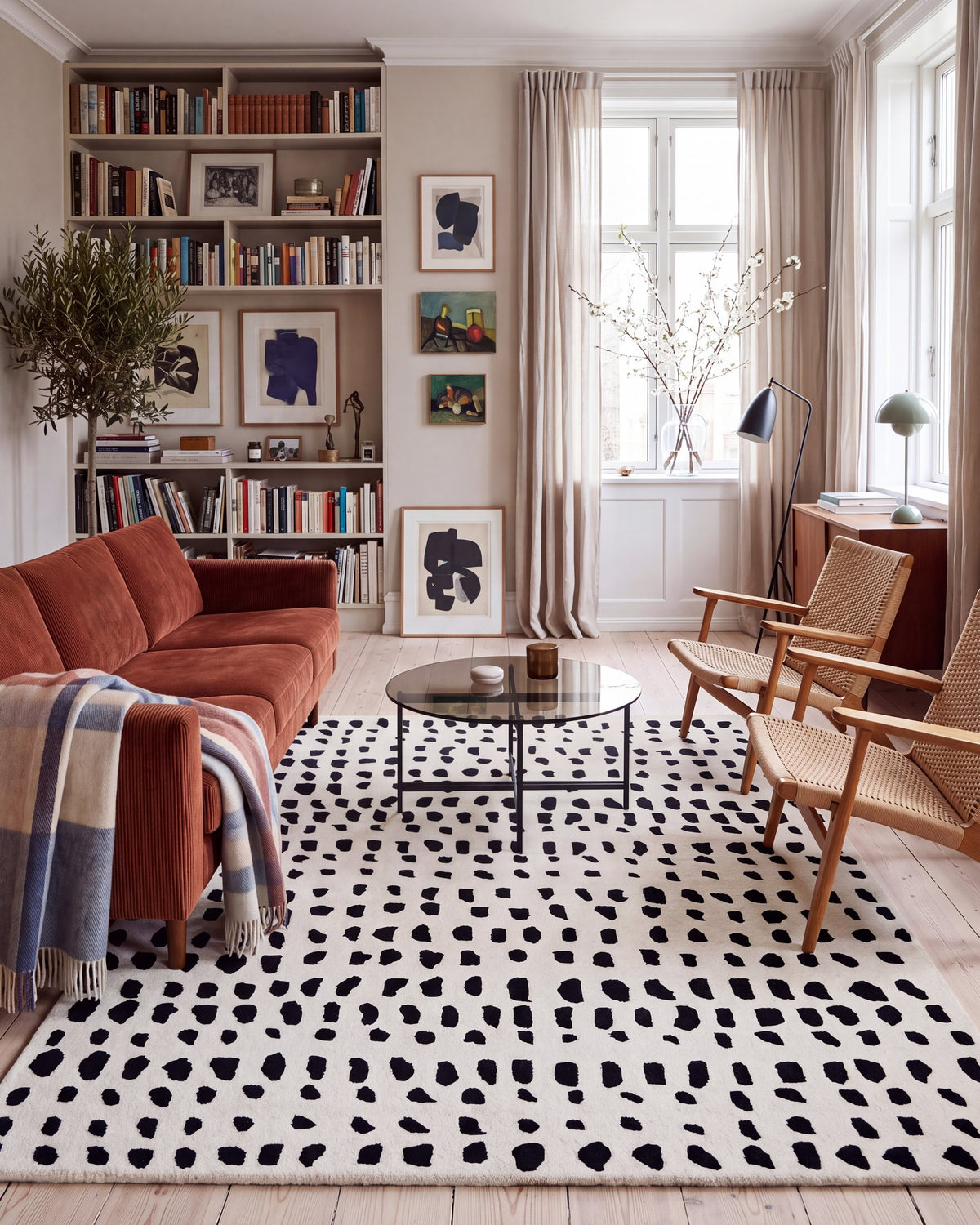
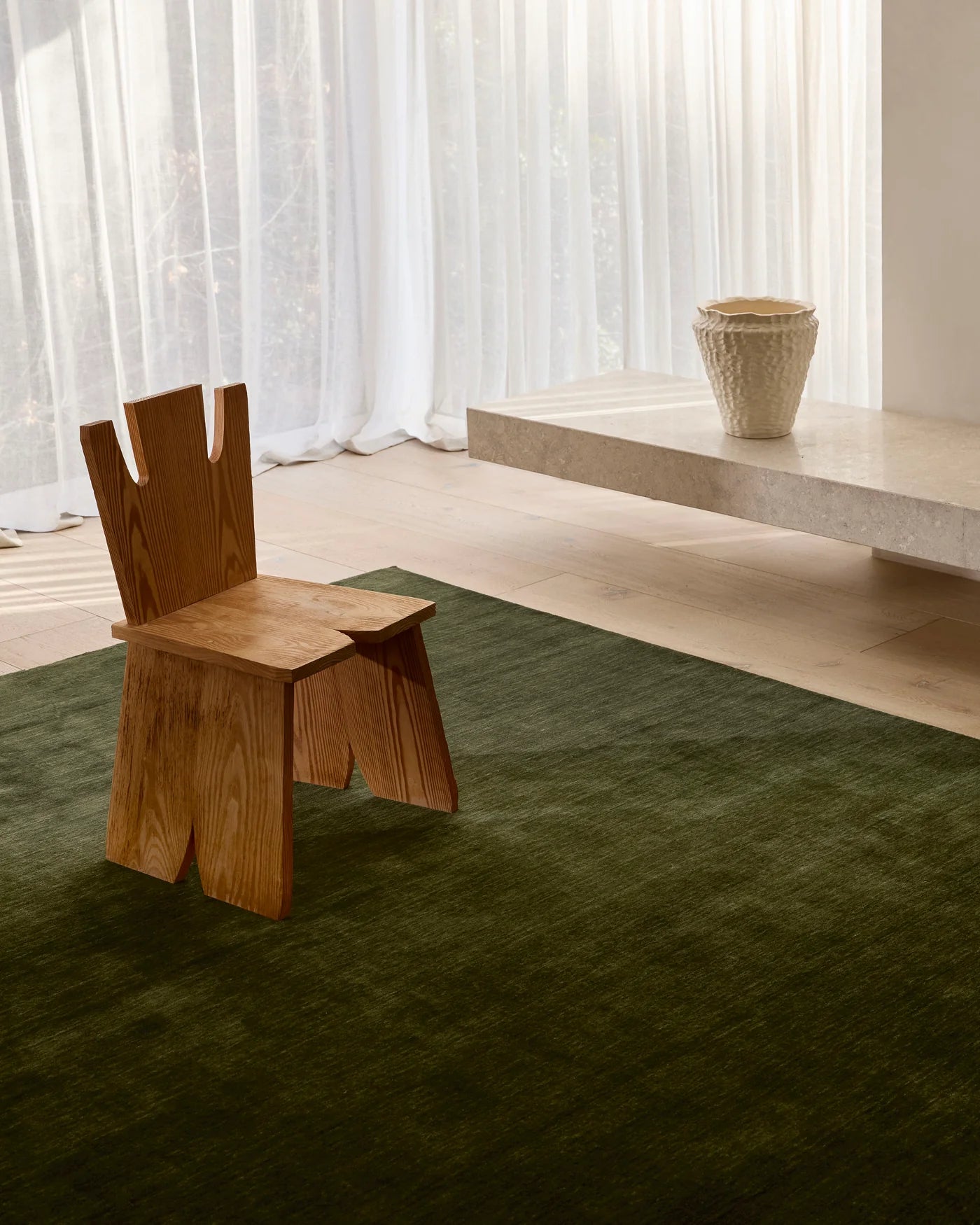
A handloom is the root of so much of what Rugberry makes, and two of the rugs pictured here come straight off it. If the sand and tan of these rooms appeal, our Cabra Wool & Jute Rug in sand and our Grain Wool Rug in tan work in a similar register. Both are handloom woven, the first in New Zealand wool and jute, firm underfoot with the natural irregularity of the plant fibre, the second in New Zealand wool, low and closely worked with the weave visible. Like Maheshwari cloth, both are better understood by hand than by photograph. A handloom rug, like a handloom sari, carries small variations from row to row, the trace of a person at the beater rather than a machine at a constant speed.


In the Rugberry house
- Handloom rugsWoven on the loom in New Zealand wool.
- The art of makingHow a Rugberry rug is made by hand.
- Handwoven rugsFlat and close constructions from the loom.
Rugberry has no affiliation with the studios featured. Images are from the Rugberry house unless credited.