

The Women Who Wove the Bauhaus
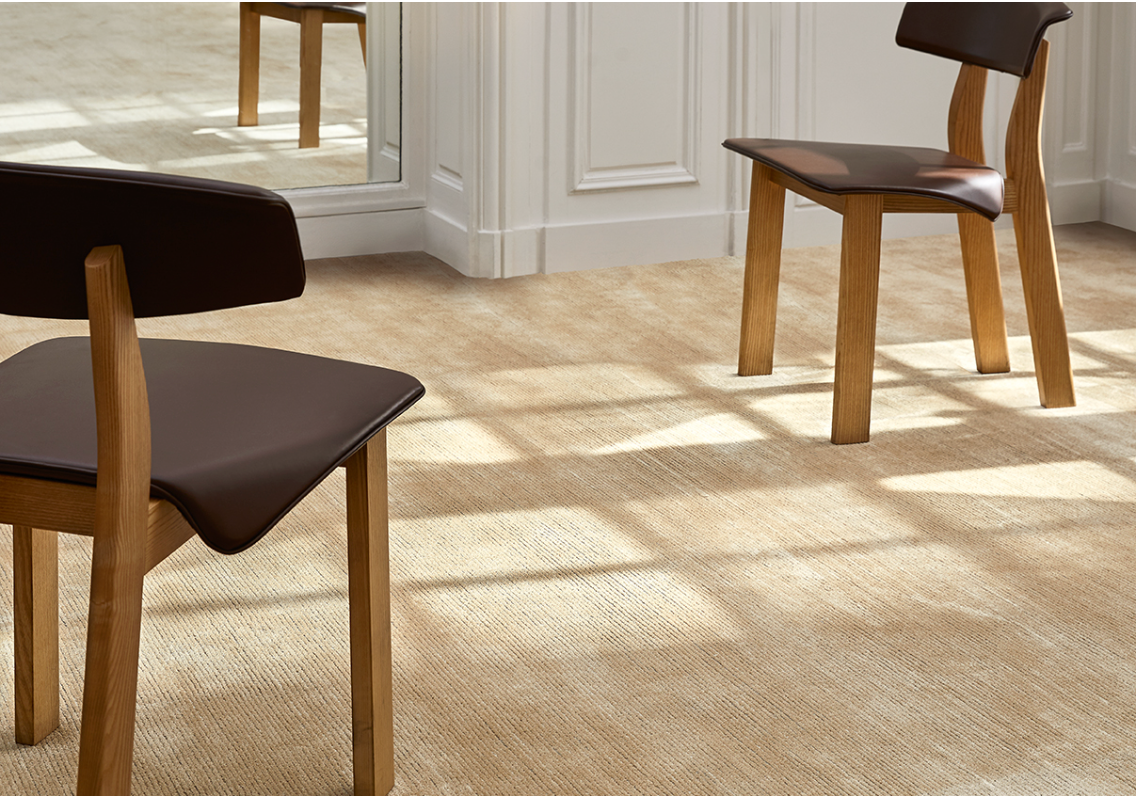
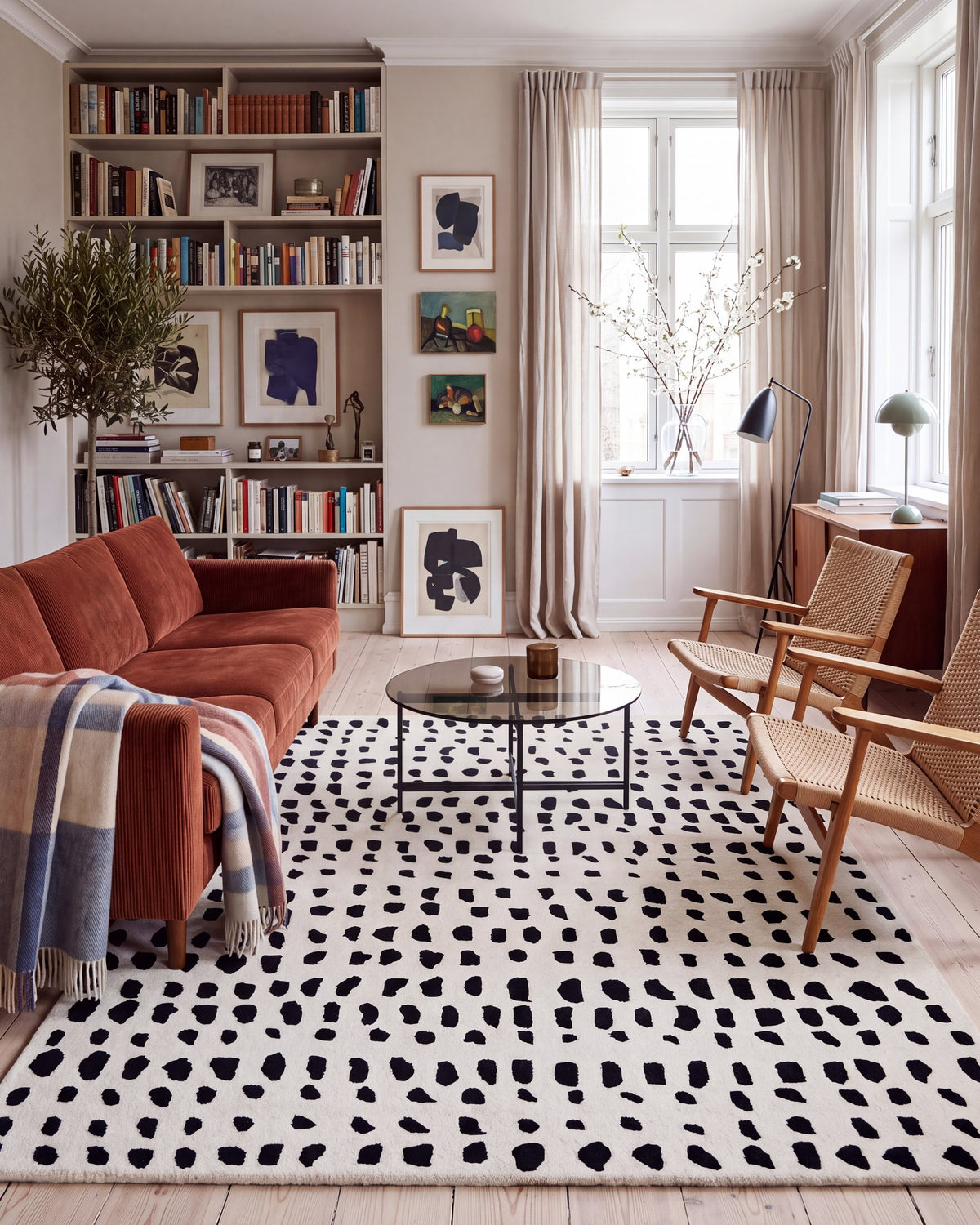
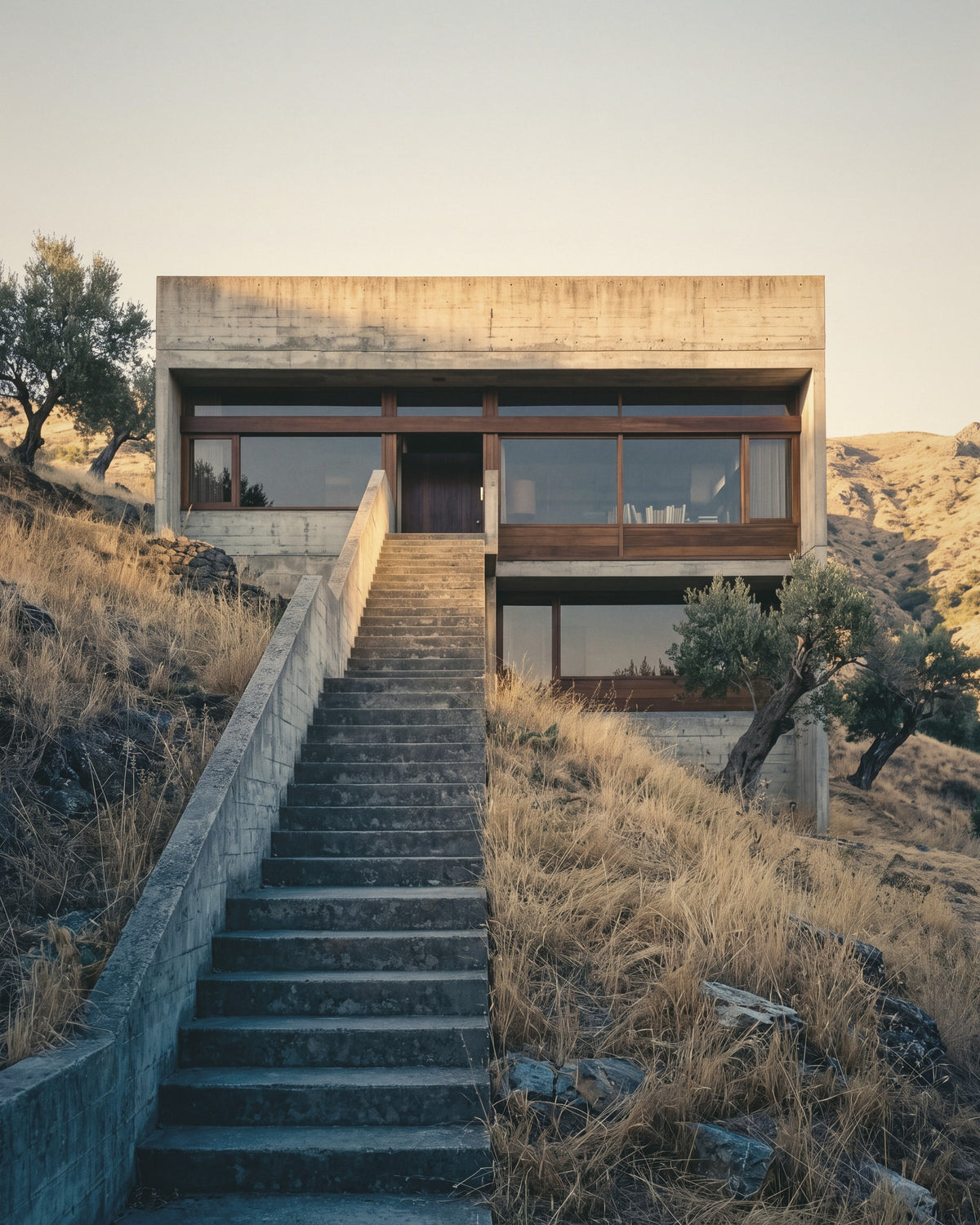
Images are credited where they are not from the Rugberry house.
The Bauhaus building in Dessau by Walter Gropius, where the weaving workshop moved in 1925. Photo: JensKunstfreund, CC BY-SA 4.0, via Wikimedia Commons, licence
The Bauhaus is usually remembered in metal and white paint: the tubular steel chair, the flat roof, the glass corner of a workshop building. It is remembered far less often in thread. Yet in a room full of looms, among the students the school had quietly directed away from its more celebrated departments, some of the most lasting ideas of modern design were being worked out, one pass of the shuttle at a time.
The weaving workshop was the part of the Bauhaus that many of its women were steered towards. Anni Albers, one of its most famous students, turned to textiles after being discouraged from other disciplines at the school. It is an uncomfortable origin story. It is also, in hindsight, a story about how the workshop the school treated as secondary produced the lesson that matters most to anyone who thinks about floors.
A student becomes the master
Gunta Stölzl joined the weaving workshop in 1921, training under Georg Muche, who led it at the time. She was not content to make pretty cloth. When the school moved to Dessau she became master of form there in 1925 and 1926, and then directed the weaving workshop herself until around 1931. Under her leadership the looms became a laboratory.

The question that laboratory asked was simple and radical. What if pattern did not have to be applied to a textile, printed or embroidered onto its surface, but could grow directly out of the way the threads were put together? A weave has a structure: the over and under of warp and weft, the floats and interlacings that give it strength and texture. Change the structure and the pattern changes with it. The design and the construction become the same thing.
Change the structure and the pattern changes with it. The design and the construction become the same thing.
Damast, a pattern made of weave
The clearest proof sits in a museum in London. The V&A holds Stölzl's wall hanging Damast, from 1931, woven in silk and cotton on a small, hand operated jacquard loom. Its pattern does not repeat. Instead it is built from shifting areas of twill and damask, two different weave structures, laid out in bands of pink, red, blue, yellow and orange.
Look closely and the colour is almost the least important part. What you see first is the way light behaves differently on each structure. Twill runs in diagonals; damask reflects light in broad, smooth fields. The bands read as pattern because the weave is different in each one, not because anything has been drawn on the cloth. It is a textile that explains its own making.

That idea has never gone away. It is there whenever a flat weave uses a change of structure, rather than a change of colour, to create a stripe. It is there in a rug where a field of plain weave meets a band of ribbed texture, so that the pattern appears only when the light rakes across it. It is there whenever a designer begins a drawing by thinking about the loom rather than the picture.
The workshop and the furniture
The weavers were not working in isolation from the rest of the school. Stölzl developed textile covers for furniture designed by Marcel Breuer, which means that some of the most famous objects of the Bauhaus, the ones remembered in steel, depended on cloth from her workshop. The chair gets the credit in the history books. The fabric made it usable.
That small fact says something about how design histories are written. Hard materials photograph well and survive well. Textiles wear out, fade and get replaced. The result is a version of modernism that looks harder and colder than it really was. The real rooms of the period were softened, warmed and made comfortable by woven things, many of them made by women whose names appear only in the footnotes.
Stölzl herself kept working long after she left the school in 1931. She moved to Switzerland and ran a hand weaving business in Zurich for more than three decades, and in 1967 she gave up the workshop to devote herself to tapestries. It was a working life at the loom that ran far beyond the years for which the Bauhaus is remembered.
Albers and the book
If Stölzl built the workshop, Anni Albers carried its ideas furthest into the wider world. In 1965 she published On Weaving, a book that treats the loom as a tool for thinking and the woven structure as a language. It is still read by designers who have never touched a shuttle.
Tate Modern gave her the first major UK exhibition of her work, from 11 October 2018 to 27 January 2019, with more than 350 objects. The show centred on On Weaving and the research material behind it: the samples, studies and experiments that show a mind working through structure, thread by thread. Seen together, they make a quiet argument that weaving is not a decorative art at all, but a form of engineering that happens to be beautiful.
What the floor inherited
The modern rug owes more to this workshop than to any painting. Many of the ideas that now seem natural in contemporary rug design come straight from the looms of Weimar and Dessau. Texture as pattern. Restraint in colour so that structure can be seen. Stripes and bands that come from the build of the cloth. Surfaces meant to be touched as much as looked at.

There is also a lesson in humility. The Bauhaus treated weaving as a lesser craft, a place to put the students it did not quite know what to do with. Those students went on to shape how modern rooms feel underfoot. The most lasting idea about floors came from the department nobody expected much of, and it came from people who were told, in effect, to stay at the loom.
They did, and they turned it into a laboratory. Any rug made today that lets its weave speak for itself is, in a small way, their descendant.
Rugberry notes
From the Rugberry house
The idea we take from that workshop is the one at the heart of our own handwoven pieces: let the build of the rug make the pattern, so that a rib, a stripe or a change of texture appears because of how the yarn was laid, not because it was drawn on top.
If that way of making appeals, our handwoven rugs are built on structure first, and the art of making explains how a Rugberry rug comes off the loom.


In the Rugberry house
- The art of makingHow a Rugberry rug comes off the loom.
- Handwoven rugsPattern from structure, flat and close.
- Modern rugsRestraint in colour, texture as pattern.
Rugberry has no affiliation with the studios featured. Images are from the Rugberry house unless credited.