Old Stone, No Pastiche: RAAS Jodhpur
Images are credited where they are not from the Rugberry house.
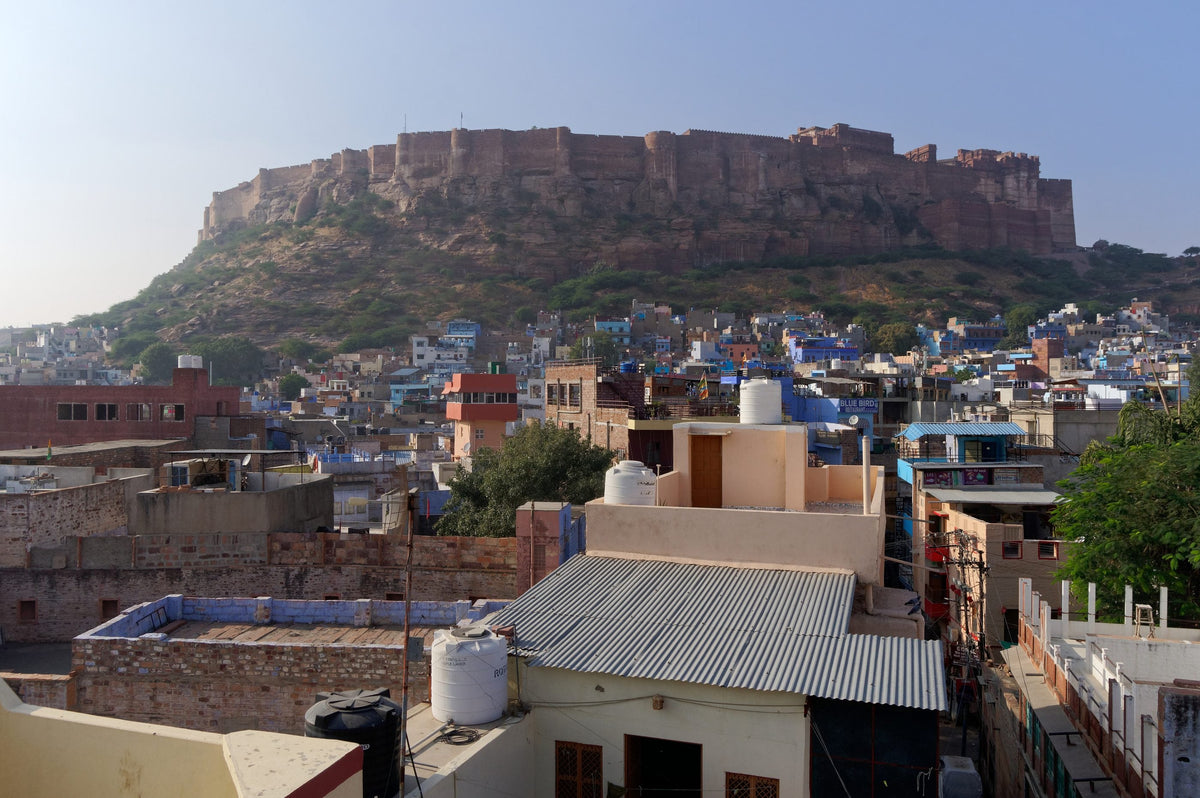
Mehrangarh Fort above the old city of Jodhpur. Photo: Jakub Hałun, CC BY-SA 4.0, via Wikimedia Commons, licence
In the walled city of Jodhpur the lanes narrow as they climb toward Mehrangarh, and the fort fills more of the sky with every turn. At the very base of it, behind a gate, three old buildings stand around a courtyard. Beside them rise newer blocks of hand-cut stone, their windows screened by panels of stone lattice that fold back like shutters. Open them and the fort is right there, a wall of red rock and battlement close enough to seem painted on the glass.

This is RAAS Jodhpur, a hotel of 39 rooms on a site of 1.5 acres, completed in 2010 and designed by Studio Lotus with Praxis Inc. It has won a good deal of praise, including the holiday building prize at the World Architecture Festival in 2011 and a nomination for the Aga Khan Award for Architecture in 2013. But the most interesting thing about it is a decision it did not make. It did not build a costume.
The easy option
Every heritage city in India knows the temptation. A traveller arrives expecting the past, and the simplest way to give it to them is to build something that looks old: a new haveli with borrowed arches, a painted facade, carved brackets cast in concrete and stained to look like centuries. It photographs well. It sells rooms. And it quietly tells the city that its real history is less useful than an imitation of it.
Studio Lotus took the harder route. Three inherited period structures at the core of the site were restored, and they hold the hotel's three heritage suites along with its dining rooms, spa and lounges. Everything else was built new, and built openly as new. The two kinds of building sit side by side without pretending to be each other. Three of the 39 rooms are heritage suites in the restored structures; the other 36 sit in the new blocks, where the folding screens frame the fort.
Lime, sandstone and the hand
The restored buildings were repaired with lime mortar and Jodhpur sandstone, the materials they were made from in the first place. That sounds obvious, but it is not common practice. Cement is faster and more familiar to most contractors, and it is a poor partner for old stone, trapping moisture where lime would let it breathe. Choosing lime is choosing to repair a building on its own terms.

The new buildings speak the same language in a different accent. Their walls are hand-cut stone. Their floors, walls and even some of their furniture are poured terrazzo, pigmented and cast in place. The furniture is sheesham. The stone lattice screens take their cue from the jharokha, the projecting carved window of Rajasthani architecture, but they are not copies of one. They are flat, foldable panels, opened for the fort or closed for privacy, a traditional idea given a new job.
According to the architects, more than 100 regional artisans and master craftsmen worked on the project, and 70 percent of its materials and people came from within 30 km of the site. Those two numbers are the real architecture of RAAS. They describe a building that was assembled from its own region rather than delivered to it.
The jharokha is not copied. It is given a new job, folding open for the fort and closing for privacy.
Preservation or product
Underneath the admiration sits an honest question. RAAS is a luxury hotel. Its restraint, its local stone, its artisans and its view of the fort are all, in the end, things a guest pays for. When heritage becomes the product, does preservation become decoration with better manners?
The answer depends on what remains when the guests leave. A costume haveli leaves nothing behind but its own facade. A building that employs a hundred regional craftsmen leaves something more durable: carvers who have cut stone screens to a modern drawing, masons who have worked in lime at scale, a demonstration to every other developer in the walled city that the old methods can still be used for new buildings. Whether those skills found steady work afterwards, or only a single generous commission, is not something the project record can show. It is the right question to keep asking of every celebrated heritage hotel, in Jodhpur and beyond.
There is also a quieter benefit, harder to measure. A hotel built from regional stone by regional hands looks like its city, and so it teaches its guests what that city is made of. Many visitors will leave Jodhpur knowing the colour of its sandstone and the shape of its jaali a little better than when they arrived. That is a small kind of preservation too. And because a hotel is used hard and photographed often, honest materials have to be kept in good order year after year, which gives the people who know how to repair them a reason to stay.
The view from the courtyard
Stand in the courtyard at RAAS and the newness of the new buildings does not feel like an intrusion. It feels like a continuation, the way a well repaired wall looks continuous even when you can see where the new stone meets the old. The fort above has been added to and repaired for centuries. The hotel at its foot has simply joined that long habit of building.

The refusal of pastiche is not a refusal of the past. It is a kind of respect: the belief that a place's history is strong enough to stand next to something honest, and does not need to be imitated to be honoured. Heritage, seen this way, is not a style to be copied. It is a set of materials, skills and habits that are still alive, provided someone keeps giving them work.
Follow @studio_lotus and @raashotels on Instagram for their own work, in their own words.
Rugberry notes
From the Rugberry house
This is a story about stone, lime and the hand, and those are colours and qualities a knotted rug can share.
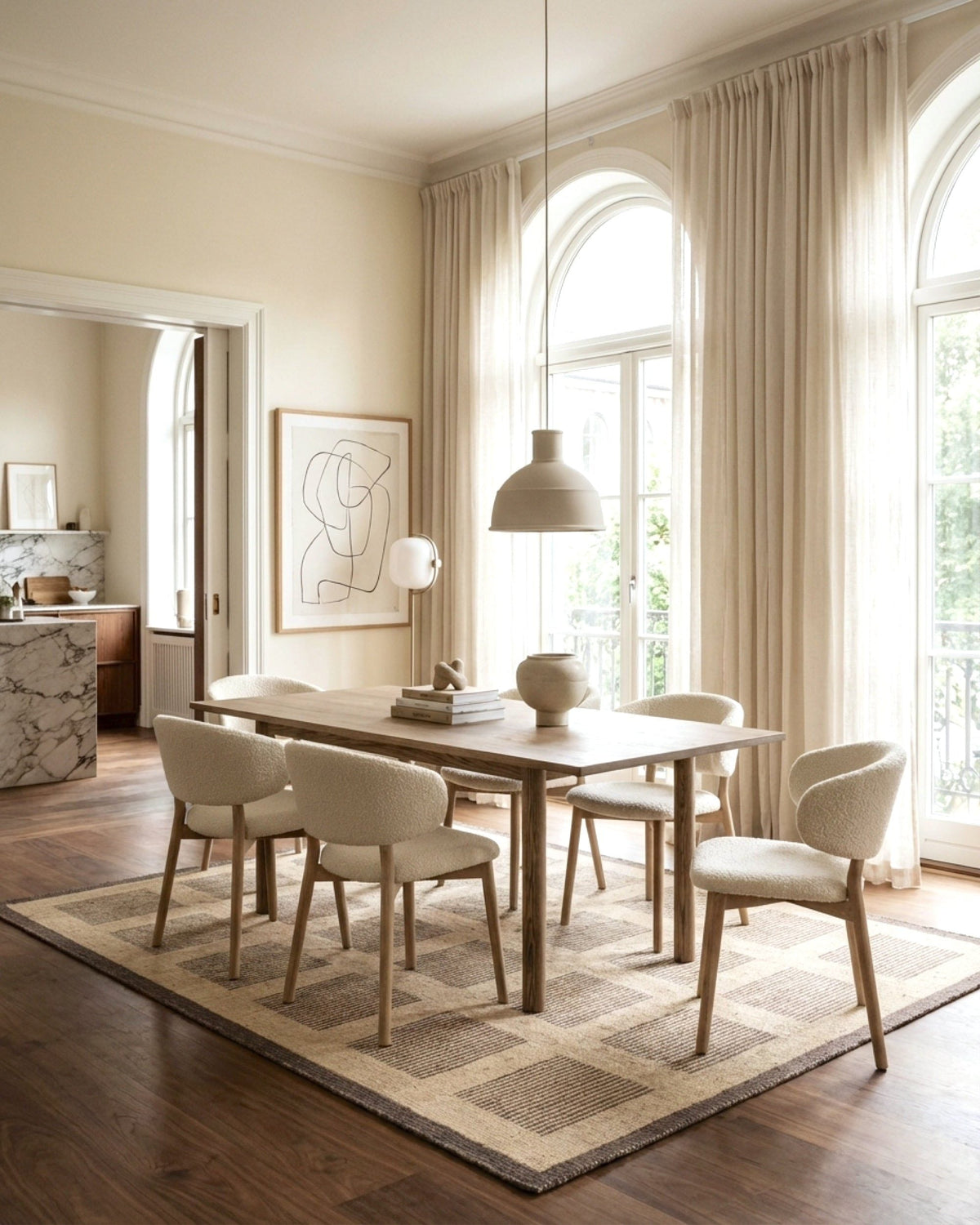
The lesson in heritage rooms is usually the same one the stone teaches. A reproduction pattern announces its age too loudly. A rug in wool coloured like the stone around it, sand, rust, cinder, with a pattern drawn simply, sits beside carved sandstone without competing. Pattern, where it appears, can take its cue from the architecture itself: a line that echoes a lattice, a field that recalls a courtyard floor. A knotted pile in New Zealand wool softens at the edges of traffic and deepens in colour over the years, much as sandstone weathers. If that palette appeals, our hand knotted rugs work in a similar register, and the Rugberry trade programme makes them to size and colour for hotels and other large rooms.


In the Rugberry house
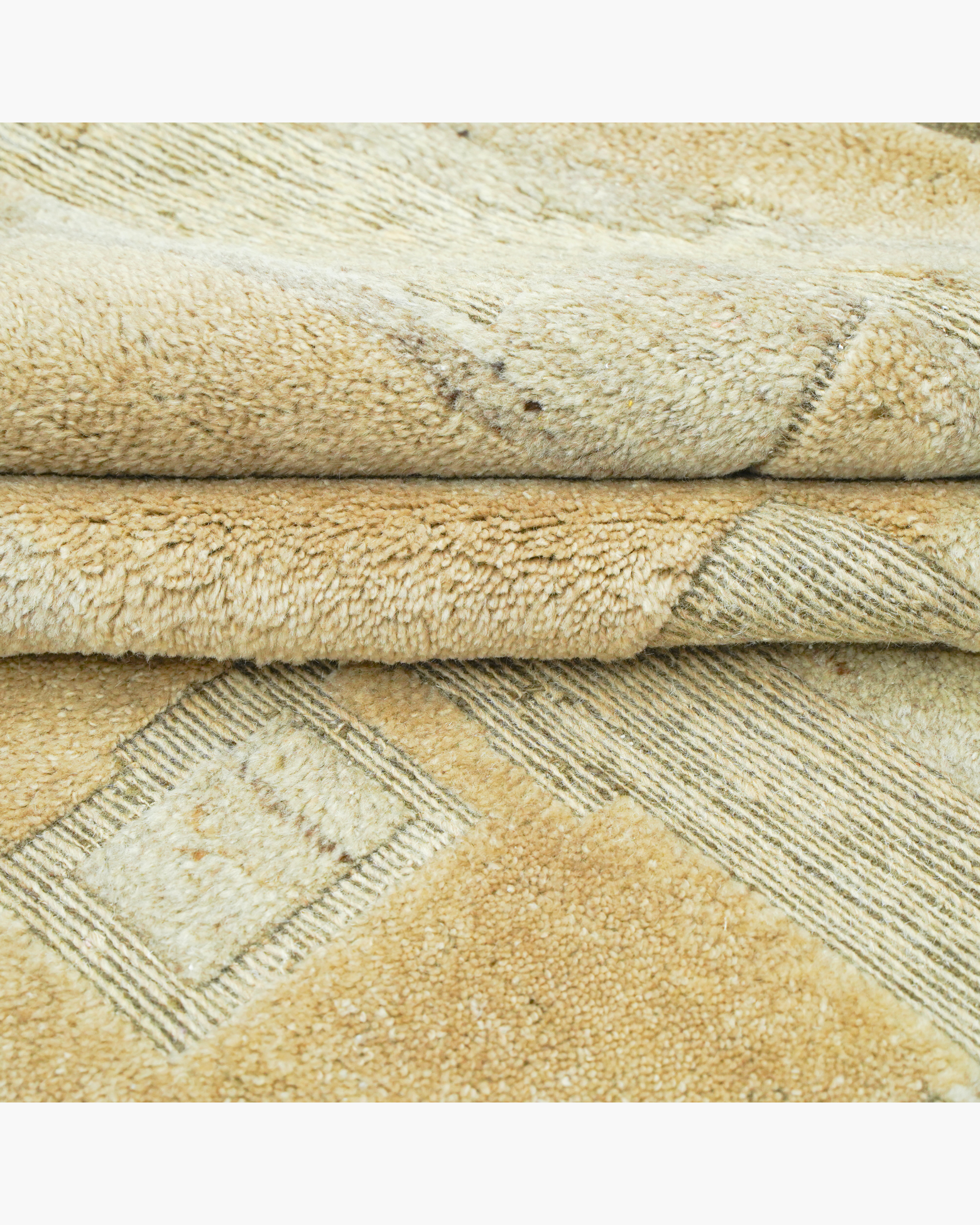
- Hand knotted rugsKnotted pile that wears the way stone weathers.
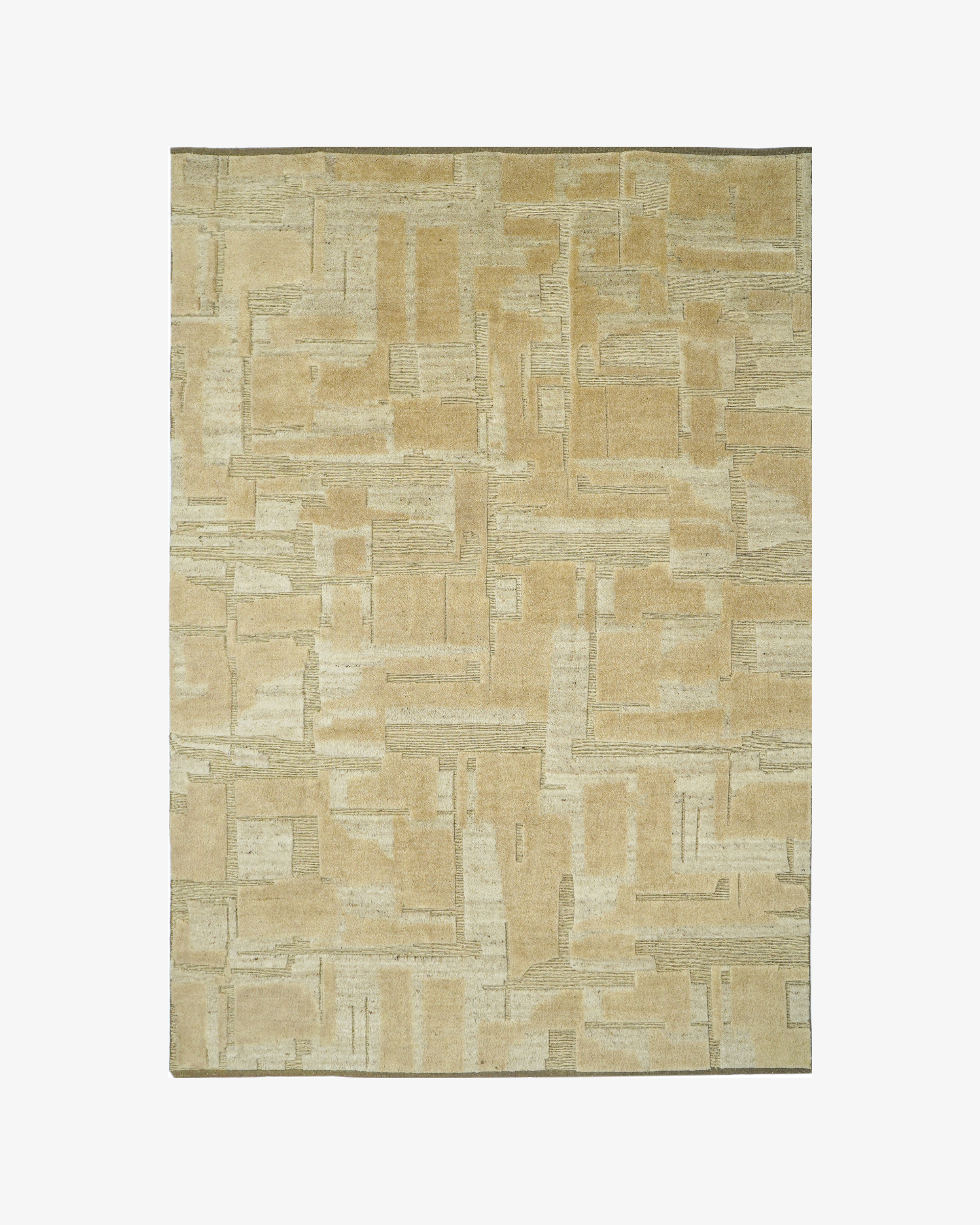
- Stratum Knotted Rug, DuneHand knotted in New Zealand wool, sandstone in colour.
- Rugberry trade programmeCustom size and colour for hotels and heritage projects.
Rugberry has no affiliation with the studios featured. Images are from the Rugberry house unless credited.