Long Life Design at D&Department
Images are credited where they are not from the Rugberry house.
A shop window usually changes with the season. The shelves are cleared to make room, and whatever did not sell is marked down and forgotten. D&Department was built around the opposite question. Not what is new this year, but what has already proved it can last, and what it would take to keep it in use.
The designer Kenmei Nagaoka founded D&Department in 2000. Its manifesto sets out ten criteria for what it calls long life design, which in plain terms means designs that can be used for a long time. The phrase sounds modest. It turns out to be one of the more demanding standards a shop can set for itself, because it asks the buyer to imagine an object not on the day it arrives but in its tenth or twentieth year.
A shop that sells what already works
Walk into a D&Department store and the first impression is of ordinariness. The shelves hold mainly everyday things: kitchen utensils, tableware, furniture. Some of it is new. A good deal of it is second hand, including designer pieces that have already lived one life in someone else's home and are being offered a second.
That mix is the point. A second hand chair on a shop floor is a small piece of evidence. It has been sat in, moved, perhaps repaired, and it is still here. A new chair beside it makes a claim. The used one has already made good on its claim. Putting the two together lets the customer see what time does to a design, which is the one thing a room full of new stock can never show.
The shop's stated aim goes further than taste. By selling the work of regional makers, it hopes to help them survive. A long life object needs a long life maker behind it, someone still at the bench in ten years who can make the same thing again or mend the one already sold. A shop that only ever buys the newest thing starves that person of steady work. A shop that keeps buying what lasts keeps them in business.
A second hand chair on a shop floor is evidence. A new chair beside it is only a claim.
Forty seven prefectures
The most ambitious part of the project is geographic. Its mission is to re-evaluate the uniqueness of Japan's 47 prefectures and their local design, through goods, food and tourism, with a long term aim of opening a shop in each one. It is an idea that runs against almost everything about modern retail, which tends to make every branch of a chain look the same. Here the ambition is for every branch to look like the place it stands in.
In Tokyo the project has a store in Setagaya, and in the Shibuya Hikarie building it runs the d47 design museum, the d47 design travel store and d47 shokudo, a restaurant serving regional food. The pairing of a museum, a shop and a canteen under one roof is revealing. It treats a bowl, a recipe and a journey as parts of the same subject: what a particular place has learned to make well, and how that knowledge might be kept alive.
The same idea runs through its publishing. The D Design Travel guides each cover a single prefecture, at a pace of two a year, and since the early volumes every edition has had the same standardised page count. That fixed format is a quiet discipline. A remote rural prefecture gets exactly the room that a famous one does. Nothing is inflated, nothing is squeezed. The guide becomes a measure of attention rather than of fame.
What long life does not mean
It would be easy to read all this as nostalgia, a shop for people who distrust anything made after their childhood. Nagaoka has said that long life design is often misread in exactly that way, as a rejection of the new. His own account is different. In his view, good taste comes from combining new things with established standards, not from refusing one in favour of the other.
That distinction matters. A long life object is not old for the sake of being old. It is something whose usefulness has outlasted the moment it was designed in, and new things can earn that status too. The test is not age but behaviour: does it still work, can it be repaired, does it look better or worse for the years it has spent in use. A design launched last spring could pass that test in time. Plenty of antiques would fail it.
The criteria also shift responsibility onto the buyer. To buy something for a long life is to accept that you will live with it through changing fashions, moving house, children, spills and repairs. It is a commitment rather than a purchase, and it asks for a different kind of judgement in the shop. Not whether this pleases me today, but whether I will still want to look after it in ten years.
There is also a generosity in the idea that is easy to miss. A shop that resells a used chair is admitting that the best version of a thing may already exist, and that its job is to find it rather than to replace it. That is an unusual position for a business that lives by selling, and it explains why the project spends so much of its energy on guides, food and museums. It is trying to sell attention as much as objects.
Objects that stay
The lesson travels well beyond Japan. Most homes are furnished in a rush, often all at once, and many of the things bought in that rush are gone within a few years, not because they broke but because they were never chosen to stay. The pieces that remain tend to be the ones that were bought slowly, or inherited, or found second hand, the ones that had already shown they could last.
D&Department's real argument is that this outcome can be planned rather than left to luck. Buy fewer things. Buy them from people who will still be making them. Prefer what can be mended. Mix the new with what has already proved itself, and let time do the editing. It is a philosophy of the shop floor, but it is also, quietly, a philosophy of the home.
Rugberry notes
From the Rugberry house
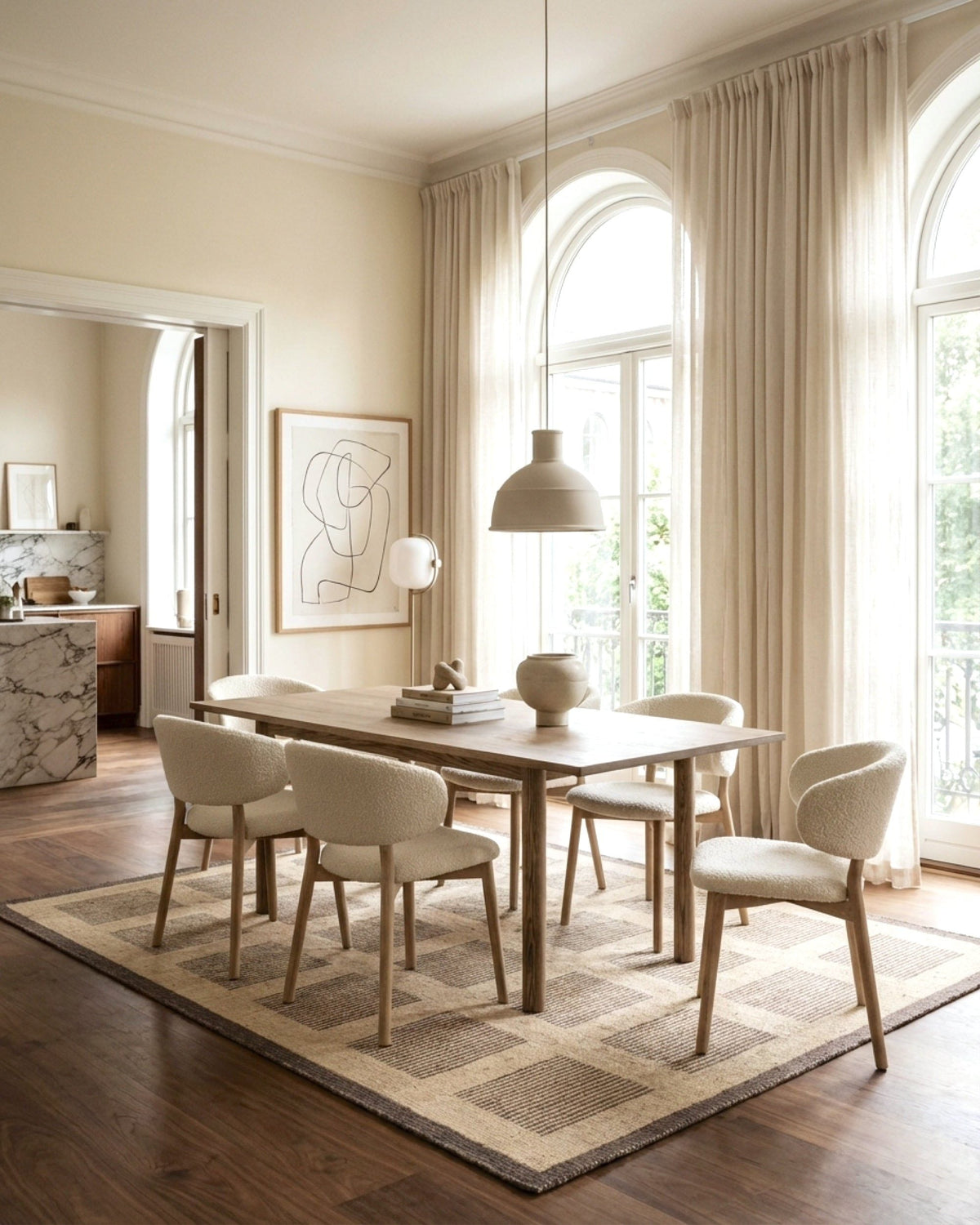
The idea of buying once and living with something for decades is close to how a rug should be chosen. A rug sits under daily life more than almost any other object in a room. It is walked on, moved, cleaned and lived around, and the good ones settle and soften rather than wear out.
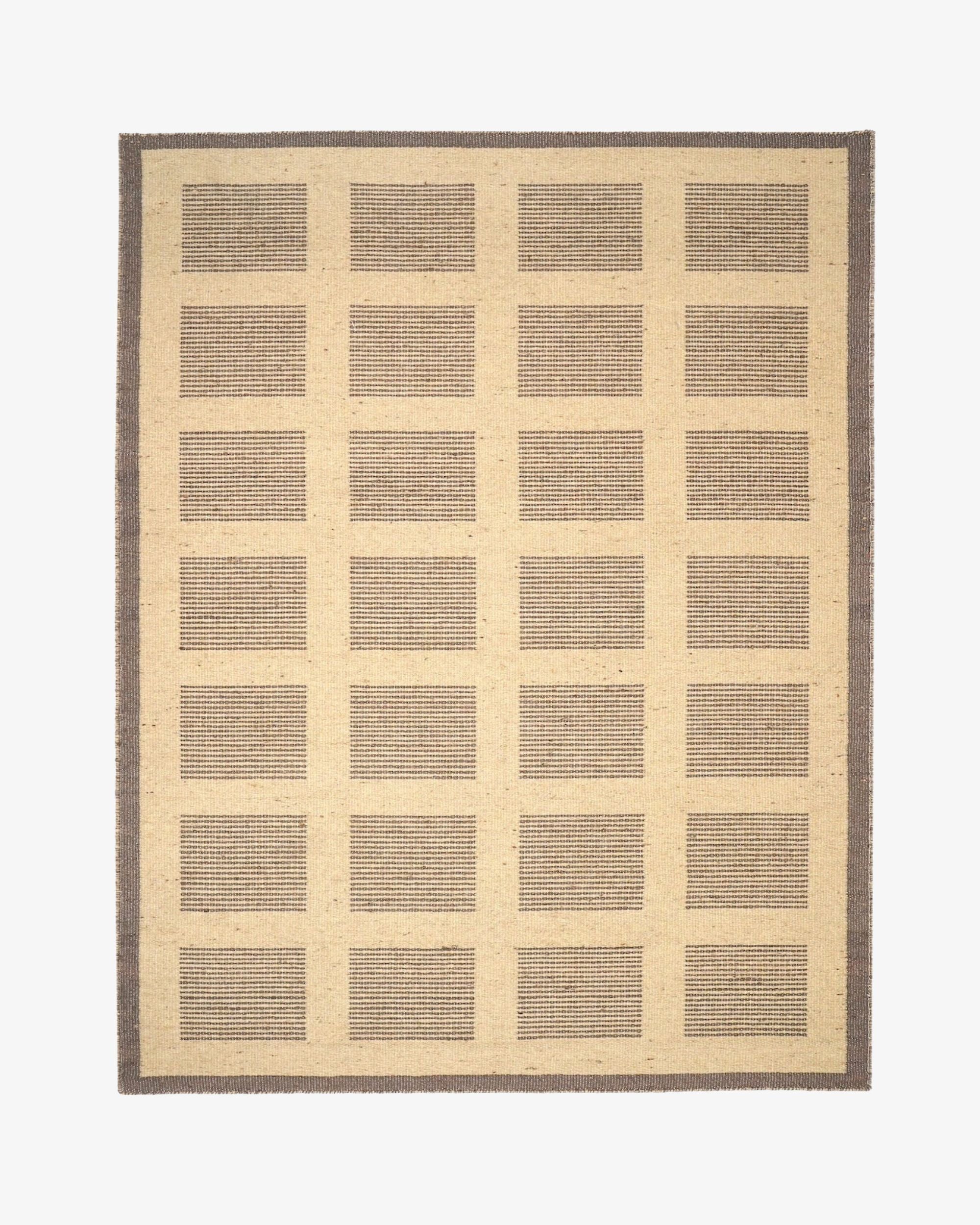
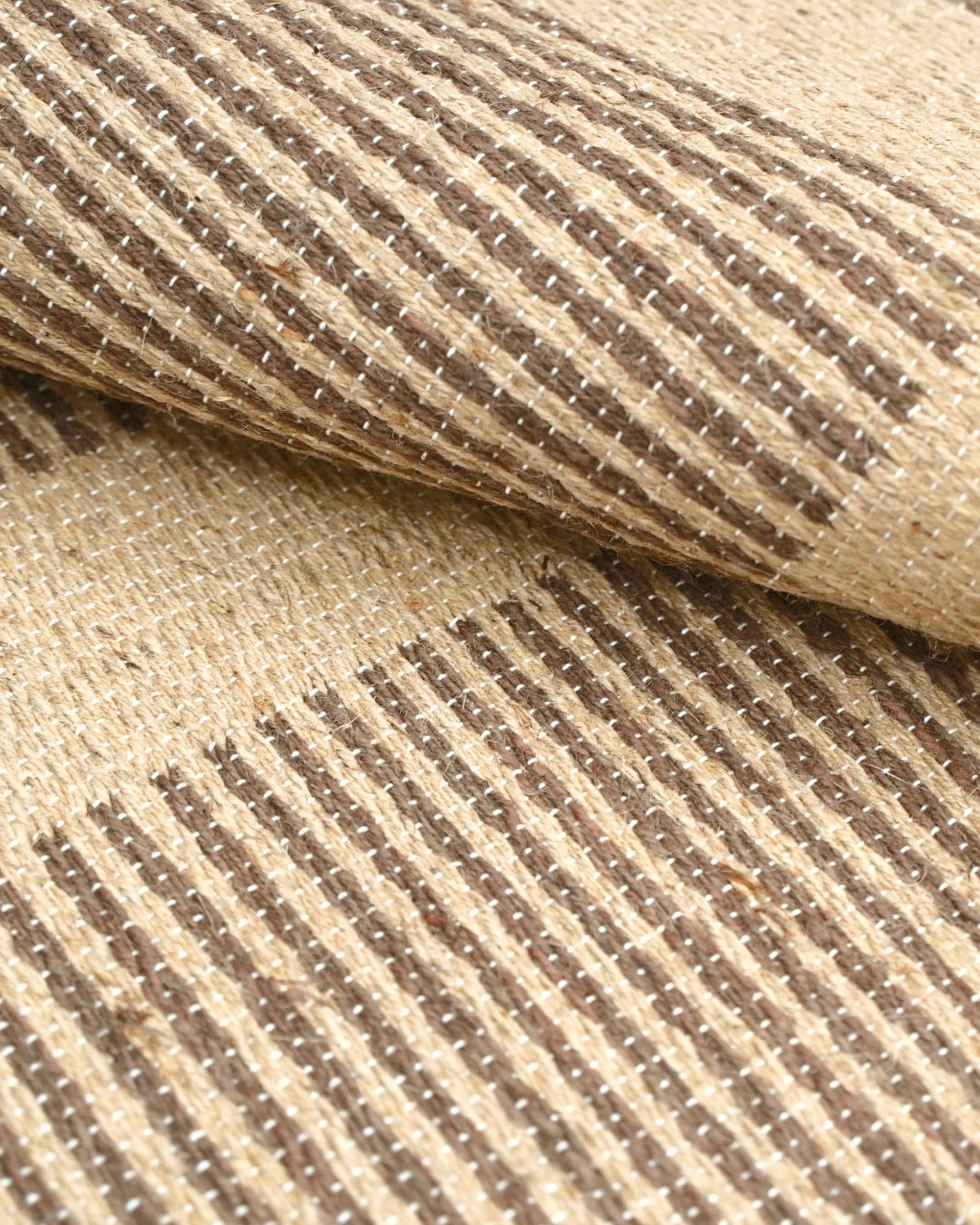
Plant fibres show this most plainly. The Kora Jute Rug is handwoven in natural jute and is described as better looking as it ages. Our sustainable rugs gather the plant and natural fibre pieces, and the art of making explains how a Rugberry rug comes off the loom.


In the Rugberry house
- The art of makingHow a Rugberry rug is made by hand.
- Sustainable rugsPlant and natural fibres, made to last.
- Handloom rugsWoven on the loom, firm and long lived.
Rugberry has no affiliation with the studios featured. Images are from the Rugberry house unless credited.