Ett Hem, the Stockholm Townhouse Hotel
Images are credited where they are not from the Rugberry house.
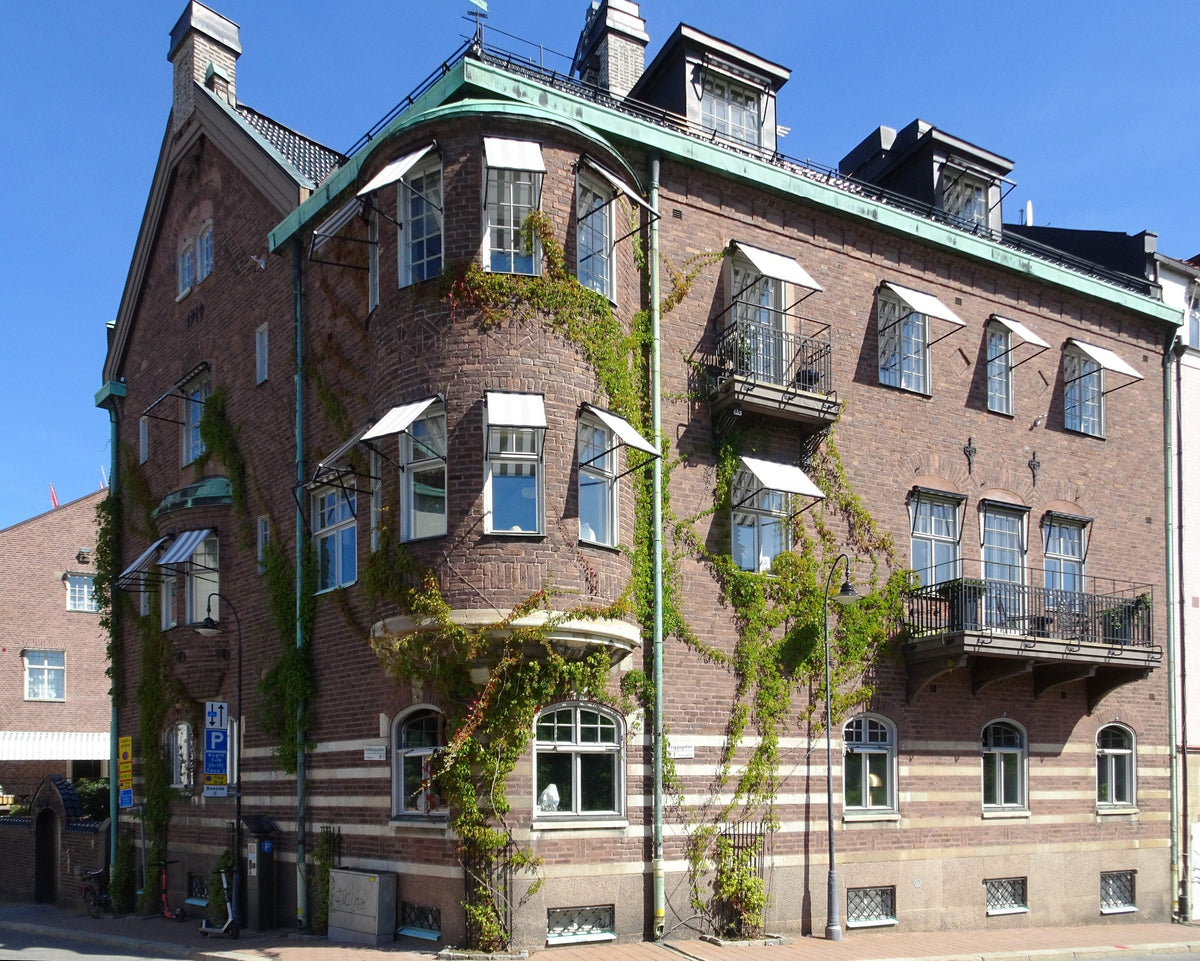
Sköldungagatan 2 in Lärkstaden, Stockholm, a townhouse of 1910 to 1911 by Fredrik Dahlberg and home of Ett Hem. Photo: Holger.Ellgaard, CC BY-SA 4.0, via Wikimedia Commons, licence
It is late, and a guest who cannot sleep walks down to the kitchen in socks. The lights are low. There is a long table with chairs that do not match, open shelves of plates and jars, and a fridge that nobody has locked. Inside there is food, and wine, and a bottle of champagne. Nobody arrives to ask for a room number. The guest cuts a slice of bread, sits at the table and eats it in the quiet, the way you might in the house of a friend who has already gone to bed.
That small scene is the whole idea of Ett Hem, a hotel in Stockholm whose name means, simply, a home. It opened in May 2012 in a townhouse built in 1910, and it was designed by Ilse Crawford and her practice, Studioilse. Crawford described it to Dezeen in a sentence that has since become something of a manifesto for a whole kind of hospitality: "The idea is a comfortable cultured house you can enjoy as if it is a friend's."
A house before it was a hotel
The building came first, and it shaped everything. It was designed by the architect Fredrik Dahlberg as a private residence for a government official and his wife, in the Arts and Crafts manner, with timber panelled walls and decorative ceilings. It was never meant to receive strangers. It was meant to be lived in by a couple, with rooms sized for conversation rather than circulation, and a sequence of spaces that a family would recognise: a place to cook, a place to read, a place to sit by the fire.
Many hotels in old houses spend their budget erasing that history, opening up the plan, installing a reception desk where the hall used to be and making every room behave the same. Ett Hem went the other way. The owner, Jeanette Mix, wanted honest places to stay, and Crawford treated the house as a house. She has called the approach ridiculously normal, and the phrase is more radical than it sounds. Normal, in hotel design, is usually the last thing anyone is paid to deliver.
The kitchen as the heart
At the centre of the plan is the kitchen. Large dining tables, assorted seating, open shelves and that famously generous fridge make it the room where the house gathers, and the place where the staff and the guests are most likely to meet as people rather than as roles. Breakfast is served in a glazed conservatory. In the evening, the same rooms turn into somewhere to eat slowly, with candles and the sound of other people talking.
Around the kitchen sit the rooms that make a house feel inhabited. A library has floor to ceiling shelves of books meant to be read, and the hotel describes it as a room to disappear into. A sitting room has sofas, games and a fireplace where logs are lit when the weather turns cold. None of this is unusual in a home. All of it is unusual in a hotel, where the public rooms are usually designed to be looked at on the way to somewhere else.
The rooms are not designed to be looked at on the way to somewhere else. They are designed to be stayed in.
Texture before spectacle
What makes the rooms feel warm is not a single gesture. It is the accumulation of surfaces that respond to the hand. The furniture is a mixture of vintage and modern pieces in cane, wood, leather and velvet, materials that change as they are used. Leather darkens where arms rest on it. Cane gives a little under weight. Velvet catches the light differently depending on which way it has been brushed. Old timber panelling, already more than a century into its life, holds the warm colour that only time can give a wall.
This is the quiet lesson of Ett Hem for anyone furnishing a house. Warmth is rarely the result of colour or of a dramatic object. It comes from texture, and from materials honest enough to show their age. A room of perfect, hard, reflective surfaces can be beautiful, but it does not invite anyone to sit down. A room of wood, wool, linen and leather does, because each surface promises to be kind to the body.
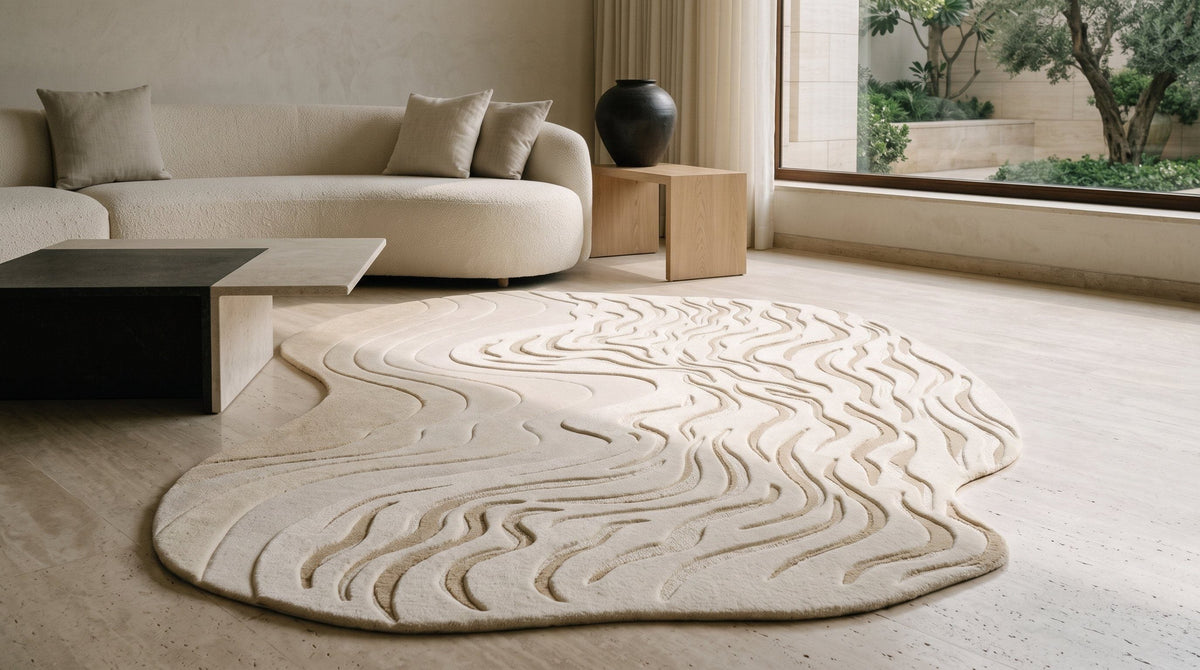
Floors matter more than they are usually given credit for. In a house built for living, the floor is where comfort begins: the first thing a bare foot meets on the way to the kitchen at night, the surface a child lies on to read, the place a dog chooses by the fire. A soft, dense floor under a sofa changes how a room sounds as much as how it looks. It absorbs footsteps and the scrape of chairs. It turns a hall into a room.
A home that grew
Ett Hem has grown since it opened. It now runs 22 rooms and suites across three connected townhouses in Lärkstaden, a quiet residential quarter of the city. In 2022 an English garden was laid out on what had been a parking lot, and the hotel bakes its own sourdough on site. Expansion is usually the moment a small hotel loses its character. Here, the growth seems to have followed the logic of a household that bought the house next door: more rooms, a garden, a better loaf of bread.
Recognition followed. In October 2025 Ett Hem was ranked number 89 on the extended list of the World's 50 Best Hotels, the first Swedish hotel to be ranked since those awards began in 2023. It is a curious honour for a place whose whole ambition was to feel unremarkable in the best sense, like the house of someone with good taste and an open fridge.
Designing for how people behave
Underneath the charm is a serious design argument. Most hospitality is planned around how a hotel wants to be seen: the photograph of the lobby, the view from the bed, the bathroom that looks expensive. Ett Hem is planned around how people actually behave when they are comfortable. They wander. They get hungry at odd hours. They want to read somewhere that is not their bed. They sit closer to a fire than any designer would place a chair.
Designing for behaviour rather than appearance produces rooms that photograph less dramatically and feel far better. It also produces rooms that age well, because nothing in them depends on being new. A worn leather chair is still a good chair. A scuffed floor is still a warm floor. A library with cracked spines is a better library. The house in Stockholm has had more than a century to prove the point, and it keeps proving it every night someone walks down to the kitchen in their socks.
Follow @etthemstockholm on Instagram for their own work, in their own words.
Rugberry notes
From the Rugberry house
The rugs in these rooms belong to the same family of surfaces as that house: soft, dense and honest about their fibre. A rug for a house like that one is less about pattern and more about touch, a wool ground that springs back under feet and softens with years of use.
If that way of furnishing appeals, our fine wool rugs and the plainer grounds in textures and solids work in a similar register. Designers working on hospitality projects can find the trade programme below.


In the Rugberry house
- Fine wool rugsWool chosen for the way it softens and ages.
- Textures and solidsPlain grounds where the surface does the work.
- Trade programmeFor designers working on homes and hospitality.
Rugberry has no affiliation with the studios featured. Images are from the Rugberry house unless credited.