The Girdlers' Rug: Lahore, London and a Survivor's Story
Images are credited where they are not from the Rugberry house.
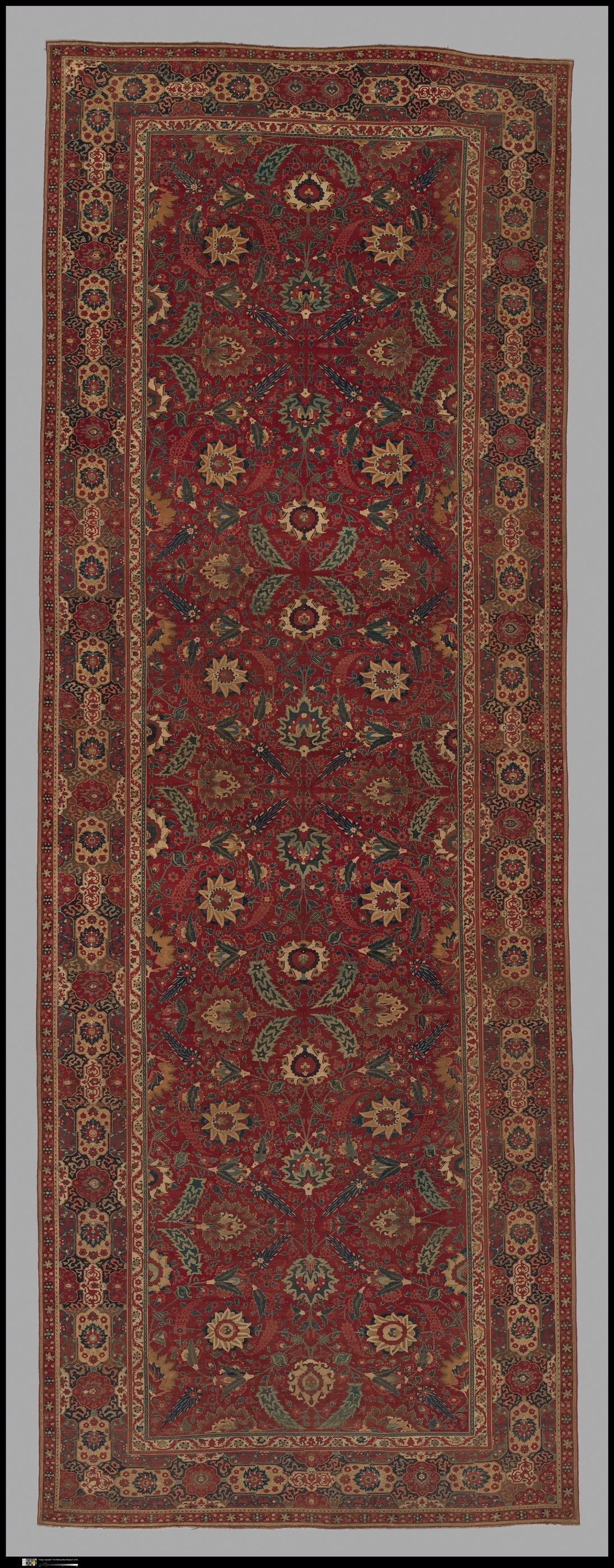
A hand knotted wool rug made in Lahore in the middle of the seventeenth century, close in date to the Girdlers' rug. Image: The Metropolitan Museum of Art, CC0, via The Met Open Access, licence
In a sealed cabinet in a livery hall in the City of London lies a hand knotted wool rug that was ordered from Lahore nearly four hundred years ago. It has been a table covering, a damaged heirloom, a museum loan and a wartime evacuee. It has survived a fire that destroyed most of a city and a bombing campaign that destroyed the hall it lived in. It is still there, and it is still a rug.
The Girdlers' rug, as it is known, is one of the best documented hand knotted pieces from Mughal Lahore. That documentation is what sets it apart. Most historic rugs arrive in collections with their origins half guessed. This one comes with a paper trail that runs from the order to the owner, and a story of survival that would be hard to invent.
An order placed in 1630
The Worshipful Company of Girdlers is one of the old livery companies of London, a guild of the makers of girdles, the belts worn at the waist. It received its Royal Charter on 6 August 1449, and its Hall stands on Basinghall Avenue in the City. In 1634 the company was given a rug by Robert Bell, who had served as its Master in 1611. The Girdlers' records show that Bell had ordered it in the spring of 1630, through his connections with the East India Company.
That detail places the rug in a very particular moment. The East India Company linked London to the Mughal empire, and Lahore was a known centre of rug production at the time. A merchant with the right connections could commission a piece there and wait, through the long months of making and shipping, for it to arrive in London.

The Girdlers' rug is not alone in this. The Victoria and Albert Museum holds a comparable East India Company commission, the Fremlin rug of about 1640, knotted in wool pile on a cotton foundation at about 224 knots to the square inch. Together, pieces like these give a rare view of how a rug could travel from a Lahore loom to an English owner, and of what such owners wanted.

Then there are the people at the other end of that order, whom the records do not name. Somewhere in Lahore, a group of weavers sat at a loom for many months, tying knot after knot to a design they may never have seen used. They did not know the rug would cross an ocean, sit on a table in a London court room, escape a fire and wait out a war in a bank vault. They only knew how to make it well. Everything that followed depended on that.
The paper trail matters for another reason too. A rug with a known date, a known buyer and a known route is a fixed point. Scholars can compare other pieces against it, and the questions of where and when a Lahore rug was made become a little easier to answer because this one is certain.
A table covering in the Court Room
The rug did not go on the floor. It first served as a table covering in the Girdlers' Court Room. Laid across a table, it could be seen at eye level, touched, and shown to guests as evidence of the company's standing and its reach.
Centuries of service took their toll. By 1898 its condition was described as torn and ink stained, and some of those ink stains can still be seen today. It was cleaned and restored in collaboration with the Victoria and Albert Museum. That intervention is part of its story too. A historic textile survives not only because it was well made, but because at the right moments people chose to care for it rather than throw it away.
A historic rug survives not only because it was well made, but because people chose to care for it.
Fire and the Blitz
The rug's survival is the part of the story most people remember. In the Great Fire of London in 1666 it was rescued by the company's Clerk. Nearly three centuries later, in the Blitz of 1940 to 1941, it was kept in bank vaults before the Girdlers' Hall was destroyed. The building burned. The rug, safely stored, came through.
Twice, then, it came through a disaster that consumed what was around it, each time because someone thought to carry it out or lock it away. It is hard to think of a better illustration of the difference between an object and a place. The hall was rebuilt. The rug did not need to be.
In 1997 it was lent to the Metropolitan Museum of Art in New York. On its return it went into a sealed display cabinet in the Livery Hall, where it remains. It is reported to measure about 27 by 8 feet, a long and narrow piece, well suited to the table it once covered.
What four centuries say about knotting
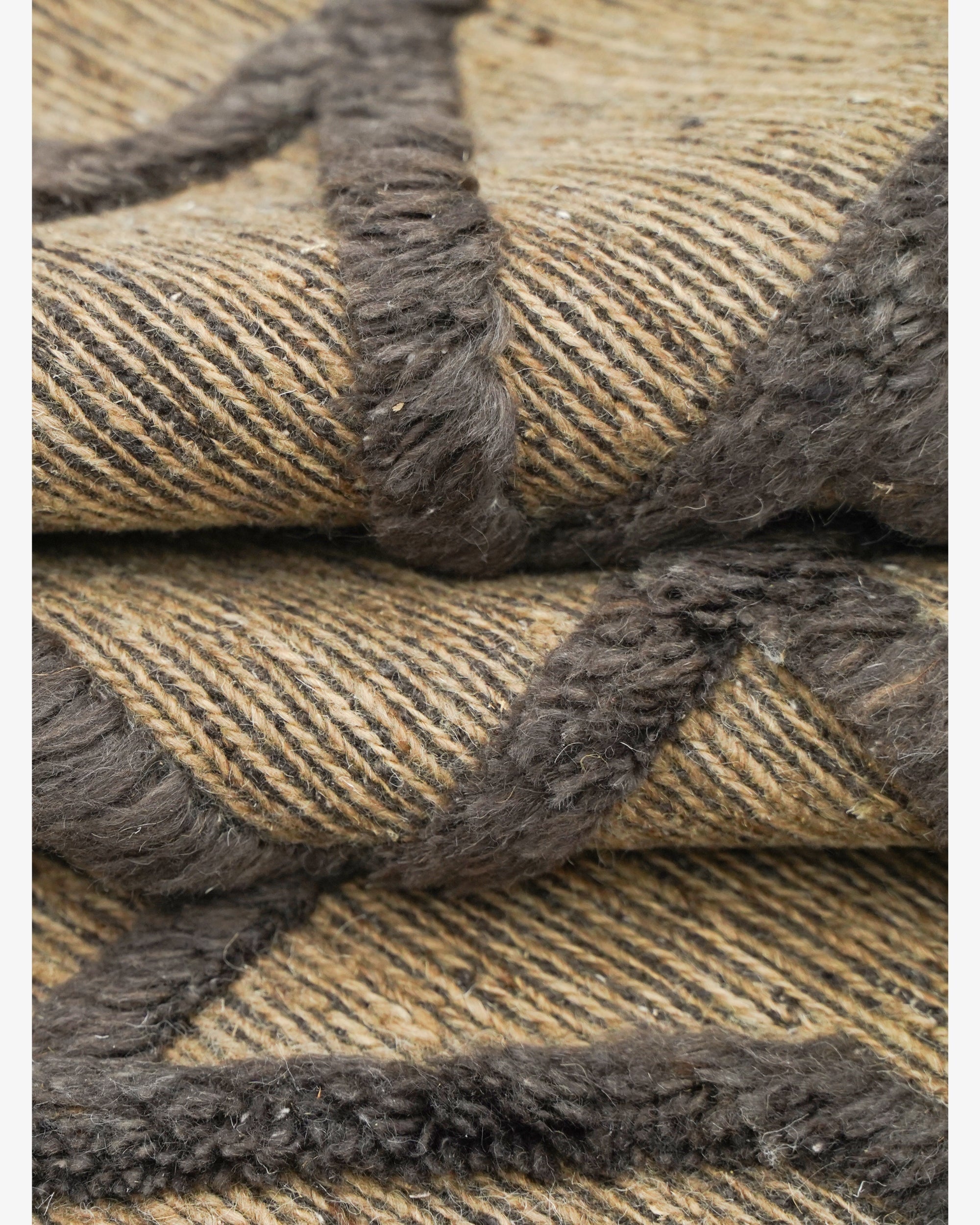
For anyone who owns or is thinking of buying a hand knotted rug today, the Girdlers' rug is the strongest possible argument that the form is built to last, given care. A knotted pile rug is made by tying individual knots of yarn around the warp threads, row by row, and beating each row down tight. The pile is held mechanically by the knots, not by glue, and the foundation is woven through the whole structure. A well made knotted rug has very little that can simply come apart.


That is why such pieces can be cleaned, repaired and restored rather than replaced, as the Girdlers' rug was in 1898. A worn area can be rewoven. A damaged edge can be rebound. The structure invites repair in a way that very few modern furnishings do.
The other lesson is about care. The rug lasted because it was used gently, as a table covering, then cleaned when it needed it, then protected from fire and bombs, then kept in a stable case. Most rugs will never face the Blitz. But the same principles apply to any good rug in a home: keep it out of harsh sun, clean it properly, turn it now and then to spread the wear, and have damage repaired early rather than late.

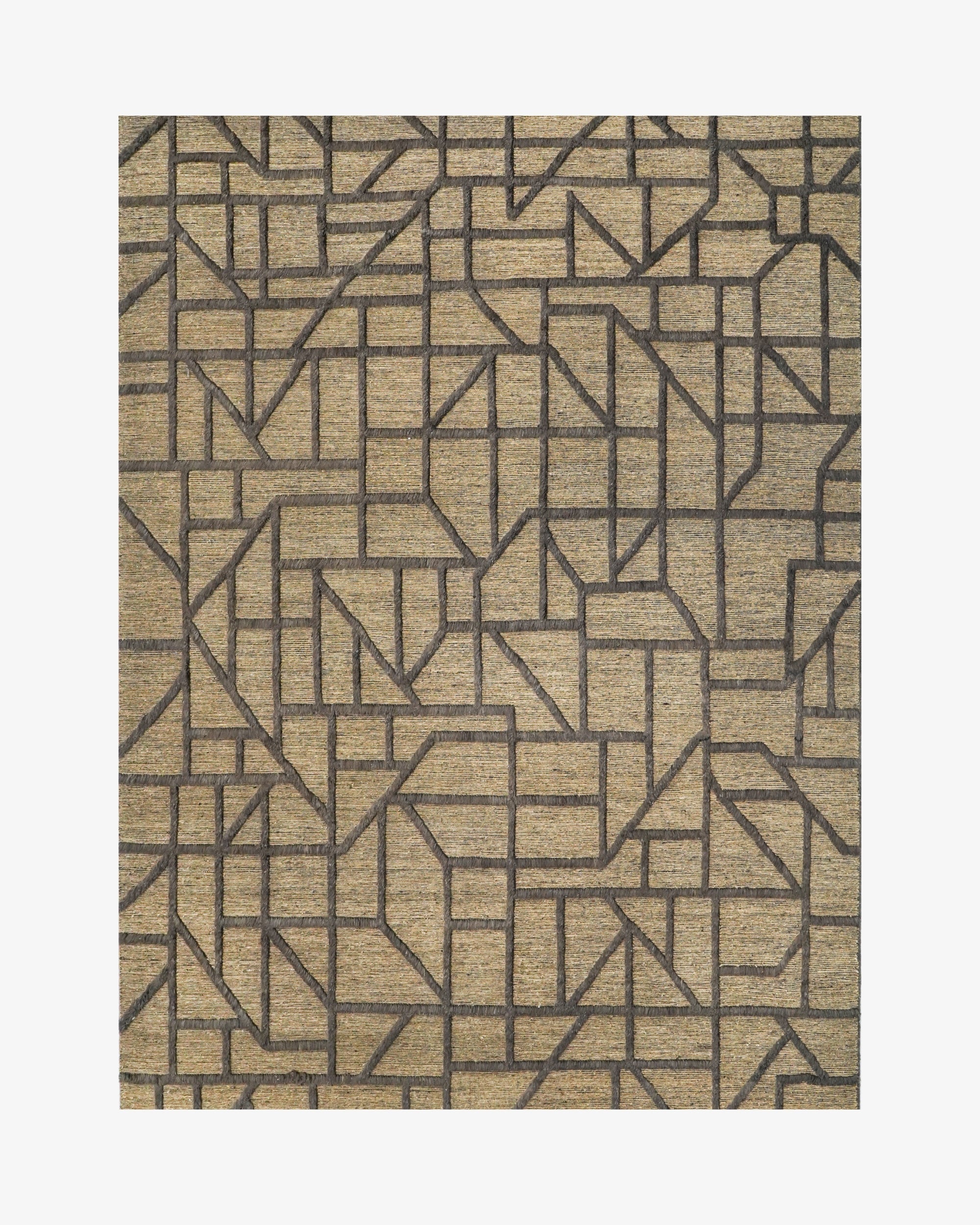
We make hand knotted rugs too, in New Zealand wool, and the Pazo Knotted Rug is one of them. The construction is the same in spirit: knots tied by hand, row by row, by people who know what they are doing. Our hand knotted rugs are described as the most durable way a rug can be made, and the Girdlers' rug is four centuries of evidence for that.


In the Rugberry house
- Hand knotted rugsKnotted by hand in New Zealand wool.
- The art of makingHow a Rugberry rug is knotted and finished.
- Fine wool rugsNew Zealand wool, soft and resilient.