Kolkata's Second Lives: Old Houses, a Jail and a Post Office
Images are credited where they are not from the Rugberry house.
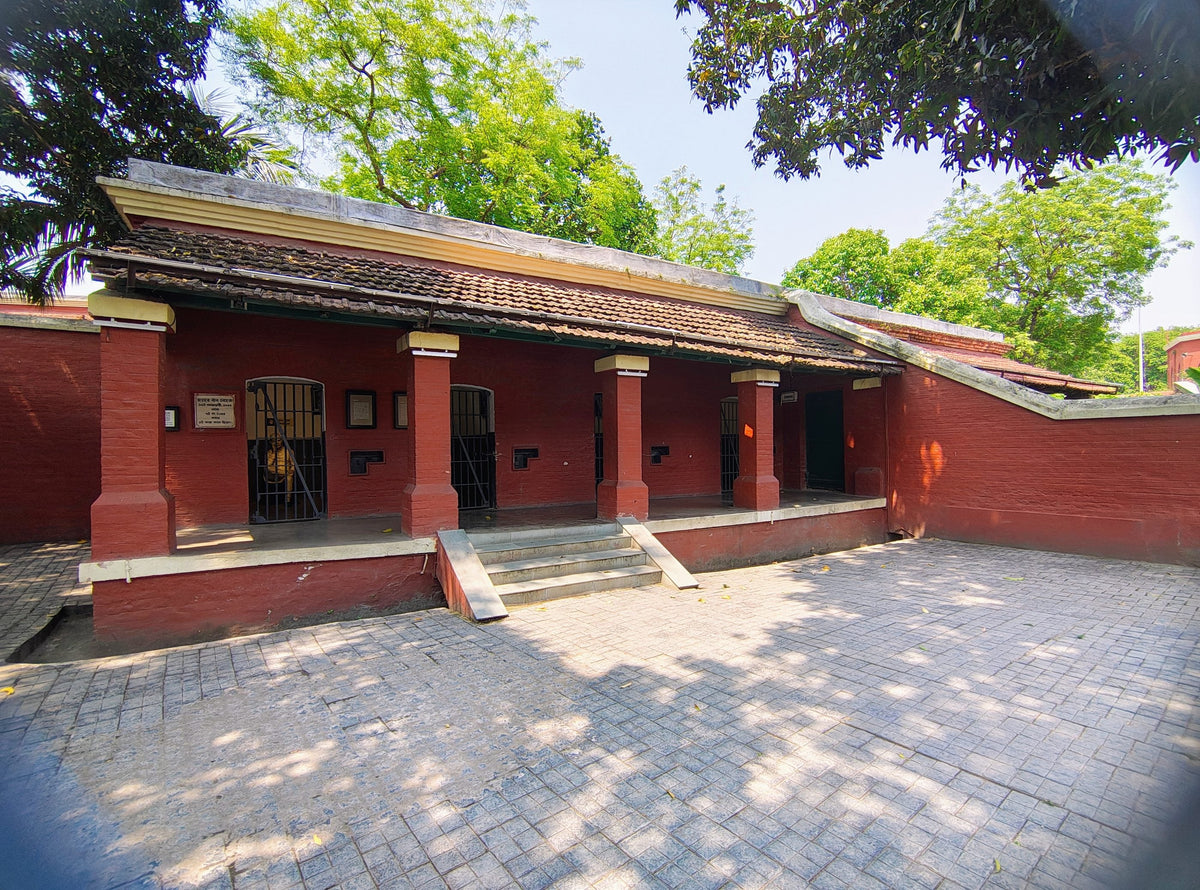
Cell blocks of the old Alipore jail, now the Alipore Museum, Kolkata. Photo: Brahmavadini, CC BY 4.0, via Wikimedia Commons, licence
In the old neighbourhoods of south Kolkata, the floors tell you how old a house is before anything else does. Red oxide, cool and faintly glossy, worn paler on the path from the door. Patterned mosaic in a front room, chipped at one corner where a cupboard once stood. Black and white chequers on a landing. Ceilings so high the fans hang on long rods, turning slowly enough to count. Most cities would have pulled such houses down long ago. Kolkata, more often, finds them a new tenant.
That habit has given the city some of its best places to eat, drink coffee, look at art and buy things made by hand. They sit inside century old homes, a colonial jail and the General Post Office, and they stay alive precisely because they are used. What follows is a short guide to a few of them, and to what they teach anyone who lives with old floors and high ceilings.
Sienna, a house of craft in Hindusthan Park
In Hindusthan Park, Sienna occupies a century old home and combines a crafts store, a cafe, a dining room and a chef's table. The store and the menu are built around Bengal's pottery and textiles, and the setting does much of the persuading. Plates and cloth look different in a room that has been lived in for a hundred years. They look as though they belong.
The lesson is in what was not done. The house was not hollowed out into a white box. Its rooms, doors and proportions still read as a home, so the visitor moves through it the way a guest would, from one room into the next, rather than along an aisle. A shop that feels like a house is easier to linger in, and lingering is the point.
The Red Bari, a barrister's mansion
On Sadananda Road near Kalighat, The Red Bari is a 90 year old red brick mansion, the former residence of the barrister Pareshnath Banerjee. It was restored in 2022 by Avantika Jalan and is now a cafe and a small bed and breakfast. The restoration kept it recognisably domestic. You eat in what feels like a family's rooms, because that is what they were.
Not far away, on Priyanath Mullick Road in Bhowanipore, The Bhawanipur House is an early twentieth century mansion restored with a conservation architect. It is used for food and for adda, the long, unhurried Bengali conversation that is less a pastime than a civic institution. A house built for large families and visiting relatives turns out to be the ideal setting for it. The rooms were always meant to hold more people than strictly fitted.
The rooms were always meant to hold more people than strictly fitted.
Siuli, coffee under the dome
In BBD Bagh, at the heart of the old commercial city, the General Post Office was built between 1864 and 1868. Inside it, Siuli, The Parcel Cafe, is described as India's first post office cafe. You drink coffee beneath the dome, among postal memorabilia, beside a parcel counter that still works. It is a small intervention in a very large building, and it is a good one, because it gives people a reason to sit in a public space they would otherwise pass through on an errand.

The cafe also changes how the building is seen. A post office is usually a place of queues and forms, somewhere to leave quickly. With a table and a cup of coffee under that dome, the architecture becomes visible again: the height, the light falling from above, the scale of a hall built when the post was one of the great public services of the empire and the city. Use, in this case, is the best form of preservation, because a room people enjoy is a room people will fight to keep.

Alipore Museum, and the weight of a place
Some second lives ask for a different tone. The Alipore jail grew in stages from 1810 and became a central jail in 1864. A new jail, with a central tower and radiating cell blocks, followed in 1906. During British rule political prisoners were held there, among them Subhas Chandra Bose, and the site carries the memory of the freedom struggle and of those who suffered for it. The prison closed on 20 February 2019 and has since become a museum, and a venue for contemporary exhibitions.

It is not a place for idle browsing. The radiating plan, designed so that a few could watch many, is still legible, and walking it is sobering. Yet the decision to open it rather than demolish it is itself an act of respect. A city that keeps its difficult buildings keeps the means to remember what happened in them.

Experimenter, and a city of galleries
Back in residential Ballygunge, Experimenter runs two gallery spaces, on Hindusthan Road and on Ballygunge Place, among the most considered contemporary art rooms in South Asia. They sit in a neighbourhood of houses, which suits them. Art looks more urgent when you reach it past gates, gardens and other people's front steps.
In November 2025 the first Kolkata Art Weekender joined many of these addresses together, with programmes across Experimenter, DAG, the Kolkata Centre for Creativity and the Alipore Museum, plus open artist studios. The Kolkata Centre for Creativity remains the city's main venue for design exhibitions and craft programming, and it is worth checking what is on before a visit.
What old rooms can hold
Seen one after another, these places argue the same thing. An old room does not need to be gutted to be useful. Its floor, its height and its proportions are assets, and the best reuses build on them rather than covering them. Red oxide and mosaic are part of the design. A high ceiling is part of the cooling. Thick walls are part of the quiet.
For anyone living in such a house, that suggests a light touch. Let the floor show at the edges. Choose furniture and textiles that sit on the old surfaces rather than hiding them. Keep the rooms flexible enough to hold a crowd for adda, or one person with a book. Kolkata has been doing this with its buildings for a long time. Its homes can do the same.
Rugberry notes
From the Rugberry house
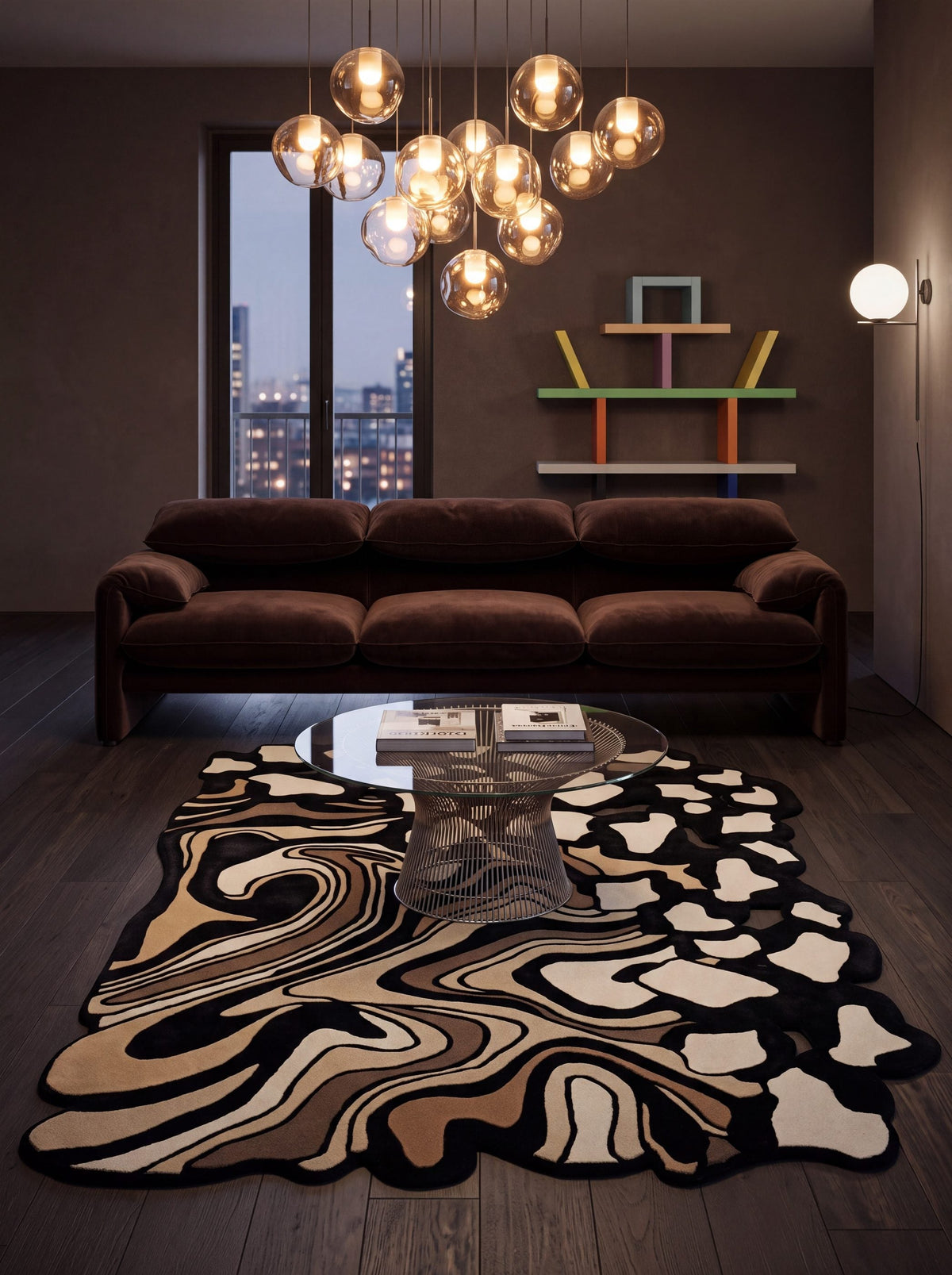
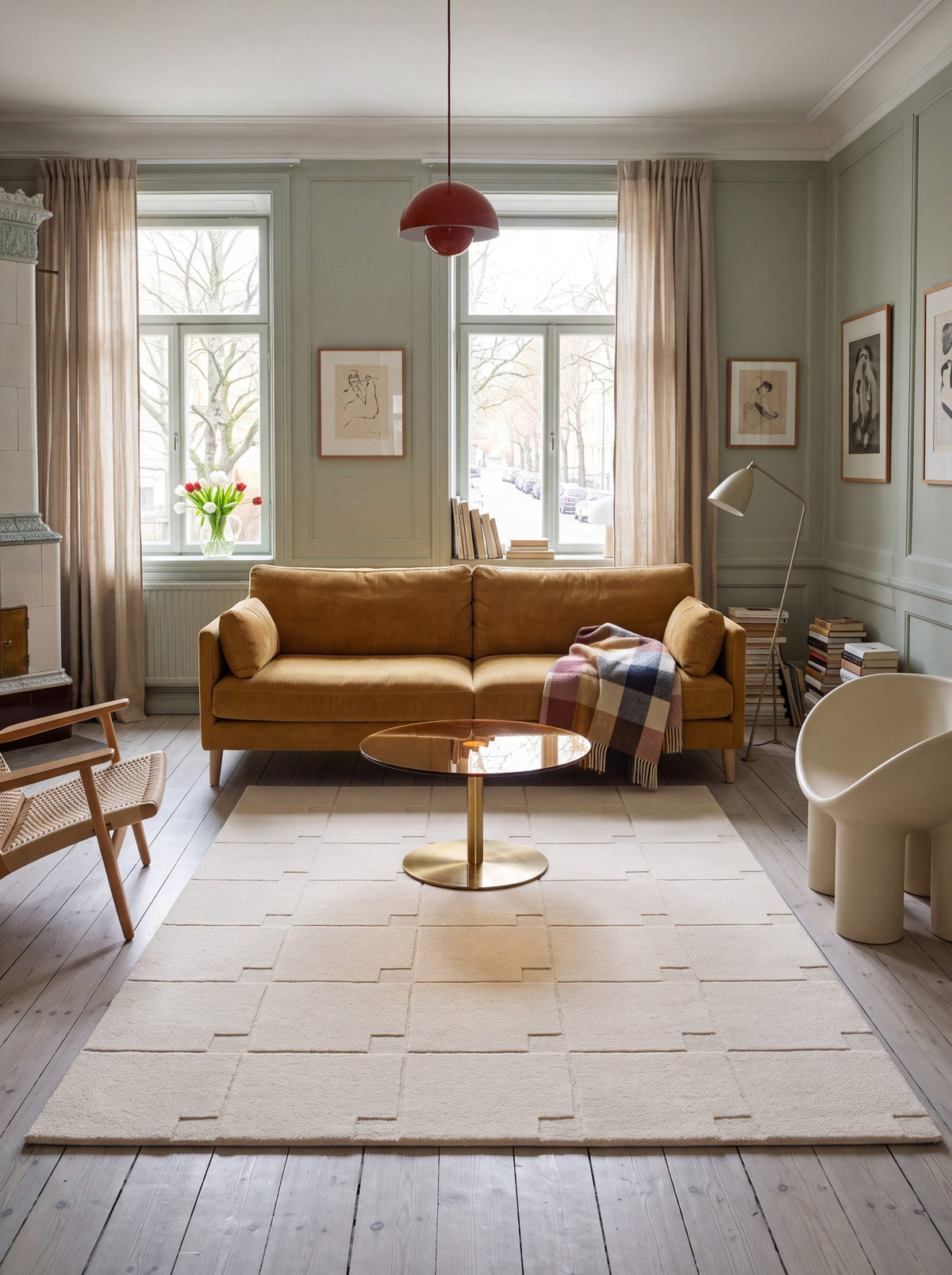
The Rugberry rooms below were chosen for old floors and tall windows. In a house with red oxide or mosaic, a rug works best when it is sized to leave a border of floor on every side, so both surfaces can be seen.
If that appeals, our flat handwoven rugs and natural jute rugs sit low on an old floor, and Terra rugs gather the everyday fibres: wool, Lincoln and jute.


In the Rugberry house
- Handwoven rugsFlat woven rugs that let an old floor show.
- Natural jute rugsThe fibre of Bengal's fields.
- Terra rugsGrade I fibres for everyday rooms.
Rugberry has no affiliation with the studios featured. Images are from the Rugberry house unless credited.