Coffee, Brick and Teak in a Byculla Warehouse
Images are credited where they are not from the Rugberry house.
Off a paved alley in Byculla, in a compound of old industrial buildings, a pair of barn doors opens onto exposed brick and the smell of roasting coffee. The doors are original, refurbished rather than replaced. Behind them, where printing presses once ran, there is now a bar, a roastery, a sensory lab and a cold room bordered in glass, and in that cold room an island of teak that travelled all the way from Auroville.
This is The Craftery by Subko, in the JAK Compound in Byculla, Mumbai. When Elle Decor India visited in March 2022, it described a space of 2,100 square feet carved out of an abandoned industrial warehouse and printing press, designed by the studio STaND, led by Siddhant Tikkoo and Nikita D'Silva. It is a coffee house, but it is also an argument about what an old industrial city can become.
Coffee as a made thing
Subko was co-founded by Rahul Reddy and Daniel Trulson. Its first home was a revived colonial style bungalow in Bandra, and from the start the brand has presented coffee less as a drink than as a craft, something grown, processed, roasted and brewed by people with particular skills. Its Instagram account has been described as working like a journal that explains the thinking behind each drink and bake.
The Craftery makes that idea physical. Elle Decor described its purpose as engaging patrons in a routine dialogue about the journey of Subko's coffee from plantation to table. The rectilinear plan is divided into five zones: the Bloom Bar, the roastery, an experience zone, a sensory lab and a cold room. You do not just buy a coffee here. You walk through the stages that made it.
There is something apt about a coffee company settling into a former printing press. Both trades are about process and repetition, about doing the same careful thing many times and getting it right each time. A press runs on registration and timing. A roastery runs on temperature and timing. The building has simply changed what it is careful about.
Brick, teak and spotted marble
The materials list reads like an inventory of Mumbai itself: brick, crafted metal, granite, concrete, Indian spotted marble, teakwood and glass. The brick walls are left exposed and paired with creamy beige tones and lean black metal frames. The wooden floor of the Bloom Bar is inlaid with copper and teak. A croissant motif by Anuranjini Singh is screen printed onto a marble panel by Pritam Arts.
None of these are exotic choices. That is precisely why they work. Brick and teak belong to the city's old working buildings, and spotted marble is a familiar Indian stone. STaND did not import a look. It worked with what the building and the city already offered, and then added a small number of crafted details that tell you someone was paying attention.
The teak island in the cold room is the detail that stays with you. It came from Auroville, near Pondicherry, a long way from Byculla. It is a reminder that a craft interior is a network as much as a room: a carpenter in one place, a printer in another, a roaster in a third, all contributing to something that only comes together on the day the doors open.
A craft interior is a network as much as a room, a carpenter in one place, a printer in another, a roaster in a third.
The line between reviving and dressing
It would be easy to celebrate all this without a second thought, and most writing about adaptive reuse does. But there is a question worth asking whenever an old working building becomes a beautiful place to spend money. What happens to the neighbourhood around it?
Byculla is an old part of Mumbai, a district of mills, warehouses, markets and dense housing. Its industrial buildings are exactly the kind of structures that are either demolished for towers or quietly reborn as cafes, galleries and studios. The second outcome is clearly better than the first. A printing press that becomes a roastery keeps its brick, its doors and its proportions. The city keeps a piece of its memory.
Still, there is a fine line between reviving a place and dressing it for an audience. A revived building continues to be part of the life around it. A dressed one becomes a set, beautiful to photograph and somewhat removed from the street outside. The difference usually lies in small things: whether the space makes something rather than only selling it, whether local trades worked on it, whether the people who lived nearby before still have a reason to walk in.
It also matters that a space like this keeps its rough edges. Exposed brick, a refurbished barn door, a compound alley outside: these are not decorative choices so much as refusals to erase what the building was. The best adaptive reuse leaves enough of the old life visible that a visitor can still read it.
By the measures available, The Craftery leans toward revival. It roasts coffee on site. Its fittings came from named craftspeople. Its design kept what the building already had. Those are not small achievements in a city where the easier route is always to tear down and start again.
Surfaces that age under use
A space like this is unforgiving on materials. Coffee spills, chairs scrape, and a steady stream of people walks through all day. That is why its floors are wood with metal inlay and its counters are stone: surfaces that age well under use rather than wearing out.
The broader lesson of The Craftery is that warmth in a hard working space does not come from adding soft things. It comes from choosing honest materials and letting them show their age. Brick that has already outlived one trade. Teak that came from a workshop with a name. A coffee that you watched being roasted.
Whatever happens next in Byculla, one old press has been given a second working life rather than a demolition order. That is how cities keep their character, one building at a time, and usually because someone decided that the brick was worth keeping.
Rugberry notes
From the Rugberry house
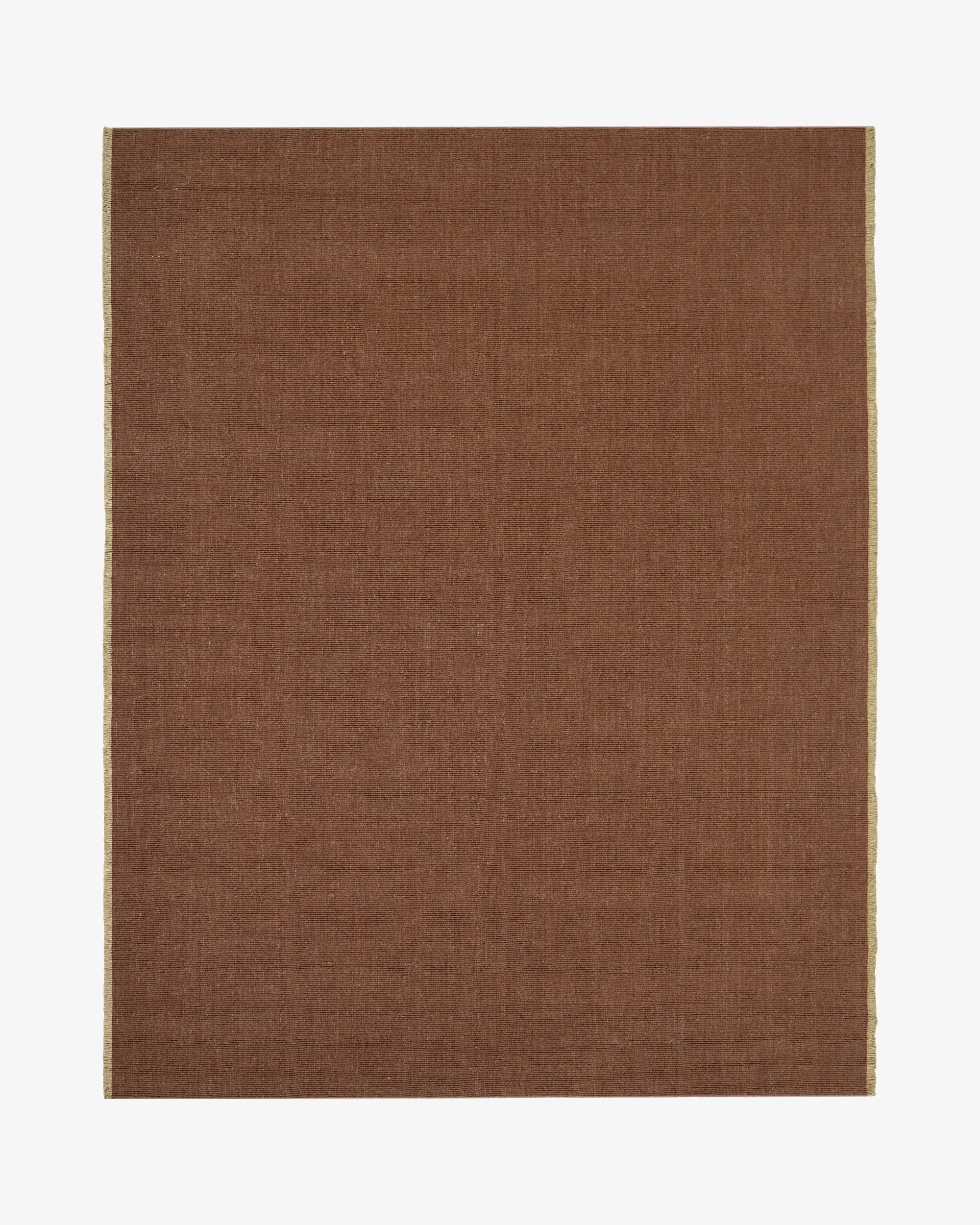
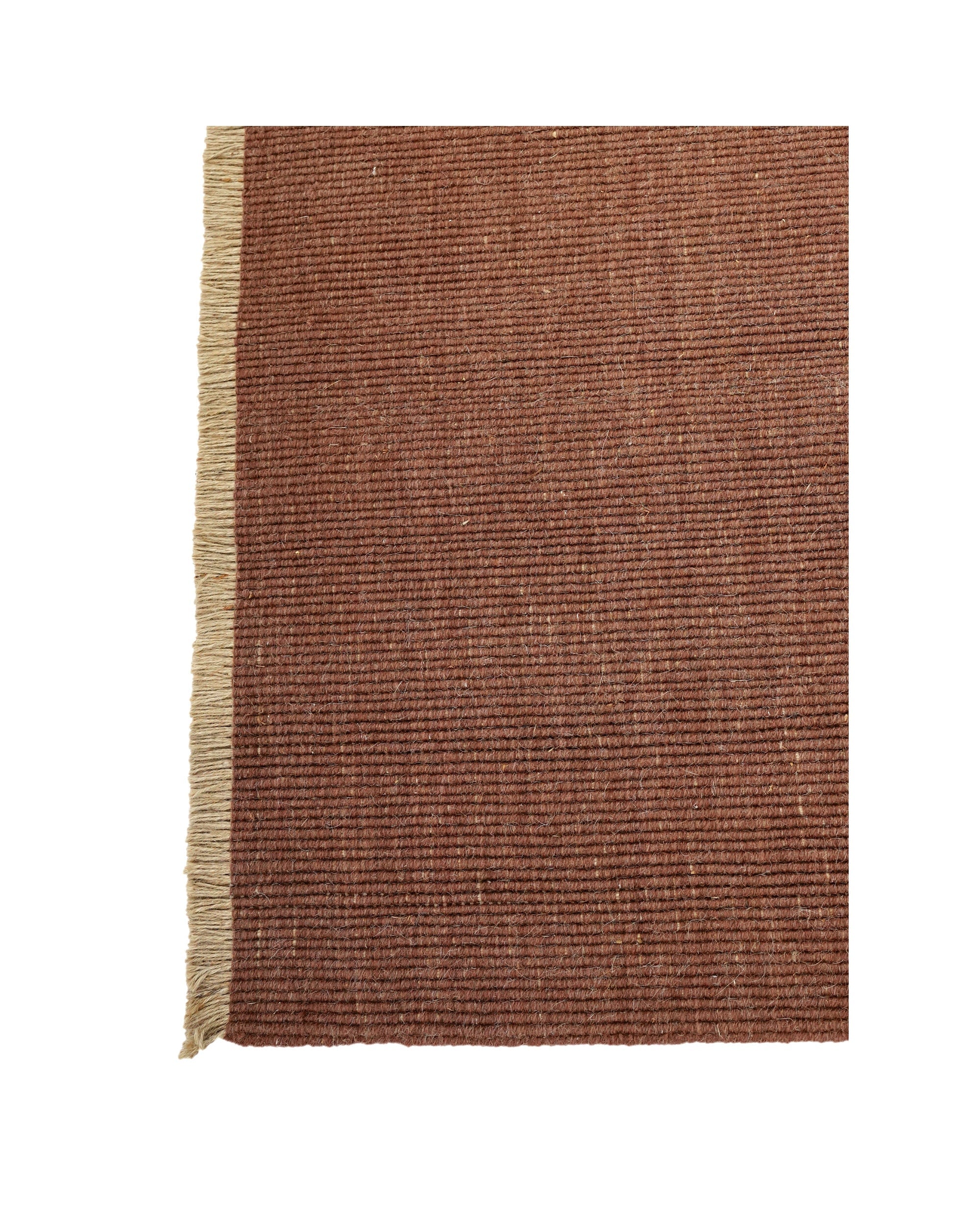
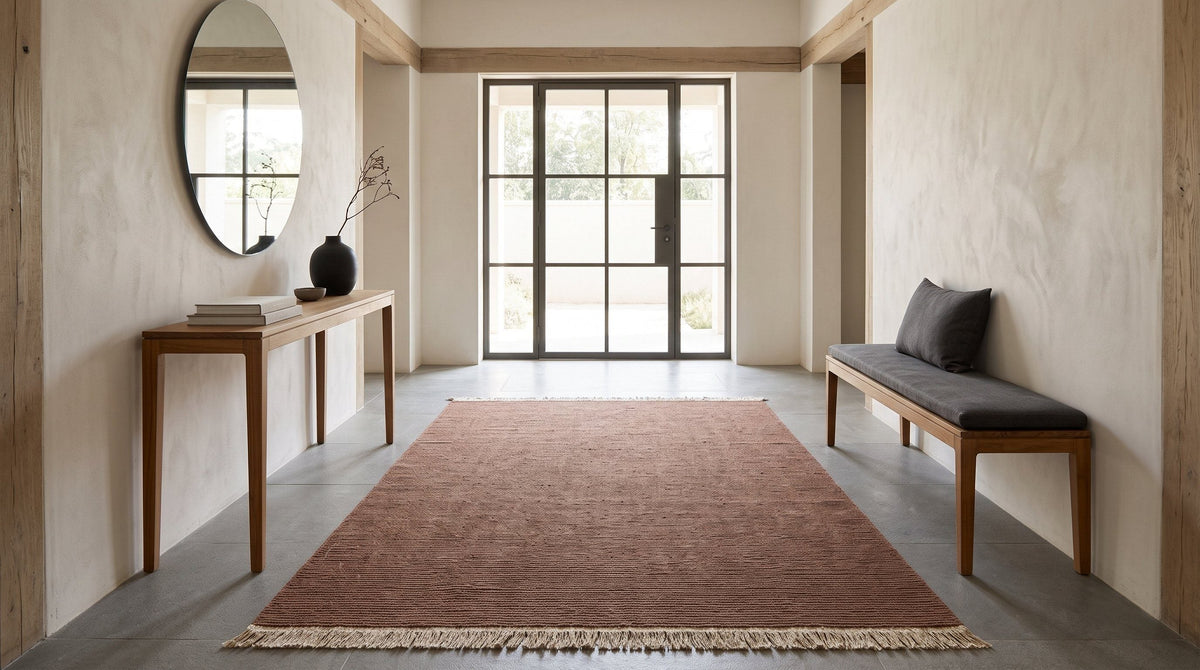
The warm palette of brick, teak and rust that runs through The Craftery carries easily onto a floor. Anything soft in a busy room has to be chosen for how it behaves on a crowded afternoon, not how it looks on opening day. Low, firm constructions such as handloom wool, or wool woven with jute, cope with traffic far better than a deep pile, and warm solid colours like rust, umber and sand sit naturally against brick and teak. If that palette appeals, our textures and solids work in a similar register, and the Rugberry trade programme makes rugs to size for cafes, restaurants and hotels.


In the Rugberry house
- Rugberry trade programmeFor cafes, restaurants and hotels, sized and coloured to the room.
- Textures and solidsWarm plain grounds for brick, teak and stone.
- Cabra Wool & Jute Rug, RustHandloom woven in New Zealand wool and jute.
Rugberry has no affiliation with the studios featured. Images are from the Rugberry house unless credited.