Wabi Sabi Begins in a Two Mat Tea Room
Images are credited where they are not from the Rugberry house.
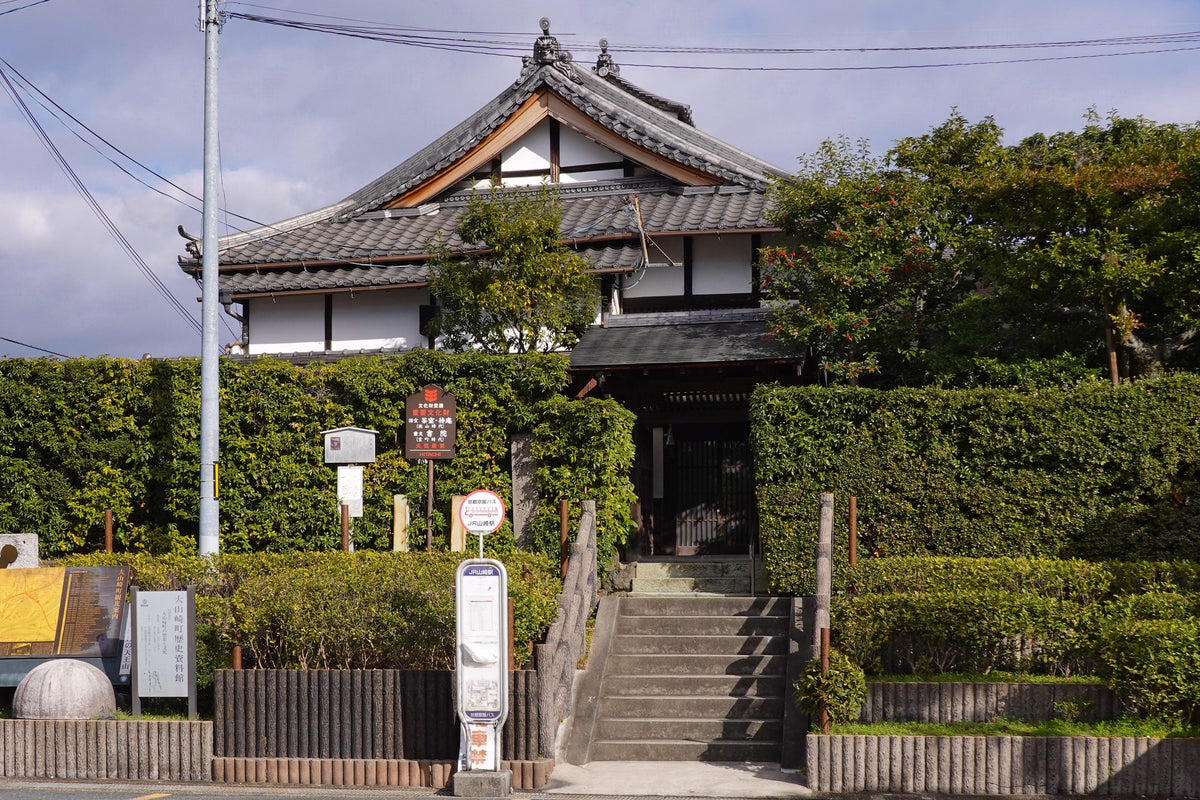
The gate of Myōki-an at Ōyamazaki in Kyoto prefecture, the temple that keeps the Tai-an tea room. Photo: 663highland, CC BY-SA 4.0, via Wikimedia Commons, licence
Wabi sabi has become a shortcut. It names a paint colour, a styling look, a mood board of linen and grey ceramics and dried grass in a jar. Search for it and you find rooms that look expensive in a quiet way. Go back to where the idea began, though, and it looks much less comfortable. It begins in a room almost too small to sit in, and in a black bowl that refused to be pretty.
What is wabi sabi, then? The answer is best found not in a definition but in two objects: a tea room in Kyoto and a family of lopsided tea bowls. Between them they make an argument that is harder, and more useful, than the version on the mood board.
Two mats
In 1582 the tea master Sen no Rikyu created the Tai-an tea room at Myōki-an, a temple in Kyoto prefecture. It measures just two tatami mats, about 3 square metres. That was strikingly small even by the standards of the time, when a four and a half mat room was the norm for tea. Rikyu took the accepted size and cut it by more than half. Tai-an was also the first tea room with a small entrance for guests, the nijiriguchi, and it is counted among the origins of the sukiya style that shaped many later tea rooms.
The choice was entirely deliberate. In a room of two mats there is no space for display, for a crowd of guests or for any object that has not earned its place. The host and guest are close enough to see each other's hands. Everything that would normally announce wealth or status, the scale of the room, the number of treasures in it, the distance between people, is taken away. What remains is the act of making and drinking tea, and the attention it demands.
Tai-an survives. It is designated a national treasure and is described as the only existing tea room said to have been made by Rikyu himself. It cannot be casually visited. Visits are in the mornings only and must be booked at least a month ahead. That restriction is oddly fitting. A room built to resist display is still resisting it more than four centuries later.
A room built to resist display is still resisting it more than four centuries later.
A bowl that would not behave
The second object is the bowl. In the late sixteenth century, at Rikyu's request, a potter named Chōjirō began making black tea bowls by hand. He was the first of the Raku potters, and his bowls embodied what is called wabi cha, a practice of tea built on simplicity, austerity and frugality. It arose, tellingly, in the Momoyama period, an age known for ornate and showy taste. The black bowl was a reply to gold leaf.

How the bowls are made matters as much as how they look. Raku bowls are fired one at a time, in a kiln fed with charcoal and driven by hand worked bellows. The process means that no two bowls turn out the same. The potter shapes the clay, but the fire has the last word, and each bowl leaves the kiln carrying marks the maker could guide but not fully control. The craft has passed through fifteen generations of the same family, each one working inside that uncertainty rather than trying to engineer it away.

When a touring exhibition, Raku: The Cosmos in a Tea Bowl, showed around 170 works in 2015, moving from LACMA in Los Angeles to the State Hermitage and Pushkin museums, it framed Chōjirō's bowls as a reflection of Rikyu's ideals. Look at the title. It does not call the bowl humble or rustic. It calls it a cosmos.
Accepting what you cannot control
Put the room and the bowl together and a clearer idea of wabi sabi emerges. It is not, at root, a taste for grey or beige. It is an acceptance of what the maker cannot control: the fire in the kiln, the grain of the wood, the way a material ages, the small irregularities that come from a human hand. The two mat room removes the distractions so that those qualities can be seen. The black bowl shows them in its surface.
The idea reached Western designers largely through a single book. Leonard Koren's Wabi-Sabi for Artists, Designers, Poets and Philosophers, published in 1994, introduced it as the beauty of things imperfect, impermanent and incomplete. That phrase has been quoted so often that it can sound like a slogan. Read slowly, it is demanding. Imperfect means the thing shows the trace of its making. Impermanent means it will change. Incomplete means it is never finished, because use keeps adding to it.
Each of those words cuts against the way most things are made and sold today. Products are expected to be flawless, to look the same on the hundredth day as on the first, and to be complete the moment they leave the box. Wabi sabi asks for the opposite, and it asks the owner to accept that a thing will wear, mark and change in their keeping.
Beyond the mood board
This is why the styling version of wabi sabi so often misses. A room can be filled with linen and unglazed pottery and still have nothing to do with Rikyu, if every object in it was chosen to look aged rather than allowed to age. The look is easy to buy. The attitude is not. It means living with things that will change, and valuing the change rather than fighting it.
The real test is time. A Raku bowl that has been used for decades has a different surface from one that has just left the kiln, and the older one is not worse for it. A tea room whose timbers have darkened over centuries is more itself, not less. The same is true of anything made by hand from natural materials and then used, honestly, for a long time.
That may be the most useful thing to take from the tea room. Not a palette, but a question to ask of anything brought into a home. Will this look better or worse when it has been lived with? Anything that can only look worse was never really wabi sabi at all.
Rugberry notes
From the Rugberry house
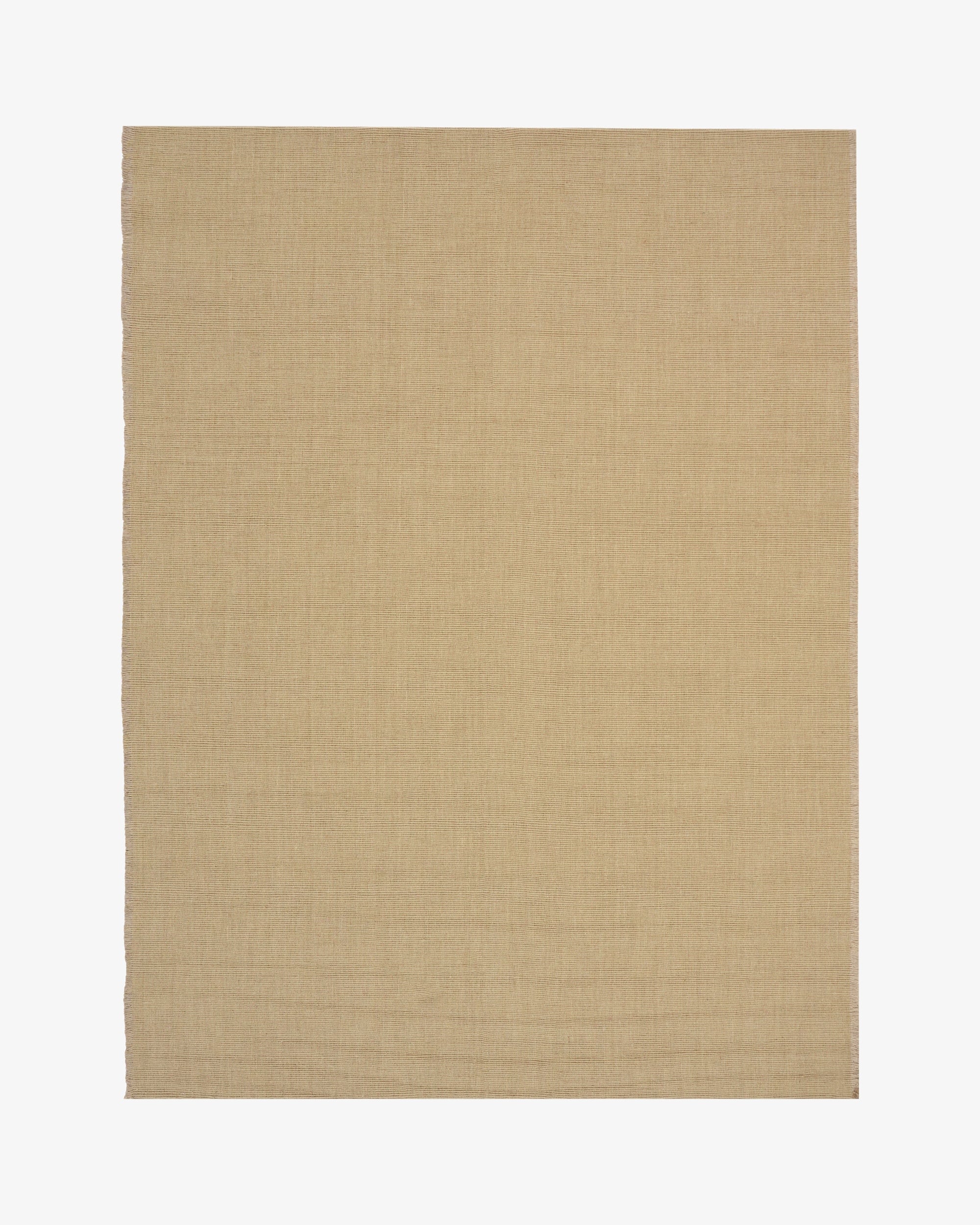
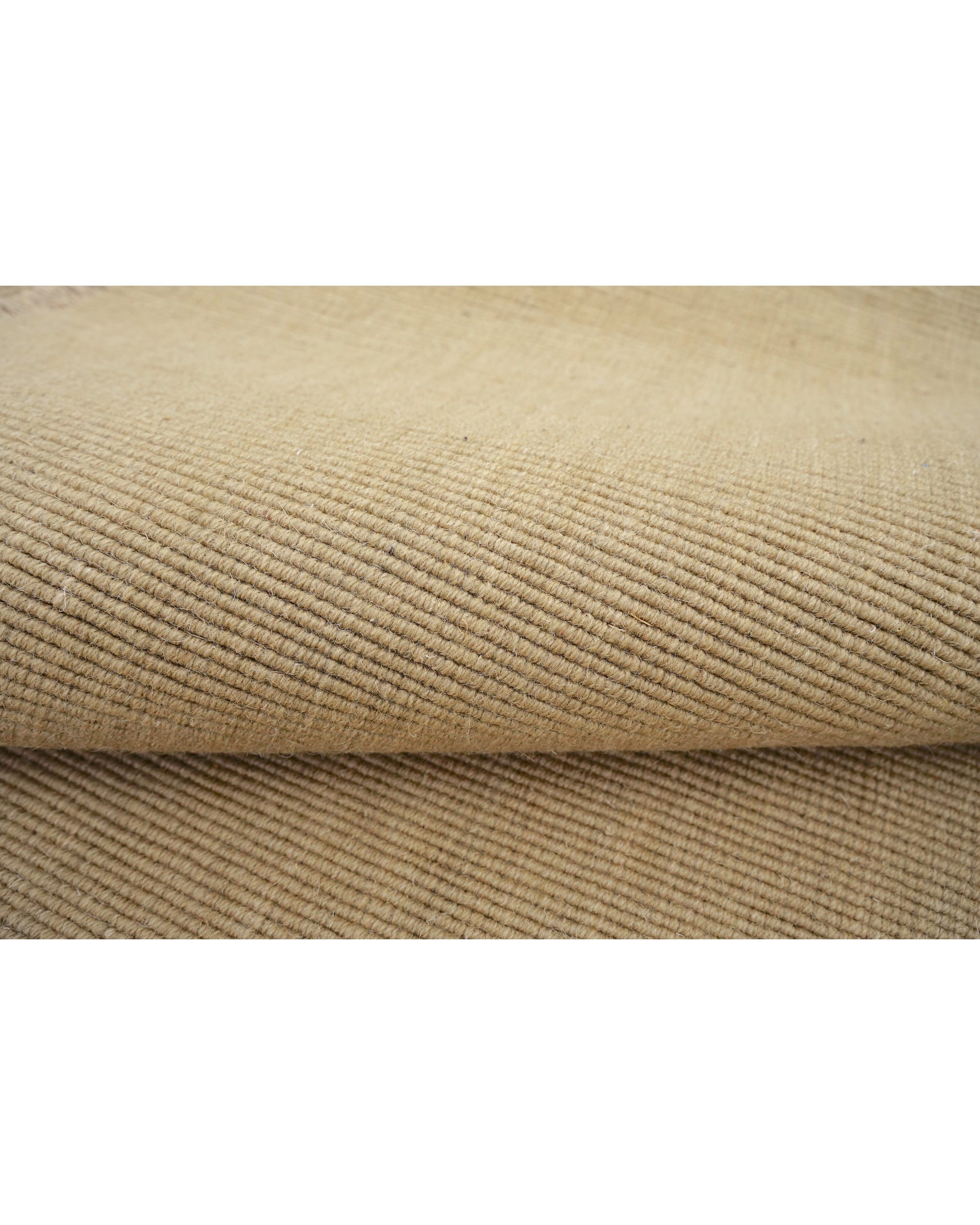
A handmade rug carries the same kind of variation that the Raku potter accepts from the fire. In wool, it shows as abrash, the gentle shift of tone where one batch of yarn meets another. In jute, it is the natural irregularity of a plant fibre. The Cabra Wool & Jute Rug is handloom woven with wool softening that irregularity, and our textures and solids keep the surface quiet enough for it to show.


In the Rugberry house
- Textures and solidsQuiet surfaces where hand variation shows.
- Natural jute rugsPlant fibre with its own irregularity.
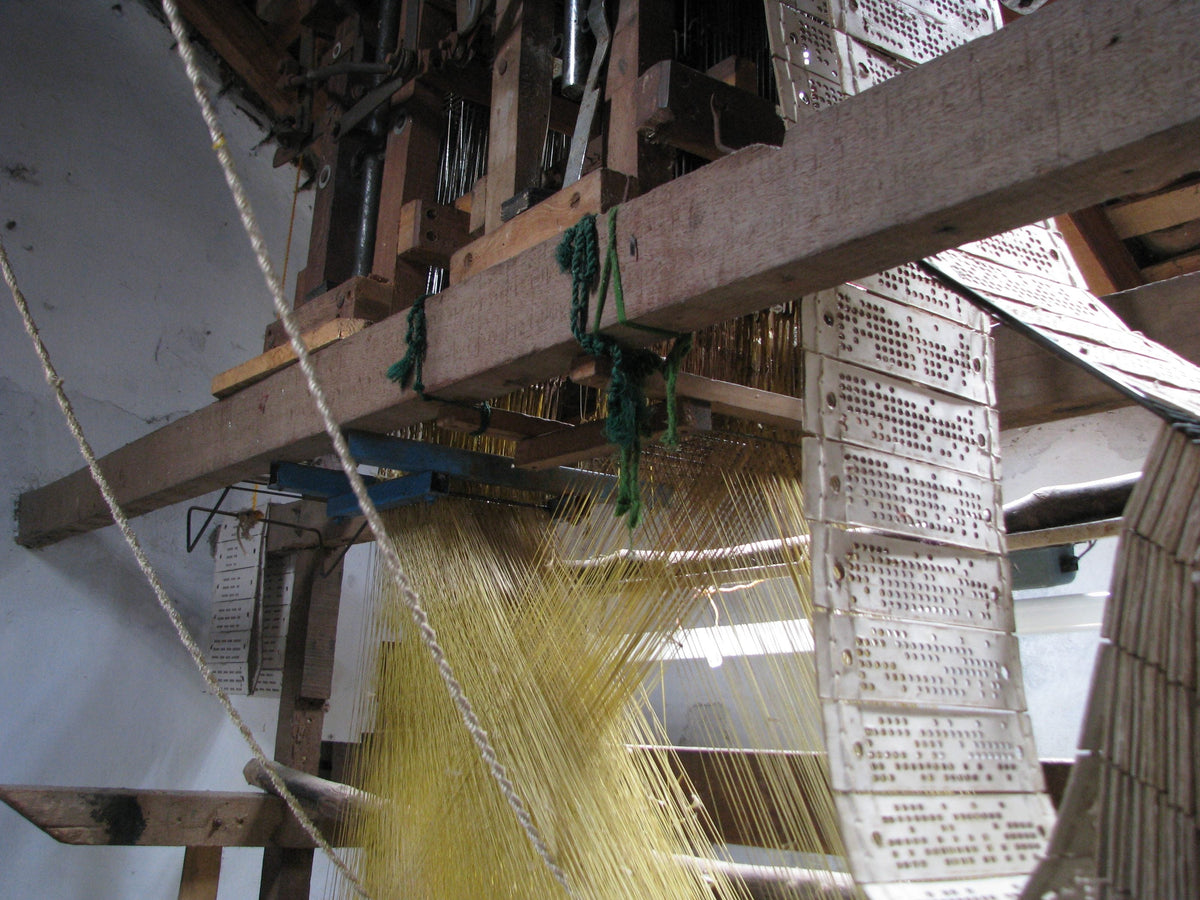
- The art of makingHow a Rugberry rug is made by hand.
Rugberry has no affiliation with the studios featured. Images are from the Rugberry house unless credited.