


The Rugberry Custom Process for Designers
A custom rug for an interior project moves through four stages at Rugberry: the brief, the colour, the approval and the making. Each stage ends with a decision the designer signs off, so nothing is assumed by the time yarn is dyed.
In short
- The Rugberry custom process runs in four stages: brief, colour selection, drawing and swatch approval, then making and handover.
- Most Rugberry designs, including the Grain Wool Rug and the Cadence Wool Rug, can be made in any size and any colour.
- Colour for a custom rug is chosen from physical references, such as numbered colour poms and swatches, rather than from a screen.
- The Quick Custom Program covers a set of solid and textured rugs, such as Grain and Plush, where only size and colour change.
The process is the same whether the rug is for a 2BHK in Pune or a villa in Alibaug. What changes is how much of the design moves away from stock.
What does the Rugberry custom process look like?
The Rugberry custom process has four stages: brief, colour, approval and making. Most projects pass through them in that order, and a stage is only closed when the designer has approved it in writing.


- Brief: room, size, design starting point and use.
- Colour: poms, swatches and named colourways.
- Approval: a drawing and, where useful, a colour strike or swatch.
- Making and handover: the rug is made, finished and dispatched to the agreed address.
Rugberry does not quote one timeline for every custom rug, because a handloom solid and a hand-knotted design take very different hand time. Ask for timing against your own brief before you promise a date to the client.
What goes into the brief?
A good brief names the starting design, the finished size, the room and how the rug will be used. With those four facts the team can tell you whether the rug is a simple resize, a recolour or a new drawing.

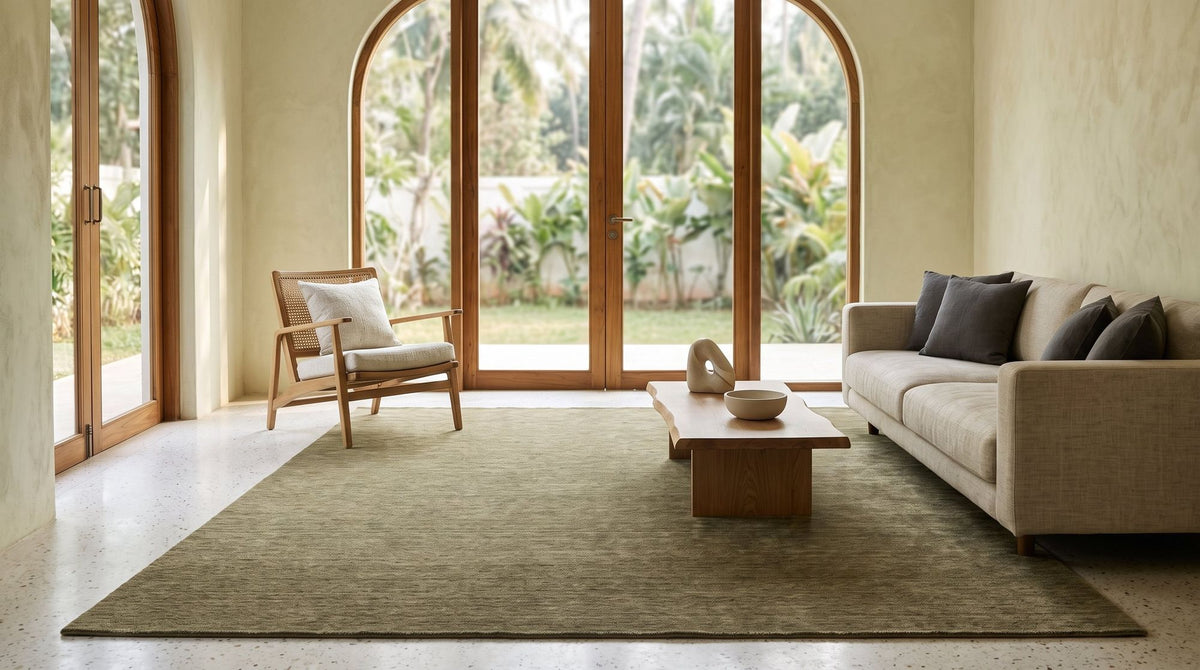
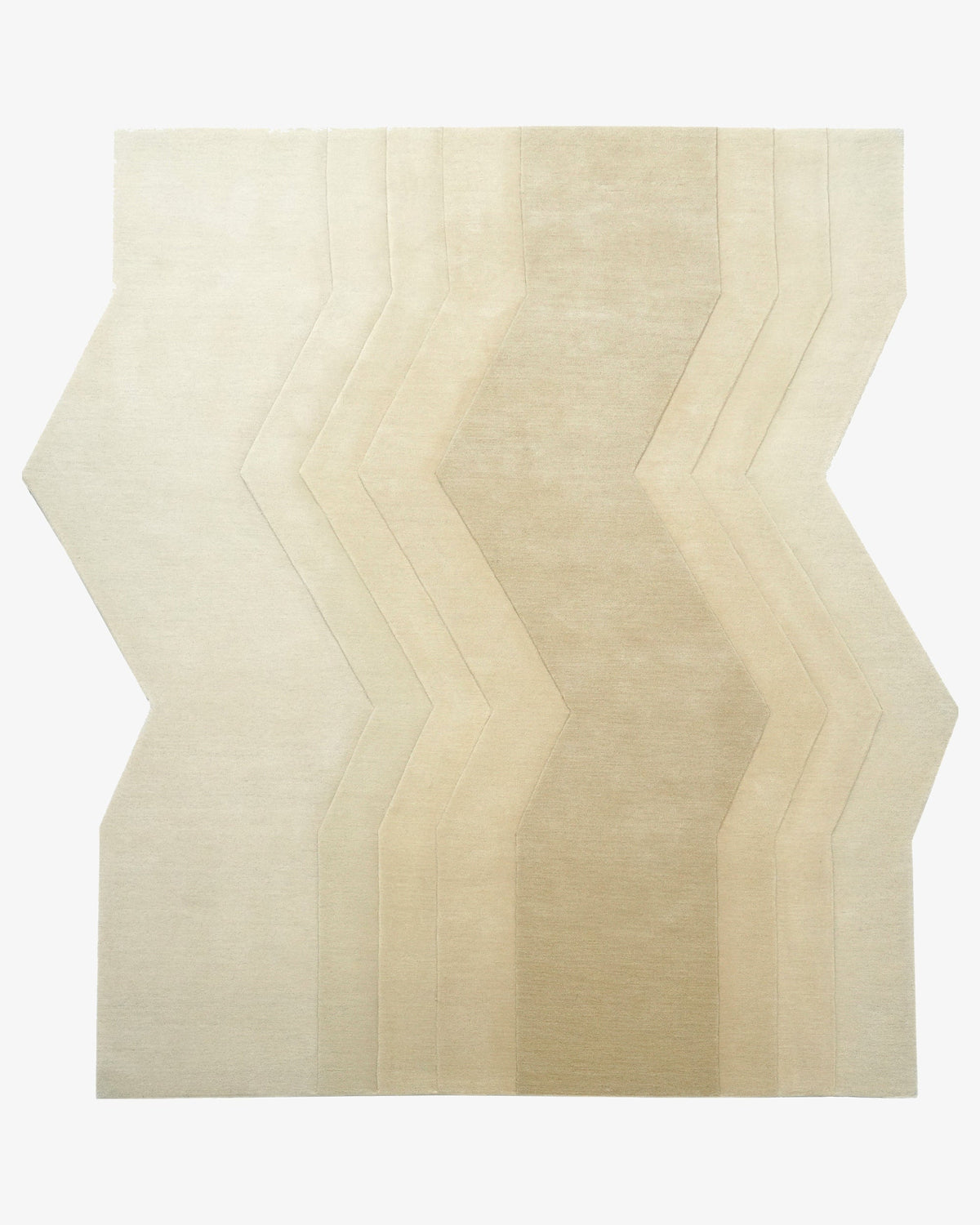
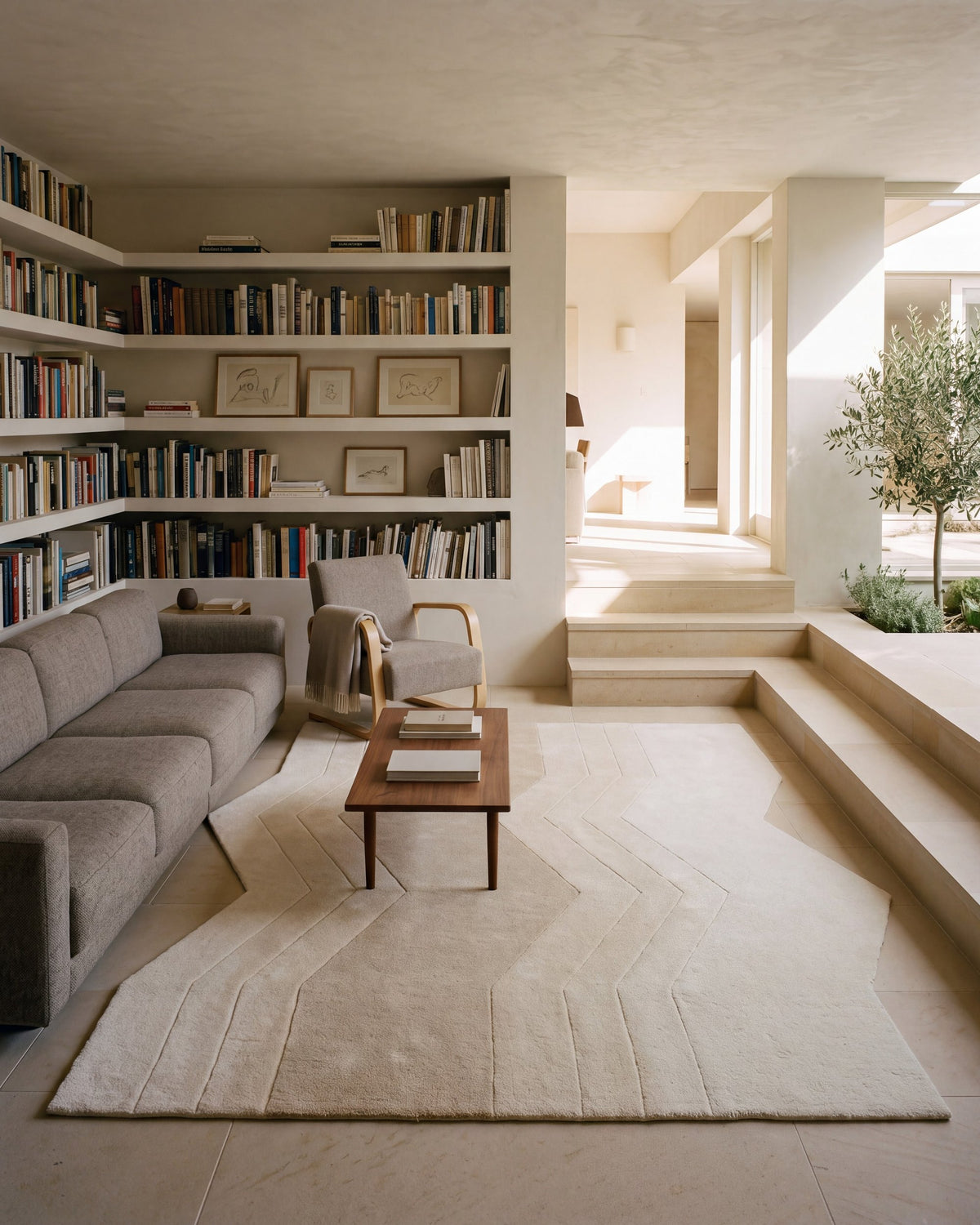
Start from an existing design wherever you can. The Grain Wool Rug in Sage is a handloom New Zealand wool rug with a low, closely worked surface, and it is already offered in any size and any colour. The Cadence Wool Rug, hand tufted with stepped bands that shift tone edge to edge, can be recoloured band by band.
Add the floor plan with furniture drawn to scale, the floor finish, and a photo of the room in daylight. A rug for a sea facing Mumbai living room reads very differently from the same rug in a north lit Delhi bedroom.
How is colour chosen for a custom rug?
Colour is chosen from physical references: numbered colour poms, rug swatches and the named colourways already in the range. You pick by holding yarn against the client's fabrics and floor, not by matching a screen.


Take the poms to site and look at them in morning and evening light. Wool picks up warmth from Indian sunlight, so a grey that looks cool in a studio can turn beige on a west facing balcony.
For multi colour designs like Cadence, number each band on the drawing and attach one pom to each number. Our piece on custom rug colour matching covers dye lots and how close a match can be.
Pick colour by holding yarn against the client's fabrics and floor, never by matching a screen.
What gets approved before making starts?
Before making starts, the designer approves the final drawing with dimensions and the colour references against it. For a recolour or a new design, a small swatch or colour strike can be requested so the client sees the yarn in rug form.
- Drawing: finished size in mm, design scale, colour numbers.
- Colour: the poms or swatch signed off, kept by both sides.
- Construction and pile: confirmed in writing.
- Price: confirmed for the exact size, before GST.
Keep one approved copy of everything on the project file. If a question comes up months later, the signed pom is the only reference that settles it.
When does the Quick Custom Program fit better?
The Quick Custom Program fits when the design already works and only the size or colour needs to change. It covers solid and textured rugs such as Grain, Plush, Meraki and the Cashmere Blend.

For a residential project with a tight schedule, choose Quick Custom over a new design, because there is no drawing to develop and fewer approvals. The Plush Wool Rug in Copper, handloom New Zealand wool with a deep, quiet pile, is a typical example from about ₹40,000 in 5x8 ft.
How should designers present the process to clients?
Present the custom rug to clients as a short sequence of sign offs, each with a physical object to approve. Clients relax when they hold a pom or a swatch, and they ask fewer questions when they know which decision comes next.

Show the starting rug on the Rugberry site, then the poms, then the drawing. Leave price and timing until the brief is fixed, because both follow the size and construction.
Frequently asked questions
Can any Rugberry rug be made in a custom size?
Most can. Product pages for designs such as Grain, Cadence and Plush state any size to order and custom colours on request, which is the clearest sign a design is open to change.
Does Rugberry send colour poms for a project?
Poms and swatches are the basis of colour selection for custom work. Ask the team how to receive them for your project, and keep the approved set on file until the rug is installed.
Can a custom rug be priced before the design is final?
An estimate is possible once size and construction are known, since price follows area and hand time. The firm price is confirmed against the approved drawing and excludes GST.
Start from a rug that already works, then change only what the room needs. Material first.





Leave a comment
This site is protected by hCaptcha and the hCaptcha Privacy Policy and Terms of Service apply.