



Rugs for Kerala Homes: Nalukettu and Tharavad
A traditional Kerala home with a central courtyard suits low, firm rugs in New Zealand wool or wool with jute, in warm browns and sand that sit beside dark teak. Keep rugs in the rooms and on the inner side of the verandah, never at the edge of the open courtyard where rain falls into the house.
In short
- A nalukettu is a Kerala house built as four wings around an open central courtyard, so rain, light and air enter the middle of the home and a rug must cope with damp.
- Low pile New Zealand wool rugs of 12 to 16 mm and wool with jute rugs of 7 to 8 mm suit nalukettu rooms better than deep pile or pure Botanical Silk.
- Warm umber, tan and sand rugs suit the dark teak pillars and ceilings of a Kerala tharavad, while bright white rugs show the dust that drifts in from the courtyard.
- Rugberry suggests the Grain Wool Rug in Umber for a sitting room and the Cabra Wool & Jute Rug in Sand for a verandah side seating area.
What is a nalukettu, and why does it change the rug?
A nalukettu is a traditional Kerala house of four wings set around an open central courtyard. The courtyard brings light, air and rain into the heart of the home, which is wonderful to live with and demanding for anything laid on the floor.

The rooms open onto a covered walkway around that courtyard, usually lined with wooden pillars. Many of these houses, and the larger family houses known as tharavads, have sloping tiled roofs, timber ceilings, thick walls and cool polished floors, often red oxide.
Three things follow for a rug. Rain splashes in during the monsoon, so the courtyard edge is no place for one.
Air moves freely, which helps a rug dry. And the light is soft and indirect, so colours look deeper than they would in a modern flat.
Many families now restore these houses with modern kitchens and bathrooms while keeping the courtyard and timber. A well chosen rug fits that mix quietly, softening a room without pretending the house is new.
Which rug fibres suit a traditional Kerala home?
New Zealand wool and wool with jute suit a traditional Kerala home best. Wool takes up moisture from humid air and gives it back without marking, and a wool and jute weave adds firmness and grip on polished floors.


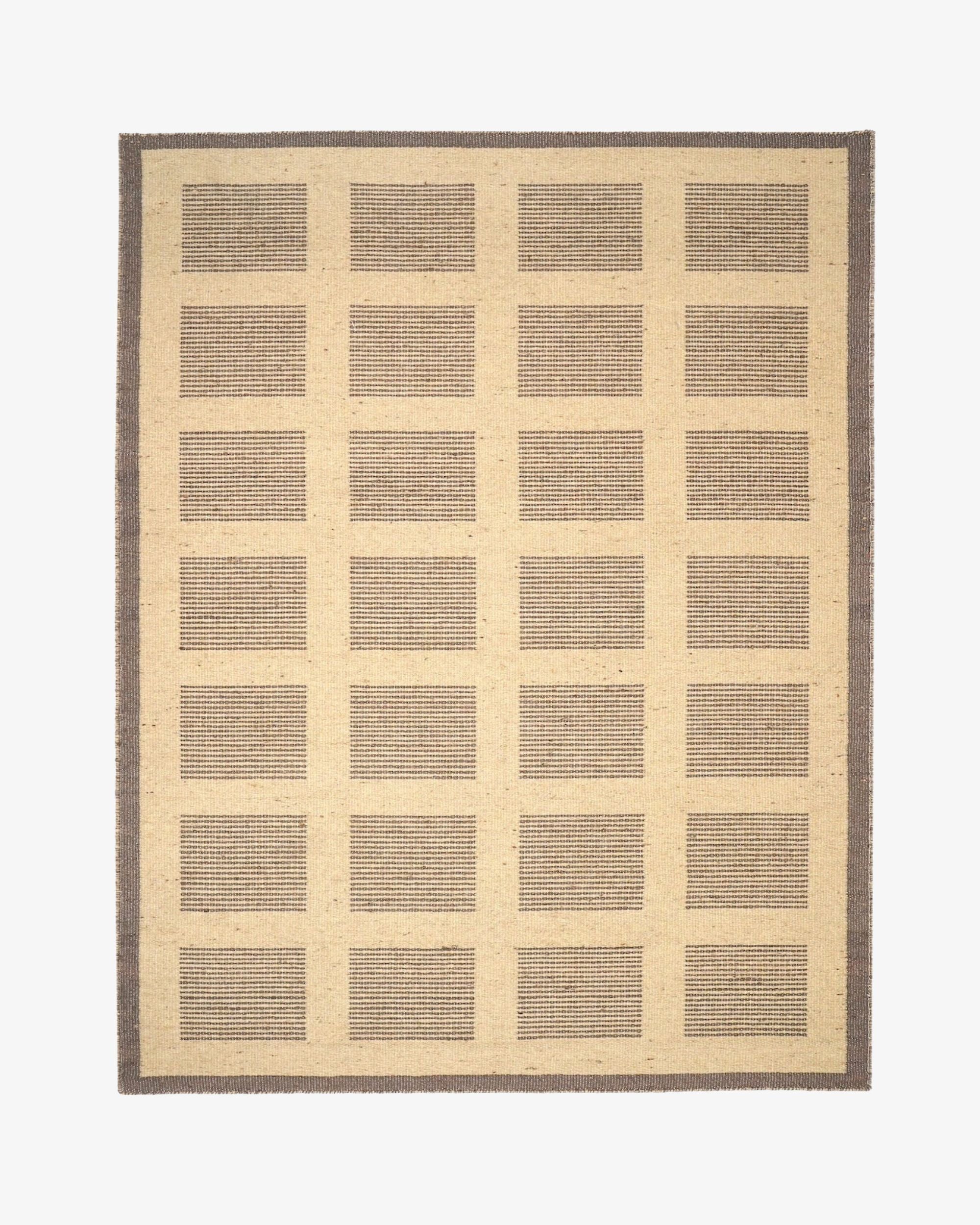
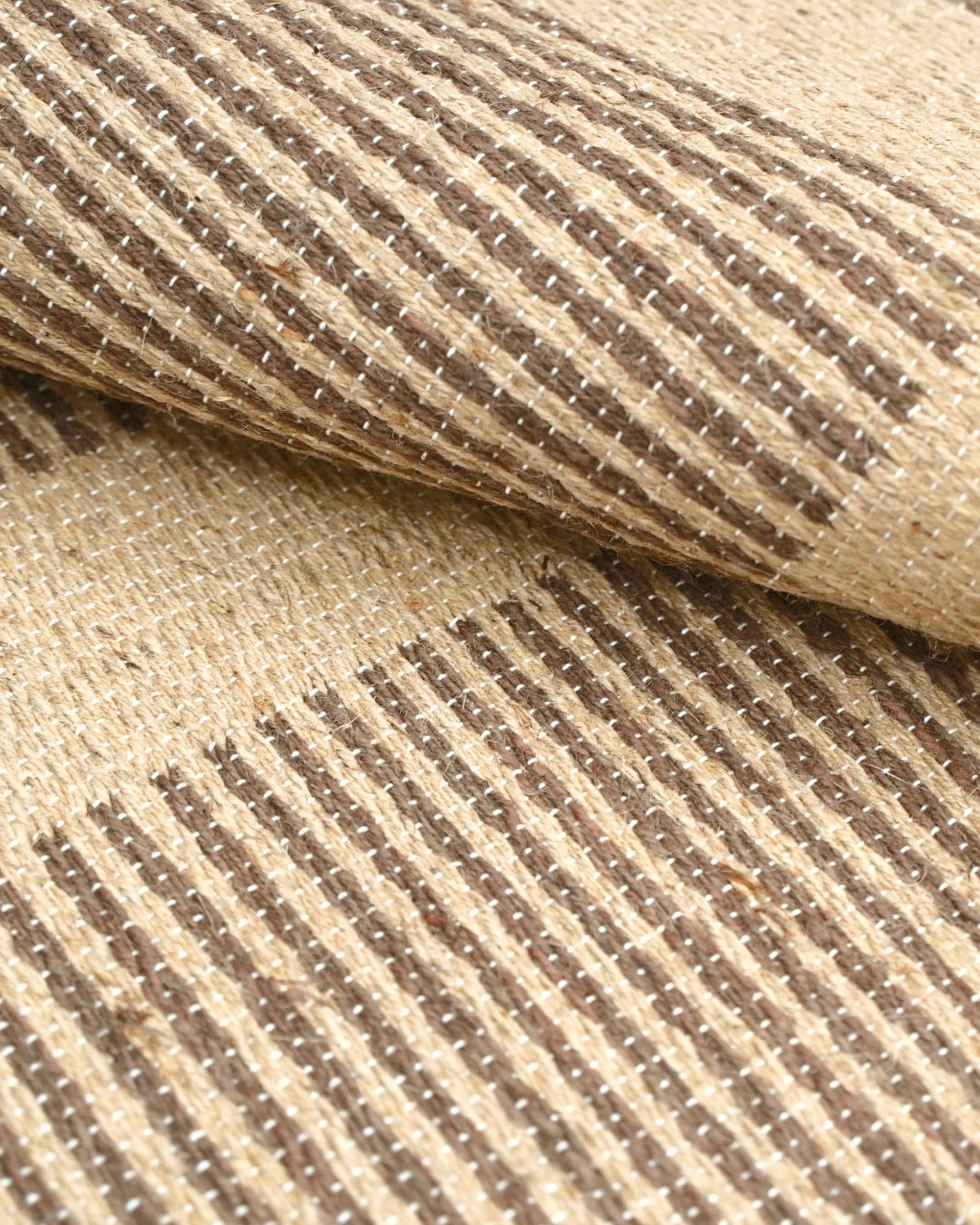
The Grain Wool Rug in Umber is handloom woven in New Zealand wool at 12 to 14 mm. Its deep earthy brown sits naturally with teak pillars and dark ceilings, and the close weave hides fine grit. Its regular price is ₹37,000 for 5x8 ft, ₹51,000 for 6x9 ft and ₹74,000 for 8x10 ft, ex GST at the time of writing.
Pure jute looks perfectly at home in a Kerala house, with its grassy texture and warm tone. It needs a dry room, though, such as an upper floor bedroom or a study kept closed during the rains.
The Kora Jute Rug is handwoven in natural jute at 10 mm, firm and hard wearing. Its regular price is ₹28,000 for 5x8 ft, ₹38,000 for 6x9 ft and ₹56,000 for 8x10 ft, ex GST at the time of writing. Our guide what is a jute rug explains why it dislikes standing damp.
Where should a rug go in a nalukettu?
A rug belongs inside the rooms and on the inner, sheltered side of the courtyard walkway, at least a metre back from where rain can reach. Never lay one in the open courtyard or on the step down into it.
The main sitting room, usually off the front verandah or facing the courtyard, is the natural home for the largest rug. Here a 6x9 ft or 8x10 ft rug under a low wooden sofa and a pair of easy chairs gives the room a centre.
Bedrooms in a tharavad are often small and closed, with high doorsills. A rug beside the bed, 4x6 ft or 5x8 ft, is usually enough and makes a cool floor kinder in the early morning.
The walkway around the courtyard is tempting, because it is where families sit in the evening. If you want a rug there, choose a small, firm one, place it against the inner wall, and take it in when a storm is forecast.
Let the courtyard keep the rain. Let the rooms around it keep the rugs.
Which rug colours suit teak, laterite and red oxide?
Warm mid tones suit teak, laterite and red oxide best: umber, tan, sand and soft ochre. They belong to the same family as the wood and stone, so the room feels whole rather than decorated.


Dark teak and a deep red floor already carry a lot of colour. A rug in umber or tan quietly bridges them, while a mid sand lifts the room without fighting the wood. Our guide to rugs with wooden furniture goes further on wood tones.
Deeper, darker rugs are not a mistake either. A chocolate or umber rug in a room with a dark timber ceiling can feel enveloping and calm, provided the walls are pale enough to keep the room from closing in.
Bright white rugs are the hardest choice in a courtyard house. Fine dust and pollen drift in through the open centre, and a pale rug shows it within days.
Cool greys can look flat under the warm, filtered light of a Kerala house. If you love grey, choose one with a brown undertone. For more on how red floors change rug colour, see our guide to old floors in Kolkata homes, where red oxide is just as common.
| Space in the house | Rug type | Size | Rugberry example |
|---|---|---|---|
| Main sitting room | Low wool, warm brown | 6x9 or 8x10 ft | Grain Wool Rug, Umber |
| Courtyard walkway, inner side | Wool and jute, firm, 7 to 8 mm | 5x8 ft | Cabra Wool & Jute Rug, Sand |
| Upper floor bedroom | Jute or wool | 5x8 ft | Kora Jute Rug |
| Formal front room | Patterned wool | 8x10 ft | Congrand Wool Rug |
| Open courtyard | No rug | None | Leave the floor bare |
For a nalukettu, choose wool or wool with jute over pure jute in every room that faces the courtyard, because those rooms take in damp air all through the monsoon.
How do you choose a rug for the courtyard side seating?
For seating beside the courtyard, choose a flat, firm wool and jute rug of 7 to 8 mm that is light enough to lift and quick to dry. It should sit well back from the open edge.


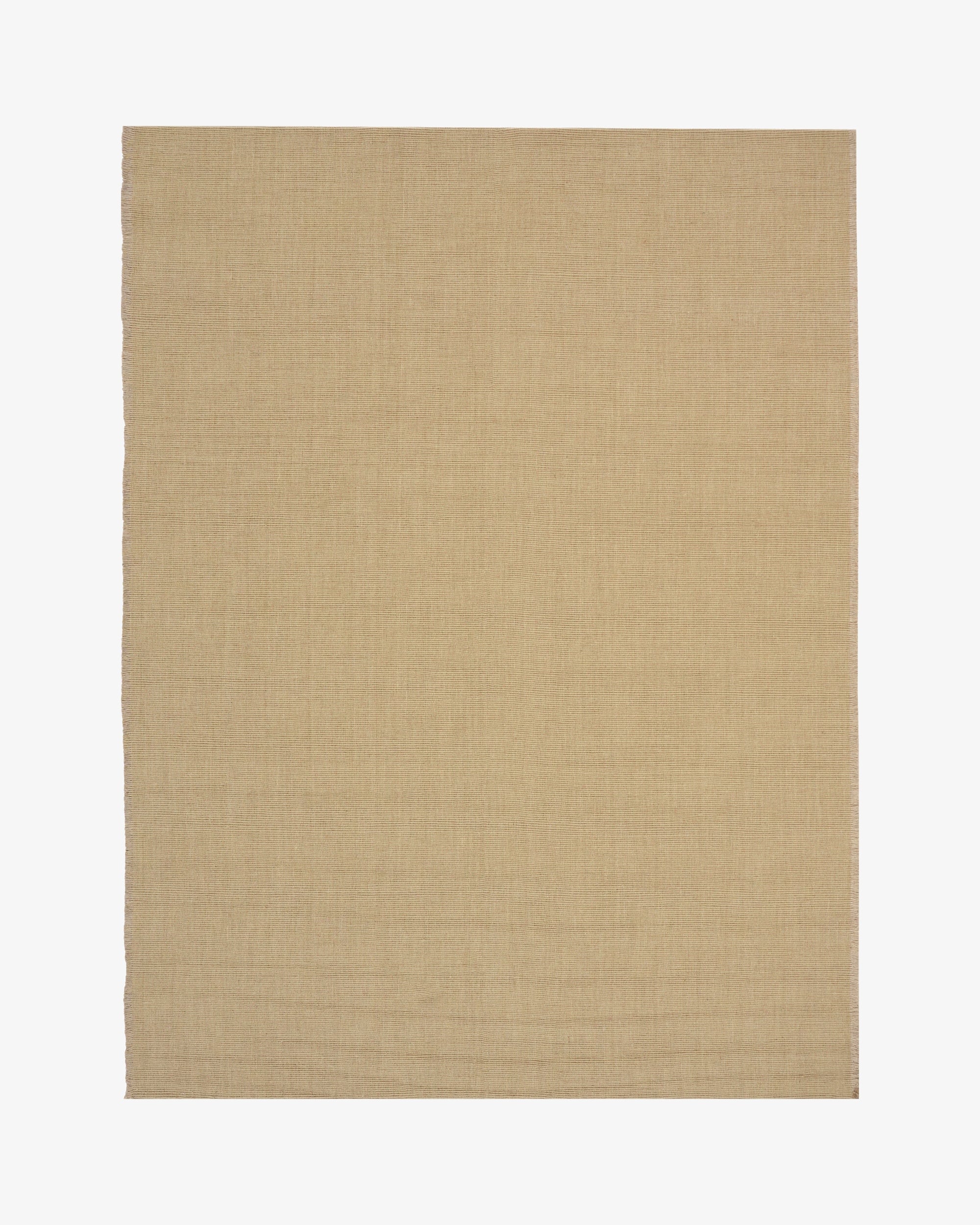
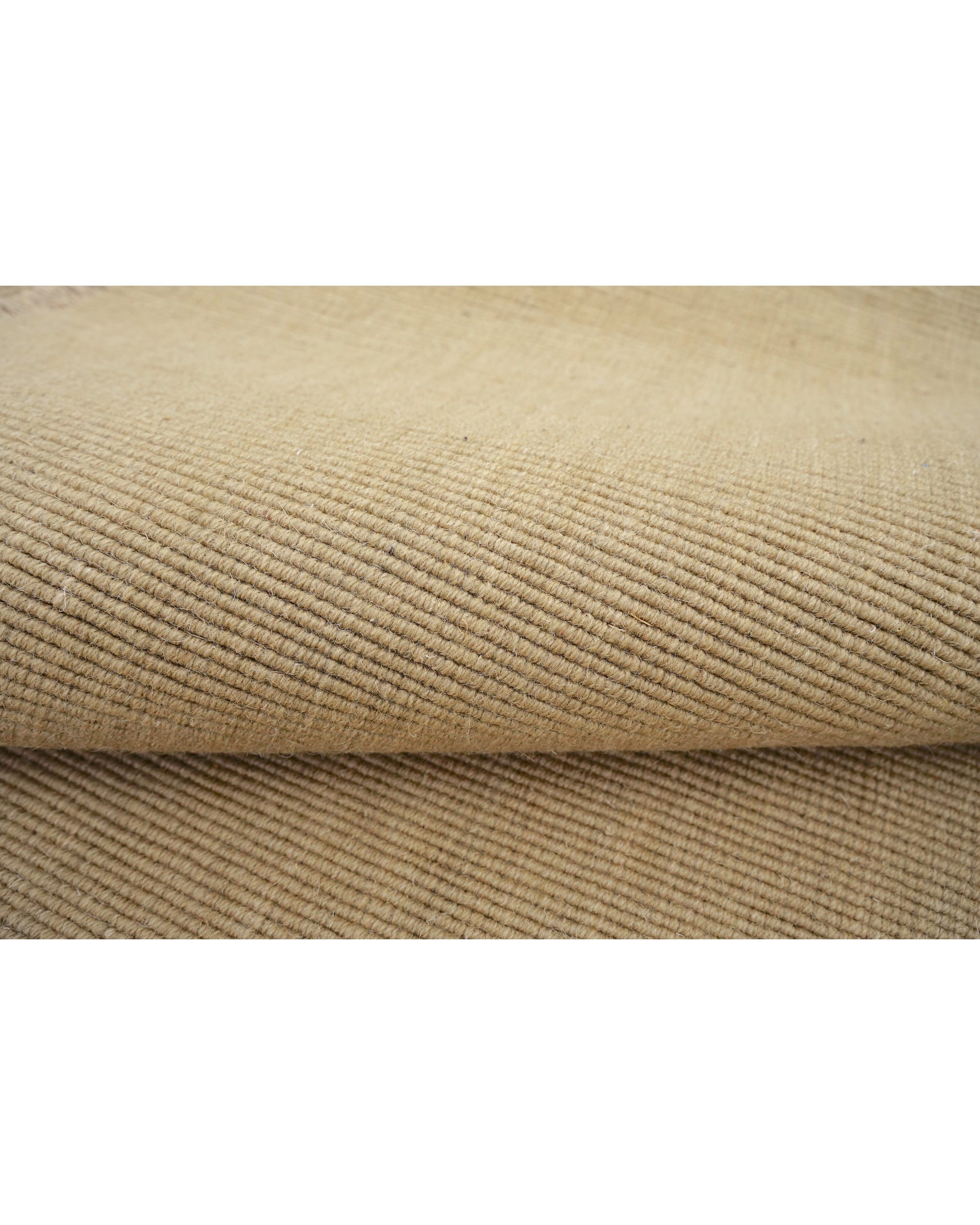
The Cabra Wool & Jute Rug in Sand is handloom woven in New Zealand wool and jute. It lies flat on polished floors and feels cool, and the sand tone echoes lime washed walls. Its regular price is ₹34,000 for 5x8 ft, ₹45,900 for 6x9 ft and ₹68,000 for 8x10 ft, ex GST at the time of writing.
A firm, flat rug also suits the way people sit in these houses. Many families still sit on the floor or on low wooden seats in the evening, and a 7 to 8 mm weave is comfortable to sit on without feeling spongy.
Lay it on a thin breathable felt pad rather than rubber, so the floor below can still breathe. On a polished red oxide floor the pad also stops the rug sliding when someone sits down quickly. See our guide to rug pads.
Can a patterned rug work in a traditional Kerala home?
A patterned rug can work well in a traditional Kerala home if the pattern is soft and the colours are warm. Loose, flowing lines suit carved wood and curved roof tiles better than hard geometry.

The Congrand Wool Rug is hand tufted in New Zealand wool at 14 to 16 mm, with ivory lines looping across a warm tan field. In a formal front room it gives a modern note that still feels relaxed beside an old wooden easy chair. Its regular price is ₹37,000 for 5x8 ft, ₹50,000 for 6x9 ft and ₹74,000 for 8x10 ft, ex GST at the time of writing.
Colour still leads. A pattern drawn in ivory and tan sits with teak and red floors, while a pattern in black and white or bright blue can look imported into the house rather than part of it.
Keep a patterned rug to one room. In a house where every surface is already crafted, one confident rug reads as a choice, while several begin to compete with the timber.
How do you care for a rug in a courtyard house?
Lift and air each rug every two to three weeks through the monsoon, sweep or vacuum weekly, and turn the rug every few months so sun and wear spread evenly. A courtyard house has good airflow, so these habits work quickly.
Fine leaves and dust blow in from the open centre. A weekly vacuum with a plain suction head, or a firm shake for a smaller rug, keeps the pile clean before grit settles. Our guide to rugs for Kochi homes covers the humid city flat side of Kerala living.
If rain does reach a rug, carry it into the shade, stand it on edge and let the fan dry both faces the same day. When a family house is closed for long stretches, roll the rugs in cotton and store them off the floor. More on damp is in our mould prevention guide.
Frequently asked questions
What is the best rug for a nalukettu house?
The best rug for a nalukettu house is a low pile New Zealand wool rug or a wool and jute rug in a warm mid tone. Both cope with the damp air from the open courtyard and sit naturally beside teak and polished floors.
Can I put a rug in the courtyard of a Kerala house?
A rug should not go in the open courtyard of a Kerala house, because rain falls straight in during the monsoon. Keep rugs inside the rooms and on the sheltered inner side of the walkway, well back from the open edge.
Which rug colour suits teak furniture and red oxide floors?
Umber, tan, sand and soft ochre rugs suit teak furniture and red oxide floors. They share the warmth of the wood and floor, while bright white shows dust quickly and cool grey can look flat in filtered light.
Is jute a good choice for a traditional Kerala home?
Jute suits a traditional Kerala home only in dry rooms, such as an upper floor bedroom or a closed study. In rooms that face the courtyard, a wool and jute blend gives the same texture with better tolerance of damp.
Does Rugberry make rugs to fit long Kerala rooms?
Rugberry makes most of its designs to measure, so a rug can follow the long, narrow rooms common in Kerala houses. The Grain, Cabra and Congrand rugs are all available in custom sizes.
A house built around air and rain deserves a rug that breathes. See Terra grade rugs and jute rugs. Material first.




Leave a comment
This site is protected by hCaptcha and the hCaptcha Privacy Policy and Terms of Service apply.