


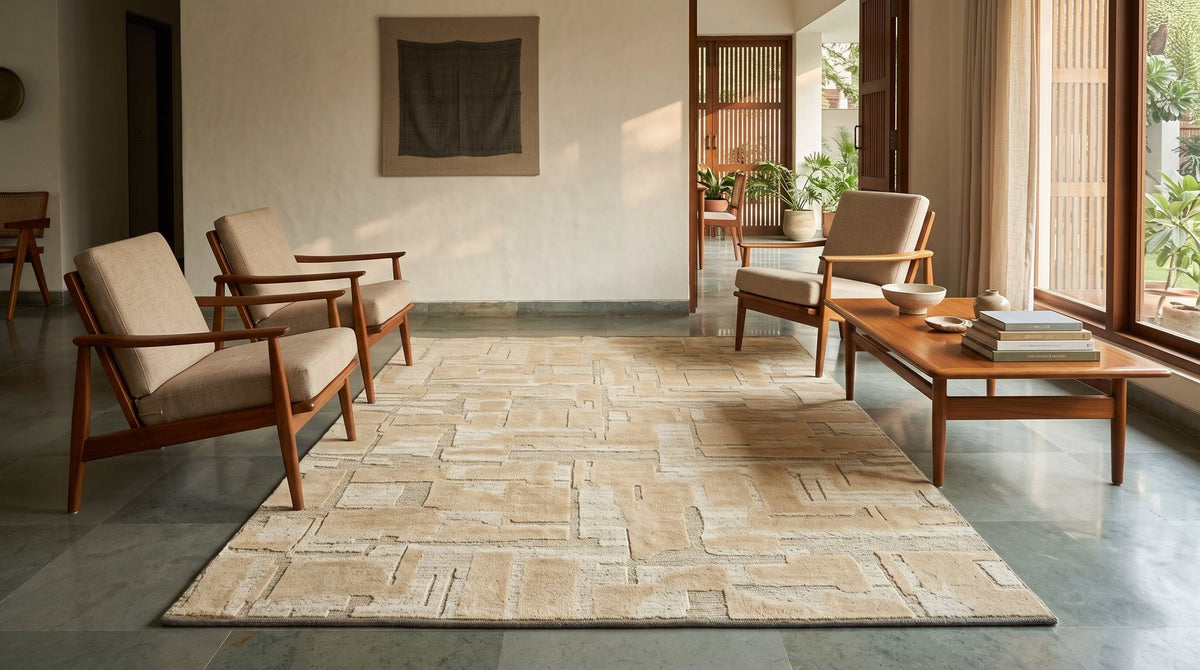
Llama Fibre in Rugs: The Rara Grade's Hardiest Fibre
Llama fibre is the hardiest of the four rare fibres in Rugberry's Rara grade: warm and light like alpaca, but with a sturdier hand that suits a floor. At Rugberry it is offered only in Rugberry Reserve, as made to measure pieces with prices on request.
In short
- Llama fibre comes from the llama, a South American camelid, and has two layers: a soft undercoat and coarser outer guard hairs.
- Llama fibre grows in natural browns, greys, fawns, black and white, so a llama rug can be made in undyed natural colour.
- Compared with alpaca, llama fibre is usually a little coarser and more varied, which makes it tougher underfoot and more textured in a rug.
- Rugberry places llama in Rara, Grade III, with mohair, alpaca and cashmere, offered only in Rugberry Reserve.
Where does llama fibre come from?
Llama fibre is shorn from the llama, a domesticated camelid of the Andes, a close cousin of the alpaca. Llamas were bred over centuries as pack animals, so their coats are built for weather and work rather than for fineness alone.
A llama's fleece has two layers. The undercoat is soft, fine and warm; the outer guard hairs are longer, straighter and coarser, and shed rain and wind. How much guard hair stays in the yarn decides how soft or how rugged the fibre feels.
For fine textiles, spinners often separate the two layers. For a rug, a measure of the stronger fibre is useful, because it gives the yarn backbone. That balance is the craft of working with llama.
What makes llama fibre different from sheep's wool?
Llama fibre differs from sheep's wool in three ways: it carries very little lanolin, it is partly hollow and so light and warm for its weight, and its surface scales are flatter, which gives a smooth, low lustre. It feels dry and silky rather than springy.


Sheep's wool is coated in lanolin, a natural grease removed in scouring. Camelid fibres carry far less, which is one reason they feel clean and dry in the hand.
Llama also has less crimp than most wools. The fibre lies straighter and drapes more, so a llama surface reads as calm and even, with a soft sheen across the pile.
Why does a camelid fibre suit a floor?
Camelid fibres such as llama and alpaca are strong for their fineness and resist pilling, because their scales lie flat and the fibres slide past each other rather than tangling. On a floor, that means a surface that stays clean looking for longer.
They are also warm without being heavy. A llama rug adds noticeable warmth to a stone floor at a lower weight than a deep wool pile of the same feel, which makes it easier to lift, roll and turn.
How does llama compare with alpaca, mohair and cashmere?
Among the four Rara fibres, llama is the most robust, alpaca the most silky and even, mohair the most lustrous and cashmere the softest. Each earns its place in Rugberry Reserve for a different reason.
| Rara fibre | Animal | Handle | Lustre | Strength underfoot | Natural colours |
|---|---|---|---|---|---|
| Llama | Llama | Dry, smooth, textured | Low | Highest of the four | Wide range of browns, greys, black, white |
| Alpaca | Alpaca | Silky, even, very warm | Soft | Good | Wide range of natural shades |
| Mohair | Angora goat | Smooth, slippery | High, bright | Good, resilient | White, takes dye brilliantly |
| Cashmere | Cashmere goat (undercoat) | Finest and softest | Soft | Gentle use, best blended | White, grey, brown |
The verdict: for a Reserve rug in a room that is lived in every day, choose llama over cashmere, because its stronger fibre stands up to feet and furniture while still feeling rare. Choose cashmere where softness is the whole point.
For the full story of the other three fibres, read our guides to alpaca rugs and mohair rugs, and our explainer on the Rara grade and Rugberry Reserve.
What does a llama rug feel and look like?
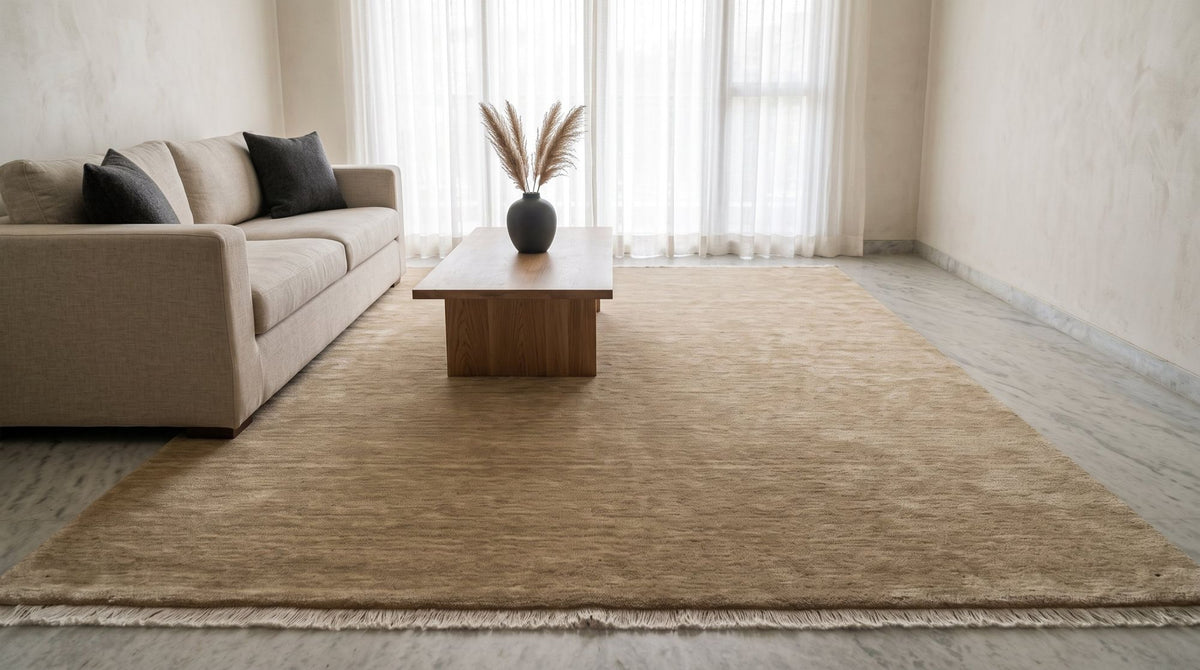
A llama rug feels warm, dry and smooth, a little firmer than alpaca, with a matt to low lustre surface and a natural variation of tone across the pile. In undyed shades it reads like a fine woollen coat in rug form.


Because the fibre varies from animal to animal, natural llama yarns carry gentle shifts of colour, similar to the abrash of a hand dyed rug. That variation is the mark of the fibre, not a fault.
Llama works well in a low, close pile or a dense loop, where the fibre stands together and the guard hairs add crispness. Woven loose and long, it would lose the very strength that makes it worth choosing.
Llama is rare fibre that was always meant to work. Warm, strong and quietly natural.
Why is llama a rare fibre if it is so hardy?
Llama is rare in rugs not because it is fragile but because so little of it reaches the loom: each animal gives a modest fleece, the coat must be sorted by hand into fine and coarse fibre, and only a small share of the world's fibre is llama. Scarcity, not delicacy, puts it in Rara.
Sheep have been bred for wool production for thousands of years, and wool is handled at enormous scale. Llama fleece is collected in far smaller quantities, often from small herds, and each fleece varies in colour and fineness. That variety is part of the appeal, and part of the cost.
Sorting matters most. A llama yarn for a rug needs the right balance of soft undercoat and stronger fibre, and the natural colours must be grouped so a rug reads as one piece. That hand work is a large part of why a llama rug is priced on request rather than listed in stock.
Is llama soft enough for bare feet?
Well sorted llama, with most of the coarse guard hair removed, is soft enough for bare feet and feels dry and warm rather than prickly. A yarn that keeps more guard hair feels crisper and more textured, which suits living rooms more than bedrooms.
The right balance depends on the room, and it is one of the first things to settle when a Reserve piece is planned. Ask to feel both a softer and a crisper sample side by side.
Where would a llama rug suit an Indian home?
A llama rug suits an Indian home where you want a rare fibre that can still take daily life: a family living room, a study, a dressing room or a hill station home where winter mornings are cold. It is also a natural choice for anyone drawn to undyed, earthy colour.

- Hill homes in Shimla, Mussoorie or Coonoor: a dense llama pile adds real warmth to a timber or stone floor.
- Delhi NCR and Chandigarh winters: a bedroom or study rug that is warm underfoot from December to February. See rugs for Delhi NCR homes.
- Quiet luxury interiors: natural browns and greys sit with oak, walnut, linen and lime plaster. Read our guide to quiet luxury rugs.
- Humid coastal cities: like any animal fibre, keep it ventilated, out of standing water and on a breathable underlay.
Colour is the other reason llama suits Indian interiors. Its natural browns and greys sit beside teak, sheesham, cane and handloom upholstery without any dye at all, which keeps a room calm and lets the texture lead. A rug in undyed llama ages slowly and evenly, because there is no dye to fade in a sunny room.
Care is simple and strict at once: vacuum gently without a beater bar, blot spills at once, and leave deep cleaning to a professional who knows animal fibres.
How can you buy a llama rug from Rugberry?
You buy a llama rug from Rugberry through Rugberry Reserve, the halo line for the rarest fibres, as a made to measure piece with prices on request. Reserve rugs are not held in stock; each is made for one room.

- Tell the team the room: size, floor, light and how the room is used.
- Choose the fibre and colour: llama in a natural shade, or blended or dyed to a palette.
- Choose a design and construction: a Rugberry design or your own, in a surface that suits llama.
- See the fibre first: ask for a sample, so you can feel the hand before the rug is made.
If you would like a rare fibre rug you can order today, the Cashmere Blend Rug in Natural and the Cashmere Blend Rug in Taupe are handloom woven in a wool and cashmere blend, 16 mm, fine, dense and very soft, listed in six sizes from 5x8 ft to 12x15 ft and from ₹43,200 for 5x8 ft ex GST, at the time of writing. They sit in the Cashmere collection.
The cashmere blend is not llama, and it is not a Reserve piece. It is the nearest way to feel a Rara fibre in a rug you can order from the Studio Collection, and a useful benchmark when you later compare llama samples.
For a wider look at how rare fibres fit into a considered home, read our guide to rugs above 1 lakh, which explains when an investment piece earns its price.
Frequently asked questions
Is llama fibre good for rugs?
Yes. Llama fibre is warm, light and stronger than most rare fibres, which makes it well suited to a floor. It works best in a dense, low pile where the fibre stands together.
What is the difference between llama and alpaca fibre?
Llama and alpaca are related camelids, but alpaca fibre is usually finer, silkier and more even, while llama fibre is a little coarser and more varied. In a rug, that makes llama the more robust of the two.
Does llama fibre need to be dyed?
Not necessarily. Llama comes in a natural range from white and fawn through brown and grey to black, so a rug can be built entirely from undyed shades blended for tone. Dyeing is possible when a scheme calls for a particular colour.
Where can I buy a llama rug in India?
Rugberry offers llama fibre in Rugberry Reserve, as made to measure pieces with prices on request. Reserve rugs are made for one room, to the client's size and colour.
How do you clean a llama fibre rug?
Vacuum a llama rug gently without a beater bar, blot spills at once with a dry white cloth, and keep it away from standing water. Deep cleaning should be done by a professional who works with animal fibres.
A rare fibre is worth most where it is used every day. Material first.




Leave a comment
This site is protected by hCaptcha and the hCaptcha Privacy Policy and Terms of Service apply.