




Lincoln Wool: The Lustre Wool of the Terra Grade
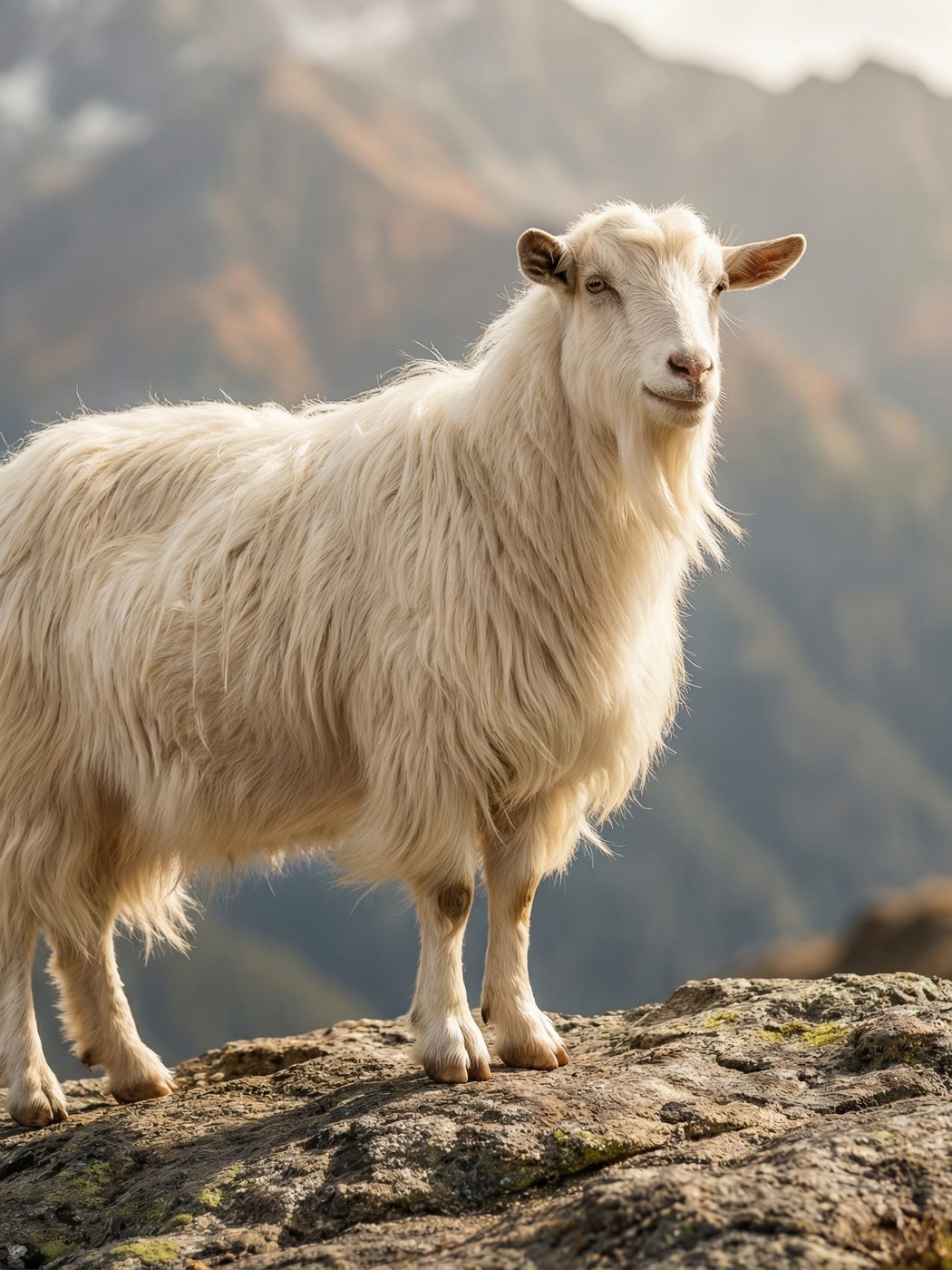
Lincoln wool comes from the Lincoln longwool sheep and is prized for one thing above all: a long, strong fibre with a natural lustre that catches light like a soft sheen. In Rugberry's fibre system it sits in Terra, Grade I, beside New Zealand wool and jute.
In short
- Lincoln is a longwool: its locks are among the longest of any sheep's wool, which gives a strong yarn with very few loose ends.
- Lincoln wool has a natural lustre, a bright glow that comes from the smooth surface of the fibre rather than from any finish.
- Lincoln is coarser than New Zealand wool and much coarser than merino, so it feels smooth and firm rather than soft and springy.
- Rugberry grades Lincoln as Terra, Grade I, and offers it for made to measure pieces rather than in the Studio Collection held in stock.
What is Lincoln wool?
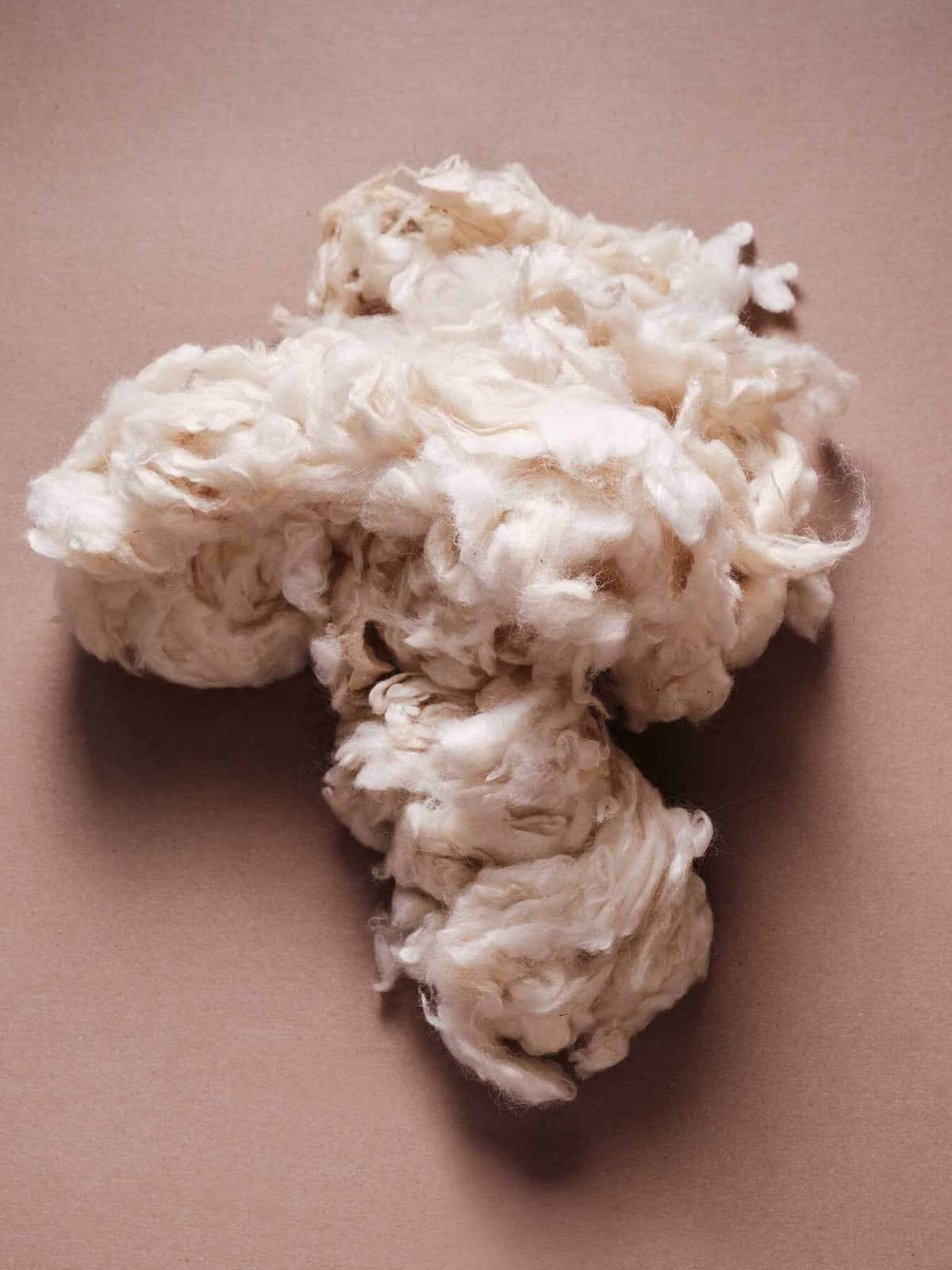
Lincoln wool is the fleece of the Lincoln, an English longwool breed of sheep known for very long, heavy, lustrous locks. It is one of the classic lustre wools, a small family of breeds whose fibre shines rather than glows.
Most wool used in rugs comes from crossbred sheep, chosen for a balance of strength, whiteness and softness. Longwools are a different family. Their locks grow long and hang in ringlets, and the fibre is thicker and smoother than a fine wool.
In a rug, those traits turn into a yarn that is strong, sleek and slow to pill. Lincoln is a fibre for surfaces that should look polished and stay that way, not for a deep, cushioned pile you sink into. For the wider picture, read New Zealand wool vs other rug wools.
Why does Lincoln wool shine?
Lincoln wool shines because its fibre is long, thick and smooth, with flatter surface scales than fine wools, so light reflects off it in a cleaner line. The shine is part of the fibre itself and stays for the life of the rug.


Every wool fibre is covered in tiny overlapping scales. On a fine wool such as merino, the scales are close and raised, which scatters light into a soft matt glow. On a longwool such as Lincoln, they lie flatter, so the surface behaves more like a polished thread.
The result is lustre: a bright, slightly silvery shine that moves as you walk around the rug. It is quieter than the sheen of silk, but unmistakable once you have seen the two side by side.
How does Lincoln compare with the other Terra fibres?
Lincoln is the lustre fibre of Terra: New Zealand wool brings springy resilience, jute brings dry plant texture, and Lincoln brings strength with shine. All three are chosen for strength, natural texture and everyday living.
| Terra fibre | Source | Surface | Feel underfoot | Where Rugberry uses it | Choose it when |
|---|---|---|---|---|---|
| New Zealand wool | Sheep | Soft glow | Springy, resilient | Grain, Plush, hand tufted designs | You want a soft, hard working rug for daily life |
| Lincoln | Lincoln longwool sheep | Bright lustre | Smooth, firm | Made to measure pieces | You want wool with a visible shine |
| Jute | Plant stalk | Dry, matt, golden | Firm, textured | Savannah, Kora, Pampas; with wool in Cabra | You want natural texture at a lower price |
The verdict: for a living room where you want the warmth of wool and a little of the light play of silk, without silk's care, choose Lincoln over New Zealand wool. For barefoot softness, New Zealand wool remains the better Terra choice.
Our guide to Terra grade rugs compares these fibres across Rugberry rugs you can buy today.
What does a Lincoln wool rug feel like underfoot?
A Lincoln wool rug feels smooth, cool and firm underfoot, with less spring than New Zealand wool and none of the cushioned softness of merino. It suits a low to medium pile, where its lustre shows and its firmness reads as crispness.
Coarse, long fibres do not crimp as tightly as fine wools, so a deep Lincoln pile would feel heavy rather than plush. Woven low, the same fibre stays upright and catches the light along every row.
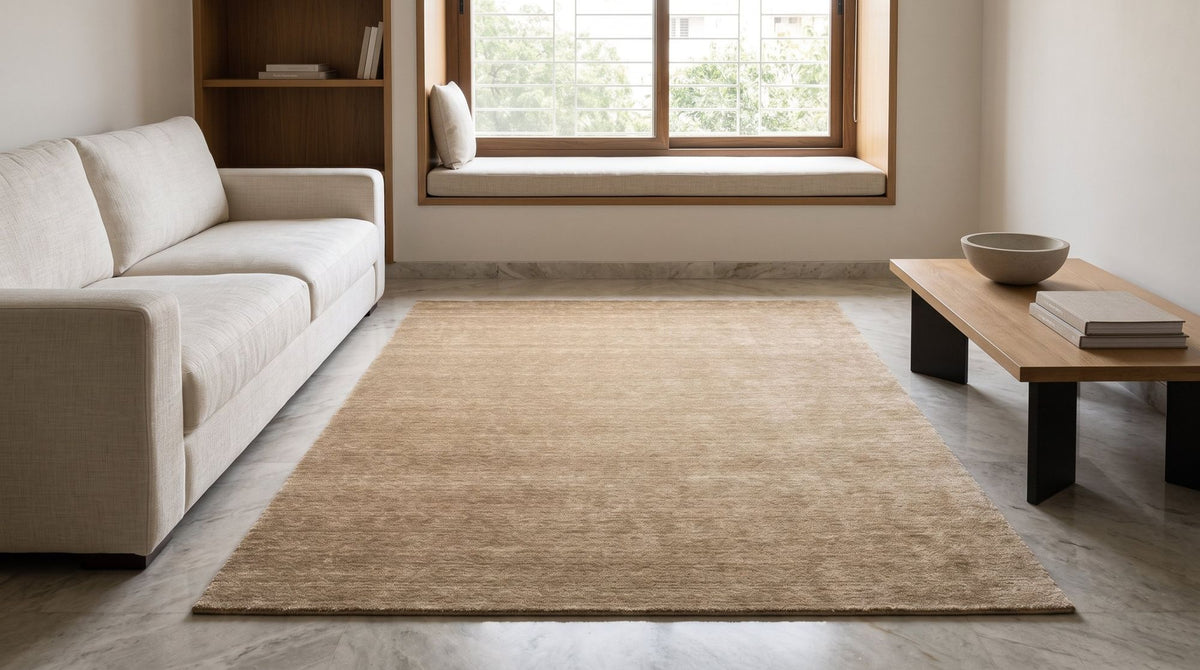
That makes Lincoln a good partner for carving and for a low pile in mid tones, where the sheen shifts across the rug as the sun moves. It is less suited to a bedroom where you want to sink your toes in. For that, read our guide to the softest rugs.
Lincoln is the wool that remembers it is a thread. Long, strong and quietly bright.
How does Lincoln wool take colour?
Lincoln wool takes colour clearly, and its lustre makes a dyed shade look brighter and more saturated than the same dye on a matt wool. Pale tones read as luminous; deep tones read as rich rather than flat.


Because the fibre reflects more light, colour on a Lincoln rug shifts with the viewing angle. Walk around it and a mid grey moves from silver to pewter, a sand from gold to biscuit. That movement is a reason to keep the palette simple: one or two tones let the lustre do the work.
When choosing colour for a made to measure piece, look at the poms or the sample in daylight and again under the warm lamps you use at night. A shade that is perfect at noon can turn warmer after dark on a shiny fibre. Our guide to rug colour in natural light explains how to test this.
Lincoln with other fibres
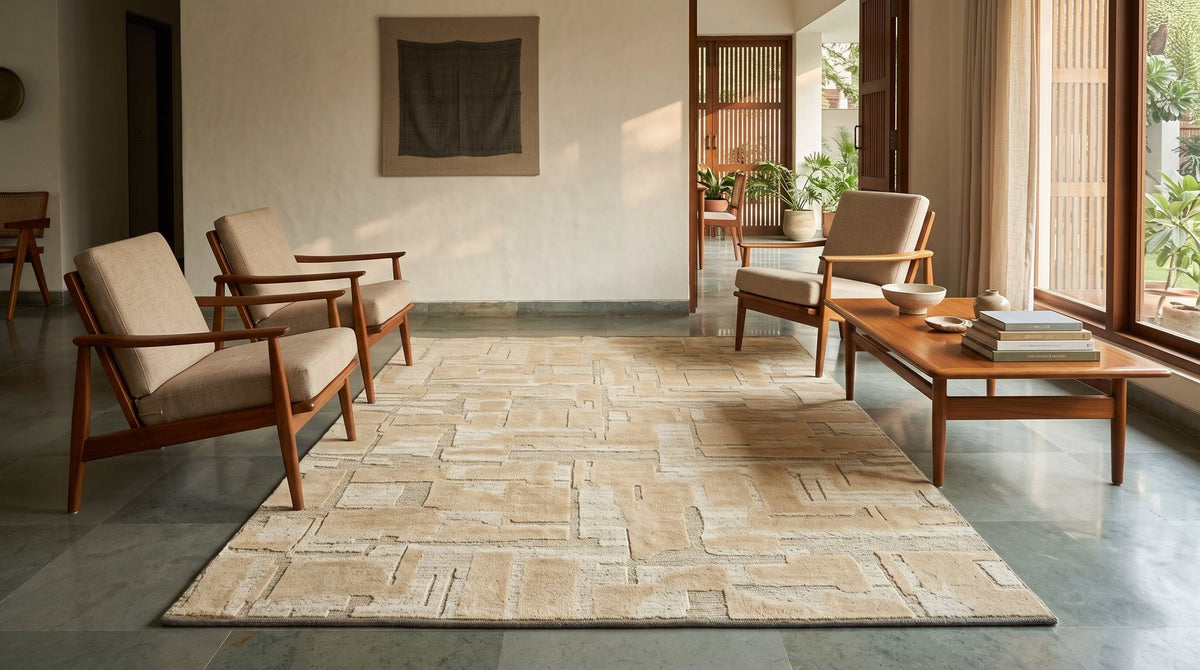
Lincoln can also be combined with New Zealand wool in one design, the Lincoln used for highlights or a pattern and the softer wool for the field. The contrast between lustre and matt draws a pattern in light alone, even in a single colour.
That is a quieter way to get the effect people often look for in a wool and silk rug, using wool throughout. It suits interiors where sheen should be felt rather than announced.
Where does a Lincoln wool rug work in an Indian home?
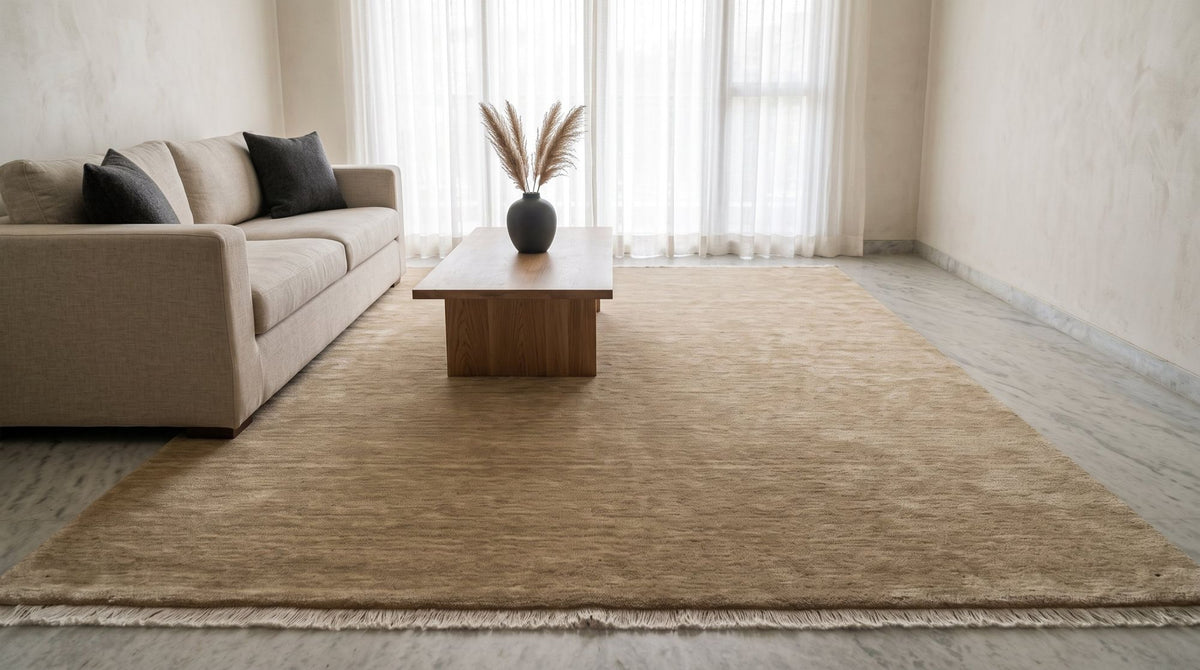
A Lincoln wool rug works best in a formal living room, a drawing room or a study, on a stone or wood floor where its lustre has light to play with. It is strong enough for daily use and dressy enough for festive hosting.

- Drawing rooms on marble: the lustre of Lincoln picks up the polish of Italian marble without competing with it.
- Studies and libraries: a firm, low surface lets a desk chair roll and still looks finished.
- Double height living rooms: sheen reads from a mezzanine above in a way matt wool does not.
- Homes with pets: a long, smooth fibre releases pet hair to a vacuum more easily than a fuzzy short staple.
For humid coastal homes, treat a Lincoln rug as you would any wool rug: good ventilation, no standing water and a turn every six months. The fibre itself handles moisture in the air as other wools do.
If you are planning a large living room, our guide to modern living room rugs shows how to size the piece to the seating, which matters more than fibre for how the room looks.
How do you order a Lincoln wool rug from Rugberry?
You order a Lincoln wool rug from Rugberry as a made to measure piece: choose a Rugberry design or bring your own, then set the size, colour and construction with the team. The Studio Collection held in stock is made in other fibres.

- Start with a design. Pick a Rugberry rug whose pattern or surface you like, or share your own drawing. The customisable rugs collection is a good starting point.
- Ask for Lincoln as the fibre. The team will advise whether the design suits a lustre wool, and at what pile height.
- Set size and colour. Any size and any colour can be made to measure; colour is matched against physical poms.
- See it before it is made. Ask for a sample of the fibre so you can see the lustre in your own light.
Made to measure pieces are priced per project. To get a feel for the Terra grade before you order, start with a stock rug such as the Grain Wool Rug in Sandstone, handloom New Zealand wool, 12 to 14 mm, from ₹29,600 for 5x8 ft ex GST at the time of writing, or the Plush Wool Rug in Sand, 18 to 20 mm, from ₹32,000. See our guide to custom rugs in India for how the process works.
Is Lincoln wool better than New Zealand wool, and how do you care for it?
Lincoln wool is not better than New Zealand wool, it is different: Lincoln wins on lustre and length of fibre, New Zealand wool wins on softness, spring and range of colour. Both sit in the same Terra grade because both are built for daily life.
Choose by the room and by your feet. If a rug will be walked on barefoot every morning, New Zealand wool is kinder. If it will be seen more than felt, under a dining table, in a formal room or across a study, Lincoln's shine earns its place.
Whichever you choose, a named fibre is the start of a good rug. Browse the fine wool rugs to compare wool surfaces, and read our guide to fibre grades to see where every Rugberry fibre sits.
Frequently asked questions
What is Lincoln wool used for in rugs?
Lincoln wool is used in rugs where strength and a natural lustre matter, usually in a low to medium pile. Its long staple gives a strong yarn, and its smooth fibre gives a visible shine.
Is Lincoln wool soft?
Lincoln wool is smooth rather than soft. It is coarser than New Zealand wool and merino, so it feels firm and cool underfoot instead of cushioned.
Does Rugberry sell Lincoln wool rugs in stock?
Rugberry offers Lincoln wool for made to measure pieces rather than in the Studio Collection held in stock. You can choose a Rugberry design or your own and ask for Lincoln as the fibre.
What grade is Lincoln wool at Rugberry?
Rugberry grades Lincoln as Terra, Grade I, with New Zealand wool and jute. Terra fibres are chosen for strength, natural texture and everyday living.
Is a Lincoln wool rug good for a home with pets?
A Lincoln wool rug suits a home with pets well, because its long, smooth fibre releases hair to a vacuum easily and its strength handles daily traffic. As with any rug, trim claws and blot accidents at once.
Some wools are chosen for comfort. Lincoln is chosen for light. Material first.



Leave a comment
This site is protected by hCaptcha and the hCaptcha Privacy Policy and Terms of Service apply.