


New Zealand Wool vs Other Rug Wools
New Zealand wool is a long, strong, bright white wool that takes dye evenly and springs back under weight, which is why it is the standard fibre for fine rugs. Other rug wools can be excellent too, but they vary more in colour, length and strength from one lot to the next.
In short
- New Zealand wool is valued in rugs for four things: a long staple, a natural whiteness, an even uptake of dye and a springy fibre that recovers after crushing.
- Other rug wools range widely; some are fine and soft, many are shorter, greyer or more uneven, which shows up as shedding, dull colour or patchy dye.
- Rugberry names New Zealand wool on its Grain, Plush and hand tufted wool rugs and places it in Terra, Grade I, the grade for strength and everyday living.
- Rugberry's Grain Wool Rug starts at ₹29,600 and the Plush Wool Rug and Cadence Wool Rug at ₹32,000 for 5x8 ft, ex GST, at the time of writing.
Why does the wool in a rug matter more than the design?
The wool in a rug decides how it feels, how it wears and how its colour reads for the next fifteen years, while the design only decides how it looks on day one. Two rugs with the same pattern can age completely differently because of the fibre underneath.


A rug is a field of thousands of short yarn ends standing on their tips. Every step bends them, every vacuum pulls at them, and every afternoon of sun works on their dye. A fibre that is long, strong and resilient survives that daily life; a short, brittle one sheds, flattens and fades.
This is why Rugberry describes every rug by fibre first, then grade, construction and technique. If you only check one line on a rug's label, make it the fibre line. Our guide to Terra, Fina and Rara explains how the nine Rugberry fibres are grouped.
What makes New Zealand wool different from other rug wools?
New Zealand wool differs from many other rug wools in four measurable ways: staple length, whiteness, lustre and consistency between lots. None of these is magic; they are the result of the sheep breeds, the climate and the grading of the clip.
Staple length
Staple length is the natural length of a lock of wool before spinning. Longer staples spin into a yarn with fewer loose ends, so a rug sheds less after the first few weeks and wears more evenly.
Whiteness and dye uptake
A naturally white fleece is a clean canvas. Dyers can reach pale ivories and clear mid tones without bleaching, and a dark colour stays true rather than muddy. Wools that start grey or yellowish limit the palette and can make soft neutrals look tired.
Lustre and resilience
Good rug wool has a gentle natural lustre, a soft glow rather than a shine. It also has crimp, the natural wave that lets the fibre spring back after a sofa leg or a footstep has pressed it down.
Consistency
Graded, consistent wool means a rug made today matches a rug made next year in feel and colour. For a designer specifying two rugs for one home, that matters as much as softness.
How does New Zealand wool compare with other rug wools?
New Zealand wool sits in the middle of the rug wool range for fineness and near the top for strength, whiteness and evenness. Finer wools such as merino feel softer but cost more; coarser blended wools cost less but vary more.


| Property | New Zealand wool | Generic blended rug wool | Merino | Lincoln |
|---|---|---|---|---|
| Rugberry grade | Terra (I) | Not used by Rugberry | Fina (II) | Terra (I) |
| Fibre fineness | Medium, typically in the 30s of microns | Varies widely between lots | Fine, typically under about 24 microns | Coarse and long |
| Staple | Long | Short to medium, mixed | Medium | Very long |
| Natural colour | Bright white | Often off white or grey | White | White with strong lustre |
| Dye result | Even, clear | Can be patchy or dull | Even, soft | Clear, with shine |
| Feel underfoot | Springy, resilient | Varies | Very soft | Smooth, firm |
| Best use | Living rooms, family homes | Budget rugs | Bedrooms, barefoot rooms | Made to measure pieces with sheen |
The verdict: for a rug that has to work hard in a family home and still look clean in pale colours, choose New Zealand wool over an unnamed blended wool, because consistency and resilience matter more over the years than a lower price on day one.
The micron figures above are general fibre ranges, not lab tests of a single rug. They are useful for comparing fibres, not for comparing two rugs of the same fibre.
How does New Zealand wool behave in Indian homes?
New Zealand wool behaves well in Indian homes because it is naturally resilient, slow to soil and comfortable across a wide range of temperatures and humidity. It suits marble and vitrified floors, air conditioned rooms and the monsoon better than most people expect.

Wool fibres absorb some moisture from the air without feeling damp, then release it as the air dries. In a Mumbai or Chennai monsoon, a wool rug in a ventilated room stays comfortable; in a Delhi winter, it adds real warmth to a cold stone floor.
The natural lanolin left in well scoured wool, together with the scaly surface of the fibre, helps it shrug off dry dust, which is why a weekly vacuum keeps a wool rug looking fresh in a dusty city. Our guide to wool rug shedding explains the loose fibres you will see in the first weeks and why they stop.
Sunlight is the other Indian test. A west facing living room in Ahmedabad or Hyderabad puts hours of strong light on a rug every afternoon, and a clean, evenly dyed wool fades slowly and evenly rather than in patches. Turning the rug every six months spreads that light across the whole surface.
Pets and children are the third. Wool is naturally slow to catch fire, does not melt like some synthetics, and lets most dry soil and pet hair lift out with a vacuum. A mid tone such as umber, tan or sand forgives the most.
A rug's design is what you buy. Its wool is what you live with.
Which Rugberry rugs are made in New Zealand wool?
Most Rugberry rugs are made in New Zealand wool, from the handloom Grain and Plush collections to hand tufted designs such as Cadence. Each shows the fibre in two different surfaces, so you can feel how construction changes the same wool.

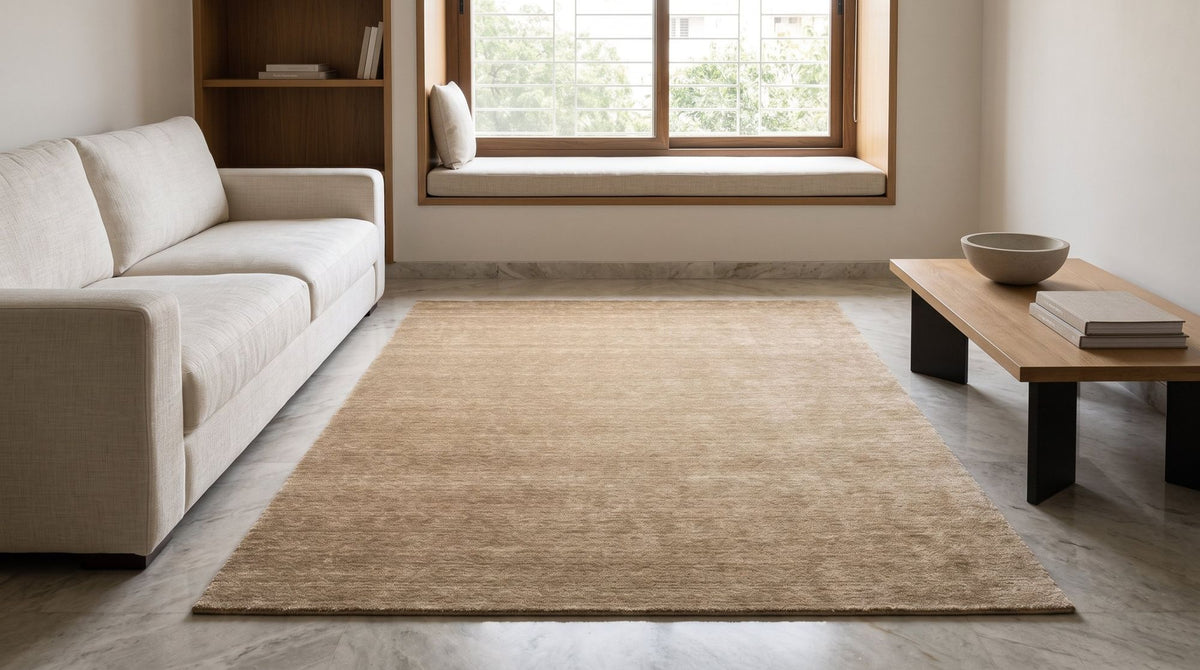
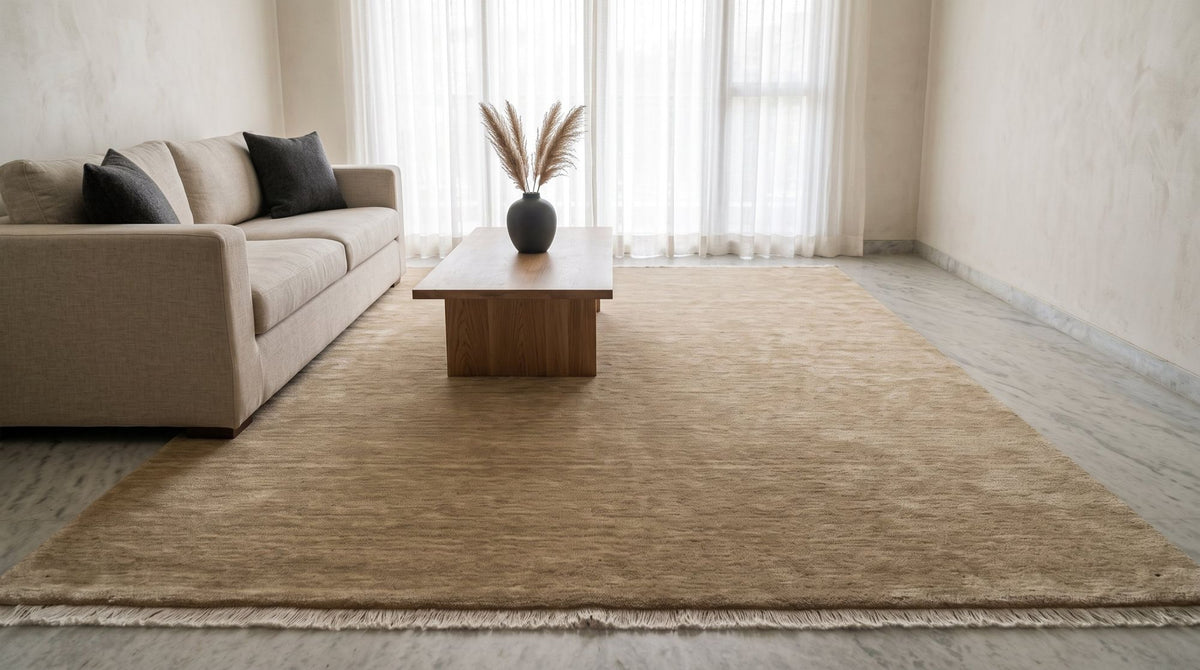
The Grain Wool Rug in Umber is handloom woven in New Zealand wool with a low, closely worked surface, 12 to 14 mm, from ₹29,600 for 5x8 ft. Umber is a deep earth brown that hides daily dust and sits well with teak and walnut.
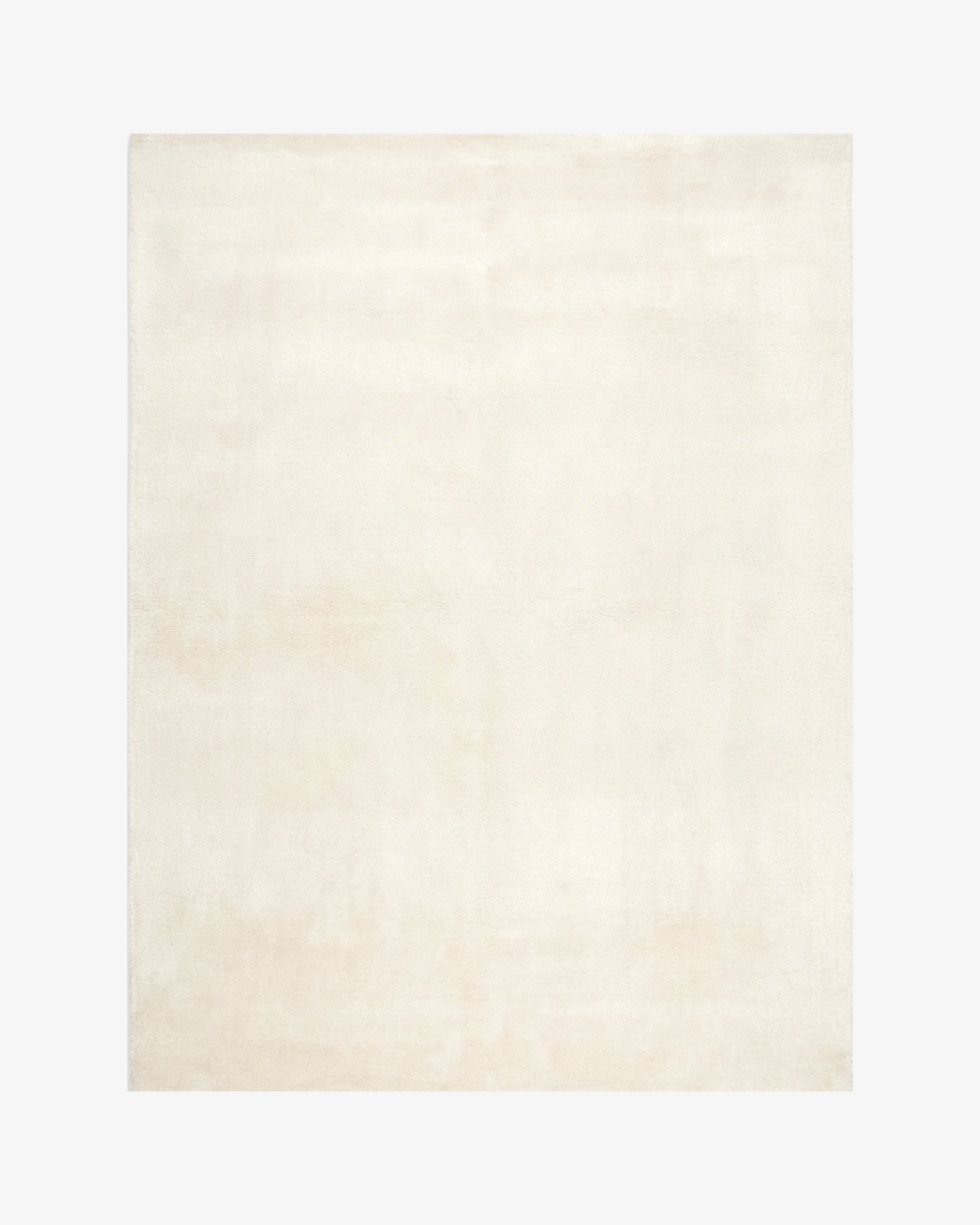
The Plush Wool Rug in Ivory is handloom woven in the same fibre with a deep, quiet pile of 18 to 20 mm, from ₹32,000 for 5x8 ft. It shows off the whiteness of New Zealand wool better than any other rug in the range. Read our story on the Plush collection for room ideas.
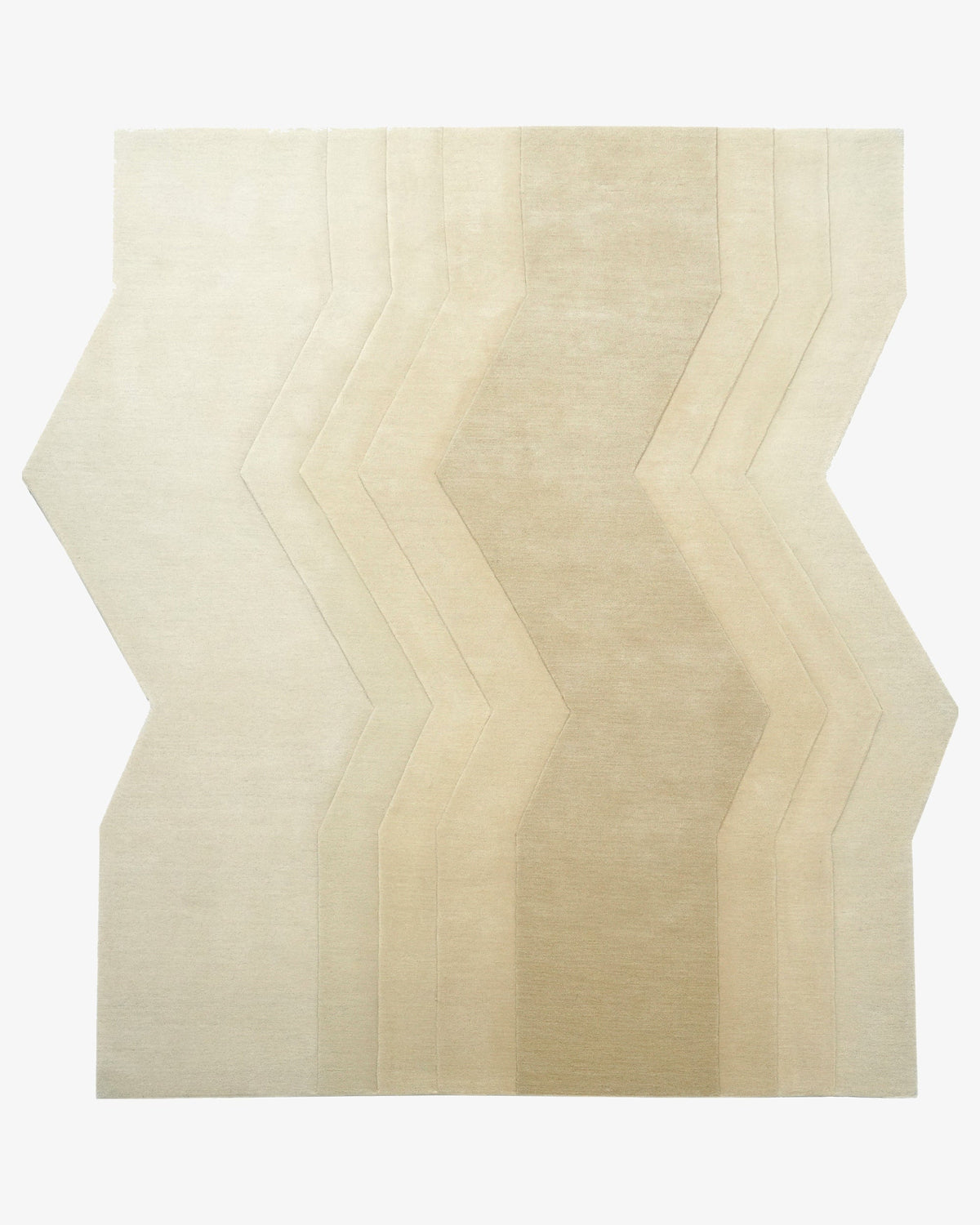
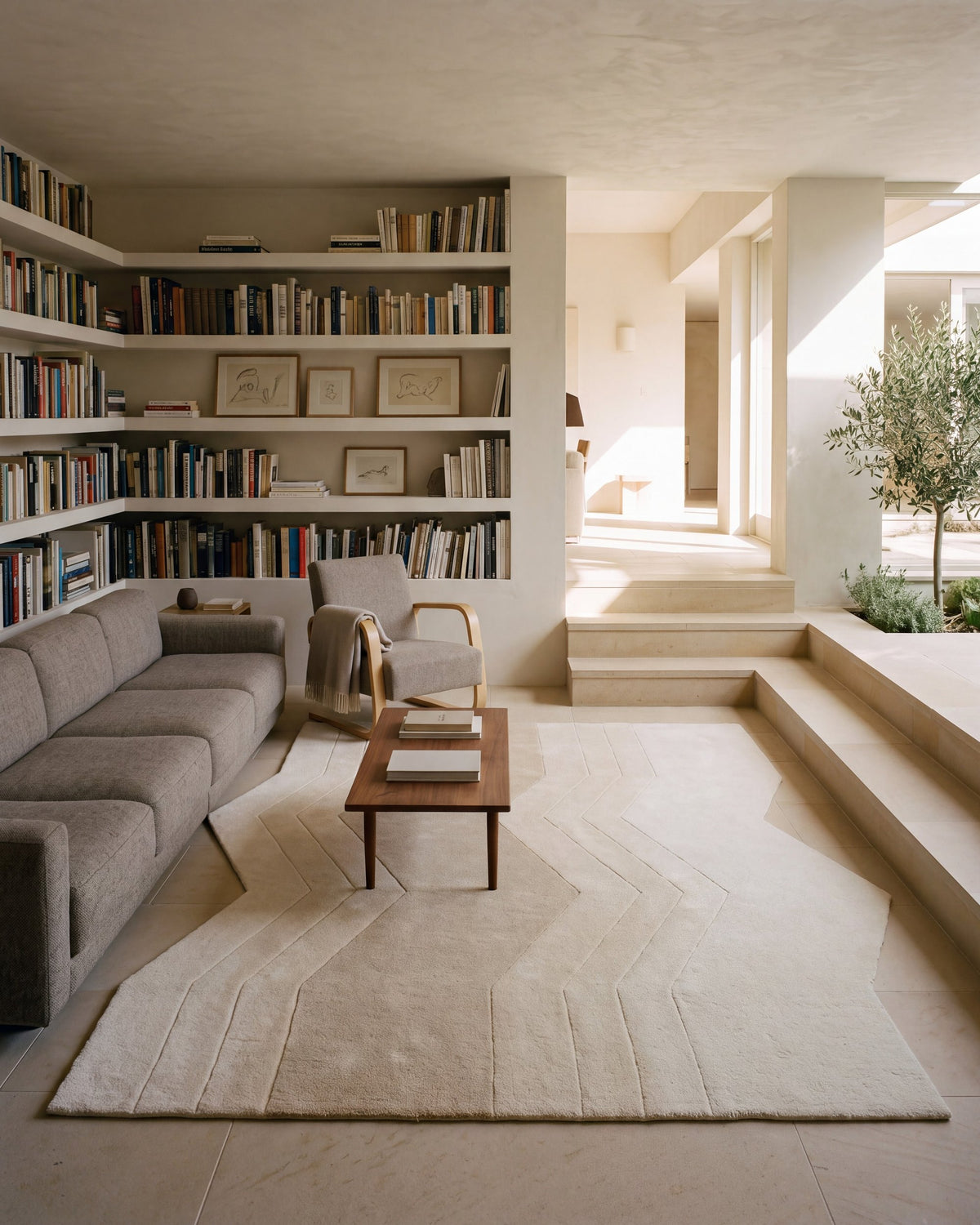
The Cadence Wool Rug is hand tufted in New Zealand wool, 14 to 16 mm, in stepped bands that shift tone from edge to edge, from ₹32,000 for 5x8 ft. It shows how evenly the fibre takes several close shades of dye side by side.
How can you tell good wool when you buy a rug?
You can tell good rug wool by its feel, its recovery and its colour: it should feel springy rather than dry, recover from a pinch within a minute and look clear rather than flat. These are tests anyone can do on a swatch at home.
- The pinch test: press the pile hard with your thumb for ten seconds. Good wool rises back within a minute or two.
- The rub test: rub the surface firmly with a flat palm ten times. A few loose fibres are normal in a new rug; a ball of fluff suggests short staple.
- The light test: look at the pile at a low angle near a window. Good wool has a soft glow; dull, chalky colour suggests poor fibre or harsh processing.
- The label test: look for a named fibre. "Wool" alone tells you little; "New Zealand wool" tells you a standard.
A Rugberry swatch lets you run all four tests on the real fibre before you order. Our guide to checking rug quality adds tests for backing, edges and finish.
Is New Zealand wool worth paying more for?
New Zealand wool is worth paying more for when the rug will see daily use or is in a pale colour, because its strength and clean dye keep it looking right for longer. For a rarely used guest room, a less specified wool may be enough.
The price gap is usually smaller than people expect. At Rugberry, a 5x8 ft New Zealand wool rug in the Grain collection starts at ₹29,600 ex GST at the time of writing, and a rug that keeps its look for many more years costs less per year than one replaced early. Read our introduction to New Zealand wool rugs for more detail.
If you want something softer still, look at the Fina grade, where merino sits. If you want sheen with strength, look at Lincoln, the other Terra wool, offered made to measure. Browse the full range in fine wool rugs.
Frequently asked questions
Is New Zealand wool better than Indian wool for rugs?
New Zealand wool is generally longer, whiter and more consistent than most blended rug wools, which makes it easier to dye evenly and slower to shed. Some fine regional wools are excellent, but quality varies more from lot to lot.
Does New Zealand wool shed?
Every new wool rug sheds a little loose fibre for the first few weeks, then settles. New Zealand wool has a long staple, so shedding is usually light and stops sooner than with short staple wools.
Is a New Zealand wool rug good for humid cities?
Yes. Wool absorbs some moisture from the air without feeling damp and releases it as the air dries, so a New Zealand wool rug stays comfortable in Mumbai or Chennai if the room is ventilated and the rug is never left wet.
What grade is New Zealand wool at Rugberry?
Rugberry places New Zealand wool in Terra, Grade I, alongside Lincoln and jute. Terra fibres are chosen for strength, natural texture and everyday living.
How much does a New Zealand wool rug cost at Rugberry?
At the time of writing, Rugberry's New Zealand wool rugs start at ₹29,600 for a 5x8 ft Grain Wool Rug, with Plush and Cadence from ₹32,000, ex GST. GST is added at checkout.
Start with the fibre, and the rest of the choice gets easier. Material first.




Leave a comment
This site is protected by hCaptcha and the hCaptcha Privacy Policy and Terms of Service apply.