



Silk vs Botanical Silk in Rugs
Silk is a protein fibre spun by the silkworm; Botanical Silk is a plant-based fibre made to give a similar sheen at a fraction of the price. Rugberry uses both and names them separately on every rug, because they look alike across a room and behave very differently up close.
In short
- Silk is an animal protein fibre from the cocoon of the silkworm; Botanical Silk is a plant-based fibre, not silk.
- Silk is stronger, holds its sheen longer and tolerates a damp cloth far better; Botanical Silk is softer on the budget, cool underfoot and easily marked by water.
- Rugberry's Couture Silk Rug is hand knotted in silk from ₹57,600 for 5x8 ft; its Luma and Nuva rugs are handloom Botanical Silk from ₹28,000 and ₹32,000, ex GST, at the time of writing.
- For a busy room or anywhere near water, choose silk or a wool blend over pure Botanical Silk; for a calm bedroom or formal room, Botanical Silk gives beautiful sheen for the money.
What is the difference between silk and Botanical Silk?
The difference is the source: silk is spun from the cocoon of the silkworm and is a protein, like wool or hair, while Botanical Silk is made from plant material and is a cellulose fibre, like cotton or linen. Their sheen is similar; their chemistry is not.


Real silk is one of the strongest natural fibres for its weight. Its smooth, triangular cross section bends light like a prism, which gives the deep, shifting sheen silk is known for.
Botanical Silk is a plant-based fibre, spun into a smooth, bright filament to give a silk-like shine. Rugberry never calls it silk, even in passing, and its product pages name the fibre in full. The glossary entry for plant silk covers the wider family of terms you may see elsewhere.
Why do both exist in one range?
Both exist because they answer different needs. Silk is for the rug that should last a lifetime and glow in a formal room; Botanical Silk brings a silk-like sheen to more homes, at a price close to a good wool rug.
The honest approach is not to choose one and hide the other, but to name each clearly and say where it works. That is how Rugberry describes them, and how this guide compares them.
Which one has the better sheen?
Both have a beautiful sheen when new, but silk's sheen is deeper and lasts for the life of the rug, while Botanical Silk's sheen is brighter at first and can soften where feet and furniture press it. The difference shows most after a few years in a busy room.
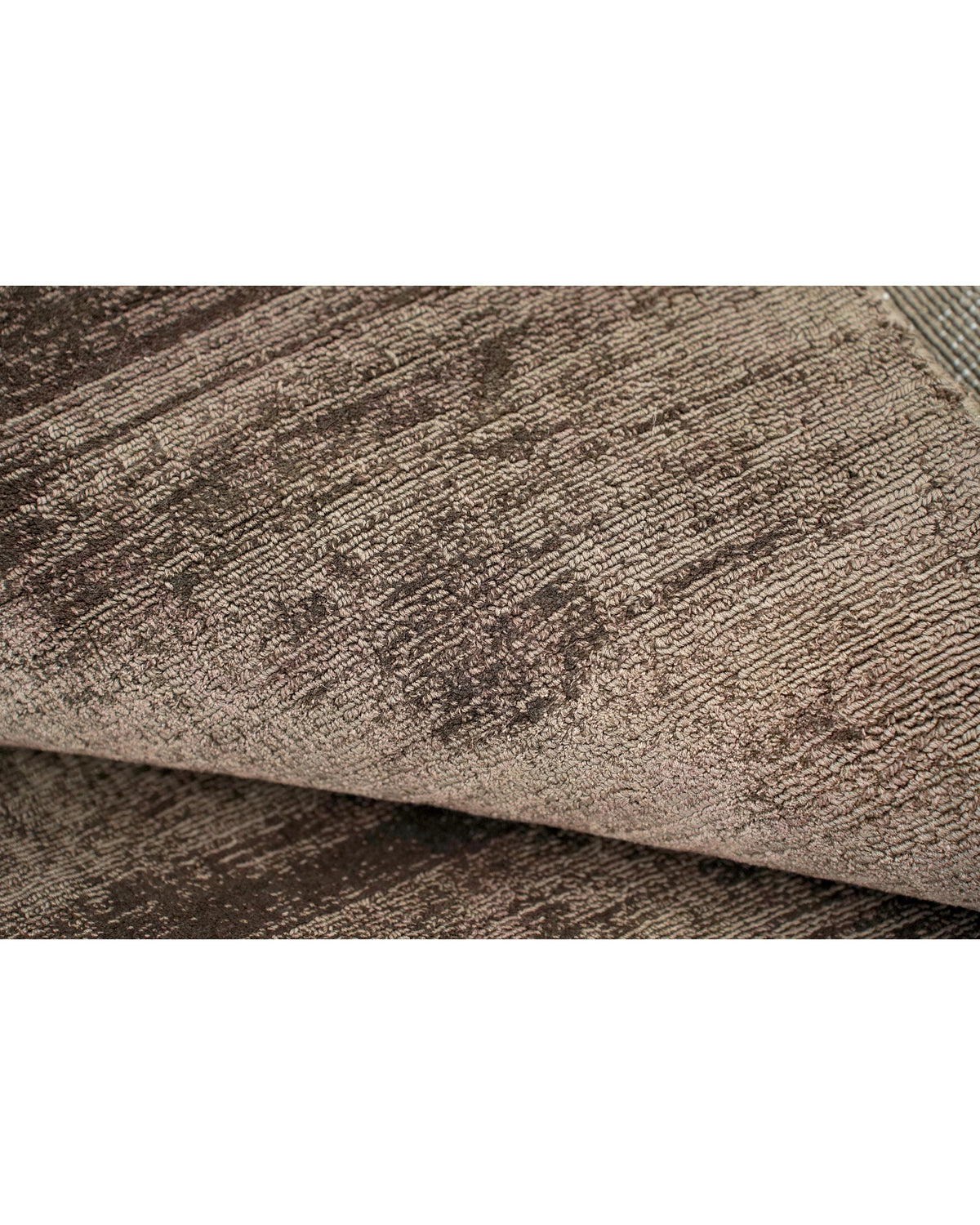
Silk's sheen comes from the shape of the fibre, so it survives wear. Botanical Silk's comes from a very smooth filament; where the pile is crushed in a walkway or under a chair, that smoothness bends and the light reads duller in that path.
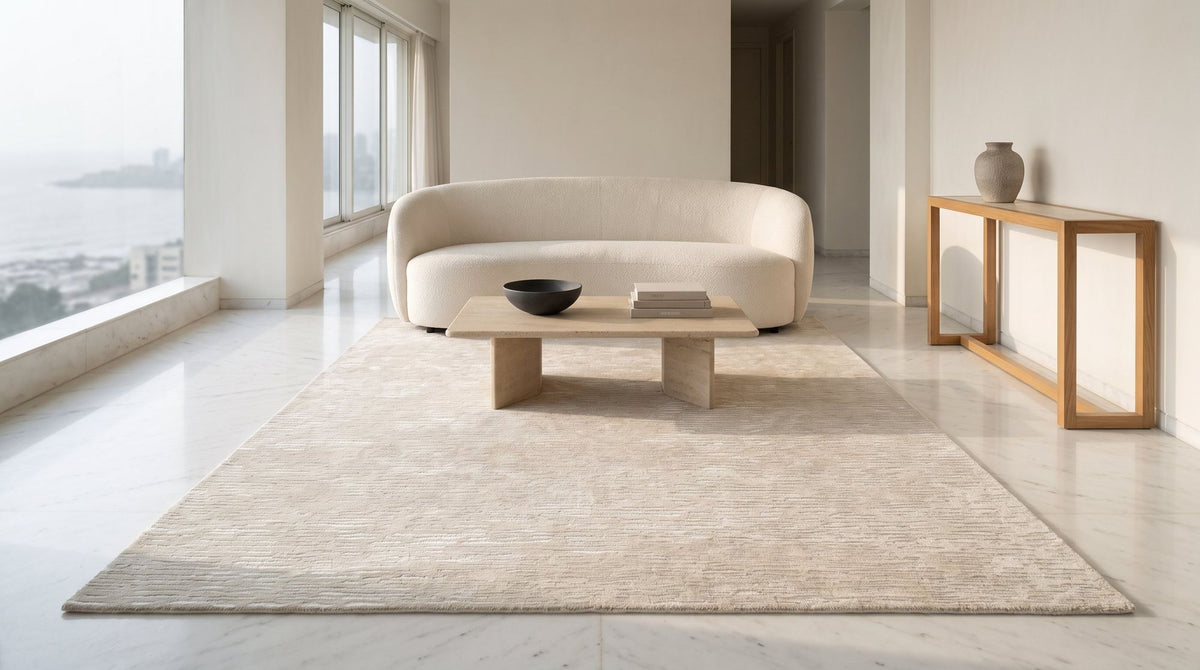
In a calm bedroom, that difference may never show. The Luma Silk Rug in Greige, handloom woven in Botanical Silk at 10 mm, is cool underfoot with a sheen that changes as the light moves, from ₹28,000 for 5x8 ft. Our story on the Nuva rug shows the same fibre in a deeper surface.
What happens when silk and Botanical Silk get wet?
Water is the biggest practical difference: Botanical Silk loses much of its strength when wet and can mark, stiffen or yellow where a spill sits, while silk handles a careful damp blot far better. Neither should ever be soaked or washed at home.


Plant cellulose fibres swell and weaken when they absorb water. On a Botanical Silk rug, a glass of water, a pet accident or a wet mop at the edge can leave a ring that a professional cleaner may not fully remove.
- Blot, never rub: press a dry white cloth on the spill until no more moisture lifts.
- No home shampoo: water and detergent work against Botanical Silk; call a professional cleaner for anything beyond a dry blot.
- Watch the edges: keep Botanical Silk rugs away from bathroom doors, wet balcony thresholds and the mop's path.
- Silk too: real silk tolerates a light damp blot, but its dyes can move, so the same professional rule applies.
For full routines, read our guide to daily rug care.
Across a room they look like sisters. Under a spilt glass of water they are strangers.
How do silk and Botanical Silk compare on wear, feel and price?
Silk is stronger, finer and longer lasting; Botanical Silk is softer on the budget, cool and smooth underfoot, but crushes and marks more easily. The table sets them out on the points that matter in a home.

| Point | Silk | Botanical Silk |
|---|---|---|
| Source | Silkworm cocoon, protein fibre | Plant-based, cellulose fibre |
| Rugberry grade | Fina, Grade II | Not graded |
| Sheen | Deep, shifting, lasting | Bright, can soften in walkways |
| Feel underfoot | Fine, dense, dry | Cool, smooth, slippery |
| Strength when dry | Very high | Moderate |
| Strength when wet | Holds up to careful blotting | Drops sharply, marks easily |
| Footprints and crush | Recovers well | Shows tracks, shading |
| Usual construction at Rugberry | Hand knotted | Handloom or hand tufted |
| From (5x8 ft, ex GST, at the time of writing) | ₹57,600 (Couture) | ₹28,000 (Luma), ₹32,000 (Nuva) |
The verdict: for an heirloom piece in a formal room, choose silk over Botanical Silk, because its sheen and strength last decades. For a calm bedroom where you want sheen for less, Botanical Silk is the honest, sensible choice.
How can you tell silk from Botanical Silk yourself?
You can tell silk from Botanical Silk by feel, by water and by the label: silk feels dry, fine and slightly warm, Botanical Silk feels cooler and more slippery, and a drop of water darkens and stiffens Botanical Silk far more. The label should name the fibre plainly.
- The hand test: rub a few yarn ends between finger and thumb. Silk has a dry, crisp resistance, sometimes called scroop; Botanical Silk slides and feels cool.
- The water test: on a swatch, place one drop of water and wait a minute. Botanical Silk darkens, then dries with a faint ring and a stiffer feel; silk recovers more evenly.
- The crush test: press a thumb into the pile and drag it. Botanical Silk shows a clear track that changes the sheen; silk shows it less.
- The price test: a hand knotted rug in real silk is never priced like a tufted wool rug. A very low price for "silk" is a question worth asking.
The simplest test of all is the product page. Rugberry writes the fibre in its "Made of" line on every rug, and our guide to reading a rug spec sheet shows what else to look for.
Why does the name matter?
Calling a plant fibre silk sets the wrong expectations for water, wear and price. A buyer who knows what lies underfoot chooses the right room for it and is happy with it for longer.
That is why Rugberry never shortens Botanical Silk to silk in its copy, and why its wool and silk designs say New Zealand wool and Botanical Silk on the label.
Which Rugberry rugs use silk and which use Botanical Silk?
At Rugberry, real silk appears in the Couture Silk Rug, hand knotted and made to measure, while Botanical Silk is used in Luma, Nuva, Concept and Abstract, and alongside New Zealand wool in designs such as Cabella, Insignia and Sepia. Each product page names the fibre.

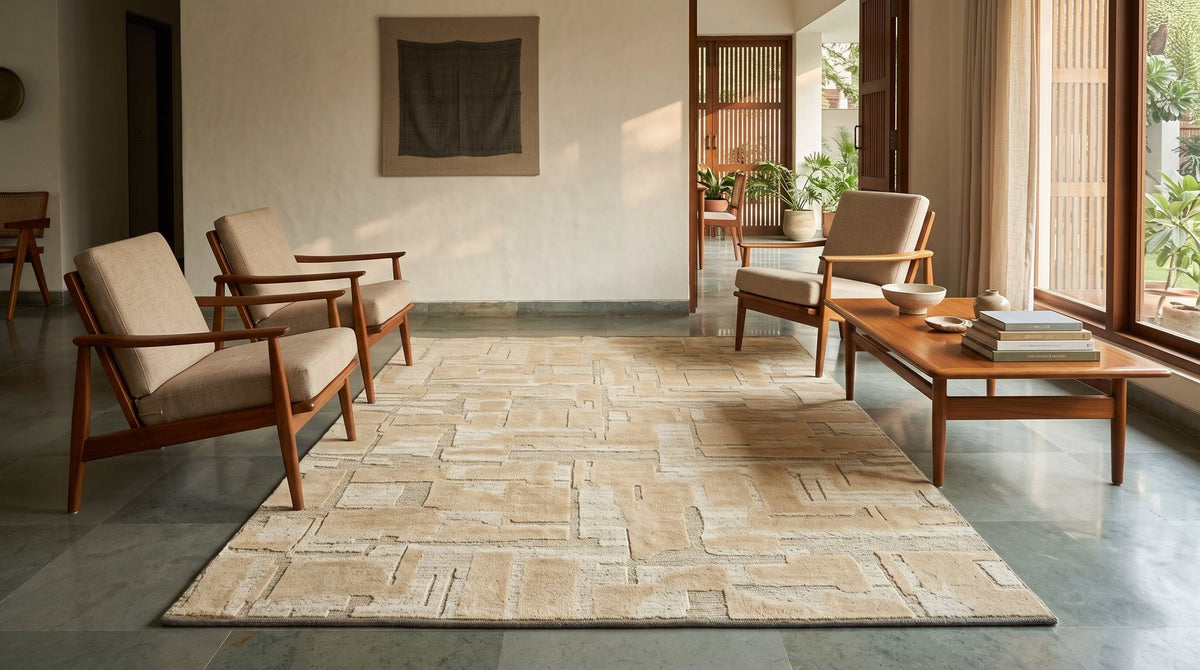
The Couture Silk Rug is hand knotted in silk, dense and fine, from ₹57,600 for 5x8 ft and made to any size. Hand knotting is the slowest and most durable way a rug can be made, which suits a fibre this fine. Read more in hand knotted silk rugs.
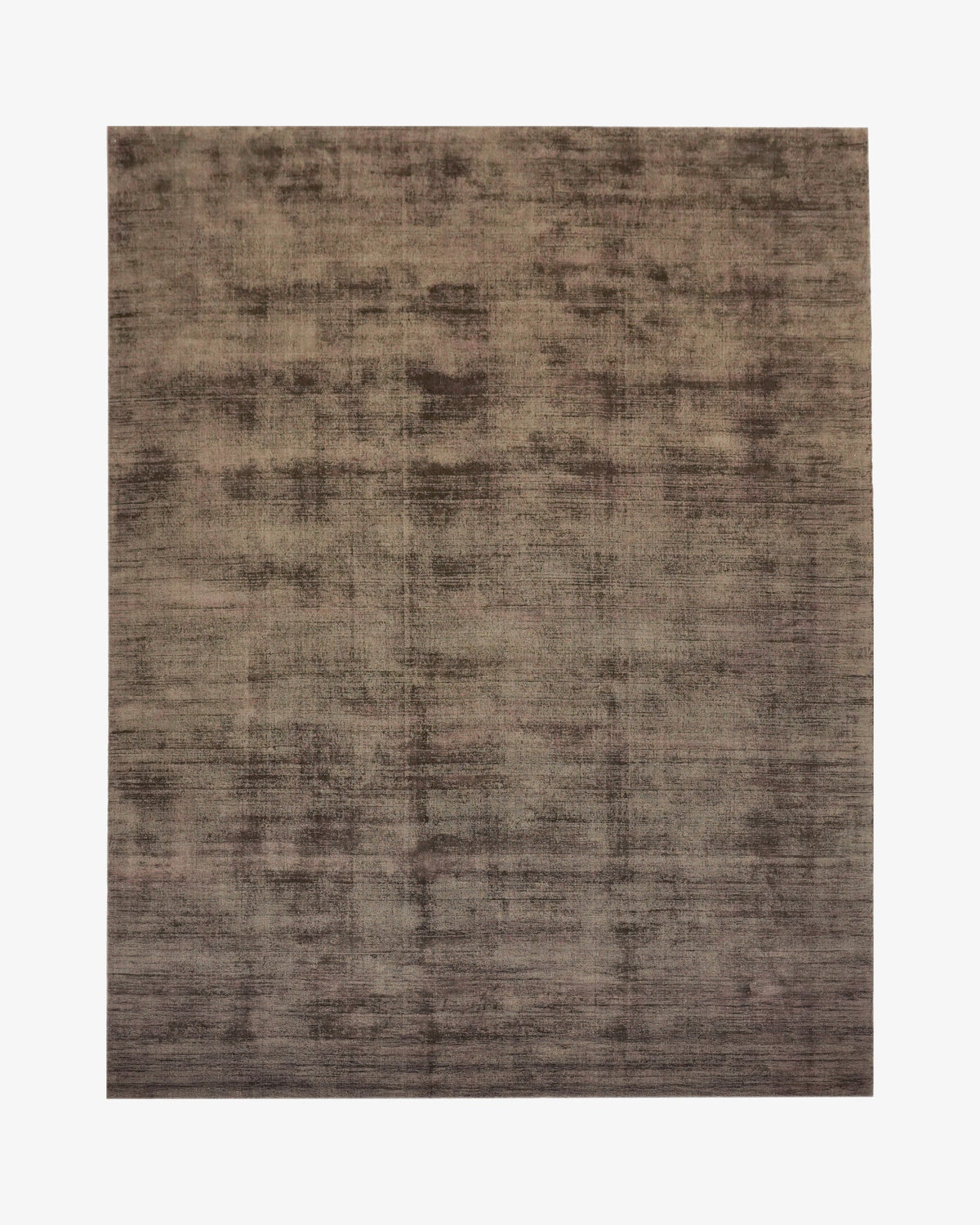
The Nuva Silk Rug in Chocolate is handloom woven in Botanical Silk, 10 mm, low and fine, with a sheen that deepens and softens as the light turns, from ₹32,000 for 5x8 ft. Both Luma and Nuva are listed in six sizes. Browse them together in the silk rugs collection.
Which should you choose for your room?
Choose by traffic and water first, then by budget: silk or a wool blend for living rooms, dining rooms and family spaces, pure Botanical Silk for bedrooms, dressing rooms and formal rooms that see few feet. If in doubt, a wool and Botanical Silk blend splits the difference.
- Master bedroom: Botanical Silk. Cool underfoot in an AC room, low traffic, no outdoor shoes.
- Formal drawing room on marble: silk if the budget allows, Botanical Silk if the room is rarely used.
- Family living room with children or pets: a wool and Botanical Silk blend, or New Zealand wool. Read wool vs Botanical Silk for room by room verdicts.
- Dining room: avoid pure Botanical Silk; spills under a dining table are certain.
Light matters too. Both fibres show their sheen best in a room with low, raking light, a west window in the evening or a floor lamp at night. In a room lit only from above, a pale wool can look nearly as rich, for less care.
Before deciding, order a swatch of each and place a drop of water on the Botanical Silk one. The test takes a minute and tells you more than any description.
Frequently asked questions
Is Botanical Silk real silk?
No. Botanical Silk is a plant-based fibre, not silk from the silkworm. Rugberry always names it as Botanical Silk so you know exactly what lies underfoot.
Why is a silk rug so much more expensive than a Botanical Silk rug?
Silk is a costly animal fibre and is usually hand knotted, the slowest construction. Botanical Silk is a plant-based fibre that costs far less and is often handloom woven or hand tufted.
Can a Botanical Silk rug get wet?
A Botanical Silk rug should be kept dry. Blot spills at once with a dry white cloth and leave any cleaning to a professional, because the fibre weakens and can mark when wet.
Which lasts longer, silk or Botanical Silk?
Silk lasts longer. It is stronger, recovers better from pressure and keeps its sheen for decades, while Botanical Silk can crush and lose sheen in walkways over time.
Is a Botanical Silk rug good for a bedroom?
Yes. A bedroom is one of the best rooms for Botanical Silk, because it sees little traffic and no outdoor shoes. The fibre feels cool underfoot in an air conditioned room.
Name the fibre, and the right room follows. Material first.



Leave a comment
This site is protected by hCaptcha and the hCaptcha Privacy Policy and Terms of Service apply.