






Keeping a Rug Flat Under a Ceiling Fan
A ceiling fan pushes air straight down, and when it hits the floor it races outward in a thin, fast layer that slips under any rug edge not lying perfectly flat. A heavier, denser rug, a size that carries the edges beyond the strongest airflow, furniture on the rug and a gripping pad keep it flat.
In short
- A ceiling fan drives a column of air down to the floor, where it turns and spreads outward fastest in a ring roughly beneath and just beyond the blade tips.
- Light flatweaves, thin jute rugs and rugs with a small curl at a corner lift or creep most under a fan, because moving air gets beneath the edge and raises it a little more each day.
- A heavier, denser rug, sized so its edges sit under furniture or well outside the fan's ring, is the most reliable fix, helped by a gripping pad.
- Fans also blow settled dust from their blades onto the floor, so the rug edges nearest a fan grey faster and need vacuuming more often.
Why does a ceiling fan lift a rug at all?
A ceiling fan lifts a rug because the air it pushes down has to go somewhere when it reaches the floor, and it goes sideways. That sideways flow hugs the floor, and wherever it meets a rug edge that is even slightly raised, it slides underneath and pushes up.

Think of the fan as a tap pouring water onto a flat table. Directly under the hub the flow is weak, under the blades it falls hardest, and once it lands it spreads out across the surface in every direction. On a floor, that spreading air is fastest a short distance beyond the blade tips and slows as it travels toward the walls.
The effect builds over time. A corner lifted by a millimetre catches a little more air, so it lifts a little further, and after a few weeks of fans running from March to October the fibre takes on that curve. That is why a rug that lay flat in February can be flapping at one corner by May.
Which rugs are most likely to lift or creep under a fan?
Rugs that are light for their size, stiff at the edges, or already carrying a curl from being rolled lift most easily. Heavy, dense, supple rugs lie down and stay down. The table compares the common types found in Indian homes.

| Rug type | Weight and edge | Under a ceiling fan | Best fix |
|---|---|---|---|
| Reversible flatweave | Light, thin, flexible | Corners flutter, rug walks slowly across tile | Gripping pad plus furniture on one edge |
| Handwoven jute, about 10 mm | Firm, springy, holds a rolled curl | Curled corners lift and stay lifted | Corner weight for a few days, then a pad |
| Handwoven flat wool | Moderate weight, supple | Usually settles; small sizes can creep | Pad on polished floors |
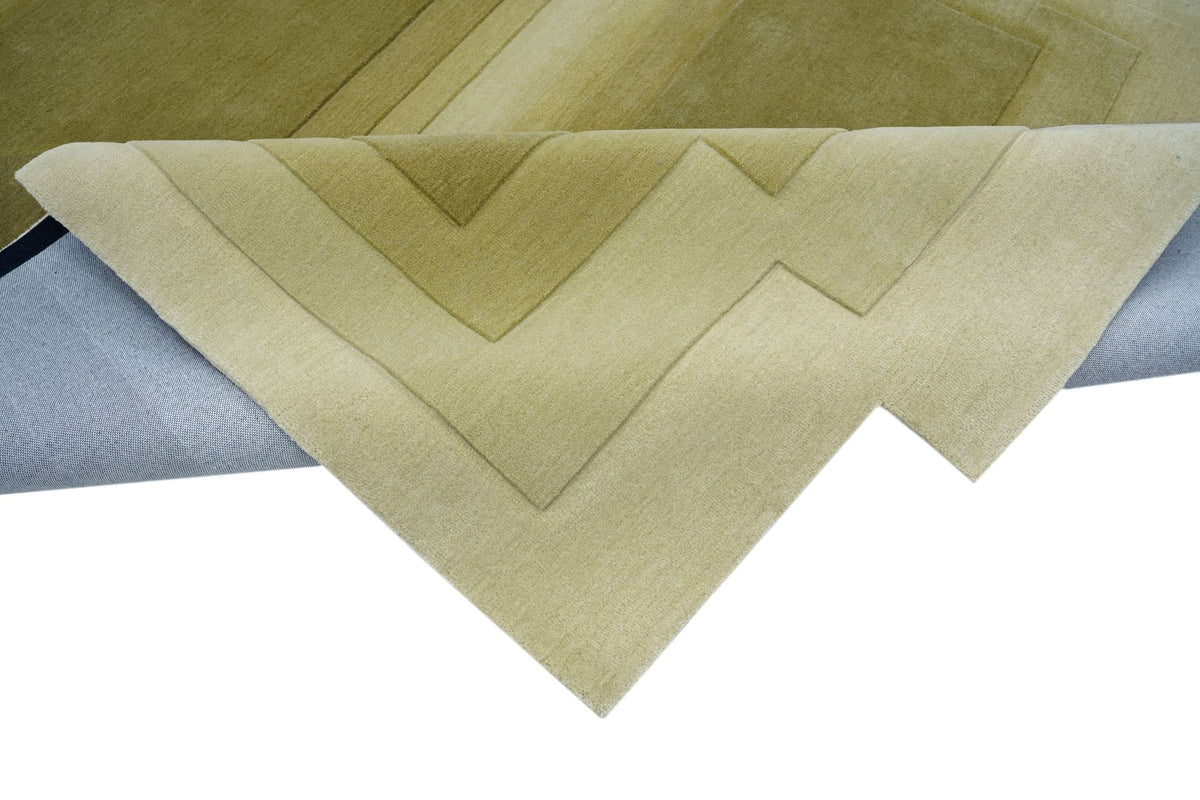
| Hand-tufted pile, 14 to 16 mm | Dense pile, backing cloth adds body | Lies flat once acclimatised; a curled corner can catch air | Turn the rug so the curl faces away from the fan |
| Handloom deep pile, 18 to 20 mm | Heaviest per square foot | Rarely moves | Usually none beyond a pad on marble |
| Round or shaped rugs | Long curved edge with no corners to anchor | Edge can ripple on the side facing the airflow | Centre it under the fan and add a pad |
Verdict: for a living room with a ceiling fan running most of the year, choose a dense pile or heavy handloom rug over a light flatweave, because weight per square foot is what keeps an edge on the floor when the air pushes under it.
How much do pile and weight matter?
They matter more than anything else you can choose. A rug's own weight presses its edge against the floor, and a dense pile adds both weight and a soft, heavy hem that air cannot easily get beneath.


Pile height on its own is not the measure, though. A tall but sparse pile can still be light, while a closely packed 14 to 16 mm hand-tufted pile with a backing cloth is heavy and calm. Ask how the rug feels when you lift a corner: if it falls back flat at once, it will cope with a fan.
The Rugberry Plush Wool Rug in Sand is the heaviest choice in this guide, handloom woven in New Zealand wool with an 18 to 20 mm pile. In an 8x10 ft size under a sofa and a coffee table, it is very unlikely to move however hard the fan runs. It is from about ₹33,600, inclusive of GST at the time of writing.
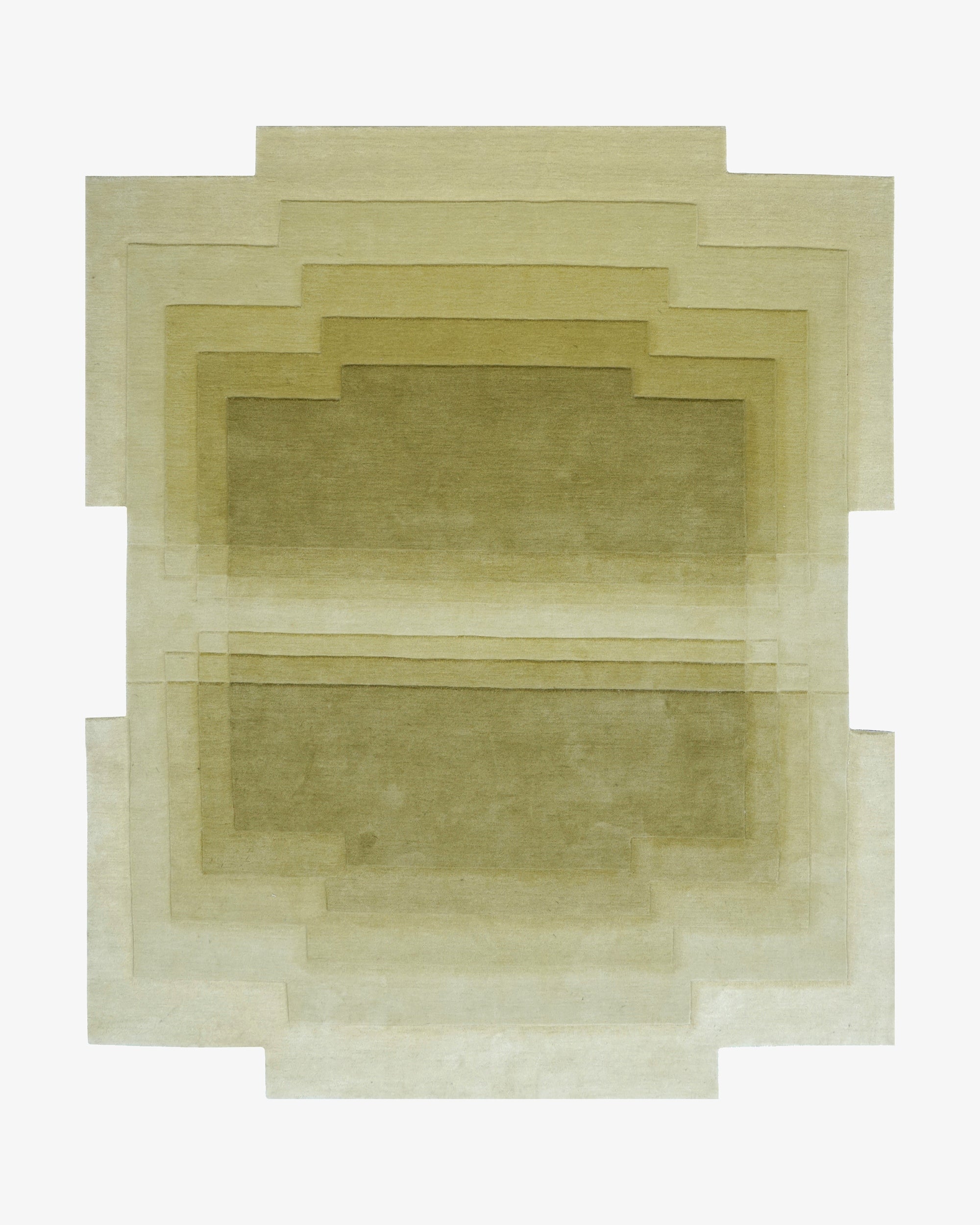
The Talus Wool Rug from the Lamina collection is hand-tufted in New Zealand wool with a 14 to 16 mm carved pile, dense enough to lie flat once it has settled. It is from about ₹33,600, inclusive of GST at the time of writing.
Where should a rug sit in relation to the fan?
Either keep the rug's edges well outside the fan's strongest ring of floor level air, or hold the edges down with furniture. The worst arrangement is a small rug whose free edges fall exactly where the downdraft spreads out fastest.

In practice, a larger rug helps twice. An 8x10 ft rug centred under a fan with a 4 ft blade span puts its edges well beyond the blades, where the outward air has already spread and slowed, and it is also large enough for the front legs of the sofa and chairs to stand on it. A 4x6 ft rug under the same fan sits right in the fast ring with nothing holding it.
- Centre round rugs under the fan so the airflow meets the whole edge evenly instead of lifting one side.
- Put furniture on the edge facing the open room, since the wall side usually sees slower air.
- Watch pedestal fans and air coolers. They blow along the floor, not down onto it, so never aim them at a rug edge; coolers also add moisture that the rug does not need.
- Try one speed lower. On many fans the top setting moves far more air at floor level than the setting below it.
Some newer fans have a reverse or winter mode that draws air upward instead of pushing it down. Where yours has one, it greatly reduces the floor level flow on cooler evenings.
Do pads, grippers and furniture solve it?
A gripping pad solves most of it, furniture solves the rest, and corner grippers are a useful extra for a single stubborn corner. Together they stop both the lifting and the slow walk across the floor that a fan causes on tile and marble.
A fan never moves a rug in one push. It moves it a millimetre at a time, all summer.
A pad adds friction underneath and a little extra weight, and it fills the tiny gap at the edge that air would otherwise use. Choose one cut just inside the rug so its own edge does not catch the airflow. Our guide to rug pads in India explains which type suits marble, vitrified tile and wood.
Avoid double sided tape, which can leave residue on tile and mark marble, and avoid weighting a corner permanently with a heavy pot or stack of books, which simply moves the lift to the next corner. The aim is a rug that lies flat by itself, helped from below rather than pinned from above.
Does a ceiling fan blow dust into the rug?
Yes. Fan blades collect a fine layer of dust on their leading edges, and when a fan is switched on after a still spell, or turned to a higher speed, some of that dust is thrown off and settles on the floor below, much of it on the rug.
The constant moving air also carries fine dust from windows and doors across the room and drops it where the airflow slows, often along the rug's edges and in the corners nearest the walls. That is why the border of a rug under a fan can look a shade greyer than its centre.
Wipe the fan blades with a damp cloth before the summer season and every few weeks after, with the fan off and a sheet over the rug. Vacuum the rug's edges as well as its traffic lanes, and see our guide to rugs and dust in India for a fuller routine.
How do you fix a corner the fan has already trained to curl?
Relax the curl, then move it out of the airflow. Most corners trained by a fan settle again once they are flattened and turned away from the strongest air.


- Turn the fan off and lay the curled corner face down, rolling it gently back against the curve for a few hours.
- Lay it flat with light weight, a few books on a clean cloth, for a day or two.
- Rotate the rug 180 degrees so the trained corner moves to the side with slower air or under a piece of furniture.
- Add or check the pad before the fan goes back on.
Avoid an iron, a hair dryer or soaking the corner, which can distort wool and stain jute. Firm rugs such as the Masai Jute Rug, handwoven in natural jute at about 10 mm, may need a few rounds before a curl relaxes, while the Cobble Wool Rug, handwoven in New Zealand wool, usually settles faster because wool is more supple. Rugberry can also make most rugs to a custom size, which is often the cleanest answer when the right size simply is not standard.
Frequently asked questions
Why does my rug keep moving under the ceiling fan?
The fan's downdraft spreads outward along the floor and slips under any slightly raised edge, nudging a light rug a little each day. A gripping pad, furniture on one edge and a heavier rug together stop the movement.
What size rug should go under a ceiling fan?
A rug large enough for its edges to sit well beyond the fan blades, or under furniture, works best. In most living rooms that means 8x10 ft or larger rather than a small rug sitting directly under the blades.
Are jute rugs a bad idea under a ceiling fan?
Jute is not a bad idea, but its stiffness means a rolled corner can stay curled and catch the air. Flatten any curl before the fan season and use a gripping pad, and it will usually lie flat.
Can a ceiling fan make my rug dusty?
Yes, a fan sheds dust from its blades and moves fine dust around the room, which settles along the rug's edges. Wiping the blades regularly and vacuuming the rug's border keeps it from greying.
Which Rugberry rugs stay flattest under a fan?
The heaviest are the safest: the Plush Wool Rug, handloom woven with an 18 to 20 mm pile, and dense hand-tufted wool rugs such as Talus. Lighter jute and flatweave rugs work too, with a pad and furniture on the edges.
Weight, size and a quiet corner of air keep a rug where you put it. Browse the Plush collection. Material first.






Leave a comment
This site is protected by hCaptcha and the hCaptcha Privacy Policy and Terms of Service apply.