




Rugs for Heritage Restoration Projects
In a heritage restoration, the right rug protects the original floor, lifts away without leaving a trace and looks plainly of its own time instead of faking age. Specify no adhesive of any kind, a breathable underlay tested on a hidden patch, a size scaled to tall rooms and a natural fibre that can be cleaned and rotated for decades.
In short
- A rug in a restored building should be fully reversible: no glue, no double sided tape and no fixings into an original floor.
- Lime, red oxide, cement tile, old timber and stone floors each react differently to underlays, grit and trapped moisture, so the underlay is specified floor by floor and tested first.
- Rooms with ceilings of 12 to 16 ft need larger rugs than the furniture alone suggests, usually set 30 to 45 cm in from the walls and centred on the room's own axis.
- Rugberry specifies rugs for restoration projects through the Rugberry Trade Program, in any size and in custom colours, with quotations prepared room by room.
What should a rug brief for a heritage building cover?
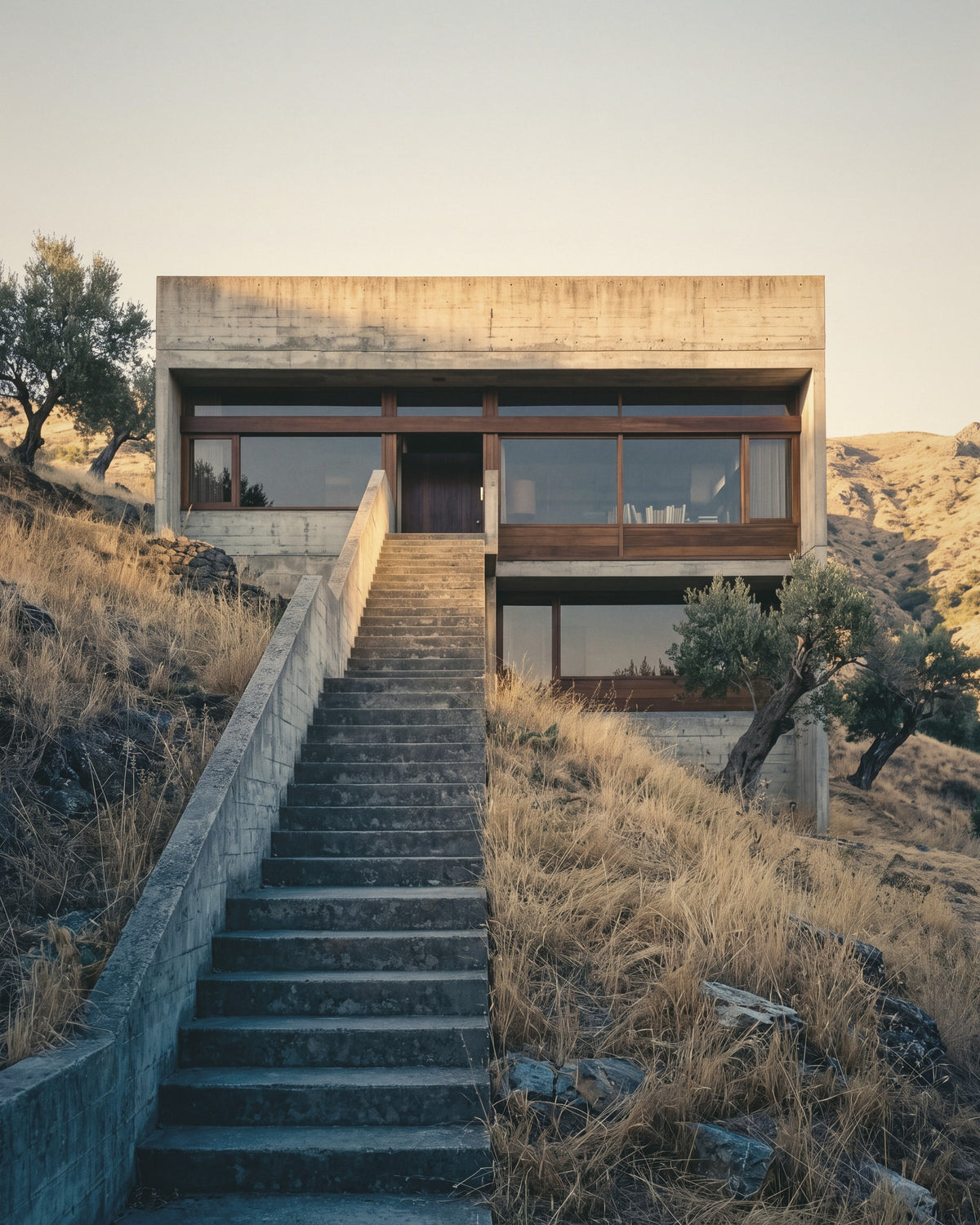
A rug brief for a heritage building should cover four things before any design is chosen: how the rug protects the floor, how it comes up again, how it relates to the scale of the rooms and how it will be cleaned. A haveli courtyard room, a colonial bungalow, a mill converted into a hotel and a merchant house in a walled city all differ, but the same four questions apply.

Conservation practice favours additions that can be removed without harm. A rug is one of the few furnishings that can meet that test completely, provided nothing is stuck, screwed or stained into the floor beneath it. Write that requirement into the specification so it survives a change of contractor.
The brief should also record the floor itself: its material, its finish, any repairs and any areas that are already fragile. A short note with photographs of each room, taken before rugs go down, gives the owner a baseline if anyone later asks what the floor looked like.
For home owners rather than project teams, our guides to rugs for Rajasthan havelis and rugs for old colonial bungalows cover style and everyday living. This guide is the specification side.
How do you protect an original floor under a rug?
You protect an original floor by keeping grit off it, keeping moisture moving through it and keeping anything sticky or rubbery away from its finish. The risks change with the material, so the table below sets out each common heritage floor in turn.


Grit is the quiet enemy. Fine sand carried in on shoes works its way under a rug and acts like sandpaper each time someone walks across, which dulls polished lime, oxide and old marble. A rug that is lifted, shaken and the floor swept every few months does far less harm than one left in place for years.
| Original floor | What can harm it under a rug | What to specify |
|---|---|---|
| Polished lime or lime terrazzo | Trapped damp, grit, rubber or PVC backed pads that mark the surface | Felt or natural fibre underlay, regular lifting, a test patch first |
| Red or black oxide cement | Grit abrasion that dulls the shine, pads that leave a pattern on the wax | Breathable felt underlay, no rubber dots, sweep before laying |
| Encaustic or Athangudi cement tile | Pigment wear from grit, damp lifting from below on ground floors | A rug sized to show the best tile border, felt underlay, monsoon checks |
| Old teak or sal boards | Uneven sun patina around the rug, dents from heavy pieces | Rotate the rug, felt under furniture legs, check board joints for grit |
| Kota, sandstone or old marble | Scratching from grit, staining from damp jute left wet | Keep jute dry, felt underlay, lift and dry after any spill |
Verdict: for almost every original floor, choose a breathable felt or natural fibre underlay over a rubber or PVC backed pad, because the floor beneath a heritage rug needs to dry out and stay clean more than it needs grip.
Which underlay is safe on lime, oxide and old tile?
The safest underlay on lime, oxide and old tile is one that lets air through and has no adhesive face, such as a dense felt. Many grip pads use rubber, latex or plastics that can react with waxed or polished finishes over time, so test any pad on a hidden corner for a few weeks before laying it across a room.
Ground floor rooms in older buildings often have no damp proof layer, and moisture can rise through lime and tile. A rug with a dense underlay over such a floor can hold that moisture against the surface, which is when white bloom, musty smells and loose tiles appear. Lift a corner during the monsoon and feel the floor with your palm.
Grip still matters on polished floors where people walk quickly. Where a felt underlay alone is too slippery, heavy furniture standing on the rug usually holds it, or the rug can be sized so a sofa and two chairs anchor it. Our guide to rug pads in India compares pad types on modern floors.
How big should a rug be in a room with a high ceiling?
A rug in a room with a high ceiling should be sized to the room's footprint rather than to one seating group, usually leaving 30 to 45 cm of floor showing on every side. A ceiling of 14 ft makes an 8x10 ft rug look small in a 16x20 ft drawing room, where 12x15 ft or a made to measure size reads as part of the architecture.

Old rooms are rarely square. Measure each wall at both ends, note where doors swing and where the floor dips, and let the rug follow the room's main axis: the line from the entrance to the window bay, the ceiling rose or the chandelier hook. A rug a few centimetres out of line with an old cornice is noticed far more than one that is slightly smaller.
Where the floor itself is the treasure, such as a fine encaustic tile field, size the rug to frame the best part of it. Leave a generous border of tile, perhaps two full tiles deep, so the pattern reads as intended. Our guide to rugs on patterned cement tiles covers how much tile to show.
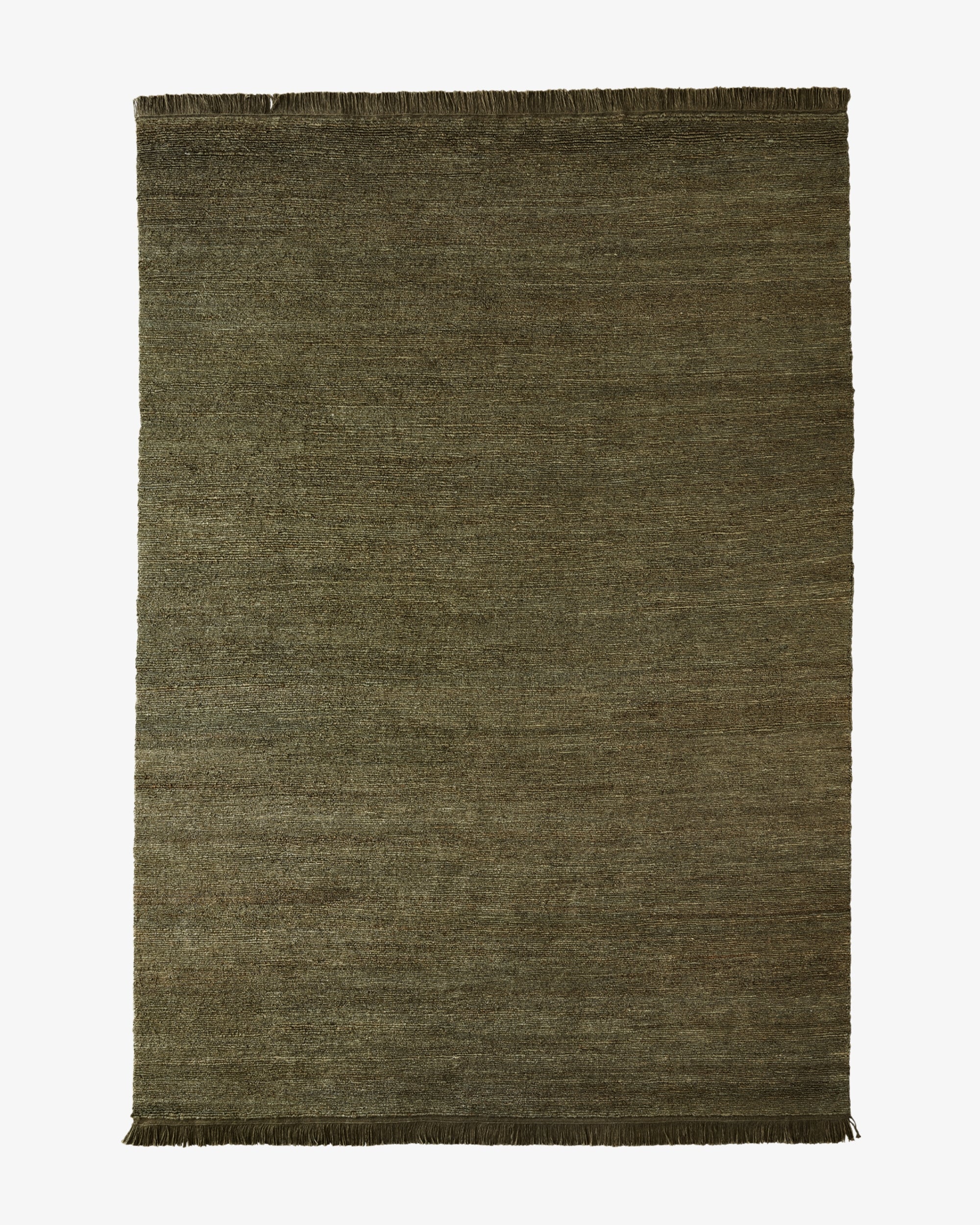
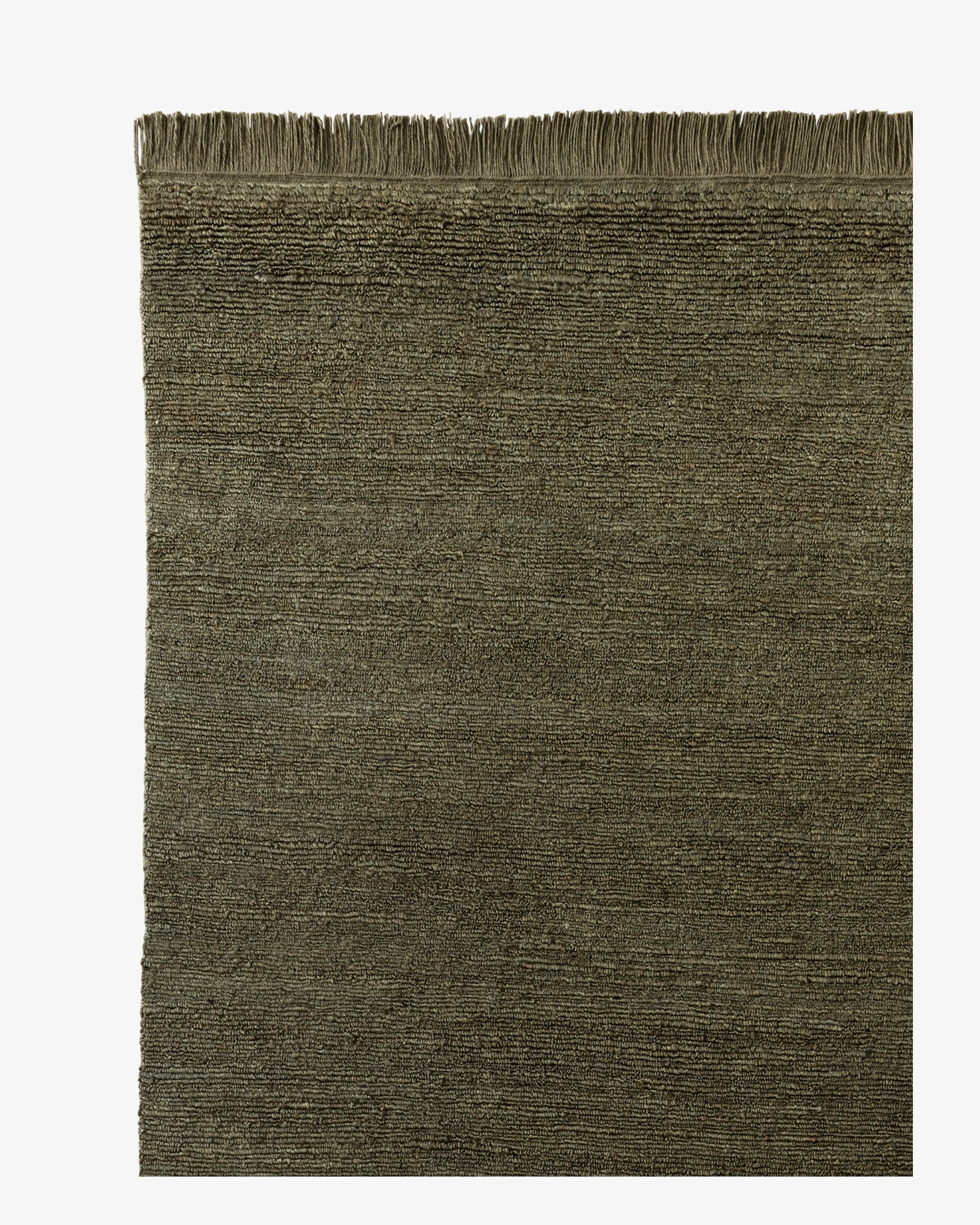
Rugberry makes rugs to any size, which matters in restoration because historic rooms seldom match standard sizes. The Savannah Jute Rug in Olive runs to 12x15 ft as a standard size and is listed from ₹34,440 for 5x8 ft, inclusive of GST at the time of writing.
Should a new rug in an old building look old?
A new rug in an old building should not pretend to be old. Distressed finishes, washed out colours and printed wear patterns compete with the real age around them, and they tend to look staged next to genuine lime walls and worn stone.


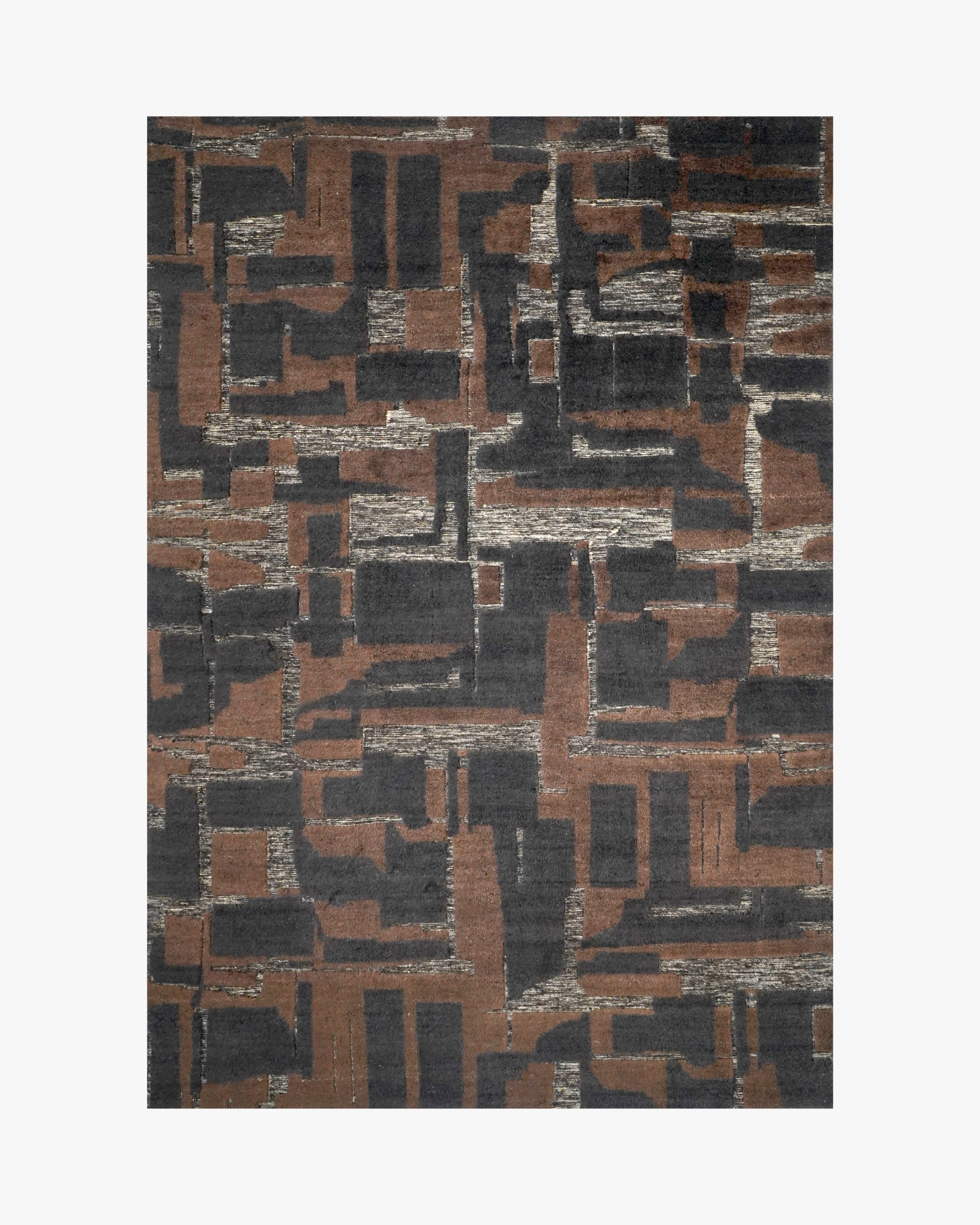
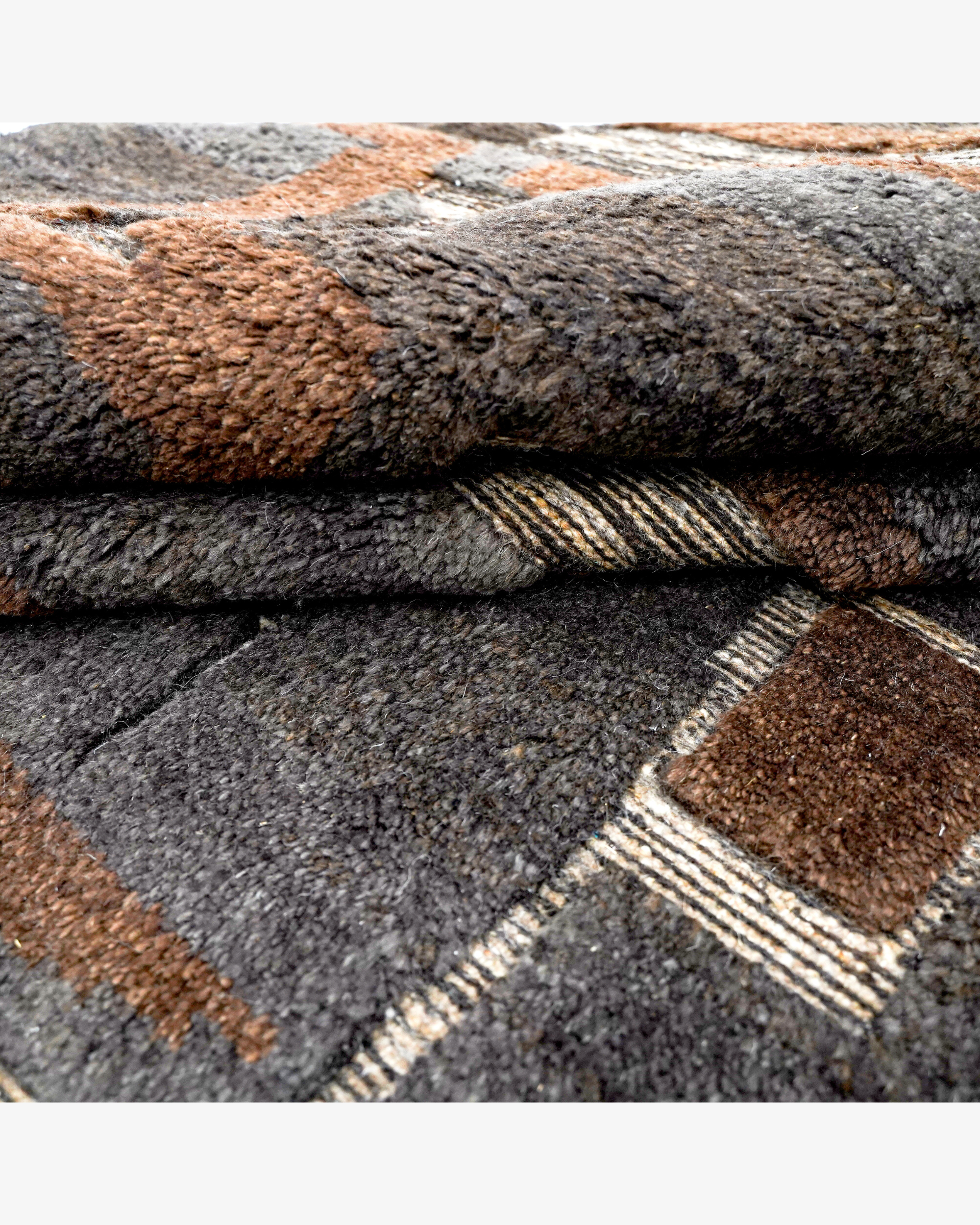
A rug that is honestly of its time lets the building do the talking. The Stratum Knotted Rug in Cinder stacks blocks of charcoal, rust and grey like layers in a quarry face, hand knotted in New Zealand wool, and sits well against exposed brick or a restored mill wall. It comes in 9x12 ft, from ₹1,47,000 inclusive of GST at the time of writing, and any size to order.
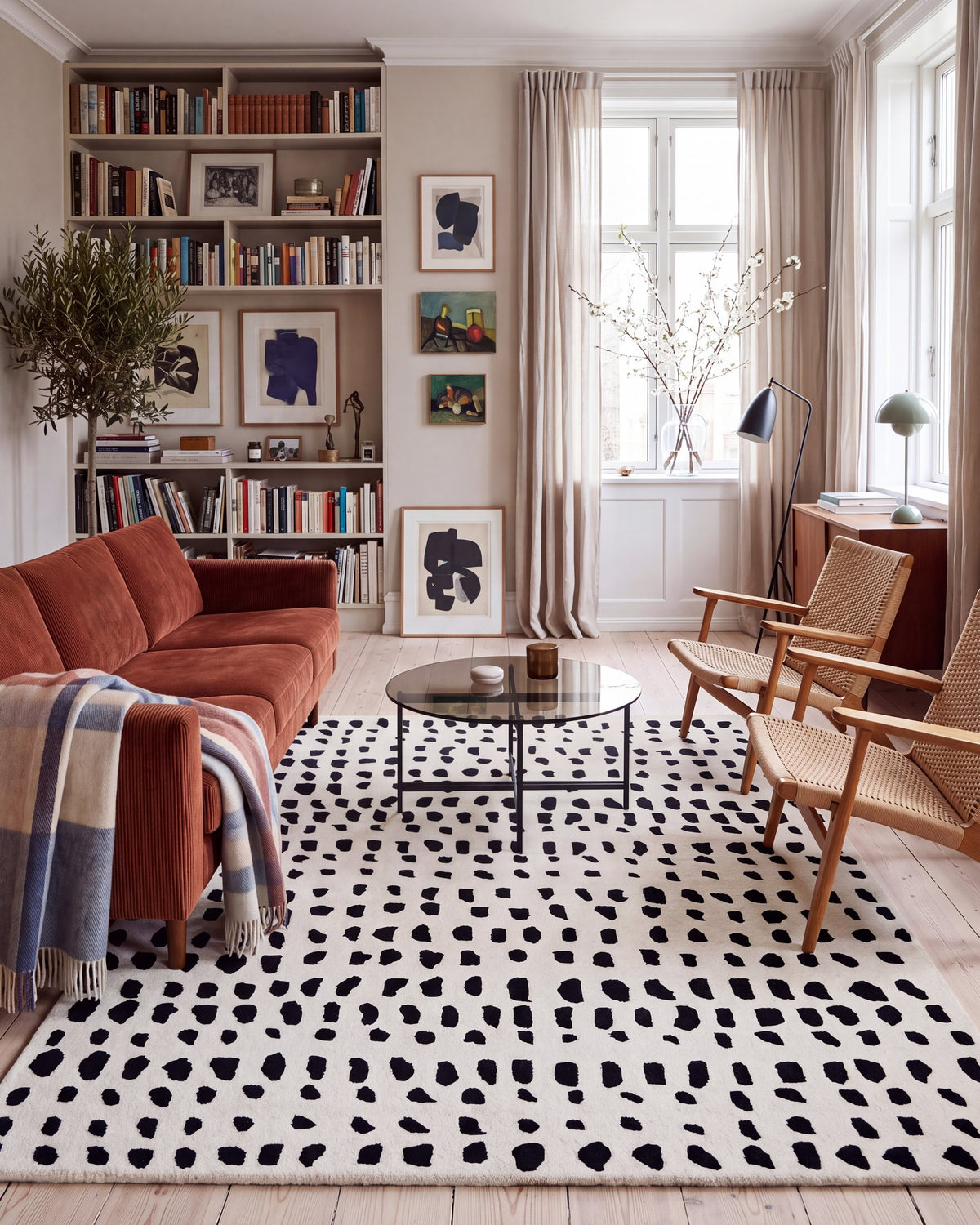
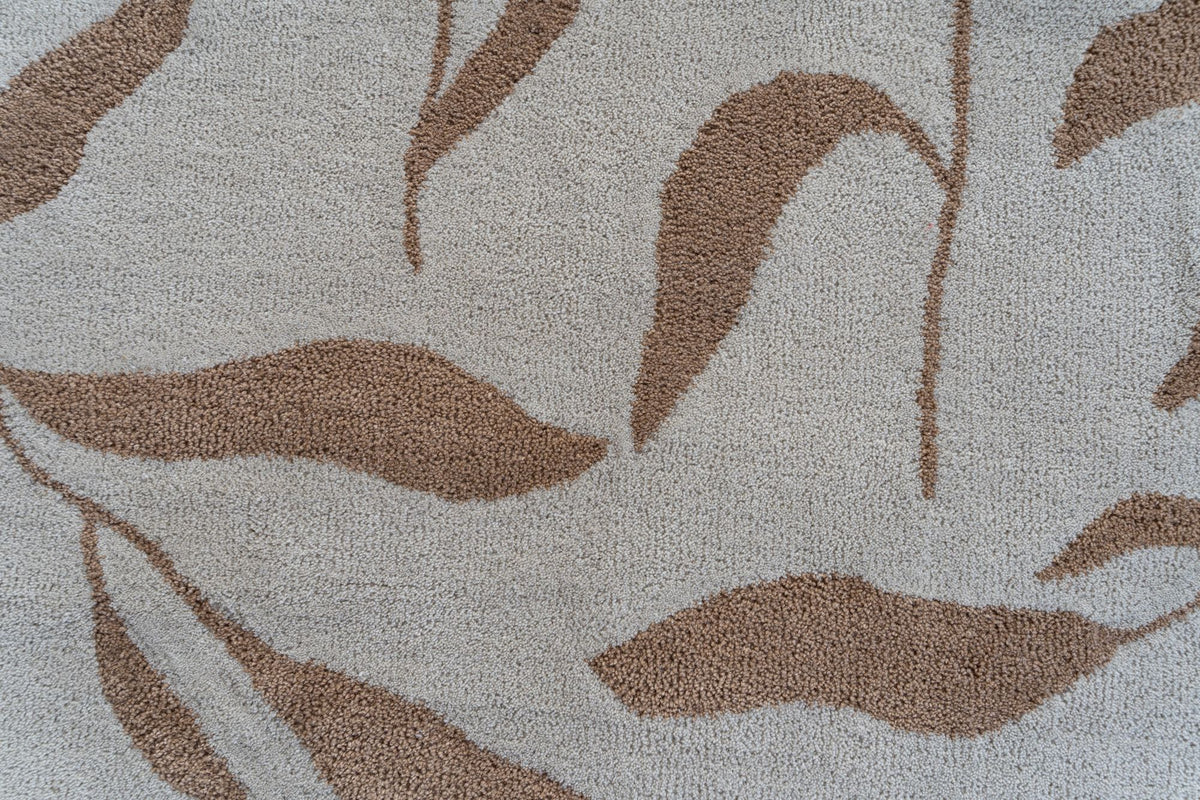
Pattern can still answer the building. The Botanical Wool Rug draws terracotta tan leaf sprays on an ivory ground, a motif that echoes painted plant borders in old interiors without copying any of them. It is hand tufted in New Zealand wool, from ₹23,520 for 5x8 ft inclusive of GST at the time of writing.
The test for a rug in an old house is simple: when it is rolled away, the floor should look exactly as it did.
Which fibres and constructions suit a restored building?
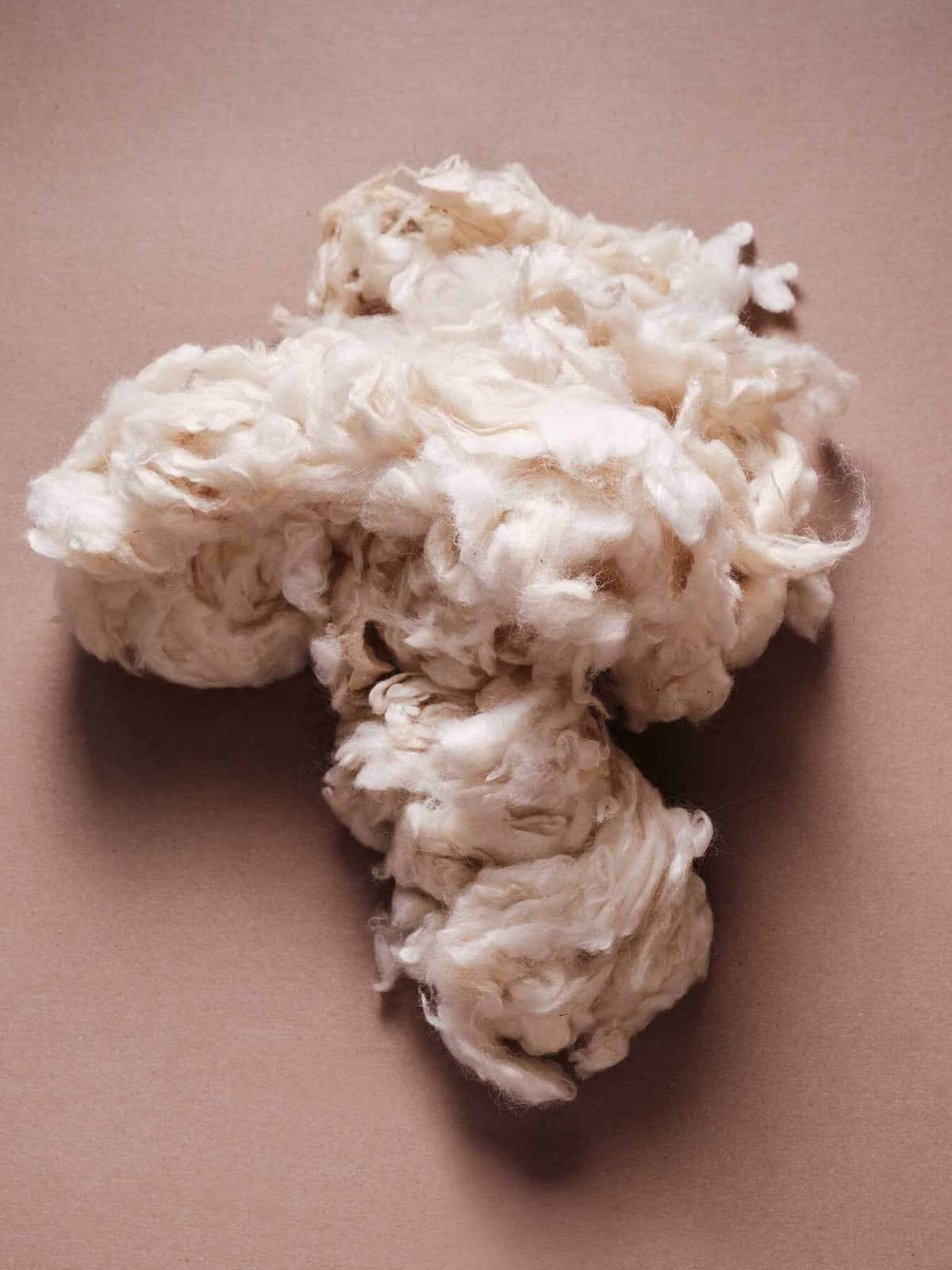
Natural fibres in sturdy constructions suit restored buildings best: wool for living rooms and bedrooms, jute for dry rooms and passages, each made in a way that can be cleaned and rotated. The construction also decides what touches the floor, which matters more here than in a new apartment.


A hand knotted rug has knots and yarn on its back, with nothing glued on, so the reverse is as natural as the face. A handwoven flat rug is similar and thinner. A hand tufted rug carries a backing cloth fixed with latex, so on a delicate polished floor it should always sit on a felt underlay rather than directly on the finish.
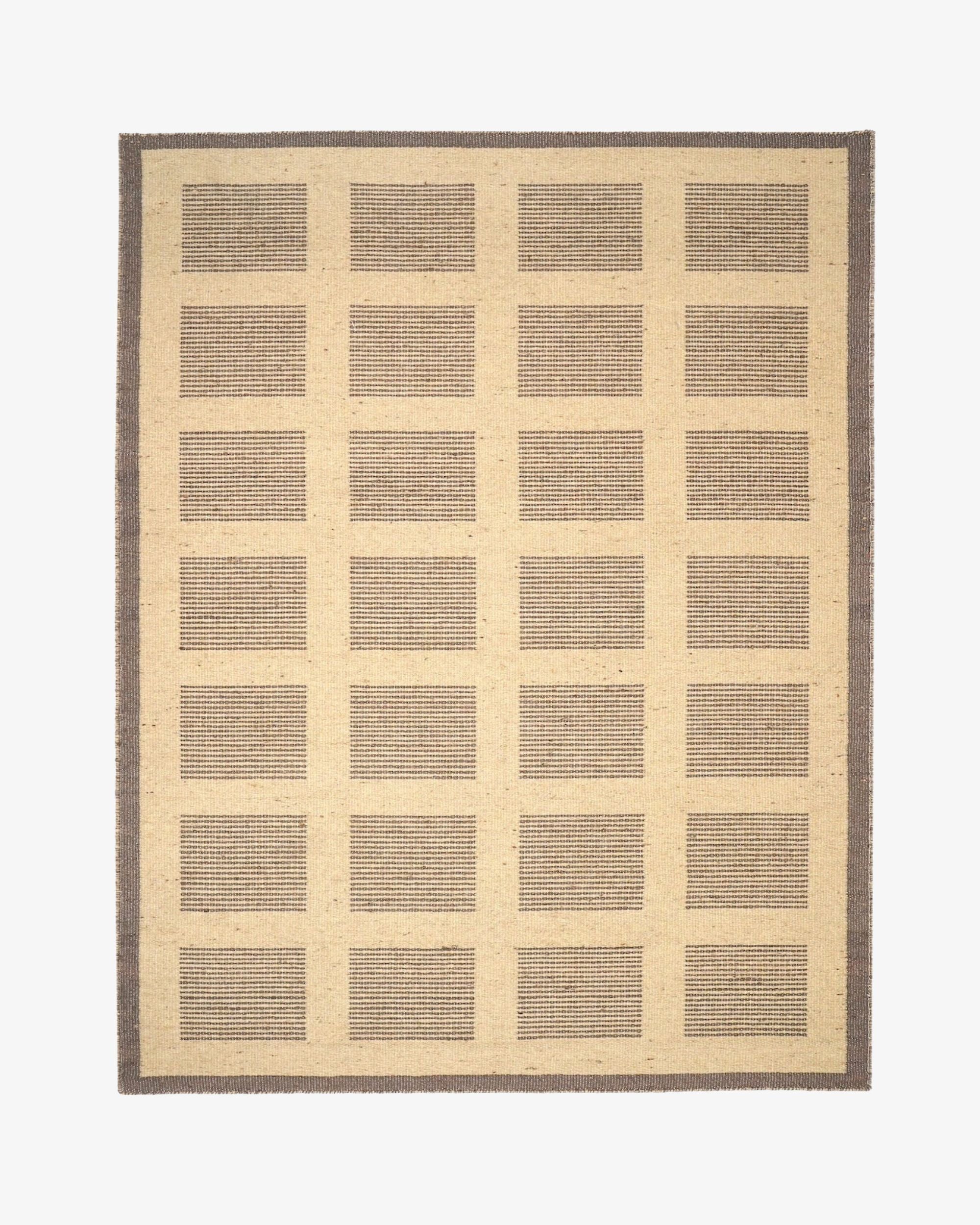
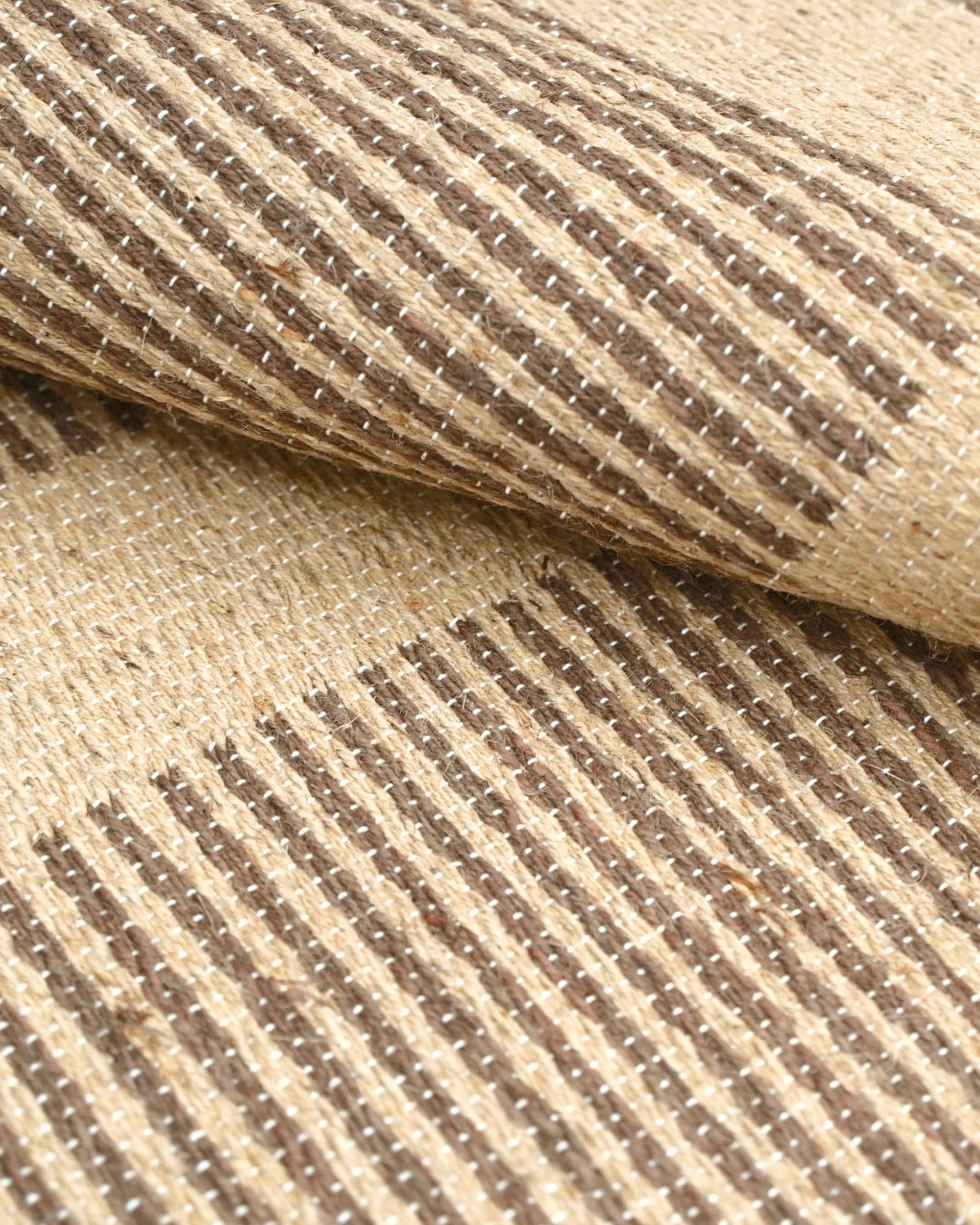
Jute is lovely in a restored building but needs a dry floor. The Kora Jute Rug is handwoven at 10 mm, with a grid of darker squares set in a natural field, from ₹23,520 for 5x8 ft inclusive of GST at the time of writing. It suits an upper floor passage or a library far better than a ground floor room that breathes damp in July.
For larger knotted pieces in plant fibre, our guide to hand knotted jute rugs explains how Savannah is built and why it softens with use.
How do architects specify rugs through the Rugberry Trade Program?
Architects and designers specify Rugberry rugs through the Rugberry Trade Program, which gives approved studios one trade price, projects organised room by room and numbered quotations. Members can request samples, tear sheets and files, which helps when a conservation consultant wants to see the fibre before approving it.
For a restoration, send the room schedule with measured sizes, the floor type in each room and any constraints such as a ceiling fan clearance or a door that must clear the pile. Rugberry can then propose a size, a construction and an underlay approach per room, and adjust colours to match a lime wash or an original tile.
Keep the rug specification beside the floor survey in the project file. When the building changes hands, the next owner will know what lies under each rug and how it was protected. Our rug specification guide for architects lists the fields worth recording.
Frequently asked questions
Can I use double sided tape to stop a rug sliding on an old floor?
No. Tape and adhesive strips can lift wax, pigment and even the top layer of a lime or oxide surface when they come away. Use a breathable felt underlay and let furniture hold the rug in place instead.
Is a jute rug safe on a lime or oxide floor?
Jute is safe on a dry, sound floor, and its plain natural colour suits old interiors. Keep it away from ground floor rooms that feel damp in the rains, and dry it at once if it gets wet, because wet jute can mark stone and lime.
How often should a rug in a heritage room be lifted?
Lift it, sweep the floor and check for damp at least twice a year, and once more after the monsoon on ground floors. Rotating the rug at the same time evens out wear and sun on both the pile and the floor around it.
Can Rugberry match a rug colour to an original tile or lime wash?
Yes. Rugberry rugs can be ordered in custom colours, and trade members can work from samples and pom numbers so the yarn is compared against the real tile or wall in daylight before the rug is made.
Should a heritage hotel use rugs or wall to wall flooring?
In rooms with original floors, loose rugs are usually the better choice because they can be lifted, cleaned and replaced without touching the floor. Wall to wall installations need fixings or adhesive, which conservation briefs generally try to avoid on historic surfaces.
Old floors have outlasted many owners. Choose the rug that lets them outlast you too, and browse the hand knotted collection or the customisable rugs to begin. Material first.



Leave a comment
This site is protected by hCaptcha and the hCaptcha Privacy Policy and Terms of Service apply.