



A Rug on Patterned Cement Tiles
On patterned cement tiles, choose a plain or tonal rug in a colour taken from the tile, and leave a generous border of tiles showing around it. The floor is already the pattern, so the rug should be the quiet surface that frames it, softening the room without hiding what makes it special.
In short
- Patterned cement tiles, also called encaustic style tiles, are handmade tiles with the pattern set into the surface, common in old Indian homes and popular again in new ones.
- On a patterned tile floor, a plain or tonal rug works better than a patterned one, because two strong patterns on one floor compete.
- The best rug colour for patterned tiles is a quiet tone already present in the tile, such as its sand, ivory or soft grey, rather than its strongest colour.
- Leave at least 18 inches of tile visible around the rug, so the pattern frames the rug like a border.
What are patterned cement tiles?
Patterned cement tiles are handmade floor tiles in which coloured cement is set into a mould to form the pattern, then backed and cured rather than fired. The pattern runs a few millimetres deep, so it wears slowly and the tiles gain a soft patina over decades.
They were common in older homes across India, from Goa and Kerala to Kolkata and Mumbai, often laid with a border band around each room. Today they are back in new kitchens, verandahs, bathrooms and living rooms, in both traditional and modern designs.
Designs range from simple two tone checks and star motifs to dense floral and geometric repeats in four or five colours. The busier the tile, the quieter the rug should be.
A floor of patterned tiles has real presence. It is also cool, hard and often slightly uneven, and polished versions can be slippery. All of this shapes the rug.
Should you put a plain rug on a patterned floor?
Yes, a plain or tonal rug is almost always the right choice on a patterned floor. One strong pattern per floor is the rule that keeps a room calm, and the tiles have already claimed that role.


A plain rug does not have to be flat or dull. Texture does the work instead of pattern: a deep pile, a carved line, a jute weave.
The Bitte Wool Rug is hand tufted in New Zealand wool at 14 to 16 mm, with fine carved lines and arcs across a quiet ivory ground. On a busy tile floor it reads almost plain, while close up it rewards a second look. Its regular price is ₹40,000 for 5x8 ft, ₹53,000 for 6x9 ft and ₹79,000 for 8x10 ft, ex GST at the time of writing.
A patterned rug can work only when the tiles are very simple, such as a two tone check or a plain field with a thin border. Even then, choose a pattern at a very different scale from the tile. For the wider question, read our guide to choosing a patterned or plain rug.
One floor, one pattern. Let the tiles talk and the rug listen.
Which rug colour suits patterned tiles?
A quiet colour already in the tile suits it best: the sand, ivory, soft grey or pale terracotta of its background or minor motifs. Avoid matching the tile's strongest colour, which makes the rug feel like part of the floor rather than a layer on top.

Lay a few colour swatches directly on the tiles and stand back 3 metres. The right rug tone will look as though it belongs, while the wrong one will either vanish or shout.
The Plush Wool Rug in Sand is handloom woven in New Zealand wool at 18 to 20 mm, deep and soft in a warm pale tone. It suits tiles with ivory, sand or terracotta grounds and turns a hard, cool floor into a place to sit. Its regular price is ₹40,000 for 5x8 ft, ₹53,000 for 6x9 ft and ₹79,000 for 8x10 ft, ex GST at the time of writing.
Think about what else in the room carries colour. If the sofa, curtains or art already repeat the tile's strong colour, the rug can stay pale and neutral; if not, a rug in a soft version of that colour can carry it gently across the room.
Blue and white tiles are an interesting case. A warm sand or natural jute rug brings warmth to a cool floor, while a white rug next to white tile looks unfinished.
How much tile should show around a rug?
Leave at least 18 inches of tile showing on every side, and more if the room has a decorative border band. The tiles around the rug act like a picture mount and are part of the look.

If the floor has a border band, which many older rooms do, place the rug inside it so the band runs all the way round. Measure the field inside the band and choose a rug about 12 inches smaller in each direction.
Kitchens, dining rooms and verandahs are where most patterned tiles are laid today. In a dining room, the rug must still be large enough for chairs to slide back without catching the edge, usually about 2 ft beyond the table on every side.
That may mean a slightly smaller rug than you would choose on a plain floor. In a 13 x 15 ft room with a border, a 6x9 ft or 8x10 ft rug under the front legs of the sofa is often right.
Rugberry makes most designs to measure, so a rug can fit the field exactly. See rugs made to measure.
| Tile floor | Rug approach | Rug tone | Rugberry example |
|---|---|---|---|
| Busy multicoloured tiles | Plain, deep texture | Sand or ivory | Plush Wool Rug, Sand |
| Blue and white tiles | Natural fibre, warm | Natural jute | Masai Jute Rug |
| Soft, faded old tiles | Plain with a gentle sheen | Beige | Nuva Silk Rug, Beige |
| Simple two tone check | Quiet pattern or carved line | Ivory | Bitte Wool Rug |
| Tiles with a border band | Plain, sized inside the band | A minor tone of the tile | Made to measure |
For a living room on busy patterned tiles, choose a plain deep pile wool rug over a patterned rug, because texture softens the room without adding a second pattern.
Can a jute rug go on cement tiles?
A jute rug suits cement tiles in a dry room very well. Its plain, natural texture complements the craft of the tiles, and its warm tone balances cool blue, grey and white patterns.

The Masai Jute Rug is handwoven in natural jute at 10 mm, firm and textured with the irregularity of the fibre. On a blue and white tile floor in a Goa or Kerala home, it brings warmth and a relaxed feel. Its regular price is ₹28,000 for 5x8 ft, ₹38,000 for 6x9 ft and ₹56,000 for 8x10 ft, ex GST at the time of writing.
Cement tiles are porous, and in humid months they can hold moisture. Keep jute off ground floor tiles that sweat in the monsoon, or lift it to air every two weeks. Our guide what is a jute rug explains why.
How do you stop a rug slipping on cement tiles?
Use a thin felt and natural rubber pad, cut about 2 inches smaller than the rug all round. Cement tiles are often slightly uneven, and a pad also smooths out small dips so the rug lies flat.
Avoid PVC or plastic grip mats on cement tiles. Cement is porous and can be stained or marked by some plastics over time, and a sealed mat traps moisture against the tile.
Check the pad and the floor beneath after the first few weeks. Old tiles sometimes have a few loose or hollow pieces, and a rug can hide a tile that is starting to lift.
Many owners seal their cement tiles with a breathable sealer, which protects the pattern from stains. Let any new sealer cure fully before laying a rug. Our guide to rug pads covers pad types in detail.
Which rug suits a formal room on old tiles?
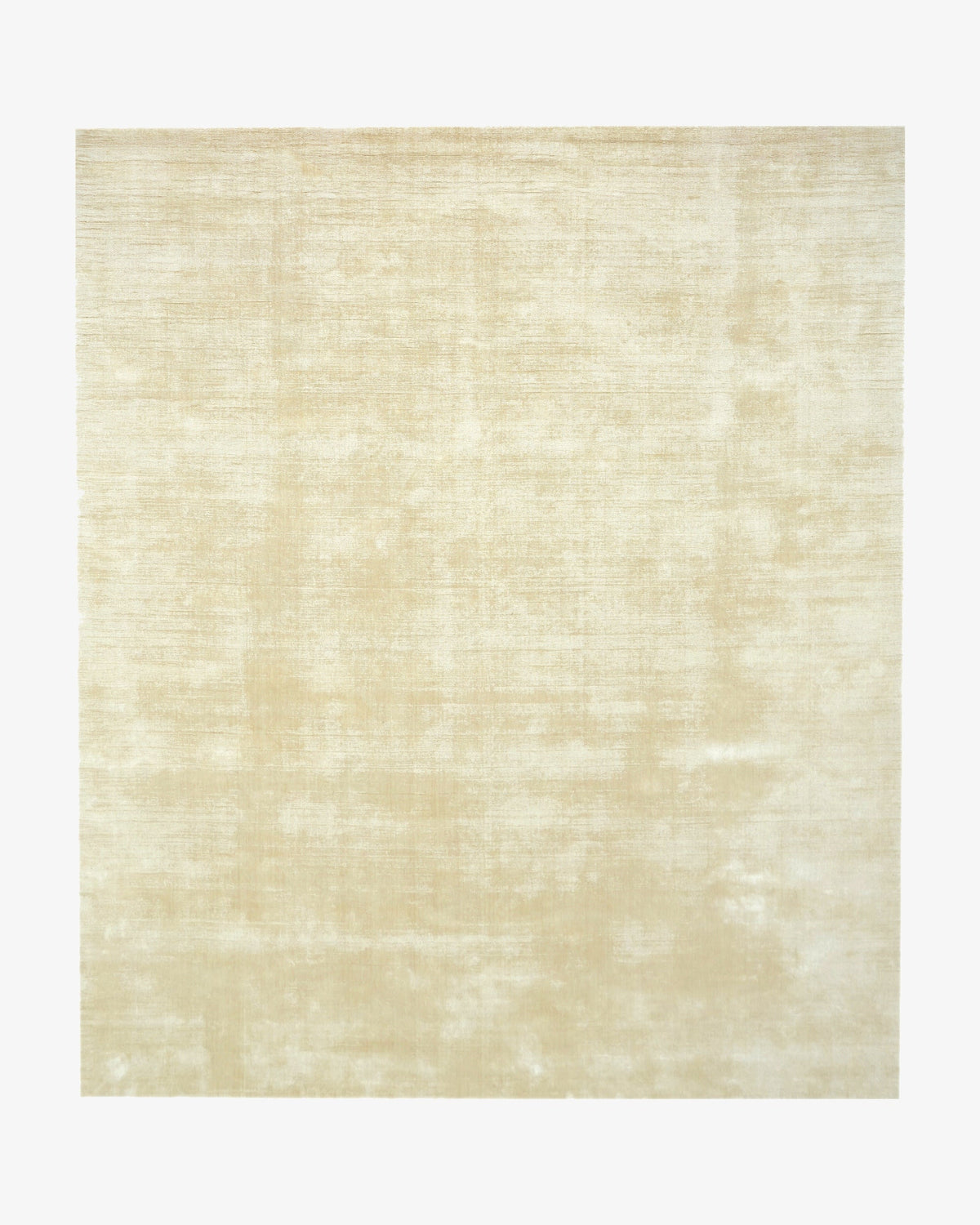
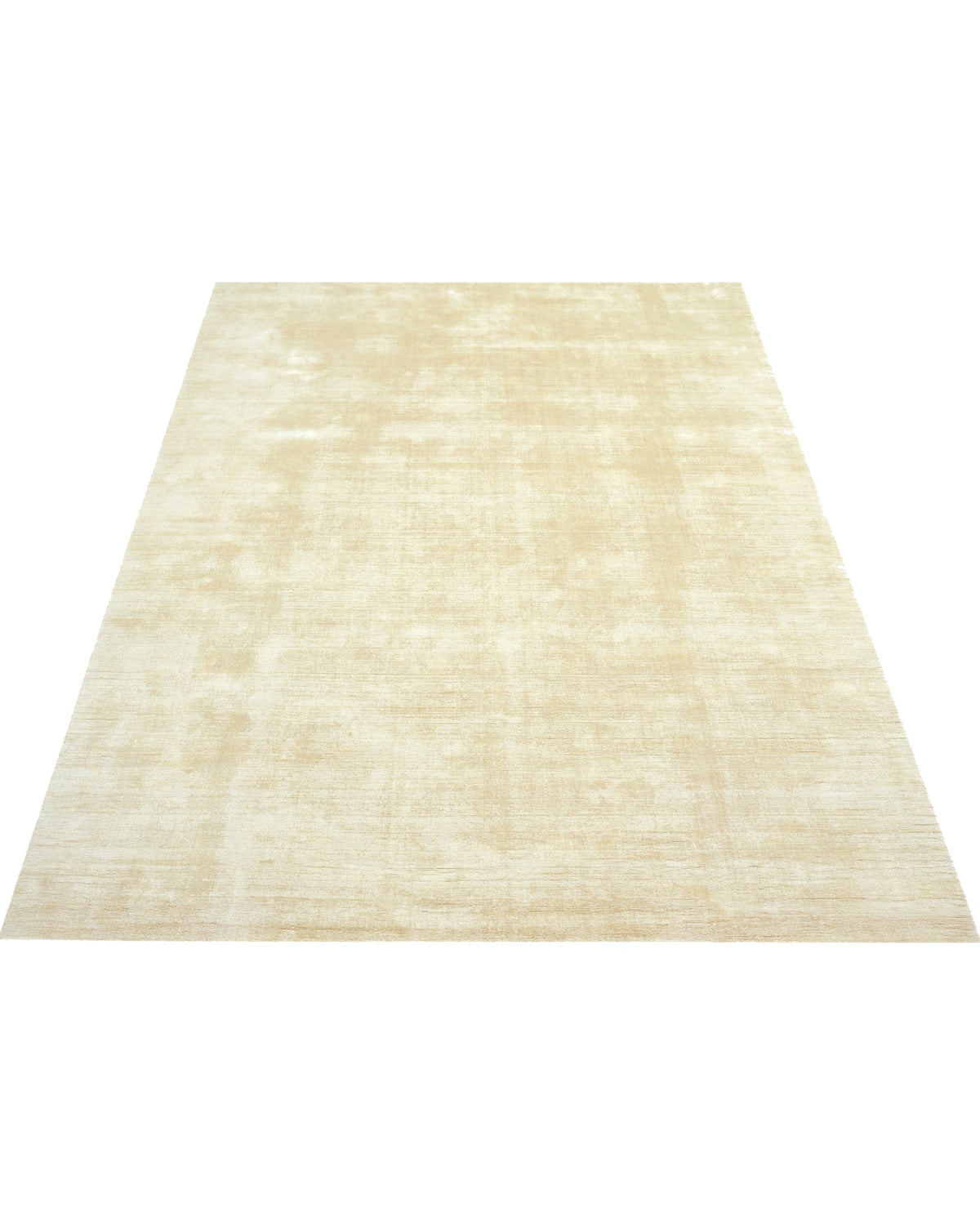
A formal room on old, softly faded tiles suits a plain rug with a gentle sheen, in a beige or ivory drawn from the tile's background. The sheen picks up the light that falls on the polished floor and ties the two together.


The Nuva Silk Rug in Beige is handloom woven in Botanical Silk at 10 mm, low and fine, with a soft sheen that moves with the light. Its regular price is ₹40,000 for 5x8 ft, ₹53,000 for 6x9 ft and ₹79,000 for 8x10 ft, ex GST at the time of writing.
Faded tiles have a softness that bright new tiles do not, with colours that have mellowed into one another over the years. A low, smooth rug matches that softness better than a thick shaggy pile, which can look too new beside an old floor.
Keep Botanical Silk in a dry, quiet room away from dining and doorways. For heritage houses with these floors, see our guide to rugs for old bungalows, and for polished floors generally, rugs on marble and tile.
Frequently asked questions
Can you put a rug on patterned tiles?
You can put a rug on patterned tiles, and a plain or tonal rug usually works best. Leave at least 18 inches of tile visible around it so the pattern frames the rug rather than disappearing under it.
What colour rug goes with patterned cement tiles?
A quiet colour from the tile itself, such as its sand, ivory, soft grey or pale terracotta, goes best with patterned cement tiles. Matching the strongest colour in the tile tends to make the rug blend into the floor.
Should a rug cover a tile border?
A rug should usually sit inside a tile border rather than covering it. The border then runs around the rug like a frame, which shows off both the rug and the original floor.
Do rugs stain cement tiles?
A rug on a felt and natural rubber pad will not stain cement tiles. Stains usually come from PVC grip mats or from moisture held against porous tiles for weeks in the monsoon.
Which Rugberry rugs suit a patterned tile floor?
The Rugberry Plush Wool Rug in Sand suits busy tiles, the Masai Jute Rug suits blue and white tiles, the Nuva Silk Rug in Beige suits a formal room on faded tiles, and the Bitte Wool Rug suits a simple check.
Let the tiles keep their voice, and give the room a soft place to land. See textures and solids and jute rugs. Material first.




Leave a comment
This site is protected by hCaptcha and the hCaptcha Privacy Policy and Terms of Service apply.