





Rugs for Mangaluru Homes: Built for a Long Monsoon
Mangaluru's rainy season runs from the first heavy showers of late May well into October, so a rug here must cope with four months or more of saturated air. Choose low, firm handloom wool for the rains, lift rugs off cool red oxide floors and keep jute for the dry months.
In short
- Coastal Karnataka has one of the heaviest and longest monsoons in India, and in Mangaluru the air stays close to saturated from June to September.
- Low, firm handloom wool rugs of 12 to 14 mm dry faster and resist mould better in a Mangaluru monsoon than deep piles or tufted rugs with glued backings.
- Old Mangalore tile roofed houses with laterite walls and red oxide floors breathe well overhead but stay cool and damp at floor level, so rugs there need airing and lifting through the rains.
- Rugberry's Grain Wool Rug in Russet and Cabra Wool & Jute Rug in Rust suit Mangaluru homes, with jute rugs such as Kora best laid between November and May.
How long is the rainy season in Mangaluru, and why does it matter for a rug?
The rainy season in Mangaluru usually begins with pre monsoon showers in May, settles into steady, heavy rain from early June to September and tails off with the retreating rain of October. For a rug, the length of that season matters more than any single downpour.

A rug can handle a wet week. What harms it is four months in which nothing quite dries: the pile takes on moisture from the air, the floor beneath stays cool and damp, and the short sunny breaks are too brief to reset either. Mould, a sour smell and soft, flattened pile are the signs that a rug has spent too long in that state.
So the useful question in Mangaluru is not which rug is waterproof, because no wool or plant fibre rug is. It is which rug gives moisture back fastest when the air moves, and how the house can help it do so. The rest of this guide answers both, starting with the rug itself.
Which rugs come through four wet months best?
Low, firm, closely woven wool rugs come through a long Mangaluru monsoon best, followed by firm wool and jute weaves on raised or upper floors. Deep piles and rugs with a glued backing hold moisture longest and are the ones that most often smell by August.


The reason is simple physics. A short, dense pile has less depth for damp air to sit in and more surface for moving air to reach. A hand tufted rug has a backing cloth fixed with latex, which slows drying from below, while a handloom or handwoven rug breathes through its whole structure.
| Rug type | How it handles months of humid air | Drying after a damp spell | Verdict for a Mangaluru home |
|---|---|---|---|
| Handloom wool, 12 to 14 mm | Wool absorbs and releases moisture, low surface stays springy | Fast with a fan, both faces breathe | First choice for living rooms through the rains |
| Handloom wool and jute, 7 to 8 mm | Wool softens the jute, thin weave airs well | Fast, but jute must not stay wet | Good on upper floors and raised rooms |
| Hand tufted wool, 14 to 16 mm | Dense pile copes, backing holds damp from below | Slower, needs lifting and airing | Fine in air conditioned bedrooms |
| Deep handloom pile, 18 to 20 mm | Soft pile takes up most moisture | Slowest to dry right through | Keep for dry months or air conditioned rooms |
| Handwoven jute, 10 mm | Plant fibre swells and can darken in long damp | Must dry quickly to avoid marks | Lay from November to May, store in the rains |
Verdict: for a Mangaluru living room through the monsoon, choose a low handloom wool rug over a deep pile or a jute rug, because it gives up moisture fastest when the fan runs and stays fresh until the rain stops.
How do Mangalore tile roofed houses change the way a rug lives?
A traditional Mangaluru house with a clay tile roof, a wooden ceiling and laterite walls breathes well overhead but holds cool, damp air at floor level, so the rug sits in the dampest layer of the room. A newer apartment is the reverse: sealed windows and air conditioning keep the air drier, but nothing moves when the power or the AC is off.

The red clay roof tiles that carry the city's name let warm air escape between them, and the timber ceiling below them keeps the rooms calm. Laterite, the red stone of the coast, is porous and takes up water during the rains, and ground floor rooms built on it often feel cool and slightly clammy by July. Many of these homes have polished red oxide floors, which are lovely underfoot and stay cold through the monsoon.
In an older house, lay rugs in the rooms with the most cross ventilation, keep them a hand's width away from laterite walls and use the upper floor or the raised hall for the rugs you care about most. In an apartment, run the AC on dry mode for an hour or two on the wettest days, and leave doors between rooms open so the whole flat shares the drier air. Our guide to preventing mould under rugs in coastal cities has more on floors and walls.
In a Mangaluru monsoon, the floor decides the fate of a rug long before the rain does.
Should a rug stay down on a red oxide floor in July?
A rug can stay down on a red oxide floor in July if it sits on a breathable underlay and is lifted every week or two so the floor beneath can dry. Left flat and undisturbed for the whole monsoon, the meeting point of a cool oxide floor and a wool rug is exactly where mildew starts.
Use a felt underlay rather than a rubber or PVC backed pad, because oxide and lime finishes need to breathe and a rubbery pad can mark the waxed surface. Every week or so, fold the rug back by half, wipe the floor with a dry cloth and leave it uncovered under the fan for an hour. Feel the back of the rug while it is folded: cool and slightly damp is normal in July, wet or musty is a signal to dry it properly.
On a ground floor that sweats badly, the honest answer is to roll the best rug and lay it upstairs until October. Red oxide is a floor that looks finished on its own, and a few bare months will not hurt the room. Similar care applies to rugs on terracotta floor tiles, another common Mangaluru floor.
What should you do with a rug when the sun comes out between spells?
When the sun breaks through between monsoon spells, use the hours to air rugs in bright shade, not to bake them in direct sun. A dry, breezy afternoon on a covered verandah does more for a damp wool rug than a week of fans indoors.
Carry the rug out pile side up and lay it over two chairs or a clean bench so air passes on both sides, and turn it after an hour. Bring it back in before the evening humidity returns, which on the coast can be well before sunset. Hard midday sun on wet wool for hours can weaken and fade it, which is why shade is the rule.
Smaller rugs can simply be hung over a verandah rail for an afternoon. While the rug is out, sweep and dry the floor where it lay, and look for any white bloom or dark spotting that would show the spot is too damp for a rug through the rest of the season.
Keep the habit simple enough to repeat. One good airing a fortnight, timed to a clear afternoon, is worth more than an ambitious plan that never happens because the sun only came out on a working day.
Which Rugberry rugs suit Mangaluru homes?
The Rugberry rugs that suit Mangaluru homes best are low handloom wool rugs in earth colours that sit naturally with laterite and red oxide, plus a firm wool and jute weave for raised rooms. Each can be made in any size to order, which helps in long halls and verandah rooms.


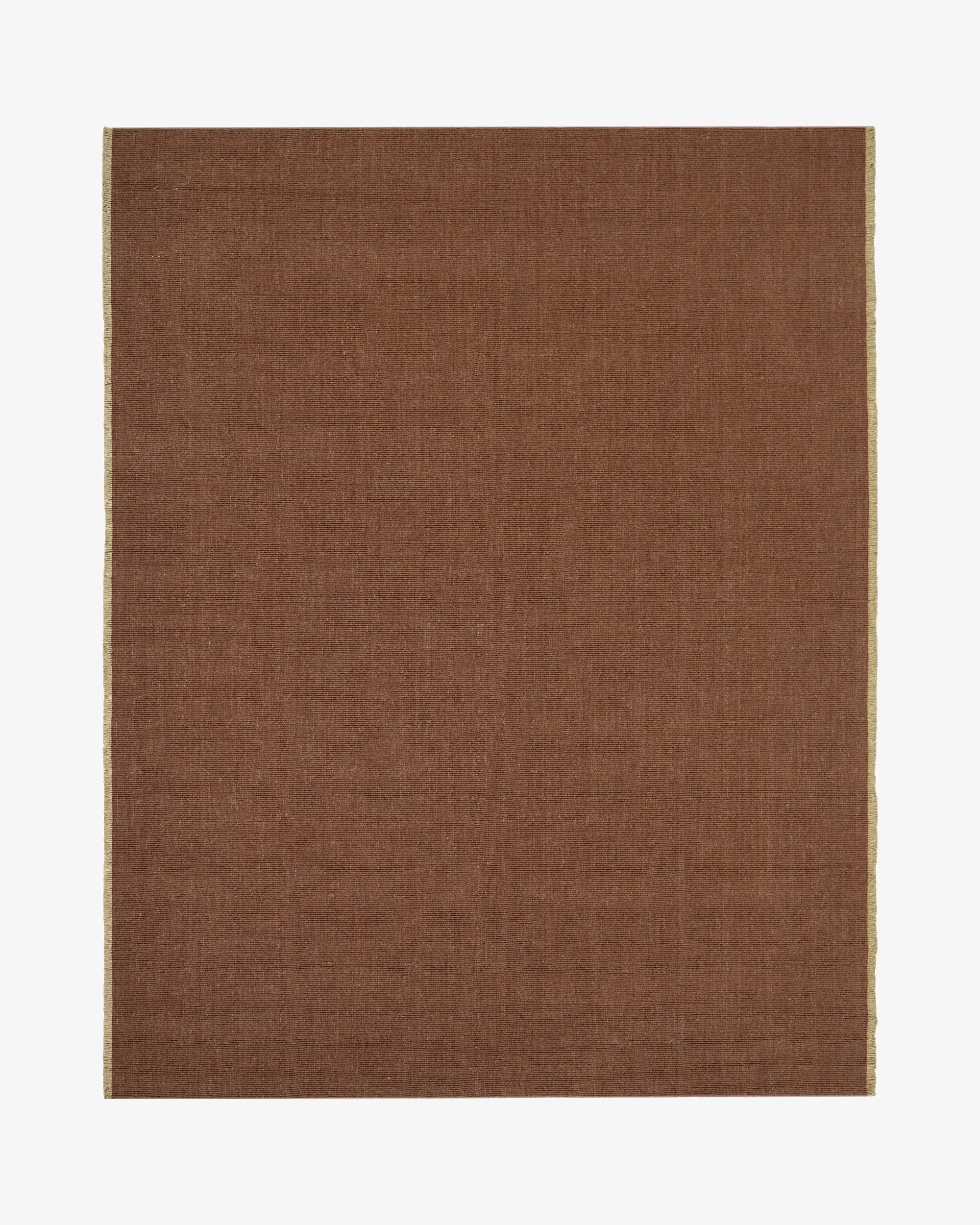
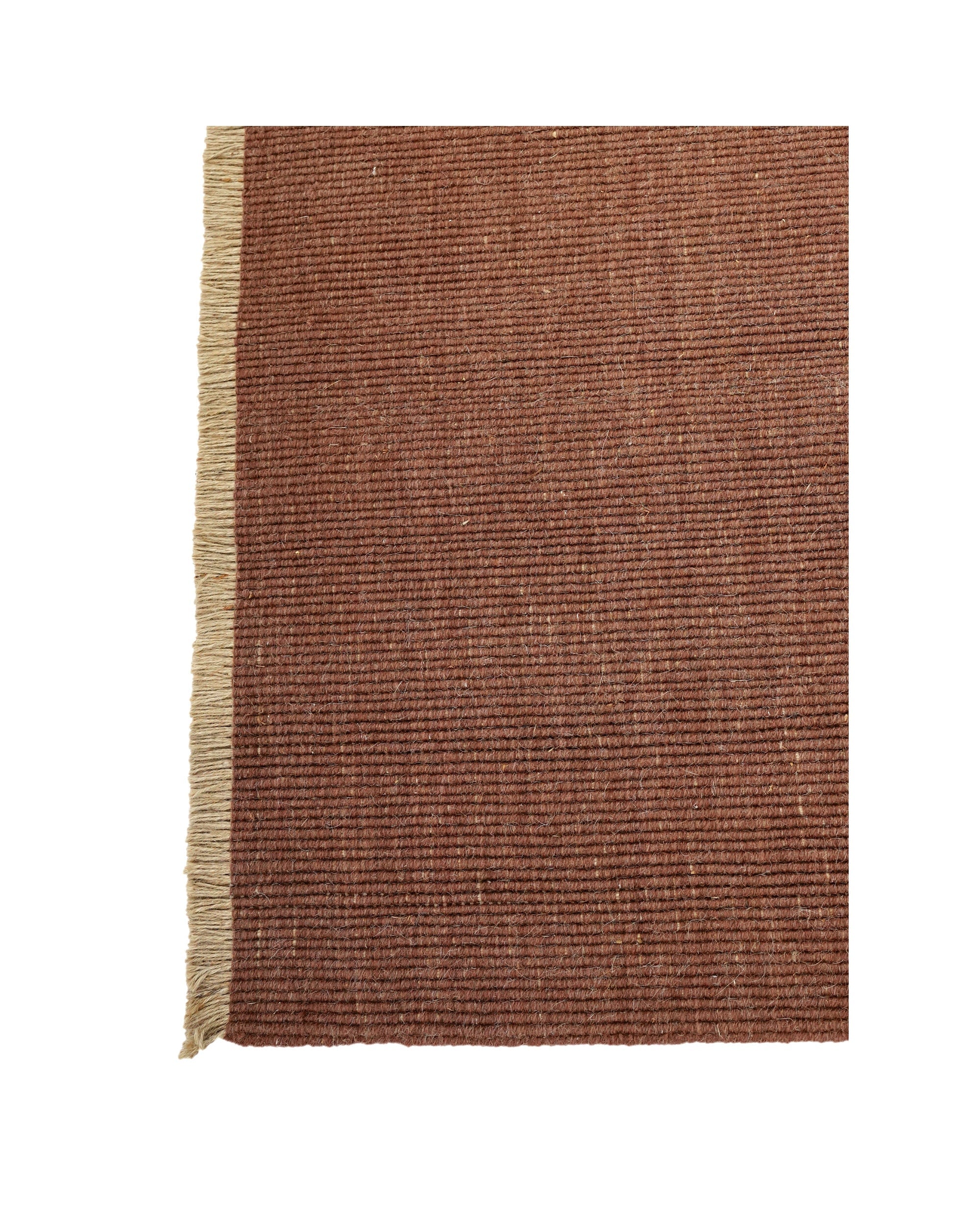
The Grain Wool Rug in Russet takes its colour from the same family as laterite and oxide, so it reads as part of the house rather than an addition. Its low, closely worked surface is the construction this guide recommends for the rains, from about ₹31,080 for 5x8 ft, inclusive of GST at the time of writing. The Grain collection also runs to tan, sandstone and umber.
For an upper floor room or a raised hall, the Cabra Wool & Jute Rug in Rust is handloom woven at 7 to 8 mm, firm and quick to air, from about ₹28,560 for 5x8 ft, inclusive of GST at the time of writing. Our guide to Cabra, wool and jute woven together explains the blend.
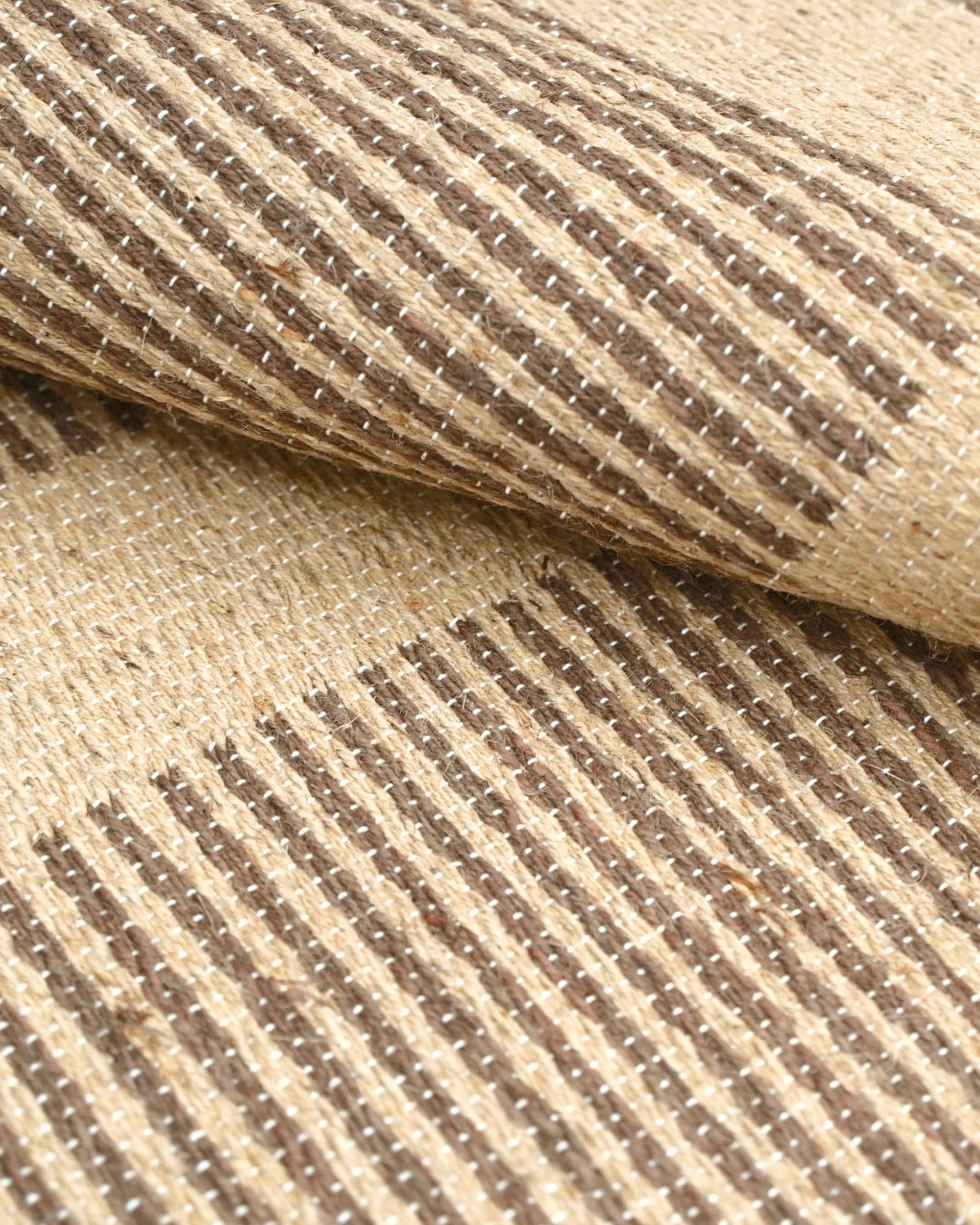
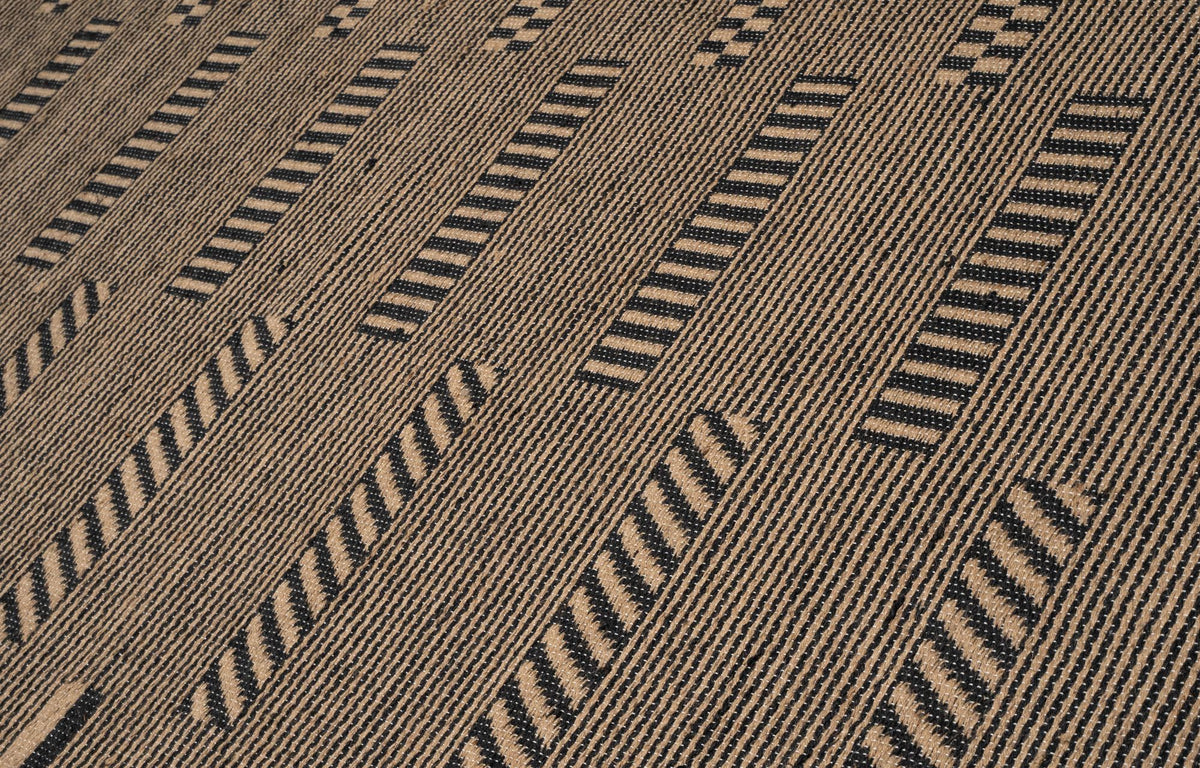
For the dry season, the Kora Jute Rug is handwoven at 10 mm with rows of darker dashes on natural jute, from about ₹23,520 for 5x8 ft, inclusive of GST at the time of writing. It belongs on the floor from November to May and rolled in a dry cupboard through the rains.
Should a Mangaluru home swap rugs with the seasons?
Yes, a Mangaluru home gets the most from its rugs by swapping them twice a year: wool down through the rains, jute and lighter weaves out for the dry, bright months. It is the same instinct that moves cushions and curtains in many coastal homes.


A practical calendar looks like this: in late May, before the first heavy rain, roll and store jute rugs and lay the handloom wool. Through June to September, air and lift as described above. In late October or November, once the floors are dry to the touch, have the wool rugs professionally cleaned, store them rolled in cotton and bring the jute back out for the cool, dry season.
Store rugs rolled, never folded, wrapped in breathable cotton rather than plastic, and raised off the floor on a shelf or a cot. A few neem leaves or cedar blocks in the store cupboard help keep insects away from wool. If you keep only one rug all year, make it low handloom wool; our guide for Kochi homes covers a similar Kerala coast routine.
Frequently asked questions
Can a jute rug be used in Mangaluru during the monsoon?
It is better not to. Jute is a plant fibre that swells, darkens and can mildew if it stays damp for weeks, which is likely between June and September. Lay jute from November to May and store it rolled and dry through the rains.
Will a dehumidifier help a rug in a Mangaluru flat?
Yes, in a closed room it helps a great deal. Running a dehumidifier or an air conditioner on dry mode for a few hours a day keeps a wool rug fresh, provided the doors are shut while it runs and the water tank is emptied often.
What colour rug suits a red oxide floor?
Earth tones such as russet, tan, umber and sand sit naturally on red oxide, picking up the warmth of the floor without competing with it. A deep charcoal also works if you want contrast, while bright white shows monsoon grime quickly.
How do I know if a rug has started to mould?
Turn it over and look for small white, grey or black spots on the back, and smell it close to the floor. A sour or musty smell that stays after an hour of airing means the rug needs a proper dry and a professional clean.
Does Rugberry clean or store rugs for customers?
Rugberry advises professional cleaning for its rugs and can suggest how to care for a particular piece. Write to the team with the rug name and size, and they will tell you what suits its fibre and construction.
The rain on this coast is patient, and the right rug is patient too. Begin with the handloom rugs and let the floor breathe. Material first.



Leave a comment
This site is protected by hCaptcha and the hCaptcha Privacy Policy and Terms of Service apply.