



Rugs for Boutiques and Retail Stores
A boutique rug works best away from the doorway, in the places where a shopper is meant to stop: a display table, a seating corner or a fitting room. Choose a low, dense wool or wool and jute weave for these zones, size it to the furniture rather than the room, and keep the entrance on a hard floor or a mat.
In short
- In a store, a rug marks a pause point. Put it under a display table, a sofa for waiting companions or the floor of a fitting room, not in the path from the door.
- Low, firm surfaces take trolleys, heels and shoe traffic best: a handloom wool at 12 to 14 mm or a wool and jute weave at 7 to 8 mm.
- A deeper or patterned piece can sit in a quieter corner, such as a lounge for clients or a private appointment room.
- Rugberry makes rugs to measure in any size and colour, so a rug can be cut to a display plinth or tinted to a brand palette, with the colour approved from yarn poms before weaving.
Where should rugs go in a boutique or retail store?
Rugs belong in the parts of a store where people are invited to slow down. A rug under a display table, a seating group or a fitting room floor changes the feel of that zone, while the main walkway and the entrance stay on the hard floor.
Retail floors in India are usually vitrified tile, marble or polished concrete. They are easy to mop and they carry trolleys, but they make a space feel quick and echoing. A rug placed in a few chosen spots gives the eye somewhere to land and quietly tells a shopper that this is a place to linger.
The zones that suit a rug most are these:
- The hero table: the first display a shopper reaches after the entrance. A rug that extends 45 to 60 cm beyond the table on each side turns it into a small room within the store.
- The seating corner: a sofa or a pair of chairs for companions waiting. A rug defines the corner and softens the sound of conversation.
- The fitting rooms: customers stand barefoot or in socks here, so a soft surface makes a measurable difference to comfort.
- The appointment room: bridal, tailoring and fine jewellery stores often have a private room for longer visits. This is where a deeper or more decorative rug fits.
Keep rugs off the first two metres inside the door. That strip collects grit, rainwater and the most foot traffic, and a rug there is the first thing to look tired. A recessed entrance mat does that job better.
Which rug fibres and constructions survive store footfall?
For a busy shop floor, the best rugs are low and dense. A handloom wool with a closely worked surface or a wool and jute flat texture hides shoe marks, does not crush under a display table and takes daily vacuuming without fuss.


New Zealand wool is the workhorse fibre for commercial rooms. Its crimp lets it spring back after pressure, and its natural lanolin slows down how quickly spills soak in. Jute adds a firm, natural texture and grips the floor well, but it does not like water, so it suits a dry, air conditioned store rather than a space near an open shopfront in the monsoon.
The Grain Wool Rug in Umber is handloom woven in New Zealand wool at 12 to 14 mm with a low, closely worked surface. Umber is a mid brown that keeps its look between cleans. Its regular price is ₹37,000 for 5x8 ft, ₹74,000 for 8x10 ft and ₹1,02,000 for 9x12 ft, ex GST at the time of writing.
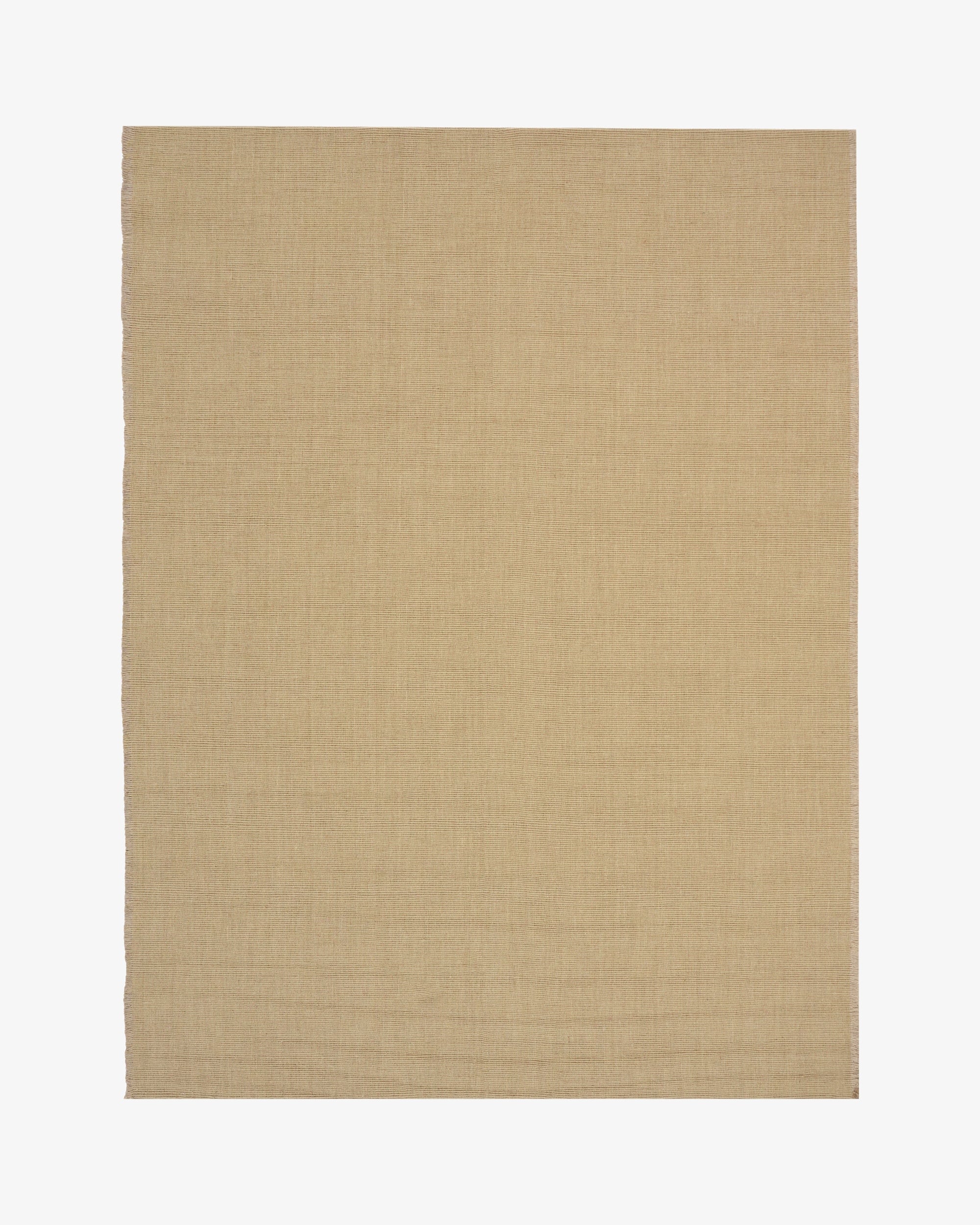
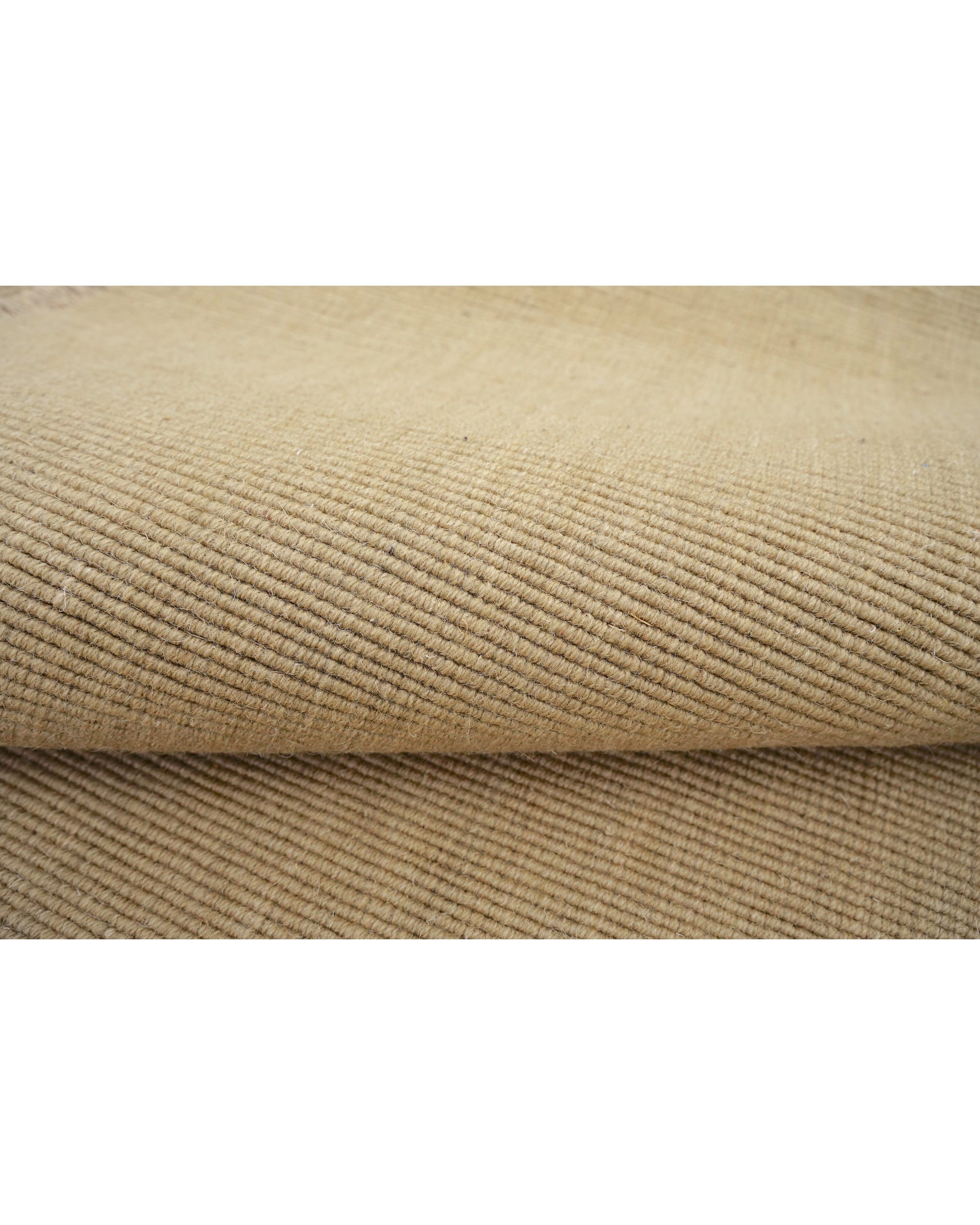
The Cabra Wool & Jute Rug in Sand is handloom woven in New Zealand wool and jute at 7 to 8 mm. It is firm and flat enough for a clothing rail to roll across and pale enough to suit a light, minimal store. Its regular price is ₹34,000 for 5x8 ft, ₹68,000 for 8x10 ft and ₹91,800 for 9x12 ft, ex GST at the time of writing.
How big should a rug be under a store display?
A display rug should be sized to the furniture it sits under, with 45 to 60 cm of rug showing on every side of a table or plinth. That margin lets shoppers stand on the rug while they browse, which is the whole point of putting it there.


A rug that only just fits under a table looks like a mat and catches toes at its edge. A rug that is too large for the zone starts to read as flooring and loses its role as a marker. Measure the table, add the margin on all four sides and round up to the nearest standard size or ask for a made to measure piece.
| Store zone | Typical furniture | Rug size to start from | Surface to choose |
|---|---|---|---|
| Hero display table | Table about 180x90 cm | 6x9 ft (180x270 cm) or a custom 270x180 cm | Low handloom wool or wool and jute |
| Seating corner | Three seat sofa and two chairs | 8x10 ft (240x300 cm) | Handloom wool, 12 to 14 mm |
| Fitting room | Cubicle about 120x150 cm | Made to measure to the cubicle | Soft, dense wool |
| Appointment room | Sofa, chairs, low table | 8x10 or 9x12 ft | Patterned or deeper pile |
| Window display | Mannequins or a single object | Made to measure to the plinth | Whatever suits the season's story |
A store layout tends to change with each season. If displays move often, standard sizes that can be shifted between zones make more sense than one large fitted piece.
Can a store rug carry a brand colour or pattern?
Yes. A made to measure rug can be woven or tufted in a colour close to a brand palette, and a patterned rug can echo a store's graphic language. The colour is matched from physical yarn poms, which are approved before weaving starts.


Rugberry's guide to custom colour matching explains the process. A brand colour on a paint card or a screen never transfers exactly into dyed wool, because wool takes colour differently and the pile catches light. Approving the pom in the store's own lighting avoids surprises.
For stores that want a graphic floor, the Mosaic Wool Rug is hand tufted in New Zealand wool at 14 to 16 mm. In the photograph above it shows fine ivory lines across a black field, a strong graphic that suits a fashion or design store. Its regular price is ₹37,000 for 5x8 ft, ₹74,000 for 8x10 ft and ₹1,00,000 for 9x12 ft, ex GST at the time of writing, and it can be made in other colours on request.
Keep a patterned rug for a zone with lighter traffic, such as an appointment room or a window. A busy pattern hides marks well, but a high contrast black and ivory piece shows grit at its pale lines if it sits too close to the door.
A store rug is a pause point. Place it where you want a shopper to stop, not where they walk.
How should rugs be kept safe and in place in a shop?
Every rug on a hard retail floor needs a non slip underlay and edges that sit flat. Shoppers look at shelves, not at their feet, so a curled corner or a sliding rug is a real trip risk.
Choose an underlay cut a few centimetres smaller than the rug on each side so it does not show. On polished tile or marble, a rubber or felt and rubber underlay holds the rug firmly. Our guide to rug pads in India compares the types.
Check these points before the store opens:
- Edge height: a low rug of 7 to 14 mm is easier to walk onto than a deep one, especially for older shoppers and children.
- Trolley paths: if rails or carts must cross a rug, choose a flat weave such as wool and jute.
- Door swing: fitting room doors must clear the rug with a few millimetres to spare.
- Cable runs: never run display lighting cables under a rug, where they wear the backing and create a ridge.
How do you clean and maintain rugs in a retail store?
A store rug needs daily vacuuming before opening, prompt blotting of any spill and a professional clean every few months, depending on footfall. Building this into the housekeeping schedule from the first week keeps the rug looking new for much longer.
Dry grit is the main enemy. It cuts at the fibre each time someone steps on it, which is why the first metres inside the door stay rug free and why daily vacuuming matters more than any deep clean. Use suction rather than an aggressive beater bar on handloom wool.
Rotate rugs that sit in sunlight from a shopfront window every few weeks so they fade evenly. If a rug sits under a display table that never moves, lift and turn it at each seasonal change, so the furniture feet do not leave permanent marks. The guide to rugs for high traffic areas has more on wear.
Write the fibre and care for each rug into the store manual, so new staff know that a wool rug can be blotted with cold water while a jute rug must be kept dry.
Which smaller handwoven rugs suit fitting rooms and counters?
Small spaces such as fitting rooms, cash counters and changing benches suit compact, firm rugs that sit flat and are easy to lift for cleaning. A 5x8 ft piece or a made to measure size cut to the cubicle works well.


The Cobble Wool Rug is handwoven in New Zealand wool with a close, even surface that is flatter than a tufted pile. It reads as a quiet charcoal and grey texture and suits a minimal store fitout. Its regular price is ₹31,000 for 5x8 ft, ex GST at the time of writing, and it can be made in any size to order.
In a fitting room, a soft surface underfoot changes how a customer feels about trying something on. Size the rug to leave a small margin of floor at each wall so it can be vacuumed easily, and choose a mid tone rather than ivory, because makeup, hair and lint gather here.
How does a store order rugs through Rugberry?
Designers and architects fitting out a store can work through the Rugberry Trade Program, which groups rugs by project and room, issues itemised quotations and lets a client approve a selection online. Store owners can also order directly.
Studio Collection rugs are held in stock in six standard sizes. Anything else, including a custom size, shape or colour, is made to measure, and handloom rugs made to order take around 35 days.
For a store opening, plan the rug order with the fitout schedule rather than at the end, so any custom piece is on site before the launch. The customisable rugs collection shows the designs that can be changed in size and colour.
Ask for swatches early. A swatch held on the store's actual floor, under its actual lighting, is the most reliable way to judge colour and texture before committing to a large piece.
Frequently asked questions
Are rugs practical in a retail store?
Rugs are practical in a store when they are placed in pause zones rather than walkways. A low wool or wool and jute rug under a display table or in a seating corner handles daily shoe traffic well with regular vacuuming.
What rug works best near a shop entrance?
Near the door, a recessed entrance mat works better than a decorative rug, because that area takes rain, grit and the heaviest traffic. Place the first decorative rug a few metres in, where shoppers begin to slow down.
Can a rug be made to the exact size of a display plinth?
Yes. Rugberry makes rugs to measure in any size and shape, so a rug can be cut to a plinth, a window bed or an unusual fitting room. Send the dimensions and the use, and the rug is quoted to that size.
How often should a store rug be professionally cleaned?
Most store rugs benefit from a professional clean every three to six months, with daily vacuuming in between. Rugs in busy zones or near food and drink counters may need it more often.
Is jute a good choice for a boutique rug?
Jute suits a dry, air conditioned boutique, where its firm natural texture looks calm and grips the floor. Avoid it near an open shopfront or a wet entrance, because water marks jute and slows its drying.
A rug can make a store feel like a room. See hand tufted rugs and the customisable rugs that can be made to measure for your floor. Material first.


Leave a comment
This site is protected by hCaptcha and the hCaptcha Privacy Policy and Terms of Service apply.