



Savannah: Hand Knotted Jute
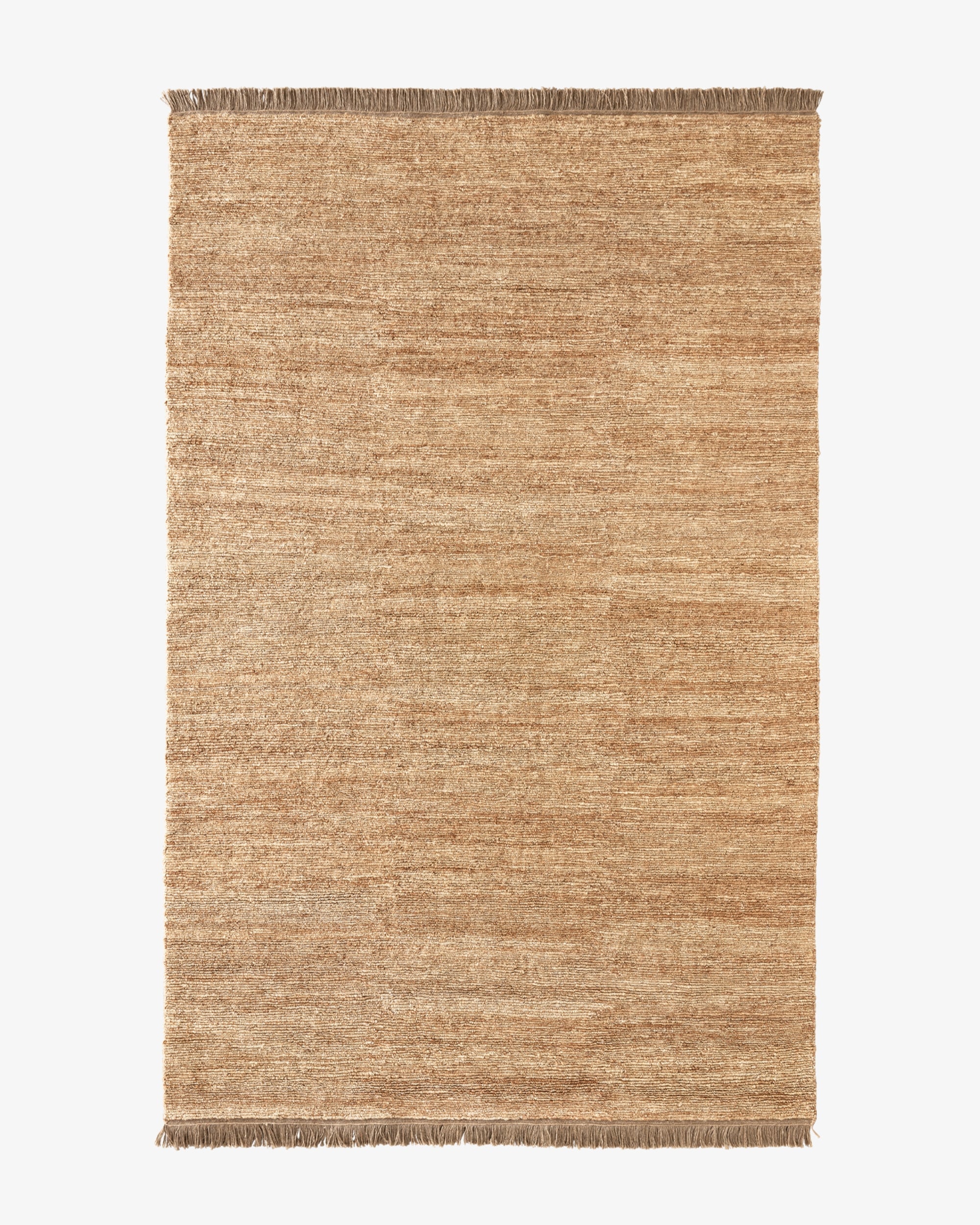
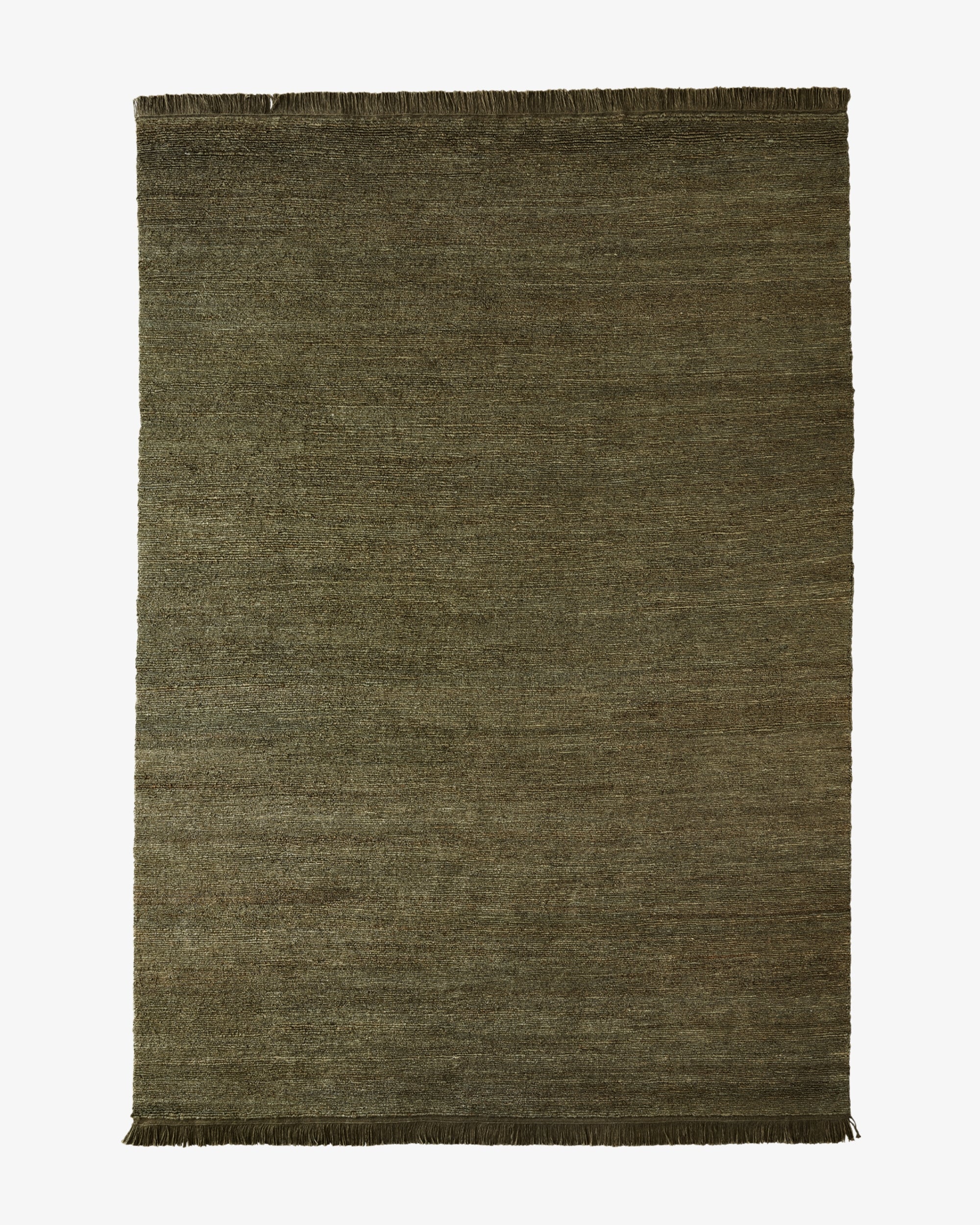
Savannah is jute that has been hand knotted into a 15 to 16 mm pile, not woven flat, so it has the honest texture of jute with the depth and weight of a knotted rug. It comes in Cashew, Natural and Olive, and it belongs in dry rooms with everyday footfall.
In short
- The Rugberry Savannah rug is hand knotted in natural jute, a Terra grade plant fibre, at a thickness of 15 to 16 mm.
- Savannah comes in Cashew, Natural and Olive, in 5x8, 6x9, 8x10, 9x12, 10x14 and 12x15 ft, from ₹41,000 for 5x8 ft and ₹82,000 for 8x10 ft, regular prices ex GST at the time of writing.
- Knotting gives jute a deeper, denser pile than a flat jute weave, so Savannah feels more substantial underfoot while staying firm and textured.
- Savannah must be kept dry: its care note is to vacuum regularly, blot spills at once, keep dry and use professional cleaning only.
Why knot jute instead of weaving it flat?
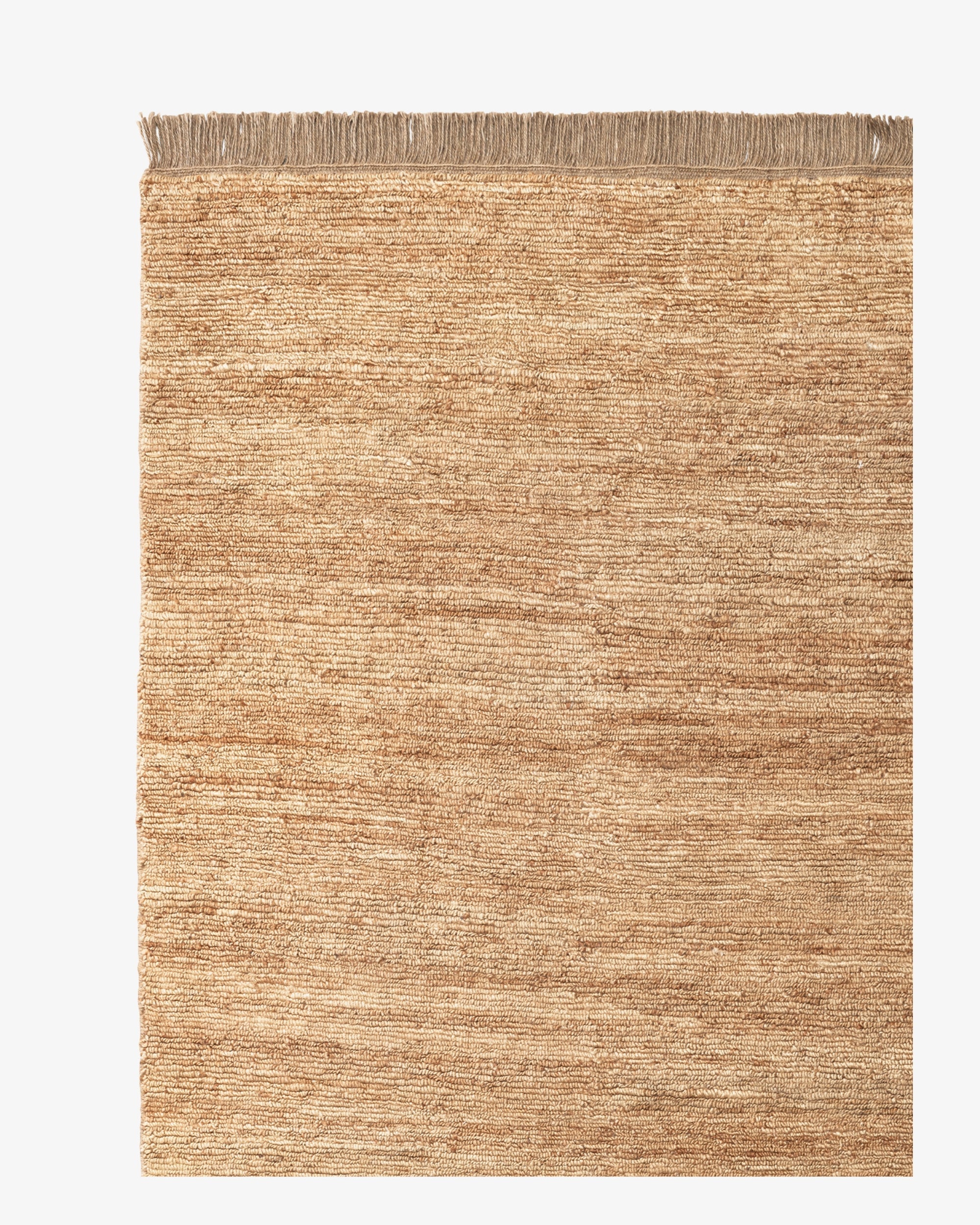
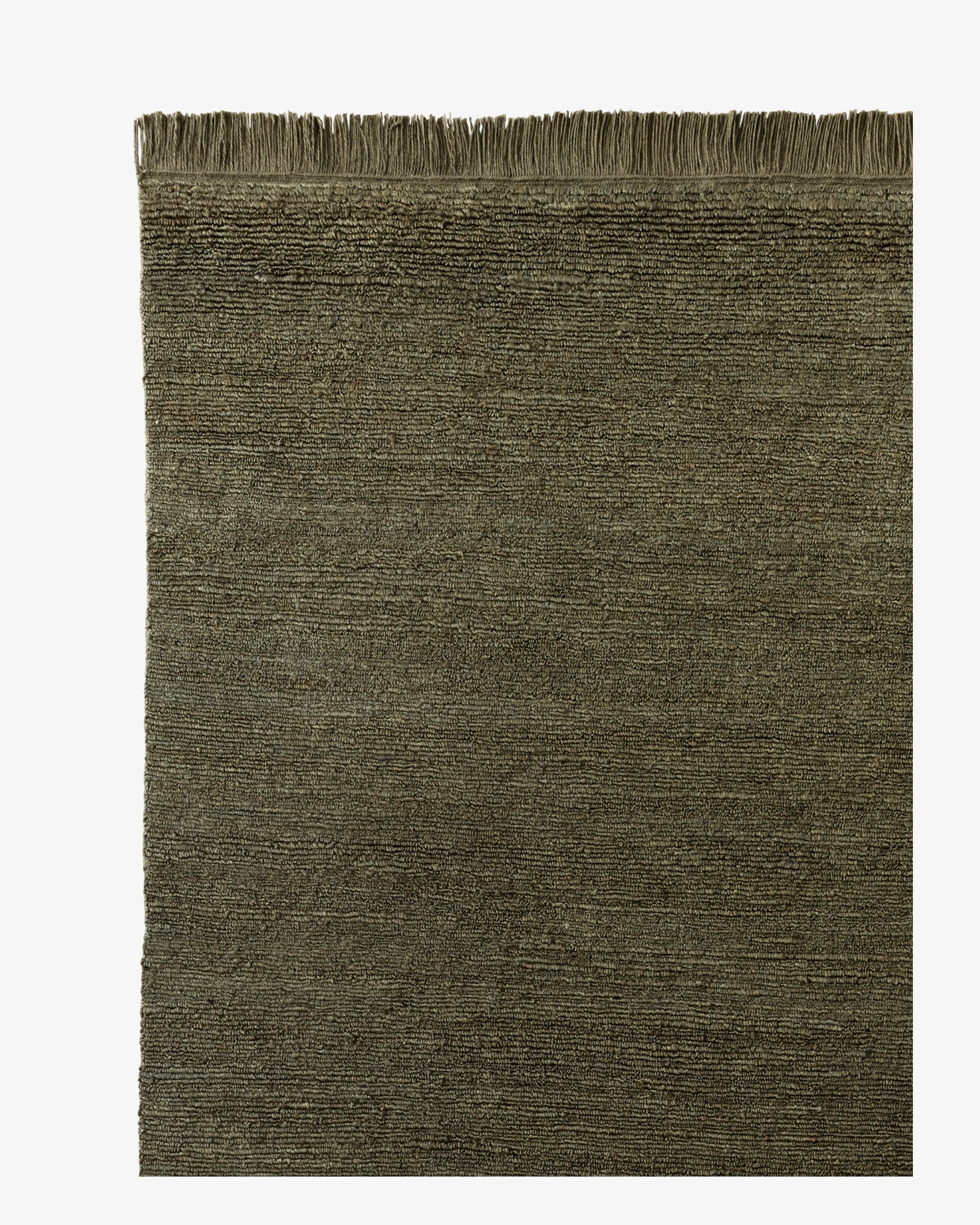
Knotting jute turns a flat, hard wearing fibre into a pile with depth: every tuft is tied around the warp threads, then cut, so the surface stands up 15 to 16 mm instead of lying flat. The result looks like jute and feels like a rug.
Most jute rugs are woven flat or braided, which keeps them thin, light and inexpensive. They are good at the door and under a dining table, but they feel hard underfoot and move on a polished floor. A knotted jute pile is heavier and denser, so it lies still and gives a little under the foot.
Knotting is also the slowest way to make a rug, which is why Savannah sits in Rugberry's hand knotted collection beside wool and silk pieces. Rugberry's guide to handloom and hand knotted rugs explains the construction, and the glossary entry on hand knotted gives the short version.
What does Savannah feel like underfoot?
Savannah feels firm and textured, with the natural irregularity of the fibre, which is how Rugberry describes it. It is not soft in the way wool is, but the knotted pile gives it a solid, springy body that flat jute lacks.


Run a hand across it and you feel the slightly coarse, dry surface of jute, with small changes in thickness from tuft to tuft. That irregularity is part of the fibre, not a fault. It catches light unevenly, which gives the rug its depth of colour.
Rugberry rates Savannah at the firm end of its softness scale. For bare feet first thing in the morning, a wool rug is kinder. For a living room where people mostly sit, or a study where the rug is about texture and colour, Savannah is a strong choice.
How do Cashew, Natural and Olive compare?
Cashew is the palest, a light sandy tone; Natural is the warm honey colour of undyed-looking jute; Olive is a deep, muted green. All three share the same knotted jute, thickness, sizes and prices, listed here as regular prices ex GST at the time of writing.


| Point | Cashew | Natural | Olive |
|---|---|---|---|
| Reads as | Pale sand, light and calm | Warm honey, classic jute | Deep muted green |
| Best floors | Grey stone, dark wood, terrazzo | White marble, pale tile, light oak | Pale marble, beige tile, light wood |
| Best palette | White, linen, black accents | Cane, rattan, teak, terracotta | Cream, brass, rust, warm wood |
| 5x8 ft | ₹41,000 | ₹41,000 | ₹41,000 |
| 8x10 ft | ₹82,000 | ₹82,000 | ₹82,000 |
| 12x15 ft | ₹1,80,000 | ₹1,80,000 | ₹1,80,000 |
For a living room with cane chairs and teak, choose Natural, because it looks like the jute people picture and ties every natural material in the room together. For a room that needs one strong, quiet colour, choose Olive.
At 8x10 ft, Savannah works out to about ₹1,025 per sq ft. That is more than a flat jute weave and less than most hand knotted wool, which reflects a slow construction in an everyday fibre. Rugberry's Stratum, hand knotted in New Zealand wool, comes to about ₹1,620 per sq ft at 9x12 ft for comparison.
Which rooms suit a hand knotted jute rug?
A hand knotted jute rug suits dry rooms with everyday footfall: living rooms, studies, entrance halls away from wet shoes, and covered sitting rooms that never see rain. Rugberry tags Savannah for entryways and living rooms.


- Living room. An 8x10 or 9x12 ft Savannah under the seating, Natural or Cashew with cane and linen.
- Study. A 5x8 ft Olive under a reading chair, with books and wood around it.
- Entrance hall. A 5x8 ft Savannah in a large foyer, as long as wet shoes and umbrellas stop before it.
- Farmhouse sitting room. A 10x14 or 12x15 ft Savannah on a stone floor, with the windows shut on dusty days.
Rugberry lists Savannah as an everyday rug but not for pets: a firm jute pile can catch claws, and pet accidents and jute do not mix. Rugberry's guide to natural jute rugs sets Savannah beside the flat jute weaves Kora, Masai and Pampas.
Jute gives the colour and the honesty. The knot gives it weight and depth underfoot.
Which rooms should a jute rug avoid?
A jute rug should avoid anywhere water reaches it: bathrooms, kitchens with wet floors, open balconies, and ground floor rooms that flood or stay damp in the monsoon. Jute absorbs water, can stain as it dries, and can weaken if it stays wet.
That rules out the kitchen runner and the poolside lounge. In Mumbai, Kochi, Goa and Kolkata, where monsoon humidity sits above 80 percent for weeks, keep Savannah in rooms with good airflow and away from external walls that sweat.
Dining rooms are possible only with care. A knotted pile traps crumbs better than a flat weave, but dal and curry spills need blotting at once and must never be rinsed. Rugberry's guide to what a jute rug is covers the fibre's limits.
How do you care for a Savannah rug?
Care for Savannah by vacuuming regularly, blotting spills at once, keeping it dry and using professional cleaning only, which is the exact care note on its product pages. Jute never goes into a washing machine or under a hose.
New jute sheds a little loose fibre in the first weeks, especially in a knotted pile. Vacuum on suction twice a week and the shedding slows. Rugberry's guide to whether jute rugs shed explains why it happens and when it stops.
For spills, press a dry white cloth on the spot and lift, without rubbing, then dry the area quickly with a fan. For a dried mark, call a professional cleaner rather than using water at home. Rotate the rug every six months so wear and sun spread evenly, and the product page notes that Savannah gets better looking as it ages.
The fringe at each end, visible in the product photographs, needs no special care beyond vacuuming across it, not along it, so the vacuum does not pull it in.
How do you choose the size and order a Savannah rug?
Choose the size by your seating or room, then the colour by your floor. All three colours are listed in six sizes and in any size and colour to order, made to your measure, so an odd sized foyer or a long living room can have a rug cut to fit.
At regular prices ex GST at the time of writing, Savannah costs ₹41,000 for 5x8 ft, ₹55,000 for 6x9 ft, ₹82,000 for 8x10 ft, ₹1,10,000 for 9x12 ft, ₹1,40,000 for 10x14 ft and ₹1,80,000 for 12x15 ft. GST is added at checkout.
See Cashew, Natural and Olive, or the natural jute rugs collection. For the same jute look with a quiet sheen, Rugberry's Meraki weaves jute with Botanical Silk on the handloom.
How does Savannah compare with flat jute and with wool?
Savannah sits between Rugberry's flat jute weaves and its wool rugs: thicker and heavier than flat jute, firmer and drier underfoot than wool. Knowing where it sits makes it easier to decide whether you need it.


Rugberry's handwoven jute rugs, Kora, Masai and Pampas, are flat weaves; Kora and Masai are listed at 10 mm. They cost ₹28,000 for 5x8 ft and ₹56,000 for 8x10 ft, regular prices ex GST at the time of writing. They are lighter to move, cheaper, and suited to a busy dry floor where a flat surface helps.
Savannah, at 15 to 16 mm and ₹41,000 for 5x8 ft, costs about half as much again, and that buys a knotted pile that lies flatter on polished stone, deadens sound and feels more substantial under a sofa. If the rug is the main piece in a living room, the extra depth shows.
Against wool, the trade is softness. A handloom New Zealand wool rug such as Grain, at 12 to 14 mm and ₹37,000 for 5x8 ft, is softer and copes better with the occasional damp mop near its edge.
Choose Savannah for the look and character of jute, and wool when bare feet and spills come first. Rugberry's guide to wool and jute together covers a rug that blends the two.
Frequently asked questions
Is the Savannah rug hand knotted?
Yes. The Rugberry Savannah rug is hand knotted in natural jute, with each tuft tied around the warp by hand and cut to a pile of 15 to 16 mm. It sits in the Rugberry hand knotted collection.
Is a hand knotted jute rug soft?
A hand knotted jute rug is firm and textured rather than soft. The knotted pile gives it more body than a flat jute weave, but for softness under bare feet a New Zealand wool rug is the better choice.
Can a Savannah jute rug go on a balcony?
No. Jute absorbs water and can stain or weaken when wet, and Savannah's care note says to keep it dry. Keep it in dry indoor rooms, and choose an indoor and outdoor reversible rug for a covered balcony.
What colours does Savannah come in?
Savannah comes in Cashew, a pale sand; Natural, a warm honey jute colour; and Olive, a deep muted green. All three are listed in six sizes, and Rugberry makes custom colours on request.
How much does a Savannah rug cost in India?
From ₹41,000 for 5x8 ft up to ₹1,80,000 for 12x15 ft, regular prices ex GST at the time of writing. The three colours cost the same at every size, so the choice comes down to the room and its light.
A plant fibre, tied by hand, kept dry. Material first.




Leave a comment
This site is protected by hCaptcha and the hCaptcha Privacy Policy and Terms of Service apply.