Bengaluru's Museum Mile, from Kasturba Road to Palace Road
Images are credited where they are not from the Rugberry house.
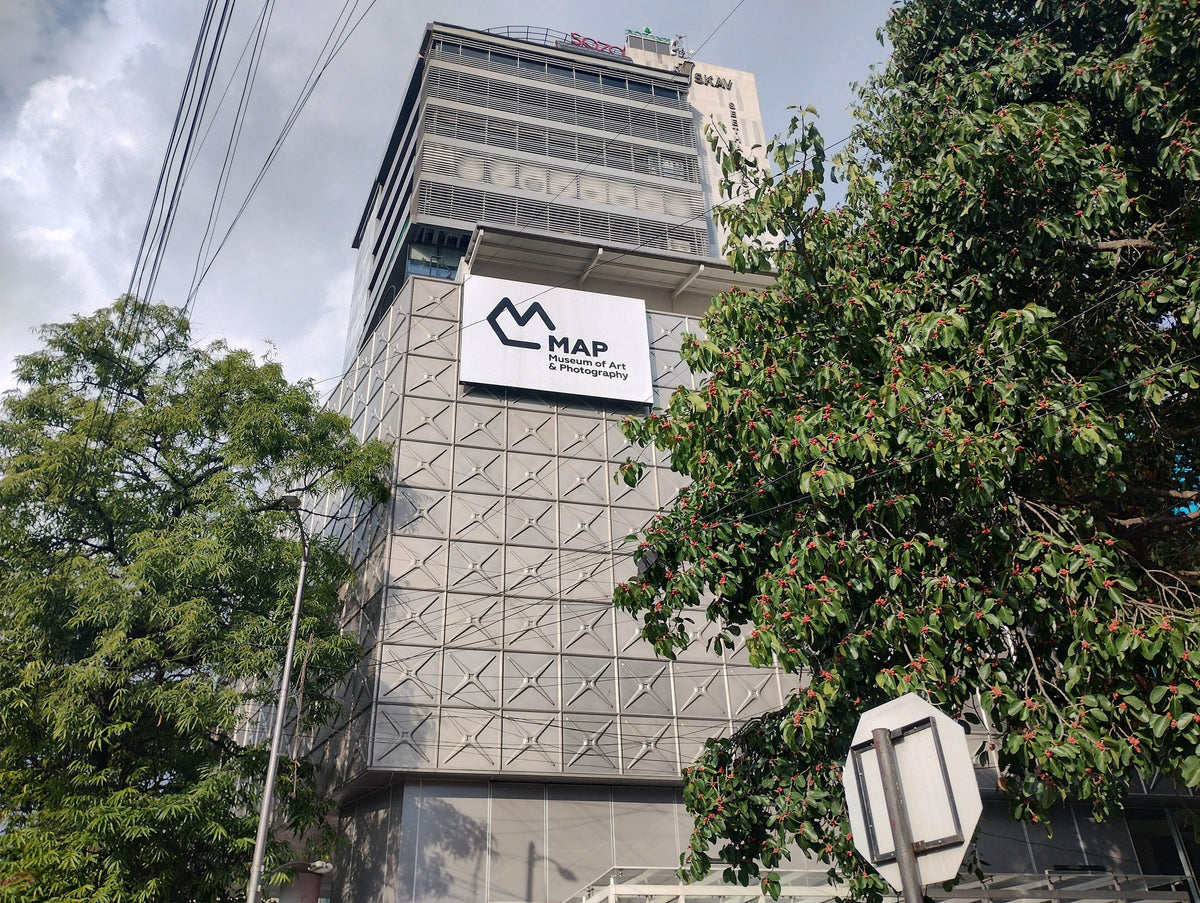
The Museum of Art and Photography on Kasturba Road, Bengaluru. Photo: Gpkp, CC BY-SA 4.0, via Wikimedia Commons, licence
By eleven in the morning the light over central Bengaluru has gone white, and anyone with sense is walking on the shaded side of the road. Under the rain trees of Cubbon Park the air is a few degrees kinder. The traffic is audible but distant, a low surf beyond the trunks. This is the city that sells itself as a place of offices and start ups, and yet within a short drive of this park there is now one of the most interesting clusters of museums and cultural rooms in India, most of them built, old or new, around the oldest problem in a hot city: how to make a room that stays cool and lets the light in without letting the heat in with it.
What follows is a route rather than a list, a way of spending a day between Kasturba Road and Palace Road, with a detour east for coffee and an evening talk. It is worth taking slowly. The best rooms on it are about patience.
MAP, on Kasturba Road
Start at the Museum of Art and Photography, known simply as MAP. It opened to the public on 18 February 2023 in a building by the architects Mathew and Ghosh, 4,089 square metres, or about 44,000 square feet, of galleries and public space. There are five galleries, a 130 seat auditorium, a library and a conservation centre, and the collection holds over 60,000 works.
Any museum in a hot climate has to decide how much of the sun to let in, since art and heat do not mix. Galleries want controlled light. People want air and a view. MAP saves its view for the top, where a rooftop restaurant looks out over the city. After the galleries, eating up there feels like coming out onto a terrace at the end of a long corridor in an old house: the reward of air after shade.
Cubbon Park, the green spine
Walk west into Cubbon Park, which ties this whole quarter together. It is less a destination than a connective tissue, the green spine between the museums and the old institutions of the city centre. It is also the setting for the Bengaluru Habba, the city's cultural festival, when its lawns and paths fill with music and performance.

On an ordinary weekday it is simply the best way to get from one building to the next. Walking through shade between rooms is itself part of the experience of this city. Bengaluru's older houses were built around the same idea: deep verandas, high ceilings, thick walls and gardens close to the windows, so that the transition from the heat outside to the cool inside happened gradually rather than all at once.

NGMA, a mansion with a new skin
On Palace Road, the National Gallery of Modern Art occupies Manikyavelu Mansion, a bungalow once owned by the Mysore royal family. It was inaugurated as a gallery on 18 February 2009, and a 1,260 square metre extension was added around the original mansion on a 3.5 acre site. Inside is modern Indian art, with changing exhibitions alongside the collection.
The pleasure here is the conversation between old and new. The mansion keeps its domestic scale, the proportions of rooms that were once lived in. The newer galleries were added around it rather than in place of it. For anyone who lives in an older home, it is a useful example of how to add without erasing. The old rooms are left to be what they are, and the new work is done around their edges.
The old rooms are left to be what they are, and the new work is done around their edges.
Karnataka Chitrakala Parishath, and the mela
A short drive north, on Kumara Krupa Road, is Karnataka Chitrakala Parishath, a complex of galleries and an art college. It is a lively and deeply local institution, part school and part public gallery, where teaching and exhibiting happen side by side.

The time to go is during one of its regular arts and crafts melas, when the gallery spaces fill with stalls of handlooms, handicrafts and textiles from across the country. The most recent edition had over 90 stalls. It is the opposite of a museum visit: noisy, tactile and commercial in the old bazaar sense. Makers often stand beside their work. Buyers rub cloth between finger and thumb. It is one of the best places in the city to understand that handloom is not a heritage abstraction but a living trade, carried out by people you can talk to. Mela dates change from year to year, so it is worth checking before planning a day around one.
East to Domlur and Indiranagar
As the afternoon wears on, head east. In Domlur the Bangalore International Centre runs talks, film screenings and architecture events across 48,000 square feet, with an auditorium, seminar rooms, a gallery, a library, an amphitheatre and a cafe. Its evening programme is one of the best ways to see the city's design and intellectual life gathered in one room.
Before that, stop in Indiranagar at the ARAKU flagship, a white, plant filled cafe over two storeys with furniture and lighting by Indian design studios. It houses India's first Modbar, a coffee training academy certified by the SCA and its own roastery. It is a bright room rather than a shaded one, and a good counterpoint to the inward looking museums: proof that a hot city can do light and openness too, if the plants and the materials are chosen with care.
What the route teaches
Taken together, these rooms make a quiet argument about building for heat. The best of them are not sealed boxes cooled by machines. They manage light, they use shade as a material, they let gardens come close and they choose surfaces that stay cool under bare feet. A city that is often discussed in terms of its offices turns out, on foot, to be a fine teacher of how to live in a warm climate with grace.
The same lessons travel home. Keep the hottest light off the deepest part of a room. Let plants and a view do some of the work that decoration would otherwise do. Choose floors and textiles that feel cool and dry in May and still kind in the brief chill of a December morning. A city of verandas, gardens and long shaded walks has been solving that problem for a long time, and its museums, old and new, are the easiest place to see the answers.
Rugberry notes
From the Rugberry house
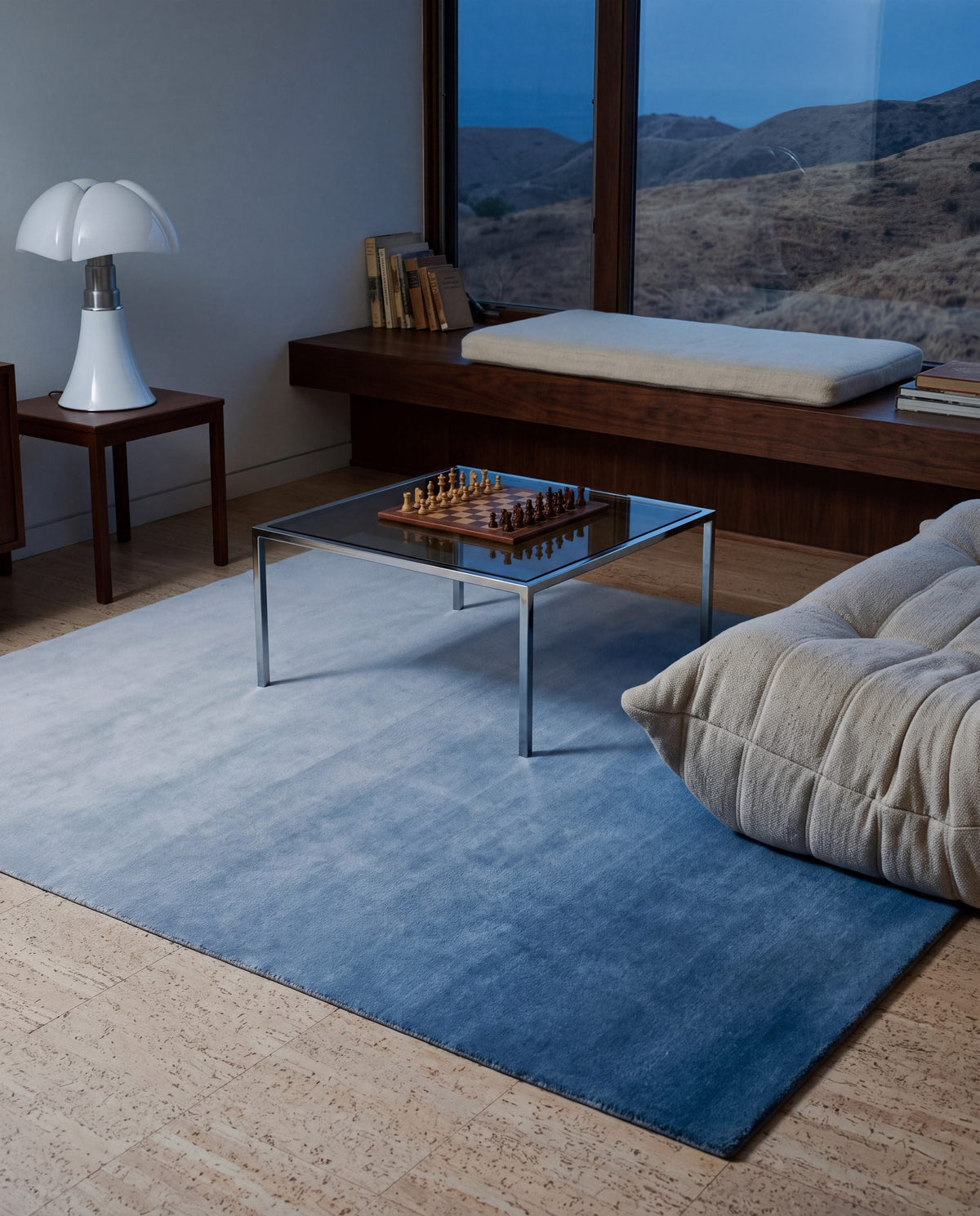
In a hot city a rug is about touch and breath as much as colour. The rooms below, styled by Rugberry, were chosen for warm daylight and pale floors, and in rooms like these a flat, firm handloom weave or a plant fibre stays cool underfoot and lets the space feel open.
If that appeals, our handloom rugs and natural jute rugs suit bright rooms like these, and the art of making explains how each is woven.


In the Rugberry house
- Handloom rugsWoven by hand on the loom, firm and even.
- Natural jute rugsPlant fibre for warm, bright rooms.
- The art of makingHow a Rugberry rug is made.
Rugberry has no affiliation with the studios featured. Images are from the Rugberry house unless credited.