Cafe de Flore and the Room That Refused to Change
Images are credited where they are not from the Rugberry house.
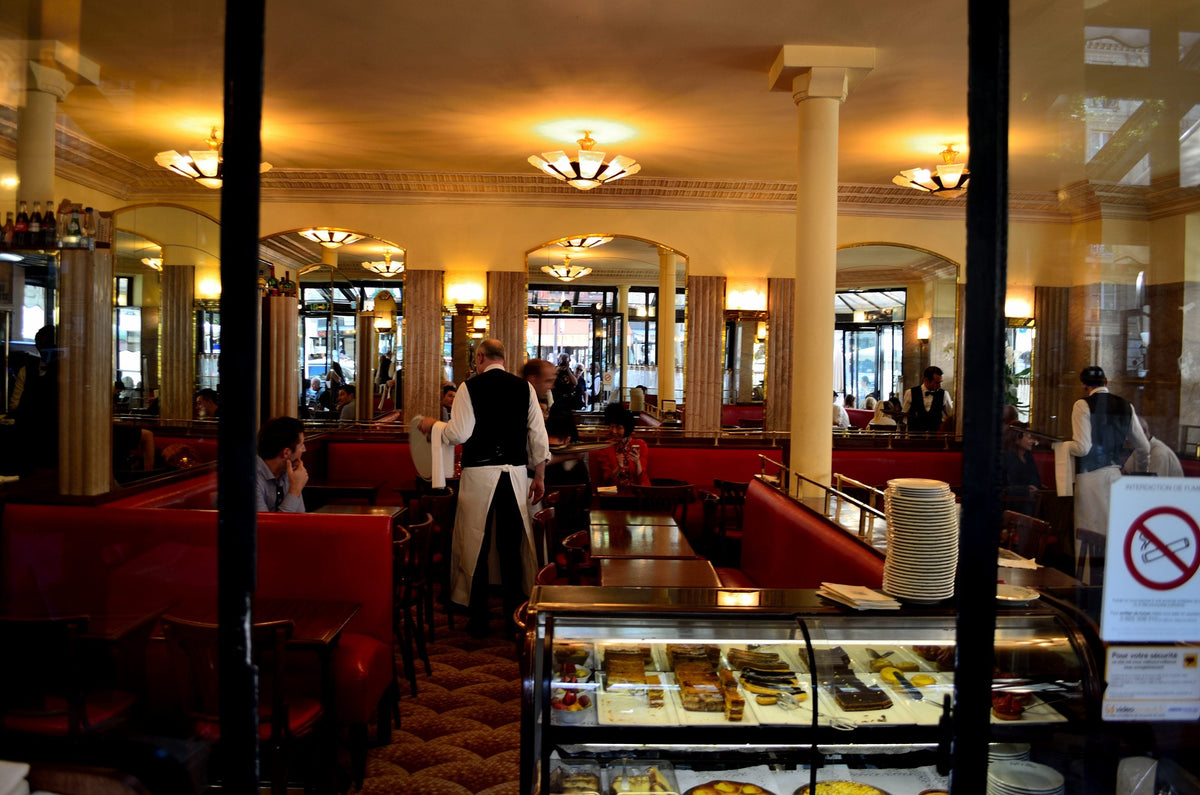
The ground floor room of the Café de Flore, red banquettes, mirrors and pale columns. Photo: Tom Hilton, CC BY 2.0, via Wikimedia Commons, licence
Sit down on the red banquette, order a coffee, and look up. The mirrors along the walls double the room and then double it again, so the waiters seem to move through several cafes at once. The wood is dark and warm, polished by decades of sleeves. The seats are the colour of old wine. Outside, the boulevard is loud with scooters and tourists and the newest shops in Paris. Inside, almost nothing has moved in a lifetime, and that is precisely why people keep coming.
Cafe de Flore stands at 172 Boulevard Saint Germain. By its own account it opened probably in 1887, at the start of the Third Republic, and it takes its name from a small sculpture of a deity that stood across the boulevard. The building, the neighbourhood and the city around it have been remade many times since. The room has kept its nerve.

A room that stopped changing
The interior is classic Art Deco: red seating, mahogany and mirrors. It has remained mostly unchanged since the Second World War. In a city famous for fashion, where shopfronts turn over every season and restaurants are redesigned to keep up with the photographs people take of them, that continuity is unusual enough to be a kind of statement.
Be precise about what has been kept. Not a theme, not a style in the decorator's sense, but a small number of materials and one colour. Red upholstery. Dark polished wood. Glass that reflects. These are not neutral choices. Red is a strong colour to commit to for decades. Mahogany darkens with time. Mirrors show every smear and must be cleaned constantly. The Flore did not survive by choosing safe things. It survived by choosing good things and then refusing to replace them.
Ownership has been just as steady. Paul Boubal bought the cafe in 1939. In 1983 he met Mr Siljegovic and his wife, who became its successors. Two owners across most of a century is a kind of stewardship rare in the restaurant trade, and it shows in the room. Things that are cared for by the same hands for a long time tend to stay as they were meant to be.
At home in the Flore
The cafe's fame comes from the people who sat in it. In the 1940s and 1950s Jean Paul Sartre and Simone de Beauvoir made it their headquarters, and it became the centre of existentialism. Sartre described a routine that sounds less like a writer visiting a cafe than like a man going to an office he loved: working there from nine in the morning until noon, going out for lunch, and coming back to work again in the afternoon. He said, in effect, that they were at home in the Flore.

The interior played its part. A large stove stood in the middle of the room, and it encouraged long stays through the cold months. Warmth, a fixed seat and a waiter who knew the order: these are the conditions under which people stop visiting a place and start living in it. Later regulars included James Baldwin and Marguerite Duras. The writers came and went. The banquettes stayed where they were.
The Flore did not survive by choosing safe things. It survived by choosing good things and refusing to replace them.
Fashion passes through
The room has also become a stage for the very industry that lives on change. Haute couture shows by Chanel, Yves Saint Laurent, Chloe, Sonia Rykiel and Paco Rabanne have been staged at 172 Boulevard Saint Germain. Artists install work on its mirrors during the Parcours Saint Germain. Each time, the newest thing in Paris is set against a backdrop that has not changed in generations, and each time the backdrop holds.
There is a reason that works. A fixed, confident interior does not compete with what is placed inside it. It frames it. A collection of clothes looks sharper against old red leather and mahogany than it would against a set built to match. The room has no need to explain itself, so it leaves the visitor free to look at whatever has been brought in.
Mirrors are the cleverest part of the arrangement. They make a narrow room feel generous, and they let everyone see everyone else without staring, which is half the pleasure of a cafe. They also turn the interior into a frame for whatever happens in it. When an artist hangs work on that glass, or a model walks past it, the room multiplies the moment and then, when the show is packed away, quietly returns to itself.
The case for a room that ages
For anyone furnishing a home, the Flore makes an argument that runs against most of what the interiors industry sells. The usual advice is to refresh: new cushions for the season, a new colour for the walls, a new rug when the old one starts to look familiar. The Flore suggests the opposite. Choose a palette you can live with for a very long time, buy materials that improve with use, and then leave them alone.
Ageing well is a property of materials, not of style. Good leather and good wood darken and soften, and look better at forty years than at four. The same is true of a well made rug in dense wool. Its colour mellows in the light, its pile settles, and the faint path where people walk most often becomes part of its character rather than a flaw. A room built of such things does not date, because it was never trying to be current.
Warm reds and deep browns are especially forgiving in this way. They hide the small marks of daily life, they glow under lamplight in the evening, and they pair naturally with dark wood. Rust, copper and wine are not fashionable colours, exactly. They are the colours of rooms that have been lived in for a long time, and they tend to stay right for exactly that reason.
The waiters at the Flore still move between the mirrors. The red seats are still there. Paris is still changing outside the window, as it always has, and the room is still declining to follow. That is not stubbornness. It is the confidence of a place that got its materials right and saw no reason to start again.
Follow @lecafedeflore on Instagram for their own work, in their own words.
Rugberry notes
From the Rugberry house
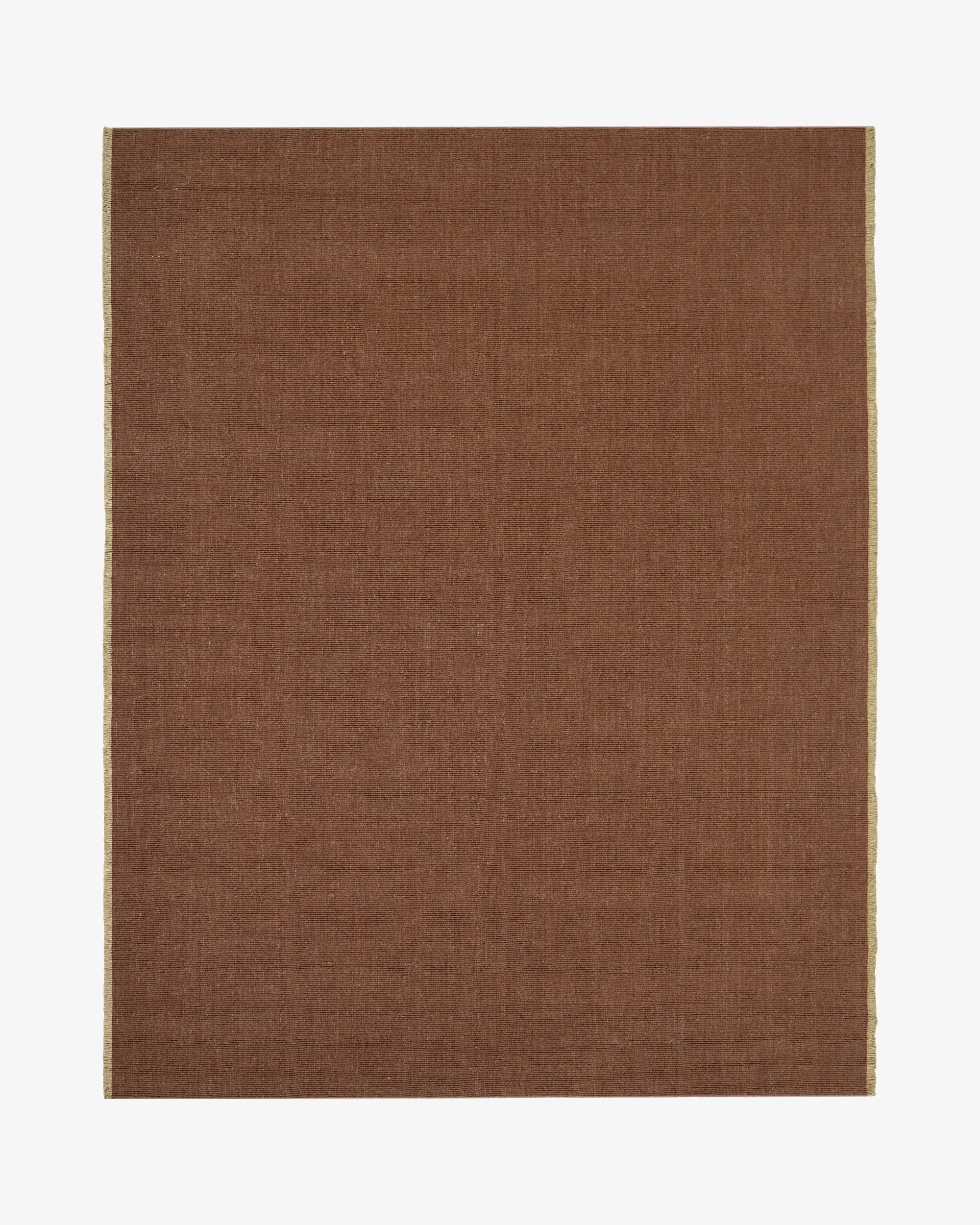
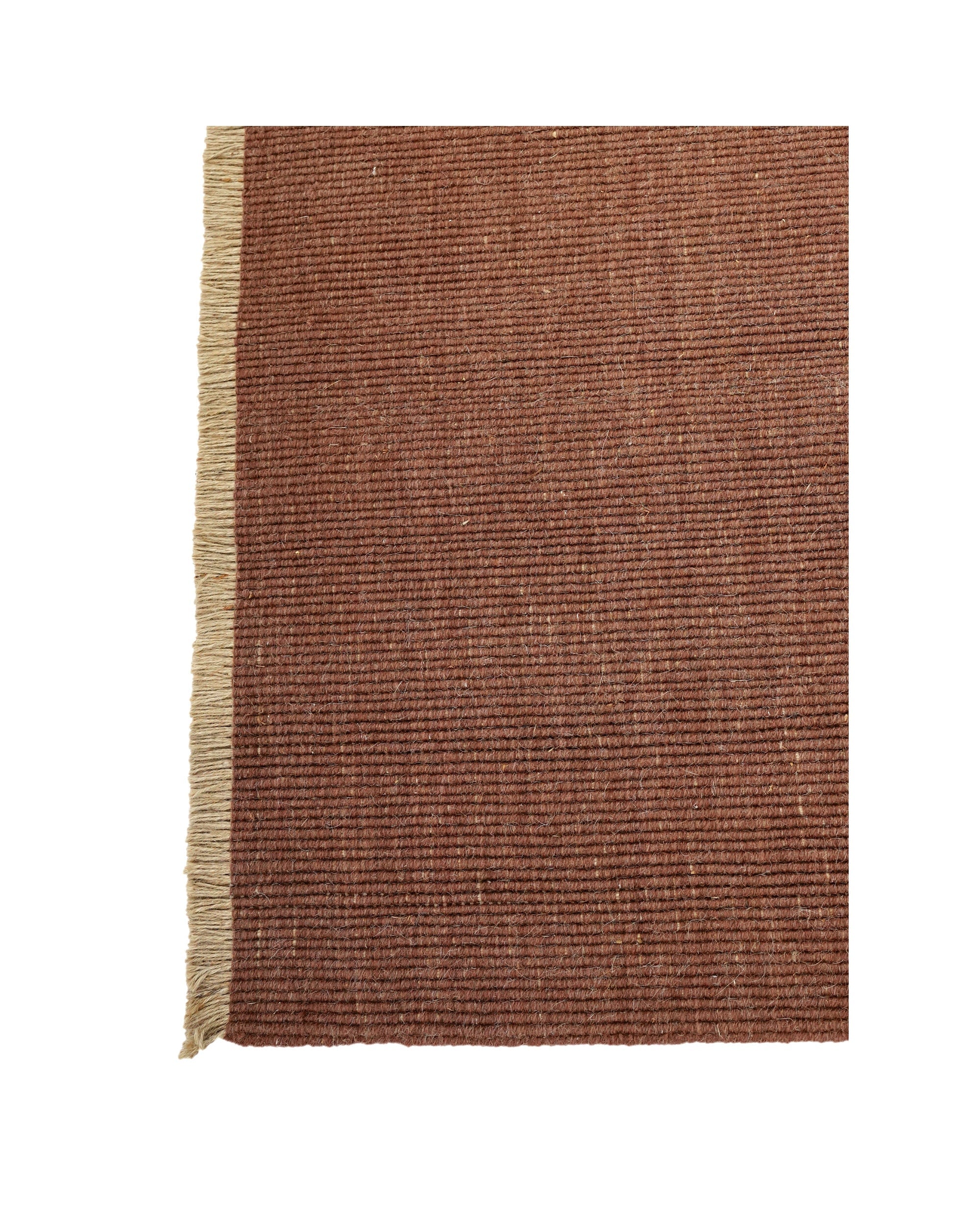
The rugs in these rooms sit in the same warm register as the Flore: rust, copper, chocolate and deep red. A rug meant to stay in a room for decades is first a question of construction. The Plush Wool Rug in copper, and in chocolate, is handloom woven in New Zealand wool with a deep, quiet pile, soft underfoot and the kind of floor that grows richer as a room is lived in.
If that idea of a room appeals, our rust and copper rugs sit in a similar palette, and the Cabra Wool & Jute Rug in rust, handloom woven in New Zealand wool and jute, brings the deeper red of these rooms in a firmer weave.


In the Rugberry house
- Rust and copper rugsWarm reds and browns that deepen with the light.
- Plush collectionDeep handloom pile in copper and chocolate.
- Fine wool rugsWool chosen to age in place.
Rugberry has no affiliation with the studios featured. Images are from the Rugberry house unless credited.