



A Rug for a Long, Narrow Living Room
In a long, narrow living room, size the rug to the width of the seating area and leave a clear walkway along one side. Most Indian halls of 10 to 12 ft width take a 6x9 or 8x10 ft rug laid parallel to the sofa, not one long rug running end to end.
In short
- A rug for a long, narrow living room should be sized to the room's width, leaving 12 to 18 inches of floor on each long side and a 30 to 36 inch walkway where people pass.
- A living room 10 ft wide usually suits a 6x9 ft rug, while a room 12 to 13 ft wide can take an 8x10 ft rug with the sofa's front legs on it.
- When a narrow room holds both sitting and dining, two rugs that define two zones work better than one long rug that runs under everything.
- Rugberry makes its Grain, Cabra and Bitte rugs to measure, so a 7x11 ft or 8x13 ft size can follow the proportions of a narrow room exactly.
What makes a long, narrow living room hard to furnish?
A long, narrow living room is hard to furnish because its width limits the seating and its length pulls the eye to the far wall. The rug has to calm both problems at once.
Many Indian apartments have exactly this plan. A 2BHK or 3BHK hall often runs 11 ft wide and 20 to 24 ft long, with the entrance at one end, a balcony door at the other, and the dining table somewhere in between. The space reads as a corridor with furniture in it.
The instinct is to buy the longest rug possible to fill it. That usually makes the room feel even more like a passage, because a long rug repeats the shape of the room instead of breaking it. The better approach is to treat the room as a series of zones, each with its own centre of gravity.
A rug is the most effective tool for this. A well placed rug tells you where the sitting room starts and stops, which lets the rest of the length belong to dining, a reading chair or simply open floor. This is why width, not length, is the number to start from.
What size rug fits a narrow living room?
Measure the room's width, subtract the walkway and a border on the wall side, and the remainder is your maximum rug depth. In most narrow rooms that lands on 6 or 8 ft.

The walkway matters most. People need about 30 to 36 inches to pass between the coffee table and the wall, or between the rug and the dining chairs. If the rug takes that space, everyone ends up walking along its edge, which wears the pile unevenly and makes the room feel tight.
| Room width | Rug to choose | Laid | What is left |
|---|---|---|---|
| 9 to 10 ft | 5x8 ft or 6x9 ft | Long side parallel to the sofa | About 3 ft walkway, 12 inch border |
| 11 ft | 6x9 ft | Long side parallel to the sofa | A generous walkway on one side |
| 12 to 13 ft | 8x10 ft | 10 ft side along the sofa | About 3 ft walkway, border at the wall |
| 14 ft and wider | 9x12 ft | 12 ft side along the sofa | The room is no longer truly narrow |
| Any width, odd length | Made to measure, for example 7x11 ft | Following the seating | Exact borders on both sides |
Always lay the rug with its long side parallel to the sofa. A 6x9 ft rug turned the other way, running away from the sofa, looks like a runner that has wandered into the room. The verdict is simple: in a narrow room, choose a rug one size smaller than you think and turn it to face the seating.
Should you use one rug or two in a long room?
Use two rugs when the room holds two activities, such as sitting and dining, and one rug when it is purely a sitting room. Two rugs break the length into human sized pieces.


The classic Indian layout puts the sofa near the entrance and the dining table near the kitchen. A rug under the sofa and coffee table, plus a second rug under the dining table, gives each area a floor of its own. The bare floor between them becomes the hallway the room was secretly trying to be.
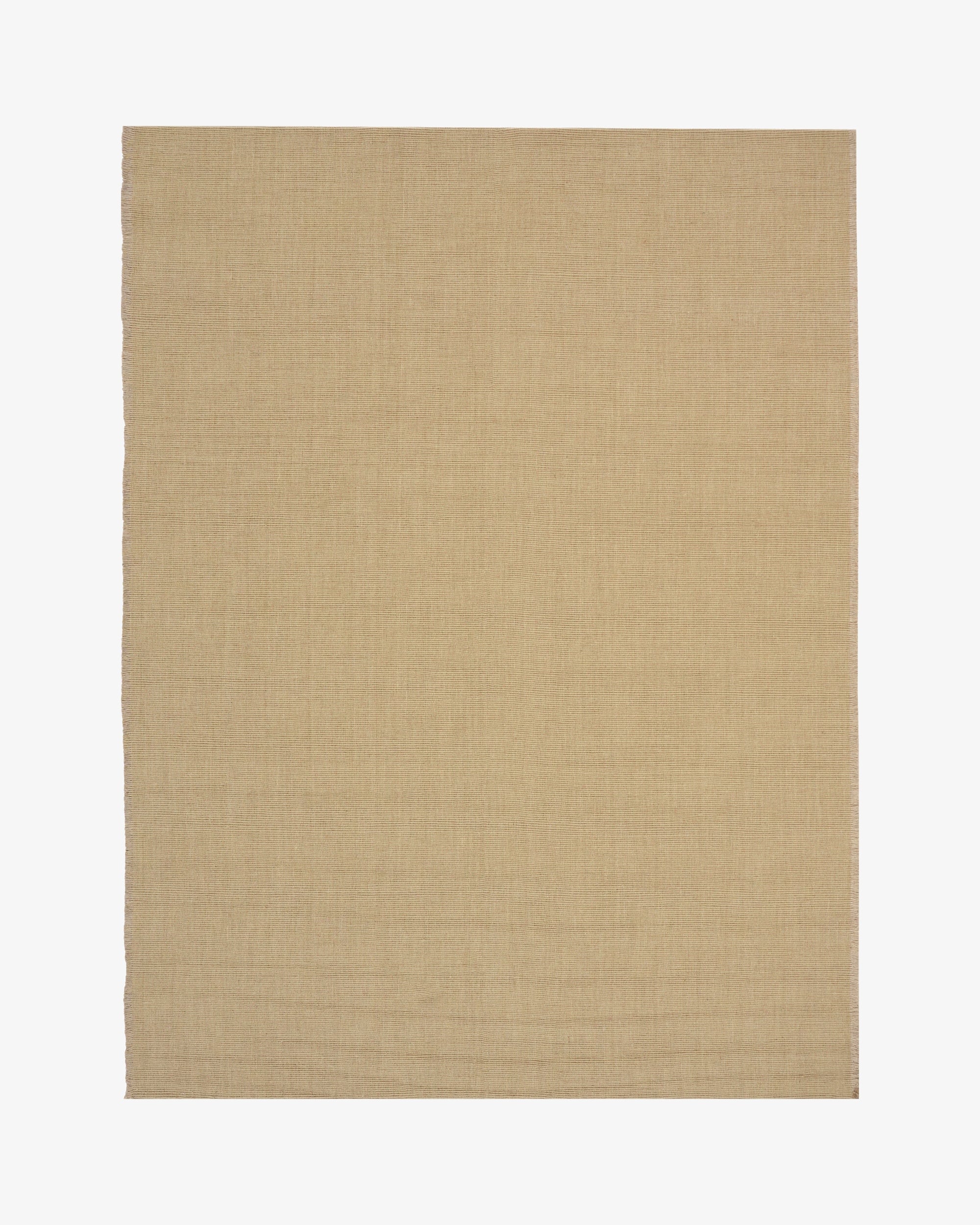
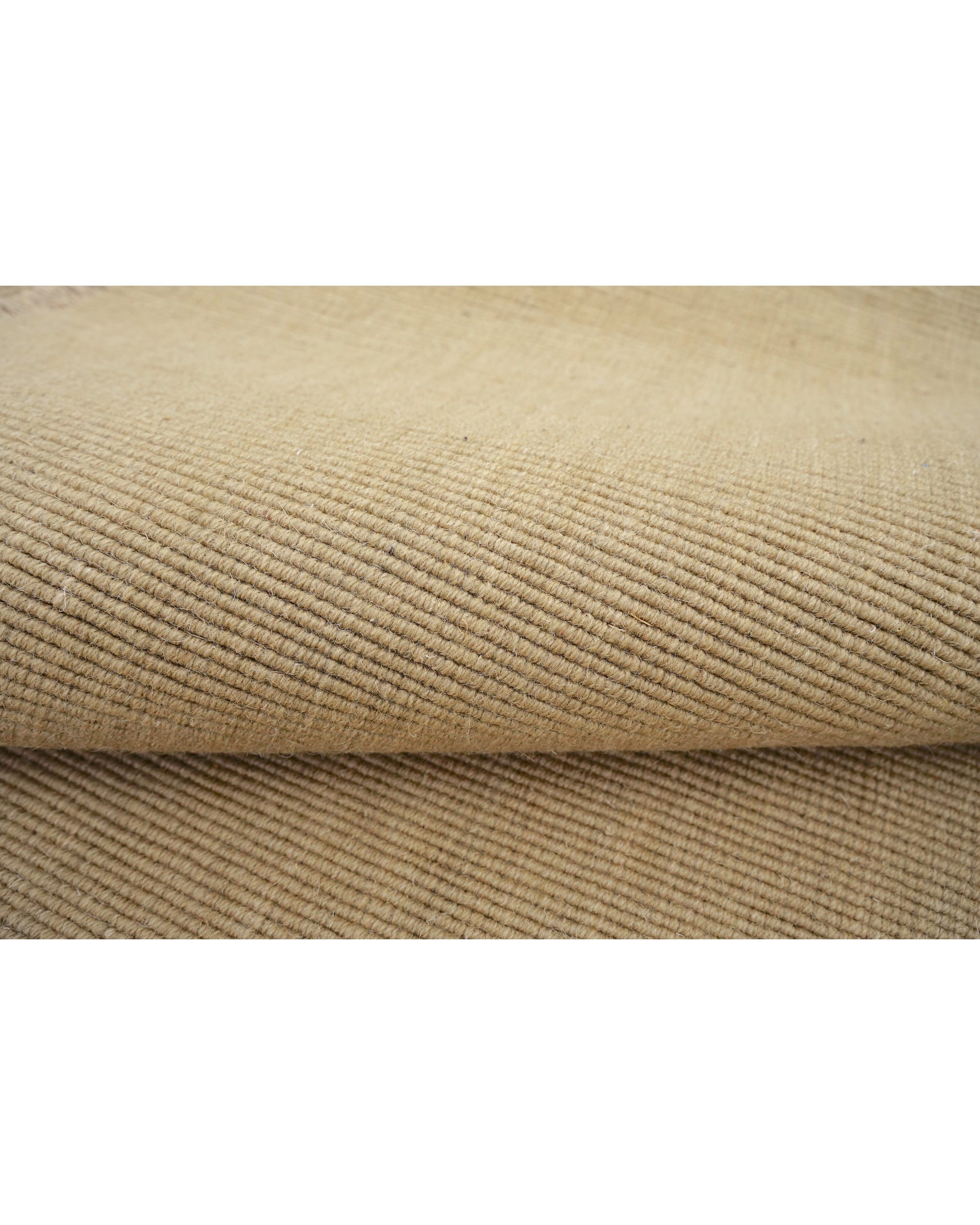
The two rugs do not need to match. They should share something, such as fibre, tone or texture, so the room reads as one home. A low Grain Wool Rug in Flax under the sofa and a flat Cabra Wool & Jute Rug in Sand under the dining table share a warm beige palette while doing different jobs.
The dining rug follows its own rule: it must reach at least 24 inches beyond the table on every side so chairs stay on it when pulled back. Rugberry's guide to zoning an open plan with rugs covers the gaps between zones in more detail.
Which way should the furniture face in a narrow room?
Place the sofa against one long wall or float it across the room's width, and let the rug follow the sofa. The rug's position is decided by the furniture, never the other way round.
Against the long wall is the usual choice. The sofa faces the television or a window on the opposite long wall, and the rug sits between them with the sofa's front legs on it. The walkway then runs along the far side, behind the coffee table.
Floating the sofa across the room, with its back to the dining area, is the bolder plan. It creates a proper room within the room, and the sofa back acts as a soft wall. Here the rug should be wide enough for both armchairs and the sofa to share it, so an 8x10 ft rug becomes useful even in a fairly narrow hall.
In a narrow room, the rug should answer the width. The length can look after itself.
Avoid pushing every piece against the walls. A sofa on one wall, chairs on the other and a rug floating in the middle leaves an empty runway down the centre, which is exactly the corridor feeling you are trying to lose.
Which rugs make a narrow room feel wider?
Light, quiet rugs with a visible texture make a narrow room feel wider, and any pattern with lines should run across the room, not along it. Direction is more powerful than colour here.


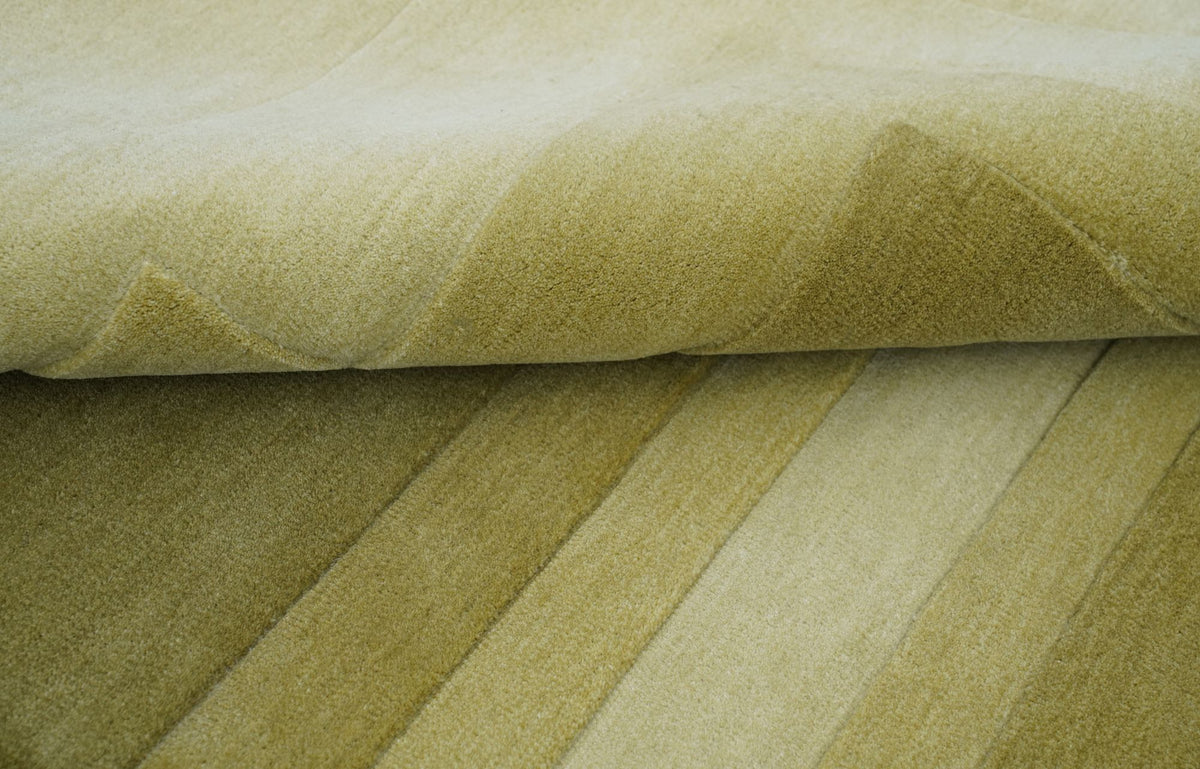
Lines that run across the width pull the walls apart visually. A rug such as the Bitte Wool Rug, hand tufted in New Zealand wool at 14 to 16 mm with small marks over a calm ground, can be laid so its rhythm crosses the room. Its regular price is ₹53,000 for 6x9 ft and ₹79,000 for 8x10 ft, ex GST at the time of writing.
Plain rugs work through tone and texture. The Grain Wool Rug in Flax is handloom New Zealand wool with a low, closely worked 12 to 14 mm surface, listed at ₹51,000 for 6x9 ft and ₹74,000 for 8x10 ft before GST. Its pale flax colour sits close to most marble and vitrified tile, so the floor seems to continue under it.
Dark rugs are not forbidden, but they shrink a narrow room when they cover most of its width. If you love a deep tone, keep it to a smaller rug with a wide pale border of floor around it.
When is a made to measure size worth it?
A made to measure rug is worth it when the room's width falls between standard sizes, for example 11.5 ft, where 6x9 ft looks small and 8x10 ft blocks the walkway. A size such as 7x10 ft solves it.

Standard sizes follow common proportions, and narrow rooms rarely do. A long living room that also has a column, a bay or a door swinging into it often needs a rug a foot narrower or two feet longer than anything on a shelf.
Rugberry makes the Grain, Cabra and Bitte rugs to any size. The customisable rugs collection lists every design that can be ordered this way, and the price follows the area, so a 7x10 ft rug sits between the 6x9 and 8x10 ft prices. Rugberry's note on rugs for odd rooms covers columns and bays.
Before ordering, mark the proposed size on the floor with painter's tape and live with it for a weekend. Walk round it, pull out the dining chairs, open the balcony door. A taped outline answers most sizing doubts better than any drawing.
How do you keep a rug in a narrow room looking good?
Rotate the rug every few months, because a narrow room concentrates footsteps along one path. Turning it 180 degrees spreads the wear across both edges.
The walkway edge always works hardest. Even with a proper walkway, people cut the corner near the sofa arm, and that strip of pile flattens first. On a low handloom rug like Grain this shows only slightly; on deeper pile it shows as a visible track until the rug is turned.
A good underlay keeps a smaller rug from creeping on marble and vitrified tile. In a long room, a rug that slides even 2 inches towards the walkway undoes the careful sizing. Rugberry's guide to rug pads in India explains which pad suits which floor.
Vacuum along the length of the room rather than across it, which follows the natural pile direction of most rugs laid parallel to the sofa. A weekly pass keeps dust from settling into the low surface, and the living room rugs collection shows which pieces are easiest to keep.
Frequently asked questions
What size rug do I need for a 10 ft wide living room?
A 10 ft wide living room usually suits a 6x9 ft rug laid with its long side parallel to the sofa. That leaves a walkway of about 3 ft on one side and a small border at the wall.
Can a runner work in a long living room?
A runner can work along a passage inside a long living room, for example from the entrance to the dining area. It should not replace the main rug under the sofa, because a runner alone makes the room read even more like a corridor.
Should the rug in a narrow room touch the walls?
No, a rug in a narrow room should leave at least 12 inches of floor between its edge and the wall. That border keeps the room from looking wall to wall and lets the floor frame the rug.
Do two rugs in one room need to match?
Two rugs in one room do not need to match, but they should share a fibre, colour family or texture. A low wool rug in the sitting area and a flat wool and jute rug under the dining table is a calm, practical pairing.
Can Rugberry make a rug to fit my room's width exactly?
Yes, Rugberry makes many of its rugs to measure in any size, including Grain, Cabra and Bitte. A size such as 7x10 ft or 7x11 ft lets the rug follow a narrow room's proportions while keeping the walkway clear.
Measure the width first, then the walkway, then choose. The living room rugs are a good place to begin. Material first.





Leave a comment
This site is protected by hCaptcha and the hCaptcha Privacy Policy and Terms of Service apply.