


Rugs in an Architect-Led Home
In an architect-led home the rug belongs in the drawings, sized against the furniture plan and the floor finish, not picked after handover. Bring it in at design development, send the maker a plan with the rug drawn on it, and the rug will sit in the room the way the room was drawn.
In short
- Architects should draw the rug at design development stage, on the furniture layout, with its size, position and the floor finish around it.
- A rug brief for Rugberry needs five things: the plan with the rug drawn, the size in cm, the fibre and construction, the colour reference and the use of the room.
- Rugberry makes any Studio Collection design, or the architect's own drawing, to measure in any size, shape or colour, and supplies a tear sheet for every rug, with CAD-ready files on request for trade members.
- Handmade rugs vary slightly from the drawn size, so detail recesses, inlays and thresholds with a margin and confirm the tolerance with the maker before the floor is finished.
When should a rug enter an architect's drawings?
A rug should enter the drawings at design development, once the furniture layout is fixed but before the floor finish is ordered. At that point its size can still change the furniture, and the furniture can still change the rug.


If the rug arrives at concept stage, it is a mood, not a size, and it will be redrawn. If it arrives after handover, it is a purchase that has to fit whatever the room became, and in a carefully proportioned house that rarely works.
Drawing the rug early also settles the floor. A recessed rug, a stone border or a timber inlay around a rug all have to be detailed before the flooring contractor starts.
It also settles the budget. A made to measure rug for a principal room is a line in the FF and E budget, and it is easier to protect when it has been drawn and priced at design development than when it appears at the end as an extra.
For clients, seeing the rug on the plan early changes the conversation. They stop asking whether they need a rug and start asking which fibre, which is the decision that matters.
What does a good rug brief contain?
A good rug brief contains the plan with the rug drawn on it, the finished size in cm, the fibre and construction, a physical colour reference and a short note on how the room is used. With those five items, the maker can price and draw the rug without guessing.
| Stage | What the architect sends | What comes back from Rugberry |
|---|---|---|
| Concept | Mood images, palette, room list | Suggested lines and fibres, swatches to handle |
| Design development | Furniture plan with rug outlines, sizes in cm, floor finish | Size check, construction advice, an indicative price |
| Specification | Final dimensions, fibre, construction, pile, colour references, shape drawing for non rectangular rugs | Tear sheet, quotation, colourway with pom numbers for custom colour |
| Approval | Signed off colourway and drawing | Order confirmed and scheduled, progress visible in the trade account |
| Site | Finished floor level, door clearances, underlay needs | Delivery to the site or to the client's address |
Our rug specification guide for architects lists every field a specification should carry, and our note on reading a rug spec sheet explains each term.
How do you size a rug against the plan?
Size the rug against the furniture and the architecture together: it should hold the front legs of the seating, sit on the room's main axis and leave an even margin of floor to the walls or to any built element. On a plan, that margin is usually where a rug looks right or wrong.

Margins and axes
Keep the floor margin between the rug and the wall roughly equal on opposite sides, often 30 to 60 cm in an Indian living room. Align the rug with the room's main axis, a window wall or a ceiling coffer, rather than with the sofa alone.
Double height and open plan rooms
In a double height room, a standard rug can look small under the volume, so draw it from the plan, not from catalogue sizes. Our guide to rugs for double height living rooms works through the proportions. In open plan homes, use two rugs to divide living and dining, with at least 60 cm of floor between them.
Non rectangular shapes
For curved or irregular rugs, send a drawing with every dimension in cm, or a full size template. Rugberry makes any shape to measure, and the shaped rugs show some of the forms already made.
How should tolerances and floor details be handled?
Treat a handmade rug like a natural material: allow a small margin wherever it meets a fixed edge, and confirm the tolerance with the maker before detailing a recess or inlay. A hand made piece is woven, tufted or knotted to the drawn size, but it will not be machine exact.
- Recessed rugs. Set the recess depth from the rug's real pile height plus any underlay, and leave a margin around the rug rather than a tight fit.
- Thresholds and doors. Check door swing against pile height. A Plush rug at 18 to 20 mm needs more clearance than Grain at 12 to 14 mm.
- Underlay. Specify a rug underlay on stone, marble and polished concrete, and include its thickness in the finished height.
- Underfloor heating and wet zones. Note them in the brief so the fibre and backing can be chosen to suit.
Draw the rug as you would draw stone: with its real thickness, a margin at every edge and a sample on the desk.
Which Rugberry pieces suit an architect-led interior?
Architect-led interiors tend to suit quiet, material-led rugs: tonal wool, hand knotted pieces with depth, and a single strong drawing rather than busy pattern. Rugberry's lines cover each of those registers.


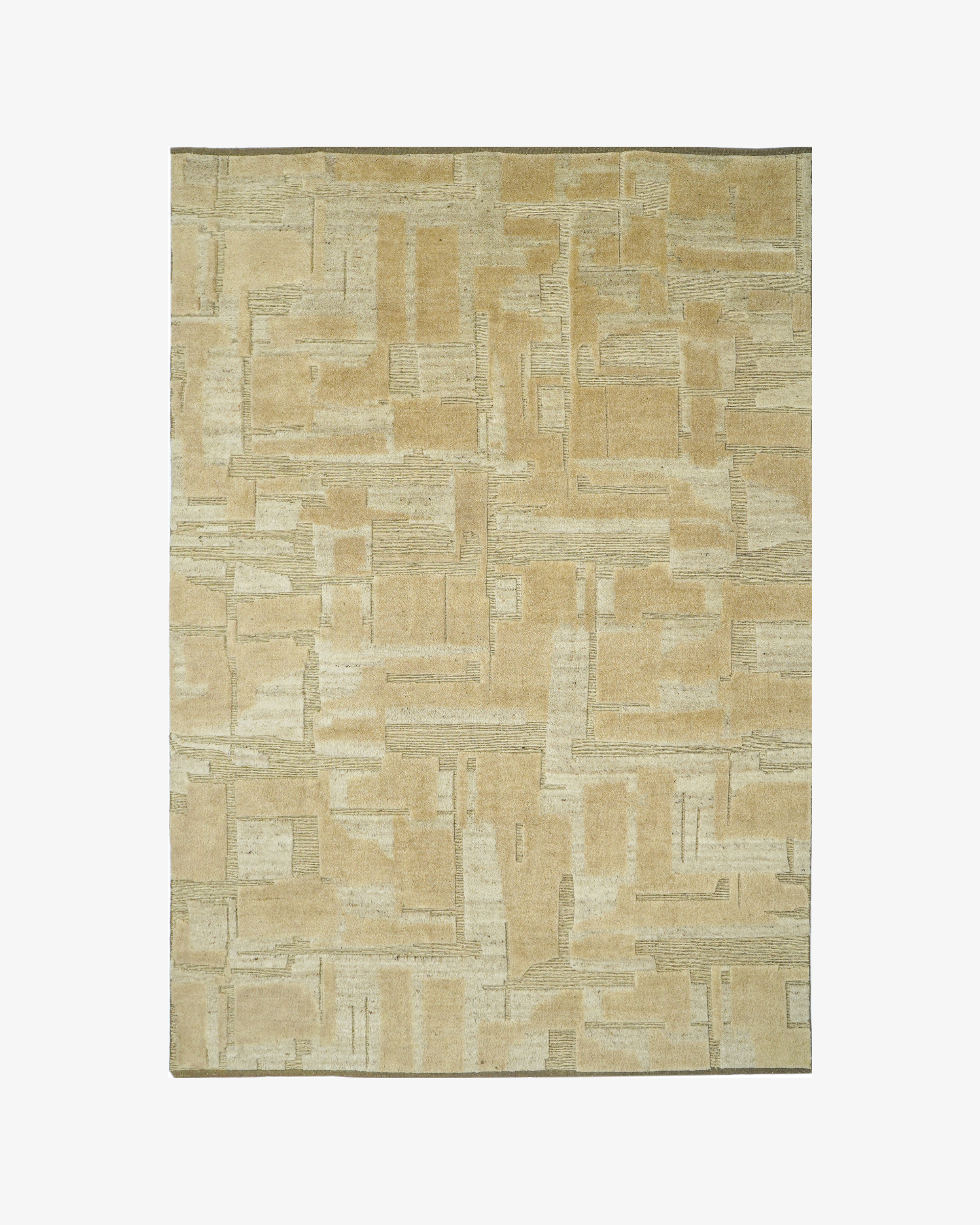
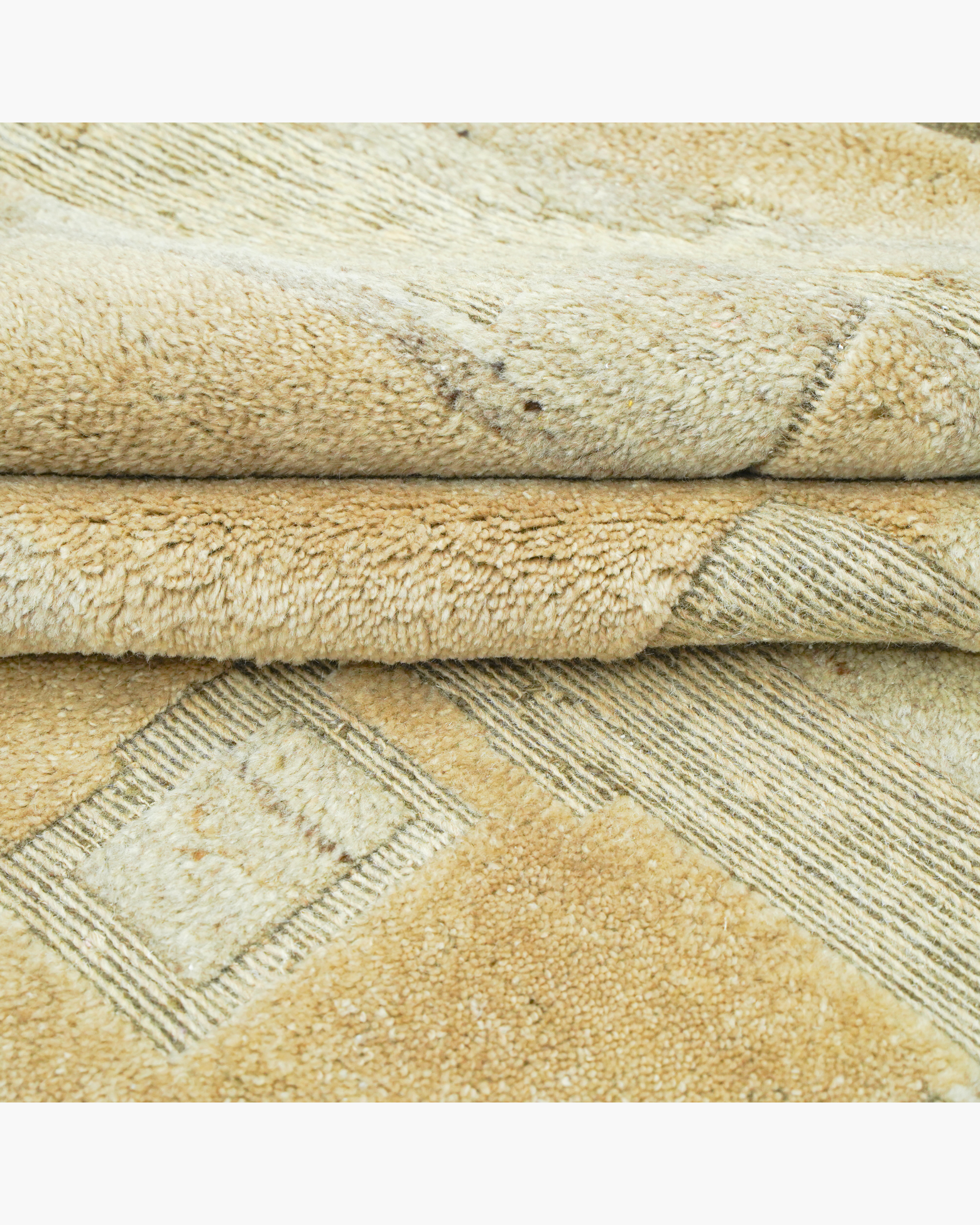
- Stratum Knotted Rug in Dune: hand knotted New Zealand wool, dense and fine, listed at 9x12 ft and made to any size. Read more in our Stratum guide.
- Insignia Wool & Silk Rug: handloom New Zealand wool and Botanical Silk at 14 to 16 mm, drawn with a single emblematic form at its centre, in six standard sizes.
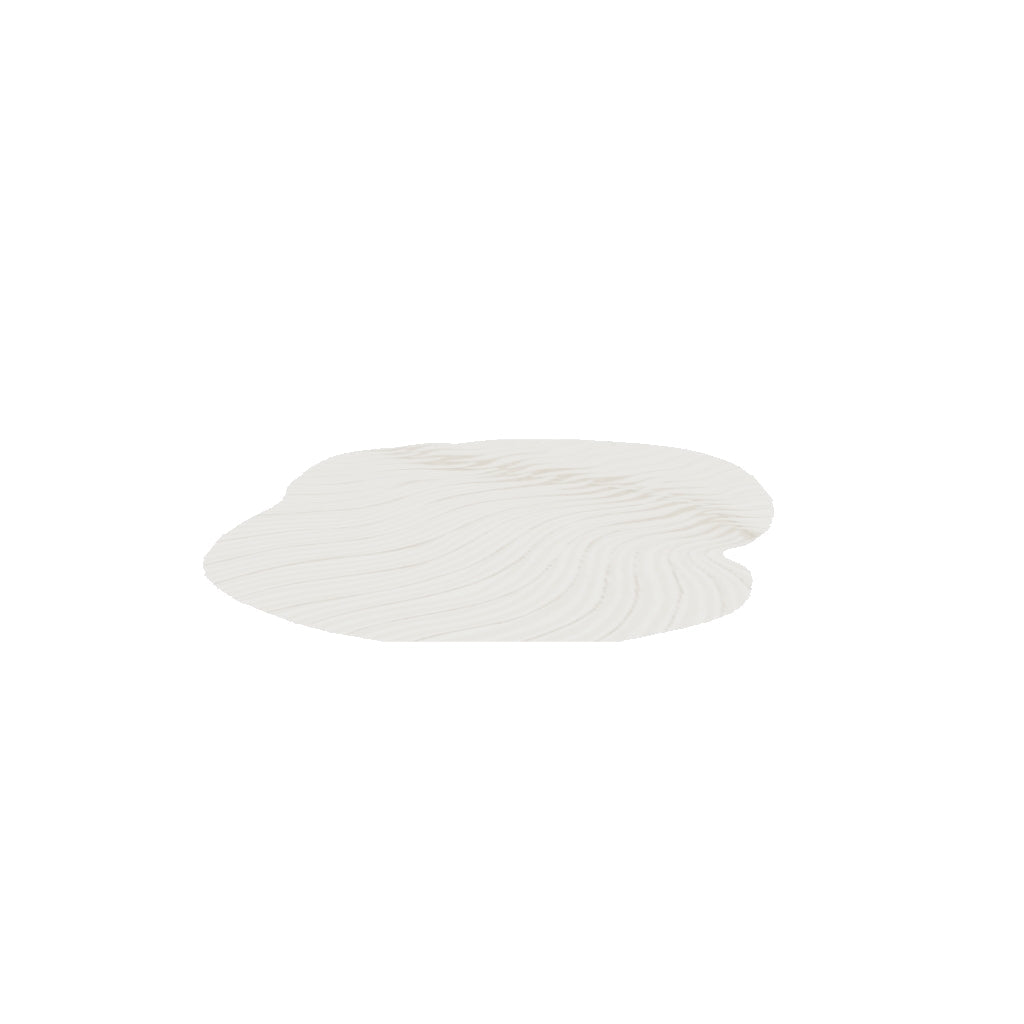
- Empreinte Rug: from the Marie Ducept x Rugberry collaboration, hand tufted New Zealand wool and Botanical Silk at 14 to 16 mm, a single soft impression across the field.
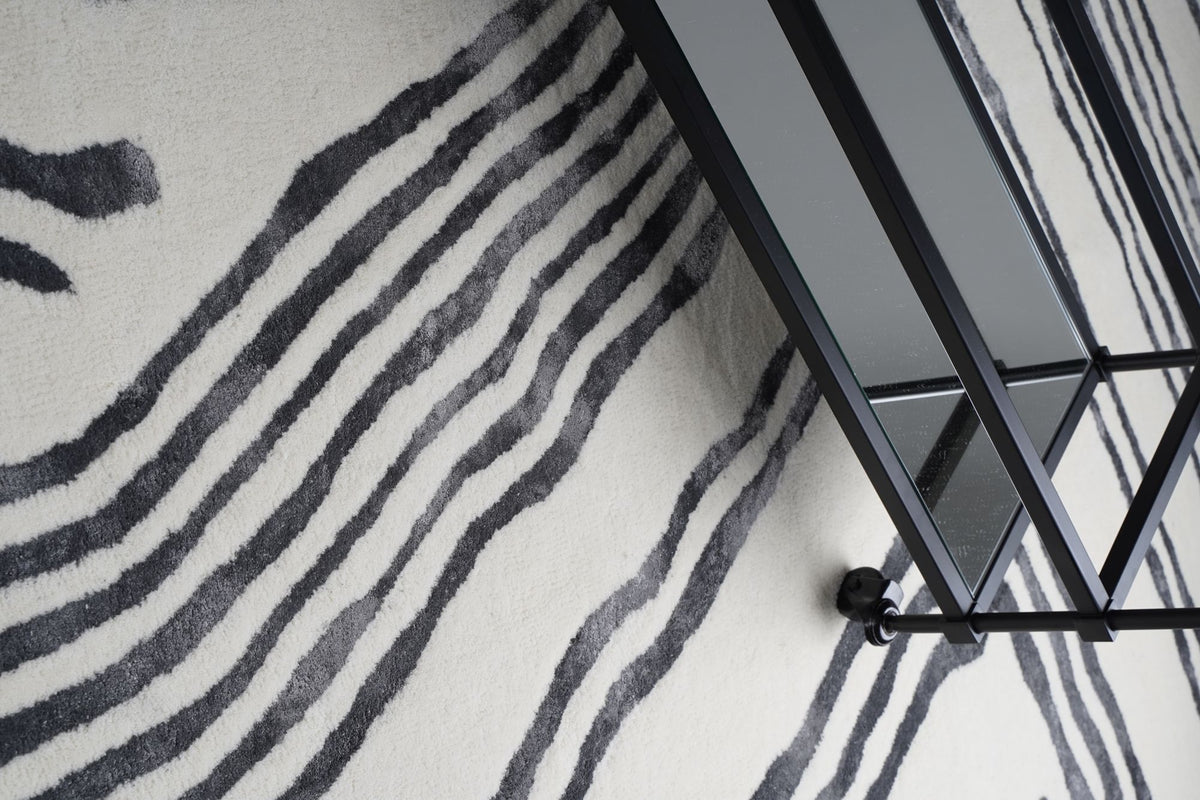
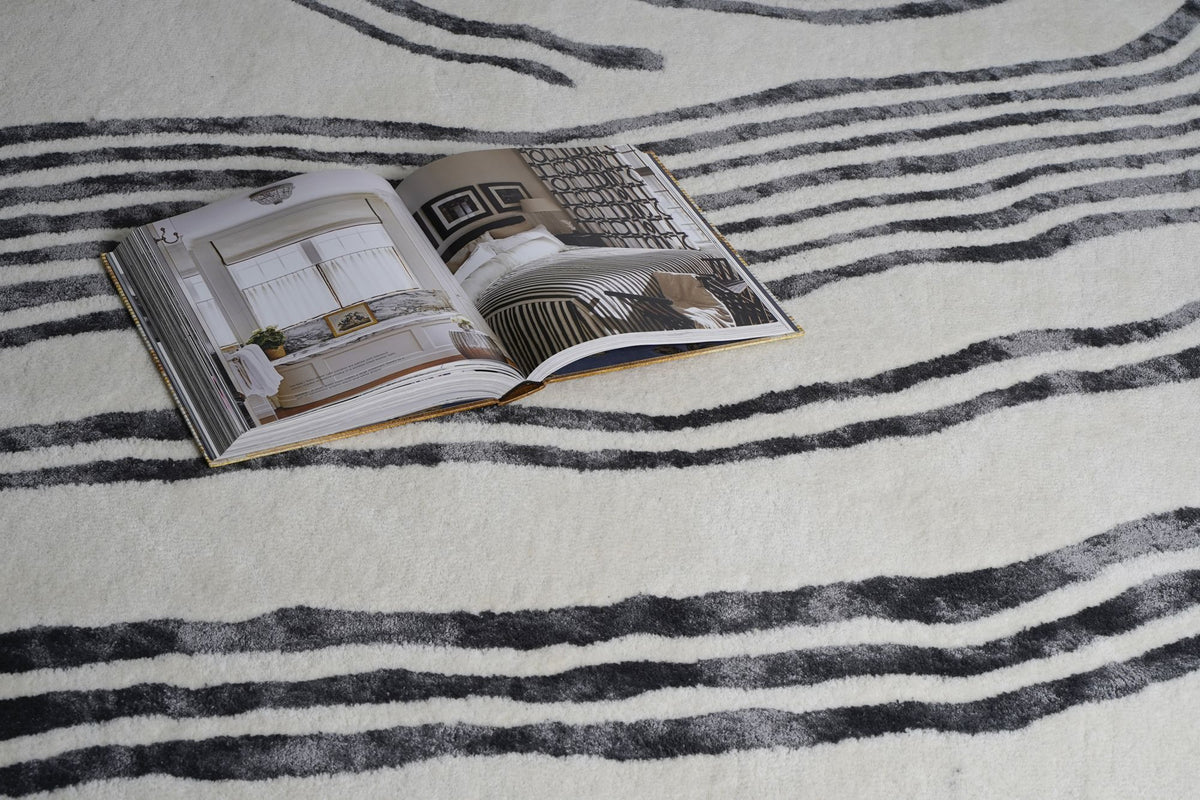
- Livid Wool & Silk Rug: hand tufted New Zealand wool and Botanical Silk at 14 to 16 mm, clouded in tone, for rooms with dark metal and glass.
For a rug designed from scratch, the architect's own drawing can be made to measure. See our guide to custom rugs for interior projects for how a drawing becomes a rug.
Choose the construction with the room's life in mind. Hand knotted wool suits a principal room meant to last for decades, handloom wool suits family rooms with daily traffic, and hand tufted wool suits a drawn design with carved lines or a strong graphic. Our hand knotted versus hand tufted comparison sets out the trade off.
How does the trade programme support an architect's practice?
The Rugberry Trade Program gives architects and interior designers one trade price on every rug, projects organised room by room, numbered quotations and a named contact, with tear sheets and CAD-ready files on request. There is no minimum order, so a single rug for one house gets the same service as a whole project.

The trade account also holds custom rugs alongside collection pieces, with a photo and size on each line, and it can produce a private client link showing the project at the price the architect chooses. Details are on the Rugberry Trade Program page.
For colour, the Rugberry Design Lab lets you recolour a Rugberry design from the pom box on screen, or upload your own drawing, then download a tearsheet with every pom number. Always approve colour against physical poms; screens show colour differently.
What do architects in India most often get wrong with rugs?
The most frequent problems are a rug sized to the room instead of the furniture, a floor finish detailed without the rug's thickness, and colour approved from a render. All three are solved by drawing the rug early and sampling it in real light.
- Sized to the room. A rug that runs wall to wall in a living room hides the floor the architect chose. Leave a margin and let the stone or timber frame the rug.
- No thickness on the drawing. A Plush rug at 18 to 20 mm plus an underlay changes door clearances and the step into a recess. Draw the section, not only the plan.
- Colour from a render. Renders flatter neutrals. Approve from physical poms and a swatch on site, at the times of day the room is used.
- One rug for an open plan. A single large rug across living and dining blurs both zones. Two rugs with floor between them read more clearly.
Kota stone, terrazzo and polished concrete, all common in Indian architect-led homes, are cool and hard. A rug in New Zealand wool warms them visually and acoustically, and our guide to rugs on marble and tile floors covers underlays for each.
Frequently asked questions
At what stage should an architect specify a rug?
An architect should specify the rug at design development, once the furniture layout is fixed and before the floor finish is ordered. That leaves time to adjust the rug size, detail any recess or inlay and approve colour from physical poms.
Can Rugberry make a rug from an architect's own drawing?
Yes. Send Rugberry the plan or CAD drawing with dimensions in cm and the colour references for the scheme, and the team prices a made to measure rug in any size, shape or colour, on the architect's drawing or a Rugberry design.
Does Rugberry supply CAD files and spec sheets?
Every Rugberry product has a downloadable tear sheet with specifications, dimensions and material details. CAD-ready files and technical documents are available to members of the Rugberry Trade Program on request.
How accurate is the size of a handmade rug?
A handmade rug is made to the drawn size but is not machine exact, so architects should allow a margin wherever it meets a fixed edge such as a recess or threshold. Confirm the tolerance for your construction with the Rugberry team before detailing the floor.
Is there a minimum order for architects?
No. The Rugberry Trade Program has no minimum order, so one rug for a single residence receives the same trade price and service as a whole project.
A drawn house deserves a drawn rug. Start with the customisable rugs. Material first.






Leave a comment
This site is protected by hCaptcha and the hCaptcha Privacy Policy and Terms of Service apply.