

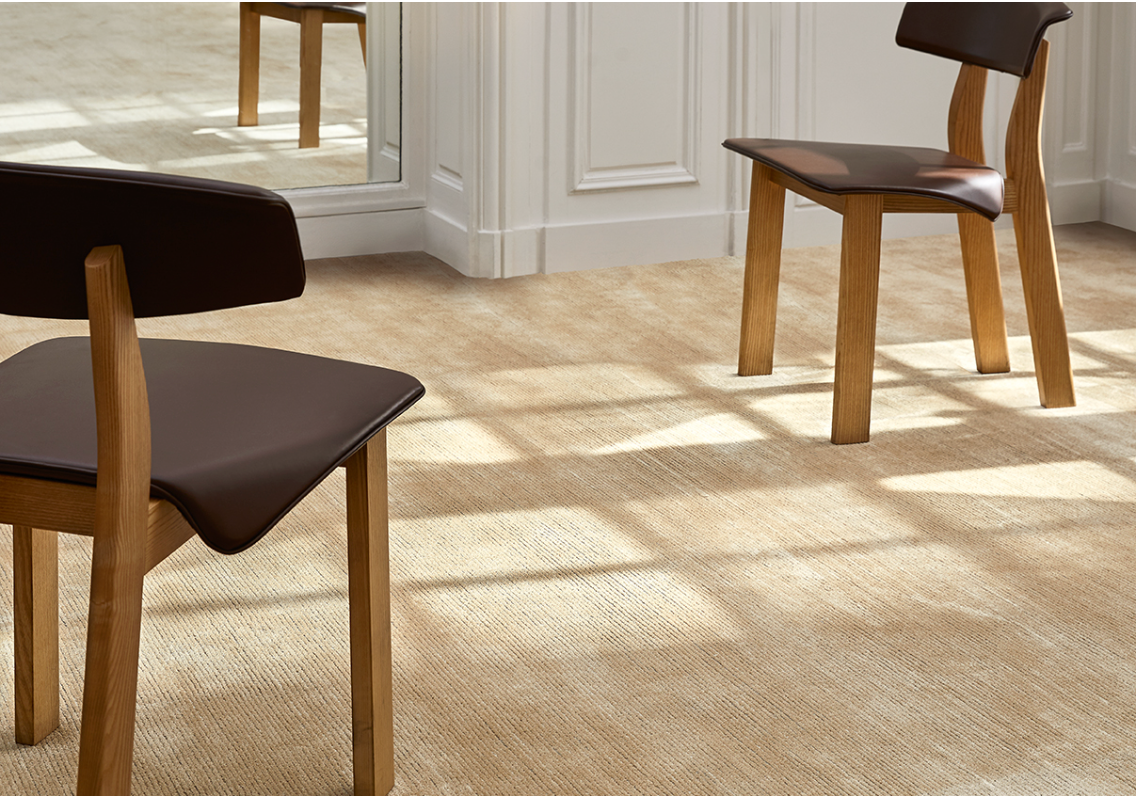

Rugs for Galleries, Exhibitions and Design Fair Stands
In a gallery or on an exhibition stand, decide first whether the rug is the exhibit or the floor. An exhibit rug is chosen like a work of art and protected from feet, while a floor rug should be low, firm, quiet in tone and fixed flat for days of heavy traffic.
In short
- A rug shown as an exhibit in a gallery is best hung on a wall or laid inside a roped or raised area, so visitors see it without walking on it.
- A rug used as the floor of an exhibition stand should be low and firm, in a mid or deep tone, because a busy fair puts more footsteps on it in four days than a home does in months.
- Rugberry drawn designs in New Zealand wool and Botanical Silk, such as Livid and Lyra, read clearly from across a hall, which suits a stand that must stop people walking past.
- Stand rugs should be fixed on an underlay or taped at the edges, rolled face in for transport and inspected between shows before they are used again.
Is the rug the exhibit or the floor?
Every gallery and stand rug is one of two things: the work being shown or the surface that frames other work. The answer changes the choice of rug, where it sits and how it is protected.


A rug as exhibit is a design piece in its own right, shown in a craft or design exhibition, a solo show of a designer, or a gallery that places textiles beside paintings and sculpture. It should be seen whole and seen closely, and it should not be walked on.
A rug as floor sits under furniture, objects or people. It belongs to an interior on show, such as a furniture brand's stand at a design fair, a gallery's reading room or the lounge where a collector waits.
Some stands do both, with one rug on the wall as the hero and a quieter one underfoot. That pairing works well when the two share a tone, so the wall piece reads as the statement and the floor as its echo.
How should a rug be shown as an exhibit?
A rug shown as an exhibit is best hung on a wall or laid flat inside a defined, unwalked area. Hanging lets visitors see the whole design at eye level, as they would a painting, and keeps shoes off the pile.
For hanging, a strip of hook and loop tape or a sleeve sewn to the back carries the weight evenly along the top edge. Never nail through the rug, and keep it out of direct spotlight heat. Our guide to hanging a rug on a wall covers the methods.
Laid flat, the rug can sit on a low plinth of 4 to 6 inches or inside a simple floor line, so visitors understand where to stop. Light it with a low, raking source as well as from above, because side light brings out carving and sheen that flat overhead light hides.
Give the label the same facts a painting gets: name, fibre, construction, size and the studio. A line such as hand tufted in New Zealand wool and Botanical Silk, 14 to 16 mm, 8x10 ft tells a visitor more than any adjective.
Which Rugberry rugs read well across a hall?
Drawn designs with strong line and contrast read best across a gallery or a fair hall, because they hold their shape at 20 or 30 ft. Quiet textures and soft gradients are lovely up close but disappear in a large, busy room.


The Livid Wool & Silk Rug is hand tufted in New Zealand wool and Botanical Silk at 14 to 16 mm, an ivory ground clouded with charcoal lines where the Botanical Silk breaks through. Its regular price is ₹40,000 for 5x8 ft, ₹79,000 for 8x10 ft and ₹1,06,000 for 9x12 ft, ex GST at the time of writing.
The Lyra Wool & Silk Rug is hand tufted in New Zealand wool and Botanical Silk at 14 to 16 mm, strung with fine vertical lines across the field. It photographs well for a stand that will be shared online, and it is priced at ₹54,000 for 6x9 ft and ₹80,000 for 8x10 ft, ex GST at the time of writing.
The Tinker Wool Rug is hand tufted in New Zealand wool at 14 to 16 mm, worked with small deliberate black marks across a plain ivory field. It has the look of a drawing left on the floor, which suits a gallery that shows works on paper. It costs ₹37,000 for 5x8 ft and ₹74,000 for 8x10 ft, ex GST at the time of writing.
Decide first whether the rug is the work on show or the floor beneath it. Everything else follows.
What should a stand floor rug be made of?
A stand floor rug should be low, dense and firm, in a tone deeper than the hall's carpet tiles or concrete, because it takes concentrated traffic for several long days. Hand tufted wool at 14 to 16 mm or a flat wool and jute weave both cope well.


Avoid a pale rug as the walked floor of a busy stand. Thousands of shoes carry dust from the parking area and the outdoor food court, and an ivory surface greys within the first afternoon.
The Clique Wool Rug in Bone White is hand tufted in New Zealand wool at 14 to 16 mm, with clustered forms gathering across the ground. It suits the protected parts of a stand, such as under a display table or inside a styled room set that visitors view from its edge, and costs ₹37,000 for 5x8 ft and ₹74,000 for 8x10 ft, ex GST at the time of writing.
For the walked zone, choose a mid tone or a drawn design on a darker ground, and set furniture on it so people naturally walk around rather than across. Our notes on rugs for high traffic areas explain why density matters more than thickness.
How do platforms and hall floors change the plan?
Most stands sit on a raised timber or board platform, often 50 to 100 mm high, and the rug must sit back from its edge. Keep at least 6 inches of platform clear at the front, so no one catches a toe where the stand meets the aisle.


| Setting | Rug role | Typical size | Fixing | Tone |
|---|---|---|---|---|
| Gallery wall | Exhibit | 5x8 to 9x12 ft | Hook and loop or sleeve | Any, lit from the side |
| Gallery floor, roped or on a plinth | Exhibit | 6x9 to 10x14 ft | None needed | Any |
| Fair stand room set | Floor, lightly walked | 8x10 or 9x12 ft | Underlay or edge tape | Mid tone or drawn |
| Fair stand open front | Floor, heavily walked | Made to measure | Edge tape to the platform | Mid or deep tone |
| Gallery lounge or reading room | Floor | 6x9 or 8x10 ft | Underlay | Quiet, close to the walls |
On a board platform, use a thin underlay or double sided rug tape that peels away cleanly, and test it on an offcut first. On polished concrete in a gallery, an underlay cut 2 inches smaller than the rug keeps the edges down without marking the floor.
Check the hall rules before the build. Many exhibition venues have their own requirements for floor coverings on stands, and the stand designer should confirm what documents the organiser asks for well before the rug is ordered.
Run every cable for lighting and screens under the platform, never under the rug. A cable beneath the pile shows as a ridge and soon wears a line into it.
How do you move, store and re-use show rugs?
Roll every show rug face in, around a tube, with acid free paper or a clean cotton sheet between layers, and wrap it in a breathable cover rather than plastic. Folding leaves creases that take days to relax under the lights.
After each show, vacuum both sides, check the edges and binding, and have the rug professionally cleaned before it goes to the next venue. A rug that toured three fairs a year will need more care than one that sits in a gallery lounge.
Keep a simple log per rug: design, colourway, size, the shows it has been to and any repairs. Brands that build stands repeatedly find that two or three well made rugs, rotated and cleaned, outlast and outperform a fresh cheap rug for every event.
How do galleries and exhibitors order through Rugberry?
Galleries, exhibitors and the designers who build their stands usually order through the Rugberry trade programme, which gives one trade rate and a single contact for a project. Made to measure sizes suit platforms that rarely match a standard rug.

Start with swatches and lay them on the actual platform material under the hall's lighting, which is often cold and bright. Our note on rug samples for designers explains how to request them.
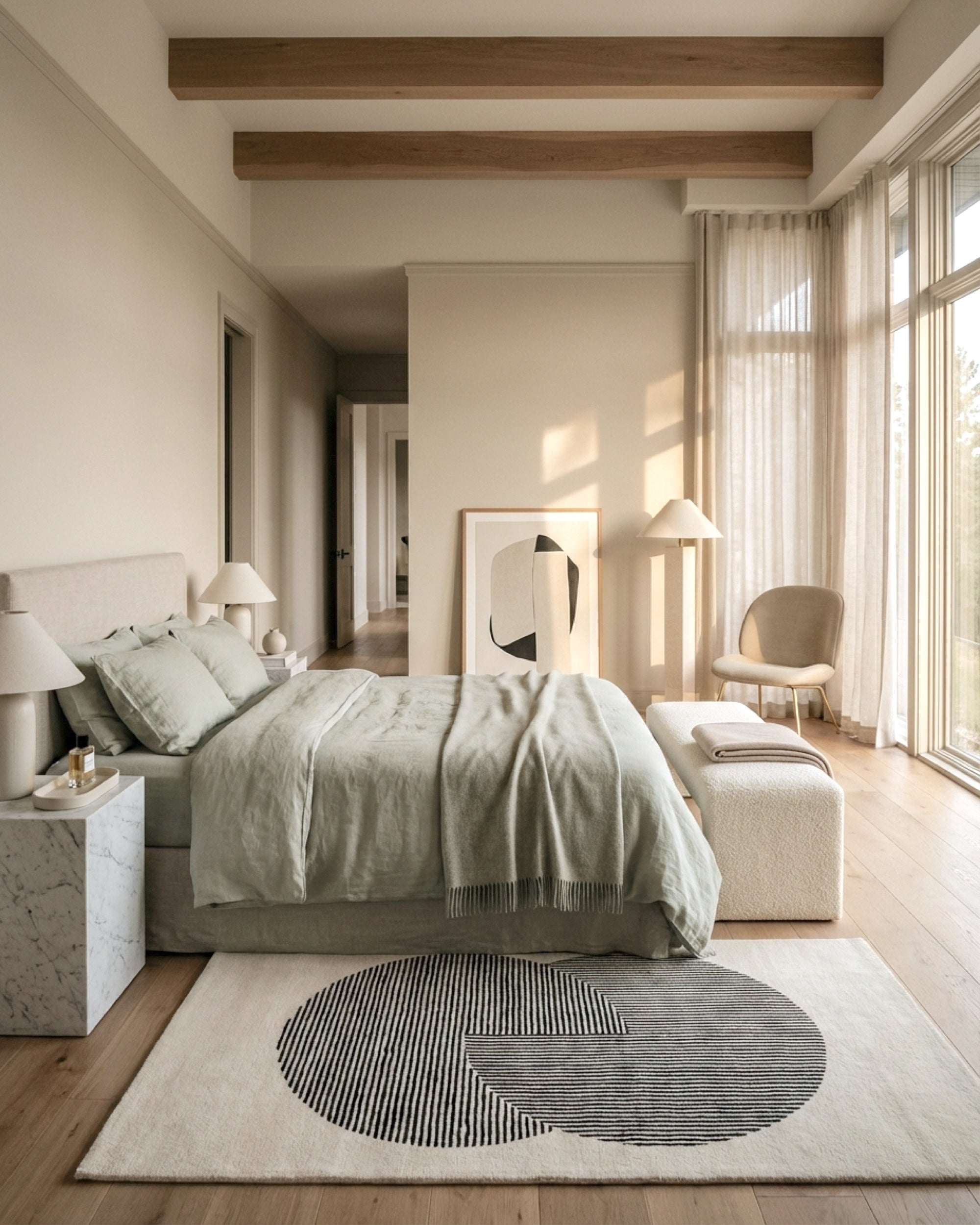
When a stand will be photographed, plan the rug with the camera in mind. Our guide to styling rugs for interior photography and our note on pairing a rug with wall art cover framing, light and how a rug sits beside paintings.
Frequently asked questions
Can a hand tufted rug be hung on a gallery wall?
A hand tufted rug can be hung safely if the weight is carried evenly along the top edge by a sewn sleeve or hook and loop tape. Ask for a backing that suits hanging when ordering, and take the rug down periodically to rest it flat.
What size rug suits a 3 x 3 metre exhibition stand?
A 3 x 3 metre stand, about 10 x 10 ft, usually takes a 6x9 ft or 8x8 ft rug that leaves a clear margin at the front and sides. A rug made to measure can follow the exact platform, less 6 inches at the open edges.
How should a rug on an exhibition stand be cleaned each day?
Vacuum the stand rug every morning before doors open and again at the close, working with the direction of the pile. Keep a white cloth and plain water on the stand for spills, and blot without rubbing.
Can a design fair rug be sold after the show?
A rug used lightly inside a room set can often be cleaned and sold or used again, while a heavily walked rug at the stand front is better kept as a working stand rug. Record the condition after each show, so the decision is honest.
Does Rugberry lend rugs for exhibitions?
Exhibitions and galleries should speak to Rugberry about their project through the trade programme, which handles orders for spaces like these. Share the dates, the platform drawing and whether the rug is an exhibit or the floor.
Choose the rug's role first, then its fibre, tone and fixing. See the pattern rugs and the customisable rugs. Material first.




Leave a comment
This site is protected by hCaptcha and the hCaptcha Privacy Policy and Terms of Service apply.