





Wool vs Acrylic Rugs: How to Tell Them Apart
Wool and acrylic can look alike in a photograph, but wool feels drier and springier, sheds soft fluff rather than hard pills, and chars rather than melts near heat. Acrylic is a cheaper synthetic made to imitate wool, and it shows the difference within a year or two as it pills, flattens and turns shiny.
In short
- Acrylic is a synthetic fibre spun to imitate wool, and it is often sold under phrases such as faux wool, wool look or wool touch.
- An acrylic rug usually pills into small hard balls that cling to the pile, while a wool rug sheds loose soft fluff that vacuums away and slows with time.
- Acrylic melts and burns readily near a flame, while wool is slow to catch fire and tends to char, which matters near diyas and heaters.
- Acrylic holds bright colour well in sun and costs far less, so it can suit a short term or children's room, but wool lasts and ages better in a main living space.
What is the difference between a wool rug and an acrylic rug?
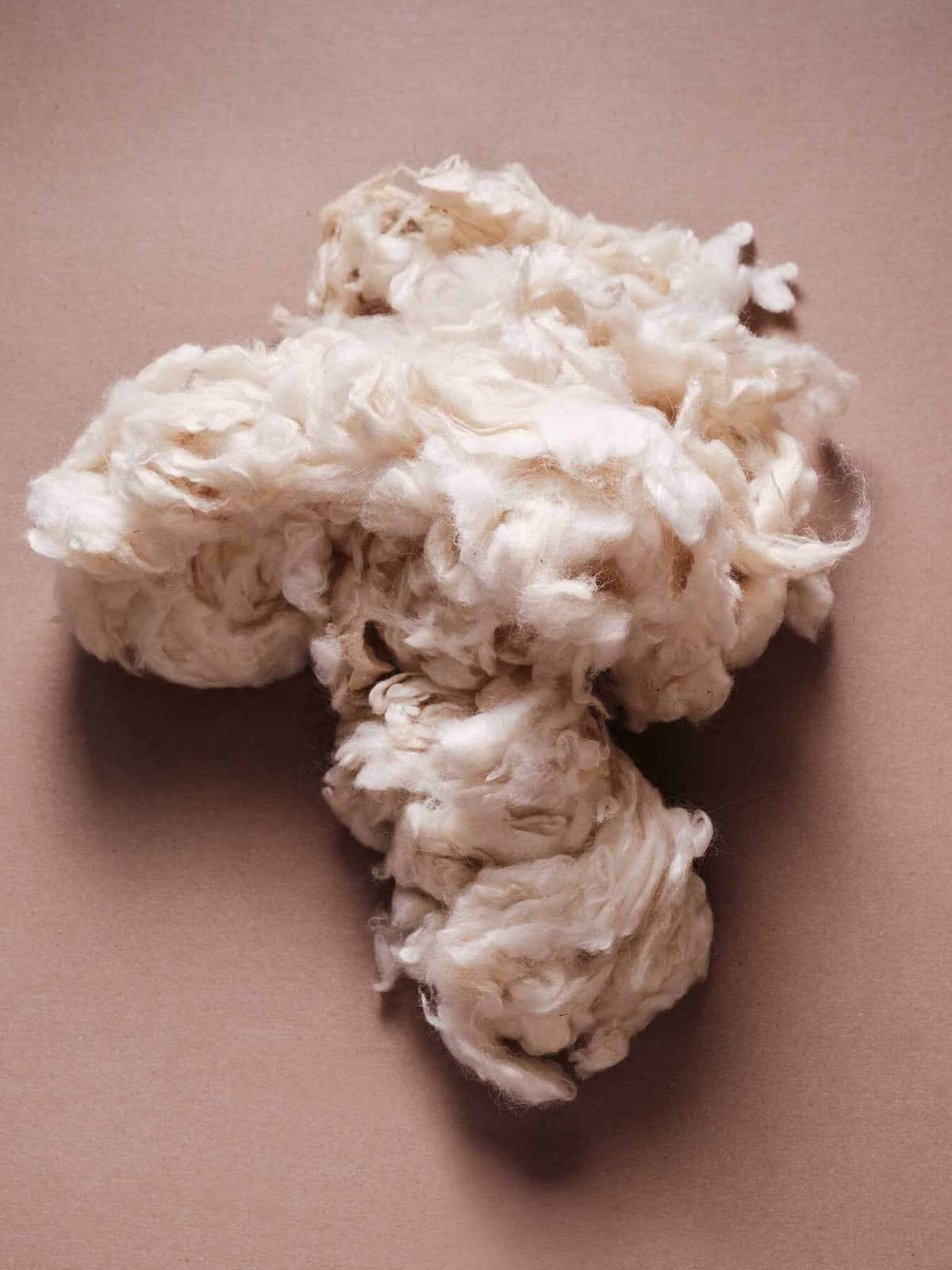
A wool rug is made from the fleece of sheep, a natural protein fibre with crimp, scales and a waxy coat of lanolin. An acrylic rug is made from a synthetic fibre spun from petrochemicals and cut and crimped to imitate wool, at a much lower cost.
The differences start inside the fibre. Wool is irregular, wavy and slightly elastic, and it takes moisture from the air into its core. Acrylic is smooth, uniform and takes up very little moisture, so it behaves more like a plastic thread with a woolly finish than like wool.
That is why the two can look identical when new and very different a year later. Acrylic is designed to copy the first impression of wool: its loft, its matt look, its warm colours. It cannot copy wool's recovery, its handling of moisture or the way it ages.
Why are acrylic rugs sold as wool look?
Acrylic rugs are sold as wool look because acrylic was developed as a wool substitute and is far cheaper, so the comparison is the selling point. Phrases such as faux wool, wool touch, woolly feel and wool effect usually mean the rug contains no wool at all.
None of these phrases is a fibre. A trustworthy listing names the fibre outright and gives the construction, such as New Zealand wool, hand tufted. Our guide on how to check what a rug is made of lists the wording to question and what the back of a rug reveals.
A wool blend needs the same care. A rug sold as a wool blend can be mostly wool with a little synthetic, or mostly acrylic with a small share of wool for the label. Ask for the percentages before you pay.
How does an acrylic rug age compared with wool?
An acrylic rug ages by pilling, flattening and turning shiny, while a wool rug ages by shedding a little at first and then wearing slowly and evenly. The difference is usually plain within the first year in a living room.


Pilling. Acrylic fibres are strong, so when they tangle into little balls on the surface the balls stay attached and build up in walkways. Wool fibres are weaker at that scale, so loose ends break away as fluff instead of forming lasting pills, and our guide to why new wool rugs shed explains why that settles.
Flattening and shine. Acrylic has little natural spring, so a pile flattened by feet or furniture tends to stay down, and the flattened fibres reflect light as a greasy looking shine. Wool's crimp lets it rise again, and its surface keeps a low, matt lustre rather than a glare.
Acrylic copies how wool looks on the first day. Wool is judged on the thousandth.
Which simple checks tell wool and acrylic apart?
Seven simple checks tell wool and acrylic apart without damaging the rug: touch, press, look closely, watch the fluff, listen for static, compare the price and read the label. No single check is proof, but four or five pointing the same way are a reliable answer.

- Touch. Wool feels dry, slightly warm and faintly textured. Acrylic feels smooth, sometimes slippery, and on a humid day it can feel a little clammy.
- Press and release. Push your palm into the pile for ten seconds and lift. Wool rises steadily; acrylic often stays dented or rises unevenly.
- Look closely. Use your phone camera zoomed in on a tuft. Wool fibres wave and vary in thickness; acrylic fibres look regular and evenly crimped, like a machine made curl.
- Watch the fluff. Wool sheds soft, loose fluff that collects in the vacuum. Acrylic forms bobbles that stay on the surface.
- Listen for static. On a dry winter day, rub the pile briskly with your hand. Acrylic often crackles or makes your hair lift; wool rarely does.
- Compare the price. A large hand made wool rug costs tens of thousands of rupees. A large wool look rug at a small fraction of that is almost certainly synthetic.
- Read the label. Ask for the fibre content and the construction in writing. A seller who knows the rug is wool will say so plainly.
Skip the burn test on a rug you are buying. It damages the rug, and it is unreliable on blends, so the checks above are both safer and more useful.
How do wool and acrylic behave near heat and flame?
Wool is naturally slow to catch fire and tends to char and stop burning when the flame is removed, while acrylic burns readily and melts, and burning drops can stick to skin. This is one of the most practical differences in Indian homes, where open flames sit on or near the floor.
Diwali diyas, puja lamps, agarbattis, angithis and room heaters all bring heat close to rugs. A spark on wool usually leaves a small scorch that can be trimmed; on acrylic it can leave a melted crater. Our guide to diyas near a rug covers safe distances for festivals on any rug.
Heat from below matters too. Acrylic softens at lower temperatures than wool can tolerate, so a hot iron, a hair straightener or a pan set down on the rug can glaze the surface. No rug is fireproof, but wool gives you more margin.
How do wool and acrylic compare, point by point?
Wool beats acrylic on feel, recovery, heat behaviour and ageing, while acrylic beats wool on starting price and on holding bright colour in strong sun. The table below sets out the trade-offs for an Indian home.


| Property | Wool | Acrylic | Better in an Indian home |
|---|---|---|---|
| Feel | Dry, warm, springy | Smooth, can feel clammy | Wool |
| Recovery from pressure | Rises again | Tends to stay flat | Wool |
| Surface over time | Sheds fluff early, then wears evenly | Pills and turns shiny in walkways | Wool |
| Static in dry air | Low | Higher | Wool |
| Heat and flame | Slow to burn, chars | Burns and melts | Wool |
| Bright colour in sun | Fades slowly | Holds colour well | Acrylic |
| Moisture | Absorbs vapour, dries slowly when soaked | Absorbs little, dries fast | Depends on the room |
| Starting price | Higher | Much lower | Acrylic |
Verdict: for a living room or bedroom rug you expect to keep for years, choose wool over acrylic, because it recovers from daily use, is safer near flame and ages without pilling or shine; choose acrylic only where low cost and bright colour matter more than longevity.
When is an acrylic rug a reasonable choice?
An acrylic rug is a reasonable choice for a short term room, such as a child's room you will redo in a few years, a rental you will leave, or a sunny corner where you want a bright colour that will not fade. It is also fine for a doorway mat you expect to replace.

In those places, acrylic's weaknesses matter less. A child grows out of a cartoon colour scheme before pilling becomes a problem, and a rug in a rented flat may not need to outlast the lease. Acrylic also washes and dries more easily than a large wool rug, which helps where spills are frequent and the rug is small.
Keep acrylic away from the puja corner, the heater and the place where diyas sit at Diwali. And for the main living room, where a rug is seen and used every day for a decade, the lower price often turns out to be the higher cost per year; our guide on whether a wool rug is worth it in India works through that sum.
Which Rugberry wool rugs show what real wool feels like?
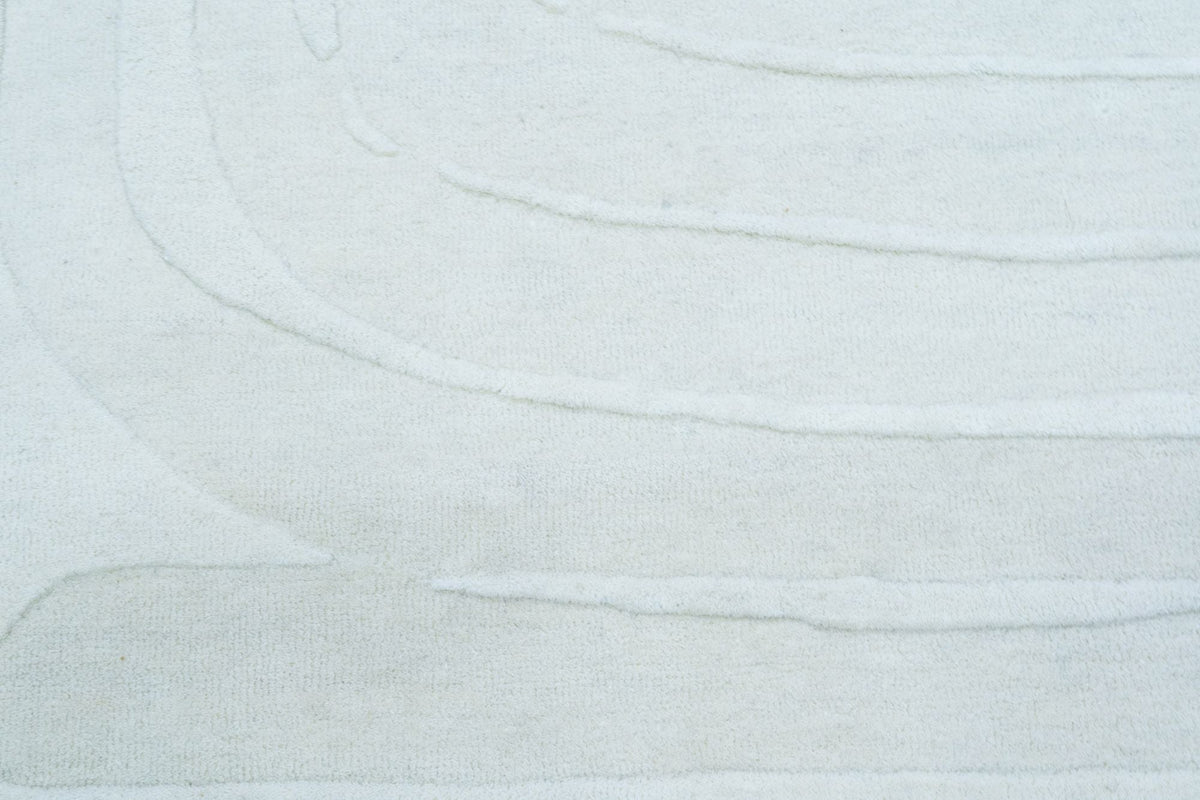
To feel the difference for yourself, compare Rugberry's Ivory Wool Rug, the Plush collection and the Greige Wool Rug, all in New Zealand wool. Each shows a different side of wool: a plain handloom pile, a deep handloom pile and a dense hand tufted pile.

The Ivory Wool Rug is handloom woven in New Zealand wool at 14 to 16 mm, a soft ivory plain enough to sit under anything, from about ₹30,240, inclusive of GST at the time of writing. In the 5x8 ft size that is about ₹756 per sq ft, a useful benchmark when a large wool look rug is priced at a fraction of that.
The Plush Wool Rug in Sand is handloom woven at 18 to 20 mm, from about ₹33,600 at the time of writing, and it is the clearest answer to an acrylic shag: deep and soft, yet springing back under the hand. The Greige Wool Rug is hand tufted at 14 to 16 mm in a grey that leans warm, from about ₹33,600 at the time of writing. For a low, textured weave, the Grain Wool Rug in Flax shows the irregular, lively surface no synthetic quite copies.
See all wool rugs and the Plush collection at Rugberry.
Frequently asked questions
Is acrylic the same as faux wool?
In rugs, faux wool almost always means acrylic or a blend led by acrylic. The phrase describes a look, not a fibre, so ask what the pile yarn actually is.
Why does my new rug have little balls all over it?
Small hard balls that stay on the pile are pills, and they are typical of acrylic and other synthetics. A wool rug sheds loose fluff instead, which lifts away with regular vacuuming rather than building up.
What are the main disadvantages of acrylic?
The main disadvantages of an acrylic carpet or rug are pilling, flattening in walkways, a shine that grows with wear, static in dry weather and melting near heat. Its advantages are a low price and bright colours that resist fading.
Is an acrylic rug safe for a baby's room?
Acrylic is widely used in children's rooms and is easy to wash in small sizes. Keep it well away from heaters and lamps, and choose a low, dense pile so small hands do not pull loose fibres.
Can a rug be part wool and part acrylic?
Yes, wool and acrylic blends are common in machine made rugs. Ask for the percentages, because a blend that is mostly acrylic will age like acrylic even if the label leads with wool.
The feel of real wool is the quickest answer. Material first.




Leave a comment
This site is protected by hCaptcha and the hCaptcha Privacy Policy and Terms of Service apply.