



How to Check What a Rug Is Made Of
To check what a rug is made of, start with the written listing: it should name every fibre and the construction, not a feel such as soft or silky. Then look at the back, part the pile, compare the sheen in daylight and, where you can, test a swatch at home. Avoid burn tests on a new rug.
In short
- A trustworthy rug listing names each fibre, such as New Zealand wool, jute or Botanical Silk, and the construction, such as hand tufted or handloom.
- Words that describe a feel, such as silky, wool touch or natural look, say nothing about what the yarn actually is.
- The back of a rug shows its construction, and parting the pile shows whether the yarn is spun fibre with a natural crimp or a smooth extruded strand.
- Rugberry lists fibre, grade, construction and technique on every product page in a provenance card, and sells a 30 x 30 cm swatch of any rug for INR 800.
What should a rug listing tell you in writing?
A rug listing should tell you, in plain words, every fibre in the yarn and the method used to make the rug. If a seller cannot put both in writing before you pay, you cannot check the rug against anything once it arrives.
The fibre line matters most. New Zealand wool, Indian wool, jute, cotton, Botanical Silk, silk from silkworms and synthetic yarns all look similar in a photograph, yet they behave very differently on an Indian floor. A rug described only by colour and pattern leaves the most important fact out.
Next comes construction. Hand knotted, handloom, hand tufted and hand woven rugs are built in different ways, and each one wears, cleans and ages in its own manner. Our guide to the four rug constructions sets them side by side.
Finally, look for the numbers that let you compare like with like: pile height in millimetres, the exact size in feet or centimetres, and a care instruction that matches the fibre. A wool rug that says machine wash, for example, deserves a second question.
Which listing words describe a feel rather than a fibre?
Words such as silky, wool touch, cotton feel, natural look and luxe blend describe how a rug is meant to feel, not what it is made of. They are often used when the yarn is a synthetic chosen to imitate a natural fibre, so treat them as a prompt to ask.
Blends need the same care. A rug labelled wool blend can be mostly wool with a little nylon for strength, or mostly polyester with a little wool for the label. Ask for the proportion, or at least the order of the fibres from most to least.
| Listing says | What it can mean | What to ask |
|---|---|---|
| Silky, silk look, silk touch | Silk, Botanical Silk, or a shiny synthetic | Which fibre gives the sheen, and is it from silkworms or plants? |
| Wool feel, wool touch | Wool, or acrylic or polyester made to feel like it | Is the pile yarn wool, and which wool? |
| Wool blend | Anything from mostly wool to mostly synthetic | What are the fibres and their proportions? |
| Natural fibre | Jute, sisal, cotton, wool or a mix | Which natural fibre, and is anything else in the yarn? |
| Handmade | Hand knotted, handloom, hand tufted or hand woven | Which of the four constructions? |
Verdict: a listing you can rely on names the fibre and the construction outright, and any word that only describes a feel should lead to a direct question before you pay.
What does the back of a rug reveal?
The back of a rug reveals how it was made, which narrows down what it can be made of. Turn a corner over in good light and look before you look at anything else.


A hand tufted rug has a cloth backing glued over the yarn loops, usually with a binding sewn along the edge. A hand knotted rug shows its knots on the back as a grid that mirrors the pattern on the face. A handloom or hand woven rug shows woven yarn on both sides with no glued cloth at all.
The Flair Wool Rug shows the first case clearly. Turn it over and you see a pale backing cloth and a black binding, the signs of a hand tufted construction in New Zealand wool at 14 to 16 mm. Its regular price is ₹37,000 for 5x8 ft and ₹74,000 for 8x10 ft, ex GST at the time of writing.
The back cannot tell you the fibre on its own. A tufted backing looks much the same whether the pile above it is wool or acrylic, which is why the next check is the pile itself. Our guide to telling a handmade rug from a machine made one covers the backs of machine made rugs in detail.
How can you check the pile by hand and eye?
You can check the pile by parting it with two fingers and looking at a single tuft closely. Spun natural fibre shows fine hairs, a slight wave and small differences in tone, while many synthetics show smooth, even strands that look almost like fishing line.

Roll a few tufts between finger and thumb. Wool has a springy, slightly dry hand and bounces back when pressed. Acrylic tends to feel warm and slippery, and polyester can feel cool and plasticky. Jute is stiff and fibrous, with a grassy smell when it is new.
Look at the colour in the yarn too. Natural fibres take dye with slight variation from batch to batch, which shows as gentle shifts across the field, described in our guide to abrash in handmade rugs. A perfectly flat colour is not proof of a synthetic, but it is a reason to read the fibre line again.
If a seller will not name the fibre in writing, the rug is not ready to be bought.
Can sheen and smell tell you anything?
Sheen and smell give useful hints but never proof. Wool has a low, soft lustre, Botanical Silk and silk catch light strongly, and many synthetics shine with an even, glassy glare that looks the same from every angle.
Walk around the rug in daylight. A wool and Botanical Silk rug such as the Livid Wool & Silk Rug changes as you move, because the plant-based Botanical Silk lines catch the light while the New Zealand wool around them stays matt. It is hand tufted at 14 to 16 mm, ₹40,000 for 5x8 ft at regular price, ex GST at the time of writing.
A new wool rug may carry a faint, clean smell of wool for a few days, and jute has its own dry, hay like scent. A strong chemical smell that does not fade points to the latex or adhesives in the backing more than to the pile, and is worth airing out in a ventilated room.
Why is a burn test a bad idea on a new rug?
A burn test is a bad idea on a new rug because it damages the piece, can mislead you and is a fire risk indoors. It belongs in a lab or with a specialist, not on the edge of a rug you have just paid for.
The theory is simple: wool smoulders and smells of singed hair, plant fibres burn like paper, and many synthetics melt into a hard bead. In practice, a single pulled tuft may come from a different yarn than the rest, dyes and finishes change how it burns, and a blend gives a confusing result.
Cutting or pulling yarn also weakens the pile and can void any defect claim, since the damage is now yours. If you genuinely doubt a rug's fibre, ask the seller in writing, or ask a professional rug cleaner, who identifies fibres before choosing a cleaning method.
How does a swatch help you check the fibre at home?
A swatch lets you check fibre, feel and colour at home before the full rug is made or shipped, without any risk to the rug itself. You can handle it, walk on it, look at it at different times of day and keep it as a reference.

At Rugberry a 30 x 30 cm swatch of any rug costs INR 800, is posted anywhere in India, and its full value is credited against the rug order. Our guide to why a swatch is worth ordering explains how to test one against your floor and sofa.
The Botanical Wool Rug is a good example of what a swatch settles. Its terracotta tan leaf sprays sit on an ivory field of hand tufted New Zealand wool, and a swatch shows the true warmth of that tan in your light. It is ₹32,000 for 5x8 ft at regular price, ex GST at the time of writing.
How does a provenance card make checking easier?
A provenance card makes checking easier because it states the facts you would otherwise have to ask for, in the same order on every rug. You can then compare two rugs line by line instead of guessing from photographs.

Every Rugberry product page carries one, with eight facts: fibre, grade, origin, character, construction, technique, made and care. The provenance card entry in our glossary defines each line, and our guide to the provenance card walks through a real example.
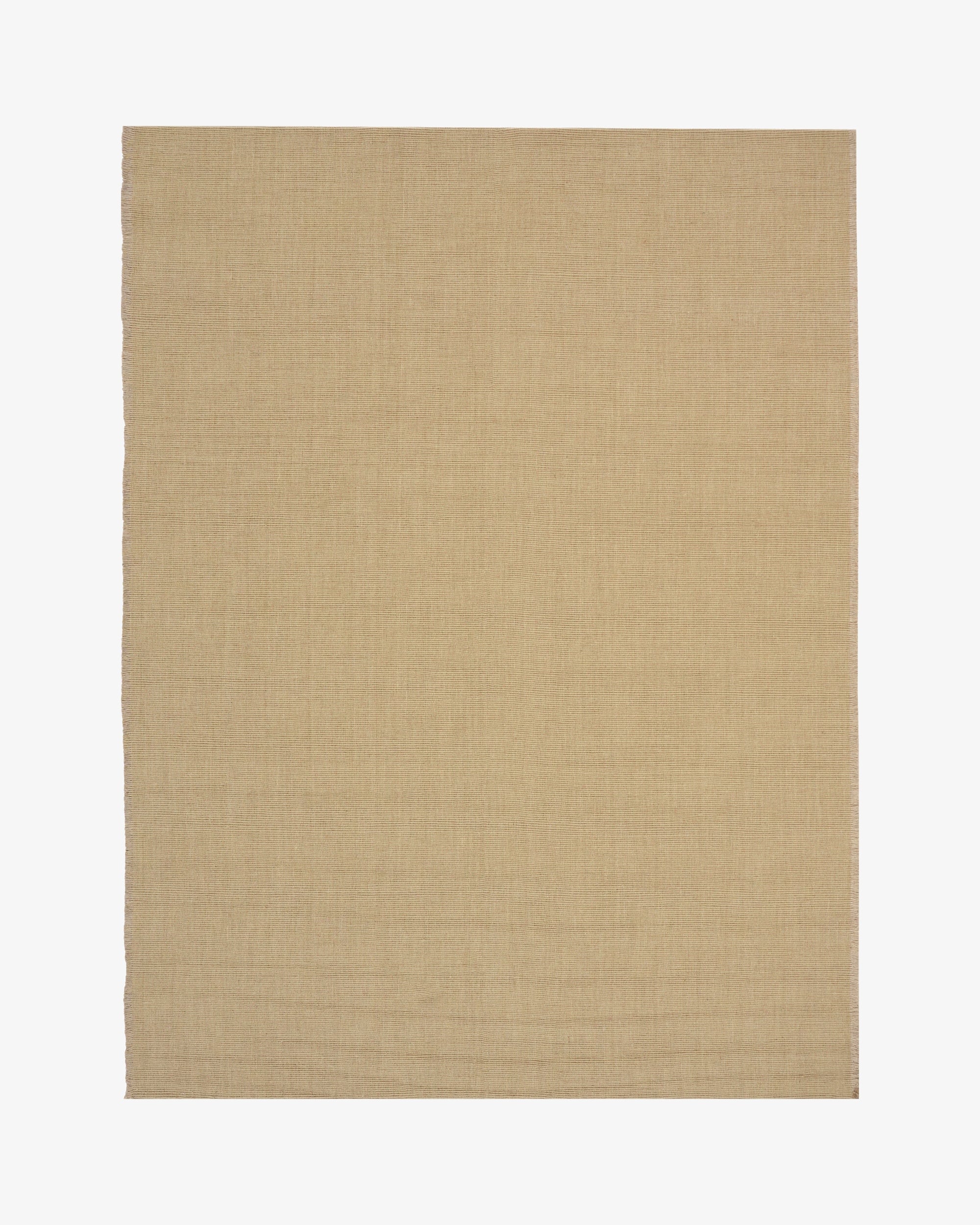
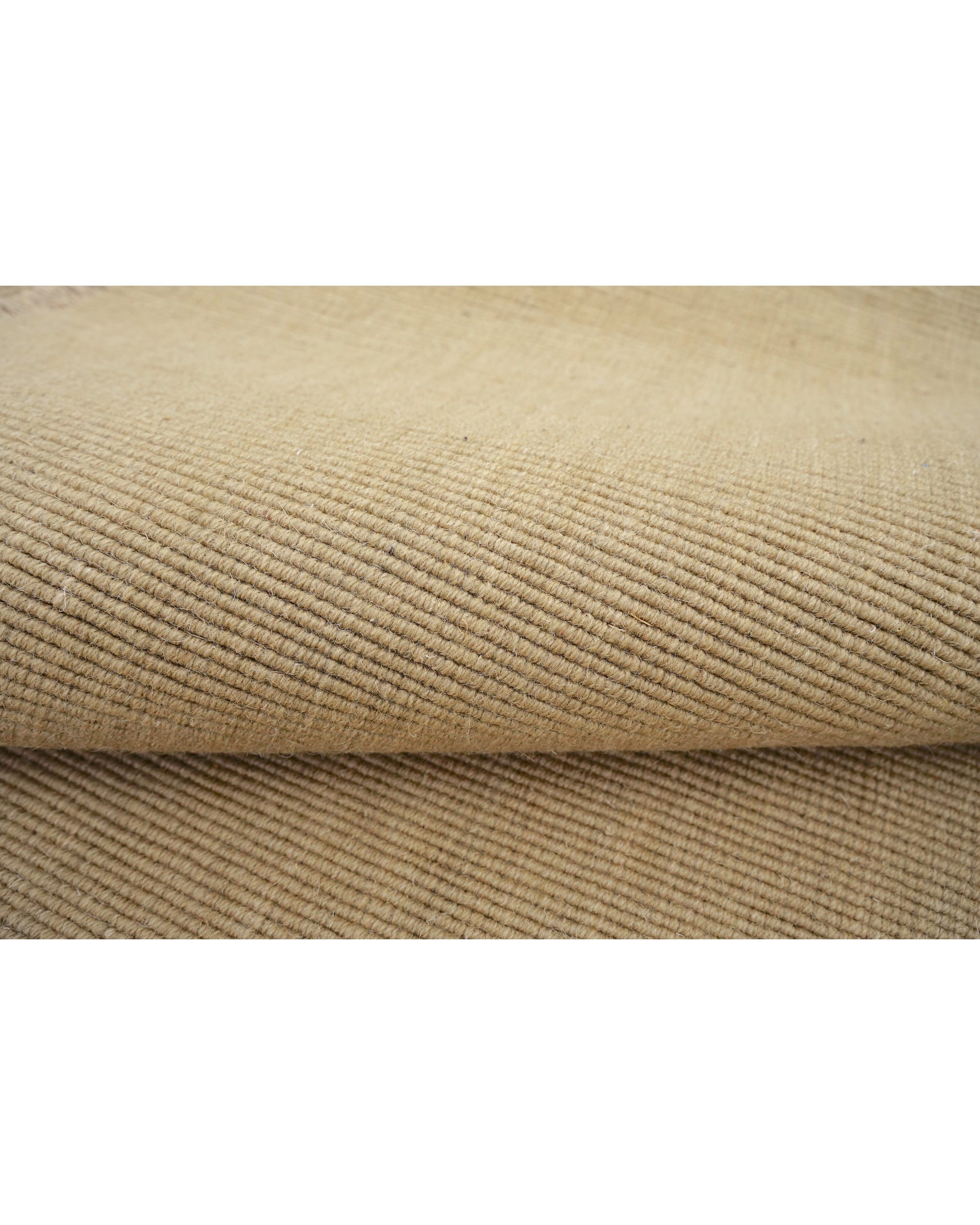
A firm, flat weave makes the point well. The Cabra Wool & Jute Rug in Sand lists New Zealand wool and jute, Terra grade, handloom construction at 7 to 8 mm, so a buyer knows before ordering that it will feel textured rather than plush. It is ₹34,000 for 5x8 ft at regular price, ex GST at the time of writing.
Whichever brand you buy from, keep a screenshot of the listing with your order. If the rug that arrives feels different from what was written, that record is what a seller will ask to see. For more on reading the numbers on a listing, see how to read a rug spec sheet.
Frequently asked questions
How can I tell if my rug is real wool?
Part the pile and press it: wool feels springy and slightly dry, shows fine hairs and a gentle wave in each strand, and recovers when you lift your hand. If the strands look glassy and identical, ask the seller for the fibre in writing.
Is it safe to pull a tuft out of my rug to test it?
No. Pulling a tuft leaves a gap that can spread and may count as damage you caused. A seller's written fibre line, a swatch or a professional cleaner's opinion tells you more without harming the rug.
Does a glossy rug always contain silk?
No. A strong gloss can come from silk, from plant-based Botanical Silk or from a synthetic yarn. Only the fibre line on the listing, or the provenance card on a Rugberry page, tells you which one is in the pile.
What should I do if the rug that arrives seems different from the listing?
Compare it with your saved listing, photograph the face, back and label, and write to the seller at once. At Rugberry, a manufacturing defect should be reported to info@rugberry.in within 24 hours of delivery.
Where can I feel Rugberry fibres before ordering?
At the Noida Experiential Centre or a partner store listed on the store locator, or at home with a 30 x 30 cm swatch posted anywhere in India. Handling wool, jute and Botanical Silk side by side is the quickest way to learn them.
Ask for the fibre in writing, read the back, then trust your hands. See fine wool rugs and wool and Botanical Silk rugs from Rugberry. Material first.






Leave a comment
This site is protected by hCaptcha and the hCaptcha Privacy Policy and Terms of Service apply.