




Wool vs Nylon Rugs: Which Lasts in an Indian Home?
For a living room or bedroom in an Indian home, wool lasts better in the way that matters: it springs back from footfall, chars rather than melts near heat, and ages evenly for years. Nylon resists abrasion and costs less, so it makes sense for offices, hotel corridors and wall to wall commercial floors.
In short
- Nylon is a synthetic polyamide fibre with very high abrasion resistance, which is why it dominates wall to wall flooring in offices, hotels and airports.
- Wool resists wear differently from nylon: its crimped fibres bend and spring back, so a wool pile recovers from feet and furniture instead of only resisting rubbing.
- Nylon softens and melts with high heat, while wool is naturally slow to burn and tends to char, which matters near diyas, heaters and hot pans.
- For a home rug meant to last many years, choose wool; for a large commercial floor replaced on a fixed cycle, nylon is often the practical choice.
Is wool or nylon better for a rug in an Indian home?
Wool is the better choice for a rug in most Indian homes, especially in living rooms and bedrooms where people sit, walk barefoot and keep the rug for many years. Nylon is better suited to commercial floors where abrasion is constant and replacement is planned.

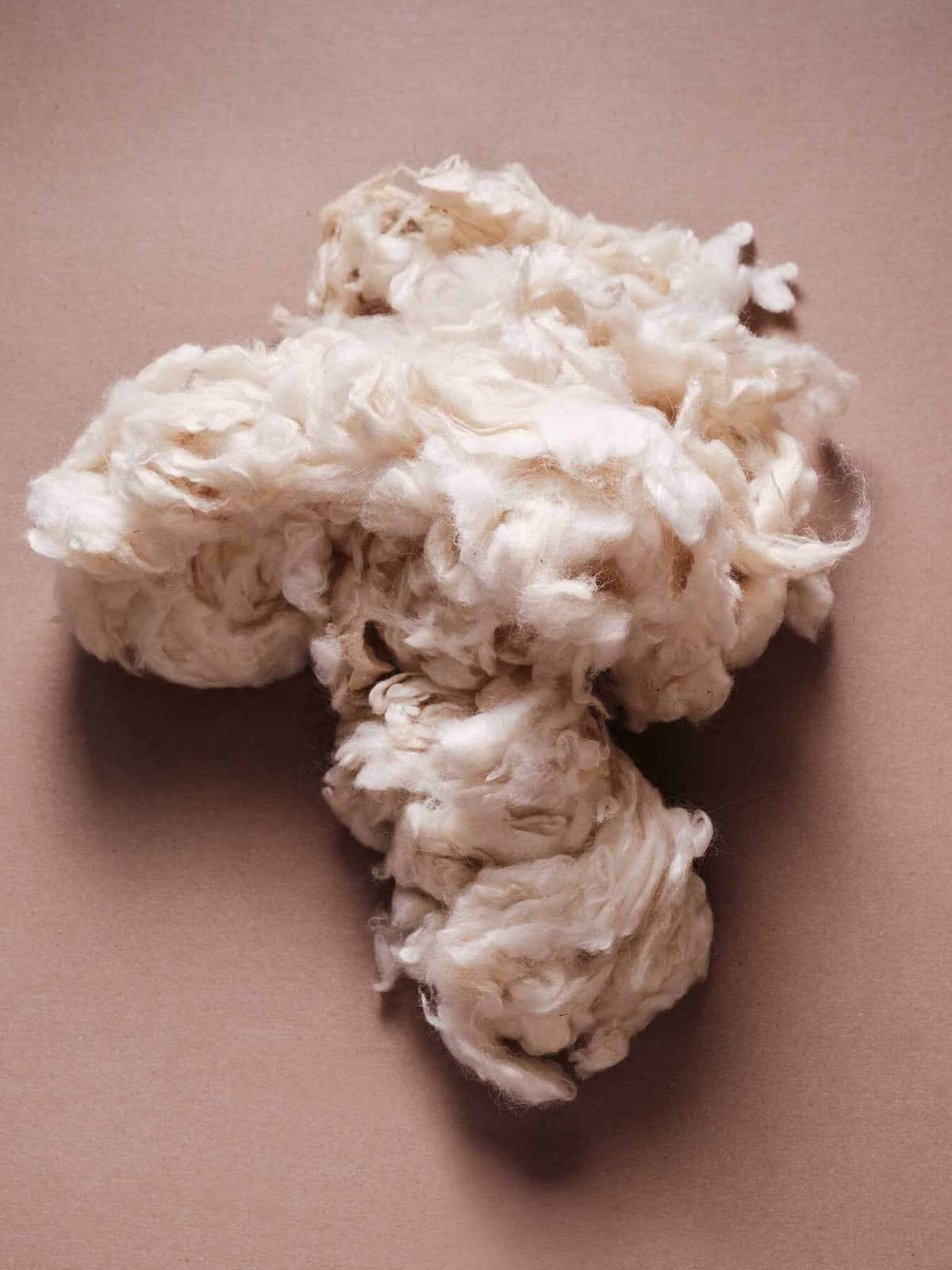
The two fibres are often sold as rivals, but they were designed for different lives. Nylon was developed as a strong, cheap, uniform synthetic, and in flooring it became the workhorse of offices and hotels. Wool is a natural protein fibre with a structure no synthetic has fully copied, and it is the traditional fibre for rugs meant to be lived on.
Rugberry's range is built on wool, jute and Botanical Silk rather than nylon. This guide compares the two honestly, including the places where nylon wins, so you can decide by room rather than by habit. For a wider look at wool against other options, see our wool rugs buyer's guide.
What is nylon, and why is it used in rugs?
Nylon is a synthetic fibre made from petrochemicals, a polyamide that is extruded as continuous filaments and then textured to look like yarn. It is used in rugs because it is very strong for its weight, takes dye well and resists abrasion better than most other synthetics.
Most nylon floor coverings are machine made, either tufted on wide machines or woven by power looms, and most are sold as wall to wall flooring rather than loose rugs. Stain resistant and soil resistant treatments are commonly applied to the fibre surface, which helps in the early years and wears away with traffic and cleaning.
Nylon also varies widely in quality. A dense, well twisted, heat set nylon in an airport corridor is a very different product from a loose, low cost nylon shag. When you compare it with wool, compare like with like: a well made rug in each fibre, for the same room.
How do wool and nylon compare on wear and crushing?
Nylon resists abrasion better than wool, while wool resists crushing better than most nylon. Abrasion wears fibre away; crushing flattens it without wearing it out, and in a home, crushing is usually what makes a rug look tired first.


Each wool fibre has a natural wave called crimp, and a structure that lets it bend many thousands of times and return to shape. Under a coffee table leg or along the path from sofa to balcony, a wool pile bends, then slowly rises again. A nylon pile resists being rubbed away, but in cheaper constructions it can lie down in traffic lanes and stay there.
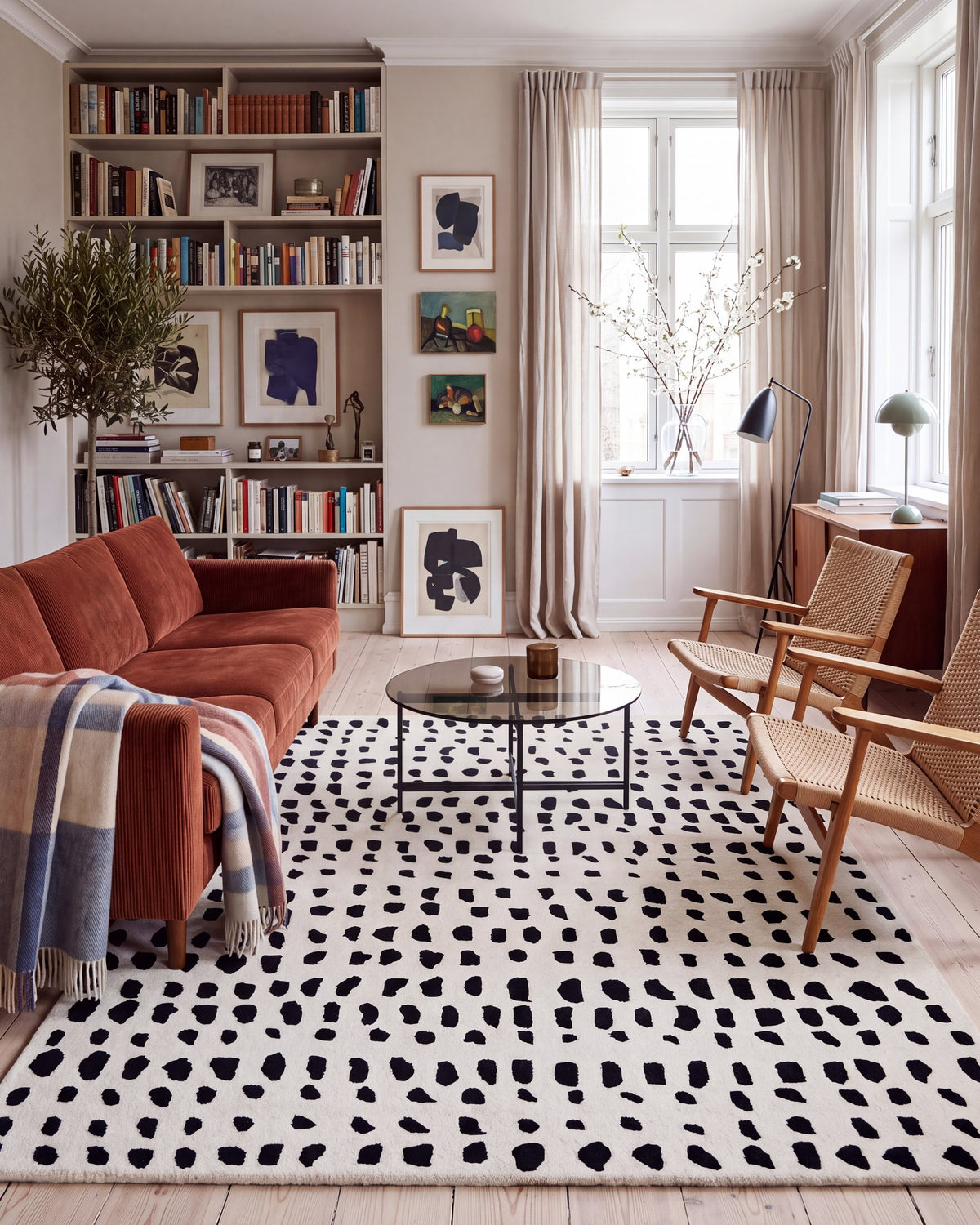
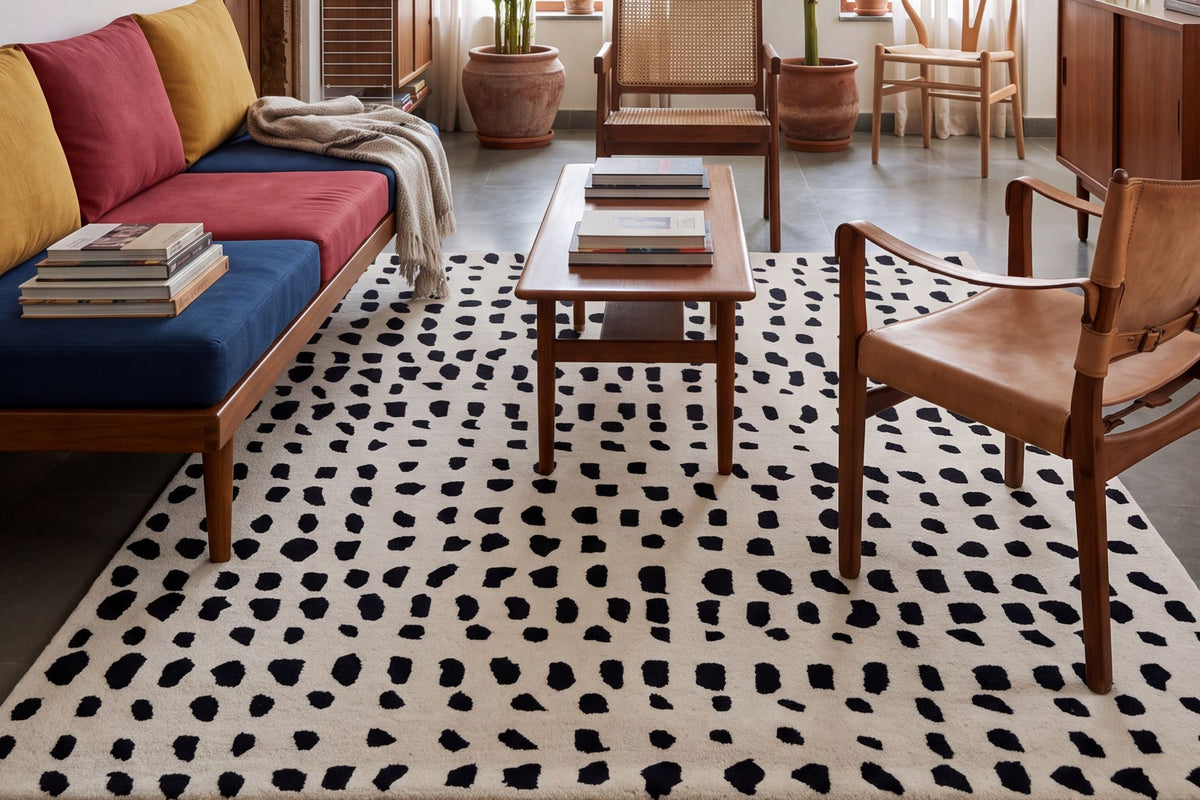
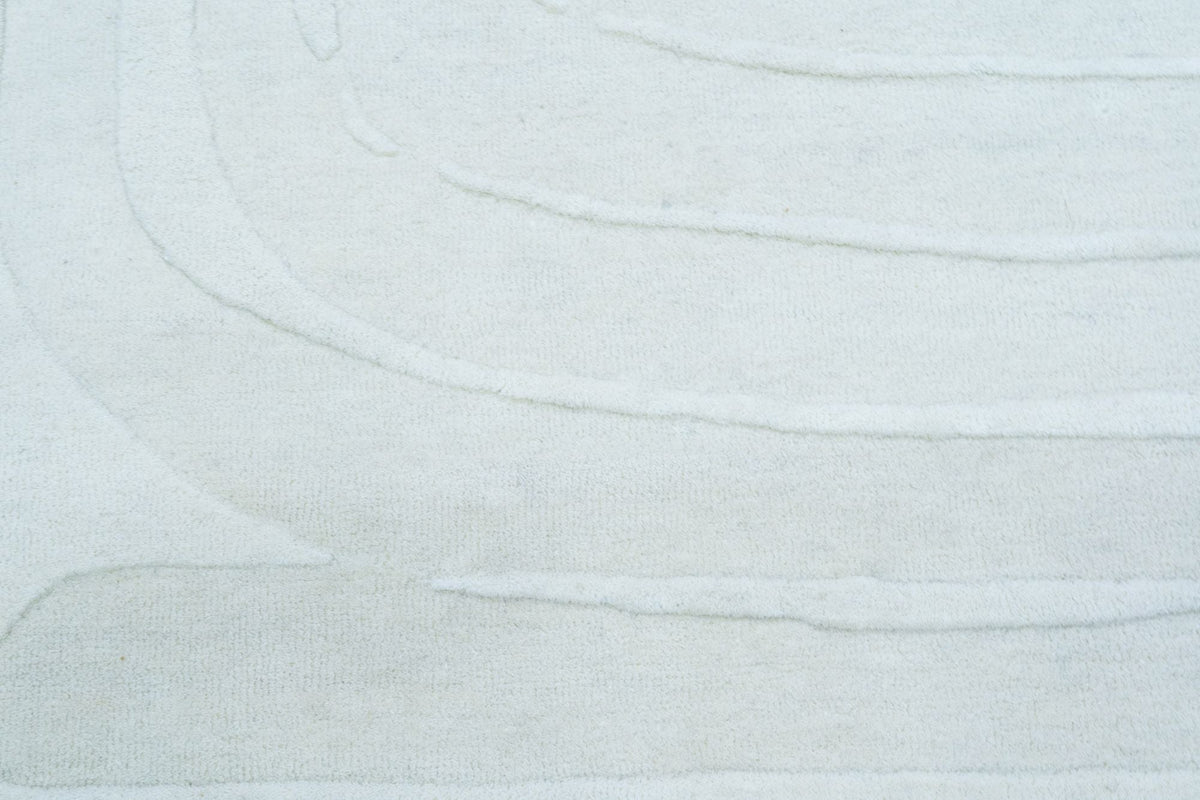
The Arctic Wool Rug shows what a dense wool pile does. It is hand tufted in New Zealand wool at 14 to 16 mm, with black brushstroke marks on ivory, from about ₹31,080, inclusive of GST at the time of writing. On a pale rug like this, a crushed lane would show quickly, which is why the springiness of wool matters more than raw abrasion figures.
Nylon resists wear by being tough. Wool resists wear by bouncing back.
How do heat, static and sun affect wool and nylon?
Heat, static and sun all favour wool in an Indian home. Nylon softens and melts at temperatures a hot pan or a fallen coal can reach, builds more static in dry air, and in many dyed forms fades or yellows with strong sun, while wool chars, holds moisture against static and fades slowly and evenly.
Heat is the clearest difference: a hot kadhai set down for a moment, a hair straightener on the bedroom floor or a heater placed too close can leave a hard, glazed spot in nylon that cannot be brushed out. Wool usually scorches at the tips, and a small scorch can often be trimmed away. Our guide to diyas near a rug covers safe distances for festival lights on any rug.
Static matters in north Indian winters and in air conditioned rooms, where indoor air turns dry. Nylon builds a charge that you feel on door handles, while wool holds a large share of its own weight in moisture, often quoted at around 30 percent, which bleeds the charge away. In strong sun near a west window, any dyed rug fades over time, so draw sheer curtains in the harshest hours whichever fibre you choose.
How do wool and nylon handle stains and cleaning?
Wool and nylon both stain more easily than many people expect, because both take the same family of acid dyes, and food colours behave like dye. Nylon is often sold with a stain treatment that helps at first, while wool relies on its natural lanolin and scaly surface to slow spills down long enough to blot them.

Turmeric, kumkum, tea and red wine are the spills that test both fibres. On either, lift solids, blot from the outside inward with a white cloth and keep water to a minimum. Nylon's factory treatment fades with years of cleaning, so an older nylon rug can take stains as readily as untreated fibre.
Moisture is the one area where nylon is easier. Nylon absorbs only a few percent of its weight in water and dries faster after a spill or a monsoon damp spell, while a wet wool rug needs air and time to dry right through. In a damp ground floor flat in a coastal city, raise wool off the floor with an underlay and keep the room ventilated.
How do wool and nylon feel underfoot through the year?
Wool feels warmer in winter and drier in humid summers, because it absorbs and releases water vapour as the air changes. Nylon feels cooler and smoother, and in humid weather it can feel slightly clammy, since it does not take up moisture from the air.
The difference is most noticeable barefoot, which is how most Indian homes use rugs. A wool pile feels soft and dry on a December morning in Delhi or Lucknow, and it does not feel sticky in a July afternoon in Mumbai. Nylon has a slicker, more uniform hand that some people like and others find slightly plasticky.
| Property | Wool | Nylon | Better in an Indian home |
|---|---|---|---|
| Abrasion resistance | Good | Very high | Nylon, in commercial traffic |
| Recovery from crushing | Very good, crimped fibre springs back | Varies, low cost nylon flattens | Wool |
| Heat and sparks | Slow to burn, tends to char | Softens and melts | Wool |
| Static in dry air | Low, holds moisture | Higher | Wool |
| Drying after a spill | Slower | Faster | Nylon |
| Feel underfoot | Soft, warm, dry | Smooth, cooler | Wool, for barefoot homes |
| Ageing over many years | Even wear, can be cleaned and refreshed | Traffic lanes, treatments wear off | Wool |
| Starting price | Higher | Lower | Nylon |
Verdict: for a living room, bedroom or dining room you plan to keep for a decade, choose wool over nylon, because it recovers from crushing, behaves better near heat and ages evenly; choose nylon for wall to wall commercial floors where abrasion is constant and replacement is scheduled.
Where does nylon make more sense than wool?
Nylon makes more sense than wool in offices, hotel corridors, cinemas, clinics and other commercial floors with very heavy, constant traffic and a planned replacement cycle. It also suits a short term rental or a site office where budget matters more than how the floor ages.


In those places, abrasion is the main enemy, cleaning is industrial and frequent, and nobody sits on the floor barefoot. A dense, heat set nylon laid wall to wall over a proper underlay is engineered for exactly that job. Wool is used in commercial projects too, especially in hotels that want a warmer feel, but nylon is the default for cost and predictability.
For outdoor or permanently damp spaces, neither fibre is ideal, and a purpose made outdoor rug is the better route; see wool vs polypropylene for that comparison. At home, the places nylon is tempting, such as a busy entrance or a dining room with children, are usually better served by a low, dense wool in a forgiving colour.
Which Rugberry wool rugs suit the rooms where wool wins?
For the rooms where wool wins, Rugberry's dense hand tufted and handloom wool rugs are the natural choice: Arctic and Avalanche for living rooms, and the Grain collection for dining rooms and busy family spaces. All are in New Zealand wool and can be made to measure.

The Avalanche Wool Rug is hand tufted in New Zealand wool, from about ₹33,600, inclusive of GST at the time of writing, and suits a family living room where children play on the floor. The Grain Wool Rug in Mochaccino is handloom woven at 12 to 14 mm, from about ₹31,080 at the time of writing, with a low, closely worked surface and a mid brown that hides dining room crumbs. Our guide to the most durable rug construction compares how each build wears.
Browse the wool rugs and the hand tufted rugs at Rugberry for more dense wool piles.
Frequently asked questions
Is nylon better than wool for an office floor?
For a busy office, a dense wall to wall nylon carpet is usually the practical choice, because it resists constant abrasion and is replaced on a schedule. Wool suits a director's room or meeting room where comfort and a warmer look matter more.
Do nylon rugs last longer than wool rugs?
In pure abrasion tests nylon often lasts longer, but in a home a rug usually looks worn because its pile has flattened, not because fibre has rubbed away. A well made wool rug keeps its look for longer in that everyday sense.
Is nylon safe for children and pets?
Nylon is widely used in homes with children and pets, and it dries quickly after accidents. Its weak points are heat and static rather than safety, while wool is softer to sit on and slower to catch fire.
Can I tell nylon from wool by touching a rug?
Nylon usually feels smoother, slightly slippery and cooler, while wool feels drier, warmer and a little springy when pressed. Touch is only a hint, so ask for the fibre content in writing before you buy.
Are wool and nylon blends a good compromise?
A blend with a small share of nylon can add abrasion strength to a wool pile, and such blends are common in machine made flooring. Ask for the exact proportions, since a label that says wool blend can mean mostly wool or mostly synthetic.
Choose the fibre for the life the room will lead. Material first.



Leave a comment
This site is protected by hCaptcha and the hCaptcha Privacy Policy and Terms of Service apply.