


Rugs for Clinics and Waiting Rooms
A rug belongs in a clinic's waiting area and consultation room, never in a treatment, procedure or sterile room. Choose a low, firm wool or wool and jute weave in a mid tone, fixed on a thin underlay, and book professional cleaning from the day it is laid.
In short
- A clinic rug should sit only in the waiting area, the reception lounge or the doctor's consultation room, and never in a room where procedures, dressings or sterile work happen.
- Low and firm constructions of 7 to 14 mm, such as the Rugberry Cabra Wool & Jute Rug and the Grain handloom wool rug, let wheelchairs, walkers and prams roll across without dragging.
- Mid tones such as sandstone, grey and charcoal hide the grit and footprints that a clinic floor collects every day far better than ivory does.
- A clinic rug needs a cleaning plan before it is ordered: daily vacuuming, prompt spot cleaning and a professional wash on a fixed schedule.
Where does a rug belong in a clinic?
A rug belongs only in the soft, public parts of a clinic: the waiting area, a family lounge and the doctor's own consultation room. These are rooms where people sit, talk and wait, and where a softer floor changes how the space feels.

A rug has no place in a treatment room, a dressing room, a procedure room, a sample collection booth or anywhere with sinks, trolleys and spills of fluids. Those rooms need a hard, sealed floor that can be wiped and disinfected, and a rug would only get in the way of that.
Draw the line on the floor plan before choosing anything. Mark every door that leads to a clinical room, and keep the rug well short of those thresholds, so no one wheels a trolley or walks a wet shoe straight onto it.
The reception desk itself is a grey zone. Patients stand there with bags and umbrellas, and staff walk behind it all day, so most clinics are better off keeping the desk on the hard floor and starting the rug where the seating begins.
Why put a rug in a waiting room at all?
A rug makes a waiting room quieter and more domestic, which many patients find calming. Hard floors and hard walls bounce every voice, phone call and chair scrape around the room, and a wool rug under the seating absorbs a good part of that.
In Indian clinics the waiting room is often a converted apartment living room or a shop floor in a commercial complex, finished in vitrified tile. One well sized rug turns that shell into something closer to a home, and it gives the seating a defined island.
A rug also helps with privacy in the consultation room. A softer floor takes some of the edge off voices behind the door, which matters when the next patient is sitting a few feet away.
In a clinic, the rug is for the people who wait, never for the rooms where care is given.
Which rug constructions suit clinic traffic?
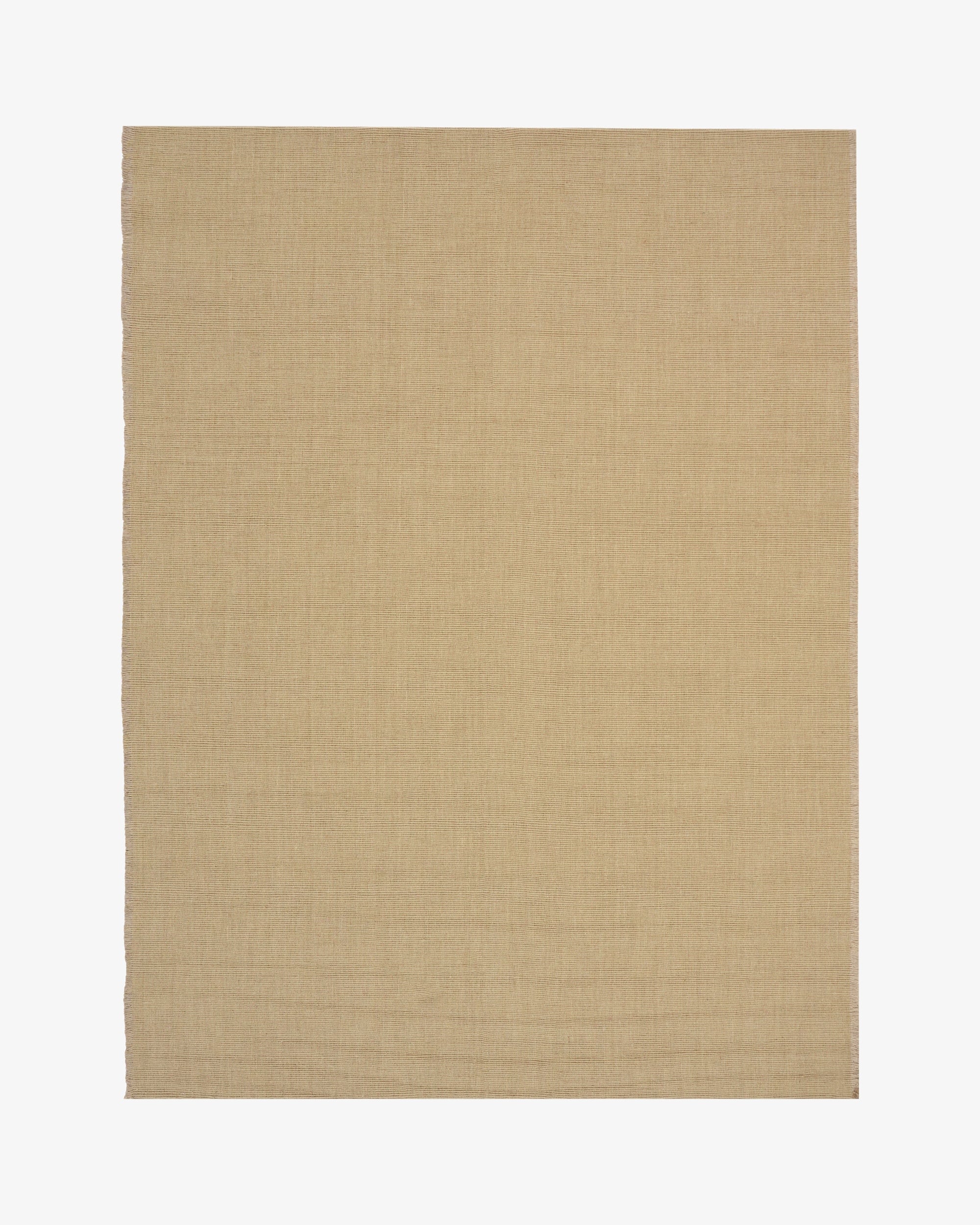
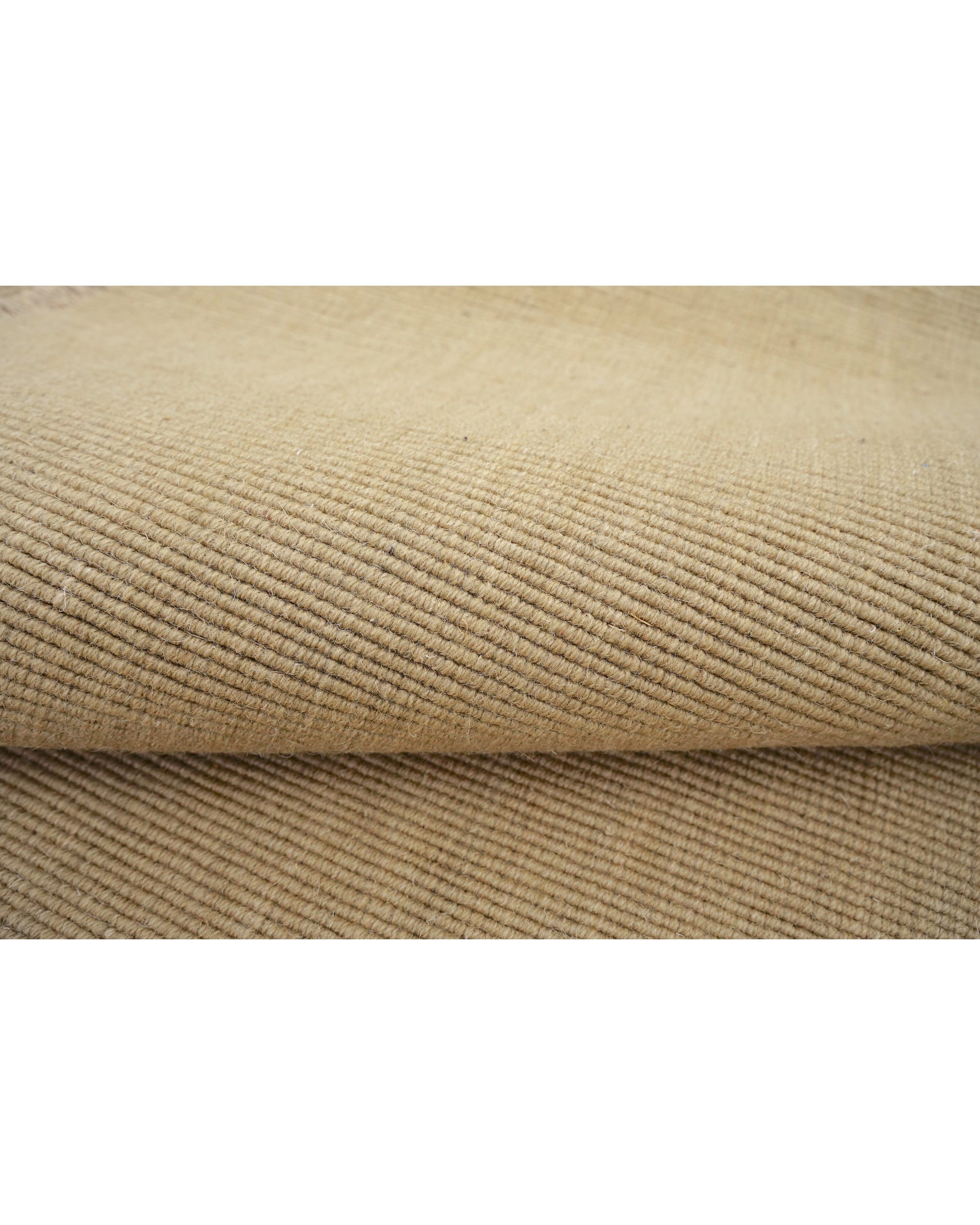
Low, dense, firm constructions suit clinic traffic best: a handloom or handwoven wool, or a wool and jute weave, at roughly 7 to 14 mm. A deep or shaggy pile slows wheels, holds dust and looks tired within months under shoes.


A wheelchair or walking frame crosses the Cabra Wool & Jute Rug in Sand without catching, because it is flat and firm at 7 to 8 mm, woven on a handloom in New Zealand wool and jute. Its flecked sand tone also forgives the dust that comes in from outside. Its regular price is ₹34,000 for 5x8 ft, ₹68,000 for 8x10 ft and ₹91,800 for 9x12 ft, ex GST at the time of writing.
The Grain Wool Rug in Sandstone is a handloom New Zealand wool at 12 to 14 mm, a little softer underfoot and still close enough to vacuum easily. It costs ₹37,000 for 5x8 ft, ₹74,000 for 8x10 ft and ₹1,02,000 for 9x12 ft, ex GST at the time of writing.
For a consultation room, where traffic is lighter, a hand tufted wool works well. The Plaid Rug is hand tufted in New Zealand wool at 14 to 16 mm, crossed in a grey plaid that stays quiet from across the room. Its regular price is ₹37,000 for 5x8 ft, ₹50,000 for 6x9 ft and ₹74,000 for 8x10 ft, ex GST at the time of writing.
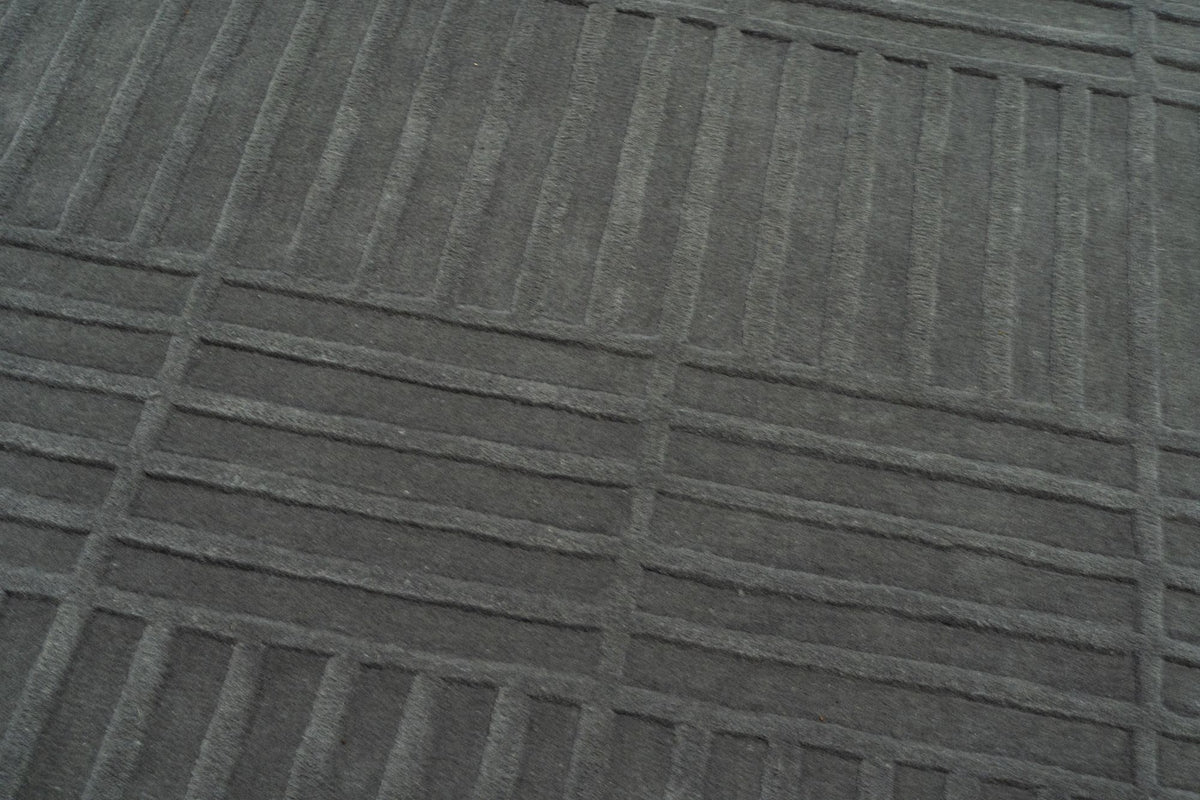
The Cobble Wool Rug is a handwoven wool in charcoal with a raised pebble texture, listed at 5x8 ft for ₹31,000 ex GST at the time of writing. It suits a small waiting corner beside a pharmacy counter, where the darkest tone does the hardest work.
How do wheelchairs, walkers and prams change the choice?
Wheelchairs, walkers and prams mean the rug must be low, fixed and bevelled at the edge. Any rug that lifts, ripples or sits more than about 15 mm proud of the floor becomes a barrier rather than a comfort.


Lay every clinic rug on a thin rubber and felt underlay cut 2 inches smaller than the rug on each side, so the rug cannot creep and the edge stays down. Our guide to rug pads on Indian floors explains which pad suits tile, stone or vinyl.
Keep a clear route of at least 3 ft on hard floor from the entrance to the reception desk and from the desk to each consultation door. Patients who use a frame or a wheelchair can then choose whether to cross the rug at all.
A bound edge lies flatter than a fringe, and a fringe should be avoided entirely in a clinic. Ask for the rug to be finished with a neat binding, and check the corners after the first week, because corners are where a rug starts to curl.
What size and layout work in a waiting room?
A waiting room rug should sit under the front legs of every chair in a seating group and stop at least 18 inches short of any walking route. Most small clinics need one 6x9 ft or 8x10 ft rug rather than several small ones.

| Clinic space | Typical floor | Rug size | Rugberry suggestion |
|---|---|---|---|
| Small waiting corner, 4 to 6 chairs | 10 x 12 ft | 5x8 or 6x9 ft | Cobble Wool Rug or Cabra in Sand |
| Waiting room, 8 to 12 chairs in a U | 14 x 16 ft | 8x10 or 9x12 ft | Grain in Sandstone |
| Family lounge with a sofa | 12 x 14 ft | 8x10 ft | Grain in Sandstone or Plaid |
| Doctor's consultation room | 10 x 12 ft | 5x8 or 6x9 ft, under the visitor chairs | Plaid Rug |
| Long corridor seating, wall to wall | Any | Made to measure runner | Cabra in Sand |
Chairs on metal frames or with linked beams are heavy and get pushed around, so set the beam fully on the rug or fully off it. A beam with two legs on and two off rocks, and it slowly drags the rug out of square.
If the floor plan is awkward, with pillars, a ramp or a bay, a made to measure rug avoids gaps that become trip points. Rugberry makes most designs in any size, and our note on made to measure rugs covers how to send the measurements.
Which colours suit a clinic waiting room?
Mid tones in sand, stone, warm grey and charcoal suit a clinic best, because they look calm and hide wear. A pale ivory rug shows every footprint by noon, and a strongly patterned rug can feel busy to someone who is already anxious.


A low texture or a quiet geometry, such as the soft plaid of the Plaid Rug or the flecked surface of Cabra, keeps the eye at rest while disguising marks. Pick one tone from the clinic's upholstery or wall finish and keep the rug a step deeper.
Children's clinics can take one gentle colour, such as a sage or a soft blue, but keep it as a field rather than a cartoon pattern. A calm room helps the parent as much as the child.
How should a clinic rug be cleaned?
A clinic rug should be vacuumed daily, spot cleaned the moment anything is spilled and professionally washed on a fixed schedule, usually every 6 to 12 months depending on footfall. Agree this with the housekeeping team or contractor before the rug arrives.
Write a short card for the front desk: blot spills with a white cloth, never rub, use cold water and a mild wool safe detergent, and call the cleaner for anything that is not water, tea or mud. Our guide to fibres that are easy to clean compares wool, jute and blends.
Be honest about limits. A wool rug is not a surface that can be disinfected like a sealed floor, so any spill of blood or body fluids should be treated by a professional cleaner, and if that happens often in a space, the space should not have a rug.
Turn the rug 180 degrees every three months so the path from the door does not wear one end first. In a dusty city, a doormat system at the entrance does more for the rug than any amount of cleaning.
How do clinics order rugs through Rugberry?
Clinics and the designers who fit them out usually order through the Rugberry trade programme, which gives one trade rate and a single point of contact for the project. It suits a practice with several rooms or a chain fitting out more than one branch.
Start with a swatch. Lay it at the entrance for a week, let real shoes walk over it and see how it looks under the clinic's lighting, which is often cooler than a home. Our page on the Rugberry trade programme explains how designers and architects open an account.
For a project where several branches need the same look, ask for every rug to be recorded by design, colourway and size, so a replacement in two years matches. Similar planning for other commercial spaces is covered in our notes on spa and wellness studios and restaurants and lounges.
Frequently asked questions
Is a rug hygienic enough for a clinic?
A wool rug is fine for a clinic waiting area or consultation room when it is vacuumed daily and washed professionally on a schedule. It is not suitable for treatment, procedure or sterile rooms, which need a sealed floor that can be disinfected.
Which rug pile height suits a dental or eye clinic waiting room?
Keep the pile between about 7 and 14 mm in any clinic waiting room, whatever the speciality. A low pile lets wheelchairs and frames roll easily, and it releases grit to a vacuum in a single pass.
Can a clinic rug be made in the practice's brand colour?
Rugberry rugs can be made to measure in a custom colour, which lets a clinic match a brand tone or the upholstery. Keep the brand colour to a deep, forgiving shade, and approve it from a swatch under the clinic's own lights.
Should a paediatric clinic use a play rug?
A paediatric clinic is better served by a low, plain wool or wool and jute rug in the waiting area, with toys kept on a wipeable table or a mat that can be cleaned between patients. A rug that children sit and play on all day needs washing far more often.
How much does a rug for a small clinic waiting room cost?
A 6x9 ft Grain Wool Rug in Sandstone has a regular price of ₹51,000 ex GST at the time of writing, and a 6x9 ft Cabra in Sand is ₹45,900. Add an underlay and a yearly professional wash to the budget.
Keep the rug to the rooms where people wait, keep it low and plan the cleaning first. See the customisable rugs and the fine wool rugs. Material first.




Leave a comment
This site is protected by hCaptcha and the hCaptcha Privacy Policy and Terms of Service apply.