



Rugs for Preschools and Activity Rooms
A preschool classroom rug should be large enough for the whole group to sit in a ring with a little space each, low and dense enough to clean daily, and placed away from the snack table and the wet play corner. For messy rooms, a washable cotton dhurrie is often the wiser choice.
In short
- A circle time rug for 12 to 15 young children needs about 8x10 ft, and a group of 20 needs about 10x14 ft or a round rug made to measure.
- Low pile wool and wool and jute weaves of about 7 to 14 mm, such as the Rugberry Grain and Cabra rugs, are easier to clean of crumbs, sand and crayon shavings than deep pile.
- A preschool rug belongs in the quiet corner used for stories, circle time and floor play, never under the snack table, the sink or the paint and clay area.
- A washable cotton dhurrie is the better choice where food, water or paint reach the floor every day, because it can go into a machine and a wool rug cannot.
What does a preschool rug actually do?
A preschool rug marks a place: the spot where the group gathers, sits down and listens. Teachers use it as a signal, so when children are called to the rug, the room changes pace without anyone raising a voice.

It also softens the sound of a room full of small voices. Most preschools in Indian cities run from converted bungalows, ground floors of residential buildings or commercial units with tiled floors and bare walls, and every noise carries.
For the youngest children, the rug also defines a safe boundary. A two year old who knows that the rug is for sitting and the tile is for walking settles faster, and teachers spend less of each session gathering the group back together.
Finally, it makes floor time warmer in a December morning in Delhi or Lucknow, when a stone or tile floor is cold to sit on for twenty minutes. In a hot Chennai classroom, a low wool rug is still more comfortable than tile, because wool stays close to room temperature.
How big should a circle time rug be?
A circle time rug should give each child roughly 18 to 20 inches of edge to sit on, with the teacher on a low chair or cushion at one side. In practice that means about 8x10 ft for 12 to 15 children and 10x14 ft for 18 to 22.
| Group size | Seating | Rug size | Shape |
|---|---|---|---|
| 6 to 8 children, playgroup | Small ring | 6x9 ft | Rectangle or round |
| 12 to 15 children, nursery | Ring with teacher | 8x10 ft | Rectangle |
| 16 to 20 children, kindergarten | Ring or two rows | 9x12 ft | Rectangle |
| 20 to 24 children | Large ring | 10x14 ft | Rectangle or made to measure round |
| Reading nook, 4 to 5 children | Cushions | 5x8 ft | Rectangle |
A round rug made to measure suits circle time particularly well, because every child sits the same distance from the centre. Rugberry can make most designs in a round, and our guide to round rugs explains how to size one.
Leave at least 2 ft of hard floor between the rug and any shelf, cubby or door. Children get up from circle time all at once, and a clear margin stops them tripping into furniture.
Which pile and fibre suit young children?
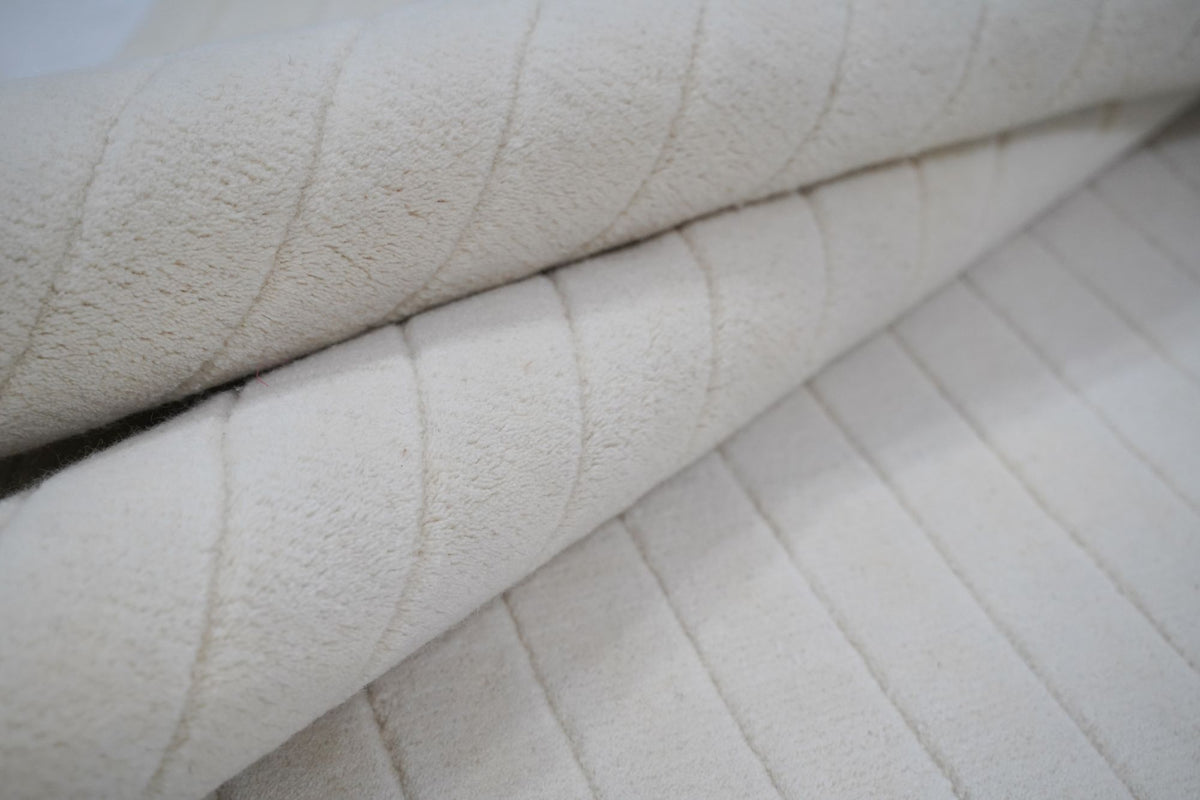
Low, dense pile in wool, or a flat wool and jute weave, suits young children best. A deep pile feels lovely but holds crumbs, sand from the play area and fine crayon shavings, and it is harder for staff to clean in the short gap between sessions.


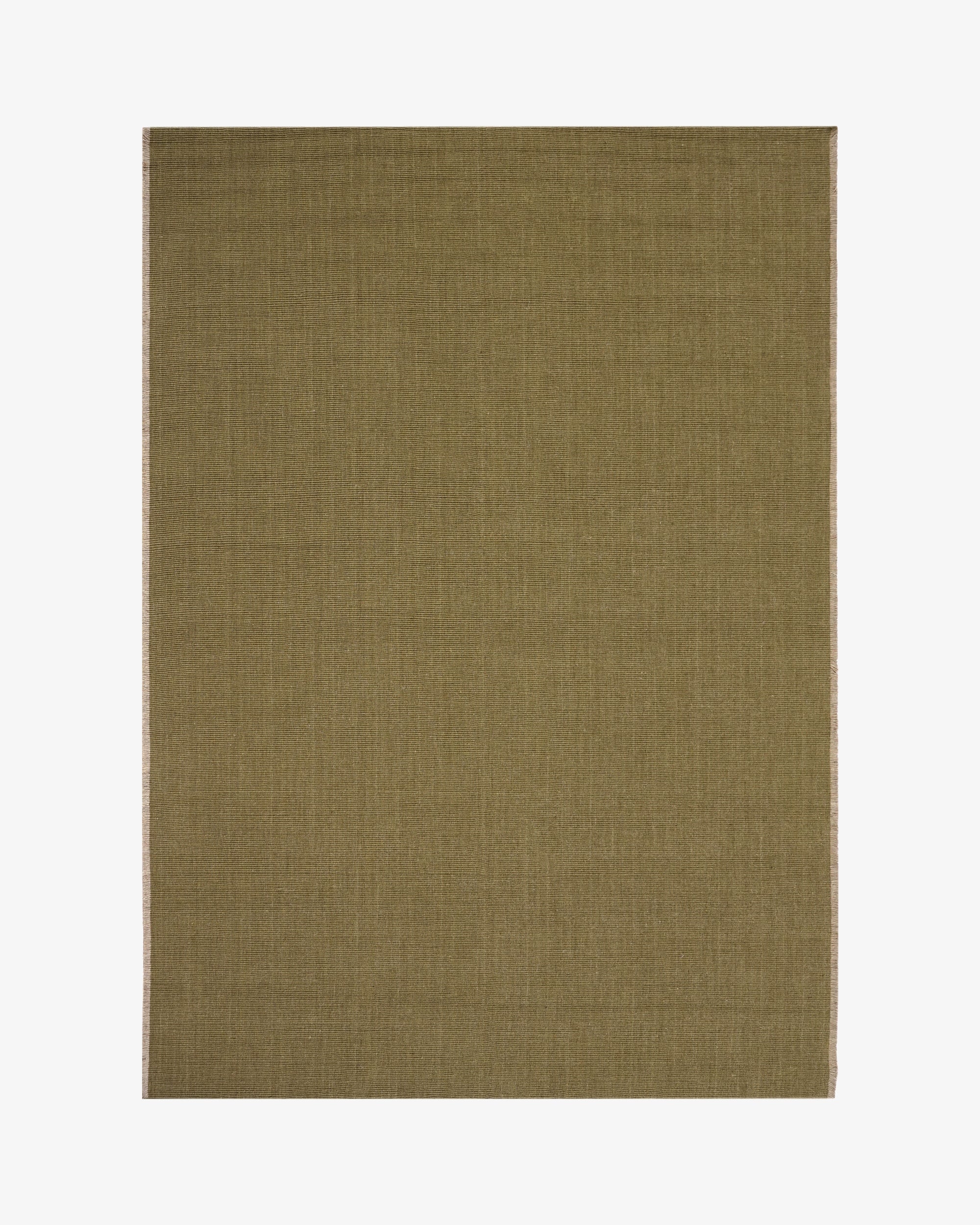
The Grain Wool Rug in Sage is a handloom New Zealand wool at 12 to 14 mm, soft enough to sit on and close enough to vacuum well. Its regular price is ₹37,000 for 5x8 ft, ₹74,000 for 8x10 ft and ₹1,02,000 for 9x12 ft, ex GST at the time of writing.
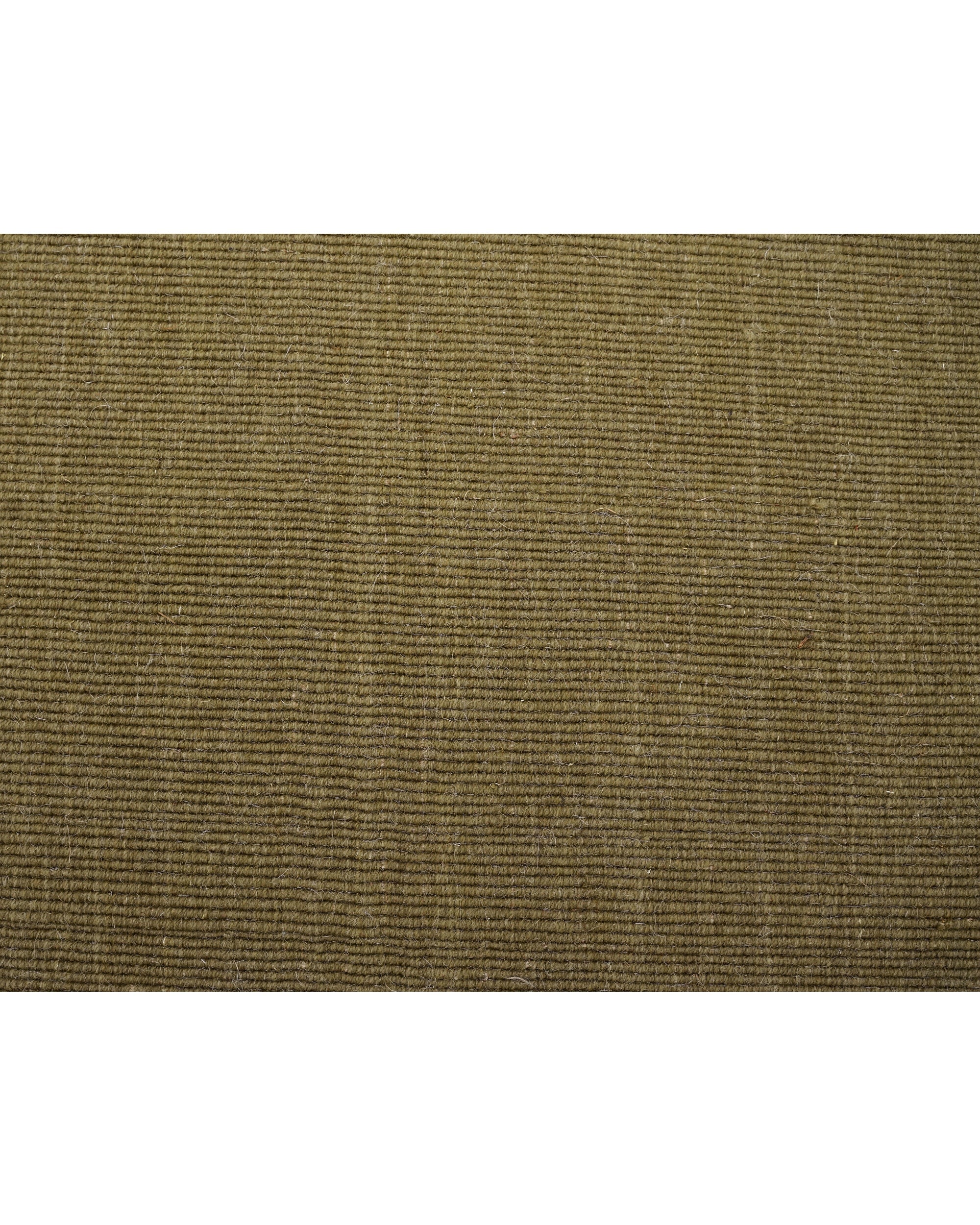
The Cabra Wool & Jute Rug in Olive is handloom woven in wool and jute at 7 to 8 mm. It is firmer and flatter than Grain, which makes it the better choice for an activity room where blocks, ride on toys and small chairs move about. It costs ₹34,000 for 5x8 ft and ₹68,000 for 8x10 ft, ex GST at the time of writing.
Wool has a practical advantage beyond comfort: it resists flattening and holds less static than synthetic fibres. Our note on low pile and high pile explains the trade off in more detail.
The rug is where the room goes quiet. Size it so every child has a place at the edge.
Should a preschool rug be patterned?
A preschool rug works best with one simple pattern or a plain field, rather than a busy printed play mat. A gentle geometry gives children a natural place to sit without the visual noise of letters, numbers and roads on every inch.


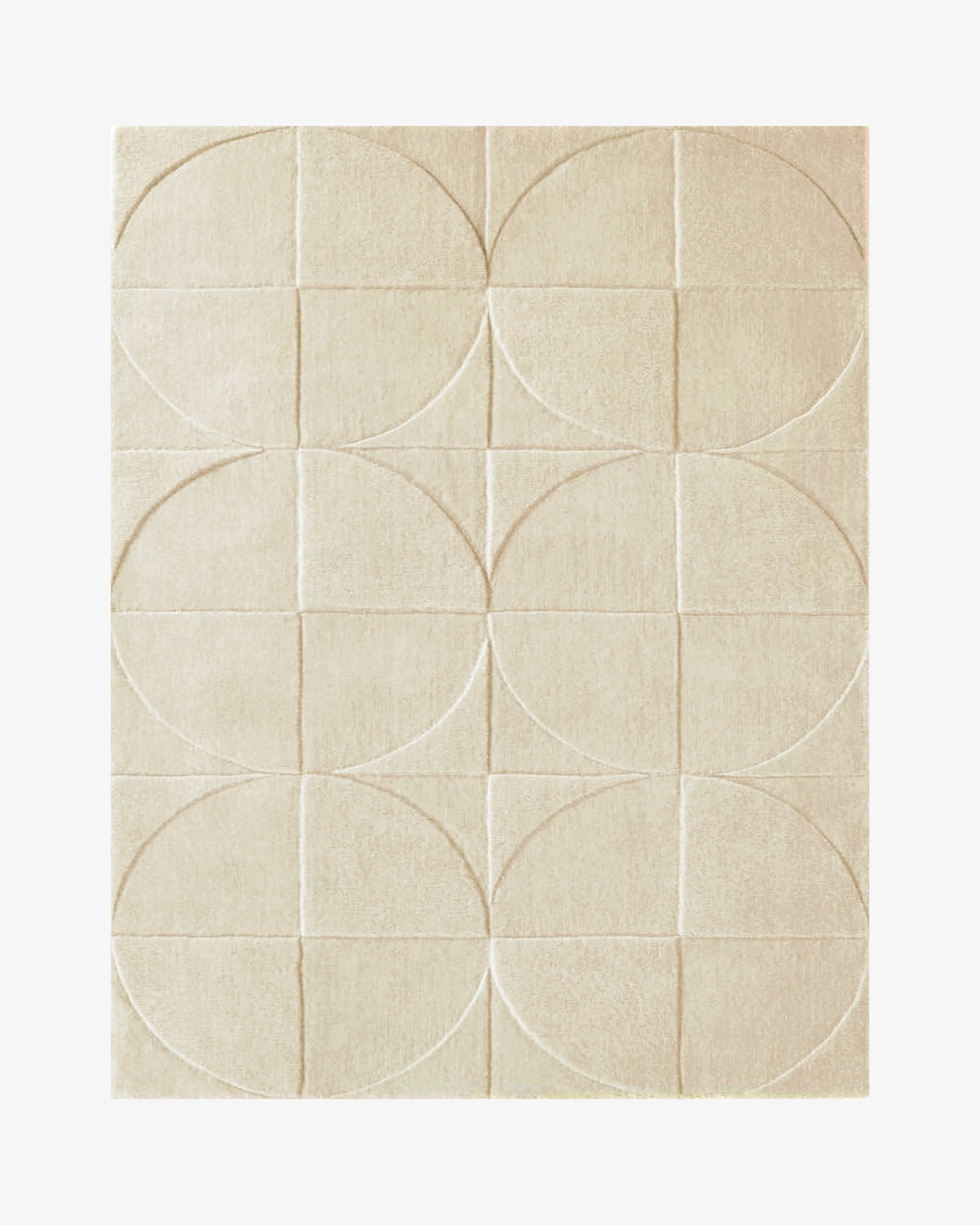
The Round Square Rug in Beige is hand tufted in New Zealand wool at 14 to 16 mm, with rounds and squares set against each other across the field. Each shape can become a seat, which teachers find useful for spacing a group. Its regular price is ₹37,000 for 5x8 ft, ₹74,000 for 8x10 ft and ₹1,00,000 for 9x12 ft, ex GST at the time of writing.
The Bedlam Wool Rug is hand tufted in New Zealand wool, an ivory ground drawn with broad, loose strokes of deep blue. It suits a reading corner or a library room more than the main circle, because the pale ground needs a cleaner floor. It is priced at ₹50,000 for 6x9 ft and ₹74,000 for 8x10 ft, ex GST at the time of writing.
Colour matters as much as pattern. Mid tones such as sage, olive and beige hide the daily dust of a classroom far better than ivory, and they sit well beside the bright primary colours of toys and books, which then stand out against a calm floor.
Keep the rest of the room calm around a patterned rug: plain cubbies, natural wood and children's own work on the walls. Our guide to modern rugs for kids' rooms covers the same idea at home.
Where in the classroom should the rug go?
The rug should go in the quietest, driest corner of the classroom, close to the book shelf and away from the door, the toilets and the sink. That keeps wet feet, food and paint off it and gives the circle a calm backdrop.
Mark three zones on the plan. A wet zone for snacks, water play, paint and clay stays on tile or vinyl with wipeable mats. A floor zone holds the rug, and a table zone with small chairs sits on the hard floor between them.
Think about the monsoon as well. Children arrive in wet sandals and raincoats from June to September, so place the shoe rack and a coir or rubber mat at the classroom door, well away from the rug, and ask that shoes come off before circle time.
In a ground floor classroom with large windows, keep the rug out of the strongest afternoon sun, or draw a sheer curtain during the hottest hours. Wool fades slowly in harsh light, and a rug that sits half in sun and half in shade will fade unevenly over a few years.
If the classroom shares the rug with nap time, choose a low pile and lay thin mats on top for sleeping, then lift them after. Mats that can be washed each week are easier to manage than washing the rug itself.
When is a washable cotton dhurrie the better choice?
A washable cotton dhurrie is the better choice wherever food, water, paint or toilet accidents reach the floor regularly. A cotton dhurrie can be machine washed or sent to a laundry, while a wool rug needs specialist cleaning and should never go into a machine.


That means a playgroup for two year olds, a snack corner, a messy art room or a sand and water area are usually dhurrie territory. Many schools keep two or three dhurries in rotation, so one is always clean.
A wool rug earns its place in the circle time corner, the library and the music room, where children sit and listen rather than eat and paint. Our comparison of dhurrie and rug sets out the differences in care and feel.
How should a preschool rug be cleaned and ordered?
A preschool rug should be vacuumed after every session, spot cleaned the same day and professionally washed at least once a year, more often for a full time crèche. Give every staff member the same short care card, so spills are blotted rather than scrubbed.


Lay the rug on a thin rubber and felt underlay, which keeps it flat when children run on and off it. Our guide to rug pads on Indian floors covers which pad suits tile, stone or vinyl.
Schools and the designers who plan them usually order through the Rugberry trade programme, which gives one trade rate across several classrooms. Order a swatch first and keep it in a classroom for a week, so teachers can judge the colour and feel under real use.
Frequently asked questions
What size rug do I need for circle time with 15 children?
A group of 15 young children sits comfortably on an 8x10 ft rug, each with about a foot and a half of edge. For a more generous ring or a larger teacher's corner, step up to 9x12 ft.
Is a wool rug suitable for a Montessori classroom?
A low wool rug suits the Montessori work area well, where children unroll small work mats on top and sit to concentrate. Choose a plain or quietly textured field in a mid tone, so the materials laid on it remain the focus.
How often should a preschool rug be professionally cleaned?
Plan a professional wash at least once a year for a half day preschool and two or three times a year for a full day crèche. Schedule it in the school holidays, so the rug has time to dry fully before children return.
Can Rugberry make a rug with a school's own colours?
Rugberry can make most designs to measure in custom colours, so a school can echo its own palette in a calm way. Keep the brand colour to the pattern and choose a forgiving ground, such as sage, olive or beige.
Are handmade rugs better than foam play mats for preschools?
Foam play mats are useful under climbing toys and in the toddler room, where falls are frequent and wiping is constant. A handmade wool rug is better for circle time, stories and quiet floor work, where warmth, sound and a sense of place matter more.
Size the rug to the circle, keep it in the dry corner and plan the cleaning with the staff. See the customisable rugs and the shaped rugs. Material first.




Leave a comment
This site is protected by hCaptcha and the hCaptcha Privacy Policy and Terms of Service apply.