


How to Layer a Patterned Rug Over Jute
To layer a patterned rug over jute, choose a jute base two standard sizes larger than the top rug, leave 12 to 18 inches of jute showing on every side, and pick a pattern that carries at least one tone from the jute. Keep the combined height under about 30 mm so the edges stay safe to walk on.
In short
- A layered rug works when 12 to 18 inches of the jute base shows on every side of the top rug; for a 6x9 ft top rug that means a 9x12 ft jute base.
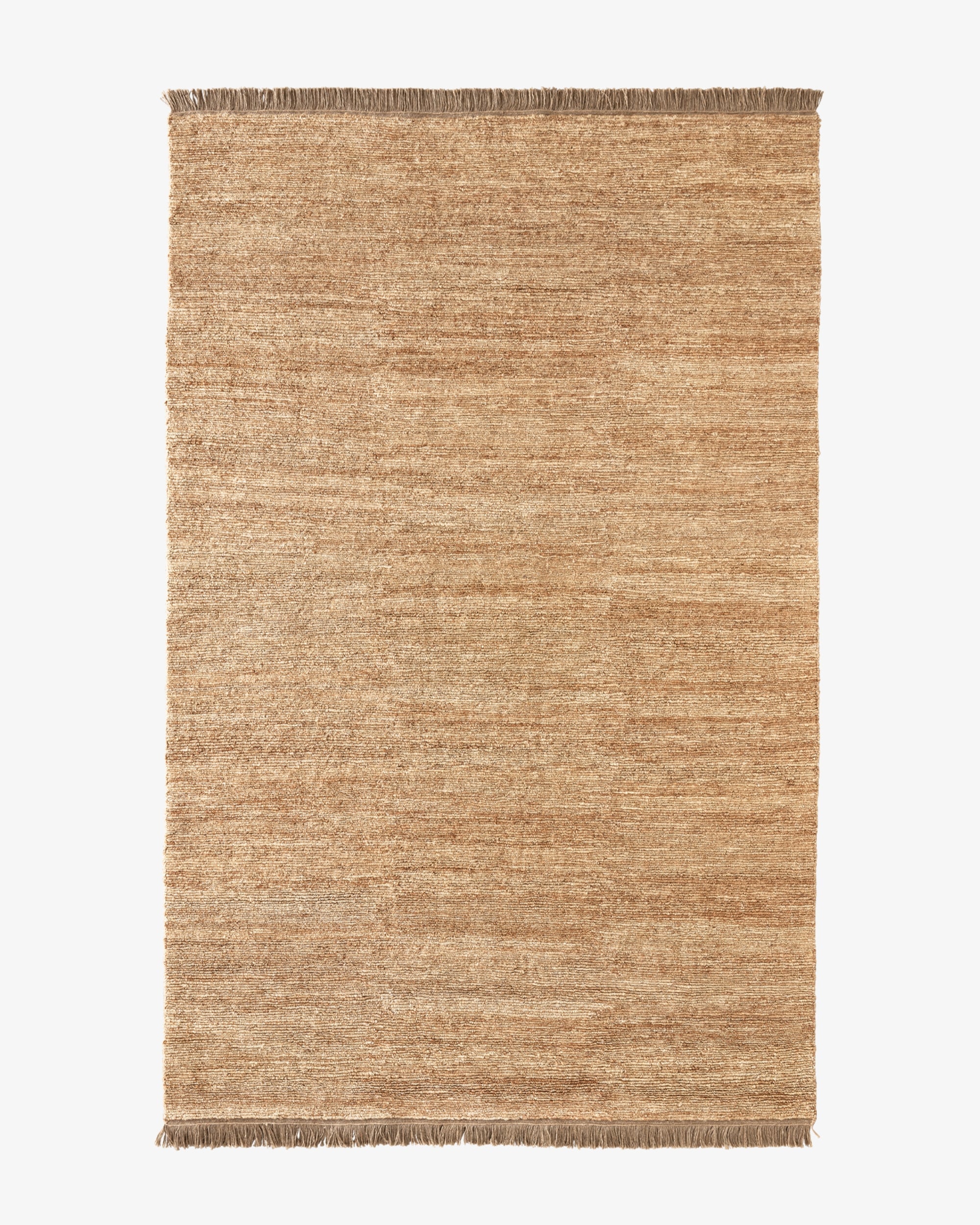
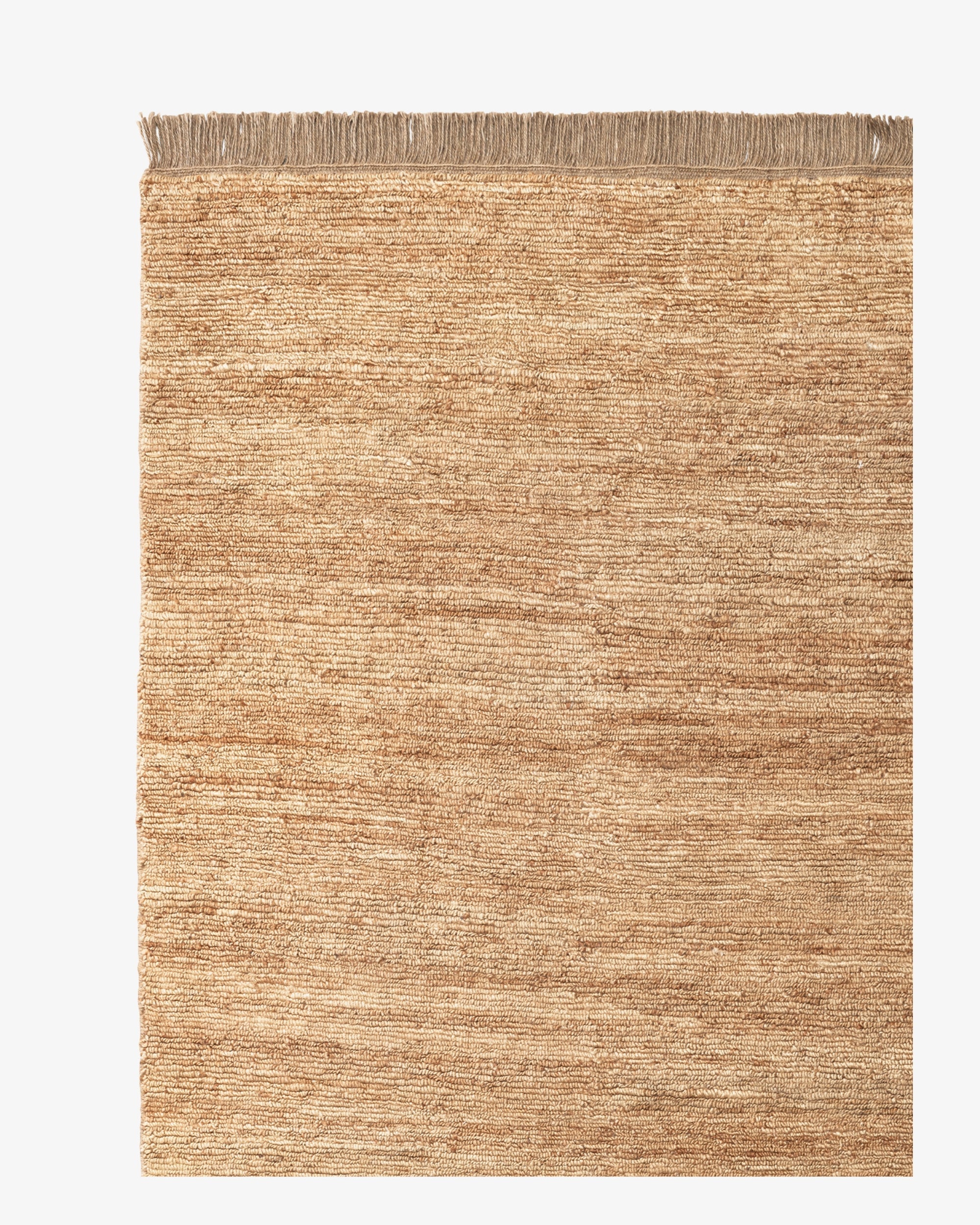
- Rugberry's Kora Jute Rug, handwoven jute at 10 mm, is the easiest Rugberry base for layering, because its low height keeps the stack flat; regular price ₹56,000 for 8x10 ft ex GST at the time of writing.
- Rugberry's Savannah Jute Rug, hand knotted jute at 15 to 16 mm, gives the richest base texture and comes in standard sizes up to 12x15 ft, with a regular price of ₹1,10,000 for 9x12 ft ex GST.
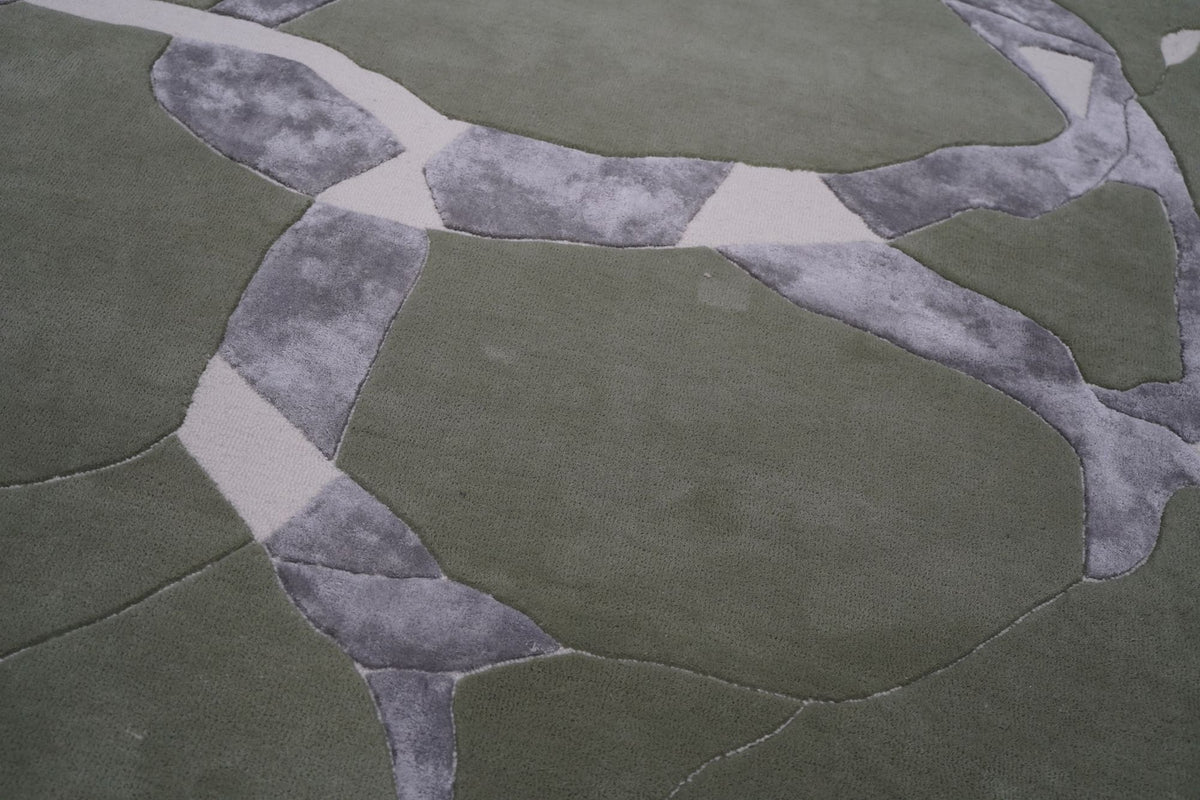
- Rugberry's Velocity Wool & Silk Rug, hand tufted New Zealand wool and Botanical Silk at 14 to 16 mm, layers well over jute because its sage and grey planes sit naturally on a straw coloured ground.
Why layer a rug over jute at all?
Layering a rug over jute lets you cover a large floor with a natural fibre at a lower cost, then add a smaller patterned rug where you want softness and colour. It also lets a modest sized pattern rug hold its own in a big room.

In many Indian living rooms the right single rug is 9x12 ft or larger, and a large patterned wool rug is a serious purchase. A large jute base with a 6x9 ft pattern rug on top gives the same coverage, a softer seat at the centre and a frame of texture around it.
Layering also solves a common problem. You fall in love with a rug that only comes in, or only suits, a smaller size. Put it on jute and it suddenly fits the room, because the base does the job of scale.
It works best in living rooms, large bedrooms and family rooms. It is less suited to dining rooms, where chairs catch on the step between rugs, and to small rooms, where two layers crowd the floor.
What size should each layer be?
The jute base should be two standard sizes larger than the top rug, so that 12 to 18 inches of jute shows on every side. Less than 12 inches looks like a mistake; more than 24 inches looks like two separate rugs.
| Room | Jute base | Top rug | Jute showing per side |
|---|---|---|---|
| Living room of 150 to 180 sq ft | 8x10 ft, Kora, Masai or Savannah | 5x8 ft | 12 to 18 inches |
| Living room of 200 to 250 sq ft | 9x12 ft, Savannah | 6x9 ft | 18 inches |
| Living room above 280 sq ft | 12x15 ft, Savannah | 8x10 ft or 9x12 ft | 18 to 24 inches |
| Large bedroom | 9x12 ft under the bed | 5x8 ft at the foot of the bed | Offset, not centred |
Kora, Masai and Pampas come in 5x8, 6x9 and 8x10 ft as standard; Savannah comes in all six sizes up to 12x15 ft. Any of them can be made to measure for a room that falls between sizes.
Centre the top rug on the seating, not on the jute. The jute frames the room; the top rug frames the conversation. When the sofa is against a wall, it is fine for the front legs to stand on both layers.
How thick can a layered stack be?
A layered stack should stay under about 30 mm in total, so the step at the edge of the top rug does not catch feet or chair legs. The easiest way is to pair a lower jute base with a standard pile rug on top.


Thickness matters more in Indian homes than people expect. Many families walk barefoot or in chappals at home, and elderly parents and small children are most at risk from a raised edge. A stack of 25 mm with a firm base is stable; a stack of 35 mm on a soft base wobbles.
- Kora or Masai at 10 mm plus a hand tufted rug at 14 to 16 mm: about 24 to 26 mm. The safest and flattest combination.
- Savannah at 15 to 16 mm plus a hand tufted rug at 14 to 16 mm: about 29 to 32 mm. Rich and generous, best in a living room where people sit more than walk.
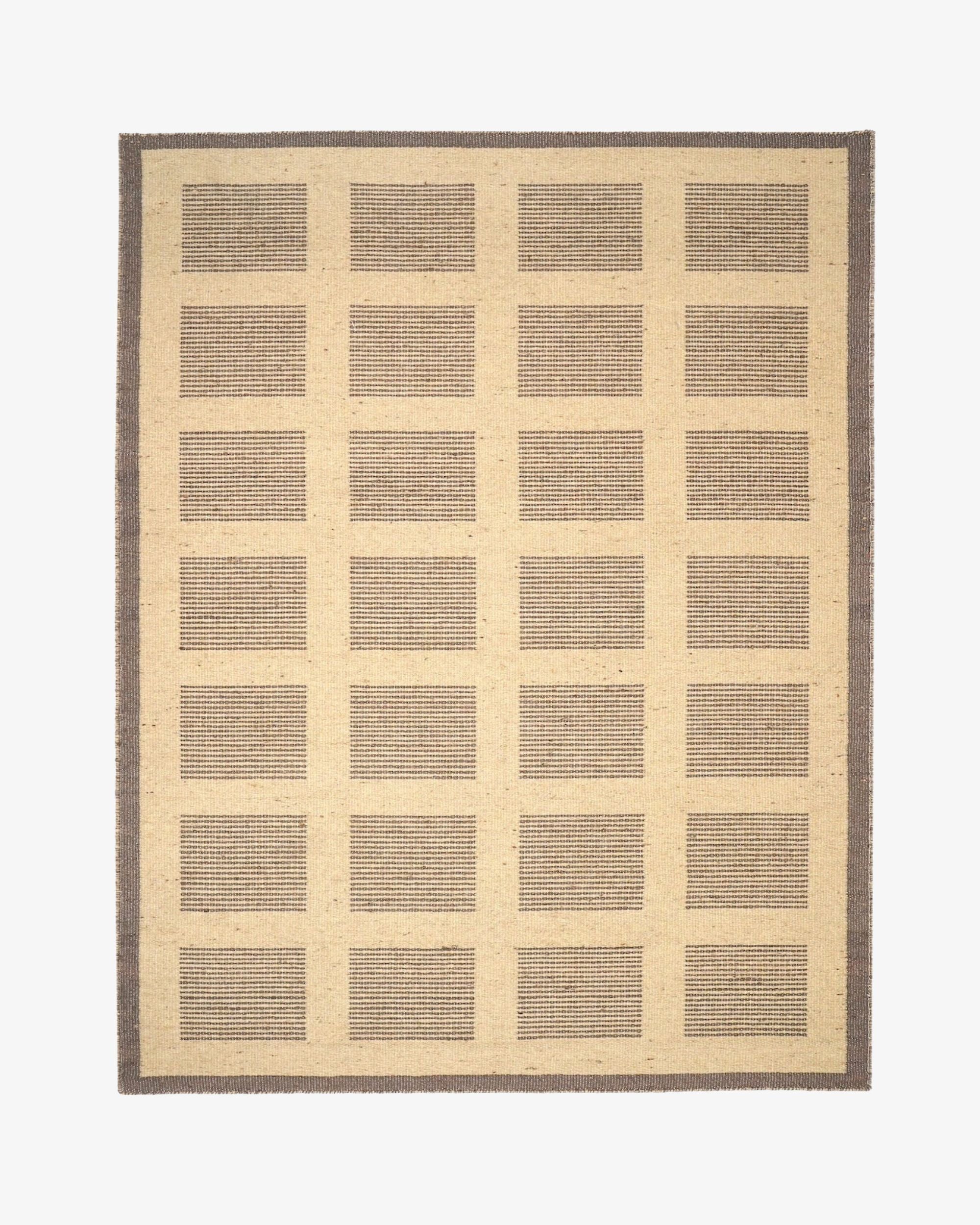
- Any jute plus a handloom Grain at 12 to 14 mm: about 22 to 30 mm, with a low, crisp edge.
Avoid putting a deep pile, such as Plush at 18 to 20 mm, on a thick jute base. The total height is too much, and a deep pile hides the jute texture you layered for. Rugberry's guide to rug thickness explains how height changes the feel of a room.
The jute frames the room. The top rug frames the conversation.
Which patterns work on top of jute?
The patterns that work best on jute carry at least one warm or earthy tone that links to the jute's straw colour, and have enough open ground that the eye can rest. Loose drawn lines, soft geometry and gentle abstracts work better than dense, all over patterns.


Jute is a busy texture in its own right. A dense pattern on top of it fights for attention, and the room feels restless. A pattern with planes of calm colour, broken by a few lines, sits on the jute like a painting on a linen wall.
The Velocity Wool & Silk Rug is a good example. It is hand tufted New Zealand wool and Botanical Silk at 14 to 16 mm, drawn in fast directional strokes of sage and grey with pale lines. The sage sits naturally on jute, and the Botanical Silk gives a low sheen that contrasts with jute's matte surface.
- Works well: abstract planes with one earthy tone, line drawn designs on a pale ground, soft geometry in two or three colours.
- Works with care: high contrast black and white, which can look graphic and modern on natural jute if the room is otherwise quiet.
- Avoid: very dense, small scale patterns, and colours far from jute's warm family, such as cold blue with icy grey.
Rugberry's post on texture versus pattern explains how the two interact. Our wider guide to patterned and plain rugs helps if you are still deciding on the top layer.
Which Rugberry pairs work together?
Three Rugberry pairs work especially well for layering: Kora under Velocity, Savannah under a Grain, and Masai under a soft abstract in sand and ivory. Each pair links the colour of the base to one tone in the top rug.

- Kora Jute Rug under Velocity Wool & Silk Rug: an 8x10 ft Kora (regular ₹56,000) with a 5x8 ft Velocity (regular ₹41,000). The flattest stack and the most contrast between matte and sheen. About ₹97,000 together, ex GST.
- Savannah Jute Rug under Grain Wool Rug in Umber: a 9x12 ft Savannah (regular ₹1,10,000) with a 6x9 ft Grain (regular ₹51,000). Two textures, one earthy family, for a large living room.
- Masai Jute Rug under a pale hand tufted abstract: an 8x10 ft Masai (regular ₹56,000) with a 5x8 ft rug in ivory and sand. Calm and bright, good for south facing rooms.
All prices are regular prices from the product pages, ex GST, at the time of writing; a seasonal sale may show lower figures. Compare this to a single 9x12 ft patterned wool rug, which typically sits around ₹1,00,000 and more in regular price.
If the pattern you want is not in the right colours for your jute, Rugberry can make any design to measure in another colourway. The Rugberry Design Lab lets you try the colours online first.
How do you care for a layered pair?
Care for a layered pair by vacuuming the top rug and the visible jute border separately each week, and lifting the top rug once a month to vacuum the jute below. Dust settles between the layers, and lifting is the only way to remove it.
Jute is firm and hard wearing, but it should be kept dry; the care line on Rugberry's jute rugs says to blot spills at once and keep dry. A spill that soaks through the top rug can reach the jute below, so lift the top rug at once and dry both.
The top rug can slide on jute, especially a flat or low pile one. A thin non-slip underlay between the layers holds it, and does not add much height. Check the edges after cleaning, when the top rug is most likely to have shifted.
Turn both rugs every three or four months, the top rug more often than the base. The jute border wears where people walk around the seating, so turning moves that path. Rugberry's guide to jute shedding explains what to expect in the first weeks.
Frequently asked questions
How much bigger should a jute rug be for layering?
The jute base should be two standard sizes larger than the top rug, leaving 12 to 18 inches of jute on every side. A 5x8 ft rug suits an 8x10 ft jute base, and a 6x9 ft rug suits a 9x12 ft base.
Can you put a wool rug on top of a jute rug?
You can put a wool rug on top of a jute rug, and it is the classic layering combination. Keep the total height under about 30 mm and use a thin non-slip underlay between the two so the top rug stays in place.
Which jute rug is best as a base?
The Rugberry Kora Jute Rug at 10 mm is the easiest base, because it keeps the stack low. The Savannah Jute Rug at 15 to 16 mm gives the richest texture and comes in sizes up to 12x15 ft.
Does layering rugs look cluttered?
Layering looks cluttered only when the size gap is wrong or both rugs are busy. With 12 to 18 inches of jute showing and a top rug with calm, open ground, a layered pair reads as one considered floor.
Can I layer rugs in a dining room?
Layering is not recommended under a dining table, because chairs catch on the step between rugs. In a dining room, use a single low weave sized 24 to 30 inches beyond the table on every side.
Base for scale, top for softness, one tone to tie them. Browse the natural jute rugs and the pattern rugs. Material first.




Leave a comment
This site is protected by hCaptcha and the hCaptcha Privacy Policy and Terms of Service apply.